


Product name: Madecassic acid
Synonym name: Brahmic acid; 6-Hydroxyasiatic acid
Catalogue No.: BP0910
Cas No.: 18449-41-7
Formula: C30H48O6
Mol Weight: 504.708
Botanical Source: Centella asiatica (L.)Urb.
Physical Description:
Type of Compound: Triterpenoids
Purity: 95%~99%
Analysis Method: HPLC-DAD or/and HPLC-ELSD
Identification Method: Mass, NMR
Packing: Brown vial or HDPE plastic bottle
Storage: Store in a well closed container, protected from air and light. Put into refrigerate or freeze for long term storage.
The product could be supplied from milligrams to grams
Inquire for bulk scale.
Description:
Madecassic acid has anti-diabetic, anti- tumor, wound-healing, and anti-inflammatory properties, it can improve glycemic control and hemostatic imbalance, lower lipid accumulation, and attenuate oxidative and inflammatory stress in diabetic mice. It can protect against hypoxia-induced oxidative stress in retinal microvascular endothelial cells via ROS-mediated endoplasmic reticulum stress. It inhibited the esspession of NOS, COX-2, TNF-alpha, IL-1beta, IL-6, and the downregulation of NF-kappaB activation.
References:
Biomed Pharmacother. 2016 Dec;84:845-852.
Madecassic Acid protects against hypoxia-induced oxidative stress in retinal microvascular endothelial cells via ROS-mediated endoplasmic reticulum stress.
Madecassic acid (MA) is an abundant triterpenoid in Centella asiatica (L.) Urban. (Apiaceae) that has been used as a wound-healing, anti-inflammatory and anti-cancer agent. Up to now, the effects of MA against oxidative stress remain unclear.
METHODS AND RESULTS:
In this study, we investigated the effect of MA and its mechanisms on hypoxia-induced human Retinal Microvascular Endothelial Cells (hRMECs). hRMECs were pre-treated with different concentrations of MA (0-50μM) for 30min before being incubated under hypoxia condition (37°C, 5% CO2 and 95% N2). Cell apoptosis was evaluated with MTT assay and TUNEL staining, and the expression of apoptosis- and endoplasmic reticulum (ER) stress-related molecules was assessed with western blotting and RT-PCR analysis. Intracellular ROS level was evaluated using DCFH-DA. Intracellular malondialdehyde (MDA), dehydrogenase (LDH), glutathione peroxidase (GSH-PX) and superoxide dismutase (SOD) were evaluated using related Kits. Activating transcription factor 4 (ATF4) nuclear translocation was assessed with western blotting analysis and immunofluorescence staining. MA significantly reduced oxidative stress in hypoxia-induced hRMECs, as shown by increased cell viability, SOD and GSH-PX leakage, decreased TUNEL- and ROS-positive cell ratio, LDH and MDA leakage, caspase-3 and -9 activity, and Bax/Bcl-2 ratio. In addition, MA also attenuated hypoxia-induced ER stress in hRMECs, as shown by reduced mRNA levels of glucose-regulated protein 78 (GRP78), C/EBP homologous transcription factor (CHOP), protein levels of cleaved activating transcription factor 6 (ATF6) and inositol-requiring kinase/endonuclease 1 alpha (IRE1α), phosphorylation of pancreatic ER stress kinase (PERK) and eukaryotic initiation factor 2 alpha (eIF2α), cleaved caspase-12 and ATF4 translocation to nucleus.
CONCLUSIONS:
The current study indicated that the regulation of oxidative stress and ER stress by MA would be a promising therapy to reverse the process and development of hypoxia-induced hRMECs dysfunction.
Nutrients. 2015 Dec 2;7(12):10065-75.
Anti-Diabetic Effects of Madecassic Acid and Rotundic Acid.
Anti-diabetic effects of Madecassic acid (MEA) and rotundic acid (RA) were examined.
METHODS AND RESULTS:
MEA or RA at 0.05% or 0.1% was supplied to diabetic mice for six weeks. The intake of MEA, not RA, dose-dependently lowered plasma glucose level and increased plasma insulin level. MEA, not RA, intake dose-dependently reduced plasminogen activator inhibitor-1 activity and fibrinogen level; as well as restored antithrombin-III and protein C activities in plasma of diabetic mice. MEA or RA intake decreased triglyceride and cholesterol levels in plasma and liver. Histological data agreed that MEA or RA intake lowered hepatic lipid droplets, determined by ORO stain. MEA intake dose-dependently declined reactive oxygen species (ROS) and oxidized glutathione levels, increased glutathione content and maintained the activity of glutathione reductase and catalase in the heart and kidneys of diabetic mice. MEA intake dose-dependently reduced interleukin (IL)-1β, IL-6, tumor necrosis factor-α and monocyte chemoattractant protein-1 levels in the heart and kidneys of diabetic mice. RA intake at 0.1% declined cardiac and renal levels of these inflammatory factors.
CONCLUSIONS:
These data indicated that MEA improved glycemic control and hemostatic imbalance, lowered lipid accumulation, and attenuated oxidative and inflammatory stress in diabetic mice. Thus, Madecassic acid could be considered as an anti-diabetic agent.
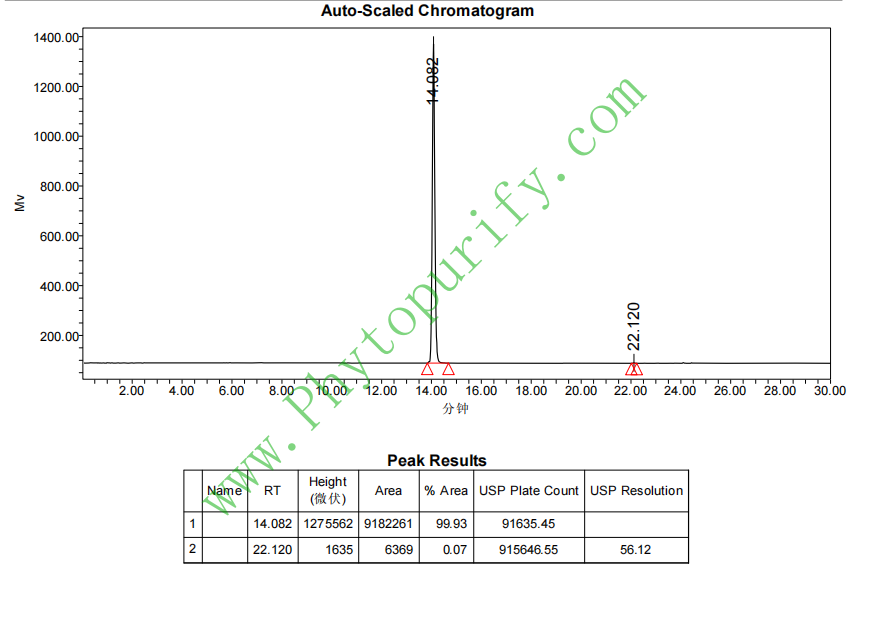
HPLC of Madecassic acid
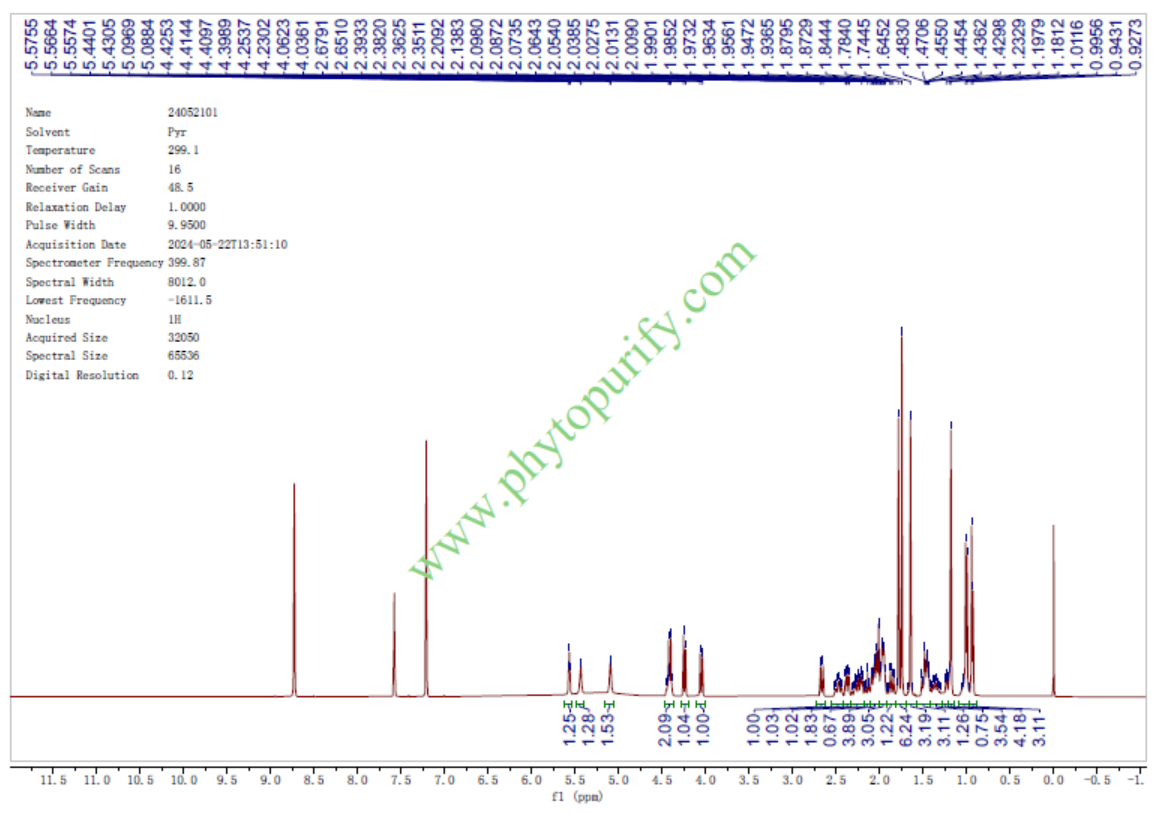
HNMR of Madecassic acid
Storage conditions:Short-term storage at 2~8℃, long-term storage at -20 ~ -80℃
118.2200
3.5755
1.9626
.0305
1.1734
3.3298
Low
89.0651
5.2380
No
No
No
No
No
No
0.0
Yes
No
Yes
No
Natural products, as an important source of drug discovery, play an irreplaceable role in the long history of human struggle against diseases. Among numerous natural compounds with biological activity, pentacyclic triterpenoids have attracted much attention due to their structural diversity and wide pharmacological activities. Madecassic acid, as a typical representative of this type of compound, originates from the traditional medicinal plant Centella asiatica(Centella asiatica (L.) Urb., Umbelliferae is one of the main active ingredients of this plant.
Snow grass has a long history of application in traditional Asian medicine, especially in Ayurvedic medicine in India and traditional Chinese medicine, where it is widely used to treat skin diseases, promote wound healing, and improve cognitive function. Modern pharmacological research has confirmed that the various pharmacological activities of centella asiatica are closely related to the triterpenoid saponins it contains, among which hydroxycentellic acid and Asiaticoside are the most representative active substances. Hydroxycentellic acid, as an important member of triterpenoid acid components in centella asiatica, has become a hot topic in natural product pharmacology research in recent years due to its significant anti-inflammatory activity, promotion of wound repair ability, and good safety.
It is worth noting that hydroxy oxalic acid is highly similar in structure to Asiatic acid, with only an additional hydroxyl group present at position C-23. This structural difference endows it with unique physicochemical properties and biological activity spectrum. With the continuous deepening of understanding of inflammation related diseases and wound repair mechanisms, the multi-target regulatory properties of hydroxyasiatic acid have gradually been revealed. Its potential in anti-inflammatory, antioxidant, anti fibrotic, and promoting tissue regeneration has attracted widespread attention from academia and industry. This article will provide a systematic review of the research progress of hydroxyasiatic acid from multiple dimensions, including chemical structure, plant origin, pharmacological activity, mechanism of action, pharmacological evaluation, and clinical application prospects, in order to provide reference for the in-depth development and clinical translation of this natural product.
The chemical name of hydroxycentellic acid is 2 α, 3 β, 6 β, 23-tetrahydroxy-12-en-28-oic acid (2 α, 3 β, 6 β, 23-tetrahydroxyurs-12-en-28-oic acid), which belongs to the pentacyclic triterpenoid acid group of the Ussurine type. Its molecular formula is C ∝₀ H ₄₈ O ₆, and its molecular weight is 504.7080 g/mol. From the perspective of structural features, the core skeleton of hydroxy asiatic acid is composed of five rings, including A, B, C, D, and E. Among them, A and B rings are hexagonal rings, C ring is hexagonal and contains a double bond (Δ ¹ ²), and D and E rings are respectively pentagonal and hexagonal rings. This compound has hydroxyl substituents attached to multiple carbon atoms: the C-2 position is an alpha configured hydroxyl group, the C-3 position is a beta configured hydroxyl group, the C-6 position is a beta configured hydroxyl group, and the C-23 position is a hydroxymethyl group. In addition, the C-28 position is a carboxyl group, giving the molecule a certain acidic characteristic.
The structural difference between hydroxy oxalic acid and Asiatic acid (2 α, 3 β, 23-trihydroxy-12-en-28-orsulinic acid) lies in the presence of a hydroxyl group at the C-6 position. This additional hydroxyl group not only increases the polarity and hydrogen bond donor/acceptor ability of the molecule, but also significantly affects its interaction mode with biological targets. From the perspective of structure-activity relationship, the presence of the C-6 hydroxyl group may enhance the antioxidant activity and metal ion chelating ability of the compound, while also affecting its interaction with the cell membrane lipid bilayer.
In terms of physicochemical properties, hydroxy asiatic acid exhibits typical characteristics of triterpenoid acid compounds. Its lipid water partition coefficient (LogP) is 3.5755, indicating that the compound has moderate lipophilicity and can maintain a certain solubility in a lipid environment without completely repelling the aqueous environment. The topological polar surface area (TPSA) is 118.2200 Å ², which is higher than the recommended upper limit of 140 Å ² for oral medications, indicating that the compound may have some oral absorption barriers. The water solubility data (0.0305 mg/mL) shows that the solubility of hydroxyasiatic acid in water is low, which is consistent with its polycyclic hydrophobic skeleton and limited distribution of polar groups. It is worth noting that the water solubility of this compound can be significantly improved under alkaline conditions through deprotonation of carboxyl groups, which provides important basis for its formulation design.
In terms of stability, hydroxyasiatic acid is relatively stable in acidic environments, but may undergo hydrolysis or oxidative degradation under strong alkaline conditions. The double bond (Δ ¹ ²) and multiple hydroxyl groups in its molecule make it sensitive to oxidative conditions, so appropriate antioxidant measures need to be taken during storage and formulation. In addition, the compound may undergo photodegradation under ultraviolet light irradiation, indicating that it should be considered for light avoidance storage in formulation development.
Hydroxy Asiatic Acid is mainly derived from the Umbelliferae plant Asiatic Grass(Centella asiatica (L.) Urb.), This plant is widely distributed in tropical and subtropical regions of Asia, Africa, and South America. The whole plant of centella asiatica can be used as medicine, with the leaves and stems being the main medicinal parts. In addition to centella asiatica, hydroxycentellic acid has also been found in a few other plants, such as certain Hydrocotyle Belonging to plants, but with much lower content than snow grass.
The content of triterpenoids in centella asiatica is influenced by various factors, including plant species, growth environment, harvesting time, processing methods, etc. Research has shown that the content of hydroxyasiatic acid in wild centella asiatica is usually between 0.1% and 0.5% (by dry weight), while the content can be increased in plants optimized through tissue culture or artificial cultivation. It is worth noting that the ratio of hydroxyasiatic acid to asiaticoside in centella asiatica varies depending on the place of origin and variety, which poses challenges for standardized extraction and quality control.
The traditional extraction method of hydroxy oxalic acid is mainly based on solvent extraction technology. Due to its good solubility in alcohol solvents, ethanol or methanol are often used as extraction solvents. The classic extraction process includes: extracting the dried snow grass powder with 70% -95% ethanol reflux, concentrating the extraction solution, and then performing liquid-liquid extraction with petroleum ether, ethyl acetate, and n-butanol in sequence. The ethyl acetate or n-butanol extraction phase rich in triterpenoid acids is then separated and purified by silica gel column chromatography, ODS column chromatography, or preparative high-performance liquid chromatography (HPLC). However, traditional methods have disadvantages such as high consumption of organic solvents, cumbersome operation steps, and low yield.
In recent years, green extraction technology has been widely used in the extraction of hydroxy asiatic acid. Ultrasound assisted extraction (UAE) utilizes the cavitation effect of ultrasound to destroy plant cell walls, significantly improving extraction efficiency and shortening extraction time. Research has shown that under optimized conditions (ethanol concentration of 60%, solid-liquid ratio of 1:20, ultrasound power of 300 W, temperature of 50 ° C, extraction time of 30 minutes), the extraction rate of hydroxy oxalic acid can be increased by 20% -30% compared to traditional reflux extraction. Microwave assisted extraction (MAE) utilizes the dielectric heating effect of microwaves to rapidly increase the internal temperature of plants, promoting the dissolution of target components. In addition, enzyme assisted extraction (EAE) can further improve the release efficiency of triterpenoid acids by hydrolyzing plant cell wall polysaccharides with cellulases, pectinases, and other enzymes.
In terms of separation and purification, macroporous adsorption resin technology has become the preferred method for the separation of hydroxy oxalic acid due to its advantages of simple operation, low cost, and scalability. The commonly used types of resins include HPD-100, D101, AB-8, etc. The effective separation of hydroxyasiatic acid from similar compounds such as asiaticoside and asiatic acid can be achieved through gradient ethanol elution. High speed counter current chromatography (HSCCC), as a liquid-liquid distribution chromatography technique, has demonstrated unique advantages in the preparation and separation of hydroxy oxalic acid, avoiding sample loss caused by irreversible adsorption. In recent years, molecular imprinting technology (MIT) has also been attempted for the selective recognition and enrichment of hydroxyasiatic acid, but it is still in the laboratory research stage.
In terms of quality control, high-performance liquid chromatography ultraviolet detection (HPLC-UV) and liquid chromatography-mass spectrometry (LC-MS) are the main methods for qualitative and quantitative analysis of hydroxyasiatic acid. The Chinese Pharmacopoeia (2020 edition) includes a method for determining the content of hydroxyasiatic acid in centella asiatica, which stipulates that its content should not be less than 0.2%. However, due to the lack of strong UV absorbing groups in hydroxyasiatic acid, the sensitivity of UV detection is limited. Evaporative light scattering detectors (ELSD) or mass spectrometry detectors can provide better detection sensitivity and selectivity.
Inflammation is the body's defense response to harmful stimuli, but excessive or sustained inflammation can lead to tissue damage and the occurrence of various diseases. The anti-inflammatory activity of hydroxyasiatic acid is one of its most concerned pharmacological properties. In vitro studies have shown that in the RAW 264.7 macrophage model stimulated by lipopolysaccharide (LPS), hydroxyasiatic acid (1-50 μ M) can concentration dependently inhibit the production of nitric oxide (NO), and its mechanism is closely related to the inhibition of inducible nitric oxide synthase (iNOS) expression. At the same time, the compound can significantly reduce the protein and mRNA levels of cyclooxygenase-2 (COX-2), thereby reducing the synthesis of prostaglandin E ₂ (PGE ₂).
In terms of cytokine regulation, hydroxyasiatic acid exhibits broad-spectrum anti-inflammatory activity. Research has confirmed that this compound can effectively inhibit the release of tumor necrosis factor - α (TNF - α), interleukin-1 β (IL-1 β), and interleukin-6 (IL-6) induced by LPS. It is worth noting that the inhibitory effect of hydroxyasiatic acid on pro-inflammatory cytokines is dose-dependent and time-dependent, and does not cause significant cytotoxicity within the non-toxic concentration range (<100 μ M). Further mechanistic studies have shown that the anti-inflammatory effect of hydroxyasiatic acid is closely related to the inhibition of the activation of the nuclear factor kappa B (NF - κ B) signaling pathway. This compound can block the phosphorylation and degradation of I κ B α, prevent the translocation of NF - κ B p65 subunit to the nucleus, and thus inhibit the transcription of downstream inflammation related genes.
In vivo studies further confirmed the anti-inflammatory activity of hydroxycentellic acid. In the carrageenan induced rat plantar swelling model, oral or local administration of hydroxycentellic acid (10-50 mg/kg) can significantly reduce inflammatory response, and its effect is comparable to the positive control drug indomethacin, but with fewer gastrointestinal side effects. In the acetic acid-induced model of increased peritoneal capillary permeability in mice, hydroxyasiatic acid also showed significant anti-inflammatory effects.
Skin wound repair is a complex biological process involving multiple stages such as inflammatory response, cell proliferation, matrix deposition, and tissue remodeling. Hydroxyasiatic acid exhibits various pharmacological activities in promoting skin wound healing. In vitro cell experiments have shown that hydroxyasiatic acid (1-10 μ M) can promote the proliferation and migration of human skin fibroblasts (HSF) and keratinocytes (HaCaT), which is closely related to the upregulation of epidermal growth factor receptor (EGFR) and fibroblast growth factor 2 (FGF2) expression.
In terms of matrix remodeling, hydroxyasiatic acid can regulate the balance of matrix metalloproteinases (MMPs) and their inhibitors (TIMPs). Research has shown that this compound can inhibit the overexpression of MMP-2 and MMP-9, while upregulating the level of TIMP-1, thereby maintaining the homeostasis of the extracellular matrix. In addition, hydroxyasiatic acid can promote the synthesis of type I collagen (COL1A1) and increase the expression of transforming growth factor - β 1 (TGF - β 1), which together promote the formation of granulation tissue and wound contraction.
Angiogenesis is a crucial step in wound repair, and hydroxyasiatic acid plays a positive role in this process. This compound can upregulate the expression of vascular endothelial growth factor A (VEGFA) and promote neovascularization by activating the fibroblast growth factor receptor 1 (FGFR1) signaling pathway. Animal experiments have confirmed that in the rat model of full-thickness skin defect, local application of gel containing hydroxy asiaticosic acid (0.5% -2%) can significantly accelerate wound closure, increase the thickness of new epithelium, and improve the order of collagen fibers.
It is worth noting that hydroxyasiatic acid can promote wound healing while also inhibiting scar formation. Research has shown that this compound can reduce the differentiation of fibroblasts into myofibroblasts by inhibiting the TGF - β 1/Smad signaling pathway, thereby alleviating wound contraction and scar hyperplasia. This characteristic makes hydroxyasiatic acid have unique application value in the repair of wounds that are prone to scar formation, such as burns and surgical incisions.
In addition to anti-inflammatory and wound healing effects, hydroxyasiatic acid also exhibits various other pharmacological activities. In terms of antioxidant activity, this compound can scavenge 1,1-diphenyl-2-trinitrophenylhydrazine (DPPH) and hydroxyl radicals, inhibit lipid peroxidation, and enhance the activity of superoxide dismutase (SOD) and glutathione peroxidase (GSH Px). In terms of neuroprotection, hydroxyasiatic acid can alleviate beta amyloid induced neurotoxicity by inhibiting oxidative stress and neuroinflammation, indicating its potential application value in neurodegenerative diseases such as Alzheimer's disease.
In addition, hydroxyasiatic acid also exhibits certain anti fibrotic activity. In the hepatic stellate cell (HSC) model, this compound can inhibit cell activation and collagen synthesis, and its mechanism is related to blocking the TGF - β 1/Smad3 signaling pathway. In terms of anti-tumor, preliminary studies have shown that hydroxyasiaticoxalic acid can inhibit the proliferation of some tumor cell lines (such as melanoma and breast cancer), but related studies are still in an early stage and need further verification.
The pharmacological activity of hydroxyasiatic acid originates from its interaction with multiple molecular targets, and this multi-target regulatory characteristic is its significant advantage over single target synthetic drugs. At the molecular level, hydroxyasiatic acid mainly exerts its biological effects through the following mechanisms:
NF - κ B is the core transcription factor of inflammatory response, regulating the expression of various inflammation related genes including iNOS, COX-2, TNF - α, IL-1 β, and IL-6. Hydroxyasiatic acid can inhibit the activation of NF - κ B in various ways. Firstly, the compound can directly interact with the I κ B kinase (IKK) complex, inhibiting the activity of IKK β and thereby reducing the phosphorylation of I κ B α. Secondly, hydroxyasiatic acid can prevent nuclear translocation of NF - κ B p65 subunit and reduce its binding ability to DNA. In addition, the compound can enhance negative feedback regulation of NF - κ B by upregulating the expression of I κ B α.
The MAPK signaling pathway (including ERK, JNK, and p38) plays an important role in inflammation and cell proliferation. Research has shown that hydroxyasiatic acid can inhibit LPS induced phosphorylation of p38 and JNK, but has little effect on ERK phosphorylation. This selective inhibition mode may be related to the specificity of its anti-inflammatory activity. It is worth noting that there is a cross-talk between the MAPK pathway and the NF - κ B pathway, and the synergistic inhibition of both by hydroxyasiatic acid may explain its strong anti-inflammatory effect.
During the process of wound repair, hydroxyasiatic acid promotes cell proliferation and migration by activating various growth factor receptor signaling pathways. This compound can upregulate the expression of EGFR and enhance its downstream PI3K/Akt and Ras/ERK signaling pathways. Meanwhile, hydroxyasiatic acid can also activate FGFR1, promote FGF2 mediated fibroblast proliferation and angiogenesis. In addition, the TGF - β 1/Smad signaling pathway plays a key role in the regulation of collagen synthesis and matrix remodeling by hydroxyasiatic acid, which can balance the pro fibrotic and anti-inflammatory effects of TGF - β 1.
MMPs play a dual role in wound repair and tissue remodeling: moderate MMP activity is beneficial for clearing damaged matrix and cell migration, but overexpression leads to excessive degradation of matrix and chronic wounds. Hydroxyasiatic acid can finely regulate the balance of MMP/IMP by inhibiting the activity of MMP-2 and MMP-9, while upregulating the expression of TIMP-1, maintaining the homeostasis of the extracellular matrix. This regulatory mechanism may involve inhibition of AP-1 transcription factors and activation of TGF - β 1 signaling.
Recent studies suggest that hydroxycentellic acid may exert its pharmacological effects through epigenetic mechanisms. Preliminary evidence suggests that the compound can inhibit the activity of histone deacetylase (HDAC), particularly HDAC1 and HDAC3, thereby altering chromatin accessibility and gene expression profiles. In addition, hydroxyasiatic acid may also participate in negative feedback regulation of inflammatory response by regulating the expression of microRNAs (such as miR-146a, miR-155). These epigenetic regulatory mechanisms provide a new perspective for understanding the pleiotropy of hydroxyasiatic acid.
Based on Lipinski's "Rule of Five" and Veber's rule, a systematic evaluation of the pharmacological properties of hydroxyasiatic acid was conducted. The molecular weight of the compound is 504.7080 Da, slightly above the threshold of 500 Da; The LogP value is 3.5755, which meets the requirement of ≤ 5; The number of hydrogen bond donors is 5 (four hydroxyl groups and one carboxyl group), and the number of hydrogen bond acceptors is 6, both of which meet the regulatory requirements. However, the TPSA value of 118.2200 Å ² is higher than the recommended upper limit of 140 Å ², indicating that the compound may have oral absorption disorders. In addition, its low water solubility (0.0305 mg/mL) may affect its bioavailability.
In terms of safety evaluation, the Ames test result is 0.0, indicating that hydroxyasiatic acid has no significant mutagenicity. HERG inhibition prediction is negative, indicating a low risk of the compound causing cardiac QT interval prolongation. The prediction of blood-brain barrier penetration is low, which to some extent limits its application in central nervous system diseases, but also reduces the risk of central nervous system toxicity. Overall, hydroxyasiatic acid has a good safety foundation, but its oral bioavailability is the main challenge facing its drug development.
At present, there is relatively limited systematic research on the pharmacokinetics of hydroxyasiatic acid, but preliminary information has been provided by existing studies. In terms of oral administration, the absolute bioavailability of hydroxyasiatic acid is relatively low (usually less than 5%), mainly due to its poor water solubility and intestinal permeability. Research has shown that this compound may undergo partial metabolism in the gastrointestinal tract, including glucuronidation and sulfation binding reactions. In terms of distribution in the body, hydroxyasiatic acid is mainly distributed in plasma and liver, with lower concentrations in brain tissue, consistent with its prediction of low blood-brain barrier penetration.
Metabolic studies have shown that hydroxyasiatic acid mainly undergoes phase I metabolism (hydroxylation, oxidation) and phase II metabolism (glucuronic acid binding, sulfuric acid binding) in the liver. The cytochrome P450 enzyme system (especially CYP3A4 and CYP2C9) may be involved in its phase I metabolism process. It is worth noting that hydroxyasiatic acid has a weak inhibitory effect on CYP450 enzyme, indicating a low risk of drug drug interactions. In terms of excretion pathways, hydroxyasiatic acid and its metabolites are mainly excreted through bile and feces, with less excretion in urine.
To overcome the bottleneck of low oral bioavailability of hydroxyasiatic acid, various formulation strategies have been explored. Liposomal encapsulation technology can improve the water dispersibility and intestinal permeability of the compound. Studies have shown that the oral bioavailability of hydroxyasiatic acid liposomes can be increased by 3-5 times. Phytosome technology enhances the lipid solubility of compounds by forming drug phospholipid molecular complexes, promoting their passive diffusion through intestinal epithelial cells. In addition, formulation technologies such as cyclodextrin inclusion complexes, solid dispersions, and nanoemulsions have also shown potential in improving the solubility and bioavailability of hydroxyasiatic acid.
In terms of local administration, hydroxyasiatic acid has good transdermal permeability and is suitable for development as an external preparation. Gel, cream, patch and other dosage forms have been used in wound repair research. It is worth noting that transdermal absorption enhancers such as azone and propylene glycol can further increase the skin penetration of the compound. In addition, physical infiltration methods such as microneedle technology and ion introduction are also being explored.
Hydroxyasiatic acid has been used as a pharmaceutical or cosmetic ingredient in multiple countries and regions. In France, an external preparation containing hydroxyasiatic acid (trade name: Madecassol) ®) Approved for promoting wound healing and treating scars. In India, centella asiatica extract (standardized as hydroxycentellic acid and centella asiatica glycoside) is used to treat skin ulcers, burns, and scars. In China, total glycosides of centella asiatica (including hydroxycentellic acid) have been approved for the treatment of keloids and hypertrophic scars. In addition, hydroxyasiatic acid is also present as an active ingredient in various skincare products, used for anti-aging, repairing skin barriers, and reducing inflammation.
Based on its multi-target pharmacological activity, hydroxyasiatic acid has potential clinical application value in the following disease areas:
Chronic inflammatory diseases The anti-inflammatory activity of hydroxyasiatic acid makes it promising for the treatment of chronic inflammatory diseases such as rheumatoid arthritis, inflammatory bowel disease, psoriasis, etc. Preliminary studies have shown that this compound can alleviate joint swelling and bone destruction in collagen induced arthritis models.
Liver fibrosis The anti fibrotic activity of hydroxyasiatic acid suggests its potential in the treatment of liver fibrosis. Animal experiments have shown that this compound can alleviate carbon tetrachloride induced liver fibrosis, reduce collagen deposition and α - SMA expression in liver tissue.
Complications of diabetes The antioxidant and anti-inflammatory properties of hydroxyasiaticosic acid may be beneficial to the complications of diabetes (such as diabetes foot ulcer and diabetes nephropathy). Studies have confirmed that this compound can promote wound healing in diabetes rats and improve the wound microenvironment.
Neurodegenerative diseases Although the blood-brain barrier penetration is low, hydroxyasiatic acid can exert neuroprotective effects by reducing neuroinflammation and oxidative stress. Nanoformulations or nasal administration routes may increase their concentration in brain tissue.
Despite the broad application prospects of hydroxyasiatic acid, its clinical translation still faces multiple challenges. Firstly, the low oral bioavailability is the main obstacle to its systemic application, requiring the development of efficient delivery systems. Secondly, the poor water solubility of the compound poses difficulties for the development of formulations, especially in the development of high concentration injection solutions. Thirdly, there is currently a lack of large-scale, multicenter clinical trial data, and its clinical efficacy and safety need to be further validated. Fourthly, the research on the interaction between hydroxyasiatic acid and other drugs is not sufficient, especially in the safety evaluation of combination therapy.
Future research directions should include: (1) improving the pharmacokinetic properties of hydroxyasiatic acid through structural modification or prodrug design; (2) Develop new delivery systems (such as nanoparticles, liposomes, polymer micelles) to improve their bioavailability; (3) Conduct systematic toxicology research and long-term safety evaluation; (4) Conduct high-quality clinical trials to validate its efficacy and safety in specific indications; (5) Explore the synergistic effects of hydroxyasiatic acid with other natural products or synthetic drugs.
Hydroxyasiatic acid, as a representative active ingredient in centella asiatica, occupies an important position in the field of natural product pharmacology due to its unique chemical structure and multi-target pharmacological activity. From anti-inflammatory and promoting wound repair to anti fibrosis and neuroprotection, this compound exhibits a wide spectrum of biological activities, and its mechanism of action involves fine regulation of multiple signaling pathways such as NF - κ B, MAPK, and growth factor receptors. Although there are shortcomings in oral bioavailability and water solubility, these obstacles are expected to be overcome through advanced formulation technology and structural modification strategies.
With the continuous deepening of the understanding of the pharmacological mechanism of hydroxycentellic acid and the continuous progress of formulation technology, the clinical application prospects of this compound in skin wound repair, chronic inflammatory diseases, liver fibrosis and other fields are worth looking forward to. In the future, interdisciplinary collaborative research will drive the process of translating hydroxyasiatic acid from laboratory research to clinical practice, making it a successful example of natural product drug development. Meanwhile, in-depth research on the structure-activity relationship of hydroxyasiatic acid will provide important guidance for designing more efficient and safe semi synthetic derivatives, further expanding the drug development space of pentacyclic triterpenoids.
