| Catalog No | Package | Original Price | Price | Inventory | Quantity | Operating |
|---|---|---|---|---|---|---|
| BP4259-5mg | 5mg | $350.00 | Sign in |
|


Product name: Humantenirine
Synonym name: 4-Demethyl-11-methoxyhumantenine;Humantenrine
Catalogue No.: BP4259
Cas No.: 82375-30-2
Formula: C21H26N2O4
Mol Weight: 370.449
Botanical Source: Gelsemium elegans
Type of Compound: Alkaloids
Purity: 95%~99%
Analysis Method: HPLC-DAD or/and HPLC-ELSD
Identification Method: Mass, NMR
Packing: Brown vial or HDPE plastic bottle
Storage: Store in a well closed container, protected from air and light. Put into refrigerate or freeze for long term storage.
Whenever possible, you should prepare and use solutions on the same day. However, if you need to make up stock solutions in advance, we recommend that you store the solution as aliquots in tightly sealed vials at -20℃. Generally, these will be useable for up to two weeks.
The product could be supplied from milligrams to grams
Inquire for bulk scale.
For Reference Standard and R&D, Not for Human Use Directly.
Storage conditions:Short-term storage at 2~8℃, long-term storage at -20 ~ -80℃
60.0300
2.0630
1.1795
1.7700
2.3153
16.5068
High
58.6420
6.2893
No
Yes
No
No
Yes
No
1.2
No
No
Yes
Yes
Natural products, as an important source of drug discovery, play an irreplaceable role in the long history of human struggle against diseases. The isolation and identification of bioactive chemical components from traditional herbs, and elucidation of their pharmacological mechanisms, are important paradigms in modern medicinal chemistry and pharmacology research. Among the many plants with a long history of medicinal use, the genus Gelsemium(Gelsemium)Plants have attracted much attention due to their significant neurotoxicity and potential medicinal value. This genus of plants is mainly distributed in North America, Central America, and southeastern Asia, among which the evergreen Gelsemium, native to southeastern North America(Gelsemium sempervirens (L.) J.St. - Hill has been used in folk medicine to treat neuropathic pain, migraine, rheumatism, and certain inflammatory diseases, but its use is strictly limited due to its severe toxicity.
Modern plant chemistry research reveals that,Gelsemium The main active ingredients of plants are a class of indole alkaloids with complex structures and diverse biological activities. These alkaloids can be classified into multiple subtypes based on their skeletal structure, such as gelsemine type, humantine type, etc. Humantenirine is a representative indole alkaloid isolated from the evergreen Gelsemium elegans. Its unique five or six ring fused skeleton, as well as multiple chiral centers and functional groups in the molecule, endow it with complex chemical space and potential biological activity. Early research mainly focused on its neurotoxicity, but in recent years, with a deeper understanding of the neurobiological mechanisms of pain, especially the roles of voltage-gated sodium channels, transient receptor potential (TRP) channels, and GABAergic systems in pain transmission and regulation, the pharmacological activity and mechanism of action of matrine, as a potential lead compound for treating neuropathic pain, are being re examined and further studied.
This article aims to provide a systematic review of the research status of Houttuynia cordata alkaloids, covering their chemical structure and physicochemical properties, plant sources and extraction methods, pharmacological activities, mechanisms of action and molecular targets, pharmacological evaluation and pharmacokinetic characteristics. It also looks forward to their future clinical application prospects and challenges, in order to provide reference for the further development and utilization of this natural product.
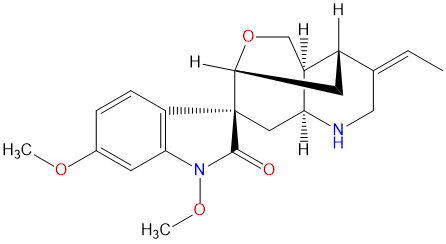
Humantenirine belongs to the monoterpene indole alkaloid family, and its chemical structure has a typical Humantenirine type skeleton. The core feature of this skeleton is a polycyclic system constructed through complex cyclization reactions of a monoterpene unit derived from a tryptophan unit and a secologanin. Specifically, the structure of Houttuynia cordata alkaloids includes an indole ring (A, B ring), a hexagonal pyridine ring fused with the indole ring (C ring), and a complex polycyclic system formed by monoterpene units containing an oxygen bridge or lactone ring (D, E rings). Its molecular formula is usually reported as C ₂₁ H ₂₆ N ₂ O ₄, with a molecular weight of 370.4490 g/mol. The molecular structure contains multiple chiral centers, which determine its specific stereochemical configuration. Different stereochemical configurations may be closely related to their interaction modes with biological targets and biological activities.
From the perspective of physical and chemical properties, Houttuynia cordata alkaloids exhibit typical alkaloid characteristics. Its lipid water partition coefficient (LogP) is 2.0630, indicating that the molecule has moderate lipophilicity, which facilitates its penetration through biological membranes, including the blood-brain barrier. In fact, its blood-brain barrier penetration is evaluated as' high ', which is highly consistent with its potential as an active molecule in the central nervous system. Its topological polar surface area (TPSA) is 60.0300 Å ², which is lower than the commonly believed good permeability threshold for oral drugs (about 140 Å ²), further supporting its good membrane permeability. In terms of water solubility, its predicted value (LogS) is 1.7700, indicating limited solubility in water, which may need to be improved through methods such as salt formation, use of co solvents, or nanotechnology in actual drug formulation development. It is worth noting that the prediction result of hERG inhibition is "no", which reduces the risk of serious cardiac toxicity such as prolonged QT interval in the heart, and is a positive pharmacological indicator. The Ames test result is 1.2, indicating that it may have potential genetic toxicity, which requires special attention and verification in subsequent toxicological evaluations.
The main plant source of Houttuynia cordata alkaloids is the evergreen Gelsemium plant in the Loganiaceae family(Gelsemium sempervirens). This plant is a perennial evergreen vine native to the southeastern United States to Central America. Due to its yellow trumpet shaped flowers and toxic properties, it is also known as "Carolina Jasmine" or "Yellow Jasmine". Other plants belonging to the same genus, such as the Asian Gelsemium, besides the evergreen Gelsemium(Gelsemium elegans Benth., Commonly known as "intestinal cutting grass", it also contains abundant indole alkaloids, but there are significant differences in the types and contents of alkaloids among different species. The content of Houttuynia cordata alkaloids in evergreen Gelsemium elegans is usually low, belonging to trace or minor alkaloid components, which poses certain challenges for its large-scale preparation.
The extraction of Houttuynia cordata alkaloids usually follows the classic process of natural product chemistry, which mainly includes the following steps:
Raw material processing and extraction Collect the whole plant or roots of evergreen Gelsemium elegans, dry and crush them, and use solvent extraction method. Due to the fact that alkaloids can easily form salts and dissolve in water under acidic conditions, and dissolve in organic solvents as free bases under alkaline conditions, the strategy of "acid extraction and alkali precipitation" or direct organic solvent extraction is often adopted. Common extraction solvents include methanol, ethanol, acidified ethanol, or chloroform. For example, the dried powder is extracted by percolation with an ethanol solution containing 0.5-1% hydrochloric acid. After concentrating the extract, it is adjusted to alkaline with an alkaline solution (such as ammonia), and then extracted with organic solvents such as chloroform and ethyl acetate to obtain the total alkaloid extract.
Preliminary separation and purification Total alkaloid extract is a complex mixture containing multiple structurally similar alkaloids. Preliminary separation is usually carried out using silica gel column chromatography, with gradient elution using solvent systems such as chloroform methanol or petroleum ether acetone in different ratios, and separation is performed based on the polarity differences of alkaloids. In addition, alumina column chromatography or preparative thin-layer chromatography can also be used for separation.
Enrichment and refinement of target components Due to the low content of alkaloids in Houttuynia cordata, further enrichment from the initially isolated components requires more refined separation techniques. High performance liquid chromatography (HPLC), especially preparative HPLC, is a key means of separating and purifying this compound. By optimizing the mobile phase of the reverse phase C18 chromatography column (such as acetonitrile water trifluoroacetic acid system), efficient separation of huperzine Ding from other structurally similar compounds (such as huperzine A, B, C, etc.) can be achieved. Finally, high-purity monomers of Houttuynia cordata alkaloids were obtained through methods such as recrystallization, and their structures were confirmed by spectroscopic methods such as nuclear magnetic resonance (NMR) and mass spectrometry (MS).
Given the low abundance of Houttuynia cordata alkaloids in plants and their research value as potential drug lead compounds, developing efficient extraction and separation techniques, and even exploring methods of biosynthesis or chemical total synthesis to obtain this compound, is the key to promoting its in-depth research.
The pharmacological activity research of Houttuynia cordata alkaloids has long been closely related to the toxicity and traditional use of its parent plant, Gelsemium elegans. Early research mainly focused on its neurotoxicity, while recent studies have gradually revealed its potential in pain relief, especially in the treatment of neuropathic pain.
neurotoxicity As a member of the Gelsemium alkaloids family, Hu Man Teng alkaloids have shown certain neurotoxicity in animal models. Its toxic mechanism is believed to be related to interference with neurotransmitter transmission in the central nervous system, which may involve regulation of glycine receptors, GABA_A receptors, or voltage-gated sodium channels. However, compared to the main toxic components with higher content in Gelsemium elegans, such as Gelsemine, the toxicity of Houttuynia cordata alkaloids is generally considered relatively low, providing a wider safety window for its development as a therapeutic drug.
Analgesic activity This is currently the most active field of research on Houttuynia cordata alkaloids. Given its traditional use for treating neuropathic pain and the inclusion of multiple proteins closely related to pain signaling in its molecular target prediction (such as TRPV1, SCN9A, SCN10A, etc.), multiple studies have confirmed its significant analgesic effect.
Other activities In addition to its analgesic effect, there are sporadic reports suggesting that Houttuynia cordata alkaloids may have anti-inflammatory, anti-tumor, or sedative effects. For example, it may exert anti-inflammatory effects by inhibiting the release of inflammatory factors. However, more systematic research is needed to confirm and elucidate these activities.
The complex pharmacological activity of Houttuynia cordata alkaloids stems from their multi-target action characteristics. Based on its chemical structural characteristics and modern molecular pharmacology research, its mechanism of action mainly involves the regulation of multiple ion channels and receptors related to pain signal transduction.
Regulation of Voltage Gated Sodium Channels (VGSCs)VGSCs play a central role in the generation and conduction of action potentials and are important targets for pain treatment. Especially the Nav1.7 (encoded by SCN9A) and Nav1.8 (encoded by SCN10A) subtypes, which are specifically highly expressed in peripheral nociceptors, are key drivers of neuropathic pain. Research has shown that Houttuynia cordata alkaloids can inhibit the currents of Nav1.7 and Nav1.8, and their mode of action may be similar to local anesthetics. By binding to the inactive state of channels, they preferentially inhibit high-frequency firing neurons, thereby blocking the transmission of pain signals from the periphery to the center. This selective inhibition of specific subtypes is the molecular basis for their analgesic effects and potential reduction of cardiac and central nervous system side effects.
Regulation of TRPV1 receptor TRPV1 (transient receptor potential vanillic acid subtype 1) is a non selective cation channel that can be activated by harmful stimuli such as capsaicin, heat, and acid, and plays a key role in inflammatory pain and neuropathic pain. Hu Man Teng alkaloid Ding may act as an antagonist or inverse agonist of TRPV1, inhibiting its excessive activation, thereby reducing calcium ion influx, lowering neuronal excitability, and relieving pain. Its interaction with TRPV1 may be another important mechanism for its anti-inflammatory and analgesic activities.
The impact on GABA_A receptors GABA_A receptors are the main inhibitory neurotransmitter receptors in the central nervous system. Enhancing the function of GABA_A receptors can produce sedative, anti anxiety, and analgesic effects. Hu Man Teng alkaloid Ding may act as a positive allosteric modulator of GABA_A receptors, enhancing the binding of GABA to its receptors or increasing the frequency of chloride ion channel opening, thereby strengthening central inhibition, which helps explain its analgesic and possible sedative effects. The target prediction includes GABRA1 (GABA_A receptor alpha 1 subunit), supporting this hypothesis.
Effects on other targets Hu Man Teng alkaloid Ding may also act on other pain related targets, such as:
In summary, Hu Man Teng alkaloid Ding does not act on a single target, but synergistically inhibits the generation, transmission, and perception of pain signals through a "multi-target, multi pathway" network regulation mode. This multi-target mode of action is an important reason for its high analgesic efficacy and relatively low side effects, but it also brings complexity to accurately elucidating its mechanism of action.
A systematic evaluation of the drug like and pharmacokinetic (ADME) properties of Houttuynia cordata alkaloids is required to advance them from natural product lead compounds to clinical candidate drugs.
Analysis of drug properties parameters According to the provided parameters, Houttuynia cordata alkaloids exhibit some positive pharmacological characteristics. Its molecular weight (370.45 Da) and LogP value (2.06) both conform to the Lipinski's Rule of Five, indicating that it has good oral absorption potential. The TPSA value (60.03 Å ²) is moderate, which is beneficial for oral absorption and blood-brain barrier penetration. High blood-brain barrier penetration is advantageous for treating central nervous system diseases such as neuropathic pain, but it may also bring central related side effects. The low risk of hERG inhibition is an important safety advantage. However, a positive Ames test result (1.2) is a warning signal that needs to be taken seriously, indicating that it may have mutagenicity, and this risk must be avoided or reduced through structural modifications or formulation design in subsequent development.
Pharmacokinetic characteristics At present, there is relatively limited publicly available data on the pharmacokinetics of Houttuynia cordata alkaloids in vivo, but inferences can be made based on their physicochemical properties and studies of similar compounds.
Overall, Houttuynia cordata alkaloids have the basic physicochemical properties to become oral drugs, but their poor water solubility and potential genetic toxicity are the main obstacles to development. Future research should focus on: 1) obtaining in vivo ADME data through systematic pharmacokinetic experiments (such as oral and intravenous administration in rats/dogs); 2) Conduct comprehensive toxicological evaluation, especially genetic toxicity and long-term toxicity; 3) Based on structure-activity relationship (SAR) research, the structure of Houttuynia cordata alkaloids was optimized to improve their water solubility, metabolic stability, eliminate genetic toxicity, and retain or enhance their analgesic activity.
As a natural product derived from traditional medicinal plants, Houttuynia cordata alkaloids have shown remarkable clinical application prospects in the treatment of neuropathic pain, especially in line with the urgent demand for non opioid and non addictive analgesics.
Differentiated advantages for neuropathic pain The current first-line drugs used for neuropathic pain in clinical practice, such as gabapentin and antidepressants, have limited efficacy and significant side effects (such as dizziness, drowsiness, and weight gain). Hu Man Teng alkaloid Ding may provide more comprehensive and effective pain relief through a multi-target mechanism, especially by inhibiting Nav1.7/1.8 and regulating TRPV1, and preliminary studies have shown that its motor function and sedative side effects are relatively small. This makes it possible to become a candidate drug for the treatment of diabetes neuralgia, post herpetic neuralgia, trigeminal neuralgia and other refractory diseases.
As a lead compound for structural optimization The complex skeleton of Houttuynia cordata alkaloids provides rich structural modification space for medicinal chemists. By synthesizing a series of derivatives, the structure-activity relationship can be systematically studied with the aim of:
Expand into new therapeutic fields Based on its multi-target mechanism of action, the therapeutic potential of Houttuynia cordata alkaloids and their derivatives may not be limited to neuropathic pain. For example, its regulatory effects on TRPV1 and CGRP may make it effective for migraines; Its anti-inflammatory activity may be applicable to inflammatory pain and arthritis; Its effect on GABA_A receptors may lead to the development of drugs with anti anxiety or sedative effects. In addition, some alkaloids of Gelsemium also exhibit anti-tumor activity, which is worth exploring the potential of Houttuynia cordata alkaloids in tumor treatment.
Challenges and Future Directions Faced Despite the bright prospects, the clinical translation of Houttuynia cordata alkaloids still faces severe challenges. The primary challenge is its source issue, with low natural content, complex chemical synthesis routes, and high costs. Therefore, it is urgent to develop efficient biosynthetic methods (such as using genetic engineering to modify microorganisms or plant cell cultures) or to develop simpler and more economical routes for total synthesis. Secondly, strict and systematic preclinical toxicology studies must be conducted, especially a thorough evaluation of its genetic toxicity and long-term neurotoxicity. Finally, rigorous clinical trials need to be designed to validate its efficacy and safety in humans, and to determine the optimal treatment dosage and dosing regimen.
Hu Man Teng alkali Ding, an indole alkaloid derived from the evergreen Gelsemium elegans, is a model for the interdisciplinary study of natural product chemistry and pharmacology. It carries the wisdom of traditional medicine and is integrated with modern molecular pharmacology and drug discovery concepts. Its unique chemical structure endows it with multi-target pharmacological characteristics, especially in regulating voltage-gated sodium channels, TRP channels, and GABAergic systems, providing new molecular entities and ideas for the treatment of neuropathic pain, a clinical challenge.
Although current research is still in its early stages and the road from natural products to clinical drugs is full of obstacles - including source limitations, potential genetic toxicity, and complex pharmacokinetic properties - the highly efficient analgesic activity and unique mechanism of action exhibited by Houttuynia cordata alkaloids make them an attractive lead compound. Future research requires the collaborative efforts of multidisciplinary experts in chemistry, biology, pharmacology, and toxicology to overcome existing obstacles through structural optimization, mechanism elucidation, and systematic preclinical evaluation, ultimately transforming this natural gift into a truly beneficial medicine for patients with neuropathic pain. In depth research on Houttuynia cordata alkaloids is expected to not only promote the development of new analgesic drugs, but also further reveal the enormous potential of natural products in the treatment of complex diseases.
Batch can search by a CAS number,one per line
