| Catalog No | Package | Original Price | Price | Inventory | Quantity | Operating |
|---|---|---|---|---|---|---|
| BP4258-5mg | 5mg | $350.00 | Sign in |
|


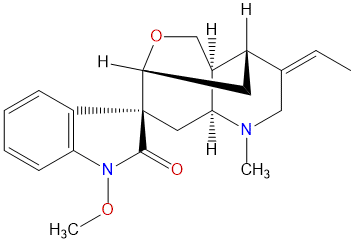
Product name: Humantenine
Synonym name:
Catalogue No.: BP4258
Cas No.: 82375-29-9
Formula: C21H26N2O3
Mol Weight: 354.45
Botanical Source: Gelsemium elegans
Type of Compound: Alkaloids
Purity: 95%~99%
Analysis Method: HPLC-DAD or/and HPLC-ELSD
Identification Method: Mass, NMR
Packing: Brown vial or HDPE plastic bottle
Storage: Store in a well closed container, protected from air and light. Put into refrigerate or freeze for long term storage.
Whenever possible, you should prepare and use solutions on the same day. However, if you need to make up stock solutions in advance, we recommend that you store the solution as aliquots in tightly sealed vials at -20℃. Generally, these will be useable for up to two weeks.
The product could be supplied from milligrams to grams
Inquire for bulk scale.
For Reference Standard and R&D, Not for Human Use Directly.
Storage conditions:Short-term storage at 2~8℃, long-term storage at -20 ~ -80℃
42.0100
2.2742
2.0064
.7939
4.3271
21.0750
High
59.9549
6.1816
No
Yes
Yes
Yes
Yes
No
0.6
No
No
Yes
Yes
Natural products are an important source of drug discovery, among which alkaloids derived from toxic plants have always been a hot topic in pharmacological research due to their unique chemical structure and significant biological activity. Gelsemium elegans(Gelsemium elegans (Gardn. & Champ.) Benth.), Also known as the Broken Intestine Grass or the Hu Man Teng, it is an evergreen vine plant in the family Malvaceae, widely distributed in southern China and Southeast Asia. The entire plant of Gelsemium elegans is highly toxic and has been commonly used for external pain relief, insecticide, or oral administration to treat various painful diseases in history. However, its treatment window is extremely narrow, and excessive intake can quickly lead to respiratory depression and even death. The traditional application of "attacking poison with poison" coincides with the exploration of active ingredients in modern pharmacology.
Gelsemine is rich in various structurally complex indole alkaloids, which are mainly divided into series such as gelsemine, koumine, gelsemicine, and humantine based on their skeleton types. Among them, Humantenine, as an important member of the Humantenine family, has gradually attracted academic attention for its unique pharmacological activity and toxicity mechanism since its isolation and identification in the 1980s. Early research mainly focused on its analgesic activity and effects on the central nervous system, and found that it may exert potent analgesic effects by acting on targets such as opioid receptors and dopamine receptors, but it is also accompanied by significant neurotoxicity.
In recent years, with the deepening of epigenetic research, especially the revelation of the dynamic and reversible post transcriptional regulation mechanism of RNA N6 methyl adenosine (m ⁶ A) modification, the research of viniferine B ushered in a new breakthrough. The latest research shows that matrine B can directly bind to and regulate key proteins modified with m ⁶ A, including demethylase ALKBH5 and methyltransferase METTL. This discovery not only reveals a novel molecular mechanism of the compound, but also expands its scope of action from traditional neuropharmacology to the field of epigenetic regulation. More importantly, research has shown that berberine B disrupts the expression of tight junctions and cytoskeletal related genes by interfering with the methylation level of m ⁶ A in intestinal epithelial cells, leading to impaired intestinal barrier function. This provides a new perspective for understanding its intestinal toxicity and potential therapeutic value for intestinal diseases.
This article aims to systematically review the chemical structure, plant origin, pharmacological activity, molecular mechanism, medicinal characteristics, and clinical application prospects of Houttuynia cordata alkaloids, in order to provide comprehensive academic references for the in-depth research and development of this unique natural product.
Humantenine is a typical monoterpene indole alkaloid, and its chemical structure belongs to the Humantenine type of the Gelsemium alkaloids. The core skeleton of this type of alkaloid is composed of an indole ring fused with a highly oxidized C10 monoterpene unit through C-C bonds, forming a unique six ring system. Specifically, the molecular skeleton of Houttuynia cordata alkaloids contains an indole nucleus, a hexagonal lactam ring (D ring), a pyridine ring (E ring), and an epoxyethane ring (F ring). Its molecular formula is C ₂₁ H ₂₆ N ₂ O3, and its molecular weight is 354.45 g/mol. There are multiple chiral centers in this structure, endowing it with complex stereochemical characteristics, among which the key absolute configuration determines its specific interaction with biological targets.
From the perspective of physical and chemical properties, the lipid water partition coefficient (LogP) of Houttuynia cordata alkaloids B is 2.2742, indicating its moderate lipophilicity, which is conducive to transmembrane transport and interaction with lipid soluble biofilms. Its topological polar surface area (TPSA) is 42.01 Å ², which is lower than the commonly assumed passive diffusion threshold (about 140 Å ²), indicating good cell membrane permeability. The water solubility parameter is 0.7939 mg/mL, which belongs to the category of slight solubility, which to some extent limits its bioavailability in aqueous environments, but can be improved through formulation methods. It is worth noting that the blood-brain barrier (BBB) penetration ability of Humin B has been evaluated as "high", which is highly consistent with its traditional recognition as a central nervous system active compound and explains its rapid production of central nervous system toxicity. In addition, the indole ring and lactam ring in its structure are key pharmacophores, providing a structural basis for hydrogen bonding and π - π stacking with target proteins.
Hu Man Teng alkaloid B mainly comes from the plant Gelsemium in the family Malvaceae(Gelsemium elegans). The entire plant is toxic, with the roots, stems, and leaves being the most abundant in alkaloids. There are significant differences in the content of alkali ethyl in Houttuynia cordata from different regions, harvesting seasons, and plant parts. Generally speaking, the total alkaloid content is highest in the roots, while the leaves are rich in gelsemine and gelsemin. Research has shown that the accumulation of alkaloids in Gelsemium plants harvested in autumn is relatively high. Except G. elegans Externally, plants belonging to the same genus, such as Gelsemium sempervirens The North American Gelsemium also contains compounds of the vine vine alkaloid class, but in relatively low amounts.
The classic process for extracting and separating matrine B from Houttuynia cordata usually includes the following steps: first, the dried Gelsemium plant powder is soaked or soaked in an acidic aqueous solution (such as 0.5-1% hydrochloric acid or sulfuric acid) to dissolve the alkaloids in salt form. Secondly, alkalize the acidic extraction solution (usually adjust the pH to 9-10 with ammonia or sodium hydroxide), and then perform liquid-liquid extraction with organic solvents (such as chloroform, dichloromethane, or ethyl acetate) to obtain the crude extract of total alkaloids. Subsequently, the total alkaloids were preliminarily separated by silica gel column chromatography, alumina column chromatography or Sephadex LH-20 gel column chromatography, and the flow rich in vanilline B was obtained by gradient elution (such as petroleum ether ethyl acetate methanol system). Finally, high-purity Hupervine alkaloid monomer can be obtained by purification using preparative high-performance liquid chromatography (Pre HPLC) or recrystallization techniques. In recent years, new separation technologies such as high-speed counter current chromatography (HSCCC) have also been successfully applied to the separation of alkaloids in Gelsemium elegans, with advantages such as high separation efficiency and low solvent consumption.
One of the most notable pharmacological activities of Humangteng alkaloid B is its potent analgesic effect. Traditionally, Gelsemium is used to treat painful diseases such as rheumatism, rheumatism, and traumatic injuries. Modern pharmacological research has confirmed that berberine B exhibits significant analgesic effects in various pain models. For example, in the mouse hot plate method and acetic acid writhing test, intraperitoneal injection of berberine can significantly increase pain threshold, reduce writhing frequency, and its potency is even higher than some classic analgesic drugs. Further research indicates that its analgesic mechanism has multi-target characteristics. Through molecular docking and functional experiments, it was found that matrine B can bind to opioid receptors (such as OPRM1, OPRD1, OPRK1), especially exhibiting moderate affinity for the μ - opioid receptor (OPRM1), which may be the basis for its central analgesic effect. In addition, it can also act on the cannabinoid receptor (CNR1) and dopamine receptor (DRD2), suggesting that its analgesic effect may involve the synergistic regulation of the endogenous opioid system, endogenous cannabinoid system, and dopaminergic system. It is worth noting that matrine B also has a regulatory effect on transient receptor potential channels (TRPV1 and TRPA1), which is related to its anti nociceptive effect on peripheral nerve endings. Meanwhile, the inhibitory effect on cyclooxygenase (PTGS1/PTGS2) may contribute to its peripheral anti-inflammatory and analgesic activity.
Although Humin B has significant analgesic activity, its intestinal toxicity is a key factor limiting its clinical application. The latest research has revealed the molecular mechanism of its intestinal toxicity. Through in vitro and in vivo experiments, researchers have found that berberine B can dose dependently damage the integrity of intestinal epithelial cells. In the Caco-2 monolayer cell model, treatment with berberine resulted in a significant decrease in transepithelial electrical resistance (TEER), while the permeability of fluorescein sodium increased, indicating the disruption of tight junctions. Further mechanistic studies have found that berberine B binds to and disrupts the activity of RNA m ⁶ A modified regulatory proteins (ALKBH5 and METTL), leading to global changes in the m ⁶ A methylation levels of target genes. Specifically, it disrupts the mRNA stability and translation efficiency of tight junction proteins (such as ZO-1, Occludin, Claudin) and cytoskeletal related proteins (such as Actin, Tubulin), ultimately leading to loss of intestinal epithelial barrier function and cytotoxicity. This discovery extends the toxicity mechanism of matrine B from traditional receptor-mediated neurotoxicity to RNA modification regulation at the epigenetic level, providing a new theoretical basis for understanding its multi organ toxicity.
In addition to pain relief and intestinal toxicity, berberine B also exhibits certain anti-inflammatory and immunomodulatory activities. In the lipopolysaccharide (LPS) - induced macrophage inflammation model, berberine B can inhibit the release of pro-inflammatory factors such as TNF - α and IL-6, which may be related to its inhibitory effect on PTGS2. In addition, preliminary studies have shown that berberine B has a proliferative inhibitory effect on certain tumor cell lines (such as liver cancer and lung cancer cells), but its selectivity is poor and close to the toxic dose. Therefore, its anti-tumor potential still needs further evaluation.
The mechanism of action of Houttuynia cordata alkaloids B exhibits complex features of multi-target and multi-level effects, and its core mechanism can be summarized into the following two aspects:
Based on its high blood-brain barrier penetration, berberine B can rapidly enter the central nervous system and interact with various G protein coupled receptors (GPCRs) and ion channels. As mentioned earlier, its excitatory effect on opioid receptors (OPRM1, OPRD1, OPRK1) is the main driving force behind its analgesic effect. Meanwhile, the antagonistic or partial excitatory effects on dopamine receptors (DRD2) may be related to the motor coordination disorders and psychological side effects they produce. In addition, the regulation of transient receptor potential channels (TRPV1, TRPA1) explains their anti nociceptive effects in peripheral nerve endings. The interaction of these classic targets together constitutes the complex neuropharmacological map of huperzine B.
This is a major breakthrough in the study of the mechanism of berberine B in Houttuynia cordata in recent years. RNA m ⁶ A modification is the most abundant internal modification of mRNA in eukaryotes, catalyzed by methyltransferase complexes (such as METTL3/METTL14) for "writing", by demethylases (such as FTO, ALKBH5) for "erasing", and recognized and performed downstream functions by reading proteins (such as the YTHDF family). Research has found that berberine B can directly bind to ALKBH5 and METTL proteins. Molecular simulation and surface plasmon resonance (SPR) experiments have confirmed that the alkaloid ethyl from Houttuynia cordata inhibits its demethylase activity by forming hydrogen bonds and hydrophobic interactions with the active pocket of ALKBH5 through its indole and epoxyethane rings; Meanwhile, it can also competitively bind to the SAM binding site of METTL, interfering with the function of methyltransferase. This dual regulation leads to disruption of intracellular m ⁶ A modification levels. In intestinal epithelial cells, this disorder specifically affects the m ⁶ A modification levels of mRNA encoding tight junction proteins (such as ZO-1, Occludin) and cytoskeletal proteins (such as Actin), thereby affecting their mRNA stability, splicing or translation efficiency, ultimately leading to downregulation of the expression of these key proteins and disrupting the integrity of the intestinal barrier. This mechanism not only explains the intestinal toxicity of berberine B, but also provides potential lead compounds for the development of intestinal disease treatment strategies based on m ⁶ A regulation.
From the perspective of medicinal properties, Houttuynia cordata alkaloids exhibit a "double-edged sword" characteristic. Its molecular weight (354.45 Da) and LogP (2.27) both meet the basic requirements for oral drugs in Lipinski's "Five Rules" (MW<500, LogP<5), indicating that it has the physical and chemical basis to become an oral candidate drug. TPSA (42.01 Å ²) also suggests that it has good membrane permeability. However, its low water solubility (0.79 mg/mL) may affect its oral absorption and bioavailability. More importantly, its blood-brain barrier penetration is high, which is beneficial for central analgesia but also increases the risk of central nervous system toxicity. In addition, the risk assessment of hERG inhibition is "yes", indicating a potential risk of cardiac toxicity that may lead to QT interval prolongation, which is a warning signal that requires high vigilance in drug development. The Ames test result is 0.6, indicating a moderate level of genetic toxicity risk, which further increases safety concerns for its use as a systemic medication.
At present, there is insufficient systematic pharmacokinetic research on berberine B. Existing animal experimental data indicate that after intraperitoneal injection, berberine B is rapidly absorbed and reaches its peak in plasma with a short time (Tmax of about 15-30 minutes). It is widely distributed, especially with high concentrations in the central nervous system and intestinal tissues. Its elimination half-life (t ₁/₂) varies depending on the animal species and dosage, generally between 1-3 hours, indicating faster metabolism. The metabolic pathways may mainly involve oxidative reactions mediated by liver cytochrome P450 enzyme systems (such as CYP3A4) and glucuronic acid binding reactions. Its excretion pathways are mainly bile and urine. It is worth noting that the acute toxicity data of Houttuynia cordata alkaloids B are clear: the LD50 of intraperitoneal injection in mice and male/female rats are approximately 0.8 mg/kg, 0.6 mg/kg, and 0.5 mg/kg, respectively. Its therapeutic index (TD50/ED50) is extremely narrow, which constitutes the biggest obstacle to its drug development.
The clinical application prospects of Houttuynia cordata alkaloids are currently facing enormous challenges, but also contain unique opportunities.
Its extremely narrow therapeutic window, central toxicity caused by high blood-brain barrier penetration, hERG inhibition risk, and genetic toxicity make the possibility of direct development of huperzine B as a systemic analgesic drug extremely low. The traditional concept of "fighting poison with poison" requires strict safety assessments in modern drug development, therefore, it is almost impractical to directly promote it as an oral or injectable drug in clinical practice.
Structural modification and derivatization The key path to reducing toxicity and improving selectivity is to optimize the structure through medicinal chemical methods based on the complex skeleton of berberine B. For example, modifications can be made to the indole ring, lactam ring, or ethylene oxide ring to reduce their affinity for hERG channels or weaken their binding ability to ALKBH5/METTL, thereby reducing intestinal toxicity. At the same time, by introducing polar groups (such as carboxyl and phosphate groups) to reduce its blood-brain barrier penetration, its analgesic effect is limited to the periphery, thereby avoiding central side effects. Developing opioid receptor subtype agonists with higher selectivity, such as biased μ - opioid receptor agonists, is also an important direction.
Local administration and targeted delivery: In view of its powerful analgesic activity, Hu vine base B or its derivatives can be considered to be developed as topical preparations (such as patches and creams) for local analgesia, such as the treatment of post herpetic neuralgia, diabetes peripheral neuropathy, etc. Local administration can significantly reduce systemic exposure, thereby avoiding systemic toxicity. In addition, the use of nanocarriers (such as liposomes, polymer micelles) or prodrug strategies to achieve intestinal targeted delivery of drugs may utilize their intestinal toxicity mechanisms to develop drugs for the treatment of inflammatory bowel disease (IBD) or colorectal cancer, by disrupting the barrier function of diseased tissues or inducing cell apoptosis at local high concentrations.
As a tool molecule As the first natural small molecule discovered to simultaneously regulate ALKBH5 and METTL, Humin B's unique molecular mechanism makes it a valuable tool molecule for studying the biological functions of RNA m ⁶ A modification. By using berberine B, it is convenient to interfere with the level of m ⁶ A modification in cell or animal models, thus studying its role in intestinal barrier function, inflammatory response, cell differentiation, and other processes. This provides a new chemical probe for epigenetic research.
As a highly toxic indole alkaloid in Gelsemium elegans, the research process of Hu Man Teng alkaloid vividly illustrates the deepening of natural product pharmacology from classical receptor mechanisms to epigenetic regulation mechanisms. It is both a potent analgesic molecule and a toxic substance that disrupts the intestinal barrier by interfering with RNA mRNA modification. The dual attributes of "poison" and "medicine" make it a sharp double-edged sword. Although its extremely narrow therapeutic window and multiple toxicity risks severely limit its potential for direct drug development, through the optimization of modern medicinal chemistry structures, the development of novel drug delivery systems, and in-depth exploration of its unique molecular mechanisms, matrine and its derivatives still have the potential to find their unique application value in the fields of local analgesia, intestinal disease treatment, and epigenetic tool molecules. Future research should focus on analyzing its structure-activity relationship, designing highly selective and low toxicity derivatives, and exploring their potential roles in precision medicine. The in-depth study of Hu Man Teng alkaloid B not only helps to reveal the pharmacological and toxicological essence of traditional Chinese medicine Gelsemium, but also provides valuable examples for mining lead compounds from toxic natural products.
Batch can search by a CAS number,one per line
