Introduction/Overview
Natural products, as an important source of drug discovery, play an irreplaceable role in the long history of human fight against diseases. From ancient plant medicines to modern targeted therapy drugs, the chemical diversity inherent in nature provides endless inspiration for the development of innovative drugs. Among the numerous biologically active natural product families, indole alkaloids have attracted much attention due to their structural complexity and significant pharmacological activity. Sempervirine, derived from plants of the genus Gelsemium, is a type of evergreen plant(Gelsemium sempervirens)The monoterpenoid indole alkaloids have gradually become a research hotspot in the field of natural product pharmacology in recent years due to their unique anti-tumor activity and potential analgesic effects.
Plants of the genus Gelsemium, especially evergreen Gelsemium(Gelsemium sempervirens)It has a long history of application in traditional medicine. Its extract has been used to treat various painful diseases such as neuralgia, migraine, and rheumatism, but its use is strictly limited due to its severe toxicity. Modern pharmacological research reveals that the complex chemical composition of plants in the genus Gelsemium is the common basis for their pharmacological effects and toxicity. As one of the key active ingredients, the research history of evergreen gelsemine can be traced back to the early 20th century. However, for a long time, the understanding of its pharmacological activity has mainly been limited to the effects on the nervous system. Until the past two decades, with the advancement of cell biology and molecular pharmacology techniques, scientists have discovered that turmeric alkaloids exhibit significant inhibitory effects on the proliferation of various tumor cell lines, which has opened up new directions for their application in the field of anti-tumor. At the same time, breakthrough progress has been made in modern mechanism research on its traditional analgesic effects, revealing its interactions with multiple pain related targets.
This article aims to provide a systematic review of the current research status of evergreen gelsemine. The article will first introduce its chemical structure and physicochemical properties, and then elaborate on its plant origin and extraction methods. On this basis, the pharmacological activities of its anti-tumor and analgesic properties are summarized, and its mechanism of action and molecular targets are explored in depth. Finally, based on its pharmacological parameters and pharmacokinetic characteristics, the clinical application prospects of this ancient natural product are discussed, in order to provide comprehensive scientific basis for the development of modern drugs.
Chemical structure and physicochemical properties
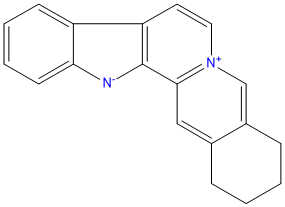
The chemical structure of evergreen gelsemine is the basis of its biological activity. From a chemical classification perspective, it belongs to monoterpene indole alkaloids, whose core skeleton is formed by the condensation of a monoterpene unit derived from a tryptophan (indole moiety) and a secologanin. Specifically, the structural feature of evergreen Gelsemium alkaloids is that they have a five ring system, including an indole ring, a quinoline ring, and an additional nitrogen-containing heterocyclic ring. This unique rigid skeleton endows the molecule with a specific three-dimensional conformation, enabling it to interact specifically with multiple biological targets. Its molecular formula is C ₁₉ H ₁₆ N ₂, molecular weight is 272.3510 g/mol, and CAS number is 6882-99-1.
In terms of physical and chemical properties, Evergreen Gelsemium alkaloids exhibit some typical characteristics of alkaloids. Its lipid water partition coefficient (LogP) is 1.6110, indicating that the molecule has a certain lipophilicity, which is beneficial for its penetration of cell membranes and biological barriers. The topologically polar surface area (TPSA) is only 18.2000 Å ², far below the recommended upper limit of 140 Å ² for oral medications, which is highly correlated with its good membrane permeability. The water solubility data (0.0182 mg/mL) shows that its solubility in water is low, which may affect its formulation development and bioavailability. It is worth noting that the blood-brain barrier (BBB) penetration of this compound has been evaluated as "high", which is closely related to its traditional applications in the nervous system (such as analgesia), but also suggests that it may be accompanied by corresponding neurotoxic risks when exerting central nervous system effects. In addition, hERG inhibition is predicted as' no ', indicating a low risk of causing cardiac QT interval prolongation and arrhythmia, which is a favorable safety signal. The Ames test result (1.8) suggests that it may have a certain genetic toxicity risk, which requires strict evaluation and validation in subsequent drug development.
Plant sources and extraction methods
The evergreen gelsemine mainly comes from the genus Gelsemium in the Loganiaceae family(Gelsemium)Plants. There are about ten species of this genus of plants worldwide, mainly distributed in subtropical and tropical regions of the Americas and Asia. among which,Gelsemium sempervirens The evergreen hemlock, also known as Carolina jasmine, is the most extensively studied and widely used species, native to southeastern North America. In addition, in Asia Gelsemium elegans(Gelsemium elegans, commonly known as intestinal grass) also contains evergreen gelsemine, but the content may vary depending on the place of origin, harvest season, and plant part. Usually, evergreen gelsemine is mainly enriched in the roots and rhizomes of plants, with relatively low levels in the aboveground parts.
The traditional method of extracting alkaloids from plant materials is mostly based on the principle of acid-base extraction of alkaloids. The typical process is as follows: first, soak or percolate the dried and crushed plant roots in an acidic aqueous solution (such as 0.5-2% hydrochloric acid or sulfuric acid) to dissolve the alkaloids in salt form. After filtration, adjust the acidic extract to alkaline (pH 9-10) with alkali (such as ammonia or sodium hydroxide) to allow free alkaloids to precipitate. Subsequently, multiple extractions were performed using organic solvents that are immiscible with water, such as chloroform, dichloromethane, or ethyl acetate, to transfer the free alkaloids to the organic phase. Combine the organic phases, dry with anhydrous sodium sulfate, and concentrate under reduced pressure to obtain the crude extract of total alkaloids.
In order to obtain high-purity turmeric alkaloids, further separation and purification of the total alkaloids are required. Classic separation methods include silica gel column chromatography, alumina column chromatography, and preparative thin-layer chromatography. Due to the similarity in structure and little difference in polarity between evergreen gelsemine and other gelsemine alkaloids (such as gelsemin seed, gelsemin A, etc.), gradient elution or multiple chromatography are required to achieve satisfactory separation results. In recent years, modern separation techniques such as high-performance liquid chromatography (HPLC) and high-speed countercurrent chromatography (HSCCC) have also been applied to the purification of turmeric alkaloids. These methods have the advantages of high separation efficiency and automated operation, and can quickly obtain high-purity target compounds. In addition, with the increasing emphasis on sustainable development and green chemistry, some new extraction technologies, such as ultrasound assisted extraction, microwave-assisted extraction, and supercritical fluid extraction, have also been explored to improve the extraction efficiency and yield of turmeric alkaloids and reduce the use of organic solvents.
Pharmacological activity research
Antitumor activity
One of the most notable pharmacological activities of evergreen gelsemine is its significant anti-tumor effect. In vitro cell experiments have shown that turmeric alkaloids have strong proliferative inhibitory activity against various human tumor cell lines. Specifically, its 50% inhibitory concentration (EC ≮₀) on Burkitt lymphoma cell line Raji, human breast cancer cell line MDA-MB-231 and human cervical cancer cell line HeLa reached 2.7 μ M, 1.77 μ M and 1.96 μ M respectively. These values indicate that evergreen gelsemine can effectively inhibit the growth of these tumor cells at the micromolar level, demonstrating strong cytotoxicity potential. In particular, MDA-MB-231 is a triple negative breast cancer cell line, which has high resistance to conventional chemotherapy drugs, and the activity of evergreens gelsemine on it is of particular concern.
Further mechanistic studies have revealed that the pathway through which turmeric alkaloids induce tumor cell death may involve multiple mechanisms. Preliminary evidence suggests that it can induce apoptosis in tumor cells, manifested as nuclear condensation, DNA fragmentation, and activation of Caspase family proteases. At the same time, some studies suggest that turmeric alkaloids may inhibit tumor cell proliferation by inducing cell cycle arrest, such as blocking cells in the G0/G1 or G2/M phases. In addition, given the structure of its indole alkaloids, some studies speculate that it may exert cytotoxic effects by embedding into the DNA double helix structure, interfering with DNA replication and transcription. However, the exact molecular targets of its anti-tumor activity are currently not fully understood and require further research.
Analgesic activity
In addition to its anti-tumor effect, the analgesic activity of turmeric alkaloids is another core pharmacological action, which is consistent with its application in traditional medicine. Early pharmacological studies mainly used classic pain models, such as hot plate method, acetic acid writhing method, and formalin test, to verify the analgesic effect of turmeric alkaloids in rodents. The results showed that evergreen gelsemine can significantly increase the pain threshold of animals, reduce pain behavioral responses, and its analgesic effect is dose-dependent.
Modern research has further revealed the complex mechanism of its analgesic effect. Unlike traditional opioid analgesics, the analgesic effect of turmeric alkaloids is not solely dependent on the μ - opioid receptor (OPRM1). Research has shown that it may exert a synergistic analgesic effect by simultaneously acting on multiple targets related to pain signal transduction. These targets include transient receptor potential vanillic acid subtype 1 (TRPV1) and anchor protein repeat domain 1 (TRPA1), which are key ion channels for sensing and conducting thermal pain, chemical pain, and inflammatory pain; Cannabinoid receptor 1 (CNR1) is involved in the analgesic regulation of the endogenous cannabinoid system; The δ - opioid receptor (OPRD1) and the κ - opioid receptor (OPRK1), as well as the dopamine D2 receptor (DRD2), are closely related to central and peripheral pain regulation pathways. In addition, turmeric alkaloids may also exert peripheral anti-inflammatory and analgesic effects by inhibiting the activity of cyclooxygenase-1 (PTGS1) and cyclooxygenase-2 (PTGS2), reducing the synthesis of prostaglandins. Meanwhile, its potential impact on the 5-hydroxytryptamine transporter (SLC6A4) may also be involved in pain regulation by modulating the 5-hydroxytryptamine pathway. This multi-target mode of action may provide unique advantages for the treatment of complex pain (such as neuropathic pain) with turmeric alkaloids, and may reduce the common tolerance and dependence of single target drugs.
Mechanism of action and molecular targets
The pharmacological activity of evergreen gelsemine originates from its interactions with various biomolecules. A deep understanding of its mechanism of action and molecular targets is crucial for developing it into safe and effective drugs.
Antitumor mechanism: The anti-tumor mechanism of evergreen gelsemine is still an active research field. In addition to inducing apoptosis and cell cycle arrest mentioned above, increasing evidence suggests that it may exert its effects by interfering with key signaling pathways within cells. For example, studies have suggested that the evergreen gelsemine can inhibit the activity of the PI3K/Akt/mTOR signaling pathway. This pathway plays a central regulatory role in cell growth, proliferation, and survival, and its abnormal activation is a common feature of many cancers. By inhibiting this pathway, turmeric alkaloids can weaken the survival signal of tumor cells and enhance their sensitivity to apoptosis. In addition, evergreen gelsemine may also induce cell apoptosis by activating stress kinase pathways such as p38 MAPK and JNK. Another noteworthy mechanism is its inhibitory effect on topoisomerase. Topoisomerase is a key enzyme in DNA replication and transcription processes, and many effective anti-cancer drugs (such as camptothecin and etoposide) work by inhibiting topoisomerase. Preliminary molecular docking and enzyme activity experiments indicate that the evergreen gelsemine may have the potential to inhibit topoisomerase I or II, causing DNA damage and ultimately leading to cell death.
Analgesic mechanism: The analgesic mechanism of evergreen gelsemine exhibits typical multi-target and multi pathway characteristics. Its interaction with TRPV1 and TRPA1 is particularly critical. TRPV1 and TRPA1 are non selective cation channels expressed on primary sensory neurons, which can be activated by capsaicin, mustard oil, hypothermia (TRPA1), and various inflammatory mediators, mediating the generation and transmission of pain signals. Evergreen Gelsemium alkaloids may act as antagonists or modulators of these channels, directly blocking the transmission of pain signals. Meanwhile, its activation or partial activation of cannabinoid receptors (CB1) and opioid receptors (δ, κ) can activate the endogenous analgesic system and inhibit the transmission of pain signals at both central and peripheral levels. In addition, inhibiting COX-1/COX-2 and reducing the production of peripheral inflammatory mediators are the basis for its peripheral anti-inflammatory and analgesic effects. This multi-target synergistic mode of action enables the production of significant analgesic effects at lower doses of turmeric alkaloids, and may avoid common side effects of single target drugs (such as opioid drugs), such as respiratory depression, addiction, and gastrointestinal reactions.
Summary of molecular targets: Based on existing research, the molecular targets of turmeric alkaloids can be classified into the following categories:
1. Ion channel: TRPV1, TRPA1。
2. G protein coupled receptor (GPCR): CNR1 (CB1), OPRD1 (delta opioid receptor), OPRK1 (kappa opioid receptor), OPRM1 (μ - opioid receptor), DRD2 (dopamine D2 receptor).
3. Enzyme: PTGS1 (COX-1), PTGS2 (COX-2), Topoisomerase.
4. Transporter: SLC6A4 (5-hydroxytryptamine transporter).
5. Signal pathway proteins: PI3K, Akt, mTOR, p38 MAPK, JNK。
This multi-target action characteristic not only serves as the basis for the pharmacological activity of turmeric alkaloids, but also lays the groundwork for their potential toxic side effects. Therefore, future research needs to more accurately analyze its binding patterns, affinity, and functional effects (excitatory/antagonistic/allosteric regulation) on various targets, in order to provide guidance for designing more selective and less toxic derivatives.
Evaluation of drug properties and pharmacokinetics
A comprehensive evaluation of the pharmacological properties of evergreen gelsemine is required to transform it from a natural product into a clinical drug. According to the provided data, its pharmacological parameters exhibit a characteristic of both advantages and disadvantages.
Beneficial aspects: The molecular weight (272.35 Da) meets the requirement of less than 500 Da in the Lipinski Five Rules, which is beneficial for oral absorption. LogP (1.61) is moderate, balancing water solubility and fat solubility. TPSA (18.2 Å ²) is very small, indicating excellent biofilm permeability, including penetration through the blood-brain barrier. High BBB penetration is an advantage for the development of central nervous system drugs, such as analgesics. HERG inhibition has a low risk and reduces the potential hazards of cardiac toxicity.
Disadvantage: The extremely poor water solubility (0.0182 mg/mL) will be the main challenge in the development of oral formulations. Low water solubility not only affects the dissolution and absorption of drugs, leading to low bioavailability, but may also increase food effects and individual differences. The positive result of Ames test (1.8) suggests that it may have genetic toxicity, which is a serious safety issue that requires confirmation and risk assessment through more comprehensive genetic toxicity tests (such as in vivo micronucleus test, chromosome aberration test) in the early stages of drug development.
Pharmacokinetic characteristics: At present, there is relatively limited publicly available data on the pharmacokinetics (ADME) of turmeric alkaloids in vivo. Based on its physical and chemical properties, it can be inferred that:
- Absorption: Due to its high permeability and low water solubility, the oral absorption of turmeric alkaloids may be a dissolution rate limiting process. The degree of absorption may not be complete and there may be significant individual differences.
- Distribution: High lipophilicity and BBB penetration indicate a large apparent distribution volume (Vd), which can be widely distributed in tissues throughout the body, especially in brain tissue.
- Metabolism: As a small molecule alkaloid, turmeric alkaloids are likely to undergo oxidative metabolism in the liver through cytochrome P450 (CYP450) enzyme systems (such as CYP3A4, CYP2D6, etc.), and may also undergo glucuronidation or sulfation binding reactions. Its metabolites may have activity or toxicity.
- Excretion: Metabolites and small amounts of prototype drugs may be excreted from the body through the kidneys (urine) and/or bile (feces).
In order to promote the clinical development of turmeric alkaloids, future pharmacokinetic studies need to focus on the following aspects: developing appropriate formulation technologies (such as solid dispersions, nanocrystals, liposomes, etc.) to improve their oral bioavailability; Conduct comprehensive in vivo pharmacokinetic experiments to determine the blood drug concentration time curve, bioavailability, distribution, metabolism, and excretion characteristics in animals; Identify its main metabolites and evaluate their pharmacological activity and toxicity; Assess its potential drug drug interaction risks.
Clinical application prospects and prospects
The unique pharmacological activity spectrum of evergreen gelsemine has shown potential clinical application prospects in multiple therapeutic fields.
In the field of anti-tumor: The strong activity of gelsemine on a variety of tumor cells, especially on triple negative breast cancer cells (MDA-MB-231), makes it a candidate molecule for developing new anti-tumor drugs. In the future, the possibility of using it as a monotherapy or in combination with other chemotherapy drugs or targeted drugs can be explored. Structural modification, such as introducing hydrophilic groups to improve water solubility, or changing specific functional groups to enhance selectivity towards tumor cells and reduce toxicity towards normal cells, is a key direction for the development of turmeric alkaloids as anti-tumor drugs. In addition, using nano drug delivery systems to target the delivery of turmeric alkaloids to tumor sites is also an effective strategy to improve efficacy and reduce systemic toxicity.
Pain relief field: Given its multi-target analgesic mechanism, turmeric alkaloids have great potential in treating chronic pain, especially neuropathic pain and inflammatory pain. This type of pain usually has poor response or serious side effects to traditional nonsteroidal anti-inflammatory drugs (NSAIDs) and opioid drugs. By simultaneously acting on multiple targets such as TRPV1, cannabinoid receptors, and opioid receptors, evergreen gelsemine may provide a novel and less side effect pain management approach. However, the central nervous system side effects caused by its high BBB penetration, such as dizziness, muscle weakness, respiratory depression, etc., are key issues that need to be addressed. By optimizing the structure, designing derivatives that selectively act on peripheral targets (such as peripheral TRPV1) but cannot penetrate the BBB may be the key to developing safe and effective non addictive analgesics.
Challenges and Future Directions Faced:
1. Toxicity issue: As one of the main toxic components of the Gelsemium genus plants, the therapeutic window of evergreen Gelsemium alkaloids may be relatively narrow. The positive result of Ames test also sounded the alarm. Future research must systematically evaluate its acute toxicity, chronic toxicity, reproductive toxicity, and neurotoxicity, and clarify its toxic target organs and mechanisms.
2. Poor water solubility: This is the biggest bottleneck that restricts its medicinal properties. We need to develop advanced drug delivery systems or conduct prodrug design.
3. Mechanism unclear: Although it is known to act on multiple targets, the contribution of each target to the overall pharmacological effect, the interactions between targets, and the key targets mediating its toxicity are still unclear. Advanced technologies such as gene knockout animal models and chemical proteomics are needed for in-depth exploration.
4. Structure performance relationship research: The system conducts structure-activity relationship (SAR) research on the evergreen gelsemine, synthesizing a series of structurally similar compounds to clarify which structural fragments are necessary for activity and which lead to toxicity, thereby guiding the design and synthesis of safer and more effective derivatives.
Conclusion
Evergreen Gelsemine, an indole alkaloid derived from ancient medicinal plants, is undergoing a profound transformation from traditional empirical medicine to modern precision pharmacological research. Its unique chemical structure endows it with the potential to simultaneously act in both anti-tumor and analgesic therapeutic fields. In vitro experiments have confirmed its significant inhibitory effect on various tumor cells, while research on its analgesic mechanism has revealed a complex network of multi-target and multi pathway synergistic effects. However, the path from laboratory discovery to clinical application remains challenging. Its extremely poor water solubility, potential genetic toxicity, and narrow therapeutic window are the main obstacles facing current drug development.
Future research should focus on the following core directions: firstly, through in-depth structure-activity relationship studies and medicinal chemical modifications, design and synthesize derivatives of turmeric alkaloids with higher selectivity, lower toxicity, and better pharmacokinetic properties; The second is to use modern molecular biology and pharmacology techniques to precisely elucidate the key molecular targets and signaling pathways of its anti-tumor and analgesic effects, providing a theoretical basis for precision drug design; The third is to develop innovative drug delivery systems to solve the problem of poor water solubility and achieve targeted delivery. Although the road ahead is long, the unique pharmacological activity exhibited by evergreen gelsemine undoubtedly provides new ideas and candidate molecules for overcoming the two major medical challenges of cancer and chronic pain. With the continuous deepening of research, we have reason to expect that this ancient natural product will eventually radiate new vitality and contribute to the cause of human health.