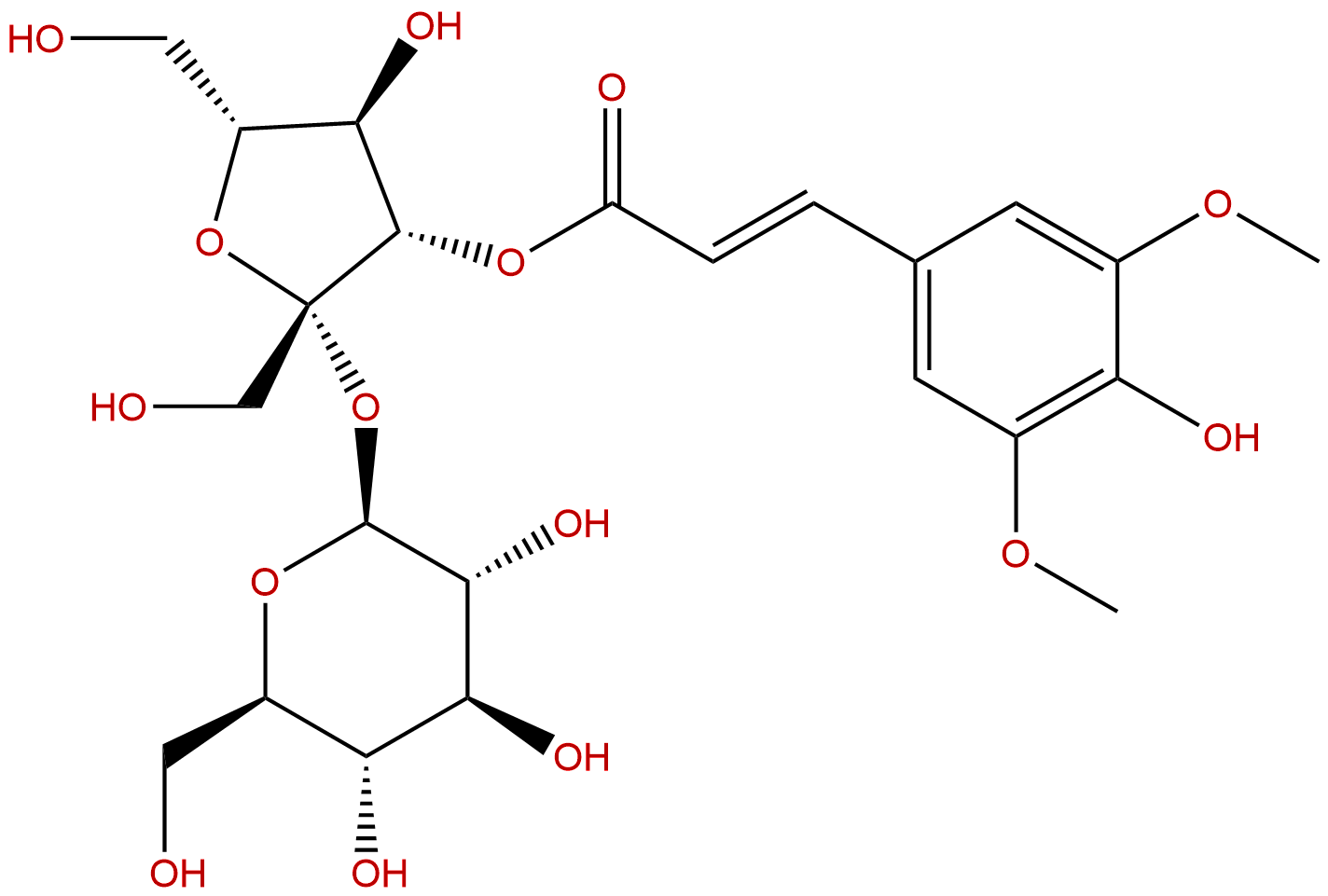


Product name: Sibiricose A6
Synonym name:
Catalogue No.: BP1734
Cas No.: 241125-75-7
Formula: C23H32O15
Mol Weight: 548.494
Botanical Source: Polygala sibirica; Polygala tenuifolia
Physical Description: Powder
Type of Compound: Phenylpropanoids
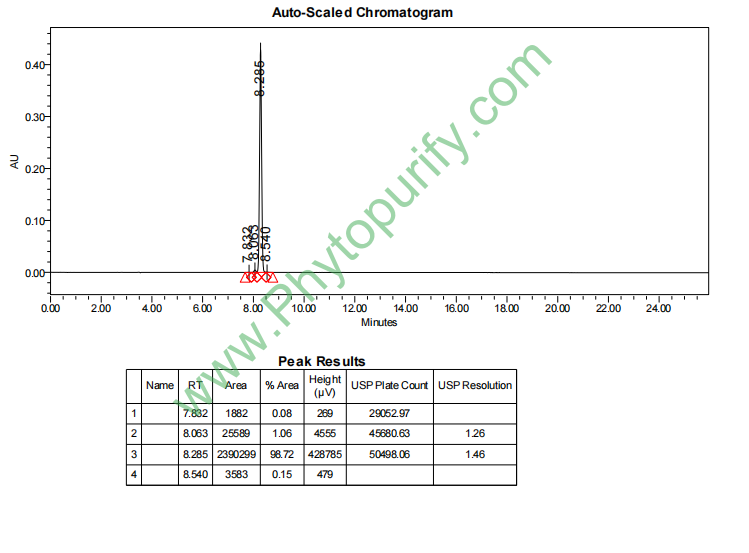
Purity: 95%~99%
Analysis Method: HPLC-DAD or/and HPLC-ELSD
Identification Method: Mass, NMR
Packing: Brown vial or HDPE plastic bottle
The product could be supplied from milligrams to grams. Inquire for bulk scale.
We provide solution to improve the water-solubility of compounds, thereby facilitating the variety of activity tests and clinic uses.
For Reference Standard and R&D, Not for Human Use Directly.
HPLC of Sibiricose A6
Storage conditions:Short-term storage at 2~8℃, long-term storage at -20 ~ -80℃
234.2900
-1.0959
-1.0978
12.8976
.4621
.1860
Low
48.6253
4.6573
Yes
No
No
No
No
No
0.0
Yes
Yes
Yes
Yes
In the field of natural product chemistry and pharmacology research, medicinal plants have always been an important source of new drug discovery and development due to their rich structural diversity and significant biological activity. The plants of the genus Polygalae in the family Polygalaceae, especially their dried roots (Polygalae Radix), have a long history of application in traditional medicine. They are commonly used for calming the mind, improving intelligence, dispelling phlegm, and opening the orifices. Modern research has also confirmed their potential value in the treatment of neurological diseases, especially depression. Sibiricose A6 (CAS: 241125-75-7) is a representative oligosaccharide ester compound isolated from Polygala tenuifolia. In recent years, with the deepening understanding of the pathophysiological mechanisms of depression and the increasing emphasis on the key role of combating oxidative stress in neurological and psychiatric disorders, natural products with both antioxidant and multi-target regulatory potential have attracted much attention. Siberian Polygalaceae glycoside A6, as one of the important active ingredients in Polygalaceae for neuroprotective and antidepressant effects, has a unique chemical structure, clear antioxidant activity, and potential interactions with various depression related targets, making it an important molecule in the research of natural antidepressant drugs. This article aims to systematically review the chemical properties, plant sources, pharmacological activities, mechanisms of action, pharmacological evaluation, and clinical application prospects of Siberian Polygalaceae glycoside A6, in order to provide comprehensive scientific references for the in-depth research and development of this compound.
Siberian Polygalaceae glycoside A6 is a structurally complex oligosaccharide ester. Its molecular formula is C23H32O14 and its molecular weight is 548.4940. Structurally, it belongs to trisaccharide ester compounds, with a core composed of a glucose unit. The specific hydroxyl position of the glucose is connected to a benzoyl group, forming ester bonds. At the same time, glucose is also connected to other sugar units (such as xylose, xylose, etc., depending on the isomer) through glycosidic bonds, forming a typical "sugar nucleus acyl" modified oligosaccharide ester skeleton. This structure is a characteristic active ingredient in plants of the Euphorbia genus, endowing the molecule with a certain polarity and specific spatial conformation.
Based on its chemical structure, Siberian Polygalaceae glycoside A6 exhibits specific physicochemical properties. The calculated lipid water partition coefficient (LogP) is -1.0959, indicating that the compound has a high degree of hydrophilicity, which is consistent with the structural characteristics of the molecule containing multiple hydroxyl and sugar units. The topologically polar surface area (TPSA) is as high as 234.2900 Å ², further confirming its strong polarity characteristics, which can affect its transmembrane absorption and distribution. Its water solubility value is 12.8976 (usually measured in mg/mL or logS), indicating good solubility in water. These physicochemical parameters collectively point to a typical hydrophilic, highly polar natural product molecule, which has a decisive impact on its bioavailability and pharmacokinetic behavior.
Siberian Polygalaceae glycoside A6 mainly comes from the dried roots of various plants in the Polygalaceae family, namely the traditional Chinese medicine "Polygalaceae". Commonly used primitive plants include Polygala tenuifolia Willd and Polygala sibirica L Wait. Among them, the name 'Siberian Yuanzhi' comes from the epithet of 'Egg Leaf Yuanzhi'. Yuanzhi, as a traditional Chinese medicine, is rich in various chemical components such as saponins, oligosaccharides, ketones, and alkaloids in its medicinal roots. Oligosaccharides are considered one of the important material bases for its neuropsychiatric activity.
The extraction and isolation of Siberian Polygalaceae glycoside A6 from plant materials usually follow the conventional process of natural product chemistry. Firstly, polar solvents are used to extract the dried powder of Eucommia ulmoides roots. Common methods include:
1. Solvent extraction method Use methanol, ethanol, or ethanol water solutions of different proportions for reflux extraction or ultrasound assisted extraction to maximize the extraction of polar oligosaccharide ester components.
2. Preliminary enrichment After vacuum concentration of the extract, the resulting paste is often subjected to gradient extraction using solvents such as petroleum ether, ethyl acetate, n-butanol, etc. Siberian Polygalaceae glycoside A6 is mainly enriched in n-butanol extraction sites or water layers due to its strong hydrophilicity.
3. Separation and purification Further chromatographic separation of the parts rich in oligosaccharide esters. Silica gel column chromatography, reversed phase silica gel (such as ODS) column chromatography, dextran gel (such as Sephadex LH-20) column chromatography are often used for crude separation. The final acquisition of high-purity monomeric compounds highly relies on high-performance liquid chromatography techniques, especially preparative or semi preparative reverse phase high-performance liquid chromatography, which uses methanol water or acetonitrile water as the mobile phase for gradient elution.
4. Structural Identification The isolated pure compound was structurally identified using modern spectroscopic techniques, including nuclear magnetic resonance (1H-NMR, 13C-NMR, 2D-NMR such as HSQC, HMBC, COSY), mass spectrometry (ESI-MS, HR-ESI-MS), and optical rotation determination, and ultimately determined to be Siberian Polygalacoside A6.
The pharmacological activity research of Siberian Polygalaceae glycoside A6 is currently in its early stages, but it has shown various biological activities, especially in the fields of nervous system protection and related diseases.
antioxidant activity This is the earliest reported and relatively clear activity of Siberian Polygalaceae glycoside A6. Research has shown that this compound exhibits significant activity in various in vitro antioxidant models, such as DPPH radical scavenging, ABTS radical scavenging, superoxide anion scavenging, and iron ion reduction assays. Its antioxidant capacity may stem from the phenolic hydroxyl groups (derived from the benzoyl moiety) in its structure and the hydroxyl groups on its sugar units, which can act as hydrogen donors, neutralize free radicals, and interrupt oxidative chain reactions. In cell models, it can alleviate neuronal oxidative damage caused by hydrogen peroxide (H2O2) or other oxidative stress inducers, increase cell survival rate, reduce intracellular reactive oxygen species (ROS) levels and lipid peroxidation products (such as MDA) content, while enhancing the activity of endogenous antioxidant enzymes such as superoxide dismutase (SOD) and glutathione peroxidase (GSH Px).
Neuroprotective effect Based on its antioxidant properties, Siberian Polygalaceae glycoside A6 exhibits protective effects in various neural injury models. In addition to combating oxidative stress-induced neuronal apoptosis, research also suggests that it may have a mitigating effect on Alzheimer's disease-related pathological damage such as glutamate excitotoxicity and beta amyloid (A β) toxicity. Its neuroprotective mechanism is related to maintaining mitochondrial function, inhibiting the activation of apoptotic pathways such as caspase-3, and regulating the expression of neurotrophic factors.
Potential antidepressant activity Although there are insufficient public reports on the direct and systematic antidepressant behavioral evaluation of Siberian Polygalaceae glycoside A6 monomer (such as forced swimming test, tail suspension test, chronic unpredictable mild stress model), the following points support its antidepressant potential: firstly, it originates from the traditional Chinese medicine Polygalaceae with clear antidepressant efficacy, and is one of the important components of the antidepressant active site (oligosaccharide ester site) of Polygalaceae. Secondly, its antioxidant stress response is highly consistent with the "oxidative stress hypothesis" of depression, where there is a significant oxidative antioxidant imbalance in specific regions of the brain in patients with depression. Finally, as mentioned later, research on its mechanism of action suggests that it can be associated with multiple depression related targets.
Other activities Preliminary studies have also explored its role in anti-inflammatory, improving learning and memory, and other aspects. These activities complement its neuroprotective effects, together forming the modern scientific connotation of Yuanzhi's "intelligence enhancing and calming" effect.
The antidepressant and related neuroprotective effects of Siberian Polygalaceae glycoside A6 may be achieved through multi-target and multi pathway synergy, involving the monoaminergic system, neurotrophic system, neuroplasticity, and related signaling pathways.
Regulating the monoamine neurotransmitter system This is the main pathway of action of classic antidepressants. Siberian Polygalaceae glycoside A6 may have an impact through the following ways:
Enhancing neuroplasticity and providing neurotrophic support:
Regulating the GABAergic system Gamma aminobutyric acid type A receptor (GABRA1) is the main inhibitory receptor in the central nervous system. Depression is often accompanied by dysfunction of the GABAergic system. Siberian Polygalaceae glycoside A6 may have anti anxiety and mood stabilizing effects by positively regulating the function of GABAA receptors, restoring the balance of inhibitory neurotransmission.
Core mechanism: antioxidant stress The normal function of all the targets and pathways mentioned above may be disrupted by oxidative stress. The strong antioxidant capacity of Siberian Polygalaceae glycoside A6 is attributed to its multi-target regulatory effect Basic and protective mechanisms By directly clearing free radicals and enhancing the endogenous antioxidant defense system, it can protect neurons from oxidative damage, maintain mitochondrial function, and provide a stable cellular environment for the normal operation of the monoaminergic system and neurotrophic signaling pathways.
In summary, Siberian Polygalaceae glycoside A6 may act synergistically on multiple targets such as MAOA/B, SLC6A4, HTR1A, GSK3B, CREB1/BDNF, GABRA1, etc. in a "network pharmacology" manner, with antioxidant as the cornerstone, to collectively correct depression related neurobiochemical, endocrine, and plasticity abnormalities.
Based on calculations and preliminary experimental data, a preliminary evaluation of the pharmacological properties of Siberian Polygalaceae glycoside A6 is conducted
Preliminary analysis of drug properties:
Absorption, distribution, metabolism, excretion (ADME) prediction:
Summary of Medicinal Properties Siberian Polygalaceae glycoside A6 has clear biological activity and multi-target potential, and its preliminary safety prediction is good. However, it The poor oral absorption and weak blood-brain barrier penetration caused by polar physicochemical properties are the main bottlenecks in its development into neurological drugs Future research needs to validate these predictions through experimental pharmacokinetic studies (measuring in vivo drug time curves, tissue distribution, cerebrospinal fluid/plasma concentration ratios, etc.), and actively explore formulation strategies (such as phospholipid complexes, nanoparticles, liposomes, prodrug modifications, etc.) to improve their bioavailability and brain targeting.
The clinical application prospects of Siberian Polygalaceae glycoside A6 are closely related to its unique pharmacological properties, but it also faces many challenges.
Potential application directions:
challenges faced:
Future research directions and prospects:
Siberian Polygalaceae glycoside A6, as a representative oligosaccharide ester active ingredient in Polygalaceae, has become a promising candidate molecule in natural product antidepressant research due to its clear antioxidant activity and multi-target regulatory potential related to multiple key pathological processes of depression, such as monoaminergic dysregulation, malnutrition, and oxidative stress. It reflects the value of the therapeutic concept of "multi-component, multi-target, and holistic regulation" of traditional Chinese medicine in modern drug discovery. However, its inherent strong hydrophilicity and low blood-brain barrier permeability are major obstacles that must be overcome to translate its activity into clinical efficacy. Future research needs to focus on improving its drug properties through drug chemical modification and advanced formulation techniques, based on a thorough elucidation of its precise molecular mechanisms. Only by deeply integrating the wisdom of traditional natural products with modern drug development technology can Siberian Polygalaceae glycoside A6 potentially move from the laboratory to clinical practice, providing new options for the treatment of neurological disorders such as depression.
