Introduction/Overview
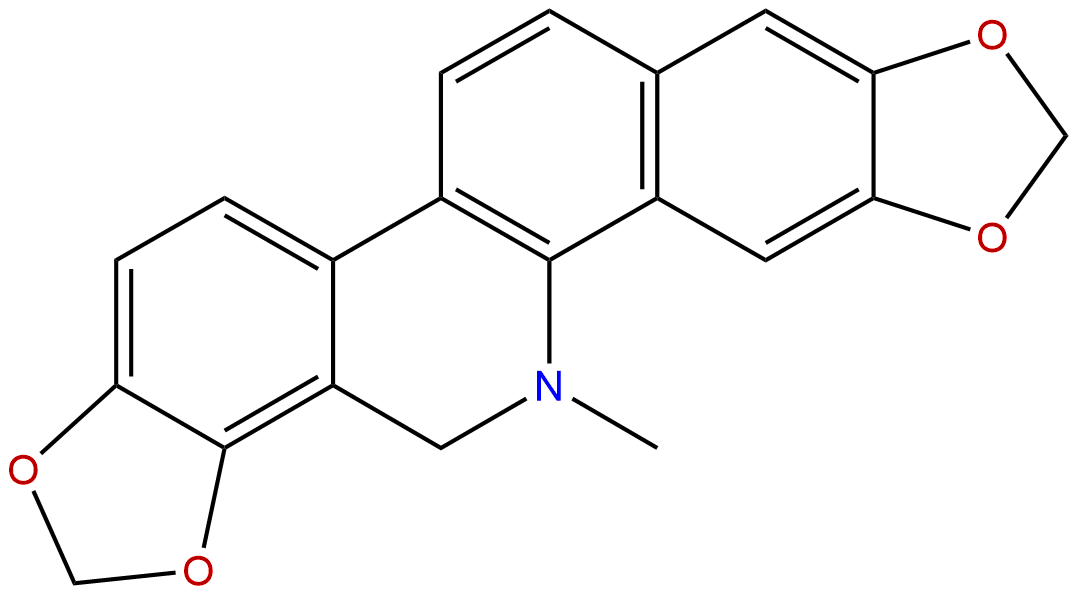
Natural products have long been an important source of innovative drug discovery, and their structural diversity and wide range of biological activities provide unique molecular frameworks for addressing various disease challenges. Isoquinoline alkaloids, as one of the important active ingredients, have attracted much attention due to their significant pharmacological effects. Dihydrosanguinarine (CAS number: 3606-45-9) is a reduced form of sanguinarine and a tetracyclic isoquinoline alkaloid with a benzo [c] phenanthridine skeleton. Early research focused on its prototype compound, sanguinarine, which is known for its anti-inflammatory, antibacterial, and anti-tumor activities. However, in recent years, dihydrosanguinarine has gradually entered the research field due to its unique chemical stability and diverse biological activities. It was initially reported to be extracted from the leaves of Ficus spp., and subsequent studies have also found its presence in various plants such as the Papaveraceae family (such as the Boluohui genus). Research has shown that dihydrosanguinarine exhibits various pharmacological activities, including antimicrobial (especially antifungal), anti proliferative, and anti-inflammatory effects, indicating its potential application value in fields such as anti infection and anti-tumor. This article aims to systematically review the chemical structure, plant origin, pharmacological activity, mechanism of action, and pharmacological characteristics of dihydrosanguinarine, in order to provide comprehensive scientific references for the in-depth research and development of this compound.
Chemical structure and physicochemical properties
The molecular formula of dihydrosanguinarine is C20H15NO4, with a molecular weight of 333.3430. Its core structure is benzo [c] phenanthridine, which is the product of the reduction reaction of Sanguinarine at the C-6 position (from imine ion to secondary amine). This structural transformation resulted in the loss of the planar quaternary ammonium salt conjugated system of sanguinarine, significantly altering its physicochemical properties and biological activity.
Compared to sanguinarine, dihydrosanguinarine has more stable chemical properties. Blood root alkaloids mainly exist in the form of zwitterionic or quaternary ammonium salts at physiological pH, are sensitive to light, and are prone to undergo ring opening reactions. The reduced secondary amine structure of dihydrosanguinarine makes it more inert in neutral environments, reducing non-specific reactions, which may be beneficial for its stable existence in living organisms.
From the perspective of pharmacological parameters, the lipid water partition coefficient (LogP) of dihydrosanguinarine is 4.3316, indicating its high lipophilicity. Its topological polar surface area (TPSA) is 40.1600 Å ², which is relatively small. These parameters collectively determine its extremely low water solubility (approximately 0.0003 mg/mL), which may be one of the main challenges facing its oral absorption and formulation development. On the other hand, higher lipophilicity also suggests that it may have good cell membrane penetration ability. It is worth noting that the calculated prediction of its blood-brain barrier permeability is "high", indicating that the compound has the potential to act on central nervous system related targets. On early safety indicators, the predicted risk of hERG inhibition was' no ', reducing the potential risk of causing QT interval prolongation in the heart. However, the Ames test value of 1.8 suggests a possible slight risk of mutagenicity, which is a safety aspect that needs to be evaluated in subsequent development.
Plant sources and extraction methods
Dihydrosanguinarine is relatively widely distributed in nature, but its content is usually lower than its oxidized form sanguinarine. Its main plant sources include:
1. Mulberry family Ficus genus plants The leaves of various Ficus spp. were one of the first reported sources of isolation.
2. Papaveraceae plants This is the classic source of benzo [c] phenanthridine alkaloids. In plants such as Macleaya cordata, Sanguinaria canadensis, and Chelidonium majus, it often coexists with sanguinarine.
3. Other families and genera There are also sporadic reports in some Rutaceae and Annonaceae plants.
The extraction method usually follows the general process of natural alkaloids. Firstly, extract or percolate the plant materials (dried, crushed) using polar organic solvents such as methanol, ethanol, or acidified methanol. After the crude extract is concentrated under reduced pressure, it is dissolved in an acidic aqueous solution (such as dilute hydrochloric acid) to convert the alkaloids into salts and transfer them into the aqueous phase. Subsequently, liquid-liquid extraction was performed using organic solvents such as chloroform and dichloromethane to remove lipophilic impurities. After alkalization of the aqueous phase (such as adjusting to alkalinity with ammonia water), the free alkaloids are extracted again by organic solvents. Finally, high-purity dihydrosanguinarine is obtained through techniques such as silica gel column chromatography, preparative thin-layer chromatography, or high-performance liquid chromatography (HPLC) for separation and purification. In recent years, modern separation techniques such as high-speed countercurrent chromatography have also been applied to improve separation efficiency and yield.
Pharmacological activity research
A large number of in vitro and partially in vivo studies have revealed the diverse pharmacological activities of dihydrosanguinarine, among which antimicrobial and anti proliferative activities are the most prominent.
1. Antimicrobial activity
This is one of the earliest activities of dihydrosanguinarine that received attention, especially for its Antifungal activity famous. Research has shown that it exhibits strong inhibitory activity against various clinically relevant pathogenic fungi, such as Candida albicans, C. glabrata, Cryptococcus neoformans, and some dermatophytes, with MIC values (minimum inhibitory concentration) often in the micromolar range. Its antifungal mechanism may involve disrupting cell membrane integrity and inhibiting ergosterol synthesis. In addition, dihydrosanguinarine also exhibits certain inhibitory effects on certain Gram positive bacteria (such as Staphylococcus aureus) and Gram negative bacteria, but its antibacterial spectrum and efficacy are usually weaker than its antifungal activity.
2. Anti proliferative and anti-tumor activity
Dihydrosanguine can inhibit the growth and induce apoptosis of many human tumor cell lines, including leukemia, liver cancer, breast cancer, colon cancer, lung cancer, etc. Its effect is concentration and time-dependent. Compared with sanguinarine, dihydrosanguinarine may have slightly weaker cytotoxicity, but its mechanism of action may be more complex and unique. Research has shown that it can not only induce cell cycle arrest (such as G0/G1 phase or G2/M phase), but also activate the Caspase cascade reaction through the mitochondrial pathway and endoplasmic reticulum stress pathway, ultimately leading to cell apoptosis.
3. Anti inflammatory and immune regulatory activity
Dihydrosanguinarine exhibits anti-inflammatory potential in various inflammatory models. It can inhibit the excessive production of nitric oxide (NO), prostaglandin E2 (PGE2), and pro-inflammatory cytokines (such as TNF - α, IL-1 β, IL-6) in macrophages induced by stimuli such as lipopolysaccharide (LPS). This effect is closely related to its regulation of key inflammatory signaling pathways such as NF - κ B and MAPK.
4. Other activities
In addition, studies have reported that dihydrosanguinarine has potential activities such as antioxidant, antiparasitic (such as Leishmania parasites), and neuroprotective effects, but research in these areas is still in its early stages and requires further exploration.
Mechanism of action and molecular targets
The multiple pharmacological activities of dihydrosanguinarine stem from its interactions with various biomolecules. According to existing research, its mechanism of action and potential molecular targets can be summarized as follows:
1. Antimicrobial target network
Its antimicrobial activity, especially antifungal activity, involves multi-target effects:
- Cell wall and membrane targets Possible disruption of cell structure and integrity may occur by interfering with the function of fungal cell wall β -1,3-glucan synthase (FKS1 encoding) or key enzymes involved in ergosterol biosynthesis on the cell membrane, such as CYP51 and lanosterol 14 α - demethylase.
- Nucleic acid and protein synthesis targets Similar to other alkaloids, it may inhibit bacterial DNA gyrase (GYRB) or penicillin binding protein (PBP2).
- Innate immune recognition pathway Research suggests that dihydrosanguinarine may affect the host's immune response to pathogenic microorganisms by regulating pattern recognition receptors such as Toll like receptor 4 (TLR4), nucleotide binding oligomeric domain protein 2 (NOD2), and its downstream adaptor protein MYD88, thereby indirectly exerting anti infective effects or regulating infection related inflammation.
- Metabolic enzyme targets Some studies speculate that it may inhibit microbial dihydrofolate reductase (DHFR) and affect folate metabolism.
2. Mechanisms of anti-tumor and anti proliferative effects
- Inducing cell apoptosis This is its core mechanism. Dihydroredone can induce a decrease in mitochondrial membrane potential, release cytochrome C, and activate Caspase-9 and Caspase-3. Meanwhile, it can upregulate pro apoptotic proteins (such as Bax) and downregulate anti apoptotic proteins (such as Bcl-2).
- cell cycle arrest By regulating the expression of cyclins and cyclin dependent kinase inhibitors (such as p21), cells are blocked at specific cycle checkpoints.
- Reactive oxygen species (ROS) generation In various cancer cells, dihydrosanguinarine can induce a large amount of ROS production, leading to oxidative stress and triggering apoptosis signals.
- Signal path interference Significantly inhibit the activation and nuclear translocation of NF - κ B, thereby downregulating its regulated gene expression related to proliferation, survival, and inflammation. It also has a regulatory effect on the MAPK pathway (ERK, JNK, p38) and the PI3K/Akt pathway.
3. Anti inflammatory mechanism
Mainly by inhibiting the NF - κ B and MAPK signaling pathways, the transcription and expression of downstream inflammatory mediators are reduced. Its regulation of the TLR4/MYD88 pathway may play an important role in this process.
Evaluation of drug properties and pharmacokinetics
Despite the attractive biological activity exhibited by dihydrosanguinarine, its pharmacological development still faces a series of challenges, and related pharmacokinetic studies are relatively limited.
1. Advantages and challenges of pharmaceutical properties
- Advantage Moderate molecular weight (333 Da), meeting the basic requirements of the five rules for generic drugs; No hERG inhibition warning, low risk of cardiac toxicity; Higher lipid solubility and blood-brain barrier penetration potential are beneficial for distribution to deep tissues.
- Main challenges:
- Extremely low water solubility This is the biggest bottleneck restricting its oral bioavailability and injectable development. It may be necessary to improve its solubility and dissolution rate through formulation techniques such as making nanocrystals, liposomes, cyclodextrin inclusion complexes, or prodrugs.
- Potential genetic toxicity risk The mutagenic signals (1.8) suggested by Ames test must be confirmed and evaluated through a more comprehensive combination of genetic toxicity tests (such as micronucleus test, chromosome aberration test).
- chemical stability Although more stable than sanguinarine, its degradation still needs to be investigated under specific conditions such as strong light and oxidative environment.
2. pharmacokinetics (based on limited research speculation)
The study of ADME (absorption, distribution, metabolism, excretion) in the system is not yet sufficient on dihydrosanguinarine, but it can be reasonably inferred based on its physicochemical properties and similar compounds:
- absorb A high LogP value suggests that oral absorption may be limited by dissolution rate rather than intestinal permeability. If the formulation can solve the dissolution problem, its absorption may be better.
- distribution High lipophilicity and predicted high blood-brain barrier permeability indicate that it may be widely distributed in the body, easily entering tissues such as the brain and fat, and may have a larger volume distribution.
- Metabolism As an isoquinoline alkaloid, the liver may be its main metabolic site, and it is speculated to undergo phase I oxidation (such as CYP450 enzyme system) and phase II binding (such as glucuronidation and sulfation) reactions. The metabolites, main metabolic enzymes, and whether toxic metabolites are produced urgently need to be studied.
- excretion Metabolites may be mainly excreted through bile and kidneys.
In the future, standardized preclinical pharmacokinetic studies are needed to clarify their absolute bioavailability, half-life, tissue distribution characteristics, and main elimination pathways.
Clinical application prospects and prospects
The multi-target and multi activity properties of dihydrosanguinarine have brought potential application prospects in multiple therapeutic fields, but the transformation still needs to overcome numerous obstacles.
1. Potential application directions
- Development of antifungal drugs Given its broad-spectrum antifungal activity and potential novel mechanisms of action (such as targeting FKS1, CYP51, etc.), dihydrosanguinarine or its structurally optimized derivatives have the potential to be developed for the treatment of drug-resistant fungal infections, particularly systemic candidiasis or cryptococcosis. Consider developing topical formulations (such as for treating skin fungal infections) or developing systemic medication through novel drug delivery systems.
- Antitumor adjuvant therapy It induces apoptosis and inhibits the activity of NF - κ B, making it possible as a chemotherapy sensitizer or for the treatment of certain inflammation related tumors. Combined use with existing chemotherapy drugs may result in synergistic effects, reducing medication dosage and toxic side effects.
- Anti inflammatory and immune related diseases The regulatory effect of TLR4/NF - κ B pathway suggests its exploratory value in the treatment of excessive inflammatory response diseases such as sepsis, rheumatoid arthritis, and inflammatory bowel disease.
- Application in agriculture and animal husbandry As a plant-based pesticide or veterinary drug, it has the potential to be environmentally friendly for preventing and treating crop fungal diseases or animal fungal infections.
2. Future research focus and prospects
- Structural modification and optimization Systematic structural modification is carried out to address its poor water solubility and potential toxicity. For example, preparing water-soluble salts, synthesizing amino acid or peptide conjugated prodrugs, or modifying functional groups on their benzene rings and nitrogen atoms in order to improve pharmacokinetic properties and safety while retaining activity.
- Deep analysis of the mechanism of action Using chemical biology methods such as affinity fishing and proteomics to identify the protein targets directly affected by it, and drawing more accurate target maps to provide a basis for precision medicine.
- Research on a new drug delivery system Actively exploring advanced formulation technologies such as nanoparticles, microemulsions, and solid dispersions to fundamentally solve their delivery challenges.
- Preclinical evaluation of the system Complete standardized pharmacological (especially in vivo models), pharmacokinetic, and toxicological (acute, subchronic, genetic toxicity, reproductive toxicity, etc.) studies, comprehensively evaluate their development risks and benefits.
Conclusion
Dihydrosanguinarine, as a naturally occurring benzo [c] phenanthridine alkaloid, is increasingly receiving attention in the field of natural product pharmacology due to its unique chemical structure and extensive pharmacological activity. Its significant effects in antifungal, anti-tumor, anti-inflammatory and other aspects reveal its enormous potential as a new drug lead compound. However, its inherent physical and chemical properties defects (such as extremely low water solubility) and preliminary safety warnings (Ames test positive) are the main obstacles on its development path. Future research should focus on optimizing the structure through rational drug chemistry strategies, improving its bioavailability using modern formulation technology, and conducting systematic mechanism studies and preclinical evaluations. Only through the joint efforts of multiple disciplines can dihydrosanguinarine be truly transformed from a potential natural active molecule into an effective drug for clinical treatment, thus realizing its medicinal value as a gift from nature.