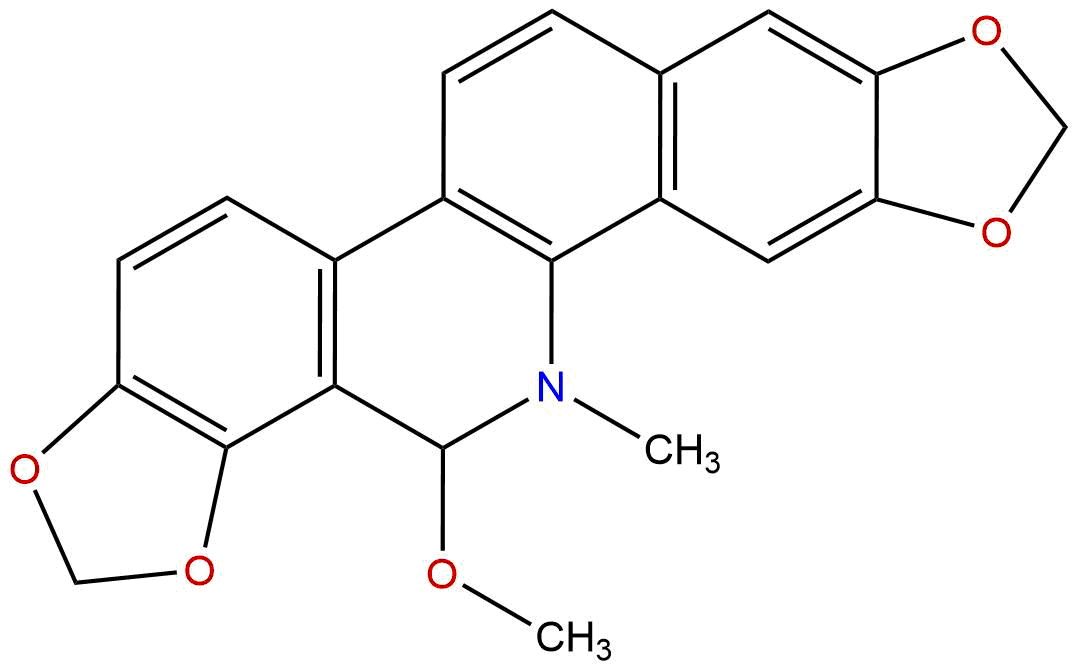


Product name: 6-Methoxydihydrosanguinarine
Synonym name: (±)-6-Methoxyldihydrosanguinarine;(±)-8-Methoxydihydrosanguinarine;CAS:88544-84-7
Catalogue No.: BP2131
Cas No.: 72401-54-8
Formula: C21H17NO5
Mol Weight: 363.369
Botanical Source: Macleaya cordata (Willd.) R. Br.
Type of Compound: Alkaloids
Purity: 95%~99%
Analysis Method: HPLC-DAD or/and HPLC-ELSD
Identification Method: Mass, NMR
Packing: Brown vial or HDPE plastic bottle
Storage: Store in a well closed container, protected from air and light. Put into refrigerate or freeze for long term storage.
Whenever possible, you should prepare and use solutions on the same day. However, if you need to make up stock solutions in advance, we recommend that you store the solution as aliquots in tightly sealed vials at -20℃. Generally, these will be useable for up to two weeks.
The product could be supplied from milligrams to grams
Inquire for bulk scale.
For Reference Standard and R&D, Not for Human Use Directly.
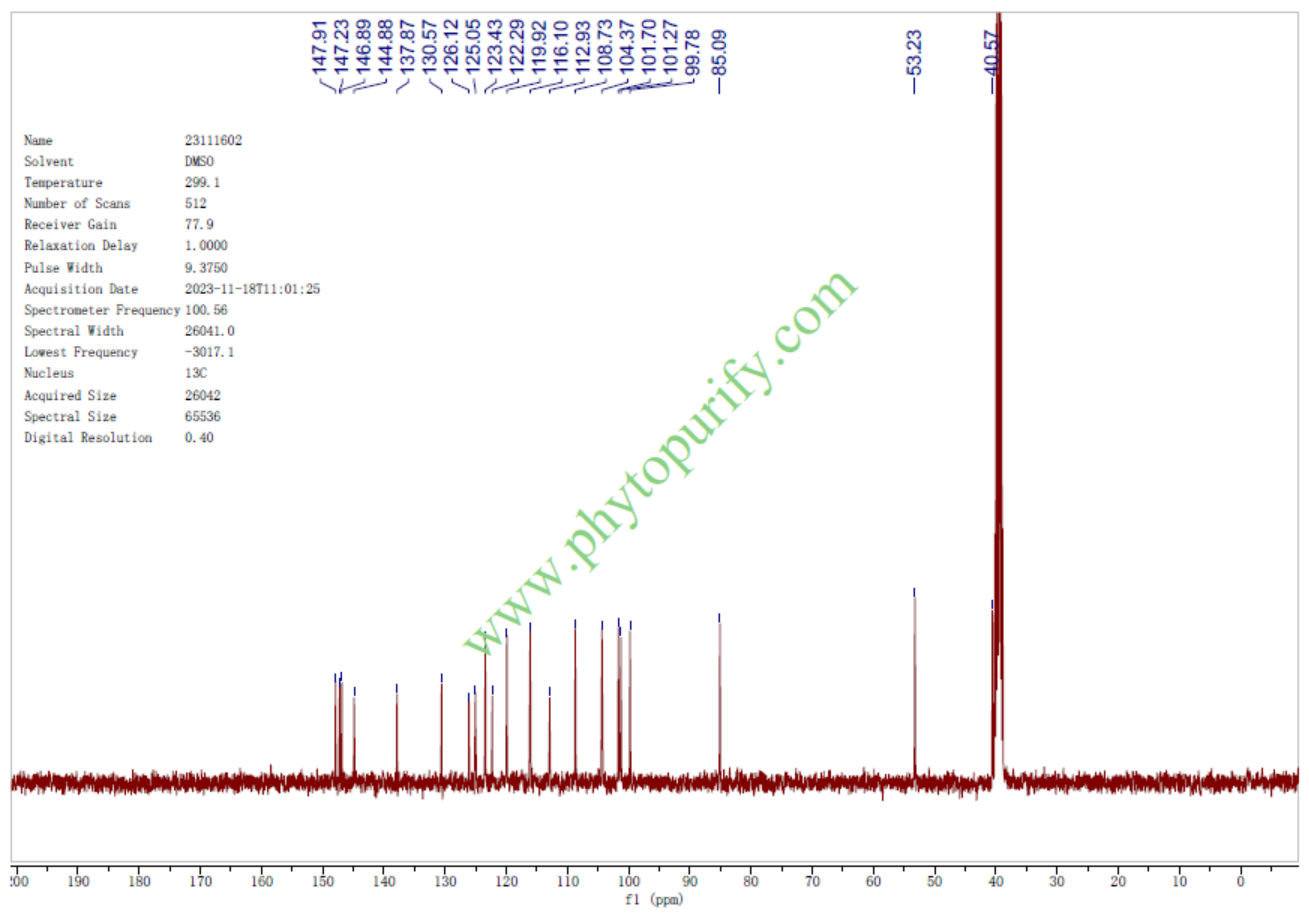
NMR of 6-Methoxydihydrosanguinarine
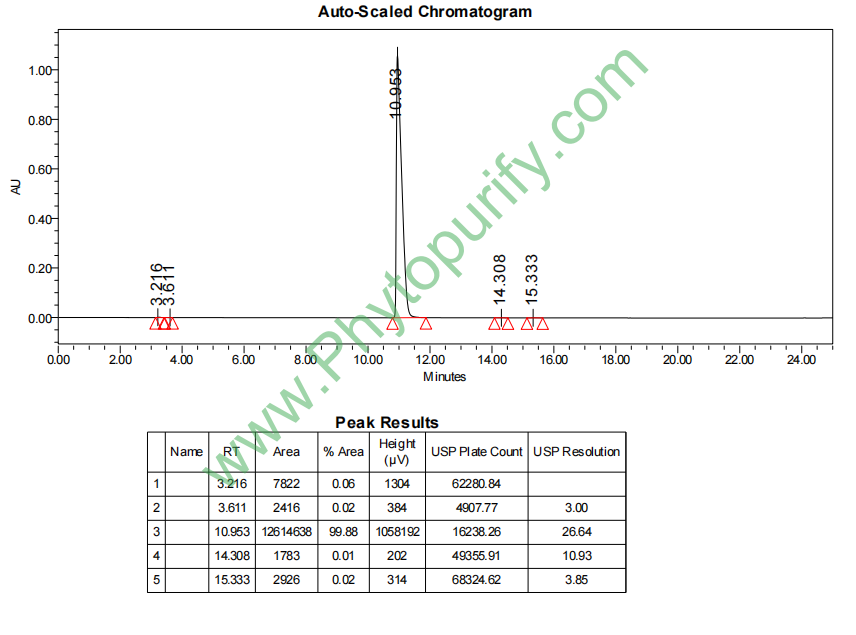
HPLC of 6-Methoxydihydrosanguinarine
Storage conditions:Short-term storage at 2~8℃, long-term storage at -20 ~ -80℃
49.3900
3.8596
3.8593
.0003
8.0288
32.2590
High
88.5453
3.3989
Yes
No
Yes
No
Yes
No
1.8
Yes
No
Yes
Yes
6-methoxydihydrosanguinine (hereinafter referred to as 6-methoxydihydrosanguinine) is a natural product with significant biological activity and belongs to the sanguinarine alkaloid class. This compound was first isolated from the fruit of the plant Macleaya cordata (South China Blood Root), and has received widespread attention in the field of natural product pharmacology in recent years due to its unique chemical structure and significant biological activity. Blood root alkaloids are known for their diverse pharmacological effects, covering various biological activities such as anti-tumor, antibacterial, anti-inflammatory, etc. As a representative member, 6-methoxydihydrosanguine shows significant cytotoxicity to many tumor cell lines, especially its inhibitory effect on breast cancer MCF-7 cell line and glioma SF-268 cell line, with IC50 values as low as 0.61 μ M and 0.54 μ M respectively. In addition, the compound exhibits broad-spectrum antibacterial activity, targeting multiple key bacterial protein targets, demonstrating its potential development value as an antibacterial drug.
This article aims to systematically review the chemical structure and physicochemical properties, plant sources and extraction methods, pharmacological activity and mechanism of action, pharmacological evaluation and pharmacokinetic characteristics of 6-methoxydihydrosanguinarine, and to prospect its clinical application prospects, in order to provide theoretical basis and research direction for subsequent basic research and drug development.
The molecular formula of 6-methoxydihydrohematine is C21H21NO5, with a molecular weight of 363.3690. Its chemical structure is based on a typical sanguinarine skeleton, containing a methoxy substituent located at position 6, and the structure contains a hydrogenation modification, endowing it with unique chemical properties. The LogP value of this compound is 3.8596, indicating that it has good lipid solubility, which is beneficial for cell membrane penetration and in vivo distribution. The polar surface area (TPSA) is 49.39 Å ², which is within a moderate range and supports its good bioavailability.
The extremely low water solubility (0.0003) suggests limited solubility in the aqueous phase, which may affect its oral absorption and formulation design. The high permeability of the blood-brain barrier indicates that this compound has the potential to act on central nervous system related diseases. The hERG channel inhibition experiment showed a negative result, indicating a low risk of cardiac toxicity. The Ames mutagenicity test score is 1.8, indicating a low risk of genotoxicity, but further systematic toxicological evaluation is still needed.
In summary, 6-methoxydihydrosanguinarine has good lipid solubility and blood-brain barrier penetration ability, and its physicochemical properties are suitable for development as a small molecule drug, but it needs to overcome the formulation challenges caused by poor water solubility.
6-methoxydihydrosanguinarine mainly comes from the fruit of the poppy family plant Macleaya cordata. M. Cordata is widely distributed in southern China and East Asia, traditionally used for medicinal herbs and herbal treatments. This plant contains abundant sanguinarine alkaloids and is the main natural resource for extracting 6-methoxydihydrosanguinarine.
The extraction method usually uses organic solvent extraction combined with column chromatography separation technology. The specific steps include:
In recent years, with the development of separation technology, new technologies such as ultrasound assisted extraction and microwave-assisted extraction have also been attempted to improve extraction efficiency and purity. In addition, the study of biosynthetic pathways provides the possibility for the future production of this compound through bioengineering methods.
6-methoxydihydrosanguinarine exhibits significant cytotoxicity in various tumor cell lines. Especially in breast cancer MCF-7 cells and glioma SF-268 cells, IC50 values were 0.61 μ M and 0.54 μ M, respectively, showing a strong inhibitory effect. This activity is superior to many traditional natural products, indicating its potential in the development of anti-cancer drugs.
Cytological studies have shown that 6-methoxydihydrosanguinarine can induce apoptosis of tumor cells, inhibit cell proliferation, and interfere with cell cycle progression. Its mechanism of action may involve activation of mitochondrial pathways, elevation of intracellular reactive oxygen species (ROS) levels, and regulation of multiple signaling pathways, such as MAPK and PI3K/Akt pathways. In addition, the compound also has inhibitory effects on the migration and invasion ability of tumor cells, suggesting that it may block the process of tumor metastasis.
6-methoxydihydrosanguinarine exhibits broad-spectrum antibacterial activity and shows inhibitory effects against various bacterial targets. The relevant targets include bacterial DNA gyrase subunit GYRA, membrane protein GYPB, cell division protein FTSZ, fatty acid synthase FABI, dihydrofolate reductase DHFR, membrane protein MECA, penicillin binding protein PENA, fungal cytochrome P450 enzyme ERG11 and its homologous enzyme CYP51A1, as well as the multidrug resistance protein CDR1 of the bacterium.
These targets cover key biosynthetic and metabolic pathways of bacteria and fungi, indicating that 6-methoxydihydrosanguinarine has dual antibacterial and antifungal activities. It slows down the development of drug resistance and enhances the potential of anti infective therapy through a multi-target mechanism of action.
In addition to anti-tumor and antibacterial activities, preliminary studies also suggest that 6-methoxydihydrosanguinarine may have anti-inflammatory, antioxidant, and neuroprotective effects. Given its high blood-brain barrier permeability, its future application in neurological diseases deserves further exploration.
The pharmacological activity of 6-methoxydihydrosanguinarine depends on its regulation of multiple molecular targets, and the specific mechanism is as follows:
The multi-target mechanism of action gives 6-methoxydihydrosanguinarine a strong advantage in anti infective therapy.
The pharmacological evaluation of 6-methoxydihydrosanguinarine shows that it has good potential for drug development:
In terms of pharmacokinetics, although specific in vivo metabolic data is still lacking, based on its physicochemical properties, it is speculated that 6-methoxydihydrosanguinarine may be metabolized through the liver and mainly excreted through the enterohepatic circulation. High lipid solubility may lead to longer half-life and wider tissue distribution, especially in brain tissue. In the future, systematic in vivo pharmacokinetic and toxicological studies are needed to clarify its absorption, distribution, metabolism, and excretion (ADME) characteristics.
6-methoxydihydrosanguinarine has broad clinical application prospects due to its significant anti-tumor and antibacterial activities. Its strong inhibitory effect on breast cancer and glioma cells suggests its potential as a candidate molecule for new anti-cancer drugs. Especially in the current context of limited tumor drug resistance and treatment options, 6-methoxydihydrosanguinarine may provide patients with a new treatment option.
In the field of anti infection, the multi-target antibacterial mechanism of this compound helps overcome the problem of traditional antibiotic resistance, especially its inhibitory effect on fungal infections, providing new ideas for the development of antifungal drugs. In addition, its high blood-brain barrier permeability gives it a unique advantage in treating brain infections and neurological tumors.
However, formulation development and pharmacokinetic optimization remain key challenges for its clinical translation. Low water solubility limits oral absorption and requires the use of nanocarriers, liposomes, or solid dispersions to enhance bioavailability. Safety assessment and long-term toxicology research cannot be ignored.
Future research should focus on:
6-methoxydihydrosanguinarine, as a natural sanguinarine derived from Macleaya cordata, exhibits broad pharmacological potential due to its unique chemical structure and significant biological activity. Its multi-target mechanism of action in the fields of anti-tumor and antibacterial provides an important theoretical basis and practical direction for the development of new drugs. Although still facing challenges such as poor water solubility and insufficient pharmacokinetic data, with the advancement of modern drug development technology, 6-methoxydihydrosanguinarine is expected to become an important breakthrough in the research of natural product drugs, promoting the application of natural products in clinical treatment. Future systematic research and clinical validation will lay a solid foundation for the realization of its medicinal value.
