

Storage conditions:Short-term storage at 2~8℃, long-term storage at -20 ~ -80℃
48.9000
3.2000
2.8000
Yes
.8500
Yes
Positive
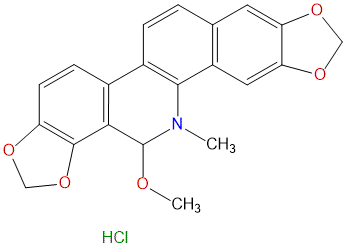
6-Methoxydihydroxysanguinarine chloride (product code: BP2132) is a natural alkaloid derivative isolated from the poppy plant Macleaya cordata. As a structural analogue of sanguinarine, it belongs to the benzophenanthridine alkaloid family and has a unique chemical structure and potential biological activity. Blood root alkaloids have attracted much attention in traditional medicine and modern pharmacology research, as they exhibit various pharmacological effects such as antibacterial, anti-inflammatory, and anti-tumor. 6-methoxydihydrosanguinarine hydrochloride is a structurally modified product based on sanguinarine, which introduces methoxy substitution and undergoes dihydroreduction in its molecule. This structural change may significantly affect its physicochemical properties, biological activity, and pharmacokinetic characteristics. At present, the basic data such as CAS number, precise molecular formula, and molecular weight of the compound have not been fully disclosed, which reflects common data gaps in natural product chemistry research and suggests that the compound may still be in the early stages of research. However, the long history of application of its plant source - Boluohui - in traditional East Asian medicine provides important ethnic pharmacological clues for exploring the medicinal value of this compound. This article aims to systematically review the existing scientific data on 6-methoxydihydrosanguinarine hydrochloride, and provide a comprehensive evaluation of its chemical nature, plant origin, potential pharmacological activity, drug evaluation, and future research directions, in order to provide a professional and rigorous reference material for researchers in the field of natural product drug development.
6-methoxydihydrosanguinarine hydrochloride is a derivative of sanguinarine. Blood root alkaloid (molecular formula C20H14NO4 ⁺) is a quaternary ammonium benzophenanthrene alkaloid with a planar aromatic conjugated system and an orange red color. The "dihydrogen" in its name means that a double bond in the parent nucleus is reduced, which usually occurs at the C6-C13 site, disrupting its fully conjugated planar structure, resulting in a lighter color (usually pale yellow), and potentially significantly altering its electron distribution and chemical reactivity. 6-methoxy "refers to the introduction of a methoxy (- OCH3) substituent at the sixth position of the aromatic ring, which increases the polarity and steric hindrance of the molecule and may affect its interaction with biomolecules through electron donating effects.
Although the precise molecular formula and molecular weight of the compound are currently lacking, we can make reasonable inferences based on its parent nucleus structure. The molecular weight of sanguinarine is 332.33 g/mol (cationic form). By performing dihydroreduction (adding 2 H atoms) and methoxy substitution (adding CH3O - to replace one H), the molecular weight of its cationic portion may increase to the range of approximately 364-376 g/mol. After forming the hydrochloride salt, a chloride ion (Cl ⁻) needs to be added as a contribution. Therefore, its total molecular weight is expected to be around 400 g/mol. This estimate is consistent with the molecular weight range of most bioactive natural alkaloids.
In terms of physical and chemical properties, dihydroreduction destroys the planarity and complete conjugation of sanguinarine, which is expected to reduce its lipophilicity (LogP value). Blood root alkaloids themselves have a low LogP value (strong hydrophilicity) due to their quaternary ammonium salt properties and planar structure. The introduction of methoxy groups may slightly increase hydrophobicity, but the saturated carbon center brought about by dihydroreduction may play a dominant role, resulting in the overall lipophilicity of 6-methoxydihydrosanguinarine being lower than or comparable to that of the original sanguinarine. Its hydrochloride form ensures good water solubility and crystallinity, making it convenient for in vitro pharmacological experiments and preliminary formulation studies. The topological polar surface area (TPSA) of this compound is expected to be between 50-70 Å ², with the main contributions coming from nitrogen atoms, oxygen atoms, and aromatic ring systems. These preliminary analyses of physicochemical properties are crucial for understanding their subsequent biological activity, membrane permeability, and pharmacokinetic behavior.
The plant source of 6-methoxydihydrosanguinarine hydrochloride is Macleaya cordata (Willd.) R. Br., also known as horn pole or trumpet bamboo, which is a perennial large herbaceous plant of the genus Macleaya in the family Papaveraceae. Boluohui is widely distributed in the Yangtze River Basin, Yellow River Basin, and Japan, often growing in hills, low mountain grasslands, or forest edges.
In traditional medicine, the whole plant or root of Boluohui is used, but its application has a distinct characteristic of "fighting poison with poison". Traditional Chinese medicine records that it has a cold nature, bitter taste, and is highly toxic. It is mainly used externally and rarely taken orally. Traditional uses include:
* Insecticide and itching relief Boil water and wash or crush it for external application, used to treat eczema, scabies, skin itching, trichomonas vaginitis, etc.
* Reduce swelling and detoxify External treatment for carbuncles, sores, toxins, scrofula, and traumatic injuries.
* deworming Used to kill intestinal parasites such as roundworms and hookworms (use with extreme caution).
Modern plant chemistry research has confirmed that Boluohui is rich in various isoquinoline alkaloids, among which sanguinarine, baicalein, and protopine are its main active ingredients. These alkaloids are considered the material basis for their pharmacological effects and toxicity. It is worth noting that traditional applications mainly rely on whole plant extracts, which contain complex mixtures of multiple alkaloids. The individual contribution of 6-methoxydihydrosanguinarine as a trace component or conversion product has not been clearly recognized in traditional applications. However, traditional applications have provided preliminary human empirical evidence for its antibacterial, antiparasitic, and anti-inflammatory activities, pointing the way for modern pharmacological research. At present, animal feed additives based on total alkaloids of Boluohui (used for promoting growth and antibacterial purposes) have been approved for marketing in China, reflecting the transformation of their traditional medicinal value in modern agriculture.
Although there is currently a lack of specific target information and disease-related data for 6-methoxydihydrosanguinarine hydrochloride in publicly available database information, we can infer its potential pharmacological activity spectrum and mechanism of action from extensive research on its parent compound sanguinarine and benzophenanthridine alkaloids. It should be emphasized that the following analysis is based on scientific speculation of known biological effects of similar compounds, and the specific target and mechanism of action of the compound need to be experimentally confirmed.
4.1 Potential pharmacological activity
4.2 Scientific explanation of the mechanism of action
From a chemical structure perspective, the potential mechanism of action of 6-methoxydihydrosanguinarine may be based on the following molecular interactions:
* Interaction with nucleic acids The planar structure of sanguinarine allows it to be inserted between the base pairs of DNA double helix, interfering with DNA function. After hydrogenation reduction, the planarity of the molecule is disrupted, and this insertion ability may be weakened, but it may still interact with DNA/RNA through electrostatic interactions or groove binding. The introduction of methoxy groups may provide additional hydrogen bonding sites.
* Binding with enzyme active center The nitrogen atoms and aromatic systems in its structure may serve as hydrogen bond acceptors or donors, and bind to the active centers or conformational sites of various enzymes through π - π stacking and cation - π interactions, such as inhibiting topoisomerase I/II, protein kinases (such as PKB/Akt), or inflammation related kinases (such as IKK).
* Affects cell membrane and ion channels As a positively charged molecule, it may interfere with the potential of the cell membrane, affecting the function of sodium, potassium, and calcium ion channels, which may play a role in antibacterial and inducing tumor cell apoptosis.
* Regulating cellular signal transduction Through the interaction with enzymes or receptors mentioned above, downstream signaling pathways closely related to cell survival, proliferation, and inflammation such as NF - κ B, MAPK, PI3K/Akt, STAT3, etc. are affected.
4.3 Speculation on the association with diseases
Based on the above activity, the possible future research directions of 6-methoxydihydrosanguinarine hydrochloride are related to the following disease fields:
* infectious diseases: Used for developing new topical or systemic antibacterial agents against drug-resistant bacteria (such as MRSA) or specific parasites.
* Inflammatory and autoimmune diseases Exploring anti-inflammatory agents such as rheumatoid arthritis, inflammatory bowel disease, dermatitis, etc.
* tumor As a chemotherapy sensitizer or used alone for specific types of hematological or solid tumors. Its structural modification may aim to reduce the cardiotoxicity and genotoxicity of sanguinarine, and improve the therapeutic window.
* skin disease Inheriting traditional topical experience, developing local medications for treating skin diseases such as psoriasis and atopic dermatitis.
Drug efficacy assessment aims to predict the likelihood of a compound developing into an oral medication. We conducted a preliminary evaluation of 6-methoxydihydrosanguinine hydrochloride using Lipinski's Rule of Five (Ro5) and other relevant parameters. It should be pointed out again that due to the absence of some key parameters, the following evaluation includes reasonable speculation based on structural similarity.
5.1 Analysis based on Lipinski's Five Rules
The Lipinski Five Rules are empirical rules for evaluating the pharmacological properties of compounds, mainly for oral absorption:
1. Molecular weight (MW)<500 Da The expected molecular weight of the compound is around 400 Da,Comply with Rules.
2. Lipid water partition coefficient LogP (octanol/water) ≤ 5 The LogP value of sanguinarine is relatively low (about 1-2). Dihydrogen reduction may further reduce LogP, while the introduction of methoxy groups has a relatively small impact. It is expected that its LogP will be between 1-3,Comply with Rules.
3. Number of hydrogen bond donors (HBD) ≤ 5 Based on its structure, it can be inferred that HBD (mainly - OH and - NH -) may not exceed 2 (quaternary ammonium salts have no H on the nitrogen, and dihydroreduction may introduce CH2),Comply with Rules.
4. Number of hydrogen bond acceptors (HBA) ≤ 10 Expected number of HBA (N, O) to be around 5-7,Comply with Rules.
Preliminary assessment suggests that 6-methoxydihydrosanguinarine hydrochloride is likely Complies with Lipinski's Five Rules It suggests that it has good oral absorption potential.
5.2 Analysis of Other Key Medicinal Parameters
5.3 Comprehensive evaluation conclusion
6-methoxydihydrosanguinarine hydrochloride exhibits good drug like properties in terms of molecular size, lipid solubility, and hydrogen bonding characteristics, meeting the general physical and chemical requirements for oral medications. Its main advantage lies in the potential reduction of toxicity caused by structural modifications. However, its path to becoming a drug faces clear challenges:① Potential toxicity (especially cardiac toxicity) requires comprehensive and rigorous preclinical safety evaluation; ② Its ionic properties may lead to poor oral bioavailability and limited tissue distribution; ③ The metabolic stability and drug interaction risk are unknown. Therefore, it is currently more likely to be considered as lead compound, used for further structural optimization (such as prodrug design to improve absorption and distribution, or further modification to reduce toxicity), or developed as Topical preparations for local use(such as skin anti infection and anti-inflammatory ointments) to avoid systemic toxicity risks.
6.1 Research Status
At present, there are relatively few independent and publicly available in-depth research literature on "6-methoxydihydrosanguinarine hydrochloride". This suggests that the compound may be in the early stages of natural product chemistry discovery, or synthesized and preliminarily screened as an intermediate or analog in the study of blood root alkaloid structural modification. Current research mainly focuses on:
1. Phytochemical Separation and Identification As one of the trace alkaloid components in Boluohui, it was isolated and structurally characterized.
2. Preliminary biological activity screening It may be included in the screening of antibacterial and anti-tumor activities against total alkaloids or derivatives of Boluohui, but its individual data has not yet become a research focus.
3. Structure Activity Relationship (SAR) Study In the study of sanguinarine derivatives, methoxy substitution at the C6 position and dihydroreduction of the C ring are common chemical modification strategies aimed at exploring the effects of these changes on activity and toxicity. 6-methoxydihydrosanguinarine is one of the products of such research.
6.2 Application Prospects and Future Directions
Although the basic data is weak, future research on 6-methoxydihydrosanguinarine hydrochloride has a clear direction based on the significant activity and clear structural modification points of its parent compound
1. In depth pharmacological mechanism research The primary task is to use pure products for systematic in vitro activity screening, clarify their antibacterial spectrum, anti-tumor cell spectrum, and anti-inflammatory effects in models, and use techniques such as molecular docking and surface plasmon resonance (SPR) to identify their direct targets and elucidate their unique mechanisms of action.
2. Comprehensive optimization of drug properties On the basis of confirming its pharmacological activity superior to that of sanguinarine or having unique selectivity, carry out systematic pharmacological optimization. Including: synthesizing a series of analogues to optimize LogP, pKa, and solubility; Design prodrugs to improve oral absorption and targeted delivery; Conduct a detailed in vitro ADMET (absorption, distribution, metabolism, excretion, toxicity) evaluation, particularly genetic toxicity and cardiac safety assessment.
3. Clear indication positioning Given its potential improvement in toxicity characteristics, priority should be given to exploring it Local application scenarios Developing topical preparations for oral infections (mouthwash), skin diseases (cream), and gynecological infections (suppository). If the toxicity problem of the system can be solved through optimization, it can be explored as a solution Antitumor adjuvant drugs or Treat specific chronic inflammatory diseases The potential.
4. The value of natural product databases This research case highlights the importance of professional natural product databases (such as the database providing BP2132 numbers) in the early stages of drug discovery. They systematically collect, standardize, and provide incomplete but critical compound information, linking scattered plant chemistry and pharmacological screening data, which can effectively stimulate research ideas and accelerate the identification and validation of lead compounds.
Summary
6-methoxydihydrosanguinarine hydrochloride represents a research strategy that seeks higher safety and therapeutic efficacy by rational structural modification of highly active natural toxins. It bridges the gap between traditional medicinal plants and modern medicinal chemistry. Although the road ahead is full of challenges, requiring a lot of chemical, pharmacological, and toxicological work to fill in its data gaps and validate its value, it is undoubtedly a candidate molecule worth exploring in depth, and its research process will provide valuable scientific experience for innovative drug development based on natural products. The future breakthrough may lie in the precise revelation of the intrinsic relationship between "structural modification physical and chemical properties biological activity toxicity" through interdisciplinary collaboration, ultimately transforming it from a plant trace component or chemical intermediate into a drug candidate with clear clinical value.
Batch can search by a CAS number,one per line
