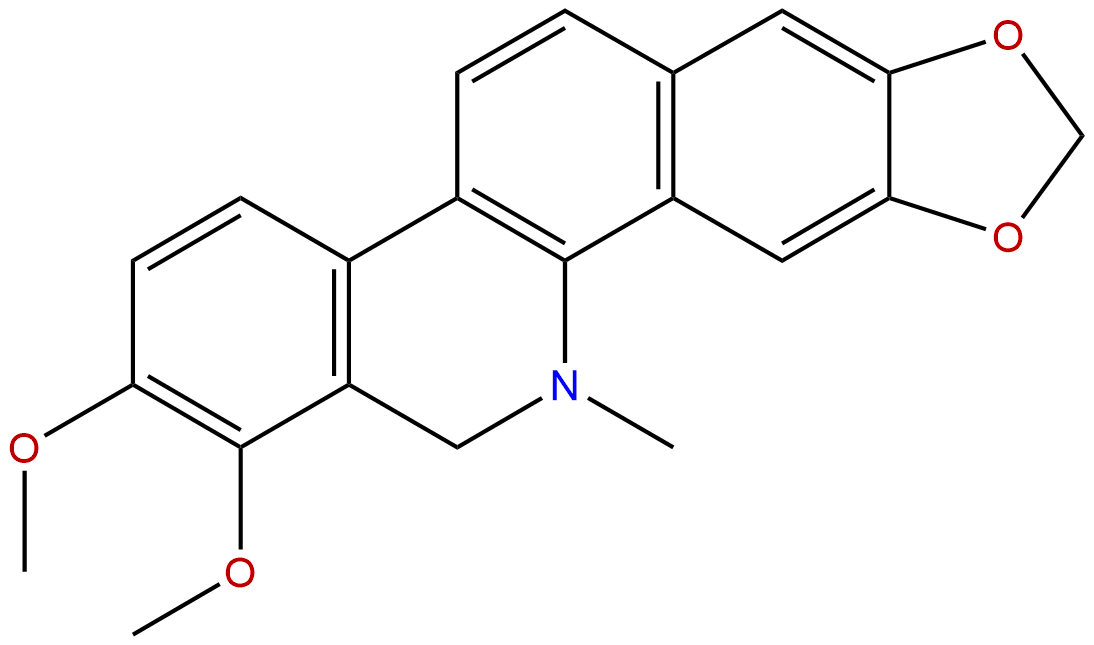


Product name: Dihydrochelerythrine
Synonym name:
Catalogue No.: BP3123
Cas No.: 6880-91-7
Formula: C21H19NO4
Mol Weight: 349.386
Botanical Source:
Physical Description: Powder
Type of Compound: Alkaloids
Purity: 95%~99%
Analysis Method: HPLC-DAD or/and HPLC-ELSD
Identification Method: Mass, NMR
Packing: Brown vial or HDPE plastic bottle
The product could be supplied from milligrams to grams. Inquire for bulk scale.
We provide solution to improve the water-solubility of compounds, thereby facilitating the variety of activity tests and clinic uses.
For Reference Standard and R&D, Not for Human Use Directly.
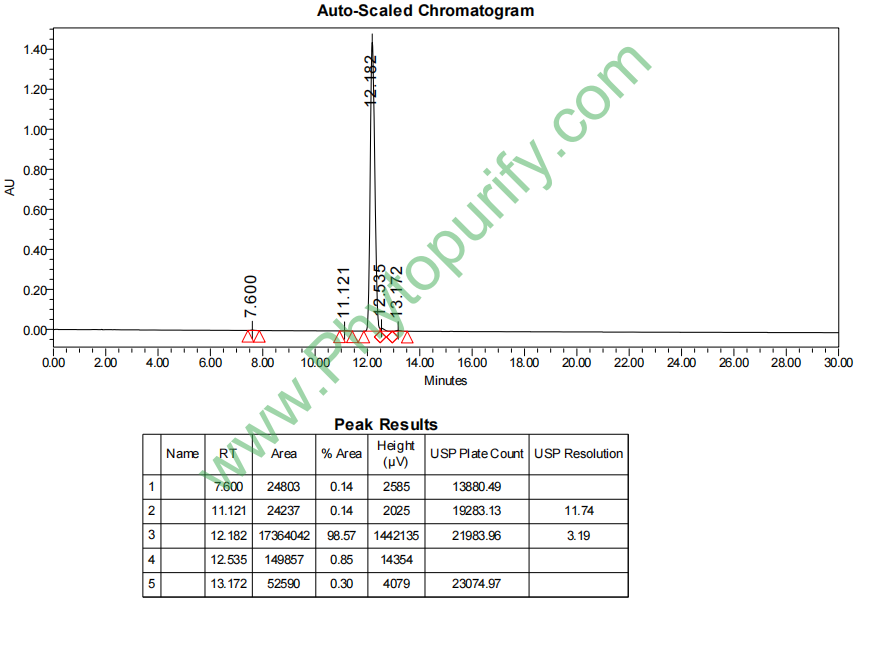
HPLC of Dihydrochelerythrine
Storage conditions:Short-term storage at 2~8℃, long-term storage at -20 ~ -80℃
40.1600
4.4766
4.4760
.0006
7.0040
35.9381
High
93.3703
2.6032
Yes
No
Yes
No
Yes
Yes
1.8
No
No
No
Yes
Dihydrochelerythrine (CAS number: 6880-91-7) is a benzophenanthrene alkaloid with significant biological activity. Its molecular formula is C21H19NO4, with a molecular weight of 349.3860 g/mol. This compound is mainly derived from the poppy family plant Boraceae(Macleaya cordata)Separated from the middle. As a traditional medicinal plant, Boluohui is commonly used in folk medicine for insecticidal and anti-inflammatory purposes. Its rich variety of alkaloids has attracted widespread attention from modern pharmaceutical researchers. Dihydroquercetin, as one of its members, was initially discovered for its activity against plant pathogenic fungi, and subsequent research gradually revealed its potential in anti parasitic (such as multi fruit melon worms) and more importantly, anti-tumor fields. Especially for leukemia cells (such as HL-60 cells), research has shown that this compound can induce cell apoptosis and necrosis by affecting the cell cycle, activating the mitochondrial apoptosis pathway, and demonstrating potential as an anti leukemia drug. Its known molecular targets include BCL2, MYC, JAK2, BCR-ABL, and STAT5, which are closely related to cell proliferation, survival, and the occurrence and development of leukemia. This article will provide a systematic professional popularization of this natural product from the aspects of its chemical structure, plant origin, pharmacological mechanism, medicinal evaluation, and research prospects.
Dihydroquercetin belongs to the benzophenanthrene alkaloid class, characterized by a condensed polycyclic aromatic system. From the SMILES expression (COc1ccc2c (c1OC) CN (C) c1c-2ccc2cc3c (cc12) OCO3), it can be inferred that its core skeleton contains a benzophenanthrene ring system and is connected to functional groups such as methoxy (- OCH3) and methylenedioxy (- O-CH2-O -). These structural features have a decisive impact on its biological activity and physicochemical properties.
Based on the provided pharmacological parameters, we can conduct in-depth analysis of its physicochemical properties:
- Molecular weight (MW):349.3860 g/mol, Less than 500, within the common range of small molecule drugs.
- Lipid water partition coefficient (LogP/LogD)They are 4.4766 and 4.4760 respectively. This value is significantly greater than 2, indicating that the compound has a high degree of lipophilicity. This is beneficial for its penetration through the cell membrane, but it may also lead to poor water solubility and a biased distribution towards adipose tissue in the body.
- Water solubility Only 0.0006 mg/mL confirms its extremely low water solubility, which is a direct consequence of high LogP values and a key challenge to overcome in the development of oral or intravenous formulations.
- Topological Polarity Surface Area (TPSA)The value of 40.1600 Å ² is relatively small, and it is generally believed that compounds with TPSA<60 Å ² have better membrane permeability, which is attributed to their higher Caco-2 permeability (35.9381) and High blood-brain barrier (BBB) penetrability The predicted results are consistent. High BBB penetration implies that it may have potential therapeutic value for central nervous system related leukemia, such as certain types of acute lymphoblastic leukemia, but also increases the potential risk of neurotoxicity.
- Plasma protein binding rate (PPB)As high as 93.37%, it indicates that after entering the bloodstream, the vast majority of drugs bind to plasma proteins (mainly albumin), which can affect their free drug concentration, distribution volume, and efficacy, but may also prolong their half-life.
Combining classic Lipinski's Five Rules Evaluation based on the "Five Principles of Similar Drugs": ① Molecular weight<500 (compliant); ② LogP<5 (4.4766, compliant); ③ The number of hydrogen bond donors (inferred from the structure, there may be a dissociable H on N, but the tertiary amine form may not have strong hydrogen bond donors, usually with fewer hydrogen bond donors, expected to be<5); ④ The number of hydrogen bond acceptors (4 O and 1 N in the molecule, a total of 5, meeting the requirement of<10). Therefore, dihydroquercetin basically conforms to the Lipinski rule and has the basic chemical spatial characteristics to become an oral drug, but its extremely low water solubility is the main development obstacle.
The main plant source of dihydroquercetin is Bo Luohui(Macleaya cordata (Willd.) R. Br.), Also known as tube pole or mountain fire tube, it belongs to the family Papaveraceae and the genus Boraceae. Boluohui is widely distributed in parts of China south of the Yangtze River, north China, and northwest, and is also distributed in Japan and other places. In traditional Chinese medicine and folk applications, the whole plant or roots of Boluohui are often topically used to treat skin diseases, traumatic injuries, insecticides (such as scabies), and anti-inflammatory agents. It has a bitter and pungent taste, a cold nature, and is highly toxic. Therefore, when taken orally, extreme caution should be taken, and it should be used as an external detergent or tamping.
Modern plant chemistry research has confirmed that Boluohui contains a variety of bioactive isoquinoline alkaloids, including not only dihydroquercetin alkaloids, but also sanguinarine alkaloids, quercetin alkaloids, and protoopiate alkaloids. These alkaloids together form the material basis for the antibacterial, anti-inflammatory, insecticidal, and anti-tumor activities of Boluohui. Traditionally, its "toxicity" has been used to kill insects and sterilize, which coincides with the modern scientific revelation that its alkaloid components can interfere with the cellular functions of pathogenic microorganisms or parasites. The transition from traditional topical insecticides and anti-inflammatory agents to modern research discovering their anti leukemia potential reflects the inheritance and sublimation from traditional medicinal experience to modern targeted drug development. However, it is necessary to emphasize its "highly toxic" characteristics, reminding us to attach great importance to its safety assessment and dose control when developing its medicinal value.
The pharmacological activity research of dihydroquercetin has expanded from its initial antifungal and antiparasitic effects to anti-tumor fields, especially in the treatment of leukemia, showing remarkable potential. Its mechanism of action is complex, involving multiple key signaling pathways and targets.
Main pharmacological activities:
1. Antifungal and antiparasitic activity Has inhibitory effects on plant pathogenic fungi; For aquatic parasites, such as the multi daughter small melon worm(Ichthyophthirius multifiliis)It has a killing effect, indicating its potential application in preventing and treating serious infections in veterinary or aquaculture fields.
2. Antitumor (anti leukemia) activity The research on human promyelocytic leukemia cell line HL-60 is the most in-depth. It can significantly inhibit the proliferation of HL-60 cells, induce cell apoptosis and necrosis. Mechanism research shows that it can Affects the distribution of cell cycle Block cells at a certain cycle checkpoint (such as G2/M phase) to prevent normal division. More importantly, it can Activate mitochondrial apoptosis pathway This may involve classical apoptotic processes such as reducing mitochondrial membrane potential, promoting cytochrome C release, and activating caspase cascade reactions.
Target and mechanism analysis:
The known or speculated targets of dihydroquercetin include BCL2, MYC, JAK2, BCR-ABL, and STAT5, which are closely related to the occurrence and development of leukemia, especially myeloid and lymphocytic leukemia.
- BCL2 It is an important anti apoptotic protein. Many cancer cells, including leukemia cells, evade apoptosis by overexpressing BCL2. Dihydroquercetin may promote mitochondrial apoptosis by inhibiting the function or expression of BCL2, thereby relieving its inhibition of apoptosis.
- MYC It is a proto oncogene transcription factor that plays a central regulatory role in cell proliferation, metabolism, and apoptosis. The abnormally high expression of MYC is closely related to various types of leukemia. This compound may interfere with the transcriptional activity or stability of MYC, thereby inhibiting its driven abnormal proliferation signals.
- JAK2/STAT5 pathway This is a key pathway for cytokine signaling transduction. Mutation or sustained activation of JAK2 kinase can lead to sustained phosphorylation and activation of its downstream transcription factor STAT5, which in turn drives uncontrolled cell proliferation and survival. This is common in myeloproliferative tumors and certain leukemia. Dihydroquercetin may inhibit the growth and survival of leukemia cells by suppressing the kinase activity of JAK2, blocking the JAK2-STAT5 signaling axis.
- BCR-ABL It is a fusion protein produced by the Philadelphia chromosome, with constitutive tyrosine kinase activity, and is a clear driver gene for chronic myeloid leukemia (CML). Tyrosine kinase inhibitors targeting BCR-ABL, such as imatinib, are a milestone in the treatment of CML. Dihydroquercetin may serve as a multi-target inhibitor, which also has a certain inhibitory effect on BCR-ABL kinase activity and may overcome certain resistance mutations.
Association with diseases:
Almost all of the above targets are directed towards leukemia Leukemia is a type of malignant tumor in the hematopoietic system, characterized by abnormal proliferation of leukemia cells in the bone marrow that inhibit normal hematopoiesis. Dihydroquercetin can interfere with the survival, proliferation, and anti apoptotic ability of leukemia cells through multiple pathways and multiple nodes by simultaneously acting on multiple key targets related to leukemia (survival promoting protein BCL2, transcriptional regulator MYC, signal kinases JAK2 and BCR-ABL, and downstream effector STAT5), ultimately inducing their death. This multi-target mode of action may lead to a broader spectrum of anti leukemia effects and may reduce the risk of drug resistance caused by single target mutations, but it may also increase the complexity of off target toxicity.
Based on the physical and chemical properties and pharmacokinetic prediction parameters described earlier, we conducted a comprehensive evaluation of the pharmacological potential of dihydroquercetin
Advantage:
1. Good membrane permeability The smaller TPSA (40.16 Å ²) and higher predicted Caco-2 permeability and BBB permeability indicate that it is easy to penetrate biological membranes and can effectively enter the cell interior to act on targets, which is beneficial for the treatment of leukemia (including possible central nervous system infiltration).
2. Basically in compliance with the drug classification rules Satisfying the Lipinski Five Rules and having a moderate molecular weight, it provides a chemical basis for oral absorption.
3. High plasma protein binding may prolong half-life Although 93.37% of PPB can reduce the concentration of free drugs, it may also cause slow drug release in the body and prolong the duration of action.
4. No risk of hERG inhibition The predicted results show no hERG inhibition, which is an important positive signal for cardiac safety and reduces the potential risk of fatal arrhythmias such as apical torsion ventricular tachycardia.
Challenges and Risks:
1. Serious water solubility issues The extremely low water solubility (0.0006 mg/mL) is the biggest obstacle to developing it into injectable or oral solid preparations. Advanced formulation technologies such as nanocrystals, liposomes, cyclodextrin inclusion, prodrug strategies, etc. may be needed to improve its solubility and bioavailability.
2. Potential toxicity risks:
- Genotoxicity The Ames test value is 1.8 (usually>1.1 indicates potential mutagenicity), and it shows the presence of chromosome aberration Risk is a highly vigilant "red flag" signal in drug development that must be confirmed through more in-depth genetic toxicity testing.
- Phototoxicity Predicting phototoxicity suggests that the compound may produce reactive oxygen species under light exposure, which can damage the skin or eyes and affect its administration and patient medication guidance.
- Respiratory sensitization Prediction of respiratory sensitization risk, although the mechanism is unclear, suggests the possibility of triggering allergic reactions.
- Hepatotoxic signal Predicting elevated serum ALT (Yes) suggests potential risk of liver cell damage and requires close monitoring of liver function in preclinical studies.
3. Uncertainty caused by multi-target targeting Although multi-target therapy may enhance efficacy, it also increases the risk of off target effects and complex adverse reactions, requiring detailed pharmacological and toxicological studies to define its therapeutic window.
Conclusion Dihydroquercetin is a lead compound with clear anti leukemia pharmacological activity, and its chemical structure has the basic framework for becoming a drug. However, its serious solubility issues, especially potential genetic toxicity and other toxic signals, constitute the main bottleneck for its transformation into candidate drugs. Future research needs to prioritize addressing these safety concerns and optimizing their physicochemical properties through appropriate chemical modifications or formulation methods.
Research status:
At present, research on dihydroquercetin is mostly in progress Preclinical stage Mainly focused on in vitro cellular levels (such as HL-60 leukemia cells) and a few in vivo animal models, its anti leukemia activity has been confirmed and its multi-target mechanism of action has been preliminarily explored. The research on its antifungal and antiparasitic activities provides ideas for its application in agriculture or veterinary fields. However, there is a relative lack of systematic pharmacokinetic studies, toxicological evaluations, and structural optimization work to address its shortcomings. As a member of the total alkaloid extract of Boluohui, it is often studied in compound or mixture formulations.
Application prospects and future directions:
1. As a lead compound for anti leukemia drugs This is the most promising direction. Future research should focus on:
- structural optimization By using semi synthetic methods to modify its molecules, the aim is to maintain or enhance anti-tumor activity while improving water solubility, reducing LogP to optimize pharmacokinetic properties, and most importantly Eliminate or reduce its genetic toxicity and other toxicity For example, modifying structural fragments that may produce genetic toxicity.
- Deepening the mechanism of action Using chemical biology methods (such as chemical proteomics) to more accurately identify its direct target of action, elucidate the network relationship of its multi-target effects, and provide theoretical basis for combination therapy.
- Formulation development Explore new formulations such as nano drug delivery systems to solve the problem of poor solubility, improve targeting and bioavailability.
- Preclinical development Complete the in vivo efficacy, pharmacokinetics, and toxicology evaluation of the system, and clarify its therapeutic index.
As a tool molecule Due to its ability to simultaneously affect multiple key pathways such as BCL2, MYC, JAK2, etc., it can serve as a chemical biology tool for studying the cross dialogue and network regulation of these pathways in leukemia.
Agricultural or veterinary applications Based on its antifungal and antiparasitic activities, the development of green biopesticides or veterinary drugs for crop protection or aquaculture has a relatively lower development threshold than human drugs.
Summary:
Dihydroquercetin is a treasure molecule discovered from the traditional medicinal plant Boluohui. Its unique benzophenanthridine structure and multi-target anti leukemia mechanism endow it with great potential as a new anti-tumor candidate drug. However, the road from natural lead compounds to safe and effective drugs is long and challenging. There is an urgent need to utilize modern medicinal chemistry and toxicology methods to "highlight strengths and avoid weaknesses" and maximize its therapeutic value while fully understanding and controlling its toxicity risks. With the deepening of research, dihydroquercetin is expected to provide a new direction for the treatment of leukemia, especially for patients who are resistant to existing targeted drugs, and also provide valuable examples for the development of modern innovative drugs from traditional toxic Chinese medicine.
