


Product name: Liquiritin apioside
Synonym name:
Catalogue No.: BP0875
Cas No.: 74639-14-8
Formula: C26H30O13
Mol Weight: 550.513
Botanical Source: Glycyrrhiza Radix Et Rhizoma
Physical Description:
Type of Compound: Flavonoids
Purity: 95%~99%
Analysis Method: HPLC-DAD or/and HPLC-ELSD
Identification Method: Mass, NMR
Packing: Brown vial or HDPE plastic bottle
Storage: Store in a well closed container, protected from air and light. Put into refrigerate or freeze for long term storage.
Whenever possible, you should prepare and use solutions on the same day. However, if you need to make up stock solutions in advance, we recommend that you store the solution as aliquots in tightly sealed vials at -20℃. Generally, these will be useable for up to two weeks.
The product could be supplied from milligrams to grams
Inquire for bulk scale.
Chengdu Biopurify Phytochemicals Ltd. is a leading company in the research, development, manufacture and marketing of High Quality Phytochemicals and Extracts(especially Active Ingredients from Traditional Chinese Medicine,TCM), Natural Active Pharmaceutical Ingredients worldwide.
The main services:
A. Supply active ingredients and reference standards of TCM, from mgs to kgs scale
B. Custom extraction and purification, target Herb Active Ingredients
C. Custom synthesis and semi-synthesis for Natural Active Ingredients
D. CR(contract research), CM(contract manufacture) and PD(process development) services from lab scale, pilot scale to commercial scale(GMP is also available)
E. TCM compounds library for drug screen,more than 3000 compounds available, many of them are rare and unique.
HPLC of Liquiritin apioside
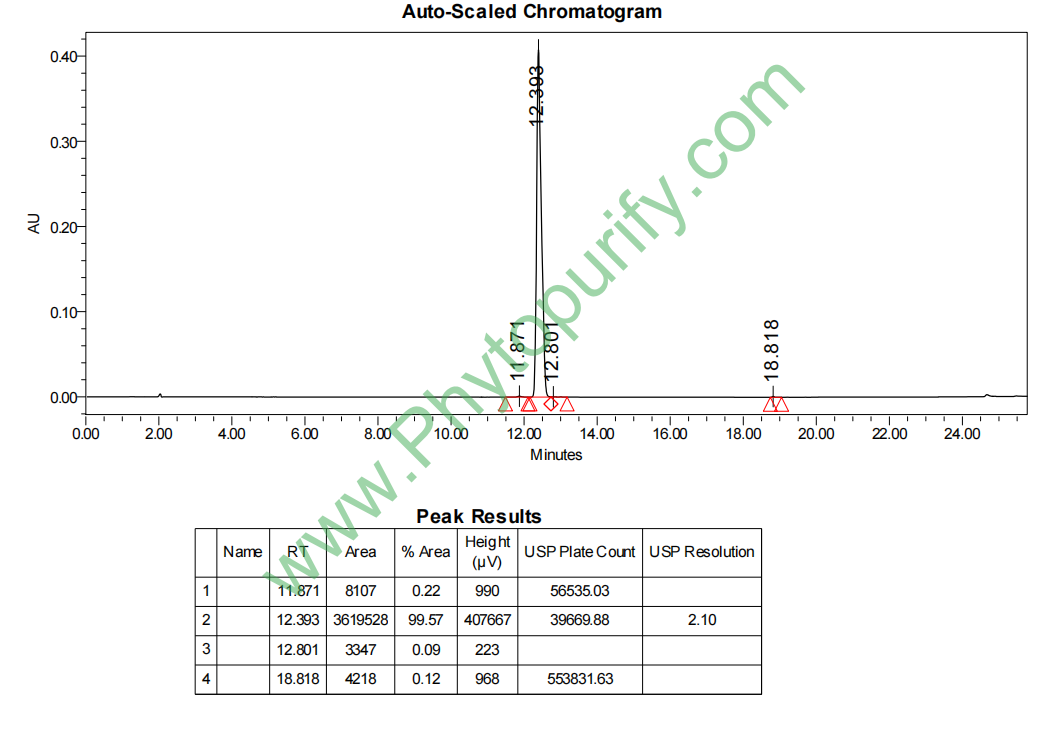
Storage conditions:Short-term storage at 2~8℃, long-term storage at -20 ~ -80℃
204.8300
-.2269
-.2333
2.1278
.5680
.1205
Low
71.5073
4.6548
No
No
No
No
No
No
0.0
Yes
Yes
Yes
Yes
Licorice(Glycyrrhiza uralensis Fisch., as one of the most widely used traditional Chinese medicines, is known as the "old man of the country" due to its complex chemical composition and diverse pharmacological effects. In addition to the well-known glycyrrhizic acid components, flavonoids are also an important material basis for their pharmacological effects. Liquiritin apioside (CAS: 74639-14-8) is a unique chalcone glycoside compound in licorice, characterized by the addition of an apiose group to the glucose group of Liquiritin. In recent years, with the deepening of pharmacological research on natural products, celery sugar glycyrrhizin has gradually stood out from numerous licorice flavonoids, demonstrating unique biological activities that distinguish it from other components. Research has shown that celery sugar glycyrrhizin is an orally effective transient receptor potential vanilloid 1 (TRPV1) receptor inhibitor, and can exert protective effects by regulating oxidative stress pathways, especially in the field of respiratory diseases, demonstrating potential research value. This article aims to provide a systematic review of the chemical structure, plant origin, pharmacological activity, mechanism of action, medicinal properties, and application prospects of celery sugar glycyrrhizin, in order to provide comprehensive scientific references for the in-depth research and development of this compound.
The chemical name of celery sugar glycyrrhizin is 7-hydroxy-2 ', 4' - dihydroxy-5-celery sugar glucosoxychalcone, with a molecular formula of C26H30O13 and a molecular weight of 550.5130. Its structural parent nucleus is chalcone (dihydrochalcone), and the 7th hydroxyl group of the A ring (phenylacetyl moiety) is connected to a disaccharide bond. The disaccharide is composed of one molecule of glucose and one molecule of apiose connected by a glycosidic bond, with the apiose group attached to a specific position of the glucose group. The introduction of this celery sugar group significantly changes the polarity, spatial conformation, and interaction mode with biomolecules of the molecule, which is the structural basis for its unique activity.
From the analysis of parameters related to medicinal properties, apigenin glycosides exhibit typical polar natural glycoside compound characteristics. Its lipid water partition coefficient (LogP) is -0.2269, indicating strong hydrophilicity. The topologically polar surface area (TPSA) is as high as 204.8300 Å ², mainly attributed to the oxygen atoms on multiple hydroxyl and sugar groups in the molecule. The predicted value of its water solubility is 2.1278 (LogS), which belongs to the soluble range. These physicochemical properties determine its distribution characteristics in the body: high polarity and large TPSA result in a predicted "low" ability to penetrate the blood-brain barrier, which to some extent limits its direct effects on central nervous system diseases, but may also reduce the risk of central side effects. In addition, preliminary computer simulation toxicity predictions showed no inhibitory tendency towards hERG potassium channels (hERG inhibition: No), and the Ames test predicted a value of 0.0, suggesting that it may not be mutagenic and has a relatively good safety starting point.
Celery sugar and glycyrrhizin are mainly derived from leguminous plants of the licorice genus, especially Ural licorice(Glycyrrhiza uralensis Fisch.)、 Swelling fruit licorice(G. inflata Bat. and licorice with light fruit(G. glabra L. Dry roots and rhizomes. The content of licorice varies among different varieties and regions, and it is usually present as a trace or secondary component of licorice flavonoids.
The extraction of celery sugar and glycyrrhizin from licorice usually follows the general extraction process of flavonoids. Firstly, solvent extraction method is adopted, commonly used solvents include methanol, ethanol, or their aqueous solutions (such as 70% ethanol), which are extracted by reflux, ultrasound, or microwave-assisted extraction to improve efficiency. After vacuum concentration, the crude extract was enriched and purified using macroporous adsorption resins (such as AB-8 and D101), and gradient elution was performed using ethanol water solutions of different concentrations. Glycyrrhizin was usually found in the low to medium polarity elution sites. Further purification relies on chromatographic techniques such as silica gel column chromatography, polyamide column chromatography, as well as high-performance liquid chromatography (HPLC) or preparative high-performance liquid chromatography (pre HPLC). Modern analytical techniques such as liquid chromatography-mass spectrometry (LC-MS) and nuclear magnetic resonance (NMR) are key means for identifying its structure and conducting content determination. Optimizing the extraction process to improve its yield and purity is the foundation for ensuring subsequent pharmacological research and application development.
In recent years, significant progress has been made in the pharmacological activity research of celery sugar glycyrrhizin, which mainly focuses on respiratory system protection, antioxidant and anti-inflammatory effects.
1. Respiratory protection function: This is the activity of celery sugar glycyrrhizin that has received the most attention. Research has confirmed that celery sugar glycyrrhizin can selectively inhibit the Laryngeal Chemoreflex (LCR) induced by chemical stimuli such as capsaicin and citric acid, while having no significant effect on the Laryngeal Mechanorefrlex (LMR). The excessive activation of LCR is associated with the pathological processes of various respiratory diseases, such as chronic cough, asthma, and laryngeal spasms. Celery sugar glycyrrhizin exhibits the potential to suppress LCR, relieve cough, and alleviate airway hyperresponsiveness, providing experimental evidence for its application in refractory cough such as cough variant asthma and gastroesophageal reflux cough.
2. Anti oxidative damage effect: Celery sugar glycyrrhizin has strong antioxidant activity. In various cellular and animal oxidative stress models, it can effectively reduce reactive oxygen species (ROS) levels, alleviate lipid peroxidation and DNA oxidative damage. Its antioxidant effect is not simply achieved by directly clearing free radicals, but more importantly by upregulating the intracellular antioxidant defense system.
3. Anti inflammatory effect: Inflammation is closely related to oxidative stress. Research has shown that celery sugar glycyrrhizin can inhibit the excessive production of inflammatory factors (such as TNF - α, IL-6, IL-1 β) in macrophages induced by lipopolysaccharides (LPS) and alleviate inflammatory reactions. This effect is related to its regulation of inflammatory signaling pathways such as NF - κ B.
4. Neuroprotective effect: Although its blood-brain barrier permeability is low, in some models of peripheral neuropathy or potential damage to the blood-brain barrier, apigenin has shown protective potential for nerve cells through its antioxidant and anti-inflammatory mechanisms, which is worth further exploration.
The multiple pharmacological activities of celery sugar glycyrrhizin stem from its precise regulation of multiple molecular targets and signaling pathways, and its mechanism of action network is becoming increasingly clear.
1. Core target: TRPV1 receptor inhibition
TRPV1 receptor is a non selective cation channel that can be activated by capsaicin, heat (>43 ° C), protons (H ⁺), etc., playing a key role in pain perception, cough reflex, and inflammation. Celery sugar glycyrrhizin has been identified as an orally effective TRPV1 receptor inhibitor. It may inhibit calcium influx and block downstream signaling by directly binding to specific sites of TRPV1 receptors, antagonizing the activation of capsaicin or proton channels. This is the direct molecular basis for its selective inhibition of laryngeal chemoreflex (LCR) without affecting mechanical reflex (LMR), as LCR is mainly triggered by TRPV1 mediated activation of chemosensory nerve fibers (C fibers).
2. Key mechanism: Regulating oxidative stress and antioxidant defense system
The antioxidant effect of celery sugar glycyrrhizin is the core link in its anti-inflammatory and cell protective effects, involving the regulation of multiple key targets:
- Inhibition of ROS generation sources: It can inhibit the activity of NADPH oxidase (NOX), which is an important source of intracellular ROS (especially superoxide anions), thereby reducing ROS bursts from the source.
- Activate NRF2/ARE pathway: This is one of its most prominent mechanisms. Nuclear factor E2 related factor 2 (NRF2, encoded by the NFE2L2 gene) is a central regulator of cellular antioxidant response. At rest, NRF2 binds to Keap1 and is degraded by ubiquitination. Celery sugar glycyrrhizin may promote the dissociation and transfer of NRF2 from Keap1 to the nucleus by modifying cysteine residues on Keap1. In the nucleus, NRF2 binds to antioxidant response elements (ARE), initiating the transcriptional expression of a series of phase II detoxifying enzymes and antioxidant proteins, including:
- Heme oxygenase-1 (HMOX1): Catalyze the degradation of hemoglobin to produce biliverdin and carbon monoxide, which have antioxidant and anti-inflammatory effects.
- Superoxide dismutase (SOD1, SOD2): Catalytic dismutation of superoxide anions into hydrogen peroxide and oxygen.
- Catalase (CAT): Decompose hydrogen peroxide into water and oxygen.
- Glutathione peroxidase 1 (GPX1): Reduce hydrogen peroxide and lipid peroxides using glutathione.
- Weakening the interaction between ROS and TRPV1: In an oxidative stress environment, ROS (such as H ₂ O ₂) can directly oxidize cysteine residues on TRPV1 channel proteins, enhancing their sensitivity and opening probability. Celery sugar glycyrrhizin effectively clears ROS and inhibits its generation, blocking the "sensitization" effect of ROS on TRPV1, forming a synergistic effect of "antioxidant TRPV1 inhibition", which may be the underlying mechanism of its efficient inhibition of LCR.
In summary, celery sugar glycyrrhizin directly inhibits TRPV1 receptors and activates the NRF2 mediated antioxidant defense system upstream, forming an effective intervention strategy targeting the oxidative stress inflammation sensory sensitization pathological axis.
Based on its physicochemical properties and preliminary computer simulation data, celery sugar glycyrrhizin has shown certain development potential, but its typical glycoside compound characteristics also pose challenges.
Drug Evaluation:
- Advantage: Oral administration is effective, which is a prerequisite for its development as an oral medication. Predict no hERG inhibition or mutagenicity, with good safety prospects. Derived from the traditional edible/medicinal plant licorice, the historical experience of long-term human use provides a certain endorsement for its safety.
- Challenge: A high molecular weight (>500) and high TPSA may lead to low oral bioavailability. The glycoside structure may be hydrolyzed by microbial communities or enzymes in the gastrointestinal tract to produce aglycones (glycyrrhizin) and glycosides, and the true pharmacological form of its action in vivo remains to be clarified. The low permeability of the blood-brain barrier limits its effect on central targets.
Pharmacokinetic studies:
At present, there are insufficient reports on the pharmacokinetic studies of the celery sugar glycyrrhizin system, but speculation can be made based on similar compounds. After oral administration, the absorption of licorice flavonoids is limited in the upper intestine, mainly through passive diffusion or transport in the lower small intestine and colon. The gut microbiota is rich in β - glucosidase and apidase, which may gradually hydrolyze it into secondary metabolites such as glycyrrhizin and glycyrrhizin, which may also be active. The absorbed prototype drug and metabolites may undergo further II binding reactions (such as glucuronidation and sulfation) in the liver. Its high polarity may lead to renal excretion as the main elimination pathway. Future research needs to clarify its absolute bioavailability, plasma protein binding rate, tissue distribution, metabolite profile, and main excretion pathways in animal models such as rats and dogs, as well as in humans. These data are crucial for dosage form design and clinical dosing regimen formulation.
The unique pharmacological mechanism of celery sugar glycyrrhizin has brought broad application prospects in multiple disease fields, especially respiratory system diseases.
1. Respiratory system diseases:
- Chronic cough: For refractory chronic cough (such as cough hypersensitivity syndrome), selective inhibition of TRPV1 mediated chemical reflex without affecting mechanical protective reflex theoretically has the advantages of good cough suppression effect and few side effects.
- Asthma and Chronic Obstructive Pulmonary Disease (COPD): Airway oxidative stress and neurogenic inflammation are important pathological features of asthma and COPD. Celery sugar glycyrrhizin may alleviate airway inflammation and reduce airway hyperresponsiveness through antioxidant and TRPV1 inhibition, serving as an adjuvant therapy drug.
- Throat spasm and inhalation injury: Can be used to prevent or treat laryngeal spasms and airway damage caused by chemical irritants such as stomach acid and smoke.
2. Other oxidative stress-related diseases:
- Cardiovascular disease: Such as atherosclerosis and myocardial ischemia reperfusion injury, its antioxidant and anti-inflammatory effects may provide protection.
- Metabolic disorders: In diabetes and its complications (such as diabetes nephropathy, neuropathy), regulating oxidative stress has therapeutic significance.
- Skin photoaging and inflammatory skin diseases: Can be used as an active ingredient in functional cosmetics or topical preparations.
Outlook and Challenges:
Future research should focus on the following aspects:
- In depth mechanism research: Clarify its precise binding site with TRPV1 receptor, elucidate the specific molecular switch that activates NRF2, and explore whether it affects other TRP channels (such as TRPA1).
- Pharmacokinetic and metabolic studies: The system conducts in vivo ADME research, identifies the main active metabolites, and improves their oral bioavailability or achieves lung targeted delivery through structural modifications (such as prodrug preparation) or novel drug delivery systems (such as nanoparticles, liposomes).
- Preclinical and clinical studies: Validate its efficacy and long-term safety in animal models closer to human diseases, such as chronic cough guinea pig models and asthma mouse models, and gradually advance clinical trials.
- Exploration of combination therapy: Study its synergistic effect with existing standard treatment drugs such as glucocorticoids and bronchodilators, and explore combination therapy regimens.
As a structurally unique flavonoid glycoside in licorice, celery sugar glycyrrhizin has emerged in natural product pharmacology research due to its orally effective TRPV1 inhibition and strong NRF2 mediated antioxidant activity. It cleverly acts on the key nodes of the pathological pathway of "oxidative stress-TRPV1 sensitization neurogenic inflammation", providing new candidate molecules and strategies for the treatment of respiratory diseases such as chronic cough and asthma. Despite facing common challenges such as bioavailability in drug development, its clear target of action, good safety prediction, and profound traditional application background endow it with enormous potential for development. With a more detailed analysis of its mechanism of action, clarification of its pharmacokinetic properties, and innovation in formulation technology, celery sugar glycyrrhizin is expected to move from the laboratory to clinical application, becoming a modern innovative drug derived from traditional Chinese medicine, benefiting a large number of patients.
