


Product name: Jujuboside B
Synonym name:
Catalogue No.: BP0814
Cas No.: 55466-05-2
Formula: C52H84O21
Mol Weight: 1045.22
Botanical Source: seeds of Zizyphus jujuba (Chinese date)
Physical Description: White powder
Type of Compound: Triterpenoids
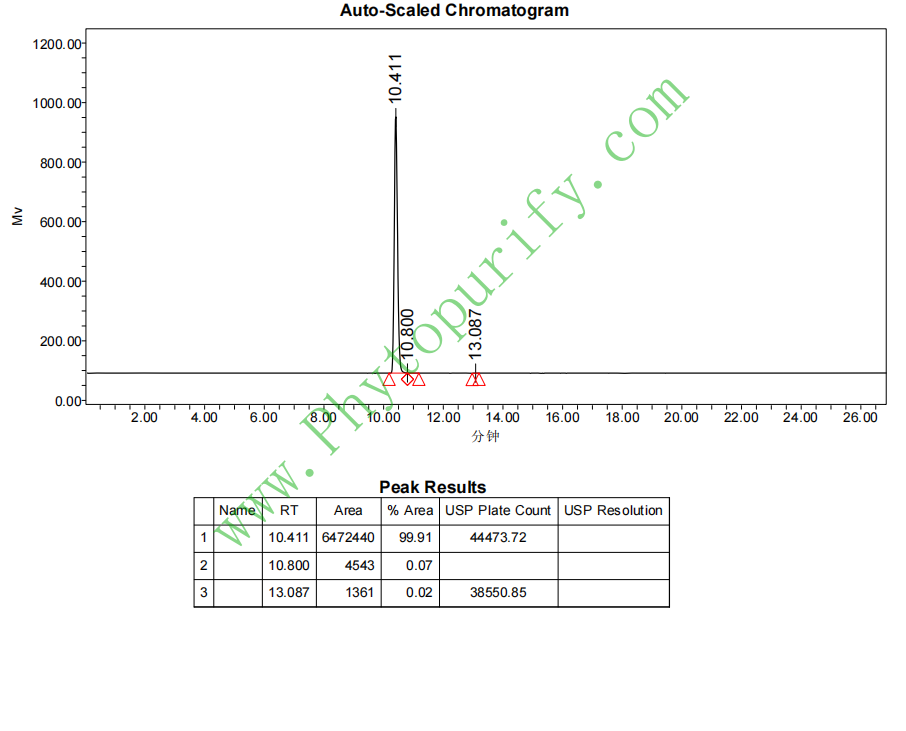
Purity: 95%~99%
Analysis Method: HPLC-DAD or/and HPLC-ELSD
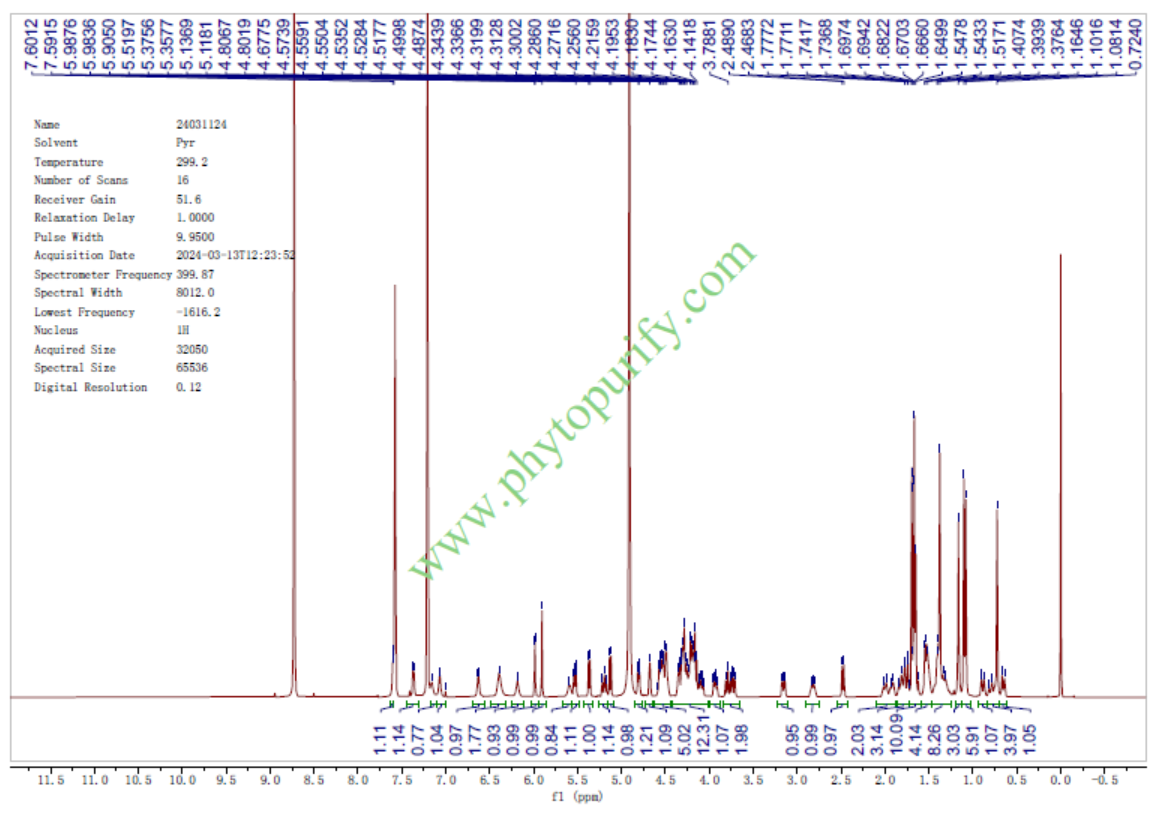
Identification Method: Mass, NMR
Packing: Brown vial or HDPE plastic bottle
Storage: Store in a well closed container, protected from air and light. Put into refrigerate or freeze for long term storage.
Whenever possible, you should prepare and use solutions on the same day. However, if you need to make up stock solutions in advance, we recommend that you store the solution as aliquots in tightly sealed vials at -20℃. Generally, these will be useable for up to two weeks.
The product could be supplied from milligrams to grams, up to kilograms
Inquire for bulk scale.
Descriptions:
Jujuboside B is one of the saponins isolated from the seeds of Zizyphus jujuba var, has
antitumor activity and the underlying mechanism via induction of apoptosis and autophagy.[1]
Jujuboside B has potent inhibitory effects on collagen-, thrombin-, AA-, and ADP-induced aggregation, also exhibits superior protection on thromboembolic model, it has a significant inhibitory effect on collagen-induced thromboxane A2 production in rat platelets; suggest that it be considered as components of preventive and therapeutic herbal drugs targeting cardiovascular diseases associated with platelet hyperaggregation.[2]
Jujuboside B reduces vascular tension endothelium-dependently by increasing Ca2+Influx and activating endothelial nitric oxide synthase, it is a natural compound with new pharmacological effects on improving endothelial dysfunction and treating vascular diseases.[3]
References:
[1] Xu M Y, Lee S Y, Kang S S, et al. J Nat Prod, 2014, 77(2):370-6.
[2] Seo E J, Lee S Y, Kang S S, et al. Phytother Res, 2013, 27(6):829-34.
[3] Zhao Y, Zhang X, Li J, et al. Plos One, 2016, 11(2)):e0149386.
[4] X Y Li, Gao Z, An X N, et al. Food Sci Technol, 2014(12):299-302.
HPLC of Jujuboside B
HNMR of Jujuboside B
Storage conditions:Short-term storage at 2~8℃, long-term storage at -20 ~ -80℃
314.8300
2.1156
2.1154
.0710
.5090
.3708
Low
69.3667
6.8382
No
No
No
No
No
No
0.0
Yes
No
No
No
Sour jujube kernels(Ziziphus jujuba Mill. var. spinosa Bunge Hu ex H. F. Chow, as a representative of traditional Chinese medicine for calming the nerves, has a history of more than two thousand years of clinical application in traditional Chinese medicine. It is mainly used to treat diseases such as restlessness, insomnia, palpitations, and dreams. Modern pharmacological research has revealed that the sedative and hypnotic effects of jujube seeds are closely related to the various active ingredients they contain, among which saponin compounds are considered the core pharmacological substance basis. Jujuboside B, also known as JuB, is one of the high content dammarane type triterpenoid saponins in jujube seeds. In recent years, it has received widespread attention due to its unique neuropharmacological activity.
The chemical name of jujube seed saponin B is (3 β, 16 β, 20R) -16,23:16,30-diepoxy-20-hydroxydamam-24-en-3-yl - β - D-xylopyranosyl - (1 → 2) - β - D-glucopyranosyl - (1 → 3) - α - L-arabinopyranoside, with a CAS number of 55466-05-2. This compound not only has significant sedative and hypnotic effects, but also exhibits multiple pharmacological activities such as antiplatelet aggregation, anti anxiety, and neuroprotection. More importantly, the mechanism of action of jujube seed saponin B involves multiple neurotransmitter systems, including the 5-hydroxytryptamine (5-HT) system, gamma aminobutyric acid (GABA) system, etc., reflecting the multi-target and multi pathway characteristics of traditional Chinese medicine.
With the accelerated pace of life in modern society, the incidence rate of nervous system diseases such as insomnia and anxiety continues to rise, and the demand for safe and effective sedative hypnotics is increasingly urgent. As a natural product, jujube seed saponin B has a different mechanism of action and lower potential for side effects compared to traditional benzodiazepines, making it a research hotspot in the field of new drug development. This article will provide a systematic review of the research progress of jujube seed saponin B from the aspects of chemical structure, plant origin, pharmacological activity, mechanism of action, pharmacological evaluation, and clinical application prospects.
Suanzaoren saponin B belongs to the Damane type tetracyclic triterpenoid saponin, and its aglycone is jujubogenin, which has a unique 16,23:16,30 diepoxy structural unit. The molecular formula of this compound is C ₅₂ H ₈₄ O ₂₁, with a molecular weight of 1045.2230 Da. It is a typical high molecular weight natural glycoside. Its structural characteristics can be summarized as follows: a lipophilic triterpenoid glycoside skeleton connects three sugar units through glycosidic bonds, forming an amphiphilic molecule.
Specifically, the sugar chain of jujube seed saponin B consists of three monosaccharides: a β - D-xylopyranose (Xyl), a β - D-glucose pyranose (Glc), and an α - L-arabinose pyranose (Ara). The connection method of sugar chains is as follows: arabinose is directly connected to the hydroxyl group at position C-3 of the glycoside, glucose is connected to arabinose through a (1 → 3) glycosidic bond, and xylose is connected to glucose through a (1 → 2) glycosidic bond. This triple sugar chain structure endows jujube seed saponin B with unique spatial conformation and biological characteristics.
Jujube seed saponin B is a white or off white amorphous powder with typical physicochemical properties of saponin compounds. Its lipophilic water partition coefficient (LogP) is 2.1156, indicating that the compound has a certain degree of lipophilicity, but overall tends to be hydrophilic. The topologically polar surface area (TPSA) is as high as 314.8300 Å ², which is much higher than the recommended upper limit of 140 Å ² for oral drugs, indicating that this compound may face challenges in terms of membrane permeability.
In terms of water solubility, the water solubility of jujube seed saponin B is 0.0710 mg/mL, which belongs to insoluble compounds. This low water solubility is related to its high molecular weight and abundant polar groups, but also limits its bioavailability. It is worth noting that jujube seed saponin B has good solubility in organic solvents such as ethanol and methanol, which provides convenience for its extraction and purification.
From the perspective of chemical stability, jujube seed saponin B is relatively stable under acidic conditions, but may undergo glycosidic bond hydrolysis in strongly alkaline environments. In addition, the epoxy structure in its molecules may undergo ring opening under specific conditions, leading to structural rearrangement or degradation. Therefore, it is necessary to pay attention to the effects of pH and temperature conditions on the stability of compounds during the development and storage of formulations.
Suanzaoren saponin B mainly comes from the Rhamnaceae jujube plant Suanzaoye(Ziziphus jujuba Mill. var. spinosa)Dry and mature seeds. Jujube is widely distributed in North China, Northwest China, and Northeast China, with the highest yield and best quality in Hebei, Shanxi, Shaanxi, and other regions. Except for sour jujube, plants belonging to the same genus such as Dian Ci jujube(Z. mauritiana Lam. and jujube(Z. jujuba Mill. also contains a small amount of jujube seed saponin B, but the content is much lower than that of jujube seed.
It is worth noting that the content of saponins B in jujube seeds varies significantly due to factors such as origin, harvest season, and storage conditions. Research has shown that mature jujube kernels harvested in autumn have the highest content of saponins, and prolonged storage time or improper storage conditions can lead to the degradation of saponin components. In addition, the content of saponin B in jujube kernels from different origins can range from 0.01% to 0.1%, which poses requirements for quality control and standardized production of medicinal materials.
The traditional method for extracting saponins B from jujube seeds is mainly based on the principle of solvent extraction, utilizing the solubility characteristics of saponin compounds in alcohol water mixed solvents. The classic extraction process includes crushing jujube kernels, defatting them with petroleum ether, refluxing them with 70% -80% ethanol for extraction, concentrating the extract and extracting it with n-butanol, and finally separating and purifying jujube kernel saponins B through column chromatography. Although this method is simple to operate, it has disadvantages such as low extraction efficiency, high solvent consumption, and long cycle time.
In recent years, various modern extraction techniques have been applied to the extraction of saponins B from jujube seeds, significantly improving extraction efficiency and product purity
Ultrasound assisted extraction Utilizing the cavitation effect of ultrasound to disrupt cell wall structure, accelerate solvent penetration and component dissolution. Under optimized conditions, ultrasound assisted extraction can increase the extraction rate of jujube seed saponin B by 30% -50%, while shortening the extraction time to 30-60 minutes.
Microwave assisted extraction Microwave radiation causes polar molecules to rapidly vibrate and generate heat, leading to an increase in temperature and pressure inside the cell and promoting the release of active ingredients. This method has the advantages of short extraction time (10-20 minutes) and low solvent usage.
Enzyme assisted extraction Using cellulases, pectinases, and other enzymes to hydrolyze cell wall components and reduce mass transfer resistance. Enzymatic pretreatment followed by solvent extraction can significantly improve the extraction rate of saponin components.
Supercritical fluid extraction Using CO ₂ as the extraction medium, selectively extract target components by adjusting pressure and temperature. This method is environmentally friendly, but the equipment cost is relatively high, and it is currently mainly used for laboratory research.
In terms of purification, macroporous adsorption resin (such as D101, AB-8 type) chromatography is a commonly used method for separating and purifying saponins B from jujube seeds, and effective enrichment of saponin components can be achieved through gradient elution. In addition, high-speed countercurrent chromatography (HSCCC) and preparative high-performance liquid chromatography (Prep HPLC) have also been used for the preparation of high-purity jujube seed saponin B, with a product purity of over 98%.
The sedative and hypnotic effects of jujube seed saponin B are its most widely studied pharmacological activities. Animal experiments have shown that jujube seed saponin B can dose dependently reduce the number of spontaneous activities in mice, prolong pentobarbital induced sleep time, and shorten sleep latency. Unlike traditional benzodiazepines, jujube seed saponin B produces sedative and hypnotic effects without causing significant muscle relaxation or motor coordination disorders, indicating its better safety.
It is worth noting that the effect of jujube seed saponin B on sleep structure has also received attention. Electroencephalogram (EEG) studies have shown that jujube seed saponin B can increase the duration of non rapid eye movement sleep (NREM), especially slow wave sleep (SWS), with little effect on rapid eye movement sleep (REM). The characteristic of selectively regulating sleep structure gives it a unique advantage in improving sleep quality.
In addition to sedative and hypnotic effects, jujube seed saponin B also exhibits significant anti anxiety activity. In classic anxiety models such as the elevated cross maze experiment and the light dark box experiment, mice treated with jujube seed saponin B showed more open arm entry times and dwell time, as well as less anxiety like behavior. Compared with traditional anti anxiety drugs such as diazepam, the anti anxiety effect of jujube seed saponin B takes effect slower but lasts longer, and does not produce tolerance or dependence.
One of the initially reported activities of jujube seed saponin B was to inhibit platelet aggregation. In vitro experiments have shown that jujube seed saponin B can inhibit platelet aggregation induced by various inducers such as ADP, collagen, and arachidonic acid, with an IC ₅₀ value in the range of 10-50 μ M. Mechanism studies suggest that jujube seed saponin B may exert antiplatelet effects by inhibiting the mobilization of calcium ions and the generation of thromboxane A ₂ (TXA ₂) in platelets. This activity suggests that jujube seed saponin B may have potential application value in the prevention of cardiovascular diseases.
Recent studies have revealed the neuroprotective activity of jujube seed saponin B. In the glutamate induced neuronal damage model, pretreatment with jujube seed saponin B can significantly reduce neuronal apoptosis rate, alleviate the decrease in mitochondrial membrane potential, and inhibit the production of reactive oxygen species (ROS). In addition, in the Alzheimer's disease cell model induced by β - amyloid protein (A β), jujube seed saponin B can reduce the aggregation of A β and the excessive phosphorylation of tau protein, and improve the expression of synaptic plasticity related proteins.
In the model of cerebral ischemia-reperfusion injury, jujube seed saponin B can reduce the volume of cerebral infarction, improve neurological function scores, and alleviate the damage to the blood-brain barrier. These protective effects are closely related to the inhibition of inflammatory response, antioxidant stress, and anti apoptotic mechanisms.
In addition to the main activities mentioned above, jujube seed saponin B also exhibits various other pharmacological effects, including:
- immunomodulation Regulating macrophage function and affecting cytokine secretion
- anti-inflammatory effect Inhibition of NF - κ B signaling pathway and reduction of pro-inflammatory cytokine expression
- antioxidant Directly eliminate free radicals and enhance antioxidant enzyme activity
- Improve learning and memory Improving spatial learning and memory abilities in various cognitive impairment models
The sedative, hypnotic, and anti anxiety effects of jujube seed saponin B are closely related to the regulation of the 5-hydroxytryptamine (5-HT) system. Molecular docking and pharmacological studies have shown that jujube seed saponin B can bind to the 5-HT transporter (SERT, encoded by the SLC6A4 gene), inhibiting its reuptake of 5-HT in the synaptic cleft, thereby increasing the concentration of 5-HT in the synaptic cleft. In addition, jujube seed saponin B can also interact with 5-HT receptors, especially 5-HT ₁ A receptor (HTR1A) and 5-HT ₂ A receptor (HTR2A).
Specifically, jujube seed saponin B has a partial excitatory effect on 5-HT ₁ A receptors, activating which can inhibit the firing frequency of 5-HT neurons in the raphe nucleus and produce anti anxiety effects. However, for the 5-HT ₂ A receptor, jujube seed saponin B exhibits an antagonistic effect. Blocking this receptor can reduce wakefulness and promote sleep. This differential regulation of different targets in the 5-HT system may be the molecular basis for the unique pharmacological effects of jujube seed saponin B.
Gamma aminobutyric acid (GABA) is the most important inhibitory neurotransmitter in the central nervous system, and GABAergic receptors are classic targets of benzodiazepines. Research has shown that jujube seed saponin B can enhance the function of GABAergic receptors, but its mode of action is different from that of benzodiazepines. Jujube seed saponin B does not compete with benzodiazepine binding sites, but enhances the binding affinity between GABA and receptors through allosteric regulation.
Molecular target analysis showed that jujube seed saponin B may act on multiple subunits of GABAergic receptors, including α 1 (GABRA1), β 2 (GABRB2), and γ 2 (GABRG2) subunits. Among them, the regulation of the γ 2 subunit is considered to be the key to the sedative effect of jujube seed saponin B without causing significant tolerance. In addition, jujube seed saponin B can upregulate the expression of GABA synthase glutamate decarboxylase (GAD), increase the synthesis and release of GABA, thereby enhancing GABAergic neurotransmission.
The mechanism of action of jujube seed saponin B reflects the characteristic of "multi-target and multi pathway" of active ingredients in traditional Chinese medicine. In addition to the main targets mentioned above, jujube seed saponin B can also regulate various signaling pathways and molecular targets:
This multi-target regulation mode enables jujube seed saponin B to produce therapeutic effects while avoiding the common side effects and resistance issues of single target drugs. Network pharmacology analysis shows that the target network of jujube seed saponin B involves multiple biological processes such as neurotransmitter system, ion channels, and signal transduction, which are consistent with its multiple pharmacological activities such as sedation, hypnosis, anti anxiety, and neuroprotection.
Based on evaluation criteria such as Lipinski's Five Rules and Veber's Rules, the pharmacological parameters of jujube seed saponin B exhibit a clear "double-edged sword" characteristic. Its molecular weight (1045.22 Da) far exceeds the threshold of 500 Da, and its TPSA (314.83 Å ²) is also much higher than the recommended upper limit of 140 Å ². Although the LogP value (2.12) is within a reasonable range, it tends to be hydrophilic. These parameters suggest that the oral bioavailability of jujube seed saponin B may be low and the membrane permeability may be poor.
However, jujube seed saponin B exhibits significant advantages in terms of safety. The prediction result of hERG inhibition is negative, indicating a low risk of cardiac toxicity. The Ames test result is 0.0, indicating no significant mutagenicity. These safety data provide important support for the further development of jujube seed saponin B.
The pharmacokinetic study of jujube seed saponin B is not yet sufficient, but some key characteristics have been revealed in previous studies:
absorb After oral administration, the absorption of jujube seed saponin B is poor, and the absolute bioavailability is usually less than 5%. This is mainly attributed to the poor membrane permeability caused by its high molecular weight and hydrophilicity, as well as the efflux of P-glycoprotein (P-gp). However, gut microbiota may metabolize jujube seed saponin B into aglycones or other active metabolites, which may have better absorption characteristics.
distribution The blood-brain barrier permeability of jujube seed saponin B is relatively low, which is consistent with its high polarity surface area and hydrophilicity. However, animal experiments have shown that it can still be detected in brain tissue, suggesting the possibility of active transport or passive diffusion when the blood-brain barrier is damaged. In addition, jujube seed saponin B is widely distributed in tissues such as the liver and kidneys.
Metabolism Jujube seed saponin B is mainly metabolized by gut microbiota, gradually hydrolyzing glycosidic bonds to generate secondary glycosides and aglycones. The liver cytochrome P450 enzyme system may also be involved in its metabolism, but further research is needed on the specific metabolic pathways.
excretion Jujube seed saponin B and its metabolites are mainly excreted through bile and feces, with less excretion in urine. Its half-life varies depending on the route of administration and animal species, generally within the range of 2-6 hours.
Multiple formulation strategies have been explored to improve the bioavailability of jujube seed saponin B in response to the challenges in its pharmacological properties
Jujube seed saponin B has broad application prospects in the treatment of insomnia. Compared with existing benzodiazepines and Z-drugs, jujube seed saponin B has the following potential advantages: it does not produce significant drug dependence, tolerance, and withdrawal reactions; The impact on sleep structure is closer to physiological sleep; The residual effect during the day is small and does not affect cognitive function. These characteristics make it particularly suitable for long-term treatment of chronic insomnia.
At present, jujube seed extract preparations with jujube seed saponin B as the main active ingredient have been clinically used to improve sleep, but high-purity jujube seed saponin B preparations have not yet been launched. In the future, the development of new sedative hypnotic drugs based on jujube seed saponin B, especially for refractory insomnia and elderly insomnia patients, has important clinical value.
Anxiety disorder is one of the most common mental illnesses, and existing first-line drugs such as selective 5-HT reuptake inhibitors (SSRIs) have slow onset and many side effects. The anti anxiety mechanism of jujube seed saponin B involves partial activation of 5-HT ₁ A receptors and enhancement of the GABAergic system. This dual mode of action may result in faster and more comprehensive anti anxiety effects. Preclinical studies have confirmed its anti anxiety activity, but more clinical trials are needed to validate its effectiveness and safety.
With the aging population, the prevention and treatment of neurodegenerative diseases such as Alzheimer's disease and Parkinson's disease have become major public health issues. The neuroprotective, anti-inflammatory, antioxidant, and neurotrophic effects of jujube seed saponin B make it potentially valuable for the prevention and treatment of neurodegenerative diseases. Especially its role in improving sleep and mood may have a positive impact on improving non cognitive symptoms such as sleep disorders, anxiety, and depression in patients with neurodegenerative diseases.
The anti platelet aggregation activity of jujube seed saponin B provides a basis for its application in the prevention of cardiovascular diseases. Compared with traditional antiplatelet drugs such as aspirin, the mechanism of action of jujube seed saponin B is different and may be suitable for patients with aspirin resistance or intolerance. In addition, its calming and calming effects may have a synergistic therapeutic effect on anxiety and sleep disorders commonly associated with cardiovascular disease patients.
Although jujube seed saponin B has various pharmacological activities and good safety, its clinical translation still faces many challenges:
Future research directions should include: developing novel drug delivery systems to improve bioavailability; Comprehensively elucidate its mechanism of action using systems pharmacology and network pharmacology methods; Conduct standardized clinical trials to verify its effectiveness and safety; Explore the synergistic effect of jujube seed saponin B with other active ingredients and develop a compound preparation based on traditional Chinese medicine theory.
As a key active ingredient in jujube seeds, saponins B from jujube seeds have shown significant research value and development potential in areas such as sedation, hypnosis, anti anxiety, neuroprotection, and antiplatelet aggregation due to their unique chemical structure and multi-target pharmacological mechanisms. Its function involves multiple neurotransmitter systems such as 5-HT system and GABAergic system, reflecting the multi-target regulation characteristics of natural products, providing lead compounds for the development of new neurological drugs.
Although jujube seed saponin B faces challenges in low bioavailability in medicinal development, its excellent safety characteristics and unique pharmacological activity give it irreplaceable advantages. With the development of modern formulation technology and a deeper understanding of its mechanism of action, jujube seed saponin B is expected to be transformed from a traditional Chinese medicine active ingredient into an innovative drug that can be used clinically, providing new options for the treatment of neurological diseases such as insomnia and anxiety.
From a broader perspective, the research process of jujube seed saponin B also provides useful insights for the modern development of active ingredients in traditional Chinese medicine: respecting the clinical application experience of traditional Chinese medicine, combining modern pharmacology and medicinal chemistry research methods, deeply exploring the medicinal value of natural products, and ultimately achieving a leap from "empirical medicine" to "evidence-based medicine". I believe that in the near future, with the continuous deepening of related research, jujube seed saponin B and its derivatives will play a more important role in clinical treatment.
