


Product name: Spinosin
Synonym name: Flavoayamenin
Catalogue No.: BP1336
Cas No.: 72063-39-9
Formula: C28H32O15
Mol Weight: 608.549
Botanical Source: Ziziphispinosae semen
Physical Description:
Type of Compound: Flavonoids
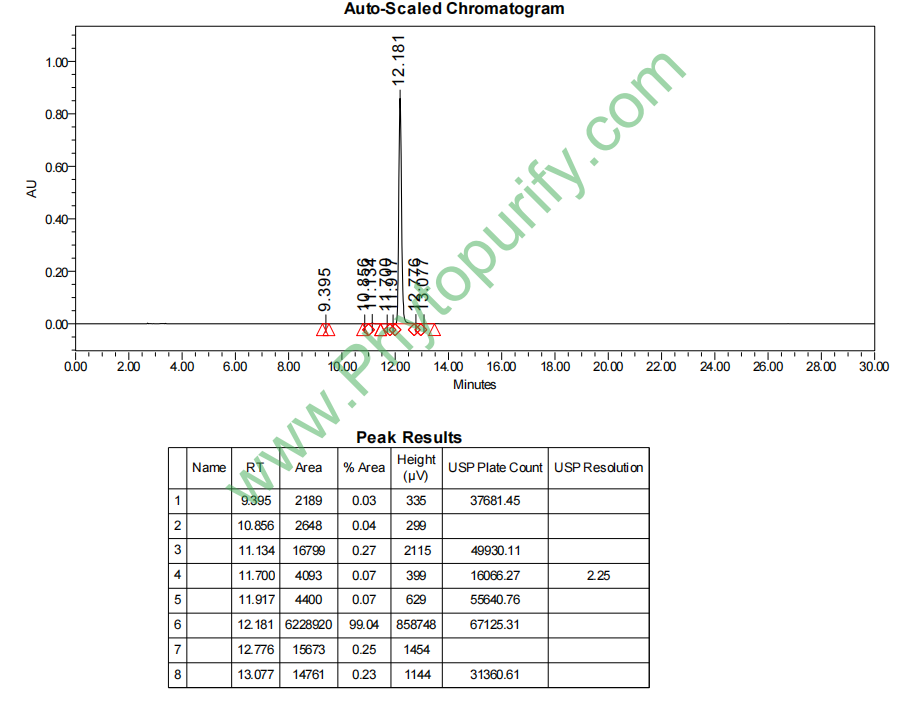
Purity: 95%~99%
Analysis Method: HPLC-DAD or/and HPLC-ELSD
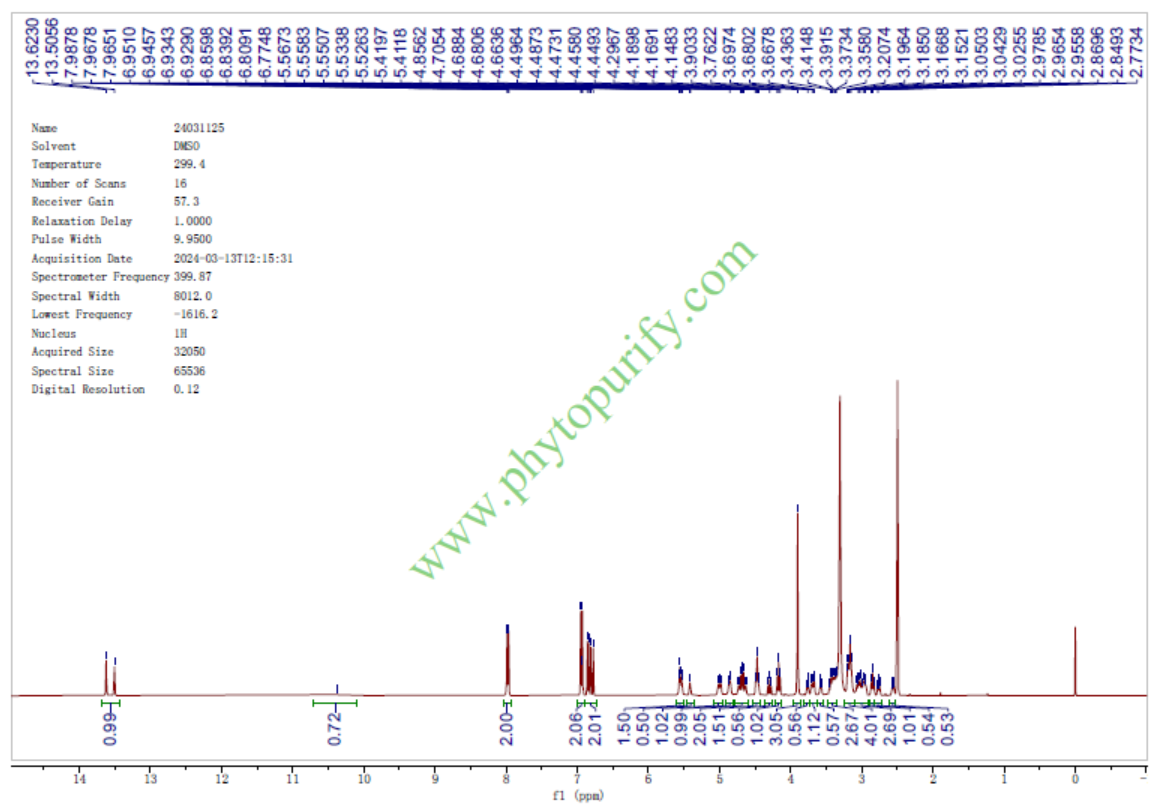
Identification Method: Mass, NMR
Packing: Brown vial or HDPE plastic bottle
The product could be supplied from milligrams to grams
Inquire for bulk scale.
Description:
Spinosin has neuroprotective, anxiolytic-like and anti-inflammatory effects, it ameliorated memory impairment induced through AβO, the serotonergic neurotransmitter system, it also potentiated pentobarbital-induced sleep via the serotonergic system.
References:
Biomol Ther (Seoul). 2015 Mar;23(2):156-64.
Spinosin, a C-Glucosylflavone, from Zizyphus jujuba var. spinosa Ameliorates Aβ1-42 Oligomer-Induced Memory Impairment in Mice.
Alzheimer's disease (AD) is a neurodegenerative disorder associated with progressive memory loss and neuronal cell death. Although numerous previous studies have been focused on disease progression or reverse pathological symptoms, therapeutic strategies for AD are limited. Alternatively, the identification of traditional herbal medicines or their active compounds has received much attention. The aims of the present study were to characterize the ameliorating effects of Spinosin, a C-glucosylflavone isolated from Zizyphus jujuba var. spinosa, on memory impairment or the pathological changes induced through amyloid-β1-42 oligomer (AβO) in mice.
METHODS AND RESULTS:
Memory impairment was induced by intracerebroventricular injection of AβO (50 μM) and Spinosin (5, 10, and 20 mg/kg) was administered for 7 days. In the behavioral tasks, the subchronic administration of Spinosin (20 mg/kg, p.o.) significantly ameliorated AβO-induced cognitive impairment in the passive avoidance task or the Y-maze task. To identify the effects of Spinosin on the pathological changes induced through AβO, immunohistochemistry and Western blot analyses were performed. Spinosin treatment also reduced the number of activated microglia and astrocytes observed after AβO injection. In addition, Spinosin rescued the AβO-induced decrease in choline acetyltransferase expression levels.
CONCLUSIONS:
These results suggest that Spinosin ameliorated memory impairment induced through AβO, and these effects were regulated, in part, through neuroprotective activity via the anti-inflammatory effects of Spinosin. Therefore, Spinosin might be a useful agent against the amyloid b protein-induced cognitive dysfunction observed in AD patients.
Pharmacol Biochem Behav. 2014 May;120:88-94.
Ameliorating effect of spinosin, a C-glycoside flavonoid, on scopolamine-induced memory impairment in mice.
Spinosin is a C-glycoside flavonoid isolated from the seeds of Zizyphus jujuba var. spinosa.
METHODS AND RESULTS:
This study investigated the effect of Spinosin on cholinergic blockade-induced memory impairment in mice. Behavioral tests were conducted using the passive avoidance, Y-maze, and Morris water maze tasks to evaluate the memory-ameliorating effect of Spinosin. Spinosin (10 or 20mg/kg, p.o.) significantly ameliorated scopolamine-induced cognitive impairment in these behavioral tasks with a prolonged latency time in the passive avoidance task, an increased percentage of spontaneous alternation in the Y-maze task and a lengthened swimming time in target quadrant in the Morris water maze task. In addition, a single administration of Spinosin in normal naïve mice also enhanced the latency time in the passive avoidance task. To identify the mechanism of the memory-ameliorating effect of Spinosin, receptor antagonism analysis and Western blotting were performed. The ameliorating effect of Spinosin on scopolamine-induced memory impairment was significantly antagonized by a sub-effective dose (0.5mg/kg, i.p.) of 8-hydroxy-2-(di-N-propylamino)tetralin, a 5-HT1A receptor agonist. In addition, Spinosin significantly increased the expression levels of phosphorylated extracellular signal-regulated kinases and cAMP response element-binding proteins in the hippocampus.
CONCLUSIONS:
Taken together, these results indicate that the memory-ameliorating effect of Spinosin may be, in part, due to the serotonergic neurotransmitter system, and that Spinosin may be useful for the treatment of cognitive dysfunction in diseases such as Alzheimer's disease.
HPLC of Spinosin
HNMR of Spinosin
Storage conditions:Short-term storage at 2~8℃, long-term storage at -20 ~ -80℃
Spinosin, CAS number 72063-39-9, is a flavonoid natural product with significant neuroprotective effects, belonging to C-glycosidic flavonoids. As an orally effective bioactive compound, Spinosin has received widespread attention in the field of neurodegenerative diseases, especially Alzheimer's disease (AD), due to its unique chemical structure and multi-target pharmacological effects. It exhibits potential antioxidant damage and neuroprotective functions by activating the Nrf2/HO-1 signaling pathway, inhibiting the production and polymerization of β - amyloid protein (A β 1-42). In addition, spinosin also exhibits central nervous system regulatory effects such as anti anxiety, demonstrating its diversity and clinical development potential as a natural drug candidate molecule.
This article aims to systematically review the chemical structure and physicochemical properties, plant sources, and extraction methods of spinosin, analyze its pharmacological activity and mechanism of action in detail, evaluate its pharmacological and pharmacokinetic characteristics, and prospect its clinical application prospects, providing theoretical basis and research direction for subsequent basic research and drug development.
Spiropine is a flavonoid C-glycoside with a molecular formula of C27H32O15 and a molecular weight of 608.5490. Its structural feature is that the flavonoid core is connected to two β - D-glucopyranose residues through C-glycosidic bonds, with specific substituents including hydroxyl groups at positions 5 and 4 ', methoxy group at position 7, and 2-O - β - D-glucopyranose - β - D-glucopyranose residue at position 6. This structure endows spinosin with high polarity and water solubility (approximately 1.87 mg/mL), with a LogP value of -0.6267, indicating strong hydrophilicity and weak lipid solubility.
The polarity characterization of spinosin is reflected by its high topological polar surface area (TPSA) of 249.2 Å ², indicating that it has certain limitations in cell membrane penetration and blood-brain barrier (BBB) penetration. The hERG channel inhibition experiment showed a negative result, indicating a low risk of cardiac toxicity. The Ames test result is 0.6, indicating a low risk of genotoxicity and a good safety basis.
Overall, the chemical structure of spinosin combines the biological activity of flavonoid skeleton with the water solubility advantage brought by C-glycosidic modification, providing a basis for its oral bioavailability and pharmacological activity. However, its low blood-brain barrier permeability is an important challenge for optimizing future drug design and delivery systems.
Spinosin is mainly found in the traditional Chinese medicine material Ziziphi Spinosae Semen. Ziziphi Spinosae Semen is the dried and mature seed of Ziziphus jujuba Mill. var. spinosa, a plant in the Rhamnaceae family. It is a commonly used medicinal herb in traditional Chinese medicine for calming the nerves and calming the body. Spinosin, as one of the main active flavonoids in jujube seeds, bears some pharmacological effects.
The common methods for extracting spinosin include hot reflux extraction, ultrasound assisted extraction, and microwave-assisted extraction. Generally, 80% ethanol or methanol is used as the solvent, combined with multi-stage solvent extraction to improve the extraction efficiency. Subsequently, high-purity spinosin was obtained through liquid-liquid distribution, column chromatography (such as silica gel column, C18 reverse phase column), and high performance liquid chromatography (HPLC) purification.
In recent years, supercritical fluid extraction and membrane separation technologies have also been introduced to improve extraction efficiency and purity. The optimization of the extraction process not only ensures the yield and quality of spinosin, but also lays the foundation for its large-scale production and drug development.
Spinosin has significant neuroprotective activity, mainly manifested in its antioxidant damage and anti-inflammatory effects on nerve cells. Multiple in vitro and in vivo studies have shown that spinosin can alleviate cell damage caused by oxidative stress, reduce neuronal apoptosis rate, and improve cognitive dysfunction.
In the Alzheimer's disease model, spinosin significantly improves cognitive impairment by inhibiting the production and aggregation of A β 1-42, reducing the formation of amyloid plaques. Animal experiments have shown that the learning and memory abilities of the spinosad treatment group are significantly better than those of the control group, indicating its potential therapeutic value.
Spinosin, as one of the main active ingredients in jujube seeds, exhibits excellent anti anxiety effects. Its mechanism of action may be related to regulating the balance of neurotransmitters in the central nervous system, which can regulate the GABAergic system, promote inhibitory conduction of neurons, and thus exert a calming effect.
Spinosin enhances the expression of endogenous antioxidant enzymes (such as SOD1, CAT, GPX1, etc.) by activating the Nrf2/HO-1 signaling pathway, significantly improving the antioxidant defense ability of cells and reducing cellular damage caused by oxidative stress. In addition, spinosin can also inhibit the expression of inflammatory factors, alleviate neuroinflammatory reactions, and further protect neurological function.
The main mechanism of action of spinosin is focused on activating the Nrf2 (nuclear factor erythroid 2-related factor 2) signaling pathway. Nrf2, as a key intracellular antioxidant transcription factor, regulates the expression of various antioxidant enzyme genes, including HO-1 (heme oxygenase-1), SOD1 (superoxide dismutase 1), CAT (catalase), and GPX1 (glutathione peroxidase 1). Spiropine promotes Nrf2 nuclear translocation, enhances antioxidant gene expression, and significantly improves cell resistance to oxidative stress.
In addition, spinosin can inhibit the production and aggregation of A β 1-42, alleviate the formation of amyloid plaques, and block the pathological process of Alzheimer's disease. Its specific targets involve the regulation of β - secretase 1 (BACE1) activity and intervention in the A β polymerization process.
In terms of anti anxiety, spinosin may play a central nervous system regulatory role by regulating the functions of GABA receptors and glutamate receptors, balancing the neurotransmitter system.
In summary, the multi-target mechanism of action of spinosin enables it to exhibit excellent pharmacological activities in neuroprotection, antioxidant, and anti anxiety, and has the potential to become a multifunctional neurological drug.
Spiropine has a relatively large molecular weight (608.5490) and contains multiple polar hydroxyl and sugar groups, resulting in strong hydrophilicity (LogP-0.6267), which poses certain obstacles to its oral absorption and blood-brain barrier penetration. Its higher TPSA (249.2 Å ²) further limits its ability to pass through lipid membranes, resulting in lower blood-brain barrier permeability.
Nevertheless, spinosin exhibits good water solubility (1.8667 mg/mL), which is advantageous for the development of oral formulations. The results of the in vitro hERG channel inhibition experiment were negative, indicating a low risk of cardiac toxicity. The Ames test results show that its genotoxicity risk is low and has a good safety basis.
At present, there is limited research on the pharmacokinetics of spinosad. Previous studies have shown that spinosin can be detected in plasma after oral administration, but its bioavailability is limited by first pass effects and low fat solubility. In the future, it is necessary to optimize its in vivo distribution and brain concentration through drug delivery systems such as structural modification or nanocarriers.
Spiropine, as a natural flavonoid C-glycoside, has shown broad application prospects in the prevention and treatment of neurodegenerative diseases, especially Alzheimer's disease, due to its significant neuroprotective and anti anxiety effects. It activates the Nrf2/HO-1 pathway, reduces oxidative stress and inflammatory response, blocks A β polymerization, and provides new ideas for the development of novel anti Alzheimer's disease drugs.
In addition, the anti anxiety effect of spinosin also provides possibilities for its application in the field of mental and neurological disorders, especially in the adjuvant treatment of symptoms such as anxiety and insomnia.
Future research should focus on pharmacokinetic optimization, formulation development, and clinical efficacy validation of spinosad. By modifying its structure to enhance its blood-brain barrier penetration ability, combined with modern drug delivery technology, its clinical application value may be significantly improved. Meanwhile, the clinical trial design of the system will be a crucial step in verifying its safety and efficacy.
Spiropine, as a natural flavonoid C-glycoside with unique structure and multiple pharmacological activities, exhibits excellent neuroprotective and anti anxiety effects. It provides a potential therapeutic strategy for neurodegenerative diseases by activating the Nrf2/HO-1 antioxidant pathway, inhibiting the production and aggregation of A β 1-42. Although there are certain challenges in its pharmacological development, especially with low blood-brain barrier permeability, it has good safety and high water solubility, providing advantages for the development of oral formulations.
In the future, combined with modern medicinal chemistry and drug delivery technology, spinosin is expected to become an important candidate drug for the treatment of Alzheimer's disease and related neurological disorders. In depth mechanism research and systematic clinical evaluation will promote its transformation from natural products to clinical drugs, benefiting a wide range of patients.
