


Product name: Aconine
Synonym name: Jesaconine
Catalogue No.: BP0120
Cas No.: 509-20-6
Formula: C25H41NO9
Mol Weight: 499.601
Botanical Source: Alkaloid from Root of Aconitum soongoricum (Ranunculaceae), also obt. by hydrol. of Aconitine
Physical Description: Powder
Type of Compound: Alkaloids
Purity: 95%~99%
Analysis Method: HPLC-DAD or/and HPLC-ELSD
Identification Method: Mass, NMR
Packing: Brown vial or HDPE plastic bottle
Storage: Store in a well closed container, protected from air and light. Put into refrigerate or freeze for long term storage.
Whenever possible, you should prepare and use solutions on the same day. However, if you need to make up stock solutions in advance, we recommend that you store the solution as aliquots in tightly sealed vials at -20℃. Generally, these will be useable for up to two weeks.
The product could be supplied from milligrams to grams, up to kilograms
Inquire for bulk scale.
Descriptions:
Aconine can inhibit RANKL-induced osteoclast differentiation in RAW264.7 cells by suppressing NF-κB and NFATc1 activation and DC-STAMP expression.[1]
Aconine has GW26-e4470 effect on the expression of Sirt-1 and eNOS system in EAhy926 cell injured by Homocysteine.[2]
Aconine can attenuate hepatic fat degeneration of rats with fatty liver induced by high-fat diet through decreasing TG,TC deposit in liver.[3]
References:
[1] Zeng X Z, He L G, Wang S, et al. Acta Pharmacol Sin, 2015, 37(2):255-63.
[2] Liu Y, Zheng Z, Zhou B, et al. J Am Coll Cardiol, 2015, 66(16):C92-3.
[3] Shou Z X, Fan H.Journal of Shandong University of Traditional Chinese Medicine, 2008, 32(2):166-8.
[4] Liu M, Zhang H, Cai Y M, et al.Journal of Pharmaceutical Practice, 2013, 31(3):181-4.
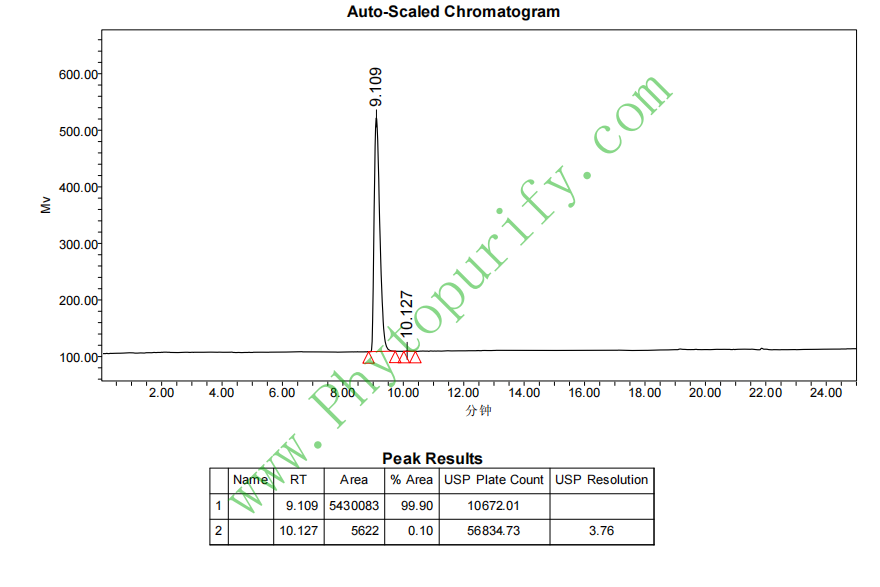
HPLC of Aconine
Storage conditions:Short-term storage at 2~8℃, long-term storage at -20 ~ -80℃
164.7300
.3300
Unknown
Unknown
Unknown
Unknown
Unknown
Unknown
Unknown
Unknown
Aconite (CAS number: 509-20-6) is an important diterpenoid alkaloid mainly isolated from Aconitum spp. plants. As a hydrogenated derivative of aconitine compounds, aconitine has attracted much attention in the fields of natural product chemistry and pharmacology. Its unique chemical structure endows it with diverse biological activities, especially in regulating inflammatory responses, bone metabolism, and lipid metabolism, showing potential medicinal value. In recent years, with the in-depth study of its molecular mechanism of action, aconitine has shown broad application prospects in multiple fields such as anti-inflammatory, anti osteoporosis, and metabolic diseases.
This review aims to systematically summarize the chemical structure and physicochemical properties, plant sources and extraction methods, pharmacological activity, mechanism of action and molecular targets, pharmacological evaluation and pharmacokinetic characteristics of aconitine, and explore its clinical application potential and future research directions. By comprehensively reviewing existing literature, we strive to provide detailed reference materials for natural product pharmacology researchers and promote the development of aconitine related drugs.
The molecular formula of aconitine is C25H41NO9, with a molecular weight of 487.60. Its chemical structure belongs to the class of diterpenoid alkaloids, specifically the hydrogenated derivatives of aconitine. The structure contains multiple hydroxyl groups (tertiary alcohols, secondary alcohols) and ether bonds, forming a complex organic heterocyclic system. Its molecular structure also contains bridging rings and tertiary amino groups, giving it a unique three-dimensional conformation and biological activity.
In terms of physical and chemical properties, the LogP value of aconitine is about 0.33, indicating that it has low lipid solubility and relatively good water solubility. Its topological polar surface area (TPSA) is 164.73 Å ², and the number of hydrogen bond acceptors is as high as 10, indicating its strong ability to form hydrogen bonds between molecules, which may affect its membrane permeability and bioavailability. There is currently no clear data report on safety indicators such as blood-brain barrier penetration, hepatotoxicity, cardiotoxicity, and hERG channel inhibition, and further systematic evaluation is needed.
Aconitum alkaloids have good chemical stability, but may undergo structural isomerism or hydrolysis reactions under acidic and alkaline conditions. Its complex cyclic structure and multiple hydroxyl groups provide multiple possible interaction sites for its binding with biological targets, becoming the molecular basis for its multi-target activity.
Aconitum alkaloids are mainly found in plants of the Aconitum genus, especially in traditional Chinese medicinal herbs such as Aconitum carmichaelii and Aconitum kusnezofii, which are rich in content. Aconitum plants are widely distributed in temperate and subarctic regions of Asia, and have always been used in traditional Chinese medicine to treat diseases such as rheumatism and rheumatism.
The traditional method for extracting aconitine is usually to use organic solvent extraction combined with acid-base separation technology. The specific steps include:
In recent years, the application of modern technologies such as ultrasound assisted extraction and microwave-assisted extraction has significantly improved the extraction efficiency and purity of aconitine. Meanwhile, the development of liquid chromatography-mass spectrometry (LC-MS) technology has promoted the qualitative and quantitative analysis of aconitine, providing a powerful means for its quality control.
The pharmacological activity research of aconitine mainly focuses on its anti-inflammatory, anti osteoporosis, lipid metabolism regulation, and potential anti hyperglycemic effects.
Aconitine can effectively inhibit the activation of the nuclear factor kappa B (NF - κ B) signaling pathway. NF - κ B is a key transcription factor that regulates inflammatory responses, and its abnormal activation is closely related to various inflammatory diseases. Research has shown that aconitine exerts anti-inflammatory effects by inhibiting the nuclear translocation and DNA binding activity of NF - κ B, reducing the expression of pro-inflammatory cytokines such as TNF - α, IL-1 β, and IL-6. This mechanism demonstrates promising therapeutic potential in disease models such as rheumatoid arthritis and inflammatory bowel disease.
Aconitine can inhibit osteoclast differentiation induced by RANKL (receptor activated nuclear factor kappa B ligand). The specific mechanism includes inhibiting the activation of NF - κ B and NFATc1 (nuclear factor activated T cell 1), as well as downregulating the expression of the key osteoclast fusion protein DC-STAMP. The inhibition of osteoclast activity helps to slow down the process of bone resorption, indicating the potential application of aconitine in the prevention and treatment of osteoporosis and bone related metabolic diseases.
In a high-fat diet induced fatty liver rat model, aconitine significantly reduces the deposition of triglycerides (TG) and total cholesterol (TC) in the liver, alleviating liver steatosis. This effect may be related to its regulation of lipid metabolism related enzyme activity and anti-inflammatory effects, providing new ideas for the treatment of non-alcoholic fatty liver disease (NAFLD).
Although there are few reports on the direct hypoglycemic effects of aconitine, its potential regulatory effects on various targets associated with hyperglycemia, such as EHMT2, AMPK, SGLT2, GCK, etc., have attracted attention. AMPK, as a key regulatory factor in energy metabolism, its activation helps improve insulin sensitivity and abnormal glucose and lipid metabolism. Aconitine may have a positive effect on hyperglycemia and related metabolic syndrome by indirectly regulating these targets, which deserves further in-depth research.
The biological activity of aconitine is mainly achieved through multiple signaling pathways and molecular targets, involving multiple aspects such as inflammation regulation, bone metabolism, and metabolic homeostasis.
As a typical inflammatory signaling pathway, NF - κ B plays a central role in various diseases. Aconitine inhibits the transcriptional activity of NF - κ B and reduces the production of inflammatory mediators by blocking RANKL induced degradation of I κ B α and nuclear translocation of p65 subunit. In addition, aconitine also inhibits the expression of NFATc1, blocking the differentiation and function of osteoclasts.
DC-STAMP (Dendritic Cell Specific Transmembrane Protein) is a key protein for osteoclast fusion. Aconitine inhibits bone resorption by downregulating the expression of DC-STAMP, blocking the multinucleation process of osteoclasts. This mechanism provides a molecular basis for its anti osteoporosis effect.
Aconitum alkaloids may regulate fatty acid synthesis, β - oxidation, and cholesterol metabolism related enzyme activity by reducing liver TG and TC accumulation in a fatty liver model. Although the specific target is not yet fully understood, its regulatory effect on lipid metabolism enzymes and transcription factors (such as SREBP-1c, PPAR α) is one of the potential mechanisms.
Aconitum alkaloids have potential interactions with various high blood glucose related targets, including:
Aconitine may improve the abnormal glucose metabolism by regulating the expression or activity of the above targets, and has a potential anti diabetes effect.
The pharmacological evaluation of aconitine is currently in its preliminary stage. Its molecular weight (487.6) is close to the upper limit recommended by Lipinski's rule, and its low LogP value (0.33) indicates strong hydrophilicity, which may affect oral absorption and cell membrane penetration ability. The high TPSA value (164.73 Å ²) and the large number of hydrogen bond receptors suggest that its polarity is high, which may limit the permeability of its biofilm and thus affect its bioavailability.
Regarding safety, there is a lack of data on liver toxicity, cardiac toxicity (including hERG channel inhibition), and genetic toxicity (Ames test), and a systematic toxicological evaluation is needed. Some alkaloids in Aconitum plants have high toxicity, and the safety window and dose-dependent toxicity of aconitine should be closely monitored.
In terms of pharmacokinetics, there is a lack of systematic analysis on its absorption, distribution, metabolism, and excretion (ADME) characteristics. Given its complex structure, there may be first pass effects and metabolic transformations. In the future, it is necessary to combine internal and external models and metabolomics techniques to clarify its metabolic pathways and active metabolites.
In addition, improvements in drug formulation such as nanocarriers and liposome encapsulation may help enhance its bioavailability and targeting due to its low fat solubility and high polarity characteristics.
As a multifunctional diterpenoid alkaloid, aconitine has multi-target and multi pathway pharmacological activities, and has broad clinical application potential.
By inhibiting the NF - κ B signaling pathway, aconitine can be used to treat various inflammatory diseases, such as rheumatoid arthritis, systemic lupus erythematosus, and chronic inflammatory bowel disease. In the future, targeted anti-inflammatory drugs can be developed by combining modern drug delivery technology.
Its inhibitory effect on osteoclast differentiation provides a new drug candidate for the treatment of bone metabolism diseases such as osteoporosis and osteoarthritis. Combined with other bone protective drugs, it may have a synergistic effect.
Aconitum alkaloids have shown positive effects in the regulation of fatty liver and potential hyperglycemia. With the in-depth understanding of its mechanism, it is expected to develop new therapeutic drugs for non-alcoholic fatty liver disease (NAFLD), diabetes and metabolic syndrome.
Given the potential toxicity risks of aconitine, a detailed toxicological assessment and dose optimization are required before clinical application. Improving its pharmacokinetic properties using modern pharmaceutical formulation technology will be the key to enhancing its clinical conversion rate.
As a typical diterpenoid alkaloid, aconitine has shown broad application prospects in the fields of anti-inflammatory, anti osteoporosis, and metabolic diseases due to its complex chemical structure and diverse biological activities. Although further systematic evaluation is needed for its pharmacological properties and safety, based on its unique mechanism of action and multi-target regulatory ability, aconitine is undoubtedly an important molecule in natural product pharmacology research.
In the future, through interdisciplinary collaboration, combined with modern medicinal chemistry, molecular biology, and drug formulation technology, it is expected to promote the transformation of aconitine from laboratory research to clinical application, providing new drug options for the treatment of related diseases. Continuous in-depth mechanism research and preclinical evaluation will be key steps in realizing its clinical value.
