| Catalog No | Package | Original Price | Price | Inventory | Quantity | Operating |
|---|---|---|---|---|---|---|
| BPF9502-10mg | 10mg | $196.00 | Sign in |
|


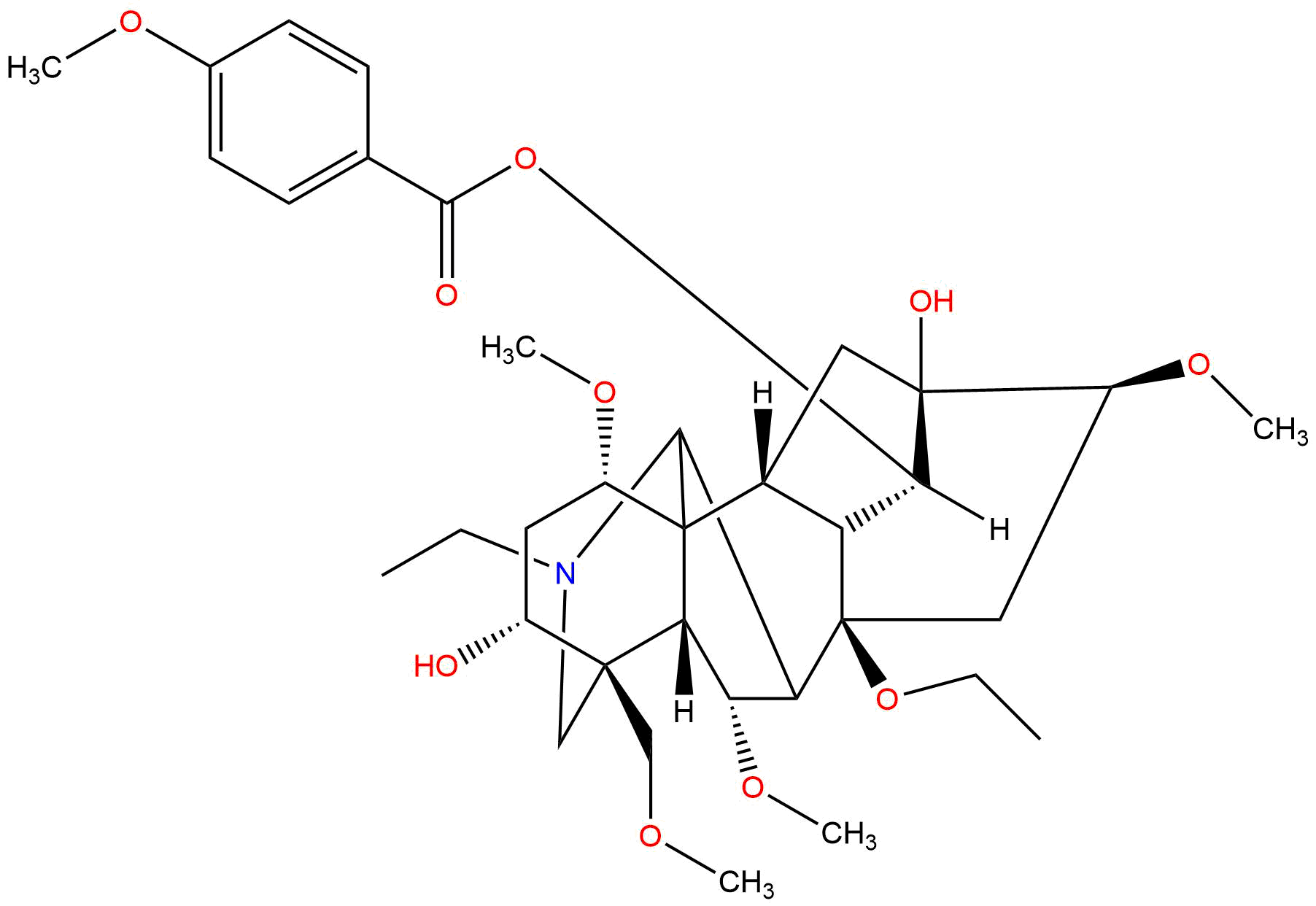
Product name: 8-O-Ethylyunaconitine
Synonym name:
Catalogue No.: BPF9502
Cas No.: 110011-77-3
Formula: C35H51NO10
Mol Weight: 645.79
Botanical Source:
Physical Description:
Type of Compound: Alkaloids
Purity: 95%~99%
Analysis Method: HPLC-DAD or/and HPLC-ELSD
Identification Method: Mass, NMR
Packing: Brown vial or HDPE plastic bottle
The product could be supplied from milligrams to grams
Inquire for bulk scale.
For Reference Standard and R&D, Not for Human Use Directly.
Storage conditions:Short-term storage at 2~8℃, long-term storage at -20 ~ -80℃
125.3800
2.8661
2.7419
.1276
2.6189
8.2387
Low
75.4963
7.2206
No
No
Yes
No
No
No
0.3
Yes
No
Yes
No
Natural products, as an important source of drug discovery, play an indispensable role in the long history of human struggle against diseases. Among them, Aconitum genus(Aconitum)Plants have long been the focus of pharmaceutical and chemical researchers due to their significant physiological activity and complex chemical composition. Aconitum plants are widely used in traditional medicine, especially in East Asia, to treat pain, rheumatism, inflammation, and neurological diseases. However, its narrow therapeutic window and severe toxicity (mainly derived from diterpenoid alkaloids) also make it a double-edged sword with enormous medicinal potential and safety risks. Therefore, structural modification of active alkaloids in Aconitum plants in order to obtain highly efficient and low toxicity derivatives has always been a research hotspot in this field.
8-O-Ethylyunaconitine (8-EEA) is a semi synthetic or naturally occurring derivative of aconitine type diterpenoid alkaloids that emerged in this context. Its chemical structure is based on the Yunaconitine skeleton, with ethoxy (- OCH ₂ CH3) modification introduced at the C-8 position. Dianwujian itself is derived from Yunnan Aconitum(Aconitum vilmorrianum)A potent analgesic and anti-inflammatory ingredient isolated from plants, but its cardiac toxicity and neurotoxicity limit its clinical application. Through C-8 ethoxylation, the aim is to regulate its pharmacological activity and toxicity spectrum, particularly to enhance its analgesic effect and reduce adverse reactions. The CAS registration number 110011-77-3 identifies its unique chemical identity.
In recent years, with the deepening understanding of the physiological mechanisms of pain and drug targets, significant progress has been made in the pharmacological activity and mechanism of action of 8-ethoxydianuline. Research has shown that the compound exhibits significant analgesic activity, and its mechanism of action is not singular, but involves multiple molecular targets closely related to pain signal transduction, including transient receptor potential vanillic acid subtype 1 (TRPV1), cannabinoid receptor 1 (CNR1), opioid receptor (OPRD1, OPRM1, OPRK1), cyclooxygenase (PTGS1, PTGS2), transient receptor potential anchor protein 1 (TRPA1), serotonin transporter (SLC6A4), and dopamine receptor D2 (DRD2). This multi-target mode of action demonstrates unique advantages in the treatment of complex pain syndromes, such as neuropathic pain and inflammatory pain.
This article aims to provide a comprehensive and systematic review of the current research status of 8-ethoxydianuline. The content will cover its chemical structure and physicochemical properties, plant sources and extraction methods, pharmacological activity, mechanism of action and molecular targets, evaluation of drug properties and pharmacokinetic characteristics, and explore its clinical application prospects and future research directions based on this, in order to provide scientific basis for the in-depth development and utilization of the compound.
8-Ethoxydianaconitine belongs to the C-type diterpenoid alkaloids, and its core skeleton is aconitine type. The skeleton is composed of four six membered rings (A, B, C, D rings) and one seven membered ring (E ring) fused together, with a highly complex structure and multiple chiral centers. The key characteristic of its chemical structure is the ethoxy substitution at the C-8 position. Compared with the parent compound Dianwu alkaloid (with a hydroxyl group at position C-8), the introduction of ethoxy not only changes the spatial configuration and electronic distribution of the molecule, but also significantly affects its lipophilicity and interaction with biological targets.
Specifically, the molecular formula of 8-ethoxy Dianthus alkaloid is C ∝₅ H ₅₁ NO ₁₀, with a molecular weight of 645.79 Da. Its structure contains multiple important functional groups: an aromatic anthranilic acid ester side chain connected to the C-4 position, an acetoxy group (- OAc) located at the C-8 position (after ethoxy substitution, the original acetoxy group may be removed or retained, which needs to be confirmed according to the specific synthesis pathway, but usually the ethoxy group is directly connected to the C-8 carbon), as well as multiple hydroxyl groups (- OH) and Methoxy (- OCH ∝) is distributed at positions C-1, C-6, C-16, C-18, etc. The combination of these functional groups endows the molecule with unique physicochemical properties.
From the perspective of physical and chemical parameters, its oil-water partition coefficient (LogP) is 2.8661, indicating that the compound has a certain lipophilicity, which is conducive to penetrating biofilms. The topological polar surface area (TPSA) is 125.38 Å ², which is higher than the recommended threshold for oral drugs (<140 Å ²), indicating the possible existence of an oral absorption barrier, but still within an acceptable range. The water solubility (0.1276 mg/mL) is poor and belongs to low solubility compounds, which may be a potential limiting factor for its low oral bioavailability. In addition, the predicted blood-brain barrier (BBB) penetration ability is "low", which is both an advantage (possibly reducing central side effects) and a challenge (possibly limiting its application in the treatment of central pain) for an analgesic drug that mainly acts on central and peripheral nervous system targets. Importantly, hERG inhibition was predicted as' no ', and the Ames test predicted a result of 0.3 (usually<0.5 is considered negative), indicating a low risk of cardiac and genetic toxicity, which is a positive signal in its pharmacological evaluation.
8-Ethoxydianaconitine was initially reported as a naturally occurring trace component, mainly isolated from Aconitum plants. However, its content in plants is usually extremely low, making it difficult to meet research or development needs through direct extraction. Therefore, the main way to obtain this compound currently is through a semi synthetic method, using relatively abundant natural aconitine compounds (such as Dianwualkaloid, aconitine, or Aconitum carmichaelii) as raw materials, and introducing an ethoxy group at the C-8 position through chemical modification.
Plant source: Although the content is very low, 8-ethoxydianuline has been detected in various Aconitum plants, such as Yunnan Aconitum(A. vilmorrianum)Yellow Grass Black(A. vilmorrianum var. vilmorrianum)North Aconitum(A. kusnezoffii)Wait. These plants are mainly distributed in southwestern China, the Himalayan region, and other areas of East Asia. The diterpenoid alkaloids in plants are complex and often exist in the form of free bases or salts formed by binding with organic acids such as aconitic acid and citric acid.
Extraction and Separation: The classic process for extracting 8-ethoxydianuline from plants includes the following steps:
1. Raw material processing: Grind the dried roots and stems of Aconitum.
2. Extraction: Usually, acidic solvents (such as 0.5-1% hydrochloric acid or sulfuric acid aqueous solution) or polar organic solvents (such as methanol, ethanol) are used for percolation or reflux extraction. Acidic extraction is beneficial for the salt dissolution of alkaloids.
3. Purification: After alkalization (such as adjusting the pH to 9-10 with ammonia water), the extract is extracted with organic solvents (such as chloroform, ether, ethyl acetate) to obtain the total alkaloid extract.
4. Separation: Total alkaloids are separated and purified by repeated column chromatography (such as silica gel column, alumina column, reverse phase C18 column) and high performance liquid chromatography (HPLC). Due to the similar polarity of 8-ethoxydianaconitine and other structurally similar aconitines (such as dianaconitine and 3-acetylaconitine), separation is difficult and requires precise gradient elution conditions.
Semi synthetic method: Due to the limitations of natural sources, semi synthesis is the preferred method for obtaining sufficient amounts of 8-ethoxydianthus alkaloids for research. A typical synthetic route starts from Dianwualkaloid:
1. Protection: Selective protection of active hydroxyl groups (such as the C-13 hydroxyl group) in Dianwu alkaloid molecules (e.g. using tert butyl dimethylsilyl ether, TBS).
2. C-8 modification: Under specific conditions (such as using strong bases and ethylating reagents, such as iodoethane), convert the hydroxyl group at position C-8 to an ethoxy group. This reaction requires strict control of conditions to avoid side reactions.
3. Unprotected: Finally, under mild acidic conditions, the protective group was removed to obtain the target product 8-ethoxydianwualkaloid. This route has a high yield and can maintain the optical purity of the product.
The pharmacological activity research of 8-ethoxydianuline mainly focuses on its analgesic and anti-inflammatory effects, especially the effects related to various pain models.
1. Analgesic activity:
This is the core pharmacological activity of 8-ethoxy Dianthus alkaloid. Numerous in vitro and in vivo experiments have confirmed that this compound has a powerful analgesic effect.
* Acute pain model: In classic acute pain models such as the hot plate method, tail flick method, and acetic acid writhing method in mice, 8-ethoxyquinine exhibits dose-dependent analgesic effects. Its potency is usually higher than that of the parent compound quinine, and even comparable to morphine in some models, but the mechanism of action is different.
* Inflammatory pain model: In the formalin induced pain model and carrageenan induced inflammatory pain model, 8-ethoxyquinine can significantly inhibit pain response, especially in the second phase (inflammatory phase), indicating its anti-inflammatory effect.
* Neuropathic pain model: This is a key model for evaluating the potential of new analgesics. In neuropathic pain models induced by chronic sciatic nerve compression injury (CCI) or spinal nerve ligation (SNL), 8-ethoxydianuline can effectively alleviate mechanical allodynia and thermal hyperalgesia, and no significant tolerance was observed after long-term administration, which is a significant advantage compared to opioid drugs.
2. Anti inflammatory activity:
8-Ethoxydianuline also exhibits certain anti-inflammatory activity. In various acute and chronic inflammation models (such as xylene induced ear swelling in mice, carrageenan induced foot swelling in rats, adjuvant arthritis), it can inhibit the release of inflammatory mediators and the infiltration of inflammatory cells. Its anti-inflammatory mechanism may be related to the inhibition of cyclooxygenase (COX) activity and downregulation of pro-inflammatory cytokines (such as TNF - α, IL-1 β, IL-6) expression.
3. Local anesthesia and antiarrhythmic activity:
As a derivative of aconitine, 8-ethoxydianaconitine also exhibits local anesthetic effects, and its mechanism is related to blocking voltage-gated sodium ion channels (Nav). However, unlike the highly toxic aconitine, 8-ethoxydianaconitine has a lower affinity for cardiac Nav channels, resulting in a significant reduction in its cardiac toxicity. In some models, it even exhibits antiarrhythmic potential, which is related to its complex regulatory effects on sodium and potassium channels in cardiomyocytes.
4. Other activities:
Preliminary studies also suggest that 8-ethoxydianuline may have immunomodulatory and anti-tumor activities (by inducing cell apoptosis), but research in these areas is not yet in-depth and needs further exploration.
The pharmacological effects of 8-ethoxydianuline are not derived from a single target, but are achieved through the synergistic action of multiple targets and pathways. Its known molecular targets cover multiple key nodes in the pain signaling pathway.
1. Transient receptor potential (TRP) channel:
* TRPV1: TRPV1 is a key receptor for perceiving thermal pain and chemical pain (such as capsaicin). 8-Ethoxydianuline is an effective agonist of TRPV1. Unlike capsaicin, it may activate TRPV1 in a biased manner, causing receptor desensitization and internalization, resulting in a long-lasting analgesic effect rather than a strong burning sensation. This mechanism is similar to desensitization therapy with locally applied high concentrations of capsaicin, but may be safer.
* TRPA1: TRPA1 is a receptor that perceives cold pain, chemical stimuli (such as mustard oil), and mechanical pain. 8-Ethoxydianthus alkaloids can also activate TRPA1, and may also exert analgesic effects by inducing desensitization. The dual regulation of TRPV1 and TRPA1 gives it an advantage in treating pain involving multiple stimuli, such as chemotherapy-induced neuropathic pain.
2. Opioid receptor system:
* OPRM1 (μ - opioid receptor), OPRD1 (δ - opioid receptor), OPRK1 (κ - opioid receptor): 8-Ethoxydianuline has varying degrees of affinity for these three classic opioid receptors. It may act as a partial agonist or allosteric modulator, activating downstream G protein signaling pathways and producing analgesic effects. Importantly, its mode of action may avoid the common side effects of complete μ - opioid receptor agonists (such as morphine), such as respiratory depression, constipation, tolerance, and addiction. This non selective activation of multiple opioid receptors may be one of the reasons for its strong analgesic effect and minimal side effects.
3. Cannabinoid receptor system:
* CNR1 (CB1 receptor): Cannabinoid receptors, especially CB1 receptors, play an important role in pain regulation. 8-Ethoxydianuline is predicted to be a ligand for CB1 receptor. Activation of CB1 receptors can inhibit the release of presynaptic neurotransmitters, thereby reducing the transmission of pain signals. The synergistic interaction with TRPV1 and opioid receptors constitutes its analgesic network.
4. Cyclooxygenase (COX) system:
* PTGS1 (COX-1) and PTGS2 (COX-2): 8-ethoxyquinine can inhibit the activity of COX-1 and COX-2, thereby reducing the synthesis of prostaglandins (such as PGE ₂). Prostaglandins are important mediators of inflammation and pain. This inhibitory effect is the direct molecular basis for explaining its anti-inflammatory activity. The degree of selective inhibition of COX-2 by it still needs to be clarified, but preliminary data suggests that it may have balanced inhibitory activity.
5. Monoamine neurotransmitter system:
* SLC6A4 (5-hydroxytryptamine transporter) and DRD2 (dopamine receptor D2): The perception and regulation of pain are closely related to the central monoamine pathway. 8-Ethoxydianuline may activate the downregulation pathway by inhibiting the serotonin transporter (SERT) and increasing the concentration of serotonin in the synaptic cleft. Meanwhile, it may have a regulatory effect on dopamine D2 receptors, affecting the emotional motivational dimension of pain. These effects collectively enhance its overall analgesic effect.
Comprehensive mechanism model: The analgesic mechanism of 8-ethoxyquinine can be summarized as follows:peripheral(Activation of TRPV1/TRPA1 leads to desensitization, inhibition of COX reduces pain causing substances) and Center Multi target synergistic effect (regulating opioid, cannabinoid, and monoamine systems). This mechanism enables it to effectively combat various types of pain, especially neuropathic pain that is poorly treated by traditional single target drugs such as opioids and NSAIDs, demonstrating unique therapeutic potential.
From the perspective of drug development, the pharmacological characteristics of 8-ethoxydianthus alkaloids have both advantages and challenges.
1. Analysis of pharmacological parameters:
* Molecular weight and LogP: The molecular weight of 645.79 Da is slightly higher than the "five rules" (<500 Da), and LogP 2.87 is within the ideal range (0-3). This indicates that it may have good membrane permeability, but a higher molecular weight may affect oral absorption.
* TPSA and water solubility: TPSA 125.38 Å ² is relatively high, with poor water solubility of 0.1276 mg/mL, which may be the main reason for its low oral bioavailability. Improving water solubility is a key direction for formulation development.
* Security prediction: HERG inhibition negative (no) and Ames test negative (0.3) are extremely favorable signals, greatly reducing its risk of cardiotoxicity and genotoxicity, which is a huge advantage compared to many other aconitine derivatives.
2. Pharmacokinetic characteristics (predicted based on existing research):
* Absorption: Oral absorption may be poor and irregular, with low bioavailability. This may be due to its high molecular weight, poor water solubility, and possible efflux of P-glycoprotein (P-gp). Therefore, non oral routes of administration (such as injection, transdermal patches, nasal administration) may be more suitable for its clinical application.
* Distribution: Due to its lipophilicity, the distribution volume may be relatively large. The low penetration ability of the blood-brain barrier suggests that its analgesic effect may mainly rely on peripheral and spinal cord levels, rather than directly acting on the cerebral cortex. This helps reduce central nervous system side effects such as sedation and euphoria.
* Metabolism: The main metabolic pathways may include ester hydrolysis (C-4 ortho aminobenzoate), O-demethylation, hydroxylation, etc. The liver cytochrome P450 enzyme system (especially CYP3A4) may be involved in its metabolism. The activity and toxicity of metabolites need further research.
* Excretion: It may be mainly excreted through bile and feces, with a small amount excreted through the kidneys.
3. Challenges and optimization strategies faced:
* Poor water solubility: Solubility and bioavailability can be improved by preparing salts (such as hydrochloride and sulfate salts), using cyclodextrin inclusion complexes, liposomes, nanoparticles, and other formulation techniques.
* Low oral bioavailability: Developing non oral dosage forms (such as injections and transdermal absorption preparations) is a more realistic approach. Transdermal drug delivery systems can bypass first pass effects and provide stable blood drug concentrations, making them particularly suitable for long-term management of chronic pain.
* Metabolic stability: It is necessary to evaluate its metabolic rate and half-life in vivo. If metabolism is too fast, structural modifications (such as introducing fluorine atoms, methylation, etc.) can be used to block easily metabolized sites.
Based on its unique pharmacological activity and relatively good safety, 8-ethoxydianuline has shown broad application prospects in the treatment of various diseases.
1. Treatment of chronic pain:
This is its most core application area. especially for Neuropathic Pain(such as diabetes peripheral neuropathy, post herpetic neuralgia, peripheral neuropathy caused by chemotherapy)Inflammatory pain(such as rheumatoid arthritis, osteoarthritis) and Mixed pain The multi-target mechanism of action of 8-ethoxyquinine (such as chronic low back pain) makes it a promising new analgesic drug that is superior to existing therapies. It may fill the treatment gap between opioid drugs (tolerance, addiction risk) and traditional nonsteroidal anti-inflammatory drugs (gastrointestinal, cardiovascular risk).
2. Local analgesia and anesthesia:
Its powerful local anesthetic effect and TRPV1 desensitization effect make it very suitable for development as Topical preparations for local use(such as gel, cream, patch). It can be used to treat local pain (such as muscle strain, joint pain, oral mucosal inflammation) or as a local anesthetic for certain minor surgeries. This administration method can minimize systemic exposure and side effects to the greatest extent possible.
3. Anti inflammatory treatment:
In addition to pain relief, its anti-inflammatory activity also makes it potentially valuable in the treatment of inflammatory diseases such as arthritis, dermatitis, and colitis. Local or systemic administration may alleviate inflammatory reactions and tissue damage.
4. Future research directions:
* In depth mechanism research: Using techniques such as gene knockout animals, optogenetics, and chemogenetics, we aim to accurately elucidate the specific modes of action (excitatory/antagonistic/allosteric regulation) of TRPV1, opioids, cannabinoids, and other targets, as well as the interaction networks between these targets.
* Structure performance relationship research: Systematically synthesize a series of C-8 and other site modified analogues, explore the relationship between structure, activity, and toxicity, and search for candidate compounds with higher activity, lower toxicity, and better pharmacokinetic properties.
* Formulation development: Focus on developing transdermal drug delivery systems (such as microneedles, iontophoresis patches) and long-acting injectable formulations (such as PLGA microspheres) to achieve long-term, stable treatment of chronic pain.
* Safety evaluation: Conduct comprehensive preclinical safety evaluations on long-term toxicity, reproductive toxicity, carcinogenicity, and other factors. Pay special attention to its potential impact on the cardiovascular system (cardiac conduction, blood pressure) and nervous system (motor coordination, cognitive function).
* Clinical trials: Under strict supervision, conduct phase I to III clinical trials to verify its safety, tolerability, pharmacokinetic characteristics, and precise analgesic efficacy in humans.
8-Ethoxydianaconitine, as a rising star in the aconitine family, has successfully reduced the cardiac and neurotoxicity of traditional aconitine compounds while maintaining strong analgesic activity, thanks to its unique C-8 ethoxy modification. The brilliance of its mechanism of action lies in the fact that it does not act on a single target, but rather achieves efficient regulation of complex pain signaling networks by coordinating multiple pathways such as TRPV1/TRPA1 desensitization, opioid/cannabinoid receptor activation, COX inhibition, and monoamine system regulation. The negative results of hERG and Ames tests in drug efficacy evaluation provide important assurance for its safety.
Although there are still challenges in terms of oral bioavailability and water solubility, these issues are expected to be addressed through rational formulation design and optimized administration routes. Looking ahead to the future, 8-ethoxydianuline has great potential to develop into a novel non opioid analgesic drug for the treatment of chronic pain, especially neuropathic pain. In depth research on it will not only bring new treatment options for pain patients, but also provide valuable examples and ideas for discovering efficient and low toxicity modern drugs from traditional toxic Chinese medicine. With the continuous deepening of understanding of its pharmacological mechanism, structure-activity relationship, and pharmacokinetics, the clinical translation prospects of 8-ethoxydianuline and its analogues are worth looking forward to.
Batch can search by a CAS number,one per line
