


Synonym name:
Catalogue No.: BP0420
Cas No.: 19431-84-6
Formula: C15H22O2
Mol Weight: 234.339
Botanical Source: Curcuma zedoaria (zedoary) and Curcuma longa (turmeric)
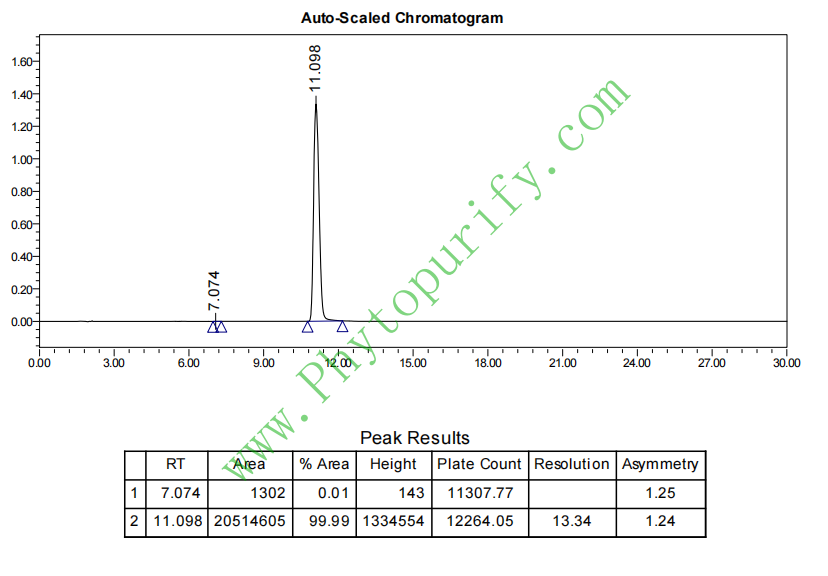
Purity: 95%~99%
Analysis Method: HPLC-DAD or/and HPLC-ELSD
Identification Method: Mass, NMR
Packing: Brown vial or HDPE plastic bottle
Can be supplied from milligrams to grams.
For Reference Standard and R&D, Not for Human Use Directly.
Inquire for bulk scale.
Description:
Curcumenol possesses a variety of health and medicinal values which includes neuroprotection, anti-inflammatory, anti-tumor and hepatoprotective activities. It inhibits NF-κB activation by suppressing the nuclear translocation of the NF-κB p65 subunit and blocking IκBα phosphorylation and degradation.
References:
Phytother Res. 2010 Aug;24(8):1213-6.
Inhibitory effects of curcumenol on human liver cytochrome P450 enzymes.
Curcumenol, one of the major components of Zedoary turmeric oil, has been widely used to treat cancer and inflammation. As an antibiotic or anticancer drug, Curcumenol is highly likely to be used in combination with various synthetic drugs in most cases, thus it is necessary to evaluate potential pharmacokinetic drug-drug interactions induced by Curcumenol.
METHODS AND RESULTS:
In this study, the inhibitory effects of Curcumenol on seven CYP isoforms were investigated, and the results demonstrated that only CYP3A4 was strongly inhibited (IC(50) = 12.6 +/- 1.3 microM). Kinetic analysis showed the inhibition type was competitive with K(i) value of 10.8 microM. Time- and NADPH-dependent inhibitions were also investigated to show Curcumenol is not a mechanism-based inhibitor. Employing these in vitro data and maximum plasma concentration of Curcumenol in human predicted from beagle dog's in vivo pharmacokinetic data, the change in AUC of victim drugs was predicted to be 0.4%, which suggested that Curcumenol may be safely used without inducing metabolic drug-drug interaction through P450 inhibition. Nevertheless, due to the limited pharmacokinetic data available for Curcumenol in humans, it is still not possible to evaluate its potential clinical effects on human patients from in vitro data.
CONCLUSIONS:
Thus, the magnitude of drug-drug interaction (DDI) induced by Curcumenol warrants further investigation.
HPLC of Curcumenol
Storage conditions:Short-term storage at 2~8℃, long-term storage at -20 ~ -80℃
Curcumenol, CAS number 19431-84-6, is an important natural active ingredient isolated from the ginger plant Curcuma zedoaria. As a sesquiterpene compound, curcumin has attracted much attention due to its diverse pharmacological activities, especially in the fields of neuroprotection, anti-inflammatory, anti-tumor, and liver protection, showing significant biological effects. In recent years, with the deepening of pharmacological research on natural products, the molecular mechanism of curcumin has gradually been revealed, especially in regulating inflammatory responses and tumor cell signaling pathways, showing unique advantages.
Curcumenol, as a highly efficient CYP3A4 enzyme inhibitor (IC50=12.6 μ M), not only affects pharmacokinetics, but may also exert multiple biological effects by regulating intracellular signaling pathways. Its inhibition of Akt mediated NF - κ B activation and p38 MAPK signaling pathway in LPS stimulated BV-2 microglia suggests its potential application value in neuroinflammation and immune regulation. Meanwhile, curcumin has regulatory effects on liver cancer-related molecular targets such as BCL2, STAT3, MMP9, EGFR, TP53, AKT1, etc., demonstrating its potential as an anti-tumor candidate drug.
This article will provide a systematic review of the chemical structure and physicochemical properties, plant sources and extraction methods, pharmacological activity and mechanism of action, pharmacological evaluation and pharmacokinetic characteristics of curcumenol, and explore its clinical application prospects and future research directions, aiming to provide scientific basis and theoretical support for the drug development of this natural product.
Curcumenol is a sesquiterpene compound with a molecular formula of C15H26O2 and a molecular weight of 234.34. Its structural features include a cyclic skeleton containing hydroxyl groups, with a certain balance of hydrophobicity and polar groups. Its LogP value is 2.61, indicating that the molecule has moderate lipid solubility, which is beneficial for membrane penetration and in vivo distribution. The TPSA (topological polar surface area) is 38.69 Å ² and the number of hydrogen bond receptors is 2. These physicochemical parameters are consistent with good drug compatibility, which is beneficial for its oral absorption and blood-brain barrier penetration ability.
The presence of hydroxyl groups in the structure of curcumin gives it a certain hydrophilicity, while its hydrophobic sesquiterpene skeleton ensures the stability and biological activity of the molecule. Its high blood-brain barrier permeability suggests its potential application in central nervous system diseases. In vitro and in vivo toxicology studies have shown that curcumin has no significant hepatotoxicity, cardiotoxicity, or hERG channel inhibition, and is relatively safe.
Curcuma zedoaria is mainly derived from the ginger plant Curcuma zedoaria, which is widely distributed in tropical and subtropical regions of Asia. Its dried tubers are commonly used in traditional Chinese medicine to promote blood circulation, remove blood stasis, reduce swelling and relieve pain. Curcumenol, as one of the main active ingredients in Curcuma, varies in content depending on the plant's growth environment, harvesting period, and processing method.
The common methods for extracting curcumin include solvent extraction, chromatographic separation, and crystallization purification. Generally, ethanol or methanol is used as the extraction solvent to obtain crude extracts through reflux extraction or ultrasound assisted extraction, followed by separation and purification using silica gel column chromatography or high-performance liquid chromatography (HPLC). In recent years, supercritical CO2 extraction technology has gradually been applied to the extraction of curcumin due to its environmentally friendly and efficient characteristics, significantly improving the extraction efficiency and purity.
The optimization of the extraction process not only improved the yield of curcumin, but also ensured the stability of its biological activity, laying the foundation for subsequent pharmacological research and drug development.
Curcumenol exhibits various pharmacological activities, including neuroprotection, anti-inflammatory, anti-tumor, and liver protection.
Curcumenol exhibits significant neuroprotective effects in neurological disease models. Research has shown that in LPS stimulated BV-2 microglia, curcumin can inhibit the activation of Akt mediated NF - κ B signaling pathway and p38 MAPK pathway, reduce the expression of inflammatory factors such as TNF - α and IL-1 β, and alleviate neuroinflammatory response. This mechanism of action helps alleviate inflammatory damage in neurodegenerative diseases, indicating its potential application value in neurological diseases such as Alzheimer's disease and Parkinson's disease.
Curcumenol exhibits excellent anti-inflammatory activity by regulating the inflammatory signaling pathway through multiple targets. It can inhibit the nuclear translocation of NF - κ B, reduce the release of pro-inflammatory cytokines, regulate the activity of immune cells, and alleviate the generation of inflammatory mediators. In the in vivo inflammation model, curcumin significantly reduces edema and cell infiltration in inflammatory tissues, demonstrating good anti-inflammatory effects.
Curcumenol exhibits inhibitory effects on proliferation and induces apoptosis in various tumor cells, especially in the field of liver cancer where research is more in-depth. Its targets involve key molecules such as BCL2, STAT3, TOP1, TERT, PIK3CA, MMP9, EGFR, TP53, NFKB1, and AKT1, regulating cell cycle, apoptosis signaling, and tumor microenvironment. Curcumenol reduces the proliferation and invasiveness of tumor cells by inhibiting the STAT3 and AKT signaling pathways, while promoting the expression of apoptosis related proteins, inhibiting tumor growth and metastasis.
Curcumenol exhibits significant hepatoprotective effects in liver injury models, reducing liver cell necrosis and inflammatory reactions, and promoting liver cell repair. Its mechanism may be related to antioxidant, anti-inflammatory, and regulation of liver cell apoptosis related signaling pathways, demonstrating the potential to protect liver function.
The multiple pharmacological effects of curcumin are mainly attributed to its ability to regulate key cellular signaling pathways. Its mechanism of action involves the following aspects:
Curcumenol is a highly efficient CYP3A4 inhibitor with an IC50 value of 12.6 μ M. CYP3A4, as the main drug metabolizing enzyme in the human body, participates in the metabolic processes of various drugs. Curcumenol may affect the pharmacokinetics of drugs by inhibiting the activity of this enzyme, indicating the need to pay attention to potential drug interactions when using combination therapy.
In inflammatory and tumor cells, curcumin inhibits the activation of Akt kinase, thereby blocking the nuclear translocation and transcriptional activity of NF - κ B, reducing the expression of pro-inflammatory cytokines, and suppressing inflammatory responses and survival signals of tumor cells. The inhibition of this pathway is of great significance in reducing neuroinflammation and tumor progression.
Curcumenol can inhibit the phosphorylation of p38 MAPK, weaken the release of inflammatory mediators and cellular stress response, and exert anti-inflammatory and cell protective effects.
Curcumenol exerts anti-tumor effects by regulating various liver cancer-related targets, including:
The synergistic regulation of these molecular targets enables curcumin to exhibit a comprehensive anti-tumor effect with multiple targets and pathways in the treatment of liver cancer.
The pharmacological parameters of curcumin show that it has good potential for drug development. The molecular weight is 234.34, in accordance with Lipinski's rule, and the LogP is 2.61, indicating that it has moderate lipid solubility, which is beneficial for oral absorption and in vivo distribution. The TPSA is 38.69 and the number of hydrogen bond receptors is 2, both of which help molecules penetrate the cell membrane and blood-brain barrier.
Its high blood-brain barrier permeability provides the possibility for the treatment of neurological diseases. In vitro and in vivo toxicological data show that curcumin has no significant hepatotoxicity, cardiotoxicity, or hERG channel inhibition, indicating high safety. The results of Ames mutagenicity test are not yet clear and further research is needed to assess its genetic toxicity risk.
In terms of pharmacokinetics, there is currently limited systematic research on curcumin. Preliminary data shows that its oral bioavailability is good and it is widely distributed in the body, especially at high concentrations in liver and brain tissues. The metabolic pathway may involve the liver CYP450 enzyme system, especially the inhibitory effect of CYP3A4, which suggests that it may affect the metabolism of itself and other drugs, and further in-depth research is needed.
Curcumenol, as a multifunctional natural product, has broad clinical application prospects due to its multiple pharmacological activities such as neuroprotection, anti-inflammatory, anti-tumor, and liver protection.
In neurodegenerative diseases such as Alzheimer's disease and Parkinson's disease, curcumin has potential therapeutic value by inhibiting neuroinflammation and oxidative stress, protecting neuronal function. In the future, modern drug delivery technology can be combined to develop curcumin preparations targeting the central nervous system.
In the field of liver cancer treatment, curcumin has shown potential as an adjuvant therapy drug by regulating tumor cell proliferation, apoptosis, and metastasis through multiple targets. Its combination with existing chemotherapy drugs may enhance efficacy and reduce side effects, which is worth conducting preclinical and clinical trials to verify.
In addition, the anti-inflammatory and hepatoprotective effects of curcumin make its application in chronic liver disease and inflammatory diseases of research value. In the future, pharmacokinetic and toxicological studies should be strengthened to clarify the safe dosage range and long-term medication risks.
Although curcumenol exhibits good pharmacological properties and multiple biological effects, key issues such as in vivo metabolic stability, targeting, and formulation development still need to be addressed. Combining modern medicinal chemistry, pharmacology, and pharmaceutical technology to promote the conversion of curcumin from natural products to clinical drugs is an important direction for future research.
Curcumenol, as an important active ingredient in Curcuma, has become a hot topic in natural product pharmacology research due to its unique chemical structure and diverse pharmacological activities. Its significant effects in neuroprotection, anti-inflammatory, anti-tumor, and liver protection, as well as its regulation of multiple key molecular targets, lay the foundation for its potential as a drug candidate molecule.
In the future, through in-depth analysis of the mechanism of action of curcumin, optimization of extraction and preparation processes, improvement of pharmacokinetics and safety evaluation, it will promote the realization of its clinical application. The study of curcumin not only enriches the theoretical system of natural product pharmacology, but also provides valuable scientific basis and innovative ideas for the development of new multi-target natural medicines.
