New Curcuma Diketone: A Molecular Potential for Liver Protection and Antitumor from Traditional Medicinal Plants
1. Overview
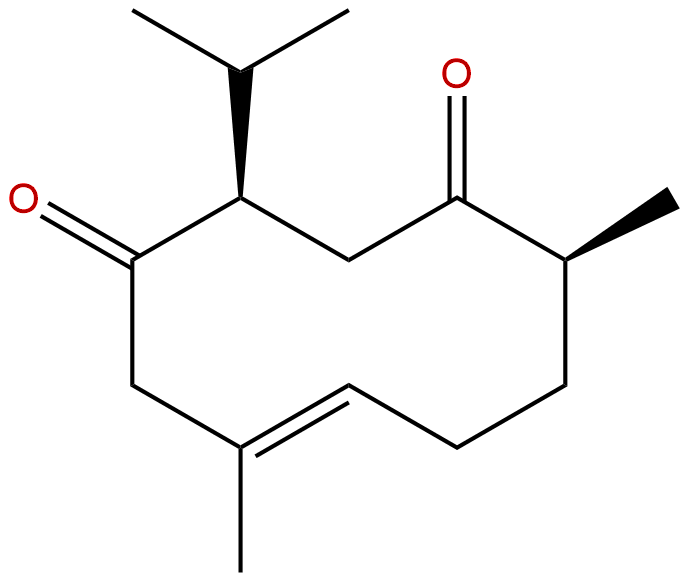
Neocurdione, as a structurally unique sesquiterpene natural product, is one of the important material bases for the pharmacological activity of traditional Chinese medicine Curcuma zedoaria. Its CAS number is 108944-67-8, molecular formula is C15H24O2, and molecular weight is 236.3550 g/mol. Since its isolation and identification from the rhizome of Curcuma zedoaria, it has received continuous attention from researchers in natural product chemistry and pharmacology due to its significant biological activity. Early studies have revealed that new curcumin has a clear protective effect on acute liver injury models induced by D-galactosamine (D-GalN) combined with lipopolysaccharide (LPS) or tumor necrosis factor - α (TNF - α) in mice. Oral administration of 50 mg/kg can significantly improve liver injury indicators, providing preliminary scientific evidence for its application in the field of liver disease treatment. In addition, the study also found that it has an attachment inhibitory effect on Mytilus edulis galloprovinalis, suggesting that it may have unique ecological disturbance activity. Further research has pointed to its anti-tumor potential, by regulating multiple key cell fate regulatory targets such as TP53, CASP3, MYC, BAX, and CDKN1A, affecting the proliferation and apoptosis of tumor cells. This article will systematically review the scientific value of this natural product from the aspects of its chemical essence, plant origin, pharmacological mechanism, medicinal evaluation, and research prospects.
2. Chemical structure and physicochemical properties
New Curcuma Diketone belongs to the sesquiterpene class of compounds, with a skeleton composed of three isoprene units and a molecule containing two ketone groups (C=O), which is also the origin of its name "diketone". Its SMILES structural formula (C/C1=C \ CC)C@HC(=O)CC@H C (=O) C1) clearly displays the positions of its double bond, chiral center (represented by @ H), and ketone group, indicating that it is a molecule with a specific three-dimensional configuration. This unique structure is the material basis for its biological activity.
According to the analysis of drug parameters, its molecular weight (MW) is 236.36 g/mol, which is much lower than the usual upper limit of 500 Da for oral drugs and complies with the first rule of Lipinski's Five Rules. The calculated logarithm of the lipid water partition coefficient (LogP/LogD) is 3.01, indicating that the molecule has moderate lipophilicity, which is beneficial for penetrating the cell membrane without causing metabolic and distribution problems due to high lipid solubility. The topologically polar surface area (TPSA) is 34.14 Å ², which is a relatively small value, indicating low molecular polarity, which usually facilitates membrane penetration. Its theoretical water solubility is about 0.22 mg/mL, belonging to the category of slight solubility, which may be a pharmaceutical challenge that needs attention when administered orally.
The in vitro permeability prediction data shows that its Caco-2 cell permeability is 20.44 (usually measured in x 10 ⁻⁶ cm/s), which is a high value, indicating its good intestinal absorption potential. The predicted permeability of the blood-brain barrier (BBB) is "high", indicating that the molecule may enter the central nervous system. This not only provides the possibility for its treatment of central related diseases, but also suggests the need to pay attention to potential neurological effects when administered systemically. The predicted plasma protein binding rate (PPB) is 75.07%, which belongs to a moderately high level, which will affect its free drug concentration and in vivo distribution.
3. Plant sources and traditional applications
The plant source of New Curcuma zedoaria is the Zingiberaceae plant Curcuma zedoaria, also known as Peng Curcuma or Wen E Shu. Curcuma zedoaria, along with turmeric and turmeric, is an important medicinal herb widely used in traditional medicine systems in Asia, especially in China, India, Japan, and Southeast Asian countries. In traditional Chinese medicine theory, its dry rhizome is warm in nature, pungent and bitter in taste, and belongs to the liver and spleen meridians. It has the effects of promoting qi circulation, breaking blood, reducing accumulation, and relieving pain. In clinical practice, it is commonly used to treat conditions such as lumps and bumps, blood stasis and meridian closure, chest tightness and pain, food accumulation and swelling, and early cervical cancer.
In Ayurvedic medicine in India and traditional Chinese medicine in Japan, Curcuma zedoaria is also used to treat digestive system diseases, liver problems, and as an anti-inflammatory agent. Traditional applications often use decoction, pill powder or external application. Modern plant chemistry research has isolated and identified various active ingredients from Curcuma zedoaria, including curcumin, curcumin, sesquiterpenes, etc. These ingredients together form the material basis for the modern pharmacological effects of Curcuma zedoaria, such as promoting blood circulation, anti-inflammatory, and anti-tumor effects. As one of the characteristic diketone sesquiterpenes, New Curcuma Diketone is one of the key chemical entities that connects traditional efficacy with modern scientific interpretation.
4. Pharmacological activity and mechanism of action
The pharmacological activity research of new curcumin mainly focuses on liver protection and anti-tumor aspects, and its mechanism of action is closely related to the regulation of multiple key cellular signaling pathway targets.
4.1 Liver protective effect and mechanism
Early activity studies have shown that new curcumin has a significant protective effect on acute liver injury induced by D-GalN/LPS or D-GalN/TNF - α in mice. D-GalN can deplete uridine triphosphate in liver cells, inhibit RNA and protein synthesis, sharply increase the sensitivity of liver cells to inflammatory mediators such as LPS or TNF - α, trigger large-scale liver cell apoptosis and necrosis, and simulate the pathological process of viral hepatitis or drug-induced liver injury in clinical practice. New Curcuma Diketone (50 mg/kg, oral) can effectively reduce the levels of liver injury marker enzymes such as ALT and AST in the serum of model mice, and alleviate pathological damage to liver tissue. Its liver protection mechanism may involve: ① anti-inflammatory effect Inhibit the excessive inflammatory response triggered by LPS/TNF - α; ② Anti apoptotic effect This is exactly the direction strongly indicated by its known target information.
4.2 Antitumor Potential and Molecular Target Mechanisms
According to database information, there is a correlation between New Curcuma Diketone and five targets closely related to cell cycle and apoptosis, namely TP53, CASP3, MYC, BAX, and CDKN1A. This provides a molecular level hypothesis basis for its anti-tumor effect:
- TP53 (tumor protein p53)The famous tumor suppressor gene is known as the "guardian of the genome". Activated during cellular stress (such as DNA damage), it can induce cell cycle arrest (allowing DNA repair) or initiate apoptosis programs. New curcumin may exert its anti-tumor effect by stabilizing or activating p53 protein.
- CASP3 (cysteine protease-3)It is a key protease in the execution stage of cell apoptosis, known as the "death protease". Upstream signals such as p53 can activate CASP3, leading to irreversible apoptosis of cells. New Curcuma Diketone may promote the activation of CASP3.
- BAX (Bcl-2 related X protein)It is a pro apoptotic protein in the Bcl-2 family. Activated p53 can upregulate the expression of BAX through transcription. BAX forms pores on the outer membrane of mitochondria, leading to the release of cytochrome C, which in turn activates CASP9 and CASP3, triggering apoptosis. New curcumin may promote apoptosis by upregulating BAX expression.
- CDKN1A (cyclin dependent kinase inhibitor 1A, also known as p21)It is one of the important downstream target genes of p53. P21 protein can inhibit the activity of cyclin cyclin dependent kinase complex, leading to cell cycle arrest in G1 phase, creating conditions for DNA repair or guiding cells towards aging and apoptosis.
- MYC (oncogene c-Myc)It is an important transcription factor that promotes cell proliferation, growth, and metabolism. Overexpressed in many tumors. P53 can inhibit the transcriptional activity of MYC or induce its degradation. Regulating MYC is also one of the anti-tumor strategies.
Integrated mechanism hypothesis New curcumin may activate or stabilize p53 (TP53) through certain mechanisms, such as causing cellular stress. Activated p53 upregulates p21 (CDKN1A) transcription, causing cell cycle arrest; On the other hand, upregulating BAX transcription may inhibit MYC. The upregulation of BAX promotes mitochondrial pathway apoptosis, ultimately leading to the activation of effector caspases such as CASP3, executing the cell apoptosis program. This series of events synergistically inhibits the unlimited proliferation of tumor cells and induces their apoptosis, thereby exerting anti-tumor effects. Of course, this mechanism network still needs further experimental verification, such as clarifying the direct or indirect interaction relationship between the novel curcumin and these targets through techniques such as gene knockout, reporter genes, and protein interactions.
5. Evaluation of drug properties
Based on the provided pharmacological parameters, we can conduct a preliminary evaluation of the properties of the new curcumin as a potential drug lead compound.
5.1 Analysis based on Lipinski's Five Rules:
1. Molecular weight (MW)236.36<500, compliant.
2. Lipid water partition coefficient (LogP)3.01<5, compliant.
3. Number of hydrogen bond donors (HBDs)From the molecular formula C15H24O2, there is no explicit - OH or - NH, and the estimated HBD number is 0, much less than 5, which is consistent.
4. Number of hydrogen bond acceptors (HBA)Two ketone oxygen atoms, HBA number 2, less than 10, comply.
The new curcumin ketone fully complies with the Lipinski Rule of Five, indicating its good oral absorption potential.
5.2 Analysis of Other Key Parameters:
- Permeability and Distribution Prediction of high Caco-2 permeability and high BBB permeability indicates strong transmembrane ability, possibly high bioavailability, and the ability to enter the central nervous system. This may be beneficial for the treatment of central nervous system tumors or hepatic encephalopathy, but it is also necessary to be alert to possible neurotoxicity.
- solubility One of its main shortcomings is its low water solubility (0.22 mg/mL). Solubilization techniques may be required in formulation development, such as the production of cyclodextrin inclusion complexes, nanocrystals, solid dispersions, or the use of surfactants.
- Metabolism and toxicity Ames test (0.0) and chromosome aberration data (none) preliminarily suggest that it has no mutagenicity. HERG inhibition is' no ', which reduces the likelihood of causing QT interval prolongation in the heart. These are favorable signals of its safety. However, 'Skid_Sens' is' yes', indicating that attention should be paid to allergic reactions when developing topical formulations or high-dose systemic administration. Elevated serum markers (ALK, GGT, AST, ALT) suggest potential liver effects, which may seem contradictory to their liver protective effects, but may reflect dose or model dependence, i.e. low-dose protection and high-dose potential burden, requiring careful delineation of safety windows in toxicology studies.
- Feasibility of synthesis The SyneAccessibility index is 4.24 (the lower the value, the easier it is to synthesize), indicating that its total synthesis is somewhat challenging, but extracting and isolating from natural plants is still the main feasible source at present.
Overall evaluation New Curcuma Diketone is a natural lead compound with a small molecular weight, in line with the "Five Principles of Similar Drugs", good oral absorption potential, and clear liver protection and anti-tumor mechanisms. The main challenge lies in its poor water solubility and the need for systematic preclinical toxicology studies (especially long-term toxicity, skin sensitization, and dose-dependent liver effects) to verify its safety. Its high BBB penetration is a double-edged sword, and the pros and cons need to be balanced based on the target indication.
6. Research Status and Application Prospects
At present, research on new curcumin is still in the preclinical stage. The existing research has laid the foundation for its use as a liver protectant and anti-tumor candidate molecule, especially its mechanism hypothesis of inducing apoptosis by regulating the p53 network, which provides direction for subsequent target validation and in-depth study of signaling pathways.
Research status:
1. Activity verification The liver protective activity has been confirmed in animal models, but the specific pathways of action (such as NF - κ B, Nrf2, MAPK, etc.) have not been fully elucidated. The anti-tumor activity is mostly speculated at the cellular level, lacking empirical data from in vivo tumor models.
2. Mechanism Exploration The association with multiple key targets is mainly based on database prediction or preliminary gene expression profile analysis, lacking experimental evidence of direct binding (such as SPR, ITC) or functional regulation (such as reporter genes, ChIP).
3. Chemical research The methods for separation, identification, and content determination have been established, but the total synthesis route may not be economical and currently relies mainly on plant extraction. There is relatively little research on structural modification, and systematic structure-activity relationship (SAR) studies have not yet been conducted to optimize its activity and drug properties.
Application prospects and future directions:
1. Deepening mechanism research The primary task is to use molecular biology and chemical biology methods to verify the direct interaction between the new curcumin ketone and targets such as TP53 and CASP3, and to draw detailed upstream and downstream signal network diagrams. Study its anti-tumor efficacy in various tumor cell lines and animal models.
2. Optimization of drug properties To address its poor water solubility, conduct pharmaceutical research (such as new drug delivery systems). Based on the structure-activity relationship, rational modification of its chemical structure may optimize its solubility, reduce protein binding rate, or regulate BBB penetration while maintaining activity.
3. safety evaluation Conduct a systematic GLP toxicology study to determine its NOAEL, particularly to clarify the dose relationship between its "protective" and "potential effects" on liver function, and assess the risk of skin sensitization.
4. Exploration of combination therapy Given that it may act through the p53 pathway, it is possible to explore its combination with DNA damaging drugs (such as chemotherapy drugs) or other targeted apoptosis pathway drugs to enhance efficacy or overcome drug resistance.
5. Expand indications Its liver protective effect suggests its potential value in drug-induced liver injury, alcoholic liver disease, non-alcoholic fatty liver disease, and other fields. The high BBB penetration is also worth exploring its potential application in neurodegenerative diseases such as Alzheimer's disease, where cell apoptosis and inflammation are also pathological factors.
In summary, New Curcuma Diketone is a highly valuable natural small molecule extracted from the traditional Chinese medicine Curcuma. It is like a delicate "molecular key" that has initially shown the ability to activate cell apoptosis and protective programs. Although the road to clinical application is long and requires solving many scientific and technological problems, its unique chemical structure and multi-target action characteristics make it promising for innovative drug development, especially in the field of natural product derived anti-tumor and liver disease treatment drugs. Future research requires interdisciplinary collaboration to jointly transform the active ingredients of this traditional medicinal herb into candidate drugs with modern medical value.