Introduction/Overview
Malignant tumor is a global public health problem that seriously threatens human health. Among them, pancreatic cancer is called the "king of cancer" because of its insidious onset, rapid progress and poor prognosis. Although the strategies of surgery, radiotherapy, chemotherapy and targeted therapy have made continuous progress, the five-year survival rate of patients with pancreatic cancer still hovers at a low level, and there is an urgent need to develop new, efficient and low toxic anti-tumor drugs. In this context, searching for lead compounds with clear pharmacological activity from traditional medicinal plants has become one of the important approaches for the development of anti-tumor drugs.
Curcuma, as the dried rhizome of the Curcuma genus in the ginger family, is commonly used in traditional Chinese medicine for breaking blood and promoting qi circulation, reducing accumulation, and relieving pain. It has a long history of application, especially in the treatment of pathological accumulation (often corresponding to modern medical tumor diseases). Modern pharmacological research has confirmed that the volatile oil of Curcuma zedoaria and its various sesquiterpenes are the main material basis for its anti-tumor activity. Isocurcumenol (CAS: 24063-71-6) is derived from Wen Yu Jin(Curcuma zedoaria)An important sesquiterpene active ingredient isolated from the rhizome. Preliminary studies have shown that it not only exhibits cytotoxicity against DLA (Dalton's lymphoma ascites tumor) and KB (human oral epidermoid carcinoma) cell lines, but has also been identified as an inhibitor of estrogen receptor alpha (ER alpha), suggesting its potential in the treatment of hormone related tumors and a wider range of solid tumors. In recent years, with the deepening understanding of the molecular pathological mechanism of pancreatic cancer, a series of key targets related to proliferation, apoptosis, invasion and metastasis, chemotherapy resistance and tumor microenvironment, such as BCL2, STAT3, TLR4, have become the new focus of drug intervention. It is interesting that there have been network pharmacology or preliminary experiments suggesting that isocurcumin may act on these target networks. Therefore, it is of great scientific significance to systematically review the chemical, pharmacological and pharmaceutical characteristics of isocurcumenol, and deeply explore its multi-target mechanism of action against pancreatic cancer, so as to promote the transformation of this natural product into preclinical and clinical research.
Chemical structure and physicochemical properties
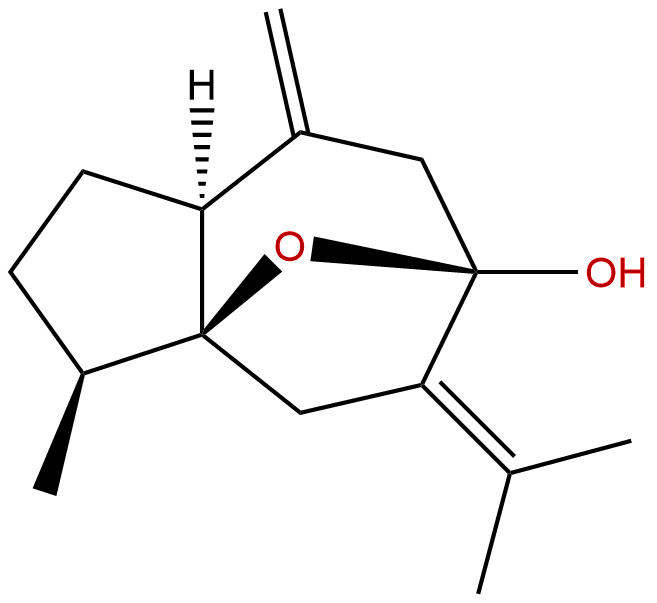
Isocoumarin is a natural organic compound belonging to the class of guaiaceae sesquiterpenes. Its molecular formula is C15H22O2 and its molecular weight is 234.3390. Structurally, its core is a sesquiterpene parent nucleus with a ten membered ring (usually a seven membered ring combined with other ring systems, specifically a guaiaceae skeleton), connected to functional groups such as hydroxyl (- OH) and possible olefinic bonds. Its specific stereochemical structure (such as the presence of chiral centers) is crucial for its biological activity, which is also the structural basis for its activity differences from other structurally similar compounds in Curcuma zedoaria, such as curcumenol and curcumedione.
According to the provided pharmacological parameters, the lipid water partition coefficient (LogP) of isozedool is 2.8558, indicating that the compound has moderate lipophilicity, which facilitates its penetration into cell membranes but may also affect its water solubility. Its topological polar surface area (TPSA) is 29.4600 Å ², which is a relatively small value, further confirming its low molecular polarity. The calculated water solubility is 0.0393 mg/mL, which is a difficult to dissolve compound and a key challenge that must be overcome in its formulation development. It is worth noting that its blood brain barrier (BBB) penetration is predicted to be "high", suggesting that the compound may enter the central nervous system, which provides potential advantages for its application in tumors that may have brain metastasis (including pancreatic cancer brain metastasis), but it is also necessary to be alert to potential neurotoxicity risks. In early safety screening, isocurcumin did not show hERG potassium channel inhibitory activity (hERG inhibition: No), reducing the risk of inducing QT interval prolongation and apical torsion type ventricular tachycardia; At the same time, the Ames test result was 0.0, which preliminarily indicates that there is no mutagenicity in this testing system, providing preliminary favorable evidence for its safety.
Plant sources and extraction methods
Isocoumarin mainly comes from the Curcuma genus in the ginger family, Wenjujin(Curcuma zedoaria The dried rhizomes of Roscoe, a plant widely cultivated in Asia, particularly in China, India, Japan, and Southeast Asian countries, are used as medicinal herbs and spices. Except for Wen Yu Jin, other plants belonging to the same genus such as Peng Yu Jin(C. phaeocaulis)It may also contain this ingredient, but the content and composition may vary depending on the species, place of origin, harvest season, and storage conditions.
The extraction and separation of isocoumarin from plant materials usually follow the conventional process of natural product chemistry. Firstly, the crude extract is obtained using solvent extraction method. The most commonly used method is steam distillation to extract volatile oil, as isocurcumin is one of the components of volatile oil; Organic solvents such as ethanol, methanol, ethyl acetate, or mixed solvents of different proportions can also be used for reflux extraction or ultrasound assisted extraction. After obtaining crude extract or volatile oil, it needs to be purified through a series of chromatographic separation techniques. Silica gel column chromatography is commonly used as a preliminary separation method, using solvent systems of different polarities (such as petroleum ether ethyl acetate gradient elution) for elution. Subsequently, combined with thin-layer chromatography (TLC) for fraction monitoring, the fractions containing the target components are further finely separated and purified by preparative thin-layer chromatography (PTLC), reverse phase column chromatography (such as ODS column), or high performance liquid chromatography (HPLC, especially preparative HPLC). The final pure product needs to be structurally confirmed by spectroscopic techniques such as nuclear magnetic resonance (NMR, including 1H-NMR and 13C-NMR), mass spectrometry (MS), infrared spectroscopy (IR), and specific rotation. In recent years, green technologies such as supercritical CO2 extraction have also been attempted for the extraction of volatile oil components from Curcuma zedoaria, which may help improve efficiency and protect thermosensitive components.
Pharmacological activity research
Isocoumarin exhibits various pharmacological activities, among which its anti-tumor effect is the most prominent.
1. Antitumor activity:
Early in vitro cytotoxicity experiments clearly revealed the direct anti proliferative effect of isocurcumin. According to research reports, its half maximal inhibitory concentrations (IC50) for DLA (Dalton's lymphoma ascites tumor) cells and KB (human oral epidermoid carcinoma) cells were 99.1 μ g/mL and 178.2 μ g/mL, respectively. Although these values indicate that its in vitro direct cytotoxicity is not extremely strong, they suggest that it has the basis for broad-spectrum anti-tumor potential. Subsequent research may be extended to more tumor cell lines, especially pancreatic cancer cell lines (such as PANC-1, MIA PaCa-2, BxPC-3, etc.), to evaluate their specific efficacy against pancreatic cancer.
2. Estrogen receptor alpha (ER alpha) inhibitory activity:
Isocurcumin has been identified as an inhibitor of ER α, which is a key molecular pharmacological characteristic. ER α is an important driving factor for the occurrence and development of hormone dependent tumors (such as breast cancer and endometrial cancer). By antagonizing the activity of ER α, isocurcumin may interfere with the estrogen signaling pathway, thereby inhibiting the proliferation of ER α - positive tumor cells and inducing their apoptosis. This characteristic not only provides a direct basis for its treatment of hormone related tumors, but also may affect other signaling pathways (such as growth factor pathway) through cross talk, thus playing a role in atypical hormone dependent tumors such as some pancreatic cancer.
3. Other potential activities:
Based on the traditional use of its parent plant, Curcuma zedoaria, and the commonality of sesquiterpenes, isocoumarin may also have anti-inflammatory, antioxidant, and antibacterial activities. Inflammation is closely related to the occurrence and development of tumors, and its anti-inflammatory properties may indirectly contribute to its anti-tumor effects, especially in regulating the tumor associated inflammatory microenvironment.
Mechanism of action and molecular targets
The anti-tumor effect of isocurcumenol, especially the potential efficacy against pancreatic cancer, may be achieved by intervening in multiple key signaling pathways and molecular targets, showing the characteristics of multi target action. Combined with the existing information and the cognition of the pathological mechanism of pancreatic cancer, its mechanism may involve the following aspects:
1. Inducing apoptosis and regulating the BCL2 family: Apoptosis resistance is common in pancreatic cancer cells. BCL2 is an important anti apoptotic protein. Isocurcumin may downregulate the expression or function of BCL2, disrupt mitochondrial membrane stability, promote cytochrome C release, activate caspase cascade reaction, and induce intrinsic pathway apoptosis in tumor cells.
2. Inhibition of STAT3 signaling pathway: The sustained activation of STAT3 is one of the core mechanisms of proliferation, survival, angiogenesis and immune escape in pancreatic cancer. Isocurcumin may inhibit upstream kinases (such as JAK) or directly interfere with the phosphorylation, dimerization, or nuclear translocation of STAT3, blocking its transcriptional activity and downregulating the expression of downstream target genes (such as Cyclin D1, Bcl xL, VEGF, etc.), thereby comprehensively suppressing the malignant phenotype of tumors.
3. Regulating tumor microenvironment and immune response (involving TLR4 and HIF1A): TLR4 is expressed in pancreatic cancer cells and tumor related immune cells, and its signal can promote the release of inflammatory factors and the formation of immunosuppressive microenvironment. Isocurcumin, as a potential TLR4 modulator, may inhibit its abnormal activation and alleviate pro tumor inflammation. At the same time, pancreatic cancer is often in a state of hypoxia. Stable HIF1A can promote angiogenesis and metabolic reprogramming. Isocoumarin may disrupt tumor adaptation by inhibiting the accumulation or activity of HIF1A.
4. Reversing multidrug resistance (involving ABCB1): ABCB1 (P-gp) is a major transporter mediating chemotherapeutic drug efflux, and its overexpression is an important reason for chemotherapy failure in pancreatic cancer. Isocurcumin may act as an inhibitor or regulator of ABCB1, reducing the efflux of chemotherapy drugs, thereby reversing tumor cell resistance and enhancing the efficacy of conventional chemotherapy drugs.
5. Inhibition of invasion and metastasis (involving MMP2, PRKCA/PRKCE): Pancreatic cancer is highly invasive. MMP2 is a key enzyme for degrading extracellular matrix. Protein kinase C (PKC) isoenzymes (such as PRKCA, PRKCE) are involved in regulating cell migration and invasion. Isocurcumin may reduce the invasion and metastasis ability of tumor cells by inhibiting the expression or activity of MMP2, as well as interfering with the PKC signaling pathway.
6. Affects oxidative stress and DNA damage (involving NFE2L2, TOP1): NFE2L2 (NRF2) pathway plays a dual role in regulating cell oxidative stress response, and is often hijacked in pancreatic cancer to protect cancer cells. Isocurcumin may regulate the NRF2 pathway, shifting its pro survival effect towards pro oxidation/pro death. In addition, it may interfere with DNA replication and repair by affecting the activity of TOP1 (topoisomerase I), leading to the accumulation of DNA damage.
7. Synergy and integration effects: It should be emphasized that isocoumarin is likely not acting on a single target, but rather simultaneously or sequentially regulating the signal network composed of multiple targets mentioned above. For example, inhibiting STAT3 may simultaneously affect BCL2 family expression and angiogenesis; ER α inhibition may also have cross talk with other pathways. This multi-target characteristic may enable it to more effectively combat tumor heterogeneity and adaptability, but it also makes mechanism research more complex.
Evaluation of drug properties and pharmacokinetics
The pharmacological evaluation based on calculations and preliminary experimental data shows that isocurcumin as a lead compound has both advantages and significant challenges.
Advantages: The molecular weight is moderate (234 Da), meeting the basic requirements of the five rules for generic drugs. A moderate LogP value (~2.86) is beneficial for oral absorption and cell membrane permeation. The absence of hERG inhibition and Ames mutagenicity alert provides a good starting point for its safety. The high blood-brain barrier penetration is its unique attribute, which provides the possibility for treating central nervous system tumors or metastases.
Main challenges: Extremely low water solubility (0.0393 mg/mL) It is the most critical factor limiting its bioavailability. Whether administered orally or by injection, low solubility can seriously affect its absorption and in vivo exposure. In addition, as a natural sesquiterpene, its structure may contain metabolic sensitive sites (such as bonds and hydroxyl groups), which are easily metabolized by phase I metabolic enzymes (such as CYP450) and phase II binding enzymes in vivo, which may lead to strong first pass effects and short half lives.
Pharmacokinetic (PK) prediction and research needs: At present, there are few reports on the in vivo pharmacokinetic studies of the isocurcumin system. It can be predicted that after oral administration, its absorption may be limited and irregular due to low solubility. After absorption, it may be widely distributed, especially in brain tissue. Metabolism may be its main clearance pathway, and the proportion of prototype drugs excreted through the kidneys may be relatively low. Future research must clarify key PK parameters such as absolute bioavailability, plasma protein binding rate, major metabolites, tissue distribution characteristics (especially concentrations in pancreatic and brain tissues), and elimination half-life through in vivo experiments.
Formulation strategy: In order to improve its medicinal properties, advanced formulation technology must be utilized. Possible strategies include making cyclodextrin inclusion complexes, solid dispersions, nanocrystals, liposomes, or nanoemulsions to significantly improve their solubility and dissolution rate. For injection administration, it may be necessary to use solubilizers or prepare dosage forms such as micelles. These pharmaceutical studies are essential steps in advancing it towards preclinical development.
Clinical application prospects and prospects
As a natural product with multi-target anti-tumor potential, the clinical application prospects of isocurcumin mainly include the following aspects:
1. Development of new drugs against pancreatic cancer: In view of the lack of effective drugs for pancreatic cancer, isocurcumenol is an attractive candidate drug because of its multi-target characteristics (especially its possible role in STAT3, BCL2, ABCB1 and other key targets). It may be used as a single drug for early or chemotherapy intolerant patients, and is more likely to be used in combination with existing standard chemotherapy drugs (such as gemcitabine, albumin bound paclitaxel) to enhance efficacy through synergistic effects and potentially reverse drug resistance.
2. Treatment of hormone dependent tumors: Its clear ER α inhibitory activity makes it valuable for development in the treatment of ER α positive breast cancer, ovarian cancer and endometrial cancer. It can be used as a supplement or alternative to tamoxifen and other traditional endocrine therapy drugs, especially for patients who are resistant to existing drugs.
3. Regarding brain metastases: Its unique advantage of high blood-brain barrier penetration provides a valuable opportunity for the development of drugs for the treatment of primary brain tumors or various solid tumor brain metastases. It can explore its potential application in glioblastoma, breast cancer and lung cancer brain metastasis.
4. Combination therapy and sensitizers: In addition to being combined with chemotherapy, isocurcumin may also be combined with radiotherapy, immunotherapy (such as PD-1/PD-L1 inhibitors), or other targeted drugs. For example, its ability to regulate the tumor microenvironment (TLR4) and inhibit STAT3 may help improve immune suppression status and enhance the efficacy of immune checkpoint inhibitors.
However, achieving its clinical translation still faces a series of challenges and future research directions:
* In depth mechanism clarification: Through rigorous molecular and cellular biological experiments (such as gene knockdown/overexpression, reporter gene detection, coprecipitation, molecular docking and verification, etc.), the direct interaction and downstream functional impact with the above putative targets (BCL2, STAT3, etc.) need to be verified one by one in specific disease models such as pancreatic cancer.
* Pre clinical evaluation of the system: Conduct comprehensive in vivo pharmacological studies and evaluate the anti-tumor effects of monotherapy and combination therapy using more clinically relevant models such as human tumor xenograft (PDX) models. At the same time, it is necessary to conduct safety pharmacology and toxicology research on the system.
* Formulation and PK/PD research: As mentioned earlier, stable formulations have been developed that can significantly improve their solubility and bioavailability, and a complete PK/PD model has been established to clarify the relationship between their in vivo exposure, efficacy, and toxicity.
* Structural optimization: Reasonable structural modification and structure-activity relationship research were conducted using isozedoary alcohol as the parent nucleus, aiming to improve its activity, solubility, metabolic stability, while reducing potential toxicity and obtaining better candidate drugs.
Conclusion
Isocurcumin is a sesquiterpenoid compound with clear biological activity isolated from traditional Chinese medicine Curcuma zedoaria. It not only shows direct anti-tumor activity in vitro, but also has been identified as an ER α inhibitor. It may play a multi pathway and multi link anti-tumor effect by interfering with STAT3, BCL2, TLR4, ABCB1 and other key targets closely related to the malignant progress of pancreatic cancer. Its moderate lipid solubility, absence of hERG, and mutagenic alarm properties lay the foundation for its drug development, while its extremely low water solubility is the main pharmaceutical challenge that must be overcome in its development process. Although its system, in-depth mechanism of action and in vivo pharmacokinetics behavior are not fully understood at present, its unique structure, multi-target potential and high blood-brain barrier penetrability make it show an attractive development prospect in the fields of anti pancreatic cancer, hormone related tumors and brain metastases. Future research needs to integrate multidisciplinary forces such as natural product chemistry, pharmacology, pharmaceutics and toxicology, and focus on three core tasks: in-depth mechanism analysis, preparation technology innovation and systematic preclinical evaluation, with a view to transforming this ancient natural molecule into a new anti-cancer drug with modern medical value, and providing a new weapon to overcome pancreatic cancer and other malignant tumors.