Pharmacological research progress and prospect of pharmacological properties of Majonoside R1
Introduction/Overview
Natural products, as an important source of drug discovery, occupy an irreplaceable position in the history of human health maintenance and disease treatment. Triterpenoid saponins, as a class of structurally diverse and biologically active natural products, have received increasing attention in recent years. Majonoside R1 (MR1 for short) is derived from the plant Majonoside in the Araliaceae family(Panax japonicus var. major)A triterpenoid saponin with significant pharmacological activity isolated from the middle. As an important member of the ginseng genus, Zhuzishen is known for its effects of "tonifying qi and nourishing yin, clearing lungs and resolving phlegm" in the traditional Chinese medicine system. Its roots and stems are commonly used to treat diseases such as cough, hemoptysis, sore throat, and traumatic injuries. Modern pharmacological research has revealed that ginsenoside R1 is not only one of the main active ingredients of Panax ginseng, but also exhibits various pharmacological effects such as anti-inflammatory, antioxidant, neuroprotective, anti-tumor, immune regulation, and cardiovascular protection, making it a research hotspot in the field of natural product pharmacology.
The chemical structure of bead ginseng saponin R1 belongs to the damane type triterpenoid saponin, and its unique sugar chain modification and stereoconfiguration endow it with biological characteristics that distinguish it from other ginsenosides. With the advancement of separation and purification technology and the improvement of pharmacological evaluation systems, the therapeutic potential of MR1 in various disease models has gradually been revealed, especially in the fields of complex diseases such as neurodegenerative diseases, metabolic diseases, and tumors, showing good application prospects. However, as a natural product, the pharmacological evaluation, pharmacokinetic characteristics, and clinical translation pathway of MR1 still face many challenges. This article aims to systematically review the chemical structure, plant origin, pharmacological activity, mechanism of action, and pharmacological parameters of bead ginseng saponin R1, providing comprehensive academic references for subsequent research and development.
Chemical structure and physicochemical properties
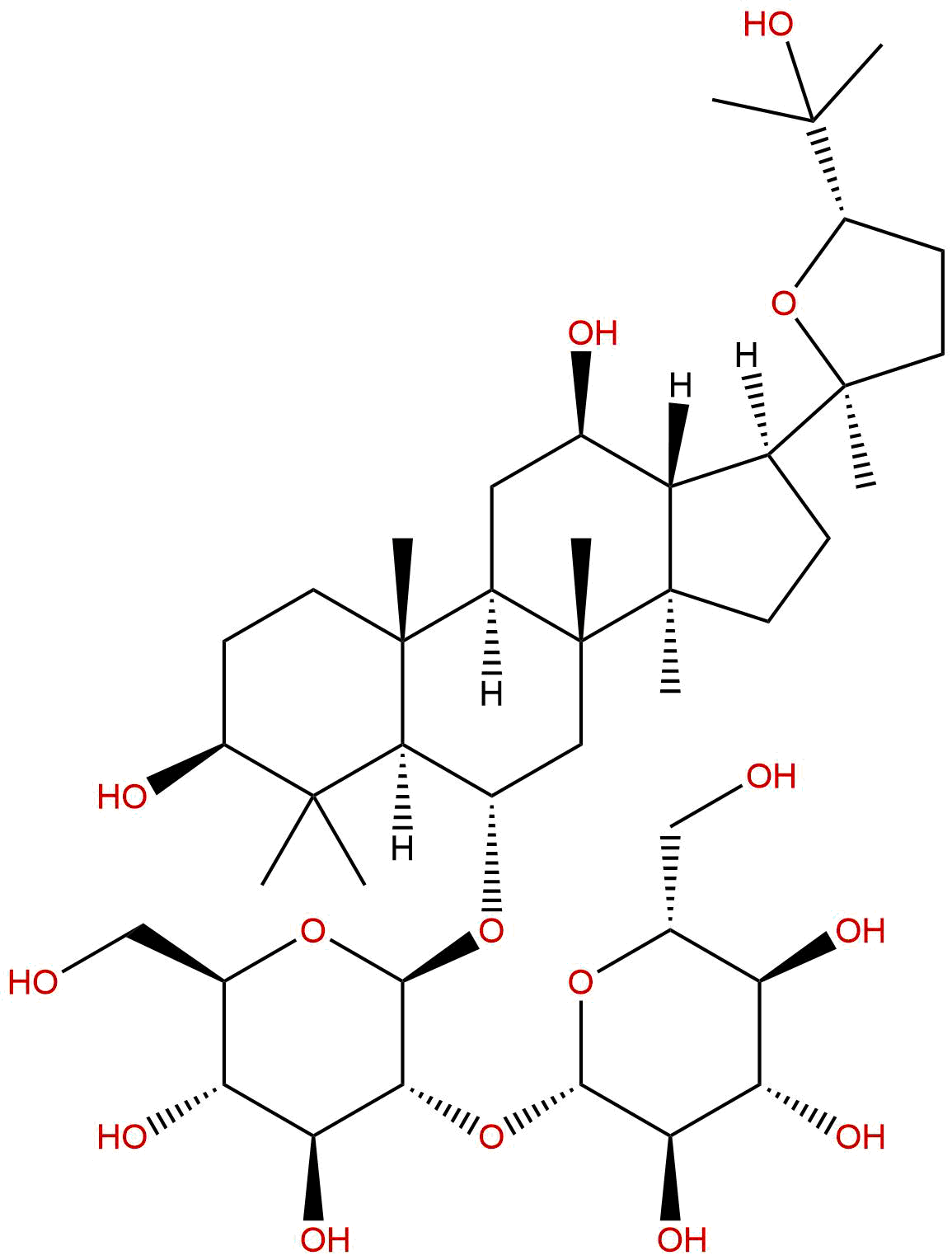
The chemical structure of bead ginseng saponin R1 belongs to the damaane type tetracyclic triterpenoid saponin, and its parent nucleus is of the 20 (S) - protopanaxadiol type. Specifically, the aglycone of MR1 is 20 (S) - protopanaxadiol, with sugar chains attached at positions C-3 and C-20, respectively. The sugar chain at position C-3 is composed of β - D-glucosyl (1 → 2) - β - D-glucosyl, while the sugar chain at position C-20 is composed of β - D-glucosyl (1 → 6) - β - D-glucosyl. This dual sugar chain modification pattern is similar to other ginsenosides such as ginsenoside Rb1, Rc, etc., but MR1 has unique characteristics in terms of sugar linkage sequence and spatial configuration, which may be the structural basis for its pharmacological activity that distinguishes it from other ginsenosides.
From the perspective of physical and chemical properties, the molecular formula of bead ginseng saponin R1 is C ₄₂ H ₇₂ O ₁₄, with a molecular weight of 772.9900 g/mol. The topological polar surface area (TPSA) of MR1 is 252.7900 Å ², which is significantly higher than the threshold of traditional small molecule drugs (TPSA<140 Å ² is generally considered favorable for oral absorption), indicating that MR1 may have high polarity, good water solubility but poor lipid solubility, which poses potential limitations on its transmembrane transport and oral bioavailability. MR1 is a white or off white amorphous powder that is easily soluble in polar organic solvents such as methanol, ethanol, and n-butanol, slightly soluble in water, and difficult to dissolve in non-polar solvents such as chloroform and ether. The specific optical rotation, ultraviolet absorption spectrum, and infrared spectrum characteristics have been systematically reported, and the nuclear magnetic resonance hydrogen spectrum and carbon spectrum data have been clearly attributed, providing a reliable basis for structural identification and quality control.
In terms of stability, MR1 is prone to glycosidic bond hydrolysis under acidic conditions, generating secondary glycosides or aglycones; Relatively stable under alkaline conditions, but prolonged heating may still lead to structural degradation. Therefore, attention should be paid to controlling pH and temperature conditions during the extraction, separation, and formulation processes. In addition, MR1 may undergo oxidation reactions under light conditions, and it is recommended to store it in the dark. These physicochemical properties provide important references for subsequent formulation design and route of administration selection.
Plant sources and extraction methods
Pearl ginseng saponin R1 mainly comes from the Araliaceae ginseng plant, Pearl ginseng(Panax japonicus C. A. Mey. var. major (Burk.) C. Y. Wu et K. M. Feng), This plant is mainly distributed in southwest China (Yunnan, Sichuan, Guizhou), Xizang, Nepal, Bhutan and other the Himalayas surrounding areas. The rhizome of Zhuzi ginseng is a traditional medicinal part, and it is often used as a substitute for ginseng in folk medicine. In addition to pearl ginseng, MR1 is also found in bamboo ginseng(Panax japonicus C. A. Mey. and some closely related species of Panax were detected, but the differences in content were significant. Research has shown that the content of MR1 in the roots and stems of Panax ginseng varies from 0.5% to 2.0% (dry weight), depending on the place of origin, harvesting season, and growth years. Generally speaking, the accumulation of saponin components in the rhizomes of Panax ginseng with a longer growth period (more than 5 years) is more abundant.
In terms of extraction methods, traditional solvent extraction is still the most commonly used approach. Due to the high polarity of MR1, methanol or ethanol (70%~80%) is usually used as the extraction solvent to obtain crude extracts through reflux extraction or cold soaking extraction. In recent years, modern technologies such as ultrasound assisted extraction, microwave-assisted extraction, and enzyme assisted extraction have been introduced to improve extraction efficiency. For example, using ultrasound assisted extraction (power 300 W, temperature 50 ° C, time 30 min) can increase the extraction rate of MR1 by about 20% to 30% compared to traditional reflux method. In addition, supercritical fluid extraction (using CO ₂ as the solvent and adding an appropriate amount of ethanol as the entrainer) has also been attempted for the extraction of saponin components, but its application is not yet widespread due to its limited ability to dissolve polar components.
Purification after extraction is a key step in obtaining high-purity MR1. The commonly used purification methods include macroporous adsorption resin column chromatography, silica gel column chromatography, reverse phase ODS column chromatography, and preparative high-performance liquid chromatography (Prep HPLC). Among them, macroporous adsorption resins (such as D101 and HP-20) are widely used for the preliminary purification of saponin crude extracts due to their advantages of low cost, easy operation, and reusability. By gradient elution (water → ethanol), MR1 is enriched in the 30%~60% ethanol elution site. Subsequently, by combining silica gel column chromatography (chloroform methanol water system) with reverse phase ODS column chromatography (methanol water system), MR1 monomer with a purity of over 95% can be obtained. For higher purity requirements, preparative HPLC (C18 column, acetonitrile water mobile phase) is an effective means of final purification. It is worth noting that MR1 has a similar structure to other ginsenosides (such as ginsenoside Rb1, Rc, Rd), and the chromatographic separation conditions need to be optimized to achieve baseline separation.
Pharmacological activity research
The pharmacological activity research of bead ginseng saponin R1 has covered multiple disease fields, demonstrating multi-target and multi pathway action characteristics. The following provides a systematic explanation of the main active directions.
Anti inflammatory and antioxidant activity MR1 exhibits significant inhibitory effects in various inflammatory models. In the lipopolysaccharide (LPS) - induced RAW264.7 macrophage inflammation model, MR1 can dose dependently inhibit the release of pro-inflammatory factors such as nitric oxide (NO), prostaglandin E2 (PGE2), tumor necrosis factor - α (TNF - α), interleukin-6 (IL-6), etc. Its anti-inflammatory mechanism is closely related to the inhibition of nuclear factor kappa B (NF - κ B) signaling pathway and mitogen activated protein kinase (MAPK) phosphorylation. In vivo experiments, MR1 can alleviate carrageenan induced paw swelling in rats and acetic acid-induced increased peritoneal capillary permeability in mice. In terms of antioxidant activity, MR1 can eliminate 1,1-diphenyl-2-trinitrophenylhydrazine (DPPH) radicals, hydroxyl radicals, and superoxide anions, and increase the activity of endogenous antioxidant enzymes such as superoxide dismutase (SOD) and glutathione peroxidase (GSH Px), while reducing malondialdehyde (MDA) levels.
Neuroprotective effect MR1 has shown good protective effects in neurodegenerative disease models. In the Alzheimer's disease cell model induced by β - amyloid protein (A β), MR1 can reduce A β aggregation, inhibit tau protein hyperphosphorylation, and alleviate oxidative stress and neuroinflammatory responses. In a mouse model of Parkinson's disease induced by 1-methyl-4-phenyl-1,2,3,6-tetrahydropyridine (MPTP), MR1 pretreatment significantly improved motor dysfunction and protected dopaminergic neurons in the substantia nigra. The mechanism is related to the activation of the phosphatidylinositol 3-kinase/protein kinase B (PI3K/Akt) signaling pathway and the inhibition of apoptosis related proteins (such as Bax and caspase-3) expression. In addition, MR1 also has a protective effect on cerebral ischemia-reperfusion injury, which can reduce the volume of cerebellar infarction, alleviate brain edema, and improve neurological function scores.
Antitumor activity MR1 has a proliferative inhibitory effect on various tumor cell lines. In vitro experiments showed that MR1 could inhibit the proliferation of human liver cancer cells (HepG2), human breast cancer cells (MCF-7), human lung cancer cells (A549) and human colon cancer cells (HT-29), and the half inhibitory concentration (IC ≮₀) was in the range of 10-50 μ M. Its anti-tumor mechanism involves inducing cell cycle arrest (G0/G1 phase or G2/M phase), promoting apoptosis (via mitochondrial pathway and death receptor pathway), and inhibiting invasion and metastasis (downregulating matrix metalloproteinase MMP-2/9 expression). It is worth noting that MR1 has low toxicity to normal cells (such as human normal liver cell L02) and exhibits a certain degree of selectivity. In addition, MR1 can enhance the anti-tumor effect of chemotherapy drugs such as cisplatin and paclitaxel, indicating its potential as a chemotherapy sensitizer.
Immune regulatory activity MR1 has a bidirectional regulatory effect on immune function. In immunocompromised models (such as cyclophosphamide induced immunosuppressed mice), MR1 can promote splenic lymphocyte proliferation, enhance natural killer (NK) cell activity, and increase serum immunoglobulin (IgG, IgM) levels. In the autoimmune inflammatory model, MR1 exhibits immunosuppressive effects, which can inhibit T cell activation and proliferation, and reduce levels of pro-inflammatory cytokines. This bidirectional regulatory characteristic may be related to the differential regulation of MR1 on immune cell signaling networks.
Cardiovascular protective effect MR1 also has a protective effect on the cardiovascular system. In the myocardial ischemia-reperfusion injury model, MR1 can reduce myocardial infarction area, decrease the release of creatine kinase (CK) and lactate dehydrogenase (LDH), and its mechanism is related to activating the Akt/endothelial nitric oxide synthase (eNOS) signaling pathway and inhibiting oxidative stress. In addition, MR1 can inhibit platelet aggregation and prolong clotting time, suggesting its potential anti thrombotic activity. MR1 can alleviate oxidative low-density lipoprotein (ox LDL) - induced damage and protect endothelial function in vascular endothelial cells.
Other activities In addition to the above main activities, MR1 has also reported anti fatigue, anti depression, liver protection and anti diabetes effects. For example, in a chronic unpredictable mild stress (CUMS) - induced depression mouse model, MR1 can improve depressive like behavior and regulate hypothalamic pituitary adrenal (HPA) axis function. In the carbon tetrachloride induced liver injury model, MR1 can reduce serum transaminase levels, alleviate liver cell necrosis and inflammatory infiltration.
Mechanism of action and molecular targets
The pharmacological activity of bead ginseng saponin R1 involves a complex regulatory network of multiple molecular targets and signaling pathways. Based on existing research, its mechanism of action can be summarized into the following core aspects.
Regulation of NF - κ B signaling pathway NF - κ B is the core transcription factor of inflammatory response. MR1 can inhibit the phosphorylation and degradation of I κ B α, thereby preventing the translocation of NF - κ B p65 subunit to the nucleus and reducing the transcription of downstream pro-inflammatory genes such as TNF - α, IL-6, iNOS, COX-2. This mechanism plays a key role in the anti-inflammatory and neuroprotective effects of MR1.
MAPK signaling pathway regulation MR1 can inhibit the phosphorylation of p38 MAPK, c-Jun N-terminal kinase (JNK), and extracellular signal regulated kinase (ERK), thereby blocking the inflammatory signaling cascade. There are differences in the regulation of MAPK subtypes by MR1 among different cell types, indicating that its effect is cell specific.
Activation of PI3K/Akt signaling pathway The PI3K/Akt pathway is a key regulatory pathway for cell survival and metabolism. MR1 can promote downstream Bad phosphorylation (inhibit apoptosis), activate eNOS (promote NO production), and inhibit glycogen synthase kinase-3 β (GSK-3 β) activity by activating PI3K/Akt signaling, thereby exerting neuroprotective, cardioprotective, and anti apoptotic effects.
Regulation of apoptosis related proteins MR1 can upregulate the expression of anti apoptotic protein Bcl-2, downregulate the expression of pro apoptotic protein Bax, inhibit mitochondrial cytochrome c release and caspase-3/9 activation, thereby blocking the mitochondrial apoptosis pathway. In addition, MR1 can also regulate the expression of proteins related to the death receptor pathway (such as Fas/FasL).
Activation of antioxidant enzyme system MR1 can upregulate the expression of antioxidant enzymes such as SOD, GSH Px, and heme oxygenase-1 (HO-1) by activating the nuclear factor E2 related factor 2 (Nrf2)/antioxidant response element (ARE) signaling pathway, enhancing cellular antioxidant defense capabilities. This mechanism plays an important role in the cell protective effect of MR1.
Epigenetic regulation Recent studies have found that MR1 can affect histone acetylation modification and microRNA expression. For example, MR1 can upregulate miR-146a expression, thereby negatively regulating the NF - κ B signaling pathway; It can also inhibit histone deacetylase (HDAC) activity, alter chromatin structure, and affect gene transcription. These epigenetic regulatory mechanisms provide new explanations for the pleiotropy of MR1.
Interaction between receptors and transporters MR1 may exert its effects by interacting with specific receptors on the cell membrane (such as glucocorticoid receptors, estrogen receptors) or transporters (such as glucose transporter GLUT). However, current research on the direct molecular targets of MR1 is still relatively limited, and the identification of high affinity binding proteins is an important direction for future research.
Evaluation of drug properties and pharmacokinetics
The pharmacological evaluation of bead ginseng saponin R1 is a key step in promoting its clinical translation. From the perspective of physicochemical properties and pharmacokinetic characteristics, MR1 faces several challenges, but there is also room for optimization.
Physical and chemical properties and drug like properties The molecular weight of MR1 is 772.99 Da, far exceeding the threshold of molecular weight<500 Da in the Lipinski Five Rules; Its TPSA is 252.79 Å ², which is significantly higher than the recommended upper limit of 140 Å ². These parameters suggest that the oral bioavailability of MR1 may be low and its transmembrane permeability may be poor. In addition, MR1 has a large number of hydrogen bond donors and acceptors (8 and 14 respectively), which further limits its passive diffusion ability. Therefore, MR1 belongs to a typical "non drug like" molecule, and its drug development requires the use of formulation technology (such as nanocarriers, liposomes, phospholipid complexes) or structural modification (such as prodrug design) to improve absorption.
Pharmacokinetic characteristics Existing animal experiments have shown that MR1 is slowly and incompletely absorbed after oral administration, with an absolute bioavailability typically below 5%. After intravenous administration, MR1 is widely distributed in the body, but mainly retained in the blood and liver, and its tissue distribution is affected by its high polarity and molecular weight. The metabolism of MR1 in the body mainly occurs in the gastrointestinal tract and liver, involving the hydrolysis of glycosidic bonds (producing secondary glycosides such as ginsenoside Rd, F2, and aglycones) and glucuronic acid binding reactions. Its metabolites may retain some pharmacological activity, but the activity intensity is usually lower than that of the parent compound. The elimination of MR1 is mainly through bile excretion (via feces), with less excretion in urine. The half-life (t ₁/₂) varies depending on the route of administration, approximately 1-3 hours after intravenous administration, and is prolonged after oral administration due to slow absorption.
safety evaluation Acute toxicity experiments showed that the median lethal dose (LDX) of MR1 was relatively high, and oral administration of LDX to mice was greater than 2000 mg/kg, indicating low acute toxicity. In the subchronic toxicity experiment, after 28 days of continuous administration, the high-dose group (200 mg/kg/d) showed slight abnormalities in liver function indicators (elevation of ALT and AST) and reduced weight gain, but no significant histopathological changes were observed. The results of genetic toxicity experiments (Ames test, micronucleus test) were all negative. Overall, MR1 has good safety, but the safety of long-term use still needs further evaluation.
Formulation strategy To overcome the pharmacokinetic deficiencies of MR1, various formulation strategies have been explored. Liposomal encapsulation can improve the encapsulation efficiency and stability of MR1, and prolong the in vivo circulation time; Phospholipid complexes can enhance the lipid solubility of MR1 and improve transmembrane transport; Polymer nanoparticles, such as PLGA nanoparticles, can achieve sustained release and targeted delivery. In addition, prodrug design based on the MR1 metabolic pathway, such as introducing ester or phosphate groups, is also under study. These formulation technologies are expected to enhance the drug potential of MR1 to a level that can be developed.
Clinical application prospects and prospects
Pearl ginseng saponin R1, as a natural triterpenoid saponin with multiple pharmacological activities, has shown potential application prospects in the treatment of various diseases. However, there are still many challenges and opportunities from laboratory research to clinical translation.
Potential indications Based on existing pharmacological activity data, MR1 is most likely to achieve clinical translation in the following areas: ① Neurodegenerative diseases (Alzheimer's disease, Parkinson's disease), whose neuroprotective, anti-inflammatory, and antioxidant properties provide a theoretical basis for treatment; ② The NF - κ B inhibitory activity and immune regulatory effects of MR1 have potential applications in chronic inflammatory diseases such as rheumatoid arthritis and inflammatory bowel disease; ③ Tumor adjuvant therapy, MR1 as a chemotherapy sensitizer or radiotherapy sensitizer, can improve efficacy and reduce side effects; ④ The cardioprotective and neuroprotective effects of ischemic cardiovascular and cerebrovascular diseases deserve further development.
Clinical conversion bottleneck The main bottleneck for the clinical translation of MR1 lies in: ① low oral bioavailability, which limits the development of oral formulations; ② Rapid metabolism in the body, short half-life, requiring frequent administration; ③ Lack of clear molecular targets and insufficient research on the mechanism of action; ④ The large-scale production process is not yet mature and the cost is high; ⑤ Lack of systematic preclinical toxicology and pharmacokinetic data, especially safety evaluation of long-term medication.
Future research directions To accelerate the clinical translation of MR1, future research should focus on the following directions: ① Thoroughly elucidating the direct molecular targets and binding modes of MR1, which can be achieved through chemical proteomics, surface plasmon resonance (SPR), and molecular docking techniques; ② Develop efficient and low-cost synthetic biology or semi synthetic methods to solve the problem of limited natural resources; ③ Optimize formulation technology and develop new dosage forms with significantly improved oral bioavailability, such as self microemulsion delivery systems and nanocrystal formulations; ④ Conduct systematic pharmacokinetic pharmacodynamic (PK-PD) correlation studies and establish a rational dosing regimen; ⑤ Explore the synergistic effects of MR1 with other drugs and develop compound formulations; ⑥ Promote preclinical safety evaluation of MR1 and provide data support for clinical trial applications.
In addition, structural modification and structure-activity relationship research based on MR1 framework is expected to discover derivatives with stronger activity and better drug properties. For example, by introducing specific functional groups or changing the sugar chain structure, its lipophilicity, metabolic stability, and target selectivity can be regulated. This strategy has achieved preliminary results in the study of ginsenoside compounds and is worth learning from in MR1.
Conclusion
Pearl ginseng saponin R1, as the main active ingredient of pearl ginseng, has become a research hotspot in the field of natural product pharmacology due to its various pharmacological activities such as anti-inflammatory, antioxidant, neuroprotective, anti-tumor, and immune regulation. Its unique structure of dammarane type triterpenoid saponins endows it with multi-target and multi pathway action characteristics, showing great potential for application in the treatment of complex diseases such as neurodegenerative diseases, chronic inflammation, and tumors. However, the pharmaceutical challenges of MR1, particularly its low oral bioavailability and rapid metabolism, remain a key bottleneck restricting its clinical translation. In the future, with the in-depth elucidation of molecular targets, innovative breakthroughs in formulation technology, and systematic research on structure-activity relationships, MR1 is expected to move from the laboratory to clinical practice, contributing new natural medicines to human health. In this process, interdisciplinary collaboration and the combination of industry, academia, and research will play an irreplaceable role. We have reason to believe that in-depth research on bead ginseng saponin R1 will not only promote the scientific utilization of ginseng plant resources, but also provide new paradigms and inspirations for the discovery of natural product drugs.