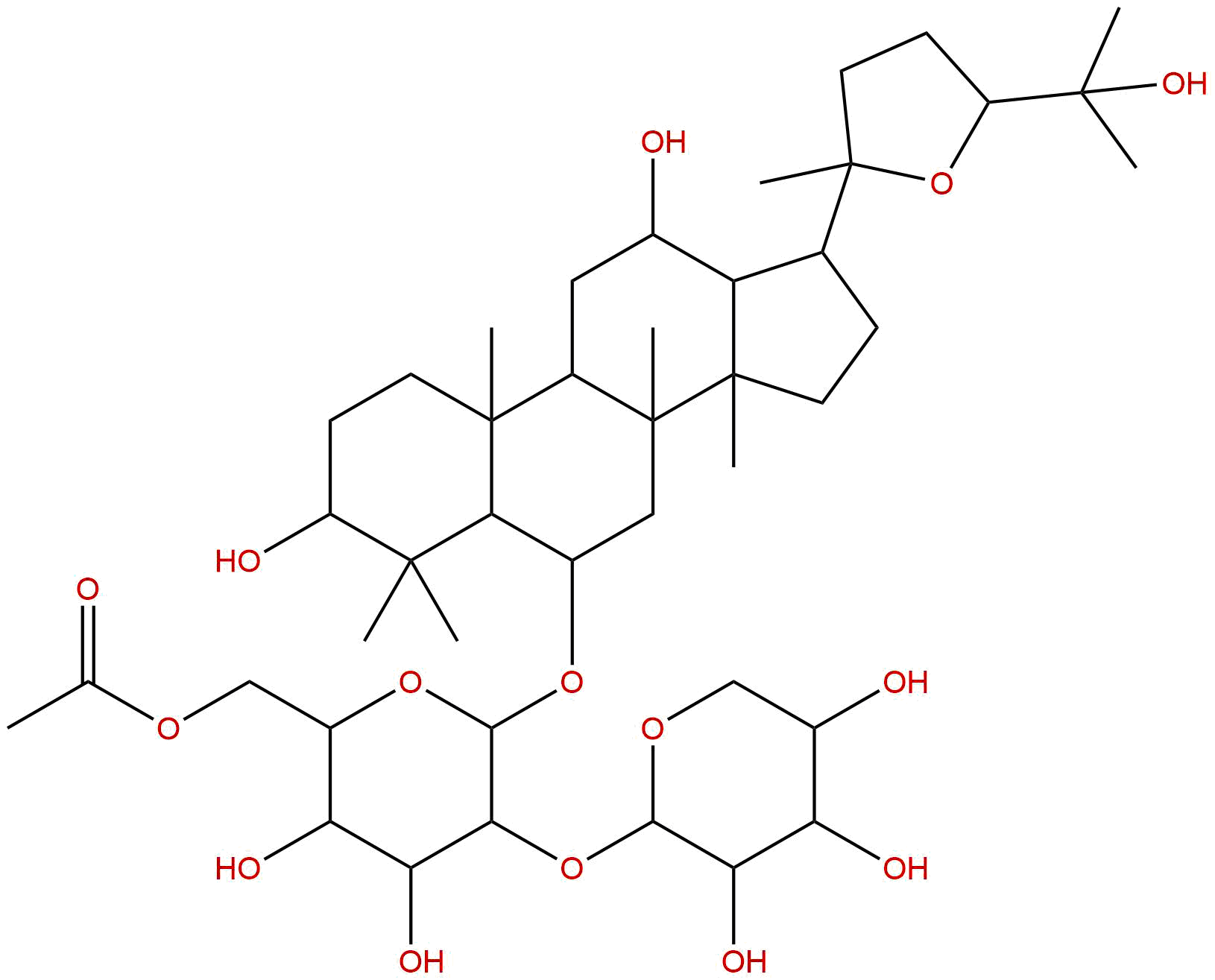


Product name: Vinaginsenoside R2
Synonym name: Vina-ginsenoside R2
Catalogue No.: BP5440
Cas No.: 156980-42-6
Formula: C43H72O15
Mol Weight: 829.034
Botanical Source: Vietnamese ginseng
Type of Compound: Triterpenoids
Purity: 95%~99%
Analysis Method: HPLC-DAD or/and HPLC-ELSD
Identification Method: Mass, NMR
Packing: Brown vial or HDPE plastic bottle
Storage: Store in a well closed container, protected from air and light. Put into refrigerate or freeze for long term storage.
Whenever possible, you should prepare and use solutions on the same day. However, if you need to make up stock solutions in advance, we recommend that you store the solution as aliquots in tightly sealed vials at -20℃. Generally, these will be useable for up to two weeks.
The product could be supplied from milligrams to grams
Inquire for bulk scale.
For Reference Standard and R&D, Not for Human Use Directly.
Storage conditions:Short-term storage at 2~8℃, long-term storage at -20 ~ -80℃
266.3600
No
No
No
No
Unknown
No
Unknown
No
Ginseng genus(Panax)Plants, as treasures of traditional medicine, enjoy a high reputation worldwide, and their medicinal history can be traced back thousands of years. Ginsenosides, as the main active ingredient of Panax plants, have been widely studied and proven to have various pharmacological activities, including anti-tumor, anti-inflammatory, immune regulation, neuroprotection, and cardiovascular protection. With the continuous development and utilization of ginseng plant resources, researchers have discovered numerous structurally novel and uniquely active saponin compounds from different species. Among them, Vinaginsenoside R2 (VG-R2) is a type of ginseng extracted from Vietnam(Panax vietnamensis The dammarane type triterpenoid saponins isolated from Ha et Grushv. have attracted widespread attention from scholars in the fields of natural product chemistry and pharmacology in recent years.
Vietnamese ginseng is mainly distributed in the high-altitude areas of central Vietnam and is used in traditional medicine to treat various diseases, including weakness, fatigue, inflammation, and tumors. In 1985, Vietnamese scientists conducted the first systematic phytochemical study on this plant and subsequently reported a series of saponin components with unique structural characteristics. Vietnamese ginsenoside R2 was first isolated and identified in 1994. Its chemical structure is 20 (S) - protopanaxadiol type saponin, and the sugar chain is composed of monosaccharides such as glucose and xylose. Compared with common ginsenosides such as Rb1 and Rg1, VG-R2 exhibits significant differences in glycosylation patterns and stereoisomers, which may be closely related to its unique biological activity.
In recent years, significant progress has been made in the pharmacological activity research of VG-R2. Research has shown that this compound exhibits good biological activity in anti-tumor, anti-inflammatory, antioxidant, neuroprotective, and metabolic regulation aspects. Of particular note is that VG-R2 exhibits selective cytotoxicity towards various tumor cell lines, with lower toxicity towards normal cells, making it a highly promising candidate molecule for anti-tumor development. In addition, the role of VG-R2 in cardiovascular and liver protection has also attracted the interest of researchers. However, compared with other ginsenosides, systematic research on VG-R2 is still relatively limited, and its mechanism of action, pharmacokinetic characteristics, and clinical application potential still need further in-depth exploration.
This article aims to provide a systematic review of the chemical structure, plant origin, extraction and isolation methods, pharmacological activity, mechanism of action, pharmacological evaluation, and clinical application prospects of Vietnamese ginsenoside R2, in order to provide reference for the in-depth research and development of this natural product.
Vietnamese ginsenoside R2 belongs to the damaane type tetracyclic triterpenoid saponin, with a aglycone of 20 (S) - protopanaxadiol (PPD). Compared with other ginsenosides, VG-R2 is unique in its sugar chain composition and connection mode. Specifically, the C-3 hydroxyl group of VG-R2 is connected to a β - D-glucopyranosyl (1 → 2) - β - D-glucopyranosyl disaccharide chain, while the C-20 hydroxyl group is connected to an α - L-arabinopyranose (1 → 6) - β - D-glucopyranosyl disaccharide chain. This glycosylation mode results in the molecular formula of VG-R2 being C ₅∝ H ₉₀₂, with a molecular weight of 837.03 Da.
From a stereochemical perspective, the C-20 position of VG-R2 is in the S configuration, which differs from some ginsenosides such as 20 (R) - ginsenoside Rg3. Research has shown that the three-dimensional configuration of C-20 has a significant impact on the biological activity of saponins, and the S configuration typically exhibits stronger pharmacological activity. In addition, VG-R2 molecule contains multiple chiral centers, and its glycosidic bonds are all in the β or α configuration, which together determine the spatial conformation and biological activity of the compound.
VG-R2 is a white amorphous powder with certain hygroscopicity. This compound is soluble in polar organic solvents such as methanol, ethanol, and n-butanol, slightly soluble in water, and insoluble in non-polar solvents such as chloroform and ether. Its low solubility in water may affect its oral bioavailability. The melting point of VG-R2 is 198-202 ° C (decomposition), and it is prone to hydrolysis under acidic conditions, producing secondary glycosides or aglycones. Relatively stable under alkaline conditions, but prolonged exposure may lead to the breakage of sugar chains.
In terms of spectroscopic characteristics, the UV absorption spectrum of VG-R2 exhibits terminal absorption around 203 nm, which is a typical feature of damaane type triterpenoid saponins. The infrared spectrum displays characteristic absorption peaks for hydroxyl (3400 cm ⁻¹), carbonyl (1700 cm ⁻¹), and glycosidic bonds (1050-1150 cm ⁻¹). The nuclear magnetic resonance hydrogen spectrum and carbon spectrum data provide key information for structural identification, where the chemical shift values at positions C-3 and C-20 can clearly indicate the connection position of the sugar chain. High resolution mass spectrometry (HR-ESI-MS) showed an excimer ion peak at m/z 837.5300 [M+H] ⁺, consistent with the theoretical molecular weight.
According to the calculated chemical parameters, the topological polar surface area (TPSA) of VG-R2 is 266.36 Å ², much higher than the typically required 140 Å ² for oral drugs, which is consistent with its structural characteristics of containing multiple sugar units. A higher TPSA value means that the compound is difficult to penetrate the blood-brain barrier, which is consistent with the conclusion of "blood-brain barrier: No" in the pharmacological parameters. In addition, VG-R2 contains 15 hydrogen bond receptors and has a relatively large molecular weight, all of which suggest that its oral absorption may face challenges.
Vietnamese ginseng saponin R2 mainly comes from the Araliaceae ginseng plant, Vietnamese ginseng(Panax vietnamensis Ha et Grushv.)。 Vietnamese ginseng is a perennial herbaceous plant mainly distributed in central Vietnam, including Kon Tum, Gia Lai, and Quang Nam provinces. It grows under evergreen broad-leaved forests at elevations of 1200-2000 meters. This plant is known as "S â m Ng ọ c Linh" or "S â m Vi ệ t Nam" in traditional Vietnamese medicine and is widely used to enhance physical strength, resist fatigue, anti-aging, and treat various chronic diseases.
The distribution of VG-R2 in other ginseng plants, except for Vietnamese ginseng, is not fully understood. There are research reports that trace amounts of VG-R2 may be detected in some cultivated varieties or closely related species, but its content is much lower than that of Vietnamese ginseng. It is worth noting that the composition and content of saponins in Vietnamese ginseng are influenced by various factors such as growth environment, harvest season, plant age, and processing methods. Usually, Vietnamese ginseng roots and stems with a longer growth period (more than 5 years) have a higher content of VG-R2, and samples harvested in autumn also have relatively abundant saponin content.
The extraction of VG-R2 usually adopts solvent extraction method, using methanol or ethanol aqueous solution as the extraction solvent. The classic extraction process includes crushing the dried Vietnamese ginseng roots and stems, and refluxing them with a 70% -80% ethanol aqueous solution at 60-80 ° C for 2-3 times, each time for 2-4 hours. Combine the extraction solutions, concentrate under reduced pressure until there is no alcohol odor, and obtain the crude extract. Subsequently, the crude extract was suspended in water and subjected to liquid-liquid extraction using petroleum ether, ethyl acetate, and water saturated n-butanol in sequence. VG-R2 is mainly enriched in the n-butanol layer, which is concentrated under reduced pressure to obtain crude total saponins.
In order to improve extraction efficiency and selectivity, researchers have developed various modern extraction techniques in recent years. Ultrasound assisted extraction (UAE) utilizes the cavitation effect of ultrasound to destroy cell walls, significantly reducing extraction time and improving yield. Microwave assisted extraction (MAE) rapidly increases the intracellular temperature through microwave heating, promoting the dissolution of active ingredients. In addition, Enzyme Assisted Extraction (EAE) utilizes cellulases, pectinases, and other enzymes to degrade cell wall polysaccharides, which can effectively improve the extraction rate of saponins. These methods significantly improve extraction efficiency while maintaining the structural integrity of VG-R2.
The separation and purification of VG-R2 from crude total saponins usually requires the combination of multiple chromatographic techniques. The classic separation process involves first passing total saponins through silica gel column chromatography, using chloroform methanol water (65:35:10, lower layer) as the mobile phase for gradient elution, and collecting the fraction containing VG-R2. Subsequently, further purification was carried out using reverse phase silica gel column chromatography (such as ODS-C18) with methanol water (60:40 to 80:20) as the mobile phase. Finally, high-purity VG-R2 monomer was obtained by preparative high-performance liquid chromatography (Prep HPLC).
In recent years, new separation methods such as high-speed countercurrent chromatography (HSCCC) and molecular imprinting technology have also been applied to the purification of VG-R2. HSCCC utilizes the liquid-liquid distribution principle to avoid irreversible adsorption of samples on solid stationary phases, and has advantages such as high separation efficiency and good sample recovery rate. Molecular imprinting technology achieves selective enrichment of target compounds by preparing polymers with specific recognition ability for VG-R2. These methods provide new technological means for the efficient preparation of VG-R2.
The anti-tumor activity of VG-R2 is one of its most concerned pharmacological effects. In vitro studies have shown that VG-R2 has a significant inhibitory effect on the proliferation of a variety of human tumor cell lines, including liver cancer cells (HepG2, Huh7), lung cancer cells (A549, H1299), breast cancer cells (MCF-7, MDA-MB-231), colon cancer cells (HT-29, HCT116), and previously listed adenocarcinoma cells (PC-3, DU145). The half maximal inhibitory concentration (IC ₅₀) is usually in the range of 10-50 μ M, and the specific value varies depending on the cell type and treatment time. It is worth noting that VG-R2 has low toxicity to normal cells such as human liver cell L02 and human umbilical vein endothelial cell HUVEC, indicating its selective anti-tumor activity.
In vivo experiments, VG-R2 can significantly inhibit the growth of transplanted tumors in nude mice. For example, in the HepG2 liver cancer xenograft model, intraperitoneal injection of VG-R2 (10-30 mg/kg/d) can lead to a 40% -60% reduction in tumor volume, and no significant weight loss or organ toxicity was observed. In addition, VG-R2 can enhance the anti-tumor effects of chemotherapy drugs such as cisplatin and paclitaxel, demonstrating potential for synergistic effects.
Inflammatory response plays a crucial role in the occurrence and development of various diseases. VG-R2 exhibits good anti-inflammatory activity. In the macrophage RAW264.7 model stimulated by lipopolysaccharide (LPS), VG-R2 can significantly inhibit the production of nitric oxide (NO), prostaglandin E2 (PGE2), as well as pro-inflammatory factors such as tumor necrosis factor - α (TNF - α), interleukin-6 (IL-6), and interleukin-1 β (IL-1 β). Further research has shown that the anti-inflammatory effect of VG-R2 is related to its inhibition of the activation of nuclear factor kappa B (NF - κ B) and mitogen activated protein kinase (MAPK) signaling pathways.
In terms of immune regulation, VG-R2 can enhance the activity of natural killer (NK) cells, promote the proliferation and differentiation of T lymphocytes, and regulate the secretion balance of cytokines. These immune regulatory effects may be closely related to their anti-tumor activity, suggesting that VG-R2 may exert anti-tumor effects through a dual mechanism of "direct killing of tumor cells" and "enhanced immune surveillance of the body".
Oxidative stress is an important factor leading to cell damage and aging. VG-R2 exhibits strong free radical scavenging ability in in vitro chemical systems, including its ability to scavenge 1,1-diphenyl-2-trinitrophenylhydrazine (DPPH) radicals, hydroxyl radicals, and superoxide anion radicals. In cell models, VG-R2 can reduce oxidative damage induced by hydrogen peroxide (H ₂ O ₂), increase the activity of antioxidant enzymes such as superoxide dismutase (SOD) and glutathione peroxidase (GSH Px), and reduce the production of malondialdehyde (MDA).
In terms of neuroprotection, VG-R2 has a protective effect against glutamate induced neuronal damage. In PC12 cells and primary cortical neuron models, VG-R2 pretreatment can alleviate glutamate induced apoptosis, reduce intracellular calcium ion concentration, and inhibit caspase-3 activation. In addition, VG-R2 can improve cognitive dysfunction induced by β - amyloid protein (A β), indicating its potential application value in neurodegenerative diseases such as Alzheimer's disease.
Cardiovascular disease is the leading cause of death worldwide. VG-R2 has also shown certain potential in cardiovascular protection. In the myocardial ischemia-reperfusion injury model, VG-R2 can reduce myocardial infarction area, decrease the release of creatine kinase (CK) and lactate dehydrogenase (LDH), and inhibit myocardial cell apoptosis. The mechanism may be related to activating the PI3K/Akt signaling pathway and inhibiting the opening of the mitochondrial permeability transition pore (mPTP).
In addition, VG-R2 has a protective effect on endothelial cells, which can inhibit endothelial cell damage induced by oxidized low-density lipoprotein (ox LDL), reduce the expression of adhesion molecules, and improve vasodilation function. These effects suggest that VG-R2 may play an active role in the prevention and treatment of atherosclerosis.
The liver is the main organ for drug metabolism and detoxification, as well as a target for various diseases. VG-R2 exhibits good activity in liver protection. In the acute liver injury model induced by carbon tetrachloride (CCl ₄) and acetaminophen (APAP), VG-R2 can significantly reduce serum transaminase (ALT, AST) levels, alleviate liver cell necrosis and inflammatory infiltration. Its hepatoprotective mechanism is related to antioxidant, anti-inflammatory, and inhibition of hepatic stellate cell activation.
In the non-alcoholic fatty liver disease (NAFLD) model, VG-R2 can improve liver lipid metabolism disorders, reduce triglyceride and total cholesterol levels, and alleviate insulin resistance. These findings suggest that VG-R2 may have potential applications in the treatment of metabolic liver disease.
The pharmacological activity of VG-R2 involves the regulation of multiple signaling pathways. In terms of anti-tumor effects, VG-R2 mainly exerts its effects through the following mechanisms: (1) inhibiting the PI3K/Akt/mTOR signaling pathway, leading to cell cycle arrest and apoptosis induction; (2) Activate the p38 MAPK and JNK signaling pathways to promote the expression of pro apoptotic proteins; (3) Inhibiting the Wnt/β - catenin signaling pathway and blocking self-renewal of tumor stem cells; (4) Regulating the NF - κ B and STAT3 signaling pathways to inhibit inflammation driven tumor progression.
In terms of anti-inflammatory effects, VG-R2 inhibits the MyD88 dependent and independent signaling pathways mediated by Toll like receptor 4 (TLR4), reduces the activation of NF - κ B and AP-1, and thus lowers the transcriptional expression of pro-inflammatory factors. In addition, VG-R2 can activate the Nrf2/ARE signaling pathway, enhance the expression of antioxidant enzymes, and exert dual anti-inflammatory and antioxidant effects.
In recent years, researchers have explored the molecular targets of VG-R2 using various technical methods. Surface Plasmon Resonance (SPR) and Drug Affinity Reaction Target Stability (DARTS) experiments have shown that VG-R2 can directly bind to Heat Shock Protein 90 (Hsp90), inhibit its chaperone function, and lead to degradation of client proteins such as Akt and HER2. In addition, VG-R2 has been found to bind to microtubule proteins, interfere with the polymerization kinetics of microtubules, and thus inhibit the mitosis of tumor cells.
Computer aided drug design (CADD) methods, including molecular docking and molecular dynamics simulations, predicted the binding patterns of VG-R2 with multiple potential targets. These targets include cyclin dependent kinase 2 (CDK2), B-cell lymphoma 2 (Bcl-2), epidermal growth factor receptor (EGFR), and vascular endothelial growth factor receptor 2 (VEGFR2). However, these predicted results still require experimental verification.
The latest research suggests that VG-R2 may also exert pharmacological effects through epigenetic mechanisms. In tumor cells, VG-R2 can inhibit the activity of histone deacetylase (HDAC), increase the acetylation levels of histone H3 and H4, and reactivate the expression of silenced tumor suppressor genes (such as p21, PTEN, etc.). In addition, VG-R2 can regulate the expression profile of microRNAs, such as upregulating miR-34a and miR-200 family members, and downregulating oncogenic miRNAs such as miR-21 and miR-155. These epigenetic regulatory effects provide a new perspective for understanding the pleiotropy of VG-R2.
According to the provided pharmacological parameters, the molecular weight of VG-R2 is 837.03 Da, far exceeding the requirement of Lipinski's "Five Rules" for molecular weight less than 500 Da. Its TPSA is 266.36 Å ² and the number of hydrogen bond receptors is 15, all of which suggest that the oral bioavailability of VG-R2 may be low. However, it is worth noting that many natural saponin compounds (such as ginsenoside Rb1, Rg3, etc.), although not conforming to the "five rules", can still exert systemic pharmacological effects through special absorption mechanisms (such as gut microbiota metabolism, lymphatic transport, etc.).
In terms of safety, the predicted results of VG-R2 show that it does not have hepatotoxicity, cardiotoxicity, or hERG inhibitory activity, indicating its good cardiac safety. The Ames test results are unknown and further genetic toxicity evaluation is needed. Overall, the safety profile of VG-R2 is relatively ideal, but its pharmacokinetic properties are a key factor limiting its pharmacological properties.
At present, research on the pharmacokinetics of VG-R2 is relatively limited. Existing studies have shown that VG-R2 has poor absorption in the gastrointestinal tract after oral administration, and its absolute bioavailability may be less than 5%. This is related to its high molecular weight, high polarity, and the efflux of P-glycoprotein (P-gp). After intravenous administration, the distribution volume of VG-R2 in the body is relatively large, indicating that it can be widely distributed in various tissues and organs. The plasma protein binding rate is relatively high (>90%), which may affect its free drug concentration.
In terms of metabolism, VG-R2 mainly undergoes deglycosylation metabolism in the body, gradually converting into secondary glycosides and aglycones. The gut microbiota plays an important role in the metabolism of VG-R2, capable of converting it into active metabolites such as 20 (S) - protopanaxadiol. These metabolites may have stronger biological activity and better absorption characteristics. The main excretion pathway is bile excretion, and some metabolites are excreted from the body through feces.
Given the low oral bioavailability of VG-R2, researchers have explored various drug delivery strategies to improve its pharmacokinetic properties. New drug delivery systems such as liposomes, nanoparticles, and phospholipid complexes have been applied in the study of VG-R2 delivery. For example, VG-R2 liposomes can significantly enhance their oral absorption and increase their relative bioavailability to 3-5 times that of the active pharmaceutical ingredient. In addition, combining VG-R2 with absorption enhancers such as bile salts and surfactants, or preparing it as a prodrug such as a phosphate prodrug, is also an effective strategy to improve its oral absorption.
Based on the anti-tumor activity exhibited by VG-R2 in various tumor models, its development prospects as a candidate anti-tumor drug are broad. Especially the low toxicity of VG-R2 to normal cells and its synergistic effect with other chemotherapy drugs give it unique advantages in combination therapy. Future research directions include: (1) clarifying the sensitivity differences of VG-R2 to different tumor types and determining the optimal indications; (2) Develop a combination therapy based on VG-R2 to improve treatment efficacy and reduce low toxicity and side effects; (3) Explore the potential application of VG-R2 in tumor immunotherapy, such as in combination with immune checkpoint inhibitors.
The anti-inflammatory and immunomodulatory activities of VG-R2 suggest its potential application value in inflammatory and autoimmune diseases. For example, in disease models such as rheumatoid arthritis, inflammatory bowel disease, and psoriasis, VG-R2 may exert therapeutic effects by inhibiting inflammatory responses and regulating immune balance. In addition, the protective role of VG-R2 in critical illnesses such as acute lung injury and sepsis also deserves further investigation.
With the aging of the population, the incidence rate of neurodegenerative diseases such as Alzheimer's disease and Parkinson's disease is increasing. The neuroprotective, antioxidant, and anti-inflammatory effects of VG-R2 make it a potential candidate molecule for treating these diseases. However, the difficulty of VG-R2 penetrating the blood-brain barrier is its main obstacle. In the future, it is necessary to develop delivery systems that can cross the blood-brain barrier or search for structurally modified derivatives to increase their drug concentration in the brain.
The role of VG-R2 in liver protection and lipid metabolism regulation suggests that VG-R2 may have application prospects in metabolic diseases (such as non-alcoholic fatty liver disease, type 2 diabetes). In addition, the protective effect of VG-R2 on the cardiovascular system also provides a basis for its application in the prevention and treatment of cardiovascular diseases.
Structural modification research is of great significance for improving the pharmacokinetic properties and biological activity of VG-R2. By changing the length, composition, or connection mode of sugar chains, or chemically modifying glycosides, it is possible to obtain derivatives with stronger activity and better absorption. Systematic structure-activity relationship research will help guide the optimization design of VG-R2 compounds.
Vietnamese ginseng saponin R2, as a type of dammarane triterpenoid saponin isolated from Vietnamese ginseng, has a unique glycosylation pattern in its chemical structure and exhibits multiple pharmacological activities such as anti-tumor, anti-inflammatory, antioxidant, neuroprotective, and cardiovascular protection. Its mechanism of action involves the regulation of multiple signaling pathways and molecular targets, including key pathways such as PI3K/Akt, MAPK, NF - κ B, Nrf2, etc. Despite the challenges of high molecular weight and low oral bioavailability in drug development, VG-R2's excellent safety profile and unique pharmacological activity make it a highly promising natural product candidate molecule.
In the future, research on VG-R2 should focus on the following aspects: (1) further elucidating its mechanism of action and identifying key molecular targets; (2) Conduct pharmacokinetic studies on the system and develop effective drug delivery strategies; (3) Expand in vivo pharmacological research to validate its therapeutic efficacy in various disease models; (4) Conduct structural modification and structure-activity relationship research to obtain derivatives with better activity; (5) Promote preclinical safety evaluation to lay the foundation for clinical trials. With the continuous deepening of research, Vietnamese ginsenoside R2 is expected to play an important role in innovative drug development and contribute to human health.
Batch can search by a CAS number,one per line
