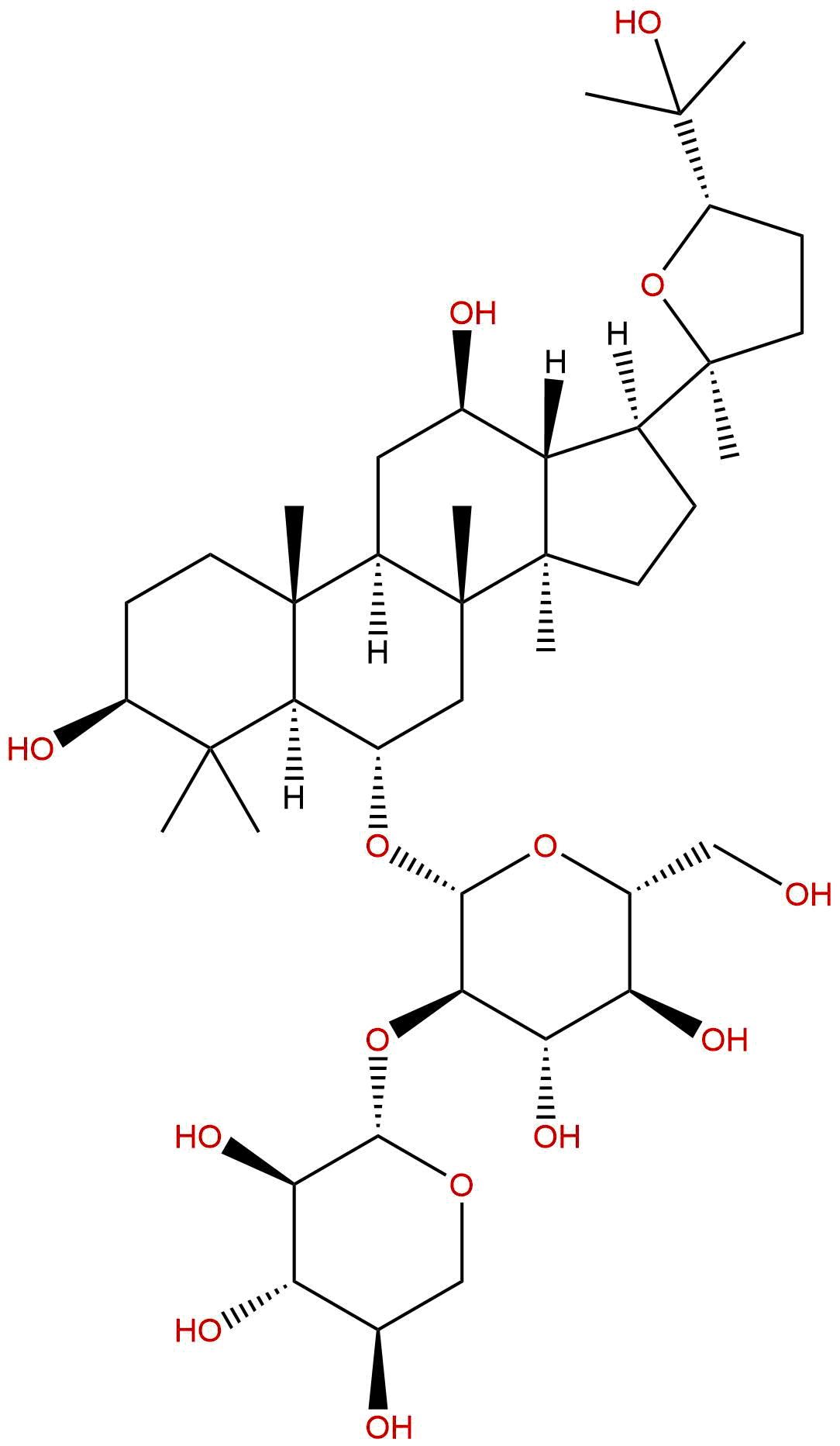


Product name: Majonoside R2
Synonym name: Dammarane,β-Dglucopyranoside deriv
Catalogue No.: BP5438
Cas No.: 81534-63-6
Formula: C41H70O14
Mol Weight: 786.997
Botanical Source: Vietnamese ginseng
Type of Compound: Triterpenoids
Purity: 95%~99%
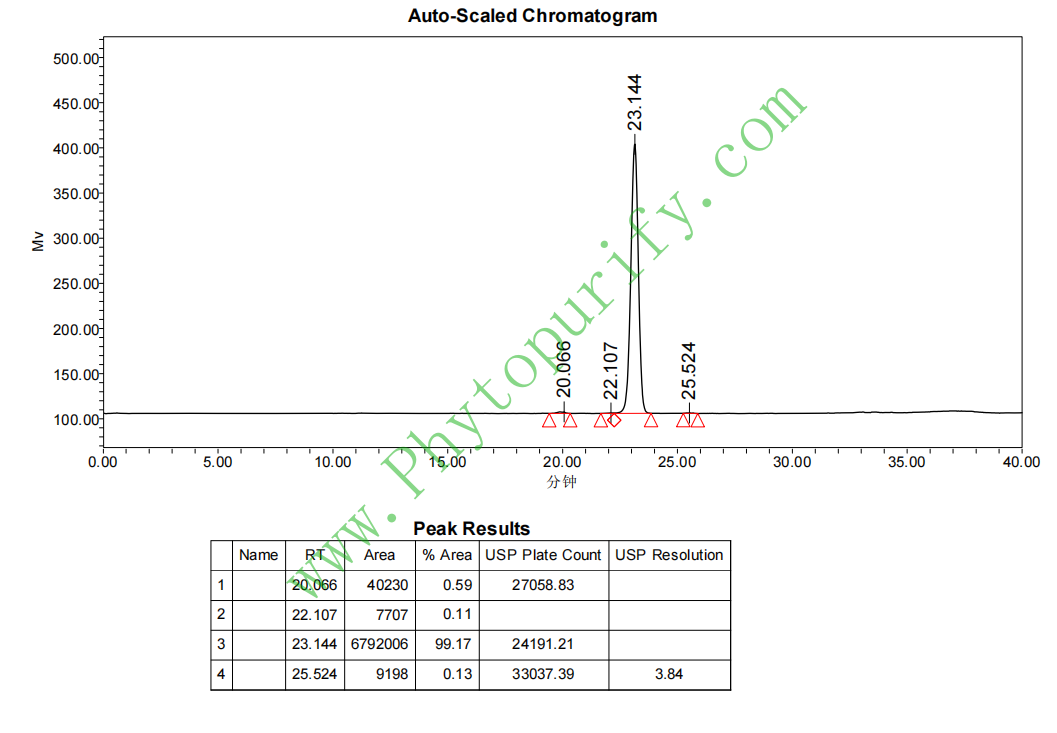
Analysis Method: HPLC-DAD or/and HPLC-ELSD
Identification Method: Mass, NMR
Packing: Brown vial or HDPE plastic bottle
Storage: Store in a well closed container, protected from air and light. Put into refrigerate or freeze for long term storage.
Whenever possible, you should prepare and use solutions on the same day. However, if you need to make up stock solutions in advance, we recommend that you store the solution as aliquots in tightly sealed vials at -20℃. Generally, these will be useable for up to two weeks.
The product could be supplied from milligrams to grams
Inquire for bulk scale.
For Reference Standard and R&D, Not for Human Use Directly.
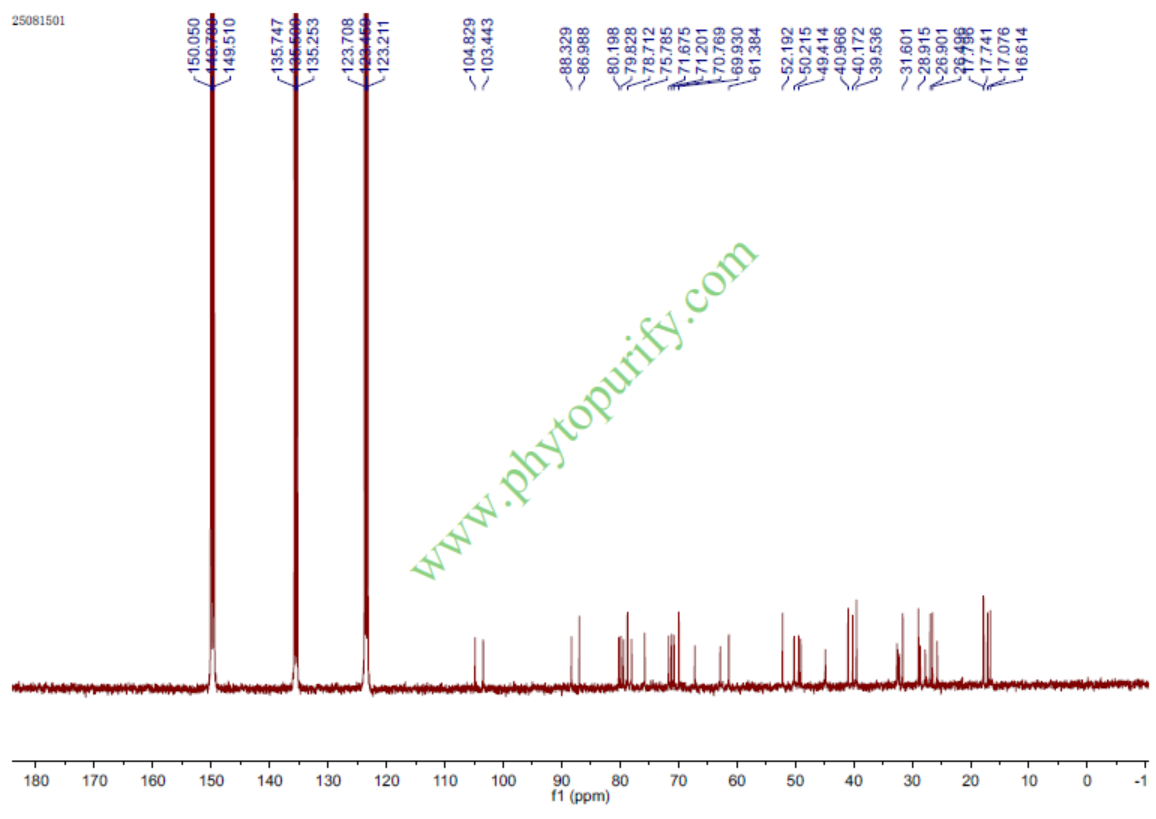
NMR of Majonoside R2
HPLC of Majonoside R2
Storage conditions:Short-term storage at 2~8℃, long-term storage at -20 ~ -80℃
252.6200
3.0000
Low
Unknown
Unknown
Unknown
Unknown
No
Unknown
Natural products, as an important source of drug discovery, play an irreplaceable role in the long history of human fight against diseases. Triterpenoid saponins are a class of naturally occurring compounds with diverse structures and broad biological activities, widely present in plants such as the Araliaceae, Leguminosae, and Campanulaceae families. They possess various pharmacological activities, including anti-inflammatory, anti-tumor, immunomodulatory, hepatoprotective, and antiviral effects. Majonoside R2 (MR2 for short) is one of the shining pearls. This compound originated from the traditional precious Chinese medicinal herb, Zhuzishen(Panax japonicus C. A. Mey. var. major (Burk.) C. Y. Wu et K. M. Feng was isolated and identified from the rhizome, belonging to the dammarane type triterpenoid saponin. As an important member of the ginseng genus, Zhuzishen has the functions of tonifying qi and nourishing yin, clearing lungs and resolving phlegm, stopping bleeding and removing blood stasis in traditional Chinese medicine theory. It is often used as a substitute or substitute for ginseng in folk medicine. Pearl ginseng saponin R2, as one of the characteristic active ingredients of pearl ginseng, has attracted widespread attention from scholars at home and abroad in recent years. Research has shown that MR2 exhibits significant activity in anti-inflammatory, anti-tumor, neuroprotective, antidepressant, anti fatigue, and cardiovascular protection, and its mechanism of action involves the regulation of multiple signaling pathways. However, despite the broad application prospects of MR2, its pharmacological evaluation, pharmacokinetic characteristics, and clinical translation research are still in their early stages. This article aims to systematically review the chemical structure, plant origin, extraction process, pharmacological activity, mechanism of action, medicinal properties, and clinical application prospects of bead ginseng saponin R2, in order to provide reference for the in-depth research and development of this natural product.
The chemical name of bead ginseng saponin R2 is 20 (S) - protopanaxadiol 3-O - β - D-glucopyranosyl (1 → 2) - β - D-glucopyranoside, which belongs to the dammarane type tetracyclic triterpenoid saponin. Its chemical structure consists of two parts: a glycoside (20 (S) - protopanaxadiol) and a sugar chain (two glucose units connected by a β -1,2 glycosidic bond). Specifically, the glycoside skeleton is a damaane type tetracyclic triterpene, with the C-3 hydroxyl group connected to the disaccharide chain and the C-20 hydroxyl group in the S configuration. This structural feature determines that MR2 has both the hydrophobicity of a lipophilic triterpenoid skeleton and the hydrophilicity of a sugar chain, making it a typical amphiphilic molecule.
From the perspective of physical and chemical properties, the molecular formula of bead ginseng saponin R2 is C ₄₂ H ₇₂ O ₁₄, with a molecular weight of 770.99 g/mol. Its oil-water partition coefficient (LogP) is 3.00, indicating that the compound has a certain degree of lipophilicity, but overall it is at a moderate level. The topologically polar surface area (TPSA) is as high as 252.62 Å ², mainly attributed to the presence of 14 hydrogen bond acceptors (mainly hydroxyl and ether oxygen atoms) in the molecule. A high TPSA value usually means that compounds have difficulty penetrating cell membranes, especially the blood-brain barrier. In fact, the pharmacokinetic parameters indicate that MR2 has a "Low" blood-brain barrier penetration ability, which is consistent with the "Lipinski Five Rules" limit of high TPSA and molecular weight exceeding 500 Da. In addition, MR2 has a relatively large number of hydrogen bond donors (usually 8-10), further increasing its polarity characteristics. In terms of solubility, MR2 is easily soluble in polar organic solvents such as methanol, ethanol, and n-butanol, and slightly soluble in water, but its solubility can be increased in hot water or aqueous solutions containing surfactants. This compound has poor stability under acidic or alkaline conditions, and its glycosidic bonds are prone to hydrolysis, leading to the breakage of glycosides and sugar chains. In solid state, MR2 is a white or off white amorphous powder with hygroscopicity. It is worth noting that the current safety data on the hepatotoxicity, cardiotoxicity, hERG inhibitory activity, and Ames mutagenicity of MR2 are all "unknown", indicating that its toxicological evaluation still needs to be systematically carried out.
Pearl ginseng saponin R2 mainly comes from the Araliaceae ginseng plant, Pearl ginseng(Panax japonicus C. A. Mey. var. major (Burk.) C. Y. Wu et K. M. Feng), This plant is mainly distributed in high-altitude areas such as Yunnan, Sichuan, Guizhou, Hubei, and Shaanxi in China, with elevations ranging from 1800 to 3500 meters. In addition, bamboo ginseng belongs to the same plant species(Panax japonicus C. A. Mey. and Hanyu Sanqi(Panax bipinnatifidus Seed also contains MR2, but the content is usually lower than that of bead ginseng. The medicinal parts of Zhuzishen are mainly the rhizomes, commonly known as "Niuziqi" and "Tusanqi", and have a long history of application in folk medicine. Modern plant chemistry research has shown that the rhizome of Panax ginseng contains abundant saponin components, among which MR2 is one of its main active ingredients, with a content of up to 1% -3% of dry weight. The specific content varies depending on factors such as place of origin, harvest season, and growth years.
Regarding the extraction method of MR2, traditional techniques often use solvent extraction. The specific process usually includes: crushing the dried rhizome of Panax ginseng to an appropriate particle size, soaking or reflux extraction with methanol or ethanol (70% -95%) at room temperature or heating conditions, concentrating the extract under reduced pressure, dispersing it with water, and then extracting it with n-butanol to obtain the crude extract of total saponins. Subsequently, the crude extract was separated and purified using techniques such as silica gel column chromatography, ODS reverse phase column chromatography, macroporous adsorption resin column chromatography (such as D101, HP-20), and preparative high-performance liquid chromatography (Prep HPLC), ultimately obtaining high-purity MR2 monomer. In recent years, with the promotion of green chemistry concepts, some new extraction techniques have also been applied to the extraction of MR2, such as ultrasound assisted extraction, microwave-assisted extraction, enzyme assisted extraction, etc. These methods can improve the extraction rate of MR2 in a shorter period of time by disrupting the cell wall structure and increasing solvent permeability, while reducing the use of organic solvents. For example, the ultrasound assisted extraction method can increase the extraction rate of MR2 by 20% -30% compared to the traditional reflux method under the conditions of 50% ethanol, a solid-liquid ratio of 1:20, an ultrasound power of 300W, and a temperature of 50 ℃ for 30 minutes. In addition, the method of supercritical fluid extraction (SC-CO ₂) combined with entrainers (such as ethanol) has also been attempted for the extraction of MR2, but due to its high equipment cost and complex operation, it has not yet been industrialized. It is worth noting that MR2 is sensitive to heat and acidity during the extraction process, so prolonged high-temperature heating or strong acid and alkali treatment should be avoided as much as possible to prevent the hydrolysis of glycosidic bonds from reducing activity.
In recent years, significant progress has been made in the pharmacological activity research of bead ginseng saponin R2, and its protective effects in multiple disease models have been widely confirmed, mainly including the following aspects:
anti-inflammatory activity Inflammation is an important defense response of the body against injury and infection, but excessive or persistent inflammation can lead to tissue damage and various chronic diseases. Research has shown that MR2 exhibits significant anti-inflammatory effects in various inflammatory models. In the LPS induced RAW264.7 macrophage inflammation model, MR2 (10-50 μ M) can concentration dependently inhibit the release of nitric oxide (NO), prostaglandin E2 (PGE2), as well as pro-inflammatory factors such as tumor necrosis factor - α (TNF - α), interleukin-6 (IL-6), and interleukin-1 β (IL-1 β). In vivo experiments, oral administration of MR2 (20-80 mg/kg) significantly reduced carrageenan induced paw swelling in rats, increased intra-abdominal capillary permeability induced by acetic acid in mice, and cotton ball induced granuloma formation. In addition, MR2 has shown protective effects on inflammation related disease models such as ulcerative colitis and acute lung injury.
Antitumor activity MR2 has inhibitory effects on proliferation and induces apoptosis in various tumor cell lines. In vitro experiments show that MR2 can inhibit the growth of human hepatoma cell HepG2, human lung cancer cell A549, human breast cancer cell MCF-7, human colon cancer cell HT-29, and human melanoma cell A375, and the IC ≮ ₀ value is usually within the range of 20-80 μ M. The anti-tumor mechanism of MR2 involves multiple aspects: inducing mitochondrial pathway apoptosis by activating caspase-3/9 and upregulating Bax/Bcl-2 ratio; Inducing autophagy by inhibiting the PI3K/Akt/mTOR signaling pathway; Inhibiting proliferation by blocking the cell cycle in G0/G1 or G2/M phases; And inhibit tumor cell invasion and migration by suppressing the expression of matrix metalloproteinases (MMPs) and epithelial mesenchymal transition (EMT) processes. It is worth noting that MR2 has low toxicity to normal cells such as human liver cell LO2 and human umbilical vein endothelial cell HUVEC, demonstrating certain selective anti-tumor activity.
Neuroprotective activity MR2 exhibits protective effects in neurodegenerative diseases and models of cerebral ischemia-reperfusion injury. In the glutamate induced PC12 cell injury model, MR2 (5-20 μ M) can reduce lactate dehydrogenase (LDH) release rate, decrease reactive oxygen species (ROS) generation, and inhibit cell apoptosis. In the SH-SY5Y cell Alzheimer's disease model induced by β - amyloid protein (A β ₂₅₋③₅), MR2 can alleviate the neurotoxicity of A β and reduce the level of excessive phosphorylation of Tau protein. In the rat model of cerebral ischemia caused by middle cerebral artery occlusion (MCAO), intraperitoneal injection of MR2 (10-40 mg/kg) can significantly reduce the volume of cerebral infarction, improve neurological function scores, and alleviate brain edema. Its mechanism is related to the inhibition of oxidative stress, inflammatory response, and apoptosis.
Antidepressant and anti fatigue activity Traditional medicine believes that Zhuzishen has the effect of "tonifying qi", while modern research has confirmed that MR2 has anti fatigue and antidepressant activity. In a mouse depression model induced by chronic unpredictable mild stress (CUMS), oral administration of MR2 (15-60 mg/kg) significantly improved behavioral indicators such as sugar water preference, forced swimming, and tail suspension test in mice. Its effects are related to regulating hypothalamic pituitary adrenal (HPA) axis function, increasing brain-derived neurotrophic factor (BDNF) expression, and regulating monoamine neurotransmitter levels. In the weight-bearing swimming and spinning experiments, MR2 can prolong the exhaustion time of mice, reduce blood lactate and urea nitrogen levels, increase liver glycogen and muscle glycogen reserves, and demonstrate anti fatigue effects.
Cardiovascular protective activity MR2 has a protective effect on cardiovascular disease models such as myocardial ischemia-reperfusion injury, myocardial hypertrophy, and endothelial dysfunction. In a rat myocardial ischemia model induced by isoproterenol, MR2 can reduce serum creatine kinase (CK) and lactate dehydrogenase (LDH) activity, decrease myocardial infarction area, and improve cardiac function. In the angiotensin II (Ang II) - induced cardiomyocyte hypertrophy model, MR2 can inhibit cell volume enlargement and the re expression of embryonic genes (ANP, BNP). In addition, MR2 can promote NO release and improve endothelial function by activating endothelial nitric oxide synthase (eNOS).
Other activities In addition to the aforementioned activities, MR2 has also been reported to have hepatoprotective, antiviral, immunomodulatory, hypoglycemic, and anti osteoporosis effects. For example, MR2 can alleviate liver injury induced by carbon tetrachloride (CCl ₄) and acetaminophen (APAP), reduce serum transaminase levels, alleviate liver cell necrosis and inflammatory infiltration. In terms of antiviral activity, MR2 has a certain inhibitory effect on respiratory syncytial virus (RSV) and herpes simplex virus (HSV-1).
The pharmacological activity of bead ginseng saponin R2 involves the regulation of multiple molecular targets and signaling pathways, and its mechanism of action has the characteristics of multiple targets and pathways. The molecular mechanism is explained from several main aspects as follows:
NF - κ B signaling pathway NF - κ B is the core transcription factor of inflammatory response, regulating the expression of various pro-inflammatory genes. MR2 can inhibit the phosphorylation and degradation of I κ B α, prevent nuclear translocation of NF - κ B p65 subunit, and thus suppress the transcriptional activity of NF - κ B. This mechanism has been validated in various cell types such as macrophages, microglia, and hepatocytes. In addition, MR2 can also inhibit the activity of upstream kinases such as IKK β, further blocking the activation of the NF - κ B pathway.
MAPK signaling pathway The mitogen activated protein kinase (MAPK) family includes three main pathways: ERK, JNK, and p38, which are involved in regulating cell proliferation, differentiation, apoptosis, and inflammatory response. MR2 can inhibit the phosphorylation of JNK and p38 induced by LPS or TNF - α, but has little effect on the phosphorylation of ERK. This selective inhibition may be closely related to its anti-inflammatory and anti apoptotic effects. In tumor cells, MR2 can inhibit the phosphorylation of ERK1/2 and block growth factor mediated proliferation signals.
PI3K/Akt/mTOR signaling pathway The PI3K/Akt/mTOR pathway is a key signaling cascade that regulates cell growth, metabolism, and survival. MR2 can inhibit Akt phosphorylation in various tumor cells, thereby downregulating the activity of downstream effector molecules such as mTOR, p70S6K, and 4E-BP1. This effect can induce autophagy and apoptosis in tumor cells, while enhancing the sensitivity of chemotherapy drugs. However, in normal cells such as cardiomyocytes and neurons, MR2 can actually exert a protective effect by activating the Akt/eNOS pathway, and this cell type dependent difference deserves further investigation.
Nrf2/ARE antioxidant pathway Nuclear factor E2 related factor 2 (Nrf2) is a key regulatory factor in the cellular antioxidant defense system. MR2 can promote the dissociation of Nrf2 and Keap1, causing them to translocate into the nucleus and bind to antioxidant response elements (ARE), initiating the expression of downstream antioxidant enzymes such as heme oxygenase-1 (HO-1), quinone oxidoreductase 1 (NQO1), superoxide dismutase (SOD), and glutathione peroxidase (GPx). This mechanism plays an important role in the neuroprotective, hepatoprotective, and cardiovascular protective effects of MR2.
Mitochondrial apoptosis pathway MR2 can promote mitochondrial outer membrane permeability by regulating the expression of Bcl-2 family proteins, leading to the release of cytochrome c and activating caspase-9 and caspase-3, inducing cell apoptosis. In tumor cells, MR2 can upregulate the expression of pro apoptotic proteins Bax, Bak, and Bad, and downregulate the expression of anti apoptotic proteins Bcl-2 and Bcl xL, thereby disrupting the balance of Bcl-2/Bax. In addition, MR2 can further promote apoptosis by inhibiting the activity of heat shock protein Hsp90, promoting the degradation of its client proteins such as Akt and Raf-1.
Epigenetic regulation Recent studies have shown that MR2 may also exert pharmacological effects through epigenetic mechanisms. For example, MR2 can inhibit the activity of histone deacetylase (HDAC), increase the acetylation levels of histone H3 and H4, and promote the transcription of tumor suppressor genes such as p21 and p27. In addition, MR2 can also regulate the expression profile of microRNAs, such as upregulating the expression of tumor suppressor miRNAs such as miR-34a and miR-200 family, and downregulating the expression of cancer promoting miRNAs such as miR-21.
Receptors and ion channels MR2 can also directly interact with certain receptors or ion channels. For example, MR2 can antagonize 5-HT1A receptors, which may be one of the molecular basis for its antidepressant effect. In addition, MR2 can inhibit the activity of voltage dependent calcium channels (L-type calcium channels), reduce calcium ion influx, and thus exert vasodilation and myocardial protection effects. MR2 can also activate high conductivity calcium activated potassium channels (BKCa), promote hyperpolarization of vascular smooth muscle cells, and further dilate blood vessels.
The evaluation of drug properties is a crucial step in the transition of natural products from laboratory research to clinical applications. According to the provided pharmacological parameters, the molecular weight of bead ginseng saponin R2 is 770.99 Da, far exceeding the "Lipinski Five Rules" threshold of 500 Da; LogP is 3.00, which is within an acceptable range; The TPSA reaches 252.62 Å ², far exceeding the recommended upper limit of 140 Å ²; The number of hydrogen bond acceptors is 14, exceeding the threshold of 10. These parameters indicate that MR2 does not conform to the classical "Lipinski Five Rules" and belongs to the "beyond Rule of Five" (bRo5) compound. These compounds usually have a large molecular weight and high polarity, and their oral bioavailability is often low, but they are not absolutely impossible to be used as drugs. In fact, many natural products (such as paclitaxel, rapamycin) and marketed drugs (such as cyclosporine A) also belong to the bRo5 category, which have achieved effective in vivo delivery through special transport mechanisms or formulation technologies.
In terms of pharmacokinetics, there is currently insufficient research on the in vivo processes of MR2. A few existing studies suggest that MR2 has poor absorption after oral administration, and its absolute bioavailability may be less than 5%. This is mainly attributed to its high polarity, high molecular weight, and efflux of P-glycoprotein (P-gp). MR2 may undergo hydrolysis in the gastrointestinal tract, with some sugar chains being metabolized by gut microbiota into secondary glycosides or aglycones, which may have different pharmacological activities. After intravenous administration, MR2 is widely distributed in the body, but it is difficult to penetrate the blood-brain barrier, which is consistent with the prediction of "Low" blood-brain barrier penetration ability. The metabolism of MR2 mainly occurs in the liver, involving reactions such as glycosidic bond hydrolysis, hydroxylation, and glucuronic acid binding. Its elimination half-life (t ₁/₂) is about 1-3 hours, with a high clearance rate, indicating the need for frequent administration or the use of sustained-release formulations. In terms of excretion, MR2 and its metabolites are mainly excreted through bile and feces, with less excretion in urine.
In response to the challenge of poor pharmacokinetics of MR2, researchers have attempted various strategies to improve its pharmacokinetic properties. For example, the use of novel drug delivery systems such as nanoliposomes, polymer micelles, and phospholipid complexes can significantly improve the oral bioavailability and targeting of MR2. In addition, structural modifications such as introducing methyl, acetyl, or phosphate groups can alter the lipid solubility and metabolic stability of MR2. The prodrug strategy has also been applied to the modification of MR2, such as esterifying the hydroxyl groups on its sugar chain and releasing the original drug through enzymatic interpretation in vivo. It is worth noting that the hepatotoxicity, cardiotoxicity, hERG inhibitory activity, and Ames mutagenicity of MR2 are all "unknown". This suggests that when advancing its preclinical research, a systematic toxicological evaluation must be conducted, including acute toxicity, chronic toxicity, genetic toxicity, reproductive toxicity, and cardiac safety evaluation (such as hERG potassium channel inhibition experiments).
Pearl ginseng saponin R2, as a natural triterpenoid saponin with multi-target and multi pathway regulatory activity, has shown potential application value in the treatment of various diseases. However, from laboratory discovery to clinical application, MR2 still faces many challenges and opportunities.
Application of anti-inflammatory and immune regulation Given the significant activity of MR2 in various inflammatory models, it is expected to be developed as a candidate drug for the treatment of chronic inflammatory diseases such as rheumatoid arthritis, ulcerative colitis, and chronic obstructive pulmonary disease. Especially the dual inhibition of NF - κ B and MAPK pathways by MR2 may have better efficacy and lower resistance than single target drugs. In addition, the immunomodulatory activity of MR2, such as regulating macrophage polarization and T cell differentiation, also provides possibilities for its application in autoimmune diseases.
Anti tumor application The inhibitory effect of MR2 on various tumor cells and its low toxicity to normal cells make it a promising chemotherapy adjuvant drug. MR2 can enhance the anti-tumor activity of chemotherapy drugs such as cisplatin, paclitaxel, and doxorubicin, while reducing their toxic side effects. In addition, the inhibitory effect of MR2 on tumor stem cells and drug-resistant cells is also worth paying attention to. However, the low oral bioavailability and fast metabolism of MR2 limit its development as an oral anti-tumor drug. Therefore, developing injectable or targeted delivery systems for MR2, such as tumor microenvironment responsive nanocarriers, may be a future research direction.
Application of neurological and psychiatric disorders The antidepressant, anti fatigue, and neuroprotective effects of MR2 make it promising for the treatment of neurological and psychiatric disorders such as depression, Alzheimer's disease, Parkinson's disease, and stroke. Especially the regulatory effect of MR2 on the HPA axis and the upregulation of BDNF, which differs from the mechanism of action of existing antidepressants such as SSRIs, may provide new options for the treatment of refractory depression. However, the difficulty of MR2 penetrating the blood-brain barrier is the main obstacle to its application in neurological diseases. Nasal administration, brain targeted nanodelivery systems, or prodrug design may help increase the concentration of MR2 in brain tissue.
Application of cardiovascular disease The myocardial protection, vasodilation, and anti myocardial hypertrophy effects of MR2 make it promising for the treatment of cardiovascular diseases such as coronary heart disease, hypertension, and heart failure. The activation effect of MR2 on eNOS is similar to that of nitrate drugs, but may have less resistance and side effects. In addition, the anti platelet aggregation and anti thrombotic activity of MR2 also deserve further investigation.
Future research directions Looking ahead to the future, research on bead ginseng saponin R2 should focus on the following aspects: firstly, conducting a systematic toxicological evaluation of MR2, especially in terms of long-term toxicity, reproductive toxicity, and cardiac safety, to provide data support for its preclinical safety evaluation. Secondly, conduct in-depth research on the pharmacokinetic characteristics of MR2, including absorption, distribution, metabolism, excretion (ADME) processes, as well as the effects of food and gut microbiota on its bioavailability. Thirdly, utilizing modern medicinal chemistry methods to optimize the structure of MR2, improve its metabolic stability and oral bioavailability, while maintaining or enhancing its pharmacological activity. Fourthly, develop efficient and low toxicity drug delivery systems, such as liposomes, nanoparticles, microemulsions, phospholipid complexes, etc., to improve the in vivo behavior of MR2. Fifth, using systems pharmacology and network pharmacology methods, reveal the multi-target action network of MR2 and elucidate its "multi-component multi-target multi pathway" mode of action. Sixth, conduct preclinical pharmacological studies on MR2 and validate its efficacy in animal models that are closer to clinical settings, such as transgenic mice and humanized mice. Seventh, explore the synergistic effects of MR2 with other drugs (including traditional Chinese medicine and Western medicine), and develop compound formulations or combination therapy plans.
Pearl ginseng saponin R2, as a characteristic active ingredient of traditional Chinese medicine Pearl ginseng, has become a hot molecule in the field of natural product research due to its unique structure of damaane type triterpenoid saponins and extensive pharmacological activities. This article systematically reviews the chemical structure, plant origin, extraction process, pharmacological activity, mechanism of action, pharmacological evaluation, and clinical application prospects of MR2. Research has shown that MR2 exhibits significant activity in anti-inflammatory, anti-tumor, neuroprotective, antidepressant, anti fatigue, and cardiovascular protection. Its mechanism of action involves the regulation of multiple signaling pathways such as NF - κ B, MAPK, PI3K/Akt/mTOR, Nrf2/ARE, as well as the regulation of mitochondrial apoptosis, epigenetic modifications, and receptor ion channels. However, the pharmacological properties of MR2 face challenges such as high molecular weight, high polarity, low oral bioavailability, poor blood-brain barrier penetration ability, and incomplete toxicological data. In the future, through structural modification, development of novel drug delivery systems, and systematic toxicology evaluation, it is expected to overcome these obstacles and promote the translation of MR2 from laboratory research to clinical applications. As a treasure of traditional Chinese medicine, in-depth research on the saponin R2 of Panax ginseng not only helps to reveal the pharmacological substance basis of Panax ginseng, but also provides valuable lead compounds for innovative drug development. We have reason to believe that with the deepening of interdisciplinary research, bead ginseng saponin R2 and its derivatives will play a greater role in human health.
