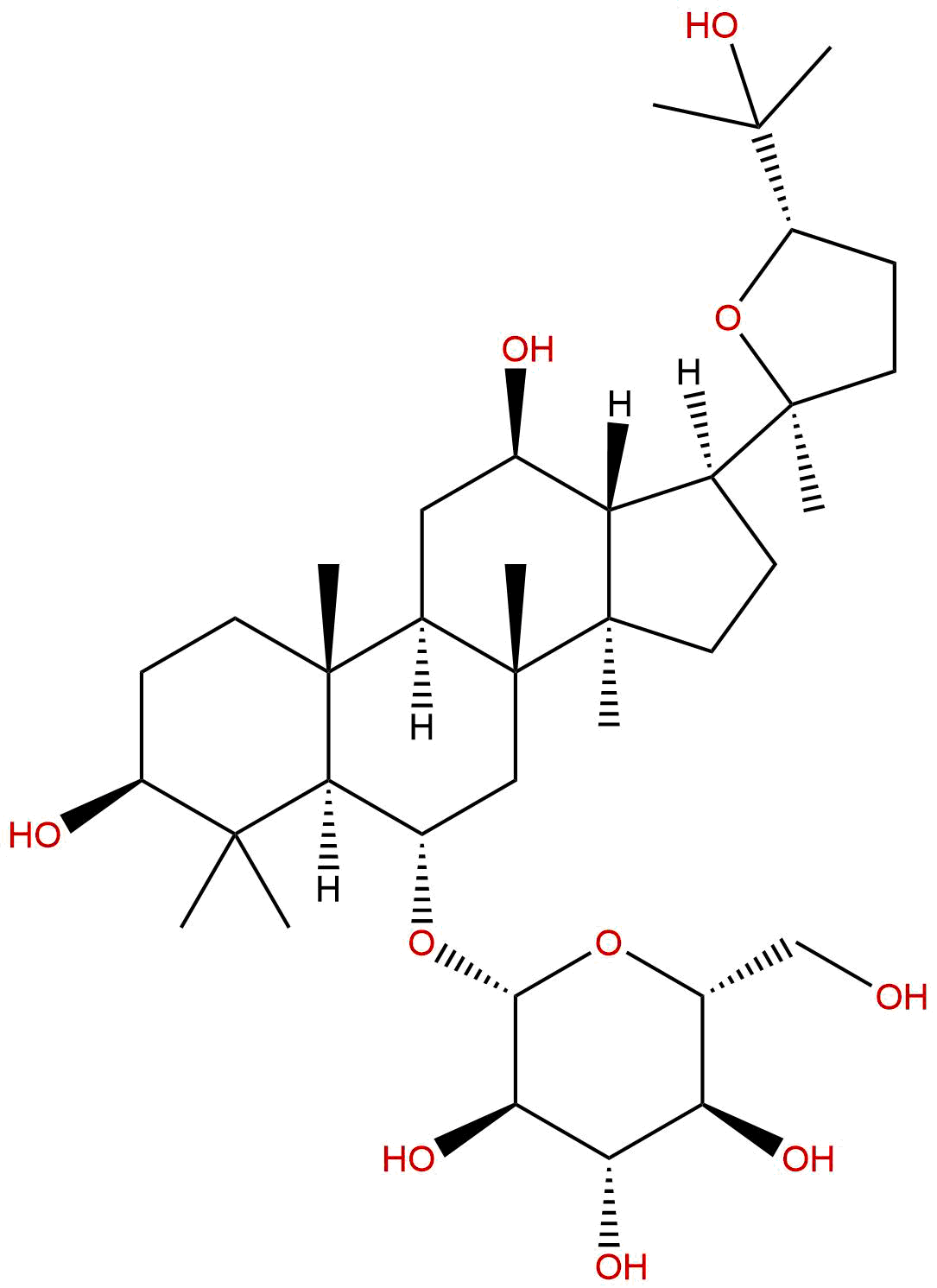


Product name: Pseudoginsenoside RT4
Synonym name:
Catalogue No.: BP2446
Cas No.: 98474-77-2
Formula: C36H62O10
Mol Weight: 654.882
Botanical Source: Vietnamese ginseng
Type of Compound: Triterpenoids
Purity: 95%~99%
Analysis Method: HPLC-DAD or/and HPLC-ELSD
Identification Method: Mass, NMR
Packing: Brown vial or HDPE plastic bottle
Storage: Store in a well closed container, protected from air and light. Put into refrigerate or freeze for long term storage.
Whenever possible, you should prepare and use solutions on the same day. However, if you need to make up stock solutions in advance, we recommend that you store the solution as aliquots in tightly sealed vials at -20℃. Generally, these will be useable for up to two weeks.
The product could be supplied from milligrams to grams
Inquire for bulk scale.
For Reference Standard and R&D, Not for Human Use Directly.
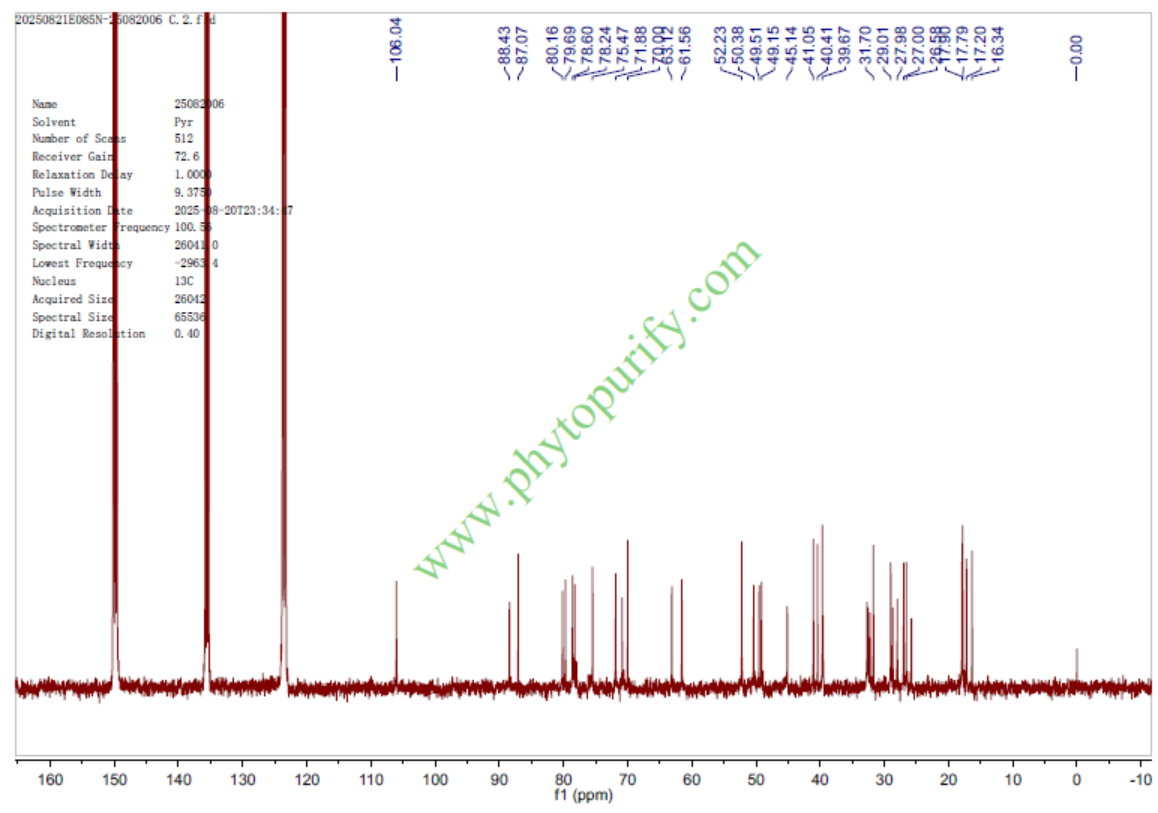
NMR of Pseudoginsenoside RT4
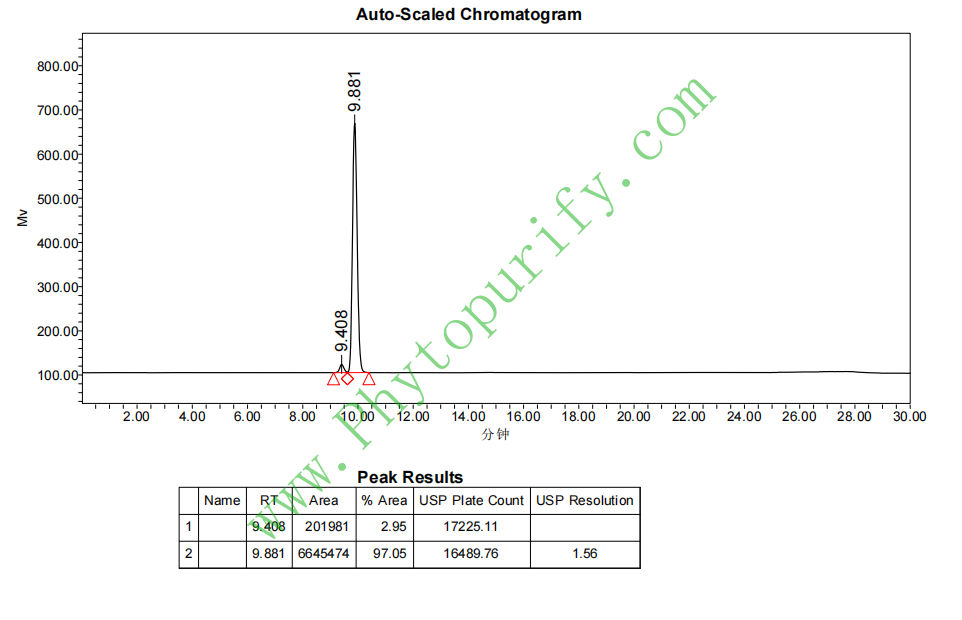
HPLC of Pseudoginsenoside RT4
Storage conditions:Short-term storage at 2~8℃, long-term storage at -20 ~ -80℃
184.7600
1.0000
Low
No
No
No
No
No
Unknown
Natural products, as an important source of drug discovery, play an irreplaceable role in the long history of human fight against diseases. Among them, it comes from the genus Panax(Panax)Saponins in plants have attracted much attention due to their wide range of biological activities. The research on the active ingredients of traditional precious Chinese medicinal herbs such as ginseng, Panax notoginseng, and American ginseng has been quite in-depth. However, the exploration of the chemical composition of some special species in this genus is still expanding our cognitive boundaries. Pseudoginsenoside RT4 (CAS number: 98474-77-2) is a natural tetracyclic triterpenoid compound that has gradually emerged in recent years.
Anthropomorphic ginsenoside RT4 was originally derived from Himalayan Panax notoginseng(Panax pseudoginseng subsp. Himalaicus)This species is mainly distributed in southwest China and surrounding areas of the Himalayas, and has a long history of application in local folk medicine. Compared with common ginsenosides such as Rb1, Rg1, etc., the anthropomorphic ginsenoside RT4 has unique structural characteristics, and its glycosylation modification mode and parent nucleus structure endow it with a differentiated biological activity spectrum. Preliminary studies have shown that the compound has significant anti-inflammatory activity and can effectively regulate the expression balance of inflammation related cytokines. At the same time, it exhibits the ability to regulate the gut microbiota, which makes it a unique application prospect in the treatment of inflammatory bowel diseases, especially ulcerative colitis.
Ulcerative colitis is a chronic, recurrent, non-specific inflammatory disease of the intestine, with a complex pathogenesis involving multiple factors such as genetic susceptibility, dysbiosis of the gut microbiota, abnormal immune response, and environmental factors. At present, clinical treatment drugs mainly include aminosalicylic acid preparations, glucocorticoids, immunosuppressants, and biologics, but they all have problems such as limited efficacy, significant side effects, or high costs. Therefore, searching for efficient and low toxicity new therapeutic molecules from natural products has important scientific significance and clinical value. The anthropomorphic ginsenoside RT4 is becoming an emerging hot topic in the field of ulcerative colitis treatment research due to its oral efficacy, good safety characteristics, and multi-target effects.
This article will systematically review the research progress of ginsenoside RT4 from the aspects of chemical structure, plant origin, pharmacological activity, mechanism of action, pharmacological evaluation, and clinical application prospects, in order to provide reference for the in-depth development and transformation of this natural product.
The anthropomorphic ginsenoside RT4 belongs to the Damane type tetracyclic triterpenoid saponin, and its chemical structure consists of two parts: the aglycone (ligand) and the sugar chain. From the perspective of skeleton type, its aglycone belongs to the Protopanaxadiol (PPD) structure, which has a typical four ring skeleton of Damatane, including four ring systems A, B, C, and D, with the C-20 position in the S configuration. Compared with common ginsenosides such as Rb1, the glycosylation pattern of anthropomorphic ginsenoside RT4 shows significant differences: different compositions and quantities of glycosylation units are connected at positions C-3 and C-20, respectively.
Specifically, the C-3 hydroxyl group of the anthropomorphic ginsenoside RT4 is usually connected to a glucose group (Glc), while the C-20 position is connected to a disaccharide chain composed of glucose and xylose (Xyl). This specific sugar group combination and connection method determine the physicochemical properties and biological activity of the compound. It is worth noting that the subtle structural differences between the anthropomorphic ginsenoside RT4 and other ginsenosides, such as the types, quantities, and connection positions of sugar groups, often lead to significant changes in their pharmacological activity. This is also a typical example of the "structure-activity relationship" research in natural product chemistry.
From the perspective of physicochemical properties, the molecular weight of the anthropomorphic ginsenoside RT4 is 646.8700 Da, which belongs to the category of medium to large molecules, which to some extent affects its transmembrane transport ability. Its lipid water partition coefficient (LogP) is 1.0000, indicating that the compound has moderate lipophilicity, which can be distributed in a lipid environment while maintaining a certain degree of water solubility, providing favorable conditions for its oral absorption. The topological polar surface area (TPSA) is 184.7600 Å ², which is a relatively high value mainly attributed to the presence of multiple hydroxyl and glycosidic bonds in the molecule. According to the Lipinski Five Rules and subsequent revised rules, molecules with TPSA greater than 140 Å ² typically have poor oral absorption, but the LogP value of ginsenoside RT4 is moderate and may be absorbed through active transport pathways mediated by intestinal transporters, which explains the experimental observations of its oral efficacy.
This compound contains 10 hydrogen bond acceptors (all oxygen atoms), and there are also many hydrogen bond donors (from hydroxyl groups). This rich hydrogen bonding ability enables it to form stable non covalent interactions with biomolecules such as proteins and receptors, which is the structural basis for its pharmacological activity. In addition, according to the results of the computer prediction model, the blood-brain barrier penetration ability of the anthropomorphic ginsenoside RT4 is low (Low), which means that the risk of central nervous system side effects is relatively small. For drugs that mainly act on peripheral tissues such as the intestine, this is a favorable safety feature.
The plant source of anthropomorphic ginsenoside RT4 is relatively specific, mainly from Himalayan Panax notoginseng(Panax pseudoginseng subsp. Himalaicus)Separated from the middle. This plant is a subspecies of Panax in Araliaceae, mainly distributed in northwest Yunnan, southeast Xizang, Nepal, Bhutan, northern India and other the Himalayas regions. Compared to common ginseng(P. ginseng)And Sanqi(P. notoginseng)Compared to other species, Himalayan Panax notoginseng exhibits differences in morphology and chemical composition, with a unique composition of saponins in its roots and rhizomes. The anthropomorphic ginsenoside RT4 is one of its characteristic components.
It is worth noting that the anthropomorphic ginsenoside RT4 is also present in trace amounts in other ginseng plants, but its content is much lower than that of Himalayan Panax notoginseng. For example, in traditional Sanqi(P. notoginseng)Trace amounts of ginsenoside RT4 can be detected in the rhizomes of Panax ginseng using high-sensitivity liquid chromatography-mass spectrometry, but its content is usually less than 0.1% of the total saponins. Therefore, Himalayan Panax notoginseng remains the main natural source for obtaining this compound at present. However, due to the limited distribution area of the plant, scarce wild resources, and immature artificial cultivation techniques, the supply of raw materials has become an important factor restricting the in-depth research and development of ginsenoside RT4.
In terms of extraction methods, the extraction process of anthropomorphic ginsenoside RT4 usually follows the general strategy of natural saponin compounds and is optimized based on their specific physicochemical properties. Traditional extraction methods include solvent extraction, reflux extraction, and percolation extraction. Considering the good solubility of ginsenoside RT4 in polar organic solvents such as methanol and ethanol, the commonly used extraction solvent is a 70% -80% ethanol aqueous solution. The extraction process usually includes the following steps: after the dried plant material (rhizome) is crushed, it is soaked or refluxed with ethanol solution at room temperature or heating conditions for extraction. The extract is concentrated, defatted, and extracted with n-butanol to obtain the crude extract of total saponins.
To further obtain high-purity ginsenoside RT4, chromatographic separation technology is required for purification. Common methods include silica gel column chromatography, ODS reverse phase column chromatography, macroporous adsorption resin column chromatography, and preparative high-performance liquid chromatography (Prep HPLC). Among them, macroporous adsorption resins (such as D101 and HP-20) are widely used for the preliminary separation and enrichment of saponin components due to their advantages of large processing capacity, low cost, and renewable use. Subsequently, preliminary separation of saponins with different polarities can be achieved through silica gel column chromatography combined with gradient elution (such as chloroform methanol water system). Finally, a preparative HPLC (usually using a C18 reverse phase column with acetonitrile water or methanol water as the mobile phase) can be used to obtain the monomeric compound of ginsenoside RT4 with a purity of over 98%.
In recent years, with the promotion of green chemistry concepts, some new extraction techniques such as ultrasound assisted extraction, microwave-assisted extraction, and supercritical fluid extraction have also been attempted to be applied to the extraction of ginsenoside RT4. These methods have the advantages of high extraction efficiency, short time, and low solvent consumption, but their application in large-scale production is still limited. In addition, biotransformation methods (such as using specific enzymes or microbial fermentation) have also been explored to convert other high content ginsenosides into ginsenoside RT4, providing new ideas for solving the problem of natural resource scarcity.
The pharmacological activity research of anthropomorphic ginsenoside RT4 is currently mainly focused on the field of anti-inflammatory effects, especially in disease models related to intestinal inflammation. Existing research evidence suggests that this compound exhibits significant anti-inflammatory activity both in vitro and in vivo, characterized by inhibition of pro-inflammatory cytokines, upregulation of anti-inflammatory cytokines, and regulation of gut microbiota.
Inflammatory response is a protective mechanism for the body to respond to injury and infection, but excessive or uncontrolled inflammatory response can lead to tissue damage and disease. The anti-inflammatory activity of anthropomorphic ginsenoside RT4 was first validated at the cellular level. In a macrophage model stimulated by lipopolysaccharide (LPS), the anthropomorphic ginsenoside RT4 can significantly reduce the secretion levels of pro-inflammatory cytokines such as tumor necrosis factor - α (TNF - α), interleukin-6 (IL-6), and interleukin-1 β (IL-1 β) in a concentration dependent manner. These cytokines are key mediators of inflammatory responses and play a central role in various inflammatory diseases. At the same time, the compound can also increase the level of anti-inflammatory cytokine interleukin-10 (IL-10), which is an important immune regulatory factor that can inhibit excessive inflammatory reactions and promote tissue repair. This "bidirectional regulation" mode of action, which inhibits pro-inflammatory factors while enhancing anti-inflammatory factors, is an important characteristic of the anti-inflammatory activity of ginsenoside RT4 and its advantage over simple anti-inflammatory drugs (such as nonsteroidal anti-inflammatory drugs).
Based on the above in vitro anti-inflammatory activity, the researchers further validated the therapeutic potential of ginsenoside RT4 on ulcerative colitis in animal models. In a mouse model of acute colitis induced by dextran sulfate sodium (DSS), oral administration of ginsenoside RT4 significantly reduced disease activity index (DAI), including improvements in symptoms such as weight loss, rectal bleeding, and diarrhea. Histopathological analysis showed that the colon mucosal damage, crypt destruction, and inflammatory cell infiltration in mice treated with ginsenoside RT4 were significantly milder than those in the model group. In addition, the compound can also reduce the activity of myeloperoxidase (MPO) in colon tissue. MPO is a marker enzyme for neutrophil infiltration, and its reduced activity reflects the degree of intestinal inflammation.
It is worth noting that the therapeutic effect of the anthropomorphic ginsenoside RT4 in the ulcerative colitis model is comparable or better than the first-line treatment drug mesalazine (5-aminosalicylic acid), and no significant toxic reactions have been observed. This suggests that the compound may become a promising candidate drug for the treatment of ulcerative colitis.
In recent years, the key role of gut microbiota in the pathogenesis of inflammatory bowel disease has been widely recognized. Another important pharmacological activity of the anthropomorphic ginsenoside RT4 is its ability to regulate the composition of gut microbiota. Research has shown that in DSS induced colitis mice, treatment with anthropomorphic ginsenoside RT4 can reverse gut microbiota dysbiosis caused by inflammation. Specifically, the compound can increase beneficial bacterial populations (such as lactobacilli)Lactobacillus Bifidobacterium genus Bifidobacterium)Reduce the relative abundance of pathogenic bacteria (such as Escherichia coli Shigella) while minimizing the potential pathogenic bacteria Escherichia-Shigella Clostridium genus Clostridium)The proportion. This microbial regulation may be achieved through various mechanisms, including direct antibacterial effects, altering the intestinal microenvironment (such as pH value, short chain fatty acid levels), and regulating host immune responses.
There is a close interaction between the improvement of gut microbiota and anti-inflammatory effects. On the one hand, the anthropomorphic ginsenoside RT4 reduces intestinal inflammation by directly inhibiting the inflammatory signaling pathway, thereby creating a favorable intestinal environment for the growth of beneficial bacteria; On the other hand, changes in microbial composition can further enhance anti-inflammatory effects by producing short chain fatty acids and regulating immune cell differentiation. This "host microbiota" bidirectional regulatory mechanism may be an important basis for the overall therapeutic effect of ginsenoside RT4.
In addition to anti-inflammatory effects, preliminary studies also suggest that ginsenoside RT4 may have other biological activities. For example, based on the research reports of its structural analogues (such as ginsenoside Rb1, Rg3), the anthropomorphic ginsenoside RT4 may have antioxidant, anti apoptotic, and immunomodulatory effects. However, research in these areas is not yet systematic and requires further in-depth exploration. In addition, considering the wide range of activities of natural saponin compounds in anti-tumor, cardiovascular protection, and neuroprotection, the potential application of human ginsenoside RT4 in these fields is also worth paying attention to.
The pharmacological activity of anthropomorphic ginsenoside RT4 is the result of its interaction with specific molecular targets. The current research mainly reveals the molecular mechanism of its anti-inflammatory effect, involving the regulation of multiple signaling pathways.
Nuclear factor kappa B (NF - κ B) is the core transcription factor in inflammatory response, playing a key role in regulating the expression of pro-inflammatory cytokines, chemokines, and adhesion molecules. In the resting state, NF - κ B binds to its inhibitory protein I κ B and exists in an inactive form in the cytoplasm. When stimulated by LPS, TNF - α, etc., I κ B kinase (IKK) is activated, leading to phosphorylation and degradation of I κ B, and the released NF - κ B is subsequently translocated into the nucleus, initiating transcription of target genes.
Research has shown that the anthropomorphic ginsenoside RT4 can effectively inhibit LPS induced phosphorylation and degradation of I κ B α, thereby blocking the nuclear translocation of NF - κ B. By inhibiting the activation of NF - κ B, this compound further downregulates the expression of downstream target genes such as TNF - α, IL-6, IL-1 β, inducible nitric oxide synthase (iNOS), and cyclooxygenase-2 (COX-2). This mechanism well explains the inhibitory effect of ginsenoside RT4 on various pro-inflammatory cytokines.
The mitogen activated protein kinase (MAPK) signaling pathway is another important inflammatory signaling pathway, mainly consisting of three branches: ERK, JNK, and p38. These kinases transmit extracellular signals to the nucleus through phosphorylation cascade reactions, regulating the expression of inflammation related genes. Research has shown that the anthropomorphic ginsenoside RT4 can inhibit LPS induced phosphorylation of p38 and JNK, with little effect on ERK phosphorylation. This selective inhibition mode may be related to its specific molecular structure and may affect the activity of downstream transcription factors such as AP-1, thereby synergistically regulating the inflammatory response through the NF - κ B pathway.
Nuclear factor E2 related factor 2 (Nrf2) is a key regulatory factor in the cellular antioxidant defense system. Under oxidative stress conditions, Nrf2 dissociates and translocates from Keap1 protein to the nucleus, binds to antioxidant response elements (ARE), and initiates the expression of a series of antioxidant and detoxifying enzymes. Although the direct antioxidant activity of ginsenoside RT4 has not been systematically studied, its structural analogues have been shown to activate the Nrf2 pathway. Considering the close relationship between oxidative stress and inflammatory response, activation of the Nrf2 pathway may be another important mechanism for the anti-inflammatory effect of ginsenoside RT4.
Intestinal barrier dysfunction is one of the important pathological features of ulcerative colitis. The disruption of tight junction proteins (such as occludin, claudin, ZO-1) leads to increased intestinal permeability, allowing bacterial products and antigens to enter the submucosal layer, triggering and amplifying inflammatory responses. Research has shown that the anthropomorphic ginsenoside RT4 can upregulate the expression of tight junction proteins in colon tissue, thereby maintaining the integrity of the intestinal barrier. This effect may be indirectly achieved by inhibiting inflammatory signaling pathways such as NF - κ B, or by directly regulating the assembly and expression of tight junction proteins.
Adaptive immunity plays an important role in the pathogenesis of ulcerative colitis, especially the immune response mediated by Th1 and Th17 cells, which is closely related to disease activity. Preliminary research suggests that the anthropomorphic ginsenoside RT4 may regulate the function of dendritic cells, affect the differentiation direction of initial T cells, inhibit the differentiation of pro-inflammatory Th17 cells, and promote the generation of regulatory T cells (Tregs). This immune regulatory effect helps to restore intestinal immune homeostasis and is one of the important mechanisms for its long-term therapeutic effect in colitis models.
Although the study of the above signaling pathways provides important clues for understanding the mechanism of action of ginsenoside RT4, its direct molecular targets have not been fully identified. At present, it is speculated that the compound may exert its effects through the following ways: (1) directly binding to receptors or channel proteins on the cell membrane, such as Toll like receptor 4 (TLR4) or glucocorticoid receptors; (2) By affecting the composition and function of lipid rafts, indirectly regulating signal transduction; (3) As a weakly acidic compound, it may affect enzyme activity by altering intracellular pH or ion concentration. In the future, through techniques such as drug affinity response target stability (DARTS), cell thermal transition analysis (CETSA), and surface plasmon resonance (SPR), it is expected to directly identify the protein target of ginsenoside RT4, laying the foundation for a deeper understanding of its mechanism of action.
Developing natural products into clinical drugs requires a comprehensive evaluation of their pharmacological properties, including pharmacokinetic characteristics, safety, and formulation feasibility. The anthropomorphic ginsenoside RT4 exhibits certain advantages and challenges in these aspects.
Pharmacokinetic studies are a crucial step in evaluating the in vivo processes of candidate drugs. Although the systematic pharmacokinetic studies of ginsenoside RT4 are not yet sufficient, research based on its structural analogues (such as ginsenoside Rb1, Rd) can provide important references. Generally speaking, the oral bioavailability of dammarane type saponins is low, mainly due to: (1) high molecular weight (>600 Da), high polarity, and limited transmembrane ability; (2) Easy to be hydrolyzed by acid and degraded by enzymes in the gastrointestinal tract; (3) There is a significant hepatic first pass effect and bile excretion.
However, the LogP value of anthropomorphic ginsenoside RT4 is 1.0000, indicating that its lipophilicity is superior to most ginsenosides (such as Rb1, whose LogP is about 0.5), which is beneficial for its absorption through passive diffusion. In addition, specific transporters in the intestine, such as the organic anion transporter peptide OATP, may mediate its active transport. Research has shown that after oral administration, the concentration of ginsenoside RT4 in the plasma is lower, but it can reach higher concentrations in intestinal tissue, which is consistent with its main use for targeted treatment of intestinal diseases. The half-life of this compound may be longer, which is beneficial for maintaining stable blood drug concentrations.
In terms of metabolism, the anthropomorphic ginsenoside RT4 may undergo deglycosylation metabolism in the intestine and liver, gradually converting into secondary glycosides or aglycones. These metabolites may retain or enhance the biological activity of the parent compound, therefore, their pharmacological contributions deserve attention. In addition, the compound and its metabolites are mainly excreted into the intestine through bile, forming enterohepatic circulation, which helps to prolong their duration of action in the body.
Safety is the primary consideration in drug development. According to the results of the computer prediction model, the anthropomorphic ginsenoside RT4 exhibits good safety characteristics: no hepatotoxicity (No), no cardiotoxicity (No), and no hERG inhibitory activity (No). The inhibition of hERG potassium channel is the main cause of drug-induced QT interval prolongation and arrhythmia, while ginsenoside RT4 has no inhibitory effect on this channel, indicating a low risk of cardiac toxicity. In addition, its low blood-brain barrier penetration ability means that the risk of central nervous system side effects is relatively low.
In animal experiments, no significant acute toxicity reactions were observed within the therapeutic dose range of the anthropomorphic ginsenoside RT4. Long term toxicity studies are still lacking, but based on the safety records of ginsenoside compounds in long-term clinical applications, it can be expected that the safety of ginsenoside RT4 is relatively good. It is worth noting that the Ames test results are unknown, which means that its genetic toxicity has not been systematically evaluated, and this is important data that needs to be supplemented for future research.
Given that the oral bioavailability of ginsenoside RT4 may be low, developing appropriate formulation techniques is crucial for improving its efficacy. Possible strategies include: (1) Nanoformulations, such as liposomes, polymer nanoparticles, or solid lipid nanoparticles, which can enhance the solubility and intestinal permeability of drugs; (2) Prodrug design: By introducing hydrolyzable functional groups into the molecule, its lipophilicity and membrane permeability are improved; (3) Colon targeted delivery system: using pH sensitive or enzyme sensitive materials to deliver drugs to the colon site, increasing local drug concentration and reducing systemic exposure; (4) Combined with absorption enhancers: such as using surfactants or bile salts to increase the permeability of intestinal epithelial cells.
In addition, considering that the anthropomorphic ginsenoside RT4 may be metabolized in the intestine, designing formulations that can protect it from premature degradation (such as enteric coating) is also an effective strategy to improve oral bioavailability. The application of these formulation technologies is expected to overcome the pharmacokinetic bottleneck of natural saponin compounds and promote their clinical translation.
As a natural product with unique pharmacological activity, the anthropomorphic ginsenoside RT4 has shown promising application prospects in the treatment of ulcerative colitis. However, there are still many challenges from laboratory research to clinical application that require interdisciplinary collaboration to solve.
Compared with existing drugs for treating ulcerative colitis, the anthropomorphic ginsenoside RT4 has the following potential advantages: (1) multi-target effect: simultaneously regulating inflammatory signaling pathways, gut microbiota, and immune cell differentiation, which may achieve more comprehensive therapeutic effects; (2) Oral administration is effective: it facilitates long-term medication use for patients and improves compliance; (3) Good safety: Preliminary safety evaluation shows that it has no hepatotoxicity, cardiotoxicity, and low risk of side effects; (4) Natural sources: in line with modern consumers' preferences for "natural medicines" and easily accepted.
Based on these characteristics, the anthropomorphic ginsenoside RT4 may be targeted for maintenance therapy of mild to moderate ulcerative colitis or as an adjuvant drug in existing treatment regimens. For patients who are intolerant or have poor therapeutic effects on aminosalicylic acid preparations, anthropomorphic ginsenoside RT4 may provide a new treatment option.
Despite the promising prospects, the clinical development of ginsenoside RT4 still faces the following key issues:
Pharmacokinetic optimization Low oral bioavailability is a common problem with natural saponin compounds, which needs to be improved through formulation techniques or structural modifications. At the same time, it is necessary to systematically study its absorption, distribution, metabolism, and excretion characteristics, especially its local pharmacokinetics in the intestine.
Explanation of the mechanism of action Although multiple signaling pathways have been found to be involved in its anti-inflammatory effects, its direct molecular targets are still unclear. Identifying target proteins is of great significance for understanding their mechanisms of action, predicting potential adverse reactions, and optimizing molecular structures.
Long term safety evaluation Standardized long-term toxicity studies are needed, including chronic toxicity, reproductive toxicity, genetic toxicity, and carcinogenicity evaluations. Especially genetic toxicity data such as Ames test need to be supplemented.
mass production Natural resources are limited, and efficient chemical or biological synthesis methods need to be developed to meet the needs of future clinical research and commercial production. In addition, establishing quality standards (such as content determination, fingerprint analysis, impurity control) is also an important prerequisite for industrialization.
Clinical study design Rigorous clinical trials need to be designed, including dose exploration, efficacy validation, and safety monitoring. Considering the heterogeneity of ulcerative colitis, it is necessary to identify the target patient population and select appropriate efficacy evaluation indicators (such as clinical remission rate, endoscopic improvement, histological healing, etc.).
Looking ahead to the future, research on anthropomorphic ginsenoside RT4 can be further expanded in the following directions:
Research on Structure Activity Relationship By synthesizing a series of structurally similar compounds and systematically studying the effects of sugar group quantity, type, and connection mode on activity, guidance is provided for optimizing molecular design.
Combination therapy research Explore the synergistic effect of ginsenoside RT4 with existing drugs such as mesalazine, immunosuppressants, or biologics, and search for the optimal combination therapy.
Expansion in other disease areas Based on its anti-inflammatory and immunomodulatory activities, explore its potential applications in other inflammatory diseases such as rheumatoid arthritis, psoriasis, asthma, etc.
Study on the mechanism mediated by gut microbiota Using sterile animal models or fecal microbiota transplantation experiments, verify the causal role of gut microbiota in the therapeutic effect of ginsenoside RT4 and identify key functional strains.
Metabolite research Identify the in vivo metabolites of ginsenoside RT4, evaluate its pharmacological activity, and clarify the contribution of the parent drug and metabolites to the overall therapeutic effect.
As a natural tetracyclic triterpenoid compound derived from Panax notoginseng, the anthropomorphic ginsenoside RT4 is becoming a new highlight in the field of natural product drug research due to its unique chemical structure and significant anti-inflammatory activity. Existing research evidence suggests that this compound exhibits promising therapeutic potential in ulcerative colitis models by inhibiting NF - κ B and MAPK signaling pathways, regulating cytokine balance, protecting intestinal barrier function, and reshaping gut microbiota composition through multiple mechanisms. Its oral efficacy, good safety features, and multi-target action characteristics give it unique advantages in the treatment of inflammatory bowel disease.
However, we must also be aware that the research on anthropomorphic ginsenoside RT4 is still in its early stages, and there are still many obstacles that need to be overcome from laboratory discovery to clinical application. The optimization of pharmacokinetic properties, identification of direct molecular targets, confirmation of long-term safety, and development of large-scale production processes are all key directions that future research needs to focus on. With the collaborative efforts of modern medicinal chemistry, pharmacology, pharmaceutical science, and clinical medicine, we have reason to believe that the anthropomorphic ginsenoside RT4 has the potential to become a new choice for the treatment of ulcerative colitis, bringing new hope to patients suffering from this disease. At the same time, this research will also provide useful examples for discovering and developing innovative drugs from traditional medicinal plants, promoting the in-depth development of natural product drug research.
