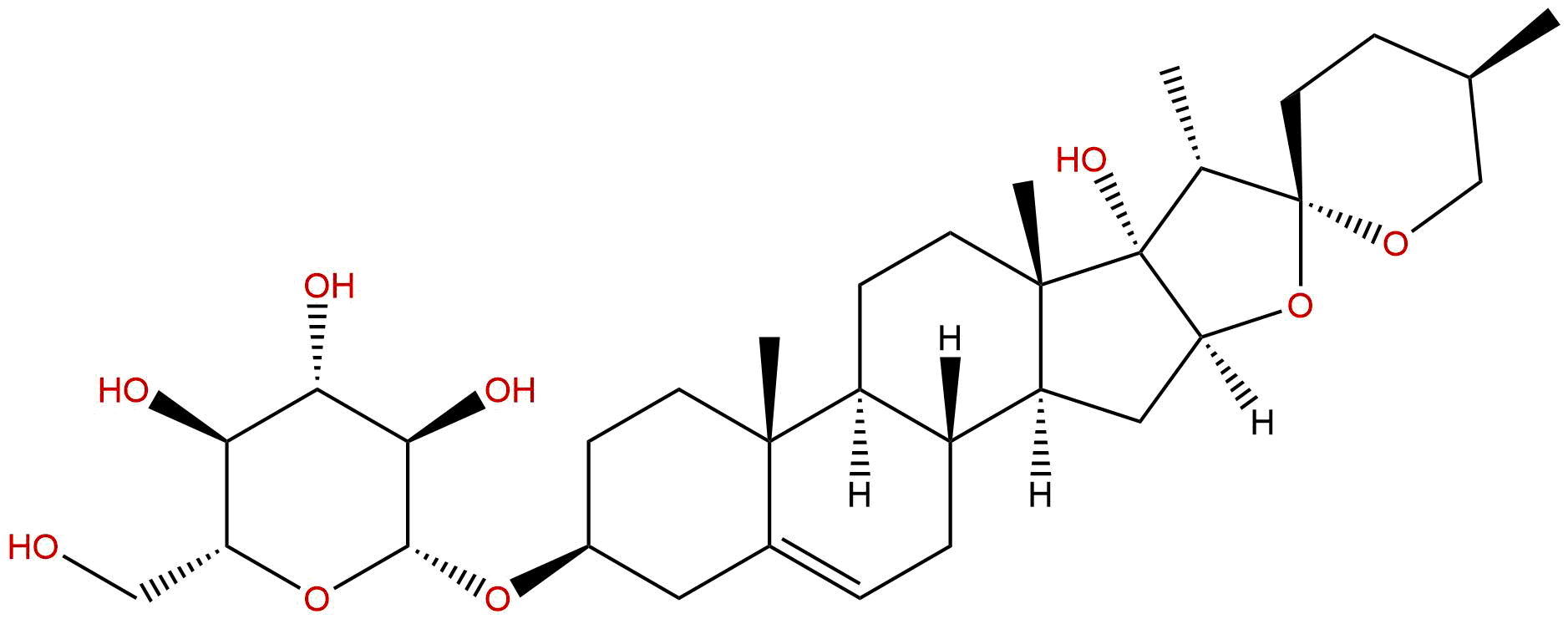


Product name: Pennogenin 3-O-β-D-glucopyranoside
Synonym name: Floribundasaponin A;Progenin I
Catalogue No.: BP5431
Cas No.: 37341-36-9
Formula: C33H52O9
Mol Weight: 592.77
Botanical Source:
Type of Compound: Steroids
Purity: 95%~99%
Analysis Method: HPLC-DAD or/and HPLC-ELSD
Identification Method: Mass, NMR
Packing: Brown vial or HDPE plastic bottle
Storage: Store in a well closed container, protected from air and light. Put into refrigerate or freeze for long term storage.
Whenever possible, you should prepare and use solutions on the same day. However, if you need to make up stock solutions in advance, we recommend that you store the solution as aliquots in tightly sealed vials at -20℃. Generally, these will be useable for up to two weeks.
The product could be supplied from milligrams to grams
Inquire for bulk scale.
For Reference Standard and R&D, Not for Human Use Directly.
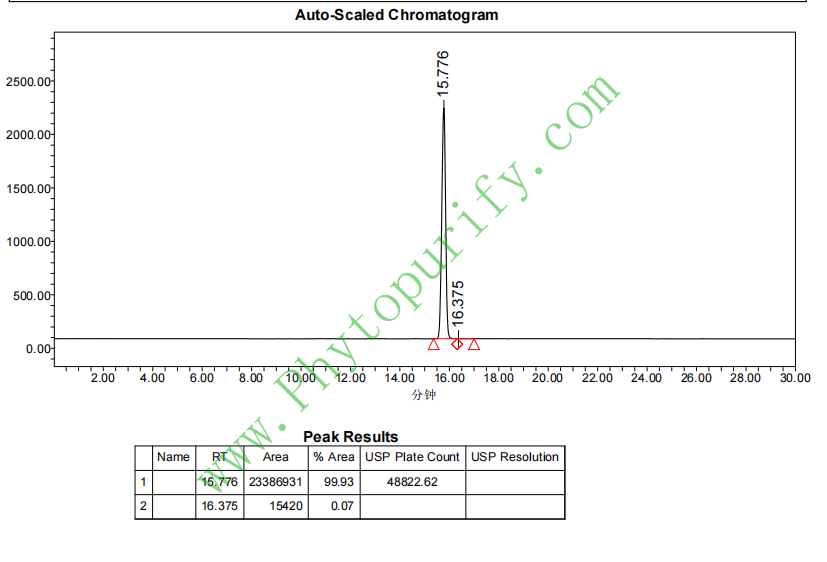
HPLC of Pennogenin 3-O-β-D-glucopyranoside
Storage conditions:Short-term storage at 2~8℃, long-term storage at -20 ~ -80℃
165.7100
No
Unknown
Unknown
Unknown
Unknown
No
Unknown
Unknown
Natural products, as an important source of drug discovery, play an irreplaceable role in the long history of human fight against diseases. Steroid saponins and their aglycones, as a class of structurally diverse and widely active natural products, have always been a hot topic in medicinal chemistry and pharmacology research. Among them, Pennogenin and its glycoside derivatives have received increasing attention in recent years due to their unique chemical structure and significant biological activity. Pennogenin-3-O - β - D-glucopyranoside (CAS number: 37341-36-9) is a key monosaccharide glycoside derivative of Pennogenin-3-O - β - D-glucopyranoside. Its structural feature is that the hydroxyl group at position 3 of the steroid nucleus is connected to a molecule of β - D-glucose through a glycosidic bond. This compound is widely present in various medicinal plants such as Liliaceae and Dioscoreaceae, and is a traditional Chinese medicine such as Chonglou(Paris polyphylla var. yunnanensis)Trillium grass(Trillium tschonoskii)One of the important active ingredients.
In traditional medicine, plants containing this compound are often used for hemostasis, anti-inflammatory, analgesic, anti-tumor, and immune regulation. Modern pharmacological research has further revealed its multifaceted pharmacological potential, particularly in the fields of anti-tumor, anti-inflammatory, cardiovascular protection, and neuroprotection, demonstrating remarkable activity. However, similar to many natural products with complex structures, the development of medicinal properties of 3-O - β - D-glucoside also faces challenges, such as its relatively high molecular weight, high polarity, and unclear metabolic processes in vivo. This article aims to provide a systematic review of the chemical structure, plant sources, extraction methods, pharmacological activities, mechanisms of action, pharmacological evaluation, and clinical application prospects of 3-O - β - D-glucoside, a natural product, in order to provide comprehensive references for the in-depth research and development of this natural product.
The chemical structure of sapogenin-3-O - β - D-glucoside belongs to a typical steroid saponin compound. Its aglycone is a spinostanol type steroidal sapogenin, with a parent nucleus consisting of 27 carbon atoms and six ring systems including A, B, C, D, E, and F. Among them, the A, B, C, and D rings are classical cyclopentane polyhydrogen phenanthrene structures, while the E and F rings are connected to the C-17 position of the D ring through a spiroketal side chain. The structural characteristics of Pianosaponin are the configuration of its C-17 side chain and the substitution mode of its hydroxyl group. Specifically, Pianosaponin has a β - hydroxyl group at position C-3, and the C-25 position of the C-17 side chain is in the R configuration (i.e., 25R configuration), which is consistent with the side chain configuration of Diosgenin (25R) but different from Yamogenin (25S).
In 3-O - β - D-glucoside, a β - D-glucopyranosyl group is connected to the hydroxyl group at position C-3 of the glycoside through a glycosidic bond. The formation of this glycosidic bond significantly alters the physicochemical properties of the molecule. Its molecular formula is C ∝③ H ₅₂ O ₉, with a molecular weight of 592.76 Da. The theoretical topological polar surface area (TPSA) is 165.71 Å ², which is a relatively high value mainly attributed to multiple hydroxyl groups (from glycosides and sugar groups) in the molecule and oxygen atoms in the spiroketide structure. A high TPSA value usually indicates a high polarity and good water solubility of the compound, but it also suggests a weak transmembrane permeability, especially difficulty in crossing the blood-brain barrier (BBB), which is consistent with the predicted results of "blood-brain barrier: No" in the pharmacological parameters.
In terms of physical and chemical properties, the compound is usually a white or off white amorphous powder with certain hygroscopicity. Due to the presence of multiple polar groups in its structure, it has good solubility in polar solvents such as methanol, ethanol, pyridine, and dimethyl sulfoxide (DMSO), while its solubility in water is relatively limited but better than its aglycone. It is almost insoluble in non-polar solvents such as petroleum ether and chloroform. The physical constants such as optical rotation and melting point may vary slightly depending on the source and purity. In terms of stability, the compound is prone to hydrolysis of its glycosidic bonds under acidic or alkaline conditions, resulting in the formation of aglycones and glucose. Degradation may also occur under light and high temperature conditions, so it is usually recommended to store under low temperature, dark, and dry conditions.
Pianosogenin-3-O - β - D-glucoside is widely distributed in nature, mainly found in plants of the Liliaceae and Dioscoreaceae families. Among them, the heavy building belongs to(Paris)Plants, especially Dianzhong Tower(Paris polyphylla var. yunnanensis)And seven leaves and one branch of flowers(Paris polyphylla)It is its most famous source. In addition, the genus Elongation Grass(Trillium)Plants such as trillium(Trillium tschonoskii), as well as the open arrow genus(Tupistra)Huangjing genus(Polygonatum)Plants also contain this ingredient. The content of this compound varies significantly among different plants, different parts (rhizomes, whole plants), different harvesting periods, and different production areas. Usually, the rhizomes or underground parts of plants are their main enrichment organs.
The method for extracting sapogenin-3-O - β - D-glucoside usually follows the classic extraction process of natural product saponins. The core idea is to utilize its polarity, select suitable solvents for extraction, and then separate and purify it through various chromatographic techniques.
1. Extraction:
The most commonly used method is solvent extraction. After crushing the dried plant raw materials, use high concentration ethanol (such as 70% -95% ethanol) or methanol for reflux extraction or cold soaking extraction. Alcohol solvents can effectively penetrate plant cell walls and dissolve various moderately polar components, including saponins. After the extraction solution is concentrated under reduced pressure, the total extract is obtained. To remove lipid soluble impurities such as chlorophyll and oil, the total extract can be dispersed in water and subjected to liquid-liquid extraction using low polarity solvents such as petroleum ether, chloroform, or ethyl acetate. Saponins are usually retained in the aqueous phase. Subsequently, the aqueous phase was extracted multiple times with water saturated n-butanol, and the n-butanol layer enriched most of the saponin components. Steam dry n-butanol to obtain crude extract of total saponins.
2. Separation and purification:
The isolation of pure sapogenin-3-O - β - D-glucoside from the crude extract of total saponins requires the use of modern chromatographic separation techniques.
* Silica gel column chromatography: This is the most classic and commonly used method. Gradient elution is performed using chloroform methanol water systems with different ratios (such as 8:2:0.1, 7:3:0.5, etc.) or ethyl acetate methanol water systems. Collect fractions containing the target compound through thin-layer chromatography (TLC) monitoring.
* Reverse phase column chromatography (such as ODS): For saponins with high polarity, reverse phase column chromatography (such as C18 silica gel) has better separation efficiency. Commonly used methanol water or acetonitrile water systems for elution.
* Macroporous adsorption resin: In preliminary purification, macroporous adsorption resins such as D101 and AB-8 are widely used for the enrichment and preliminary separation of saponins. By gradient elution with ethanol water solutions of different concentrations, water-soluble impurities such as sugars and tannins can be removed, and saponins of different polarities can be preliminarily separated.
* High performance liquid chromatography (HPLC): For the final high-purity preparation, semi preparative or preparative HPLC is an essential tool. Usually, a C18 reverse phase chromatography column is used, with methanol water or acetonitrile water as the mobile phase, combined with a UV detector (detection wavelength usually between 200-210 nm due to saponin end absorption) or an evaporative light scattering detector (ELSD) for separation.
In recent years, some new extraction techniques such as ultrasound assisted extraction, microwave-assisted extraction, and supercritical fluid extraction have also been attempted to improve extraction efficiency and shorten extraction time, but large-scale production still relies mainly on traditional solvent extraction combined with column chromatography technology. Due to the fact that this compound often coexists with structurally similar saponins of the same class (such as dioscin, sapogenin-3-O - α - L-rhamnose - β - D-glucoside, etc.), the separation and purification process often requires a combination of multiple chromatographic techniques, making it difficult.
In recent years, significant progress has been made in the pharmacological activity research of 3-O - β - D-glucoside, revealing its potential therapeutic value in multiple disease models.
1. Antitumor activity:
Antitumor activity is one of the most extensively studied areas of this compound. In vitro experiments showed that vinoregenin-3-O - β - D-glucoside showed significant inhibitory effect on proliferation of many human tumor cell lines, such as lung cancer (A549, NCI-H460), liver cancer (HepG2, SMMC-7721), breast cancer (MCF-7, MDA-MB-231), gastric cancer (SGC-7901), cervical cancer (HeLa), leukemia (HL-60, K562), etc. Its mechanism of action involves multiple aspects, including inducing cell apoptosis, blocking the cell cycle, inhibiting cell migration and invasion, etc. It is worth noting that this compound has relatively low toxicity to certain normal cells (such as human normal liver cell L-02), demonstrating a certain degree of selectivity. In vivo studies, such as mouse transplant tumor models, have also confirmed its ability to inhibit tumor growth and may have synergistic effects when combined with certain chemotherapy drugs such as cisplatin and paclitaxel.
2. Anti inflammatory and immune regulatory activity:
Traditionally, traditional Chinese medicine containing this compound is commonly used to treat inflammation related diseases. Modern research has confirmed that sapogenin-3-O - β - D-glucoside has significant anti-inflammatory activity. In the lipopolysaccharide (LPS) - induced macrophage RAW264.7 inflammation model, this compound can significantly inhibit the production of pro-inflammatory factors such as nitric oxide (NO), prostaglandin E2 (PGE2), tumor necrosis factor - α (TNF - α), interleukin-6 (IL-6), and interleukin-1 β (IL-1 β). The mechanism may be related to the inhibition of the activation of nuclear factor kappa B (NF - κ B) and mitogen activated protein kinase (MAPK) signaling pathways. In addition, the compound also showed regulatory effects on T cell and B cell proliferation, suggesting that it may have immune regulatory functions, which can both inhibit overactive immune responses (such as autoimmune diseases) and enhance immune responses under specific conditions.
3. Cardiovascular protective activity:
Research has shown that ginsenoside-3-O - β - D-glucoside has a protective effect on the cardiovascular system. In the myocardial ischemia/reperfusion injury model, this compound can reduce the myocardial infarction area, decrease the release of myocardial enzymes (such as creatine kinase and lactate dehydrogenase), and improve cardiac function. Its protective mechanism may be related to antioxidant stress, inhibition of myocardial cell apoptosis, alleviation of endoplasmic reticulum stress, and improvement of mitochondrial function. In addition, the compound also exhibits certain antiplatelet aggregation and vasodilation activity, suggesting its potential in the prevention and treatment of thrombotic diseases and hypertension.
4. Neuroprotective activity:
Given its difficulty in crossing the blood-brain barrier, the neuroprotective effect of sapogenin-3-O - β - D-glucoside may mainly act on the peripheral nervous system or in cases of blood-brain barrier damage. However, some in vitro studies have still found that it has a protective effect on neuronal injury models (such as glutamate induced excitotoxicity, hypoxia and glucose deficiency models), can reduce neuronal apoptosis, and promote the expression of neurotrophic factors. In addition, its analgesic activity is also related to neural regulation, possibly by affecting opioid receptors or ion channels.
5. Other activities:
In addition to the main activities mentioned above, this compound has also been reported to have pharmacological effects such as antiviral (such as anti HIV, anti herpes simplex virus), antibacterial, anti parasitic, hypoglycemic, and hepatoprotective effects. These activities together form the pharmacological basis for its multifunctional natural product.
The pharmacological activity of 3-O - β - D-glucoside is achieved through the synergistic action of multiple targets and pathways. A deep understanding of its molecular mechanism is crucial for developing it as a candidate drug.
1. Molecular mechanism of anti-tumor:
* Inducing apoptosis: This compound mainly induces tumor cell apoptosis through the mitochondrial pathway (endogenous pathway). It can reduce mitochondrial membrane potential, promote the release of cytochrome c from mitochondria to cytoplasm, activate Caspase-9 and Caspase-3, and ultimately lead to cell apoptosis. During this process, the expression profile of Bcl-2 family proteins changes, with downregulation of anti apoptotic proteins (such as Bcl-2, Bcl xL) and upregulation of pro apoptotic proteins (such as Bax, Bak). In addition, studies have reported that it can activate the death receptor pathway (exogenous pathway) and upregulate the expression of Fas, FasL, and other proteins.
* Cell cycle arrest: This compound can arrest the tumor cell cycle in either G0/G1 phase or G2/M phase, depending on the cell type. The mechanism involves downregulating the expression of cyclins (such as Cyclin D1, Cyclin B1) and cyclin dependent kinases (CDKs, such as CDK4, CDK2, CDC2), while upregulating the expression of CDK inhibitors (such as p21, p27).
* Inhibition signal pathway: This compound can inhibit multiple signaling pathways closely related to tumor occurrence and development. For example, it can inhibit the PI3K/Akt/mTOR pathway, thereby weakening cell proliferation and survival signals; It can also inhibit the Wnt/β - catenin pathway, affecting the self-renewal and differentiation of tumor stem cells; It can also inhibit the STAT3 signaling pathway and reduce the expression of downstream target genes such as Survivor, VEGF, and c-Myc.
* Induced autophagy: In certain tumor cells, this compound can also induce protective or non protective autophagy. Inducing autophagy may serve as a complementary or alternative mechanism to apoptosis, jointly exerting anti-tumor effects.
2. Anti inflammatory molecular mechanism:
The core of its anti-inflammatory effect lies in inhibiting key inflammatory signaling pathways. This compound can inhibit the phosphorylation and degradation of I κ B α, thereby preventing the nuclear translocation of NF - κ B p65 subunit and ultimately inhibiting NF - κ B mediated pro-inflammatory gene transcription. Meanwhile, it can also inhibit the phosphorylation of the MAPK pathway, including ERK, JNK, and p38. By inhibiting the NF - κ B and MAPK pathways, this compound effectively reduces the expression of various pro-inflammatory cytokines, chemokines, and adhesion molecules.
3. Molecular mechanism of cardiovascular protection:
* Antioxidant stress: This compound can activate the nuclear factor E2 related factor 2 (Nrf2)/antioxidant response element (ARE) pathway, upregulate the expression of a series of antioxidant enzymes (such as superoxide dismutase (SOD), catalase (CAT), glutathione peroxidase (GPx)), thereby clearing reactive oxygen species (ROS) and reducing oxidative damage.
* Anti apoptosis: In myocardial cells, this compound activates the PI3K/Akt pathway, inhibits the mitochondrial apoptosis pathway, and reduces myocardial cell apoptosis.
* Regulating calcium homeostasis: Studies have shown that this compound may exert cardioprotective effects by affecting L-type calcium channels or sarcoplasmic reticulum calcium pumps (SERCA), regulating intracellular calcium ion concentrations.
4. Molecular targets:
Although a single, high affinity "target" has not yet been identified to explain all of its activities, research suggests that it may initiate signal transduction by acting on multiple receptors, ion channels, or enzymes on the cell membrane. For example, its anti-tumor activity may be related to interfering with lipid raft structures on cell membranes, affecting the aggregation and activation of growth factor receptors such as EGFR and VEGFR. In addition, its structure is similar to cholesterol and may insert into the cell membrane, altering its fluidity and permeability, thereby affecting the function of membrane proteins. In the future, through technologies such as chemical proteomics and affinity chromatography combined with mass spectrometry, it is expected to more comprehensively reveal the molecular targets it directly acts on.
A systematic evaluation of the pharmacological properties of 3-O - β - D-glucoside is necessary for its development as a clinical drug. Based on the provided parameters and combined with its structural characteristics, a preliminary analysis of its pharmacological properties can be conducted.
1. Physical and chemical properties and drug like properties:
The molecular weight of this compound is 592.76 Da, exceeding the limit of molecular weight<500 in Lipinski's Rule of Five. Its TPSA is as high as 165.71 Å ², far higher than the commonly believed upper limit of 140 Å ², indicating its high polarity and possible good water solubility, but poor membrane permeability. The number of hydrogen bond acceptors is 10, which also exceeds the limit of<10 in the five rules. Therefore, according to the classic oral drug like rules, this compound belongs to the "non drug like" molecule, and its oral bioavailability may be low. However, this does not mean that it has no development value at all, as many successful natural medicines such as cyclosporine A and paclitaxel also violate the five rules. For such molecules, non oral administration routes (such as injection, transdermal, nasal delivery) or advanced drug delivery systems (such as liposomes, nanoparticles, micelles) can be considered to overcome their absorption barriers.
2. Pharmacokinetic characteristics:
At present, research on the pharmacokinetics of 3-O - β - D-glucoside in vivo is relatively limited, but inferences can be made based on its structure.
* Absorption: Poor oral absorption and low bioavailability. The main reason is that its molecular weight is large and polarity is high, making it difficult to passively diffuse through intestinal epithelial cells. In addition, it may be affected by the efflux of intestinal P-glycoprotein (P-gp) and other efflux transporters, further reducing absorption. At the same time, the gut microbiota may hydrolyze its glycosidic bonds to generate aglycones (sapogenins), which are then absorbed. Therefore, after oral administration, aglycones and their further metabolites may be detected in the body.
* Distribution: Due to its high polarity and low permeability, its apparent distribution volume may be small and mainly distributed in the extracellular fluid. Difficult to penetrate the blood-brain barrier, which is consistent with the predictions in the drug formulation parameters. It may be mainly distributed in organs with abundant blood flow such as the liver and kidneys.
* Metabolism: The liver is its main metabolic organ. Metabolic pathways may include: ① hydrolysis of glycosidic bonds to generate aglycones; ② Glycosides or prototype drugs undergo phase I metabolism such as hydroxylation and oxidation under the action of cytochrome P450 enzymes (CYP450); ③ It undergoes a II binding reaction with glucuronic acid, sulfuric acid, etc., generating metabolites with stronger water solubility that are easier to excrete.
* Excretion: It is mainly excreted in the form of metabolites through bile and urine. Due to its high molecular weight, bile excretion may be its main clearance pathway.
3. Toxicological evaluation:
According to the provided parameters, the liver toxicity, cardiac toxicity, hERG inhibition, and Ames test results are all "unknown", indicating a lack of systematic toxicological research data. This is a key shortcoming in the development process of the compound. Preliminary cytotoxicity experiments have shown that it has low toxicity to normal cells, but this is far from sufficient to evaluate its overall safety. Future research must conduct systematic in vivo toxicological evaluations, including acute toxicity, subchronic toxicity, reproductive toxicity, genetic toxicity (such as Ames test, micronucleus test), and cardiac safety evaluation (such as hERG potassium channel inhibition test). Especially, steroidal saponins usually have a certain hemolytic activity, which is a safety risk that needs to be closely monitored when developing them as injections.
Pianosaponin-3-O - β - D-glucoside, with its diverse pharmacological activities, has shown broad clinical application prospects, but at the same time, it also faces many challenges.
1. Potential application areas:
* Antitumor therapy: As a chemotherapy sensitizer or adjuvant therapy drug, it is used in combination with existing chemotherapy drugs to improve efficacy and reduce toxic side effects. Its multi-target nature makes it less likely to develop drug resistance, especially for tumors that are resistant to traditional chemotherapy.
* Inflammatory diseases: Used to treat chronic inflammatory diseases such as rheumatoid arthritis, inflammatory bowel disease, dermatitis, etc. Its anti-inflammatory mechanism is clear, and it may achieve more comprehensive therapeutic effects through immune regulation.
* Cardiovascular disease: As a protective agent for myocardial ischemia/reperfusion injury, or for the treatment of atherosclerosis and thrombotic diseases. Its antioxidant and anti apoptotic properties are the core of its cardiovascular protective effect.
* Neurodegenerative diseases: Although difficult to pass through the BBB, it can exert neuroprotective effects through nasal administration or targeted delivery systems, or under pathological conditions of BBB damage (such as cerebral ischemia, brain trauma), for adjuvant therapy of Alzheimer's disease and Parkinson's disease.
2. Challenges and solutions:
* Low bioavailability: This is the main obstacle. The solution strategy includes: ① designing prodrugs to improve their lipid solubility; ② Develop new drug delivery systems, such as liposomes, polymer nanoparticles, phospholipid complexes, self microemulsifying drug delivery systems, etc., to improve oral absorption or achieve targeted delivery; ③ Explore non oral routes of administration, such as intravenous injection and transdermal administration.
* The mechanism of action is unclear: It is necessary to utilize modern molecular biology and chemical biology techniques, such as drug affinity reaction target stability (DARTS), cell thermal transition analysis (CETSA), phage display, affinity chromatography-mass spectrometry, etc., to systematically identify the protein targets it directly acts on, providing a basis for drug design and optimization.
* Insufficient safety evaluation: Comprehensive preclinical toxicology studies must be conducted, particularly in-depth evaluations of its potential hemolytic, cardiotoxic, and genotoxic properties. Establish a reliable animal model and safety evaluation system.
* Resource sustainability: This compound mainly comes from plants, with limited wild resources and low content. Sustainable acquisition methods need to be developed, such as: ① biological production through tissue culture or hairy root culture techniques; ② Study its biosynthetic pathway and utilize synthetic biology techniques to achieve heterologous synthesis in microorganisms such as yeast; ③ Develop efficient and green chemical synthesis or semi synthesis routes.
As a typical natural product of steroidal saponins, 3-O - β - D-glucoside has attracted widespread interest in academia due to its unique chemical structure and extensive pharmacological activities, especially its anti-tumor, anti-inflammatory, and cardiovascular protective effects. Despite its inherent shortcomings in oral drug formulation, these issues are expected to be resolved through modern medicinal chemistry and pharmacology methods. Future research should focus on: 1) further elucidating its molecular targets and mechanisms of action, providing precise guidance for structural optimization; 2) Develop efficient and low toxicity drug delivery systems to overcome pharmacokinetic barriers; 3) Systematically evaluate its safety and clarify its toxicological profile; 4) Explore its combined application strategies with other drugs or treatment methods. With the continuous deepening of research, this ancient natural product is expected to shine with new vitality in modern drug development and contribute to the cause of human health.
