


Product name: Ganoderone A
Synonym name:
Catalogue No.: BPF0303
Cas No.: 873061-79-1
Formula: C30H48O3
Mol Weight: 456.711
Botanical Source:
Physical Description: Powder
Type of Compound: Triterpenoids
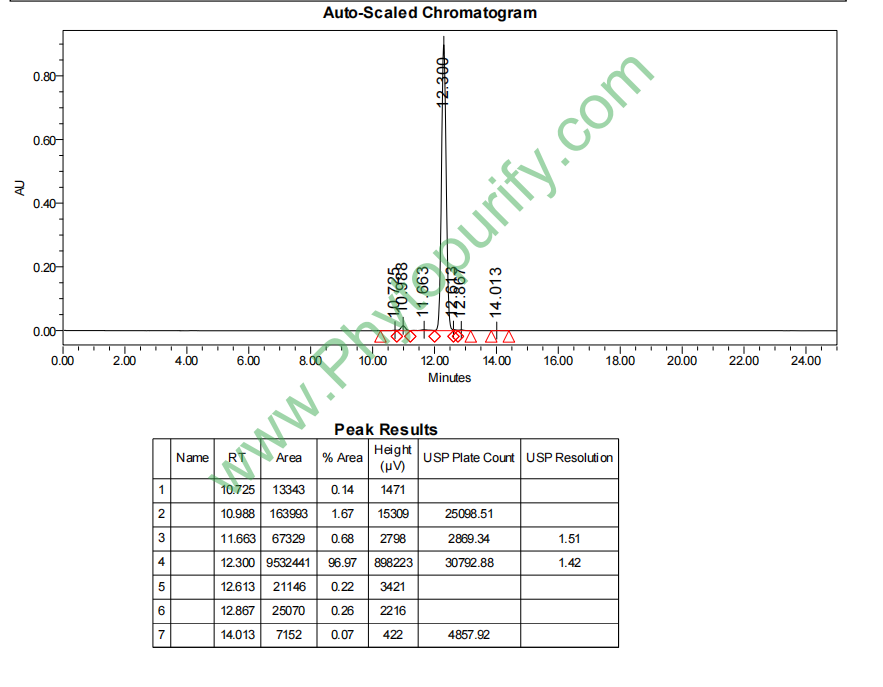
Purity: 95%~99%
Analysis Method: HPLC-DAD or/and HPLC-ELSD
Identification Method: Mass, NMR
Packing: Brown vial or HDPE plastic bottle
The product could be supplied from milligrams to grams. Inquire for bulk scale.
We provide solution to improve the water-solubility of compounds, thereby facilitating the variety of activity tests and clinic uses.
For Reference Standard and R&D, Not for Human Use Directly.
HPLC of Ganoderone A
Storage conditions:Short-term storage at 2~8℃, long-term storage at -20 ~ -80℃
57.5300
6.0254
6.0248
.0009
5.1030
14.6624
High
89.4783
4.7866
No
No
No
No
No
No
0.0
No
No
Yes
No
Natural products, as an important source of drug discovery, play an irreplaceable role in the long history of human fight against diseases. Fungi, especially the Ganoderma genus(Ganoderma)Fungi have attracted much attention due to their long history of medicinal use and rich secondary metabolites. Lingzhi, known as the "fairy grass", is used in traditional Chinese medicine to strengthen the body and prolong life. Modern pharmacological research has revealed that it has various biological activities such as immune regulation, anti-tumor, antiviral, antioxidant, etc. The chemical composition of Ganoderma lucidum is complex and diverse, mainly including triterpenoids, polysaccharides, sterols, nucleotides, etc. Among them, triterpenoids are considered as one of the key substance bases for Ganoderma lucidum to exert its many pharmacological activities.
Among the numerous triterpenoids of Ganoderma lucidum, ganoderine A, as a relatively late identified and studied member, has gradually attracted the attention of natural product chemists and pharmacologists due to its unique chemical structure and significant biological activity, especially its antiviral and anti-tumor potential. Lingzhi ketone A (CAS number: 873061-79-1) is a highly oxidized lanostane triterpenoid compound, originally derived from Ganoderma lucidum(Ganoderma fornicatum)Hainan Lingzhi(Ganoderma hainanense)Separated from its sub entities. Its most notable activity is its anti herpes simplex virus (HSV) activity, with an IC50 value as low as 0.3 µ g/mL, demonstrating potent antiviral potential. In addition, preliminary studies have shown that it also has potential application value in the field of tumor therapy, which can act on multiple targets closely related to tumor occurrence and development, including MCL1, BCL2, STAT3, MMP2, TOP1, HIF1A, TOP2A, MAPK1, ESR1, and CYP19A1.
This article aims to provide a comprehensive and systematic review of the research progress of Ganoderma lucidum ketone A. The content will cover its chemical structure and physicochemical properties, plant sources and extraction methods, pharmacological activities (especially antiviral and anti-tumor activities), mechanism of action and molecular targets, drug evaluation and pharmacokinetic characteristics, and prospects for its future clinical applications. Through the review and analysis of existing literature, this article aims to provide valuable references for the in-depth research and development of Ganoderma lucidum ketone A, and explore its potential as a lead compound in the development of antiviral and anti-tumor new drugs.
Lingzhi ketone A belongs to the lanostane type triterpenoid compound, with a core skeleton composed of 27 carbon atoms and a typical tetracyclic triterpenoid structure consisting of four rings: A, B, C, and D. Compared with the basic lanostane skeleton, the structural characteristics of ganoderide A are its high oxidation and functionalization. Its structural formula can be described as: 3 β, 7 β, 15 α - trihydroxy-11,23-dioxo-olanostane-8-ene-26-oic acid. Specifically, its molecular structure includes:
1. Mother nucleus structure The lanostane-8-ene skeleton contains a double bond between C-8 and C-9.
2. Hydroxyl substitution There is a hydroxyl group (- OH) at positions C-3, C-7, and C-15, with the C-3 hydroxyl group in the β configuration, the C-7 hydroxyl group in the β configuration, and the C-15 hydroxyl group in the α configuration.
3. Carbonyl substitution There is a ketone group (C=O) at positions C-11 and C-23 respectively.
4. Side chain structure There is a side chain containing a carboxyl group (- COOH) connected at the C-17 position, which contains a ketone group at the C-23 position and may contain a double bond between C-24 and C-25 (the specific structure needs to be confirmed according to the latest literature, but it is commonly reported that the end of the side chain is a carboxylic acid structure).
The presence of multiple hydroxyl, carbonyl, and carboxyl groups endows Lingzhi ketone A with unique chemical properties and potential biological activity. Its precise molecular formula is C30H40O6, with a molecular weight of 456.7110 g/mol.
Based on its chemical structure, Lingzhi ketone A exhibits the following key physicochemical properties:
fat-soluble The LogP value of Lingzhi ketone A is 6.0254, which is a relatively high value indicating its strong lipophilicity. This is consistent with its polycyclic triterpenoid skeleton and fewer polar groups (despite having multiple hydroxyl and carboxyl groups, the overall molecule is larger and hydrophobic). A high LogP value means that the compound is easily soluble in organic solvents such as methanol, ethanol, chloroform, ethyl acetate, etc., while its solubility in water is extremely low. Its water solubility data is 0.0009 mg/mL, further confirming its insolubility in water. This property poses challenges for its extraction, separation, purification, and subsequent formulation development (such as the need for solubilization technology).
Polar Surface Area The topological polar surface area (TPSA) is 57.53 Å ². TPSA is an important parameter for predicting drug oral absorption and blood-brain barrier penetration ability. Generally, compounds with TPSA less than 140 Å ² are considered to have good oral absorption potential. The TPSA value of Lingzhi ketone A is moderate, mainly contributed by its three hydroxyl groups and one carboxyl group. This value indicates that it has a certain polarity, but it is not enough to completely offset its strong lipophilicity.
Blood-brain barrier penetrability Based on its high LogP value and moderate TPSA value, it is predicted that Lingzhi ketone A has high blood-brain barrier (BBB) penetration ability. This means that it may enter the central nervous system, which may be beneficial for treating certain central nervous system related diseases such as brain tumors and neuroviral infections, but may also bring about central nervous system related side effects.
Stability As a natural product, the stability of Ganoderma lucidum ketone A is affected by factors such as light, temperature, and pH. The hydroxyl and ketone groups in its molecule may participate in redox reactions, while the double bonds and carboxyl groups may undergo isomerization or salt formation reactions under different pH conditions. Further experimental research is needed to obtain specific stability data.
Lingzhi ketone A was initially discovered from fungi of the Lingzhi genus, and currently reported sources mainly include two types:
In addition to the two mentioned above, it cannot be ruled out that ganoderide A may also exist in other Ganoderma species or related fungi, but its content may be lower. At present, the main source of Ganoderma lucidum ketone A still relies on extraction and isolation from wild or artificially cultivated Ganoderma lucidum and Hainan Ganoderma lucidum fruiting bodies. Due to the fact that these two types of Ganoderma lucidum are not the most common medicinal Ganoderma lucidum (such as Ganoderma lucidum) G. lucidum Or Zizhi G. sinense)However, its resources are relatively limited, which to some extent limits the large-scale acquisition and research of ganoderic acid ketone A.
The extraction and separation of Ganoderma lucidum ketone A usually follow the classic process of natural product chemistry, which mainly includes the following steps:
Raw material pretreatment Grind the dried Ganoderma lucidum fruiting body to a certain fineness (such as 40-60 mesh) to increase the contact area between the extraction solvent and the raw material, and improve the extraction efficiency.
Rough extraction Taking advantage of the high lipid solubility of Ganoderma lucidum ketone A, organic solvents with lower polarity are usually selected for extraction. Common solvents include:
Preliminary separation Total extract usually has complex components and requires preliminary separation and enrichment. Common methods include:
purification The fraction rich in ganoderide A obtained through preliminary separation needs further purification to obtain the monomeric compound. Common purification techniques include:
During the entire extraction and separation process, it is necessary to combine thin-layer chromatography (TLC) or HPLC for real-time monitoring to track the target compound. The final Lingzhi ketone A monomer can be structurally identified by spectroscopic techniques such as nuclear magnetic resonance (NMR) and mass spectrometry (MS).
The most notable pharmacological activity of Lingzhi ketone A is its potent inhibitory effect on herpes simplex virus (HSV). Research has shown that ganoderide A exhibits significant anti HSV activity in vitro cell experiments, with a half maximal inhibitory concentration (IC50) as low as 0.3 µ g/mL. This value indicates that at extremely low concentrations, ganoderide A can effectively inhibit the replication or infection process of HSV virus, and its efficacy is comparable to or even better than some commonly used anti HSV drugs in clinical practice, such as acyclovir.
HSV is a common DNA virus that can cause diseases such as oral herpes, genital herpes, and in severe cases, can lead to herpetic encephalitis. At present, clinical treatment mainly relies on nucleoside antiviral drugs, but long-term use can easily lead to drug resistance. Therefore, it is of great significance to search for natural anti HSV drugs with new mechanisms of action. The discovery of Lingzhi ketone A provides a promising lead compound for the development of novel anti HSV drugs. The specific antiviral mechanism is still under study, and it is speculated that it may involve inhibiting virus DNA replication, interfering with virus protein synthesis, blocking virus adsorption or invasion into host cells, and other links.
In addition to its antiviral activity, Lingzhi ketone A has also demonstrated potential application value in the field of anti-tumor. Although there are relatively few in vitro and in vivo research reports directly targeting the anti-tumor activity of Ganoderma lucidum ketone A, based on its target prediction and research experience on related Ganoderma triterpenoids, it can be inferred that it has multifaceted anti-tumor potential. Its possible functions include:
These potential anti-tumor mechanisms indicate that Ganoderma lucidum ketone A may be a multi target anti-tumor candidate compound, and its action spectrum may cover many types of tumors, such as liver cancer, lung cancer, breast cancer, prostate cancer, etc. However, most of these speculations are based on target prediction and structure-activity relationship analysis, and require extensive cell and animal experiments to validate.
Given that triterpenoids generally have anti-inflammatory and immunomodulatory activities, ganoderic acid A may also play a role in these areas. Its antiviral and anti-tumor activities themselves may also be related to immune regulatory functions. For example, indirectly inhibiting the growth of viruses or tumors by regulating the host immune response. However, research in these areas is currently blank and requires further exploration.
The biological activity of Ganoderma lucidum ketone A is multifaceted, and its mechanism of action also exhibits multi-target and multi pathway characteristics. At present, the understanding of its mechanism of action is mainly based on antiviral activity research and anti-tumor target prediction.
There is currently no consensus on the specific molecular mechanism of Ganoderma lucidum ketone A against HSV, but based on its structural characteristics and antiviral studies of other triterpenoids, several possible mechanisms can be proposed:
According to the provided target information, the anti-tumor mechanism of Ganoderma lucidum ketone A may involve the following key signaling pathways and proteins:
Apoptotic pathway:
signal transduction pathway:
Invasion and metastasis related targets:
Tumor microenvironment and angiogenesis:
DNA Topoisomerase:
Hormone related targets:
In summary, the anti-tumor mechanism of Ganoderma lucidum ketone A is a synergistic effect of multiple targets and pathways, which gives it the potential to overcome tumor heterogeneity and drug resistance. However, the interaction network between these targets and the specific binding mode (direct binding or indirect regulation) still need to be further validated through experimental methods such as molecular docking, surface plasmon resonance (SPR), Western blot, and gene knockout.
To develop natural products into clinical drugs, a systematic evaluation of their drug like and pharmacokinetic (ADME) properties is necessary. Based on the provided parameters and existing knowledge, conduct a preliminary analysis of the pharmacological properties of Ganoderma lucidum ketone A.
Lipinski's Five Rules This is the classic rule for evaluating the pharmacological properties of oral medications. Rule requirement: Molecular weight ≤ 500, LogP≤5, Hydrogen bond donor ≤ 5, hydrogen bond acceptor ≤ 10. The molecular weight of Lingzhi ketone A is 456.7 (compliant), and the LogP is 6.0254(violate,>5), hydrogen bond donor (3- OH+1- COOH=4, compliant), hydrogen bond acceptor (3- OH+2 C=O+2 O=6 in 1- COOH, compliant). Therefore, Lingzhi ketone A violate The LogP rule in Lipinski's Five Rules. A high LogP value indicates poor water solubility, incomplete oral absorption, and susceptibility to metabolic clearance or non-specific toxicity.
Water solubility Water solubility is a key factor affecting drug absorption and bioavailability. Lingzhi ketone A has extremely low water solubility (0.0009 mg/mL), which severely limits its feasibility for oral administration. Low water solubility can lead to slow dissolution and incomplete absorption of drugs in the gastrointestinal tract, thereby affecting their efficacy.
Blood-brain barrier penetrability Predicted as high penetration. This is advantageous for treating brain diseases such as brain tumors and viral infections, but may pose a risk of central nervous system toxicity for treating peripheral diseases.
Toxicity prediction:
At present, there is very limited and almost blank research data on the pharmacokinetics (PK) of Ganoderma lucidum ketone A in vivo. Based on its physical and chemical properties, its ADME characteristics can be reasonably inferred:
Absorption Due to its high LogP and extremely low water solubility, oral absorption of Lingzhi ketone A will be very difficult, and its bioavailability may be extremely low. It may belong to BCS (Biopharmaceutical Classification System) Class IV drugs (low solubility, low permeability). Therefore, oral administration may not be the best choice. Developing injectable formulations (such as liposomes, nanoemulsions) or transdermal delivery systems may be an effective strategy to enhance their bioavailability.
Distribution High lipophilicity makes it easy to penetrate biological membranes and widely distributed. High blood-brain barrier penetration suggests that it may reach higher concentrations in the central nervous system. At the same time, it may also highly bind to plasma proteins (such as albumin), affecting its free drug concentration.
Metabolism Lingzhi ketone A contains multiple hydroxyl and carboxyl groups and is a potential substrate for phase I metabolism (such as oxidation, reduction, hydrolysis) and phase II metabolism (such as glucuronidation, sulfation). The liver is the main organ for drug metabolism, and the cytochrome P450 enzyme system (CYP450) may be involved in its oxidative metabolism. Its metabolites may have different activities or toxicity.
Excretion Due to its high lipophilicity, ganoderide A and its metabolites may be mainly excreted through bile into the intestine and then excreted with feces. Renal excretion (urine) may not be its main excretion pathway, as highly lipophilic drugs are easily reabsorbed in the renal tubules.
In summary, the main challenges facing the pharmacological properties of Ganoderma lucidum ketone A are Extremely low water solubility and high lipophilicity This leads to poor oral bioavailability and may result in non-specific distribution and toxicity. To overcome these challenges, future research in medicinal chemistry and pharmacy can adopt the following strategies:
Structural modification:
New drug delivery system:
Lingzhi ketone A, as a natural triterpenoid compound with unique structure and significant activity, has broad clinical application prospects, but also faces many challenges.
antiviral drugs Given its potent inhibitory effect on HSV (IC50=0.3 µ g/mL), the most promising application area of ganoderide A is the development of novel anti HSV drugs, particularly targeting drug-resistant HSV strains. It can be used as a lead compound to develop derivatives with stronger activity, lower toxicity, and better pharmacokinetic properties through structural optimization. In addition, its activity against other viruses such as EB virus, cytomegalovirus, and hepatitis virus is also worth exploring.
antineoplastic drugs Based on its multi-target mechanism of action, ganoderide A or its derivatives may develop into a multi-target anti-tumor drug. It can be used alone or in combination with traditional chemotherapy drugs or targeted drugs to enhance efficacy and overcome drug resistance. Especially in the treatment of STAT3, HIF1A or estrogen signal pathway driven tumors (such as breast cancer, liver cancer, prostate cancer, head and neck cancer), it may have unique advantages.
Adjuvant therapy drugs Due to its potential immunomodulatory and anti-inflammatory activities, Ganoderma lucidum ketone A may serve as an adjuvant therapy for tumors or viral infections, improving patients' quality of life, reducing side effects of radiotherapy and chemotherapy, or enhancing the body's immune system.
In order to promote the clinical application of Ganoderma lucidum ketone A, future research should focus on the following aspects:
In depth study on the mechanism of action Modern molecular biology techniques such as CRISPR-Cas9 gene editing, proteomics, and transcriptomics need to be utilized to systematically elucidate the exact targets and signaling networks of ganoderide A in cells. Especially, it is necessary to clarify its direct binding mode and binding sites with proteins such as MCL1, STAT3, TOP1, etc.
Pharmacokinetic study of the system It is necessary to conduct in vivo (animal model) ADME research to clarify its complete process of absorption, distribution, metabolism, and excretion, determine its main metabolites and metabolic enzymes, evaluate its bioavailability and tissue distribution characteristics.
Comprehensive toxicological evaluation Conduct systematic evaluations of acute toxicity, long-term toxicity, reproductive toxicity, immune toxicity, etc. at the cellular and animal levels to determine their safe dose range and potential toxic target organs. Although the Ames test predicts a negative result, in vivo genotoxicity experiments are still required.
Pharmaceutical Chemistry Optimization Using Lingzhi ketone A as a lead, a systematic structure-activity relationship (SAR) study was conducted to improve its water solubility, reduce LogP value, enhance metabolic stability, and maintain or enhance its biological activity through structural modifications such as prodrugs, introduction of polar groups, and skeleton transitions.
Development of new formulations To address its poor water solubility, new drug delivery systems such as liposomes, nanoparticles, cyclodextrin inclusion complexes, and SMEDS have been developed to improve its bioavailability and achieve targeted delivery and slow controlled release.
Research on Resource Sustainability Due to the limited resources of Ganoderma lucidum and Hainan Ganoderma lucidum, it is necessary to study their biosynthetic pathways and explore the possibility of efficiently producing ganoderide A in heterologous hosts such as yeast and Escherichia coli through genetic engineering or synthetic biology methods. Meanwhile, study its structure-activity relationship and search for structurally similar compounds with better activity.
Lingzhi ketone A, as an important triterpenoid active ingredient in Ganoderma fungi, has shown unique value in the field of natural product drug research due to its unique chemical structure, significant antiviral (especially anti HSV) and potential anti-tumor activity. Its potent anti HSV activity (IC50=0.3 µ g/mL) makes it a promising lead compound for the development of novel antiviral drugs. Meanwhile, it can act on multiple targets closely related to tumor occurrence and development, such as MCL1, BCL2, STAT3, MMP2, TOP1, HIF1A, TOP2A, MAPK1, ESR1, CYP19A1, indicating its potential application in multi-target anti-tumor therapy.
However, the pharmacological properties of Ganoderma lucidum ketone A face significant challenges, as its high lipophilicity (LogP 6.0254) and extremely low water solubility (0.0009 mg/mL) severely limit its oral bioavailability and may lead to non-specific toxicity. Although its hERG inhibition risk and Ames mutagenicity prediction are negative, comprehensive toxicological evaluation and in-depth pharmacokinetic studies remain obstacles that it must overcome before entering clinical practice.
In the future, research on Ganoderma lucidum ketone A should focus on elucidating its precise molecular mechanism of action, optimizing its pharmacokinetic properties (through structural modifications or novel formulations), and systematically evaluating its safety and efficacy. With the advancement of synthetic biology, medicinal chemistry, and nanoformulation technology, Ganoderma lucidum ketone A and its derivatives are expected to overcome existing bottlenecks and ultimately develop into new drugs for the treatment of viral diseases and malignant tumors, contributing to human health. The true clinical value of this "elixir" discovered from "immortal grass" still needs to be further explored and verified.
