Introduction/Overview
Natural products, as an important source of drug discovery, play an irreplaceable role in the long history of human fight against diseases. Among them, flavonoids have always been a hot topic in medicinal chemistry and pharmacology research due to their extensive biological activity and relatively low toxicity. Licorice(Glycyrrhiza spp.), As one of the most widely used herbs in traditional Chinese medicine, it is known as the "old man of the country" and its medicinal value has been fully verified in thousands of years of clinical practice. Licorice is rich in various active ingredients, including triterpenoid saponins (such as glycyrrhizic acid), flavonoids (such as glycyrrhizin and isoliquiritigenin), and chalcones. In recent years, a series of unique licochalcones containing isopentenyl or coumarin side chains have attracted widespread attention in academia, among which Licochalcone E (LicoE) is a member of this family with great research potential.
Glycyrrhizic acid chalcone E (CAS number: 864232-34-8) has been extracted from Ural licorice in recent years(Glycyrrhiza uralensis)A typical chalcone compound identified through separation and identification. Its chemical structure is characterized by a chalcone skeleton containing isopentenyl side chains, which endows it with unique biological activity distinct from other simple flavonoids. Early studies have revealed that LicoE can inhibit the activation of protein kinase B (AKT) and mitogen activated protein kinase (MAPK) signaling pathways, thereby blocking the transcriptional activity of nuclear factor kappa B (NF - κ B) and activator protein-1 (AP-1). NF - κ B and AP-1 are key transcription factors that regulate inflammatory response, cell proliferation, apoptosis, and immune response. Their overactivation is closely related to the occurrence and development of various inflammatory diseases, autoimmune diseases, and cancer. Therefore, the core mechanism of action of LicoE has laid a solid theoretical foundation for its application in multiple fields such as anti-inflammatory and anti-tumor.
As research deepens, the pharmacological activity spectrum of LicoE continues to expand. In addition to its classic anti-inflammatory effects, its potential in antioxidant, anti allergic, antibacterial, and even neuroprotective aspects is gradually being revealed. More notably, LicoE exhibits regulatory effects on various molecular targets associated with inflammation and cancer, such as interleukin-6 (IL-6), signal transduction and transcription activator 3 (STAT3), tumor necrosis factor (TNF), cyclooxygenase-1 (PTGS1/COX-1), and transient receptor potential channels (TRPV1, TRPA1). These multi-target characteristics make them potential candidate molecules for treating complex diseases, especially chronic inflammation and cancer.
However, the transformation of LicoE from laboratory discovery to clinical application still faces many challenges. Its pharmacological parameters, such as high lipid solubility (LogP 4.1008), low water solubility (0.0403 mg/mL), and high blood-brain barrier permeability, are both advantages for its specific pharmacological effects and potential obstacles for its development as an oral medication. This article aims to systematically review the chemical structure, plant origin, pharmacological activity, mechanism of action, pharmacological evaluation, and clinical application prospects of licorice chalcone E, in order to provide comprehensive academic references for the in-depth research and rational development of this natural product.
Chemical structure and physicochemical properties
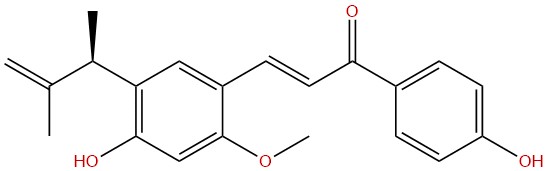
Licochalcone E belongs to chalcone compounds, and its chemical structure is the basis for understanding its biological activity. Chalcone is a subclass of flavonoids, with a core structure of 1,3-diphenyl-2-propen-1-one, consisting of two aromatic rings (A and B) connected by an α, β - unsaturated ketone bridge. The uniqueness of LicoE lies in its specific substitution patterns on the A and B rings.
Specifically, the chemical name of LicoE is usually (E) -1- (2,4-dihydroxy-3- (3-methyl-2-buten-1-yl) phenyl) -3- (4-hydroxy-3- (3-methyl-2-buten-1-yl) phenyl) -2-propen-1-one. Structurally, the A ring (the benzene ring connected to the carbonyl group) has one hydroxyl group (- OH) at positions C-2 and C-4, and an isopentenyl group (3-methyl-2-butenyl) at position C-3; The C-4 position of the B ring (the benzene ring connected to the alkene bond) has a hydroxyl group, and the C-3 position is also connected to an isopentenyl group. This di isopentenyl substitution pattern is a typical feature of the licochalcone family (such as Licochalcone A, B, C, D, etc.) and a key structural element that distinguishes it from other simple chalcones. The introduction of isopentenyl significantly increases the lipophilicity of the molecule and may enhance its binding affinity by interacting with the hydrophobic pocket of the target protein.
In terms of physical and chemical properties, the molecular formula of LicoE is C ₂₁ H ₂₂ O ₅, with a molecular weight of 338.4030 g/mol. The predicted physicochemical parameters based on its structure are as follows:
- Lipid water partition coefficient (LogP): 4.1008. This value is relatively high, indicating that LicoE has strong lipophilicity and tends to be distributed in a lipid environment. This is consistent with its structural feature of containing two isopentenyl side chains. A high LogP value is beneficial for compounds to penetrate cell membranes, but it may also lead to poor water solubility in vivo, affecting oral absorption and bioavailability.
- Topological Polarity Surface Area (TPSA): 66.7600 Å ². TPSA measures the total surface area of polar groups (such as hydroxyl and carbonyl groups) of a compound exposed to solvents, and is closely related to the intestinal absorption and blood-brain barrier permeability of the compound. Generally, molecules with TPSA less than 60-70 Å ² have good intestinal absorption capacity and are easily able to cross the blood-brain barrier. The TPSA value of LicoE is 66.76, which is near the critical value, indicating that it may have good oral absorption potential and the ability to cross the blood-brain barrier.
- Water solubility:0.0403 mg/mL。 This is a very low value and belongs to insoluble compounds. Low water solubility is a common problem faced by many natural products and candidate drugs, which can seriously affect their formulation development and in vivo pharmacokinetic behavior, such as poor solubility and low bioavailability.
- Blood-brain barrier (BBB) permeability Predicted as' high '. Combined with its high LogP and moderate TPSA value, LicoE has a physical and chemical basis for crossing the blood-brain barrier. This feature is a huge advantage for developing drugs to treat central nervous system diseases such as neuroinflammation and brain tumors, but it may also pose a risk of central nervous system toxicity.
- HERG inhibition Predicted as' no '. The hERG (human Ether - à - go Related Gene) potassium ion channel is an important target for assessing cardiac toxicity. LicoE predicts no hERG inhibitory activity, which is a positive pharmacological signal indicating a low risk of causing cardiac QT interval prolongation and arrhythmia.
- Ames test The predicted result is 0.0, indicating a low risk of genetic toxicity, that is, it does not have significant mutagenicity.
In summary, the chemical structure of LicoE determines its unique physicochemical properties: high lipophilicity, low water solubility, potential high BBB permeability, and low risk of hERG and genotoxicity. These properties not only provide advantages in exerting specific pharmacological effects, but also pose challenges in formulation and pharmacokinetics for drug development.
Plant sources and extraction methods
Licorice chalcone E is mainly derived from the Fabaceae family of licorice(Glycyrrhiza)Plants, including Ural licorice(Glycyrrhiza uralensis Fisch. has relatively high content in its roots and rhizomes. In addition, in the light fruit licorice(Glycyrrhiza glabra L. ) and swollen fruit licorice(Glycyrrhiza inflata Bat. may also exist, but the content is usually lower than that of Ural licorice. The medicinal parts of licorice are dry roots and rhizomes, which are rich in various secondary metabolites. LicoE, as one of the trace or trace components, is affected by various factors such as origin, harvesting time, variety, and storage conditions.
Traditional licorice extraction methods often use water extraction or alcohol extraction. Due to LicoE's high lipid solubility, traditional hot water decoction methods have lower extraction efficiency. Modern research tends to use organic solvents for extraction to improve the yield of target compounds. Common extraction solvents include methanol, ethanol, ethyl acetate, or their mixed solvents. For example, soaking or refluxing licorice powder in 70% -95% ethanol or methanol at room temperature or heating conditions can obtain crude extracts rich in total flavonoids and chalcones.
The separation and purification of LicoE from crude extract usually requires the combination of multiple chromatographic techniques to form a systematic separation process. The typical separation strategy is as follows:
1. Rough grading After concentrating the alcohol extract, liquid-liquid extraction is carried out sequentially using solvents of different polarities (such as petroleum ether, chloroform, ethyl acetate, n-butanol). Due to the moderate to low polarity of LicoE, it is usually enriched in the ethyl acetate or chloroform extraction layer.
2. Column chromatography separation Place the target extraction layer on a silica gel column chromatography and perform gradient elution using mixed solvents such as chloroform methanol or petroleum ether acetone. Collect the fraction containing LicoE through thin-layer chromatography (TLC) monitoring.
3. Further purification: After the streams rich in LicoE are combined, more efficient separation methods can be used, such as Sephadex LH-20 gel column chromatography (using molecular sieve effect to remove pigments and impurities), reverse phase silica gel column chromatography (such as ODS-C18, eluting with methanol water or acetonitrile water system) or preparative high-performance liquid chromatography (Pre HPLC) to refine, and finally obtain high-purity LicoE monomer compounds.
4. Structural Identification The purified compound was structurally confirmed by nuclear magnetic resonance spectroscopy (NMR, including ¹ H-NMR, ¹ ³ C-NMR, 2D-NMR) and high-resolution mass spectrometry (HR-MS). After comparison with literature data, it was ultimately determined to be licorice chalcone E.
It is worth noting that due to the low content of LicoE in licorice and its coexistence with structurally similar homologs (such as Licochalcone A, B, C, etc.), the separation and purification process is often cumbersome and costly. In recent years, some new separation techniques, such as high-speed countercurrent chromatography (HSCCC) and molecular imprinting technology, have also been attempted for efficient separation of licorice chalcone compounds, showing good application prospects. In addition, with the development of synthetic biology, the use of genetic engineering to heterogeneously synthesize LicoE or its precursors in microorganisms (such as yeast) is expected to become a potential approach to solve the problem of limited natural sources.
Pharmacological activity research
Since its discovery, the pharmacological activity research of licorice chalcone E has mainly focused on anti-inflammatory, antioxidant, anti-tumor, and anti allergic fields, among which anti-inflammatory activity is its most core and in-depth research direction.
1. Anti inflammatory activity
The anti-inflammatory activity of LicoE is its most notable pharmacological effect. Numerous in vitro and in vivo studies have confirmed that LicoE can effectively inhibit the production of various inflammatory mediators and cytokines.
- Inhibit pro-inflammatory cytokines In a macrophage model stimulated by lipopolysaccharide (LPS), LicoE can significantly reduce the mRNA and protein levels of key pro-inflammatory cytokines such as tumor necrosis factor - α (TNF - α), interleukin-6 (IL-6), and interleukin-1 β (IL-1 β). These cytokines are the core drivers of the inflammatory cascade, and their downregulation directly reduces the intensity of the inflammatory response.
- Inhibit inflammatory enzyme activity LicoE can inhibit the expression of inducible nitric oxide synthase (NOS2/iNOS) and cyclooxygenase-2 (PTGS2/COX-2), thereby reducing the production of inflammatory mediators such as nitric oxide (NO) and prostaglandin E2 (PGE2). In addition, it may also have inhibitory effects on cyclooxygenase-1 (PTGS1/COX-1), but its selectivity needs further investigation.
- Regulating inflammatory signaling pathways The core anti-inflammatory effect of LicoE lies in its regulation of key signaling pathways. It can effectively inhibit the activity of I κ B kinase β (IKBKB/IKK β), prevent the phosphorylation and degradation of I κ B α, and thus block the nuclear translocation and transcriptional activity of NF - κ B (RELA/p65 is its key subunit). Meanwhile, LicoE can also inhibit the phosphorylation of MAPK pathways (such as ERK, JNK, p38), thereby suppressing the transcriptional activity of AP-1. In addition, LicoE has been found to inhibit the phosphorylation of STAT3, further weakening the transmission of inflammatory signals.
- In vivo anti-inflammatory model In animal models such as carrageenan induced toe swelling, phorbol ester induced ear swelling, and collagen induced arthritis models, LicoE exhibits significant anti-inflammatory effects, reducing tissue edema and inhibiting inflammatory cell infiltration.
2. Antioxidant activity
The multiple phenolic hydroxyl groups in the LicoE molecular structure endow it with excellent free radical scavenging ability. Research has shown that LicoE can directly scavenge 1,1-diphenyl-2-trinitrophenylhydrazine (DPPH) free radicals, 2,2 '- diazobis (3-ethylbenzothiazoline-6-sulfonic acid) (ABTS) cationic free radicals, and superoxide anions. In cell models, LicoE can reduce reactive oxygen species (ROS) levels and upregulate the activity of antioxidant enzymes such as superoxide dismutase (SOD) and glutathione peroxidase (GSH Px), thereby protecting cells from oxidative stress damage. This antioxidant activity is an important supplement to its anti-inflammatory and cell protective effects.
3. Antitumor activity
Given its ability to inhibit signaling pathways closely related to tumor occurrence and development, such as NF - κ B and STAT3, the anti-tumor potential of LicoE has also received attention. Preliminary studies have shown that LicoE can inhibit the proliferation of many human cancer cell lines (such as liver cancer, breast cancer, lung cancer, melanoma, etc.). The mechanism may involve:
- Inducing cell apoptosis By activating caspases such as CASP1 (Caspase-1) or regulating Bcl-2 family proteins (such as downregulating Bcl-2 and upregulating Bax), mitochondrial pathway mediated cell apoptosis can be initiated.
- Inhibit cell migration and invasion By inhibiting the expression of matrix metalloproteinases (MMPs), the metastatic ability of cancer cells is reduced.
- Enhance chemotherapy sensitivity There are studies suggesting that LicoE may reverse tumor cell resistance to certain chemotherapy drugs by inhibiting NF - κ B activity.
4. Other pharmacological activities
- Anti-allergy LicoE can inhibit degranulation of mast cells, reduce the release of allergens such as histamine, and demonstrate anti allergic potential.
- neuroprotection Due to its high blood-brain barrier permeability, LicoE has shown protective effects in neurodegenerative disease models. It can inhibit neuroinflammation mediated by microglia, reduce neuronal toxicity induced by beta amyloid (A β), or protect nerve cells through antioxidant stress mechanisms.
- Analgesic effect The regulatory effect of LicoE on transient receptor potential channels TRPV1 and TRPA1 may be related to its analgesic activity. TRPV1 and TRPA1 are key ion channels mediating pain signaling, and LicoE may exert analgesic effects by antagonizing these channels.
Mechanism of action and molecular targets
The pharmacological activity of licorice chalcone E is the result of multi-target and multi pathway synergistic effects. The core mechanism of its action can be summarized as follows: by inhibiting the activation of upstream kinases AKT and MAPK, it blocks the signal transduction of downstream key transcription factors NF - κ B and AP-1, ultimately achieving precise regulation of cellular processes such as inflammation, proliferation, and apoptosis.
1. Regulation of core signaling pathway: AKT/MAPK → NF - κ B/AP-1
- Inhibit AKT activation AKT (protein kinase B) is the core node of the PI3K/AKT signaling pathway, regulating cell survival, proliferation, and metabolism. LicoE can inhibit the phosphorylation (i.e. activation) of AKT, thereby weakening its downstream signaling. Activated AKT can phosphorylate and activate IKK complexes, thereby promoting the activation of NF - κ B. Therefore, the inhibition of AKT by LicoE is one of its important upstream mechanisms for blocking the NF - κ B pathway.
- Inhibition of MAPK activation The MAPK family includes three main pathways: ERK, JNK, and p38. These pathways respond to extracellular stimuli such as inflammatory factors and stress, and transmit signals to the nucleus through cascade phosphorylation reactions. LicoE can inhibit the phosphorylation of ERK, JNK, and p38. Activated MAPK can directly phosphorylate AP-1 components such as c-Jun and c-Fos, enhancing their transcriptional activity. Therefore, LicoE's inhibition of MAPK is the key to its blockade of AP-1 activity.
- Blocking NF - κ B transcriptional activity NF - κ B typically binds to the inhibitory protein I κ B in the form of a p50/p65 (RELA) heterodimer and is present in the cytoplasm. When upstream signals (such as from AKT or IKK complexes) activate IKK β (IKBKB), IKK β phosphorylates I κ B, leading to its ubiquitination degradation. The released NF - κ B immediately enters the nucleus and binds to the κ B site on DNA, initiating the transcription of target genes such as TNF - α, IL-6, iNOS, COX-2. LicoE effectively inhibits this process by suppressing IKK β activity or directly interfering with NF - κ B nuclear translocation.
- Blocking AP-1 transcriptional activity AP-1 is a dimeric transcription factor composed of Jun and Fos family proteins. The activation of the MAPK pathway, especially JNK and ERK, can phosphorylate and activate c-Jun and c-Fos, enhancing the transcriptional activity of AP-1. AP-1 also regulates the expression of various inflammation and proliferation related genes. LicoE inhibits the MAPK pathway and blocks the activation of AP-1.
2. Key molecular targets
The activity of LicoE directly or indirectly acts on the following key targets:
- RELA (p65)The transcriptional activation subunit of NF - κ B complex. LicoE inhibits its nuclear translocation and DNA binding ability.
- IKBKB (IKKβ)Key kinases activated by the NF - κ B pathway. LicoE inhibits its activity and prevents I κ B degradation.
- STAT3 Signal transduction and transcription activator 3 is closely related to inflammation and cancer. LicoE can inhibit the phosphorylation of STAT3 (Tyr705 site), thereby blocking its dimerization and nuclear translocation.
- TNF Key pro-inflammatory cytokines. LicoE downregulates the expression of TNF - α by inhibiting NF - κ B activity.
- IL-6 A pleiotropic pro-inflammatory cytokine that is also an upstream activator of STAT3. LicoE inhibits the production of IL-6, forming a negative feedback regulation.
- NOS2 (iNOS)Inducible nitric oxide synthase catalyzes the production of large amounts of NO. LicoE inhibits its expression.
- PTGS1 (COX-1)Cyclooxygenase-1 is involved in prostaglandin synthesis. LicoE may directly or indirectly inhibit its activity.
- CASP1 Cysteine aspartate protease-1 is involved in inflammasome activation and IL-1 β maturation. LicoE may affect its expression by inhibiting NF - κ B or directly regulate its activity.
- TRPV1 / TRPA1 Transient receptor potential channels are pain and inflammation receptors. LicoE may act as an antagonist to directly block the activation of these channels, thereby exerting analgesic and anti-inflammatory effects.
Evaluation of drug properties and pharmacokinetics
To convert licorice chalcone E from an active natural product into a clinical drug, a systematic evaluation of its pharmacological properties is necessary, including an assessment of its pharmacokinetic (ADME) characteristics and potential toxicity.
1. Analysis of pharmacological parameters
Based on the parameters provided earlier, the pharmacological properties of LicoE exhibit a clear double-edged sword feature:
- Advantage:
- High lipophilicity (LogP 4.1)Beneficial for cell membrane penetration and binding to hydrophobic pockets of target proteins, it is the basis for its inhibitory activity on intracellular signaling pathways.
- High BBB permeability This provides unique advantages for the development of drugs for the treatment of central nervous system diseases such as neuroinflammation and glioma.
- Low hERG inhibition risk Reducing the risk of cardiac toxicity is an important safety signal in drug development.
- Low genetic toxicity (Ames test negative)Reduced the risk of cancer.
- Disadvantages and Challenges:
- Extremely low water solubility (0.04 mg/mL)This is the biggest obstacle to its medicinal properties. Low water solubility can lead to poor dissolution, incomplete absorption, and extremely low bioavailability after oral administration. This is one of the main reasons for the failure of many natural product developments.
- The problems caused by high LogP Excessive lipophilicity may lead to the widespread distribution of compounds in the body, highly binding to plasma proteins, and reducing the concentration of free drugs; At the same time, it also increases the risk of rapid metabolism by liver metabolic enzymes (such as CYP450) and bile excretion, resulting in a short half-life. In addition, high lipophilicity may also increase the risk of toxicity such as phosphatidylosis.
2. Pharmacokinetic (ADME) prediction and challenges
- Absorption Due to its extremely poor water solubility, the oral absorption of LicoE will be very limited. Although its high LogP value is beneficial for passive diffusion, the dissolution process is the rate limiting step. It is expected that its oral bioavailability will be very low. Therefore, developing suitable drug delivery systems (such as liposomes, nanoparticles, cyclodextrin inclusion complexes, solid dispersions) is a key strategy to improve their oral absorption. In addition, non oral routes such as sublingual, nasal, or transdermal administration may also be considered.
- Distribution LicoE is expected to have a large apparent distribution volume (Vd), indicating its ability to be widely distributed in tissues. High BBB permeability indicates that it can reach effective concentrations in the central nervous system. However, its binding rate with plasma proteins (especially albumin) is expected to be high, which may limit its free drug concentration to reach the target tissue.
- Metabolism LicoE contains multiple phenolic hydroxyl groups and isopentenyl side chains, making it a potential substrate for phase I and phase II metabolic enzymes. Phase I metabolism mainly involves oxidation reactions (such as hydroxylation and epoxidation) catalyzed by CYP450 enzyme systems (such as CYP3A4 and CYP2C9), while phase II metabolism includes binding reactions such as glucuronidation and sulfation. The epoxidation and subsequent hydrolysis of isopentenyl side chains are common metabolic pathways of chalcones. The rapid first pass metabolism is another important reason for its low oral bioavailability.
- Excretion Metabolites and small amounts of prototype drugs may be excreted through bile and urine. Due to its moderate molecular weight and high lipophilicity, bile excretion may be its main clearance pathway.
3. Toxicity assessment
In addition to favorable predictions from hERG and Ames tests, a more comprehensive toxicological evaluation is also needed. Highly lipophilic compounds can sometimes cause liver or kidney toxicity. In addition, due to its strong anti-inflammatory and signaling pathway inhibitory activity, long-term use may result in side effects such as immune suppression. The antagonistic effect on TRPV1/TRPA1 may also pose potential risks such as abnormal thermoregulation. Therefore, it is necessary to conduct acute and chronic toxicity experiments, as well as specialized studies on reproductive and developmental toxicity, immunotoxicity, and other related topics.
Clinical application prospects and prospects
Although licorice chalcone E faces challenges in drug development, its unique pharmacological activity and multi-target mechanism of action have shown promising clinical application prospects in multiple disease fields.
1. Inflammatory diseases
Based on its strong anti-inflammatory activity, LicoE has great potential in the treatment of chronic inflammatory diseases.
- Inflammatory bowel disease (IBD)Such as Crohn's disease and ulcerative colitis. LicoE can alleviate intestinal inflammation by inhibiting the local NF - κ B and STAT3 pathways, reducing the production of pro-inflammatory factors such as TNF - α and IL-6.
- Rheumatoid arthritis (RA)Reduce joint damage by inhibiting the proliferation of synovial fibroblasts and the release of inflammatory mediators.
- neuroinflammation Due to its high BBB permeability, LicoE is expected to be used for the treatment of neurodegenerative diseases such as Alzheimer's disease, Parkinson's disease, and multiple sclerosis. By inhibiting the excessive activation of microglia, reducing the release of neurotoxic factors, and protecting neurons.
- Skin inflammation Such as atopic dermatitis and psoriasis. LicoE can inhibit the inflammatory response of keratinocytes and immune cells through local administration.
2. Cancer
LicoE has potential therapeutic value for various cancers by inducing apoptosis, inhibiting proliferation, and metastasis. As a chemotherapy sensitizer, its combination with existing chemotherapy drugs may improve efficacy and reduce drug resistance. Especially for brain tumors such as glioblastoma, LicoE's BBB permeability makes it a highly attractive candidate molecule.
3. Pain management
By antagonizing TRPV1 and TRPA1 channels, LicoE may become a novel non opioid analgesic for the treatment of inflammatory pain, neuropathic pain, and other conditions. Its mechanism of action is different from traditional NSAIDs and opioid drugs, and it is expected to avoid related gastrointestinal and addictive side effects.
4. Future research directions
In order to promote the clinical translation of LicoE, future research should focus on the following aspects:
1. Drug delivery system development This is the core of solving the problems of low water solubility and low bioavailability of LicoE. Systematic research is needed on new delivery technologies such as liposomes, nanoparticles, polymer micelles, phospholipid complexes, etc., to improve their oral bioavailability or achieve targeted delivery.
2. Research on Structure Modification and Structure Activity Relationship Structural modification of LicoE's parent nucleus, such as introducing hydrophilic groups (such as phosphate groups, amino acid esters) or changing the length and saturation of isopentenyl groups, in order to obtain derivatives with better water solubility, higher activity, and more stable metabolism.
3. In depth pharmacokinetic research Establish sensitive and reliable biological sample analysis methods (such as LC-MS/MS) to systematically study the absorption, distribution, metabolism, and excretion processes of LicoE and its metabolites in vivo, clarify their metabolic pathways and key metabolic enzymes.
4. Comprehensive toxicological evaluation Conduct preclinical safety evaluations on long-term toxicity, reproductive toxicity, immune toxicity, etc., and clarify their safety window.
5. Fine analysis of the mechanism of action Using structural biology, chemical biology, and other methods, elucidate the direct binding mode and precise site of action between LicoE and key targets such as IKK β, STAT3, TRPV1.
6. Clinical translational research After completing sufficient preclinical studies, design and conduct small-scale Phase I clinical trials to evaluate their safety, tolerability, and pharmacokinetic characteristics in humans.
Conclusion
Licorice chalcone E, as a natural chalcone compound derived from traditional Chinese medicine licorice, exhibits various pharmacological activities due to its unique diisoprenyl substitution structure. Especially in the field of anti-inflammatory, it blocks the transcription activity of NF - κ B and AP-1 by inhibiting the AKT/MAPK pathway, providing a solid theoretical basis for its treatment of various inflammation related diseases. At the same time, its potential in anti-tumor, neuroprotective, and analgesic effects is also receiving increasing attention.
However, the clinical translation of LicoE is not a smooth road. Its extremely low water solubility and resulting low oral bioavailability are the biggest "bottlenecks" facing its drug development. High lipophilicity and high BBB permeability are both advantages, but they also bring potential toxicity and metabolic challenges. Therefore, the focus of future research must shift from simple activity discovery to systematic pharmacological optimization. Through advanced drug delivery technology, rational structural modification, and in-depth pharmacokinetic and toxicological research, it is expected to overcome these obstacles.
In summary, licorice chalcone E is a natural product lead compound with great research value and development potential. It is not only the key to understanding the scientific connotation of traditional Chinese medicine, but also a valuable source for modern innovative drug discovery. Despite the numerous challenges ahead, with the interdisciplinary integration and in-depth research, we have reason to believe that licorice chalcone E and its derivatives will eventually occupy a place in future clinical applications and contribute to human health. The continuous exploration of such natural products will also promote the development of natural product medicinal chemistry and pharmacology disciplines, providing classic examples for mining modern drugs from traditional wisdom.