


Product name: Formononetin
Synonym name: Formoononetin; Biochanin B; Neochanin; Pratol
Catalogue No.: BP0592
Cas No.: 485-72-3
Formula: C16H12O4
Mol Weight: 268.268
Botanical Source: red and subterranean clovers (Trifolium pratense and Trifolium subterraneum) and of chick peas (Cicer arietinum). the heartwood of Pterocarpus indicus. Found also in Baptisia australis and other plants. Widely distributed in the L
Physical Description: Powder
Type of Compound: Flavonoids
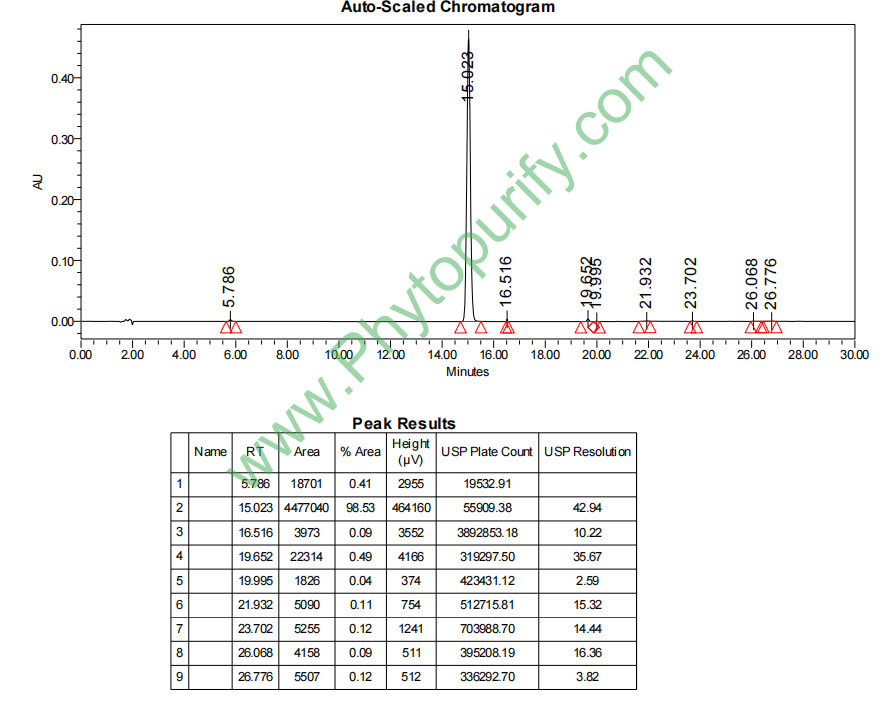
Purity: 95%~99%
Analysis Method: HPLC-DAD or/and HPLC-ELSD
Identification Method: Mass, NMR
Packing: Brown vial or HDPE plastic bottle
Storage: Store in a well closed container, protected from air and light. Put into refrigerate or freeze for long term storage.
Whenever possible, you should prepare and use solutions on the same day. However, if you need to make up stock solutions in advance, we recommend that you store the solution as aliquots in tightly sealed vials at -20℃. Generally, these will be useable for up to two weeks.
The product could be supplied from milligrams to grams, up to kilograms
Inquire for bulk scale.
Descriptions:
Formononetin causes vascular relaxation via endothelium/NO-dependent mechanism and endothelium-independent mechanism which involves the activation of BK(Ca) and K(ATP) channels.[1]
Formononetin-treated Ovx rats has an increased bone osteoprotegerin-to-receptor activator for nuclear κB ligand ratio compared with the Ovx + vehicle group; daily oral administration of formononetin for 12 weeks has a substantial anabolic effect, thus raising the possibility of its use in postmenopausal osteoporosis.[2]
Formononetin exhibits antiviral activities against some members of Picornaviridae, could inhibit EV71-induced COX-2 expression and PGE2 production via MAPKs pathway including ERK, p38 and JNK, thus, formononetin could be a potential lead or supplement for the development of new anti-EV71 agents in the future.[3]
Formononetin reduces hydrogen peroxide (H2O2)-induced apoptosis and improves the levels or activity of indicators of oxidative stress, also inhibits the activation of nuclear factor-kappaB (NF-κB), which is a significant transcription factor for RGC-5 apoptosis.[4]
References:
[1] Wu J H, Li Q, Wu M Y, et al. J Nutr Biochem, 2010, 21(7):613-20.
[2]Tyagi A M, Srivastava K, Singh A K, et al. Menopause, 2012, 19(8):856-63.
[3] Wang H, Zhang D, Miao G, et al. Viro J, 2015, 12(1):1-10.
[4] Jia W C, Liu G, Zhang C D, et al. Eur Rev Med & Pharmaco, 2014, 18(15):2191-7.
[5] Xing J H, Sun X L, Zhou J.Chinese Journal of Pharmaceutical Analysis, 2009(01):73-5.
HPLC of Formononetin
Storage conditions:Short-term storage at 2~8℃, long-term storage at -20 ~ -80℃
59.6700
2.5556
2.4569
.0385
3.2012
39.7857
High
91.3310
1.9523
Yes
No
Yes
No
Yes
Yes
2.1
No
Yes
No
No
Osteoporosis is a systemic bone disease characterized by reduced bone mass, destruction of bone microstructure, and increased bone fragility. It is the main cause of significantly increased fracture risk in middle-aged and elderly people, especially postmenopausal women. With the acceleration of global population aging, osteoporosis and the resulting fractures have become a serious public health challenge. At present, although first-line treatment drugs such as bisphosphonates and selective estrogen receptor modulators are effective, long-term use may be accompanied by side effects such as mandibular necrosis, atypical femoral fractures, and cardiovascular risks. It is urgent to develop safer and more effective new treatment strategies. In this context, natural products derived from traditional medicinal plants have become an important treasure trove for the development of anti osteoporosis drugs due to their multi-target, multi pathway effects and relatively good safety.
Formononetin, also known as 7-hydroxy-4 '- methoxyflavone, is a type of isoflavone compound widely found in leguminous plants such as Astragalus membranaceus, Trifolium repens, and Pueraria lobata. As a typical plant estrogen, mangiferin plays an important role in regulating bone metabolism balance by binding to estrogen receptors (ER) due to its structural similarity with endogenous estrogen 17 β - estradiol. In recent years, a large number of studies have revealed that the pharmacological activity of mangiferin goes far beyond estrogen like effects. It has been proven to be an effective fibroblast growth factor receptor 2 (FGFR2) inhibitor, and can synergistically promote bone formation and inhibit bone resorption by regulating various molecular mechanisms such as the nuclear factor kappa B receptor activator ligand (RANKL)/osteoprotegerin (OPG) system, Wnt/β - catenin signaling pathway, oxidative stress, and inflammatory response. Its clear anti osteoporosis activity, combined with its good pharmacological potential, makes it a highly promising natural candidate drug molecule for development. This article aims to systematically review the chemical properties, plant sources, anti osteoporosis pharmacological activities, molecular mechanisms of action, and pharmacological research progress of mangiferin, and prospects its clinical application prospects.
The molecular formula of mangiferin (CAS number: 485-72-3) is C ₁₆ H ₁₂ O ₄, with a molecular weight of 268.27 g/mol. Its chemical structure belongs to the 7-hydroxyflavone class, with the basic parent nucleus being benzo γ - pyranone (chromone), specifically the 3-phenylchromone-4-one structure. Its structural feature is that the 7th position of the A ring is a hydroxyl group (- OH), and the 4th 'position of the B ring is a methoxy group (- OCH ∝). This structure makes it a 4 '- O-methylated derivative of daidzein (7,4' - dihydroxyflavone), which is closely related in biosynthesis and biological activity.
From the analysis of physical and chemical properties, the theoretical lipid water partition coefficient (LogP) of mangiferin is about 2.56, indicating its moderate lipophilicity, which is conducive to transmembrane transport and absorption. Its topological polar surface area (TPSA) is 59.67 Å ², which is relatively small, further indicating its good membrane permeability. The water solubility measured in the experiment is relatively low, about 0.0385 mg/mL, which is a difficult to dissolve compound. This is a key factor to consider in the development of its formulation. Based on its physicochemical parameters, the pharmacokinetic (ADMET) prediction model shows that mangiferin has a high blood-brain barrier permeability, which provides the possibility for its potential central nervous system related bone metabolism regulation or neuroprotective effects. In the preliminary safety screening, the Ames test result was 2.1 (generally considered>1.5 as a potential mutagenic positive and should be interpreted with caution, combined with subsequent experiments for comprehensive judgment), indicating the need for more in-depth genetic toxicity assessment; The hERG channel inhibition experiment showed a negative result, indicating a lower risk of causing QT interval prolongation in the heart, which is a favorable pharmacological feature.
Mangosteen is widely distributed in nature and mainly enriched in various medicinal plants of the Leguminosae family. These plants are often used in traditional medicine to supplement qi, strengthen the surface, and strengthen muscles and bones.
1. Main plant sources:
* Astragalus membranaceus As a traditional Qi tonifying medicine, Huangqi is one of the most famous sources of mangiferin. Mangshanhuasu is considered an important active ingredient in Huangqi that exerts immune regulation, anti-inflammatory, and potential bone strengthening effects.
* Red clover (Trifolium pratense)Rich in various isoflavones, mangiferin and its glycosides are important components, commonly used to alleviate menopausal symptoms in women. Its phytoestrogenic effect is closely related to bone health.
* Pueraria lobata Puerarin is its signature ingredient, but it also contains a certain amount of mangiferin, which contributes to its effects of relieving muscle and fever, generating fluids, and quenching thirst.
* Glycyrrhiza uralensis、Psoralea corylifolia Traditional Chinese medicine also contains mangiferin.
The anti osteoporosis activity of mangiferin has been fully validated in various in vitro and in vivo experimental models, and its effects cover two aspects: promoting bone formation and inhibiting bone resorption.
In vitro research:
At the cellular level, mangiferin exhibits significant osteogenic activity. Research has confirmed that mangiferin can dose dependently promote the proliferation, differentiation, and mineralization of rat bone marrow mesenchymal stem cells (BMSCs), mouse pre osteoblast cell line MC3T3-E1, and human osteoblast like cells. Specifically, it manifests as increased alkaline phosphatase (ALP) activity, increased formation of mineralized nodules, and upregulation of mRNA and protein expression of key osteogenic transcription factors (such as RUNX2, Osterix/SP7) and late differentiation markers (such as osteocalcin/BGLAP, type I collagen/COL1A1). Meanwhile, mangiferin can effectively inhibit the differentiation and function of osteoclasts. In the model of RAW 264.7 cells or mouse bone marrow monocytes/macrophages (BMMs) differentiation into osteoclasts induced by receptor activator of nuclear factor kappa B ligand (RANKL), mangiferin treatment can reduce the number of multinucleated tartrate resistant acid phosphatase (TRAP) positive osteoclasts, decrease the area of bone resorption pits, and downregulate the expression of osteoclast specific genes such as protease K/CTSK.
In vivo research:
Multiple animal models have confirmed the in vivo anti osteoporosis effect of mangiferin. In a postmenopausal osteoporosis rat or mouse model induced by ovariectomy (OVX), long-term oral administration of mangiferin can significantly improve bone microstructural parameters: increase bone density (BMD), increase the number (Tb. N) and thickness (Tb. Th) of bone trabeculae, and reduce the degree of trabecular separation (Tb. Sp). Biomechanics tests such as three-point bending and vertebral compression have shown that mangiferin treatment can effectively enhance the biomechanical strength (maximum load, stiffness, etc.) of the femur and vertebrae. In models of secondary osteoporosis induced by glucocorticoids (such as dexamethasone) and age-related osteoporosis, mangiferin also shows protective effects on bone mass and improves bone quality. Its efficacy is comparable to or has a synergistic effect with classic drugs estrogen or alendronate sodium, and has shown advantages in some studies with less stimulation to estrogen sensitive organs such as the uterus, suggesting that it may have tissue selectivity.
The mechanism of action of mangiferin against osteoporosis is complex and multi-target, mainly involving the following core signaling pathways and molecular targets:
The classical pathway mediated by estrogen receptor 1 (ESR1)As a plant estrogen, mangiferin can mimic the partial effects of endogenous estrogen by binding to estrogen receptor alpha (ESR1) on osteoblasts, osteoclasts, and their precursor cells. Activation of ER in osteoblasts can upregulate the expression of transcription factors such as RUNX2 and Osterix, promoting osteogenic differentiation. Meanwhile, by inhibiting inflammatory pathways such as nuclear factor kappa B (NF - κ B), osteoclastogenesis is indirectly suppressed.
Regulating the RANKL/RANK/OPG system This is the core axis that regulates osteoclast differentiation. Mangosteen can downregulate the expression of RANKL in osteoblasts and bone marrow stromal cells, upregulate the expression of its decoy receptor osteoprotegerin (OPG, encoded by TNFRSF11B gene), thereby reducing the RANKL/OPG ratio. This reduces the binding of RANKL to RANK receptors on osteoclast precursor cells, thereby inhibiting the activation of downstream NF - κ B, MAPK (such as p38, JNK), and NFATc1 signaling pathways, ultimately suppressing the differentiation and maturation of osteoclasts.
Activate Wnt/β - catenin signaling pathway This pathway is a key positive signal that regulates bone formation. Mangosteen can inhibit the activity of glycogen synthase kinase-3 β (GSK-3 β), reduce the phosphorylation degradation of β - catenin, and promote its nuclear translocation. Nuclear β - catenin binds to TCF/LEF transcription factors, activating the transcription of downstream osteogenic related genes such as RUNX2, Osterix, and Cyclin D1. In addition, mangiferin can downregulate the expression of Wnt pathway antagonist sclerostin (SOST) and relieve its inhibition on bone formation.
Inhibition of FGFR2 signaling Mangosteen has been identified as an effective inhibitor of FGFR2 (IC50~4.31 μ M). Abnormal activation of FGFR2 signaling is associated with various bone developmental diseases and bone metabolism disorders. Inhibition of FGFR2 may regulate the balance between osteoblasts and osteoclasts by interfering with its downstream MAPK/ERK and PI3K/Akt pathways, which may be a new mechanism for its anti bone resorption and anti angiogenesis effects (affecting bone angiogenesis).
Antioxidant and anti-inflammatory effects Oxidative stress and chronic inflammation are important causes of osteoporosis. Mangshanhua extract has strong antioxidant capacity, can scavenge free radicals, and enhance the activity of superoxide dismutase (SOD) and glutathione peroxidase (GSH Px). It can also inhibit the production of pro-inflammatory cytokines such as TNF - α, IL-1 β, IL-6, which are powerful bone resorption stimuli. Its anti-inflammatory effect is related to the inhibition of NF - κ B and COX-2/PGE2 pathways.
Regulating vitamin D receptors (VDR) and bone metabolism related enzymes Mangosteen may affect calcium and phosphorus metabolism and ossification process by interacting with VDR. Meanwhile, it can directly inhibit bone matrix degrading enzymes secreted by osteoclasts, such as matrix metalloproteinase-9 (MMP9) and tissue protease K (CTSK), thereby weakening the bone resorption function of osteoclasts.
In summary, mangiferin acts on multiple targets such as ESR1, FGFR2, VDR, and synergistically regulates multiple signaling pathways such as RANKL/OPG, Wnt/β - catenin, NF - κ B, etc., constructing a networked action system that promotes bone formation and inhibits bone resorption.
Although the pharmacological activity of mangiferin is clear, whether it can become a successful drug depends on its pharmacological properties, namely "drug like" and pharmacokinetic (PK) characteristics.
Absorption, distribution, metabolism, excretion (ADME):
* absorb After oral administration, mangiferin is mainly absorbed in the small intestine. Due to its poor water solubility, the absorption rate and degree may be limited. Research has shown that its absolute oral bioavailability in rats is relatively low (usually<10%), mainly due to first pass effects and solubility issues. New drug delivery systems such as nanocrystals, phospholipid complexes, cyclodextrin inclusion complexes, or self microemulsions can significantly improve their solubility and oral bioavailability.
* distribution Mangosteen has moderate lipophilicity and a small molecular weight, making it easy to distribute to various tissues throughout the body. As mentioned earlier, it predicts high blood-brain barrier permeability and has been detected in brain tissue. Further research is needed on the specific distribution in bone tissue, which is crucial for targeted treatment of osteoporosis.
* Metabolism Mangosteen undergoes extensive metabolism in the body, mainly through II binding reactions. In the liver and intestine, it can be metabolized by UDP glucuronosyltransferase (UGT) and sulfotransferase (SULT) into glucuronidation and sulfation complexes. In addition, its 4 '- methoxy group may undergo demethylation and be converted into more active daidzein. The CYP450 enzyme system (such as CYP1A2) is also involved in its metabolism. These metabolic processes are the main reasons for its significant first pass effect.
* excretion Mangosteen and its metabolites are mainly excreted through the kidneys with urine, and some are excreted through bile and feces.
Challenges and optimization strategies for drug development:
1. Low solubility and low bioavailability This is the main challenge facing the development of mangiferin. The solution includes:Pharmaceutical Strategy(such as the aforementioned nanotechnology and solid dispersion);Structural modification(Synthesis of water-soluble prodrugs, such as phosphate esters or amino acid esters);Combined administration(Used in combination with absorption enhancers such as piperine).
2. Metabolic stability For first pass metabolism, selective combination administration of metabolic enzyme inhibitors can be studied, or derivatives that protect metabolic sites and maintain activity can be sought.
3. Targeted delivery Developing bone targeted delivery systems, such as coupling mangiferin with ligands with high affinity for hydroxyapatite or bone tissue (such as tetracycline, bisphosphonates), can increase drug concentration at bone lesions, enhance efficacy, and reduce systemic side effects.
4. Deepening safety evaluation Although the preliminary hERG test is negative, comprehensive preclinical safety pharmacology, repeated administration toxicity, reproductive toxicity, and other studies need to be completed. The potential positive signal of Ames test needs to be further confirmed through mammalian cell gene mutation test, micronucleus test, etc.
As a natural anti osteoporosis candidate molecule with multiple targets and clear mechanisms of action, mangiferin has broad clinical application prospects, but solid research is still needed for its transformation.
Potential application directions:
1. Prevention and treatment of postmenopausal osteoporosis As a plant estrogen, mangiferin may provide a relatively safe and less side effect alternative or supplement to hormone replacement therapy (HRT), especially for women who have contraindications or concerns about traditional HRT.
2. Treatment of senile and glucocorticoid induced osteoporosis Its antioxidant, anti-inflammatory, and bone promoting properties also have therapeutic potential for non estrogen deficient osteoporosis.
3. Bone repair adjuvant therapy Based on its strong promotion of bone activity, mangiferin can be loaded into bone tissue engineering scaffold materials (such as hydroxyapatite, polylactic acid hydroxyacetic acid copolymer) for local application in delayed fracture healing, non union or bone defect repair.
4. combination therapy Combined with existing anti osteoporosis drugs such as bisphosphonates and teriparatide, it may produce synergistic effects, reduce their respective dosages and side effects, or be used to reverse the excessive inhibition of bone turnover that may occur after long-term use of bisphosphonates.
Future research prospects:
1. In depth mechanism exploration Using CRISPR/Cas9 gene editing, proteomics, single-cell sequencing, and other technologies, we aim to more accurately depict the specific signaling network and epigenetic regulation mechanism of mangiferin in different cell types (osteoblasts, osteoclasts, osteoblasts, mesenchymal stem cells) of the bone microenvironment.
2. Structural optimization and derivative development Based on the mother nucleus structure of mangiferin, a systematic medicinal chemical modification is carried out to improve its activity, solubility, metabolic stability, and bone targeting, and to discover more valuable lead compounds for development.
3. Research on Advanced Drug Delivery System: Vigorously develop new delivery technologies such as bone targeted nano preparation and intelligent responsive hydrogel to achieve accurate and controllable release of pedunculosan.
4. Advance preclinical and clinical research Complete standardized preclinical studies (pharmacodynamics, pharmacokinetics, toxicology) that meet drug registration requirements, and actively prepare for clinical trials to evaluate their safety, tolerability, and efficacy in humans. Explore its long-term efficacy and economic value for the prevention of osteoporosis related fractures.
5. Expand the application of other bone diseases Study its potential therapeutic value for diseases such as osteoarthritis, rheumatoid arthritis, bone erosion, and bone tumors.
Mangshanhuasu, a natural flavonoid compound derived from traditional medicinal plants, has shown great potential in the field of anti osteoporosis due to its unique chemical structure and multi pathway, multi-target pharmacological mechanisms. It can not only simulate the bone protective effect of estrogen through phytoestrogenic effects, but also synergistically promote bone formation and inhibit bone resorption by inhibiting FGFR2, regulating the RANKL/OPG and Wnt/β - catenin signaling axes, exerting anti-inflammatory and antioxidant effects, and fundamentally intervening in bone metabolism imbalance. Despite facing challenges such as low bioavailability in drug formulation, the development of modern medicinal chemistry, pharmacy, and materials science provides powerful tools for addressing these issues. Through continuous and in-depth mechanism research, rational structural optimization, and innovative delivery strategies, mangiferin is expected to be successfully transformed from a potential natural active molecule into a new type of drug or functional health product for the prevention and treatment of osteoporosis and related fractures, contributing to the global bone health cause with the power of nature. Its research and development process also fully reflects the research paradigm value of drawing inspiration from traditional medical wisdom and utilizing modern science and technology for innovative development.
