Introduction/Overview
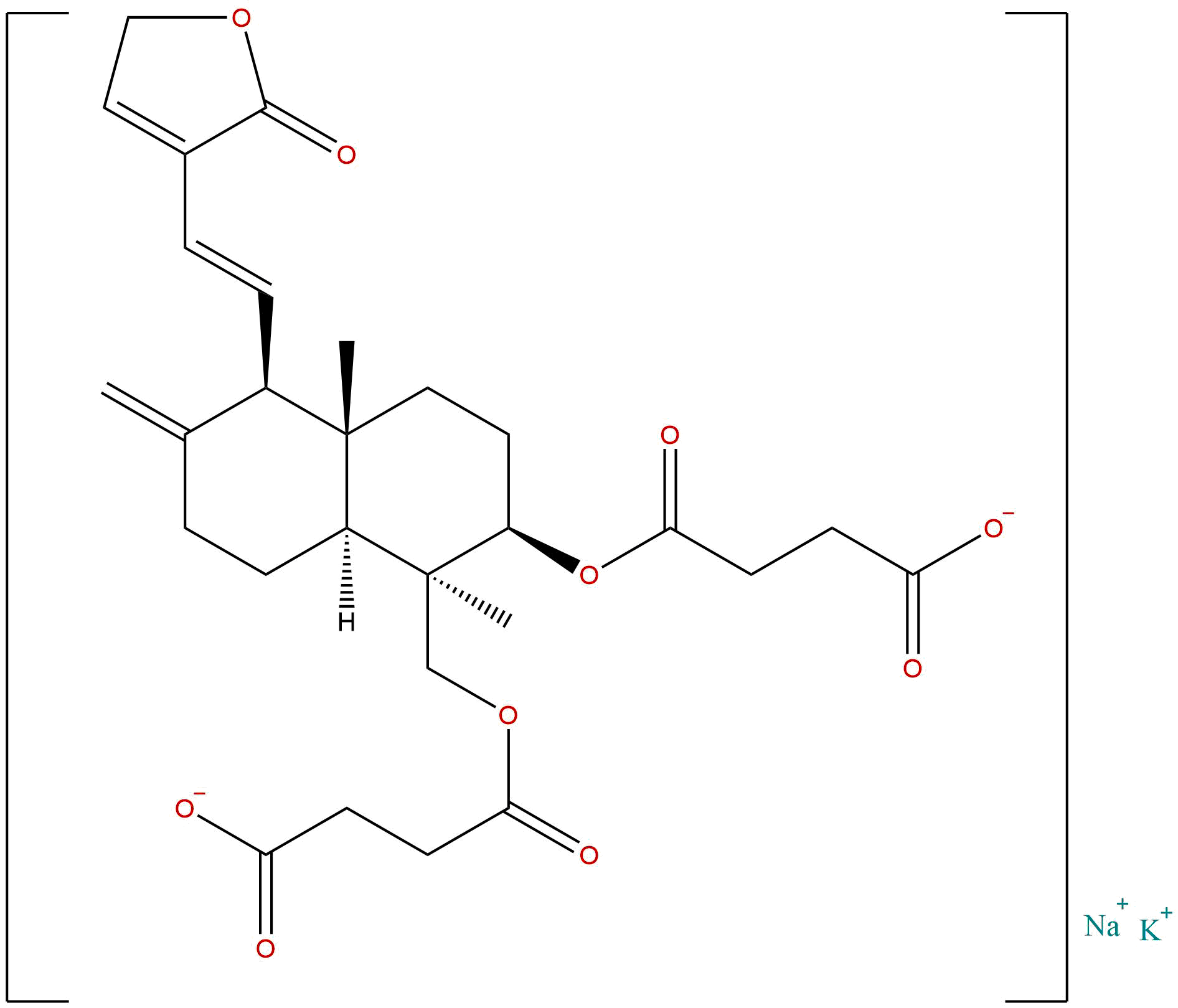
Dehydroandrographolide Succinate Sodium Potassium Salt (CAS number: 863319-40-8) is a semi synthetic derivative derived from natural products, which has attracted much attention in recent years due to its significant anti-inflammatory activity. Inflammatory response, as a common pathological basis of various diseases, involves the regulation of multiple signaling pathways and inflammatory mediators. Finding efficient and safe anti-inflammatory drugs has become an important direction for drug development. Yanhuning, with its unique chemical structure and multi-target regulatory properties, has demonstrated excellent pharmacological activity and potential as a drug, becoming a research hotspot in the field of natural product pharmacology.
This article will systematically review the chemical structure and physicochemical properties, plant sources and extraction methods, pharmacological activity and mechanism of action, pharmacological evaluation and pharmacokinetic characteristics of Yanhuning, and explore its clinical application prospects, aiming to provide comprehensive theoretical basis and practical guidance for related research.
Chemical structure and physicochemical properties
Yanhuning is a water-soluble semi synthetic derivative of dehydroandrographolide and sodium potassium salt form of succinic acid. Its molecular weight is 532.5860, with a LogP value of 2.7913, indicating moderate lipid solubility and favorable cell membrane permeability. Its topological polar surface area (TPSA) is 153.5 Å ², indicating high molecular polarity, which is consistent with its water solubility (0.0762 mg/mL). The water solubility of Yanhuning is significantly improved compared to natural products such as Chuanxinlian lactone, which is beneficial for formulation development and in vivo absorption.
Structurally, Yanhuning retains the core skeleton of Chuanxinlian lactone, and the introduction of sodium potassium succinate not only enhances its water solubility, but may also affect its binding mode with target proteins. Its molecular structure contains multiple hydroxyl and ester bonds, endowing it with excellent chemical reactivity and biocompatibility.
In addition, Yanhuning exhibits lower blood-brain barrier permeability, indicating that it mainly acts on peripheral inflammatory sites and reduces the risk of central nervous system side effects. The negative result of hERG channel inhibition experiment indicates a low risk of cardiac toxicity. The Ames test result is 0.0, indicating no significant mutagenicity and high safety.
Plant sources and extraction methods
The parent compound dehydroandrographolide of Yanhuning mainly comes from the traditional Chinese medicine Andrographis paniculata, which is widely distributed in tropical and subtropical regions of Asia and is an important heat clearing and detoxifying herb in traditional Chinese medicine. Chuanxinlian contains abundant diterpenoid lactones, among which Chuanxinlian lactone and its derivatives are its main active ingredients.
The extraction of natural paeoniflorin is usually carried out by organic solvent extraction, such as ethanol or methanol extraction, combined with liquid-liquid distribution and chromatographic purification techniques to obtain high-purity paeoniflorin. As a semi synthetic product, Yanhuning needs to be chemically modified on the basis of Chuanxinlian lactone. The synthesis process includes the succinic esterification reaction of dehydroandrographolide, followed by sodium potassium salt treatment to improve water solubility and stability.
In recent years, green extraction techniques such as ultrasound assisted extraction, microwave-assisted extraction, and enzymatic extraction have also been applied to the efficient preparation of paeoniflorin, in order to improve yield and purity and reduce environmental pollution. The large-scale production of Yanhuning relies on optimized synthesis and purification processes to meet preclinical and clinical research needs.
Pharmacological activity research
The main pharmacological activity of Yanhuning is focused on its anti-inflammatory effect. A large number of in vitro and in vivo experiments have shown that Yanhuning can significantly inhibit the expression and release of various inflammatory mediators, alleviate inflammatory reactions, and has potential value in treating various inflammation related diseases.
-
anti-inflammatory effect
Yanhuning effectively reduces inflammatory damage by downregulating the expression of pro-inflammatory cytokines such as IL-6 and TNF - α, inhibiting the activation of inflammatory signaling pathways. In vitro cell experiments have shown that Yanhuning can inhibit the production of inflammatory factors in macrophages and monocytes, and reduce the release of inflammatory mediators.
-
Antioxidant effect
Although the main mechanism of action of Yanhuning is anti-inflammatory, its regulatory effect on oxidative stress has also been reported. By inhibiting the activity of inducible nitric oxide synthase (NOS2) and related oxidases, the generation of reactive oxygen species (ROS) is reduced, and oxidative damage is alleviated.
-
Analgesic effect
By regulating TRPV1 and TRPA1 channels, Yanhuning exhibits a certain analgesic effect, especially in the inflammatory pain model where it significantly alleviates pain behavior.
-
Immune regulatory effect
Yanhuning can regulate the function of immune cells, promote the maintenance of immune homeostasis, and prevent excessive inflammatory reactions.
-
Other potential activities
Preliminary studies have shown that Yanhuning may have various pharmacological activities such as anti fibrosis and anti-tumor effects, which are worth further exploration.
Mechanism of action and molecular targets
The anti-inflammatory effect of Yanhuning involves multiple signaling pathways and key molecular targets, reflecting its multi-target and multi pathway regulatory characteristics.
-
IL-6/STAT3 signaling pathway
IL-6, as a pro-inflammatory cytokine, promotes the expression of inflammatory genes by activating the STAT3 transcription factor. Yanhuning can inhibit the expression of IL-6 and the phosphorylation of STAT3, block this signaling pathway, and reduce inflammatory response.
-
NF - κ B signaling pathway
NF - κ B is the core transcription factor of inflammatory response, regulating the expression of various inflammatory mediators. Yanhuning exerts anti-inflammatory effects by inhibiting the activation of NFKB1 and reducing the transcription of inflammatory genes.
-
CASP1 (caspase 1)
CASP1 participates in the activation of inflammasomes, promoting the maturation and release of inflammatory factors such as IL-1 β. Yanhuning inhibits CASP1 activity and blocks the inflammatory cascade mediated by inflammasomes.
-
TRPV1 and TRPA1 channels
These two types of transient receptor potential channels are involved in the transmission of inflammatory pain. Yanhuning alleviates inflammatory pain by regulating the activity of these two channels.
-
PTGS1 (COX-1) and PTGS2 (COX-2)
The inhibitory effect of Yanhuning on cyclooxygenase reduces the synthesis of prostaglandins and lowers the production of inflammatory mediators.
-
NOS2 (inducible nitric oxide synthase)
By inhibiting NOS2 and reducing excessive NO production, oxidative stress and inflammatory response can be alleviated.
In summary, Yanhuning exerts comprehensive anti-inflammatory effects by regulating inflammation related signaling pathways through multi-target synergistic effects.
Evaluation of drug properties and pharmacokinetics
The pharmacological evaluation of Yanhuning shows that it has good potential for drug development.
-
Physicochemical properties
Moderate molecular weight and LogP value are beneficial for the in vivo distribution and cell membrane permeability of drugs. The higher TPSA and water solubility improved its bioavailability and formulation adaptability.
-
safety
The negative inhibition of hERG channel and the absence of mutagenicity in Ames test indicate that Yanhuning has low risk of cardiac and genetic toxicity and good safety.
-
Blood-brain barrier permeability
Low blood-brain barrier permeability reduces the possibility of central nervous system side effects and is suitable for treating peripheral inflammatory diseases.
-
pharmacokinetics
At present, there is limited systematic pharmacokinetic research on Yanhuning, but its improved water solubility is expected to be beneficial for oral absorption and in vivo distribution. In the future, it is necessary to conduct in-depth research on its absorption, distribution, metabolism, and excretion (ADME) characteristics to clarify its in vivo dynamic behavior.
-
Formulation development
Good water solubility provides convenience for the development of oral and injectable formulations, facilitating clinical applications.
Clinical application prospects and prospects
Yanhuning, as a multi-target anti-inflammatory natural product derivative, has broad clinical application potential.
-
Treatment of inflammatory diseases
Its significant anti-inflammatory and analgesic effects make it suitable for various inflammatory diseases, such as rheumatoid arthritis, inflammatory bowel disease, skin inflammation, and respiratory inflammation.
-
Chronic disease management
By regulating immunity and oxidative stress, Yanhuning is expected to be used as an adjuvant therapy for chronic inflammation related diseases, such as metabolic syndrome and cardiovascular diseases.
-
Security advantage
Low toxicity and good safety provide assurance for its long-term use, making it suitable for patients with chronic diseases.
-
Potential for combination therapy
Can be used in conjunction with other anti-inflammatory drugs to reduce monotherapy dosage and minimize side effects.
-
Future research directions
- Pharmacokinetic and toxicological studies of the system
- Clinical trials validate its efficacy and safety
- Explore its potential applications in fields such as tumors and neurodegenerative diseases
- Optimize formulation form, improve bioavailability and patient compliance
Conclusion
Yanhuning, as a semi synthetic natural derivative derived from Chuanxinlian, has demonstrated excellent pharmacological activity and potential as a drug due to its multi-target and multi mechanism anti-inflammatory effects. Its excellent safety and water solubility provide a solid foundation for clinical development. Although research on its pharmacokinetics and clinical efficacy is still in its infancy, Yanhuning is undoubtedly an important candidate molecule in the development of natural anti-inflammatory drugs. In the future, through in-depth mechanism research, systematic pharmacokinetic analysis, and clinical validation, Yanhuning is expected to become an innovative drug for treating various inflammation related diseases, promoting the integration of natural product pharmacology and modern drug development.