


Product name: Dehydroandrographolide
Synonym name:
Catalogue No.: BP0459
Cas No.: 134418-28-3
Formula: C20H28O4
Mol Weight: 332.44
Botanical Source: Andrographis Herba
Physical Description:
Type of Compound: Diterpenoids
Purity: 95%~99%
Analysis Method: HPLC-DAD or/and HPLC-ELSD
Identification Method: Mass, NMR
Packing: Brown vial or HDPE plastic bottle
Storage: Store in a well closed container, protected from air and light. Put into refrigerate or freeze for long term storage.
Whenever possible, you should prepare and use solutions on the same day. However, if you need to make up stock solutions in advance, we recommend that you store the solution as aliquots in tightly sealed vials at -20℃. Generally, these will be useable for up to two weeks.
The product could be supplied from milligrams to grams
Inquire for bulk scale.
Description:
Dehydroandrographolide is a novel TMEM16A inhibitor and possesses multiple pharmacological activities, including anti-inflammation, anti-cancer, anti-bacterial, anti-virus and anti-hepatitis activity. It possesses activity against HBV DNA replication with IC50 values of 22.58 uM and low SI values of 8.7 ; it can alleviate oxidative stress in LPS-induced acute lung injury possibly by inactivating iNOS.
References:
DARU., 2015, 23(1):1-7.
Dehydroandrographolide enhances innate immunity of intestinal tract through up-regulation the expression of hBD-2.
Dehydroandrographolide (DA) is one of major active components in the well-known oriental herbal medicine Andrographis paniculata (Burm.f) Nees which belongs to the Acanthaceae family. DA is used for the treatment of infections in China. However, DA has not been found to significantly inhibit bacterial and viral growth directly. The current study investigates the effect of DA on the expression of human β -defensin-2 (hBD-2) in human intestinal epithelial cells and the possible signaling pathways.
METHODS AND RESULTS:
Human intestinal epithelial HCT-116 cells were incubated with 1-100 μM DA for 2-24 h. RT-PCR and Western blot were used to assess the expression of hBD-2. The specific inhibitors were used and the levels of phosphorylation of signaling molecules were detected for dissecting the signaling pathways leading to the induction of hBD-2. MTT assay showed there was no obvious cytotoxicity for HCT-116 cells by 1-100 μM DA treatment. RT-PCR and Western blot assays showed that DA (1-100 μM) could up-regulate the expression of hBD-2, and the effect lasted longer than 24 h. By using SB203580 and SB202190 (inhibitors of p38), the enhancement of hBD-2 expression were significantly attenuated. However, inhibitor of ERK and inhibitor of JNK could not block the effect of DA. Furthermore, Western blot found activation of p38 but not ERK and JNK in DA-treated HCT-116 cells.
CONCLUSIONS:
The results suggested that DA enhanced innate immunity of intestinal tract by up-regulating the expression of hBD-2 through the p38 MAPK pathways.
Bioorg Med Chem Lett. 2014 May 15;24(10):2353-9.
Synthesis, structure-activity relationships and biological evaluation of dehydroandrographolide and andrographolide derivatives as novel anti-hepatitis B virus agents.
Dehydroandrographolide and andrographolide, two natural diterpenoids isolated from Andrographis paniculata possessed activity against HBV DNA replication with IC50 values of 22.58 and 54.07μM and low SI values of 8.7 and 3.7 in our random assay.
METHODS AND RESULTS:
Consequently, 48 derivatives of Dehydroandrographolide and andrographolide were synthesized and evaluated for their anti-HBV properties to yield a series of active derivatives with lower cytotoxicity, including 14 derivatives against HBsAg secretion, 19 derivatives against HBeAg secretion and 38 derivatives against HBV DNA replication. Interestingly, compound 4e could inhibit not only HBsAg and HBeAg secretions but also HBV DNA replication with SI values of 20.3, 125.0 and 104.9. Furthermore, the most active compound 2c with SI value higher than 165.1 inhibiting HBV DNA replication was revealed with the optimal logP value of 1.78 and logD values.
CONCLUSIONS:
Structure-activity relationships (SARs) of the derivatives were disclosed for guiding the future research toward the discovery of new anti-HBV drugs.
Chin J Integr Med. 2014 Dec 9.
Potassium Dehydroandrographolide Succinate Injection for the treatment of child epidemic parotitis: A systematic review and meta-analysis.
To systematically evaluate the clinical efficacy and safety of Potassium Dehydroandrographolide Succinate Injection (PDSI) in the treatment of child epidemic parotitis (EP).
METHODS AND RESULTS:
Randomized controlled trials (RCTs) regarding Potassium Dehydroandrographolide Succinate Injection in the treatment of child EP were searched in China National Knowledge Infrastructure, Wanfang Database, Chinese Biomedical Literature Database, PubMed, and Cochrane Library from inception to July 30, 2013. Two reviewers independently retrieved RCTs and extracted information. The Cochrane risk of bias method was used to assess the quality of included studies, and a metaanalysis was conducted with RevMan 5.2 software. A total of 11 studies with 818 participants were included. The quality of the studies was generally low, among which only one study mentioned the random method. The meta-analysis indicated that Potassium Dehydroandrographolide Succinate Injection was more effective than the conventional therapy with Western medicine for EP in the outcomes of the total effective rate [relative risk (RR)=1.23, 95% confidence interval (CI) [1.14, 1.33], P<0.01], the time of temperature return to normal, the time of detumescence [mean difference (MD)=-2.10, 95% CI [-2.78, -1.41], P<0.01], and the incidence of complications (RR=0.14, 95% CI [0.03, 0.72], P=0.02). There were 6 adverse drug reactions (ADRs) in this systematic review, 2 of which were mainly represented rash and diarrhea in the experiment group, while another 4 ADRs occurred in the control group.
CONCLUSIONS:
Based on the systematic review, Potassium Dehydroandrographolide Succinate Injection was effectiveness and relatively safety in the treatment of child EP. But further rigorously designed trials are warranted to determine its effectiveness.
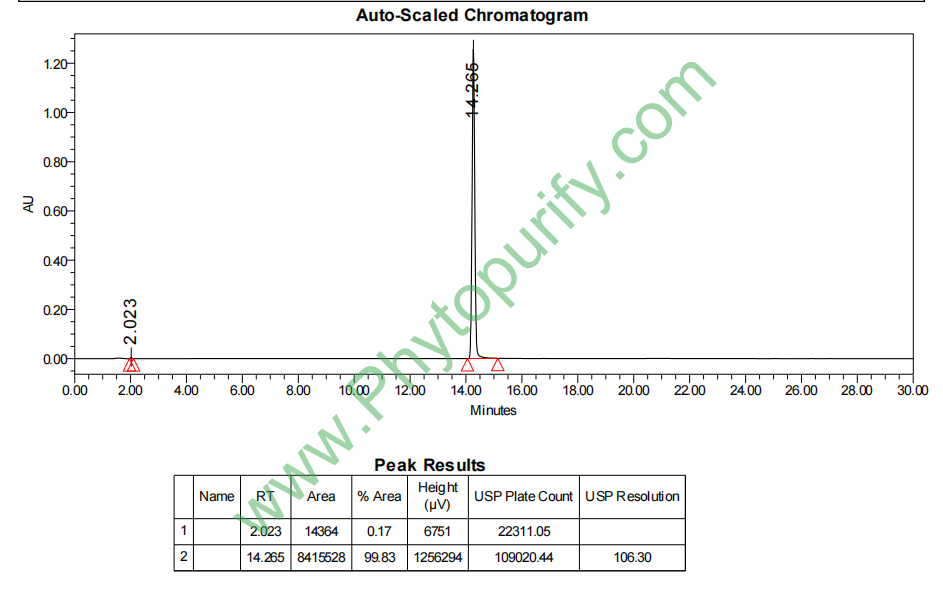
HPLC of Dehydroandrographolide
Storage conditions:Short-term storage at 2~8℃, long-term storage at -20 ~ -80℃
66.7600
2.5912
2.5912
.1196
3.2675
13.9647
High
80.8345
4.7277
No
Yes
No
No
Yes
No
0.0
No
Yes
Yes
Yes
Dehydroandrographolide (CAS number: 134418-28-3) is a traditional Chinese medicine called Chuanxinlian(Andrographis paniculata A diterpenoid lactone compound isolated from (Burm. f.) Nees, which is a derivative of the main active ingredient, paeoniflorin, in Houttuynia cordata. Chuanxinlian has a long history of application in traditional Asian medicine, often used to treat infections, inflammation, and febrile diseases. Modern pharmacological research has shown that dehydroandrographolide not only retains the core anti-inflammatory and antiviral activities of its parent compound, but also exhibits unique potential in combating influenza virus, becoming one of the hot molecules in the field of natural product drug development. In recent years, with the continuous threat of emerging respiratory infectious diseases worldwide, the development of efficient and low toxicity antiviral drugs has become particularly urgent. Dehydrated Chuanxinlian lactone intervenes in influenza virus infection and host immune response through multi-target and multi pathway mechanisms, providing a solid scientific basis for its clinical application. This article aims to provide a systematic review of the chemical properties, pharmacological activities, mechanisms of action, and pharmacological properties of dehydroandrographolide, and to explore its potential as a candidate drug for anti influenza treatment.
The molecular formula of dehydrated Chuanxinlian lactone is C20H28O4, with a molecular weight of 332.4400. Its chemical structure belongs to the semi cyclic terpenoid lactone type. Compared with andrographolide, it forms an additional double bond (Δ ^ 3,14) between the C-3 and C-14 positions, or exists in other dehydrated forms. This structural difference significantly affects its physicochemical properties and biological activity. The compound is a white or off white crystalline powder.
The parameters related to its medicinal properties show that the lipid water partition coefficient (LogP) of dehydrated andrographolide is 2.5912, indicating its moderate lipophilicity and favorable transmembrane transport. The topological polar surface area (TPSA) is 66.7600 Å ², indicating moderate polarity. The water solubility is relatively low, about 0.1196 mg/mL, which may be one of the challenges that need to be overcome in its oral absorption and formulation development. It is worth noting that its blood-brain barrier permeability is predicted to be "high", suggesting that it may have potential therapeutic value for viral infections or inflammations related to the central nervous system. In the preliminary safety evaluation, the hERG inhibition risk was "no", and the Ames test result was 0.0, indicating that its potential cardiac and genetic toxicity risks are low, providing a favorable safety starting point for its further development.
Dehydrated Chuanxinlian lactone mainly comes from the aboveground part of the plant Chuanxinlian in the family Menispermaceae. Chuanxinlian is widely distributed in China, India, Southeast Asia and other regions. Its whole plant is rich in various diterpenoid lactones, among which Chuanxinlian lactone has the highest content. Dehydrated Chuanxinlian lactone is often present as a companion component or transformation product.
The extraction method usually uses organic solvent extraction combined with chromatographic separation technology. The conventional process is as follows: Grind the dried whole plant of Houttuynia cordata, first extract it by hot reflux or ultrasound assisted extraction with ethanol or methanol, and concentrate it to obtain the total extract. Subsequently, gradient extraction was performed using solvents such as petroleum ether and ethyl acetate to enrich the diterpenoid lactone fraction. The further purification of dehydrated Chuanxinlian lactone is often carried out using silica gel column chromatography, with gradient elution using chloroform methanol or petroleum ether ethyl acetate systems in different ratios, and combined with thin-layer chromatography (TLC) or high-performance liquid chromatography (HPLC) for tracking and identification. The application of modern separation techniques such as high-speed counter current chromatography (HSCCC) and preparative HPLC has significantly improved the separation efficiency and purity of dehydrated andrographolide. In addition, using chemical or biological transformation methods to modify the structure of paeoniflorin as a precursor is also an important pathway to obtain dehydrated paeoniflorin.
Dehydrated Chuanxinlian lactone has a wide range of pharmacological activities, among which the most prominent is its antiviral activity, especially against influenza virus, while also having significant anti-inflammatory and immune regulatory effects.
1. Anti influenza virus activity:
Numerous in vitro and in vivo studies have confirmed that dehydroandrographolide has significant inhibitory effects on various influenza virus strains, including H1N1, H3N2, and influenza B virus. Its functional characteristics are not only reflected in directly inhibiting virus replication, but also in regulating the host cell's response to viral infection. In cell models, it can effectively reduce viral load and alleviate the cytopathic effect (CPE) caused by viruses. In a mouse influenza model, administration of dehydroandrographolide can significantly improve lung tissue pathological damage, reduce lung index (lung weight/body weight ratio), decrease lung virus titers, and improve the survival rate of infected animals.
2. Anti inflammatory and immune regulatory activity:
Inflammatory storm is an important cause of tissue damage and exacerbation caused by viral infections such as influenza. Dehydrated Chuanxinlian lactone can strongly inhibit the excessive production of pro-inflammatory factors (such as TNF - α, IL-6, IL-1 β) in macrophages and epithelial cells induced by lipopolysaccharides (LPS) or viruses. It can also regulate immune cell function, seeking a balance between excessive inflammation and immune suppression, which is crucial for controlling the pathological processes in the later stages of viral infection.
3. Other activities:
The study also suggests that dehydroandrographolide may have antioxidant and hepatoprotective activities, and these synergistic effects can help alleviate systemic oxidative stress and multi organ damage caused by viral infections.
The mechanism of action of dehydrated Chuanxinlian lactone against influenza is complex, involving direct intervention in the virus lifecycle and extensive regulation of host cell signaling pathways, reflecting the characteristic of multi-target synergistic effect.
1. Direct effects on viral proteins:
Research has shown that dehydroandrographolide may interact with key proteins of influenza virus such as neuraminidase (NA), hemagglutinin (HA), ion channel protein M2, and viral RNA polymerase complex components (such as PB2, PA, NP) through molecular docking and other means. This interaction may interfere with the virus's adsorption and invasion of host cells (HA), replication and transcription of the virus genome (polymerase complexes), assembly and release of virus particles (NA, M2), thereby inhibiting virus proliferation at multiple stages.
2. Regulating host cell signaling pathways and targets:
This is the core mechanism by which dehydroandrographolide exerts pharmacological effects, mainly by regulating the following key signaling molecules and pathways:
* Nuclear factor kappa B (NF - κ B) signaling pathway: NF - κ B is a pivotal transcription factor that regulates the expression of inflammatory factors. Dehydrated Chuanxinlian lactone can inhibit the activation of NFKB1 (p50) and its translocation to the nucleus, thereby downregulating the expression of pro-inflammatory cytokines such as TNF - α and IL-6 at the transcriptional level and reducing viral induced inflammatory damage.
* MAPK signaling pathway: Especially inhibiting the phosphorylation activation of c-Jun N-terminal kinase (MAPK8/JNK). The JNK pathway is involved in cellular stress, apoptosis, and inflammatory responses, and its inhibition helps alleviate virus induced cell damage and excessive inflammation.
* Nrf2/ARE antioxidant pathway: Dehydrated Chuanxinlian lactone can activate transcription factor NFE2L2 (Nrf2) and promote the expression of downstream antioxidant proteins such as heme oxygenase-1 (HO-1). This effect not only clears excess reactive oxygen species (ROS) generated during infection and reduces oxidative damage, but recent studies have also found that Nrf2 activation has extensive anti-inflammatory and antiviral effects, indirectly inhibiting virus replication.
* Interferon regulatory factor 3 (IRF3) pathway: IRF3 is a key transcription factor for type I interferon production. Dehydrated Chuanxinlian lactone may enhance the host's innate antiviral immune response by regulating the activation of IRF3 and promoting the production of interferon - β (IFN - β).
In summary, dehydroandrographolide directly acts on viral proteins and synergistically regulates multiple signaling pathways such as NF - κ B, MAPK (JNK), Nrf2, and IRF3 in host cells, constructing a multi-level antiviral defense network that can inhibit virus replication, regulate immune inflammatory responses, and protect host tissues.
Based on its physicochemical parameters and preliminary research, the pharmacological evaluation of dehydrated andrographolide presents both opportunities and challenges.
Advantage:
1. Good security foundation: There is no significant risk of hERG channel inhibition and genotoxicity signal (Ames test negative), which reduces concerns about cardiac safety and genotoxicity in clinical development.
2. High blood-brain barrier permeability: This characteristic has potential advantages for treating influenza virus strains that may cause neurological complications, such as certain neurotoxic influenza viruses.
3. Multi target effect: Reduce the risk of developing drug resistance due to virus single target mutations.
Challenge:
1. Poor water solubility: The lower water solubility (0.1196 mg/mL) may limit its oral bioavailability and affect its absorption in the gastrointestinal tract.
2. Pharmacokinetic properties to be optimized: The existing literature on the pharmacokinetics of its system is relatively limited. Usually, oral absorption of such diterpenoid lactones may be moderate, and they undergo extensive metabolism in the body, such as glucuronidation, sulfation, and other II binding reactions. The specific characteristics of its distribution, metabolism, and excretion need to be elucidated through in-depth in vitro and in vivo ADME studies.
Improvement strategy:
To improve its medicinal properties, the following strategies can be adopted:
* Formulation technology: By using formulation methods such as solid dispersion, cyclodextrin inclusion, nanocrystals, liposomes, etc., the solubility and dissolution rate are significantly improved, thereby improving oral bioavailability.
* Structural modification: By modifying its molecules through chemical synthesis, hydrophilic groups can be introduced or metabolic stability can be improved while retaining the pharmacophore, in order to obtain derivatives or prodrugs with better pharmacokinetic properties.
* In depth PK/PD research: The system conducts pharmacokinetic (PK) and pharmacodynamic (PD) correlation studies in animals, clarifying their in vivo processes, effective exposure levels, and duration of action, providing a basis for dosage form design and administration plan formulation.
Dehydrated Chuanxinlian lactone, as an active molecule derived from traditional Chinese medicine, has shown broad clinical application prospects in the field of anti influenza treatment.
1. Therapeutic application:
* Antiflu drugs: It is expected to be developed into a new type of anti influenza chemical drug or traditional Chinese medicine. Especially suitable for the treatment of existing NA inhibitors (such as oseltamivir) resistant or severe influenza patients, its multi-target, anti-inflammatory and antiviral characteristics are in line with the modern concept of influenza treatment.
* Combination therapy: It can be used in combination with standard antiviral drugs such as oseltamivir and paramivir to exert synergistic effects, which may reduce the occurrence of drug resistance and more effectively control inflammatory reactions.
* Other respiratory viral infections: Its broad-spectrum antiviral and anti-inflammatory mechanisms suggest that it may also have certain therapeutic effects on other respiratory viruses (such as respiratory syncytial virus, coronavirus, etc.), which is worth further exploration.
2. Prevention and healthcare applications:
Given its immunomodulatory effect, it may be developed as a preventive healthcare product for high-risk populations during the influenza season, such as the elderly and children, to enhance the body's ability to resist infections.
Future research directions and challenges:
* Deep analysis of the mechanism of action: It is necessary to use chemical biology methods such as photoaffinity labeling and proteomics to accurately identify the host protein targets it directly acts on, and to draw a clearer molecular action network diagram.
* Preclinical and clinical studies: Complete the GLP toxicology evaluation of the system and promote standardized Phase I, II, and III clinical trials to confirm its safety, efficacy, and optimal dosing regimen in humans.
* Intellectual Property and Industrialization: Strengthen the patent layout of its pharmaceutical preparations, derivatives, and medical applications, promote industry university research cooperation, and solve the process difficulties from laboratory to large-scale production.
* Inheritance and Innovation of Traditional Chinese Medicine Theory: In depth research on the synergistic effects of dehydrated Chuanxinlian lactone and other components of Chuanxinlian (such as Chuanxinlian lactone and XinChuanxinlian lactone), elucidating the modern scientific connotation of the "clearing heat and detoxifying" effect of Chuanxinlian, and promoting the modernization and internationalization of traditional Chinese medicine.
Dehydrated Chuanxinlian lactone is a diterpenoid lactone compound with important research value in Chuanxinlian. Its synergistic mechanism of directly inhibiting key proteins of influenza virus and regulating host signaling networks such as NF - κ B, MAPK, Nrf2, and IRF3 through multiple pathways has laid the molecular foundation for it as a multi-target anti influenza candidate drug. Despite facing challenges such as water solubility in drug development, with its excellent preliminary safety and unique blood-brain barrier permeability, it is expected to overcome these obstacles through in-depth research in modern pharmacology, medicinal chemistry, and pharmacokinetics. In the future, with further clarification of its mechanism of action and steady progress in clinical translation, dehydrated andrographolide is expected to stand out from the treasure trove of traditional Chinese medicine and develop into a new therapeutic drug for respiratory virus infections such as influenza, contributing Chinese wisdom and solutions derived from natural products to global public health security.
