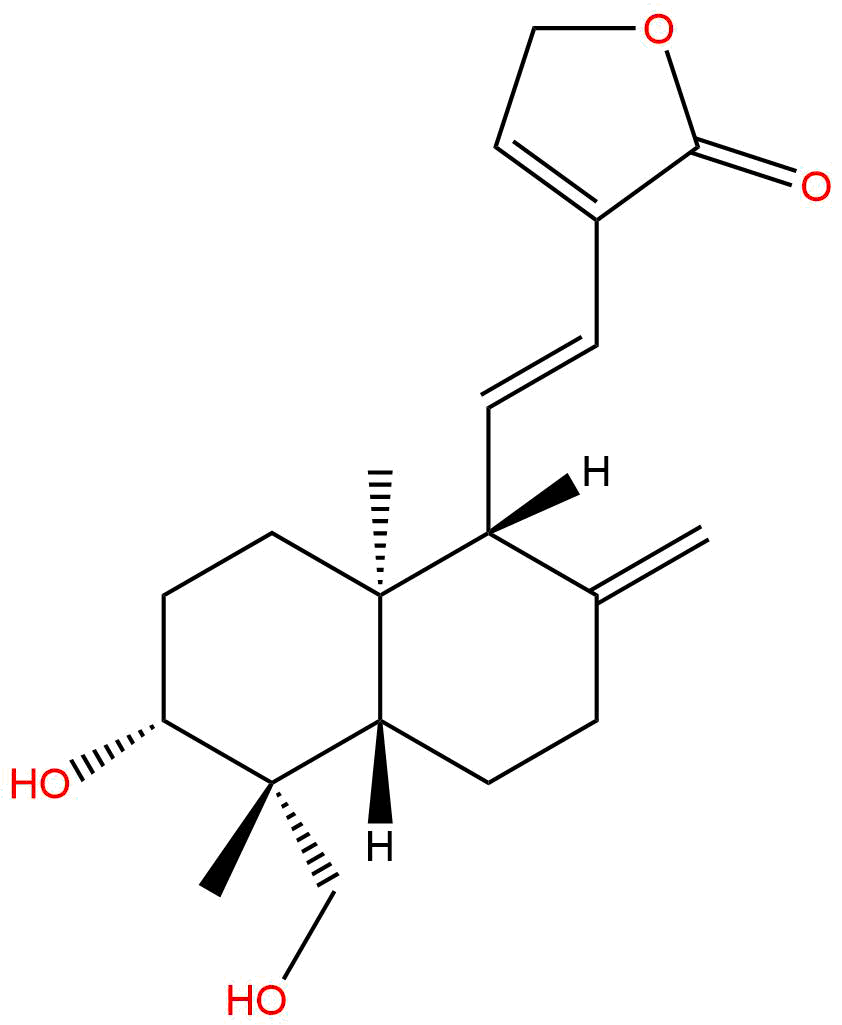


Product name: 14-Deoxy-11,12-didehydroandrographolide
Synonym name:
Catalogue No.: SBP02104
Cas No.: 42895-58-9
Formula: C20H28O4
Mol Weight: 332.44
Botanical Source:
Physical Description:
Type of Compound: Diterpenoids
Purity: 95%~99%
Analysis Method: HPLC-DAD or/and HPLC-ELSD
Identification Method: Mass, NMR
Packing: Brown vial or HDPE plastic bottle
The product could be supplied from milligrams to grams
Inquire for bulk scale.
For Reference Standard and R&D, Not for Human Use Directly.
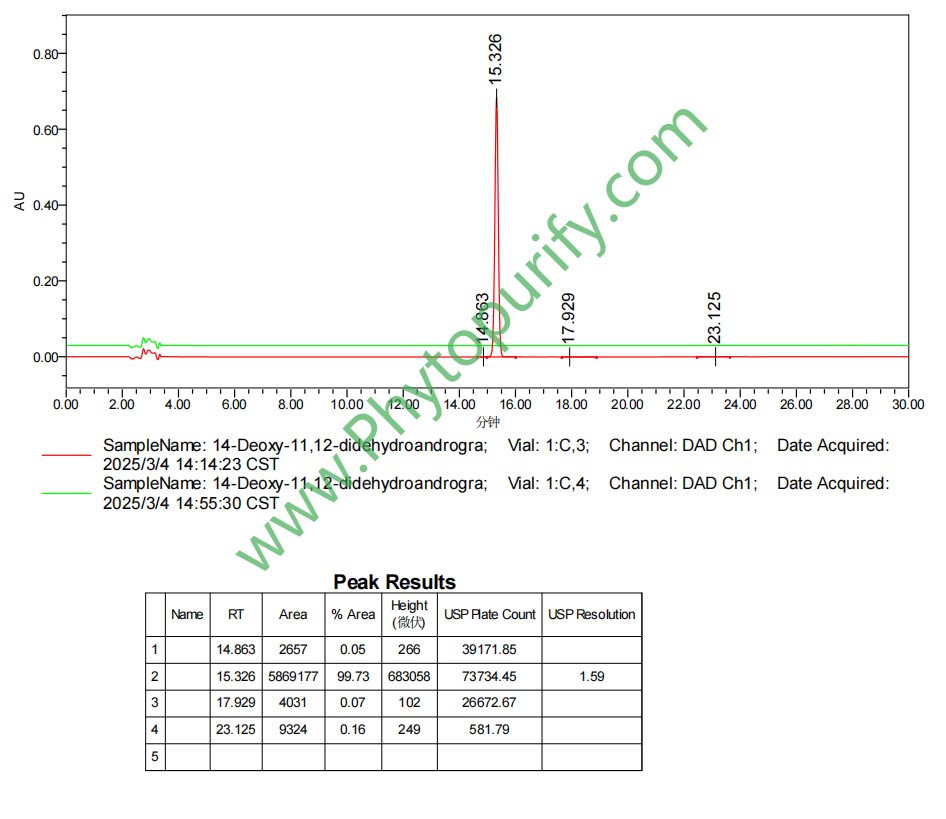
HPLC of 14-Deoxy-11,12-didehydroandrographolide
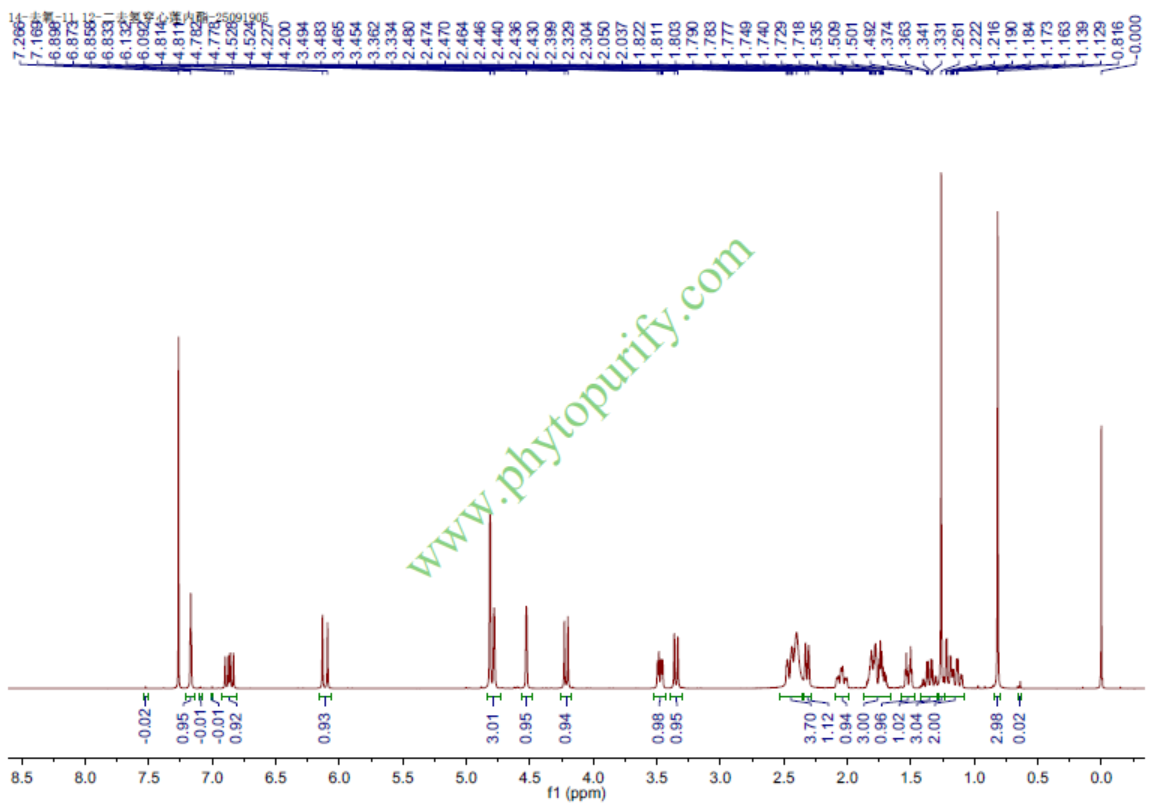
HNMR of 14-Deoxy-11,12-didehydroandrographolide
Storage conditions:Short-term storage at 2~8℃, long-term storage at -20 ~ -80℃
66.7600
2.4164
2.4164
.1019
3.4413
20.8333
High
77.2657
4.6810
No
Yes
No
No
Yes
No
0.0
No
Yes
Yes
Yes
14-Deoxy-11,12-didehydroandrographolide (CAS number: 42895-58-9) is a traditional medicinal plant derived from the heart of lotus(Andrographis paniculata)Natural diterpenoid lactones isolated from the middle. As a structural analogue of Andrographolide, a signature active ingredient in Houttuynia cordata, this compound has specific modifications in its chemical structure, namely the absence of an oxygen atom at position 14 and the formation of double bonds at positions 11 and 12. This structural change not only affects its physical and chemical properties, but also endows it with a unique spectrum of biological activity.
In recent years, with the deepening of research on natural products, Chuanxinlian and its active ingredients have received continuous attention from the international pharmaceutical community due to their extensive pharmacological effects, especially their significant anti-inflammatory activity. 14-Deoxy-11,12-didehydroandrographolide, as a derivative of andrographolide, has increasingly highlighted its research value. Existing studies have shown that this compound can effectively inhibit the activation of the nuclear factor kappa B (NF - κ B) signaling pathway, which is one of the core pathways regulating inflammatory response, immune response, and cell survival. Based on this, the compound shows potential application prospects in anti-inflammatory, immune regulation, and related disease intervention. This article will provide a systematic professional popularization of this natural product from the aspects of its chemical structure, plant origin, pharmacological mechanism, medicinal evaluation, and research prospects.
The molecular formula of 14-deoxy-11,12-didehydroandrographolide is C20H28O4, with a molecular weight of 332.4400 g/mol. Its chemical structure belongs to the diterpenoid lactone of the semi diurnal floral alkane type, which is a derivative of paeoniflorin. Represented by its SMILES (C=C1CC [C @ @ H] 2)C@(CO)C@H CC [C @ @] 2 (C) [C @ @ H] 1/C=C/C1=CCOC1=O) can be characterized by its core skeleton: a decahydronaphthalene ring system is connected to an α, β - unsaturated γ - lactone ring and has multiple chiral centers (represented by the @ @ @ symbol), which are crucial for its biological activity. Compared with the parent compound andrographolide, its structural difference lies in the deoxygenation at position 14 and the formation of double bonds (dihydro) at positions C11-C12. These modifications may affect the polarity, conformation, and interaction mode with the target protein of the molecule.
From the analysis of drug forming parameters, the physicochemical properties of this compound exhibit certain drug like characteristics. The calculated lipid water partition coefficient (LogP/LogD) is 2.4164, indicating that the molecule has moderate lipophilicity, which is beneficial for transmembrane transport and absorption. The topologically polar surface area (TPSA) is 66.76 Å ², which is relatively low and usually favorable for cell membrane permeation. The predicted value of water solubility is 0.1019 (unit may be mg/mL or log mol/L, depending on the context, usually indicating low solubility), which is consistent with the characteristics of many natural terpenoids. The predicted permeability value of Caco-2 cells is as high as 20.8333 (unit may be × 10 ⁻⁶ cm/s), indicating its excellent intestinal absorption potential. The predicted permeability of the blood-brain barrier (BBB) is "high", indicating that the compound may enter the central nervous system, which is a positive signal for the development of anti-inflammatory drugs targeting the central nervous system, such as neuroinflammatory related diseases. The predicted plasma protein binding rate (PPB) is 77.27%, which is a moderately high level and may affect its free drug concentration and efficacy.
The plant source of 14-deoxy-11,12-didehydroandrographolide is single and clear, that is, the Houttuynia cordata plant in the Euphorbiaceae family(Andrographis paniculata (Burm. f.) Nees)。 Chuanxinlian is widely distributed in South Asia and Southeast Asia, with a long history of medicinal use in countries such as China, India, and Thailand. It is widely used in traditional Chinese medicine, Ayurvedic medicine, and Thai traditional medicine.
In traditional Chinese medicine theory, Chuanxinlian (also known as Yixianxi or Lanhelian) has a cold nature and bitter taste. It returns to the heart, lungs, large intestine, and bladder meridians and has the effects of clearing heat, detoxifying, cooling blood, and reducing swelling. Clinically, it is commonly used to treat conditions such as external wind and heat, early onset of warm diseases, sore throat, mouth and tongue sores, diarrhea and dysentery, heat induced pain, abscesses and ulcers, and venomous snake bites. In Ayurvedic medicine in India, the lotus root is known as "Kalmegh" or "King of Bitters" and is used to treat liver diseases, digestive system disorders, fever, and infections. Behind these traditional applications, a large part is attributed to the anti-inflammatory, antiviral, antibacterial, hepatoprotective, and immunomodulatory effects of a series of diterpenoid lactones contained in Chuanxinlian, including Chuanxinlian lactone, neoChuanxinlian lactone, deoxyChuanxinlian lactone and its derivatives (such as 14-deoxy-11,12-didehydroChuanxinlian lactone described in this article).
Modern plant chemistry research has isolated and identified dozens of diterpenoid lactones from Houttuynia cordata, among which 14-deoxy-11,12-didehydro Houttuynia cordata lactone is one of the important active ingredients. It usually coexists with the main components such as paeoniflorin in the aboveground parts of plants, with relatively low content. However, its unique structural modification distinguishes its biological activity spectrum from paeoniflorin, making it an important molecular probe for studying the multi effect pharmacological mechanism of paeoniflorin.
The existing research data clearly indicates that the core pharmacological activity of 14-deoxy-11,12-didehydroandrographolide is anti-inflammatory Function. Its mechanism of action is not through a single target, but through the intervention of multiple targets and pathways in the complex inflammatory network. According to database information, the compound is associated with five key targets: TNF (tumor necrosis factor), PTGS2 (prostaglandin endoperoxide synthase 2, COX-2), NFKB1 (nuclear factor kappa B p105 subunit, NF - κ B1), IL6 (interleukin-6), and IL1B (interleukin-1 β). These targets are all core regulatory molecules in the inflammatory response.
Core mechanism: Inhibition of NF - κ B signaling pathway
NF - κ B is a key transcription factor that regulates inflammation, immunity, cell proliferation, and apoptosis. In the resting state, NF - κ B binds to its inhibitory protein I κ B and exists in the cytoplasm. When cells are stimulated by pro-inflammatory factors such as TNF - α, IL-1 β, or pathogen related molecular patterns, I κ B is phosphorylated and degraded, and NF - κ B (usually a p50/p65 heterodimer) is released and transferred into the nucleus, initiating the transcription of downstream pro-inflammatory genes such as TNF, IL6, IL1B, PTGS2, etc. 14-Deoxy-11,12-didehydroandrographolide has been described as "inhibiting NF - κ B activation," meaning it may block this core signaling pathway by intervening in phosphorylation/degradation of I κ B, nuclear translocation of NF - κ B, or binding to DNA.
The impact on downstream effector molecules
1. Inhibit pro-inflammatory cytokines TNF - α and IL-1 β are "alarm hormones" that initiate and amplify inflammatory responses. IL-6 is involved in acute phase response and immune cell differentiation. This compound can effectively reduce the production of these cytokines by inhibiting NF - κ B upstream, thereby alleviating the inflammatory cascade reaction.
2. Inhibition of inducible cyclooxygenase-2 (COX-2)The COX-2 encoded by the PTGS2 gene is a key enzyme that catalyzes the production of prostaglandins (PGs, especially PGE2) from arachidonic acid. It is strongly induced to express at the site of inflammation, leading to pain, fever, and vasodilation. NF - κ B is one of the important transcription factors that regulate COX-2 expression. Therefore, inhibiting the NF - κ B pathway can downregulate COX-2 expression and reduce the synthesis of inflammatory prostaglandins, providing another mechanism for the action of nonsteroidal anti-inflammatory drugs (NSAIDs) (different from directly inhibiting COX enzyme activity).
Function characteristics and significance
This multi-target mode of action enables 14-deoxy-11,12-didehydroandrographolide to suppress excessive inflammatory reactions from multiple levels. Compared with single target inhibitors, multi-target natural products may have more advantages in dealing with complex diseases such as chronic inflammation and autoimmune diseases, as they can regulate the entire inflammatory network and reduce the activation of compensatory pathways. Its anti-inflammatory effect provides a theoretical basis for its use in the treatment of diseases closely related to inflammation, such as rheumatoid arthritis, inflammatory bowel disease, asthma, dermatitis, atherosclerosis and neurodegenerative diseases such as neuritis.
Based on the provided pharmacological parameters, we can conduct a preliminary evaluation of the development potential of 14-deoxy-11,12-didehydroandrographolide. Firstly, utilizing the classic Lipinski's Five Rules Measure based on the "Five Principles of Similar Drugs":
1. Molecular weight (MW): 332.44<500 Da, consistent.
2. LogP:2.4164 < 5, Compliant.
3. Number of hydrogen bond donors (HBD): From the structural formula, a carbonyl oxygen containing one hydroxyl group (OH) and one lactone ring? In fact, the lactone carbonyl group is not a hydrogen bond donor. Therefore, HBD is about 1 (hydroxyl group), much less than 5, which is consistent.
4. Number of hydrogen bond acceptors (HBA): There are 4 oxygen atoms in the molecule (1 hydroxyl oxygen, 1 lactone carbonyl oxygen, 1 lactone cyclic ether oxygen, 1 exo cyclic ether oxygen? Accurate calculation is required), usually HBA ≤ 10, which is consistent.
This compound fully complies with Lipinski's five rules, indicating its good oral absorption potential.
Further analysis of other key parameters:
- Absorption and distribution The extremely high Caco-2 permeability prediction value and high BBB permeability prediction strongly support its good intestinal absorption capacity and ability to penetrate the blood-brain barrier, which is a major benefit for oral administration and central nervous system targeting.
- Metabolism and toxicity This is an aspect that requires careful attention. The AMES test predicted a negative result (0.0), indicating no direct genetic toxicity. HERG inhibition is predicted as' no ', reducing the risk of causing QT interval prolongation in the heart. However, multiple toxicity warnings are worth noting: "Chromosomal aberration" is predicted to be "present", indicating a possible genetic toxicity risk that needs to be verified through experiments; The prediction of 'skin sensitization' is' yes', which may limit the development of its topical preparations; The prediction of elevated serum markers (GGT, AST, ALT) is "yes", indicating a potential risk of liver cell damage or bile stasis, which is consistent with some reported cases of liver toxicity in Chuanxinlian preparations and needs to be monitored in development.
- Other The plasma protein binding rate is moderately high, which may affect the strength and duration of drug efficacy. Low water solubility may require the use of solubilization strategies in formulation development, such as making cyclodextrin inclusion complexes, nanocrystals, prodrugs, etc.
Comprehensive Assessment: 14-Deoxy-11,12-didehydroandrographolide Exhibiting excellent drug like properties in terms of absorption and distribution It fully meets the basic structural requirements of oral medications. Its multi-target anti-inflammatory mechanism is also quite attractive. However,Potential genetic toxicity (chromosomal aberration) and liver toxicity signals are the main obstacles to its drug conversion Future research must confirm and quantify these risks through standardized in vitro and in vivo toxicology experiments, and explore the relationship between toxicity, structure, and dose. If toxicity issues can be addressed through structural optimization (such as synthesizing derivatives with lower toxicity), controlling the therapeutic window, or improving the dosing regimen, this compound remains a promising lead compound.
At present, there are relatively few independent studies on 14-deoxy-11,12-didehydroandrographolide compared to its parent compound, andrographolide. Most studies use it as one of the many components in andrographolide extracts for activity screening or content determination. The existing data has clarified its NF - κ B inhibitory activity and anti-inflammatory potential, but the specific molecular details of its action (such as which protein directly interacts with in the NF - κ B pathway), structure-activity relationship, in vivo pharmacodynamics, pharmacokinetics, and systemic toxicology research are still to be further explored.
Future research directions may focus on the following areas:
1. Deepening the mechanism of action Using chemical biology methods such as molecular docking, surface plasmon resonance, affinity fishing, etc., to identify its direct target and elucidate the exact mechanism of its inhibition of the NF - κ B pathway.
2. Structure Activity Relationship (SAR) Study Using it as a lead compound, its structure can be modified through semi synthetic or total synthetic methods (such as introducing different functional groups, saturating specific double bonds, modifying lactone rings, etc.) to systematically evaluate the anti-inflammatory activity and toxicity of different derivatives, aiming to discover optimized molecules with stronger activity and lower toxicity.
3. Preclinical development On the basis of confirming its in vitro activity, conduct standardized animal model experiments to evaluate its in vivo efficacy, pharmacokinetic characteristics (absorption, distribution, metabolism, excretion), and subacute/chronic toxicity in disease models such as arthritis and colitis, laying the foundation for possible clinical research.
4. Pharmaceutical research To address the issue of poor water solubility, new drug delivery systems such as nano formulations, liposomes, microemulsions, etc. have been developed to improve their bioavailability and potentially reduce systemic toxicity through targeted delivery.
5. Exploration of combination therapy Studying its synergistic effect with existing anti-inflammatory drugs may help reduce their respective dosages, minimize side effects, or be used to overcome drug resistance.
Application Prospects If its toxicity problem can be effectively controlled, 14-deoxy-11,12-didehydroandrographolide and its optimized derivatives are expected to be developed into new types Natural source anti-inflammatory drugs Its application may not be limited to general inflammatory diseases, given its good BBB penetration, it can be used in Neuroinflammatory related diseases It may have unique value in the treatment of diseases such as Alzheimer's disease, Parkinson's disease, multiple sclerosis, and depression. In addition, due to the important role played by the NF - κ B pathway in the occurrence and development of tumors, its potential in tumor prevention or adjuvant therapy is also worth exploring.
In summary, 14-deoxy-11,12-didehydroandrographolide, as a unique active ingredient in Houttuynia cordata, provides us with a valuable template for studying natural anti-inflammatory substances. Despite the challenges ahead, especially in terms of safety considerations, through a comprehensive strategy of modern medicinal chemistry, pharmacology, and formulation, it is possible for it to transform from a traditional plant component into a modern drug candidate with clear mechanisms and clinical application value, continuing to contribute to human health.
