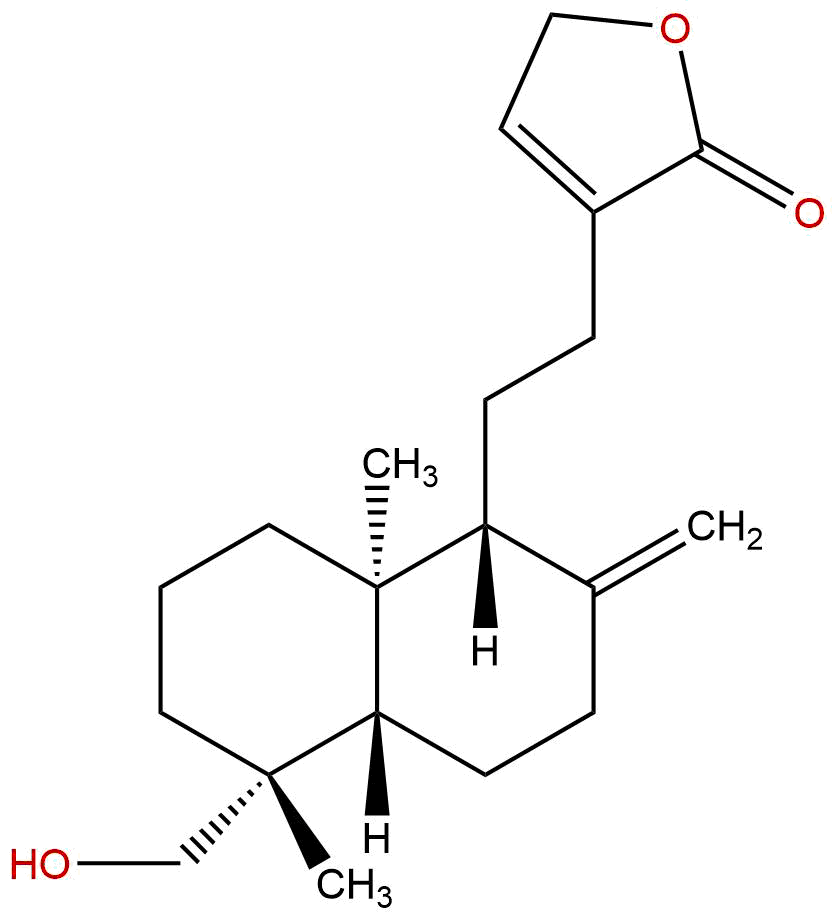


Product name: Andrograpanin
Synonym name: 3,14-Dideoxyandrographolide
Catalogue No.: BP4783
Cas No.: 82209-74-3
Formula: C20H30O3
Mol Weight: 318.457
Botanical Source:
Type of Compound: Diterpenoids
Purity: 95%~99%
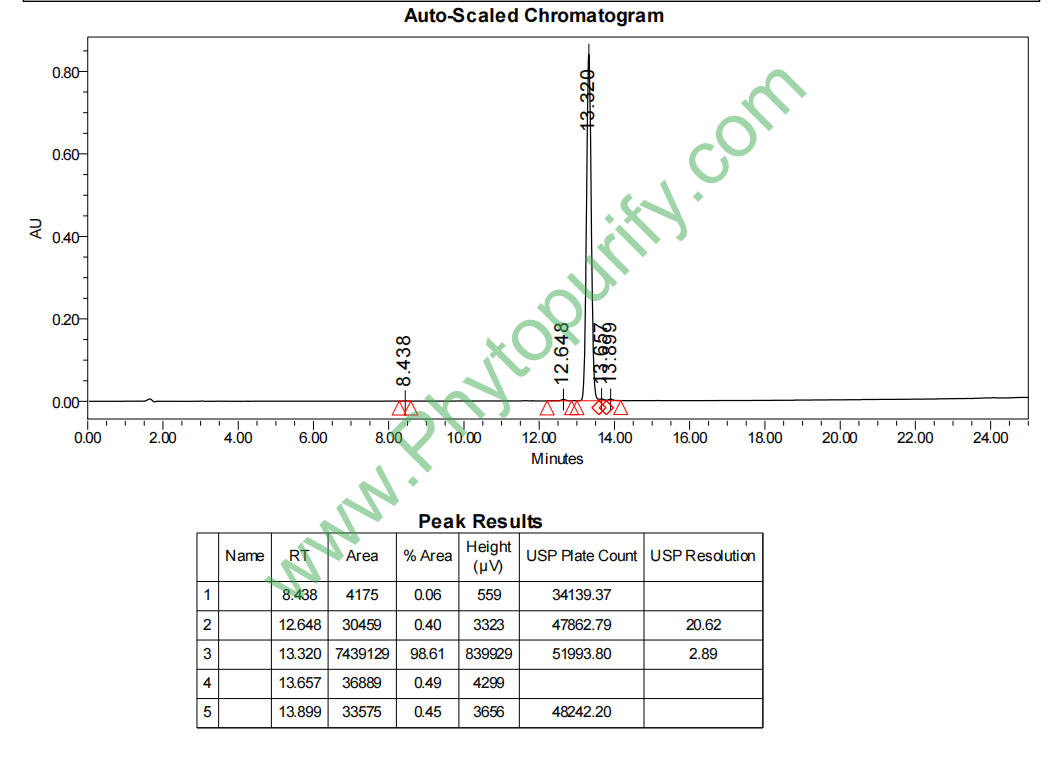
Analysis Method: HPLC-DAD or/and HPLC-ELSD
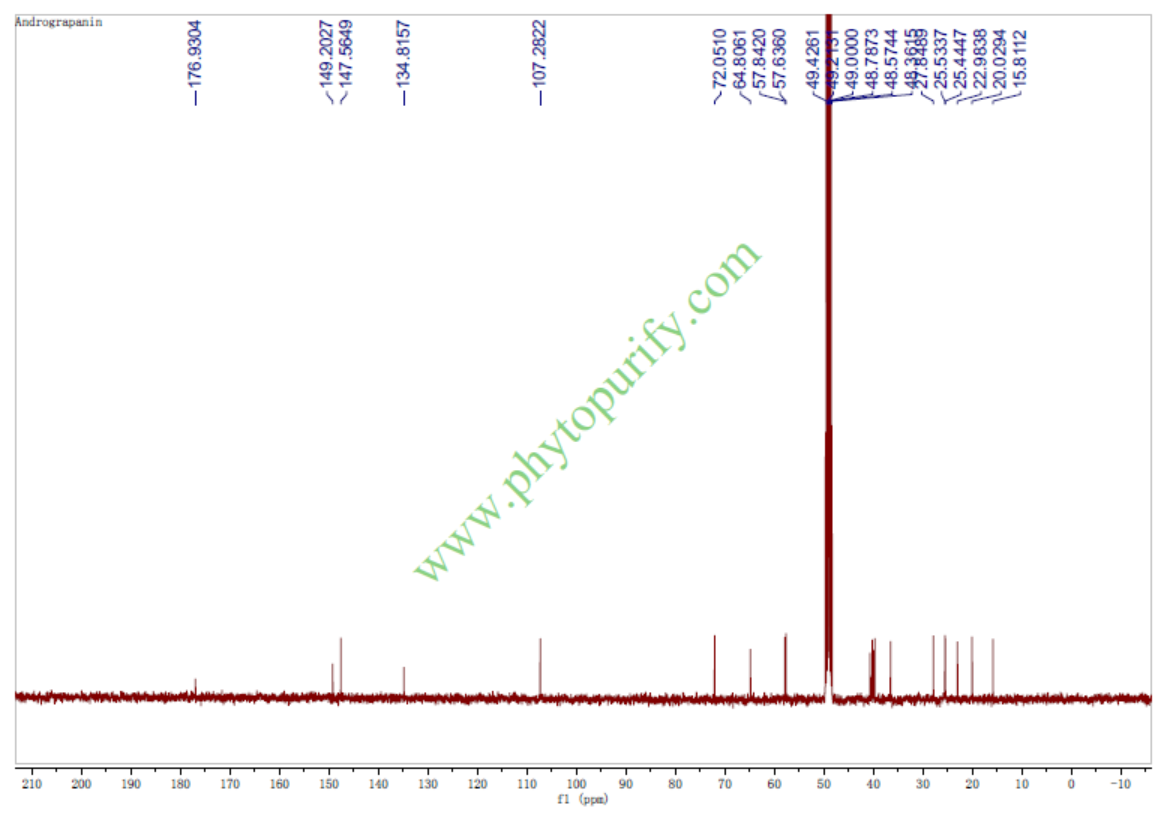
Identification Method: Mass, NMR
Packing: Brown vial or HDPE plastic bottle
Storage: Store in a well closed container, protected from air and light. Put into refrigerate or freeze for long term storage.
Whenever possible, you should prepare and use solutions on the same day. However, if you need to make up stock solutions in advance, we recommend that you store the solution as aliquots in tightly sealed vials at -20℃. Generally, these will be useable for up to two weeks.
The product could be supplied from milligrams to grams
Inquire for bulk scale.
For Reference Standard and R&D, Not for Human Use Directly.
HPLC of Andrograpanin
NMR of Andrograpanin
Storage conditions:Short-term storage at 2~8℃, long-term storage at -20 ~ -80℃
46.5300
3.8755
3.8755
.0214
5.3875
13.7180
High
87.6789
4.4226
No
No
No
No
Yes
No
0.0
No
No
No
No
Natural products, as an important treasure trove for drug discovery, have always played a crucial role in the long history of human fight against diseases. Heart piercing lotus(Andrographis paniculata (Burm. f.) Nees, as a traditional medicinal plant, is widely used in the medical systems of many Asian countries, especially in the treatment of fever, infections, and inflammatory diseases. Its main bioactive components are a series of semi branched diterpenoid lactones with an α - alkyl - γ - butyrolactone skeleton, among which Andrographolide has been extensively studied. However, the complex chemical system of Chuanxinlian also contains other compounds with unique activities. Androgramanin, also known as neoandrographolide, is a metabolic derivative or homolog of andrographolide. In recent years, it has gradually attracted attention from the pharmacological community due to its significant anti-inflammatory and anti infective activities. Its CAS number is 82209-74-3, and its molecular structure differs from that of Chuanxinlian lactone, which directly leads to its unique biological activity and target of action. In particular, modern pharmacological research has revealed the enormous potential of new glycosides from Hedyotis diffusa in the field of antiviral therapy. Its effects involve key links in the life cycle of various viruses, including herpes virus and human immunodeficiency virus (HIV), suggesting that it may become a multi-target antiviral lead compound. This article aims to provide a systematic review of the chemical properties, plant sources, pharmacological activities, molecular mechanisms of action, pharmacological characteristics, and clinical application prospects of the new glycoside of Chuanxinlian, in order to provide comprehensive scientific references for the in-depth research and development of this compound.
Chuanxinlian Xin Yuan is a semi diurnal terpenoid lactone compound. Its basic skeleton is composed of three hexagonal rings (decahydronaphthalene structure) and one pentagonal lactone ring (α, β - unsaturated γ - butyrolactone) fused together. Compared with Chuanxinlian lactone, the new glycoside of Chuanxinlian may have different hydroxyl substitution, epoxidation, or double bond positions at positions C-3, C-14, or C-19. These subtle structural modifications are the reason why it is named "new glycoside" and deeply affect its physicochemical properties and biological activity.
According to the given pharmacological parameters, the molecular weight of the new glycoside of Chuanxinlian is 318.4570 g/mol, which belongs to the category of small molecule compounds. Its lipid water partition coefficient (LogP) is 3.8755, indicating that the compound has moderate lipophilicity, which is beneficial for its penetration of cell membranes, but may also affect its water solubility and in vivo distribution. The calculated total polar surface area (TPSA) is 46.5300 Å ², which is relatively low and further confirms its good membrane permeability. The water solubility parameter is 0.0214 (usually measured in mg/mL or mol/L, indicating low solubility), which is consistent with the higher LogP value, suggesting that solubilization strategies may need to be considered in formulation development. It is worth noting that its blood-brain barrier (BBB) penetration is predicted to be "high", which means that the new glycoside of Chuanxinlian has the potential to act on virus or inflammatory targets related to the central nervous system, such as HIV related neurocognitive disorders or herpesvirus encephalitis, which is an extremely valuable characteristic. In addition, hERG inhibition was predicted as' no ', preliminarily ruling out the potential risk of causing serious side effects such as prolonged QT interval in the heart. The Ames test predicted a value of 0.0, indicating that it may not have direct genetic toxicity, providing a positive signal for preclinical safety assessment. These physicochemical and pharmacological parameters together outline a potential lead compound profile: good membrane permeability and central nervous system accessibility, as well as preliminary good safety predictions.
The main source of the new glycoside of Chuanxinlian comes from the plant Chuanxinlian in the family Menispermaceae(Andrographis paniculata)The above ground parts, especially the leaves. In plants, it may exist in trace amounts in the form of aglycones, or more commonly as a aglycone part of certain paeoniflorin glycosides, which are hydrolyzed during extraction or in vivo metabolism. Its content is usually much lower than that of andrographolide, which increases the difficulty of separation and purification.
The extraction of new glycosides from Houttuynia cordata usually follows the conventional process of natural product chemistry. Firstly, solvent extraction method is adopted, commonly using methanol, ethanol or aqueous ethanol to extract or reflux the dried whole plant or leaves of Houttuynia cordata, in order to maximize the extraction of polar components including diterpenoid lactones. After vacuum concentration, the crude extract was subjected to liquid-liquid extraction (such as extraction with petroleum ether, ethyl acetate, and n-butanol in sequence) for preliminary fractionation. Due to its equal polarity, the new glycosides of Houttuynia cordata were mainly enriched in the ethyl acetate extraction site. Subsequently, multiple chromatographic techniques are required for precise separation. Silica gel column chromatography is commonly used, with different ratios of chloroform methanol or petroleum ether ethyl acetate gradient elution. Thin layer chromatography (TLC) or high-performance liquid chromatography (HPLC) are used to track target components. Further purification may involve reverse phase silica gel column chromatography (such as C18 packing with methanol water as the mobile phase), preparative thin layer chromatography (PTLC), or high performance liquid chromatography (HPLC). The final monomer compound needs to be structurally confirmed by nuclear magnetic resonance (NMR, including 1H-NMR, 13C-NMR, 2D-NMR), mass spectrometry (MS), and comparison with literature data. In recent years, separation techniques such as high-speed countercurrent chromatography (HSCCC) that do not require solid carriers have also been attempted for the efficient preparation and separation of diterpenoid compounds from Houttuynia cordata, which is expected to improve the yield of new glycosides from Houttuynia cordata. Biotransformation or chemical synthesis are also potential pathways for obtaining this compound, such as selectively modifying the structure of paeoniflorin to synthesize new paeoniflorin, in order to meet the needs of in-depth research and development.
Although the pharmacological activity research of the new glycoside of Chuanxinlian is not as extensive as that of Chuanxinlian lactone, existing evidence has revealed its outstanding potential in anti-inflammatory and anti infective, especially antiviral aspects.
1. Anti inflammatory activity:
Research has shown that the new glycoside of Chuanxinlian exhibits significant effects in various acute and chronic inflammation models. In vitro, it can effectively inhibit the excessive production of nitric oxide (NO), prostaglandin E2 (PGE2), and pro-inflammatory cytokines (such as tumor necrosis factor - α (TNF - α), interleukin-6 (IL-6), IL-1 β) in macrophages (such as RAW264.7 cells) induced by lipopolysaccharide (LPS). In animal models, the new glycoside of Chuanxinlian has a clear inhibitory effect on acute inflammation such as xylene induced ear swelling in mice and carrageenan induced paw swelling in rats. Its anti-inflammatory strength may be comparable to or have different characteristics from that of paeoniflorin, and its mechanism of action involves the regulation of key inflammatory signaling pathways such as nuclear factor kappa B (NF - κ B) and mitogen activated protein kinases (MAPKs).
2. Antiviral activity (core activity):
This is the most distinctive pharmacological activity field of the new glycoside of Chuanxinlian. Research has shown that it exhibits inhibitory activity against various DNA and RNA viruses.
* Antiherpesvirus: It has inhibitory effects on herpes simplex virus type 1 (HSV-1) and type 2 (HSV-2). Its function may not be limited to a single link, but rather to multi-target interference with the virus lifecycle.
* Anti human immunodeficiency virus (HIV): Preliminary research suggests that the new glycosides of Chuanxinlian may inhibit HIV replication by interfering with the fusion of the virus and host cells or the activity of viral enzymes. Its predicted targets include key co receptors CCR5 and CXCR4 for HIV entry into host cells, as well as HIV-1 protease (HIV1-PR) and integrase (INT) necessary for virus replication.
* Function characteristics: Unlike many single target antiviral drugs that directly act on viral enzymes, the multi-target nature of the new glycoside in Chuanxinlian (see below) may make it more difficult to induce viral resistance and may be effective against multiple viruses, demonstrating broad-spectrum antiviral potential.
3. Other activities:
Some studies have also reported the activity of new glycosides from Chuanxinlian in liver protection, antioxidant and other aspects, which may be closely related to its anti-inflammatory effects. For example, in a chemical liver injury model, it can reduce serum transaminase levels and alleviate pathological damage to liver tissue.
The pharmacological effects, especially antiviral activity, of the new glycoside of Chuanxinlian are based on its interactions with multiple molecular targets. According to the provided target information, its mechanism of action can be summarized as follows:
1. Targeting the direct target of the virus:
* Viral enzyme inhibition:
* HIV-1 protease (HIV1-PR) and integrase (INT): As key enzymes in HIV replication, inhibiting them can effectively block virus maturation and genome integration into host DNA. The new glycoside of Chuanxinlian may bind to the active sites of these enzymes through molecular docking, thereby inhibiting their function.
* Herpesvirus enzyme: Including thymidine kinase (TK), DNA polymerase helper protein (UL42), DNA polymerase catalytic subunit (UL54), and immediate early regulatory protein (ICP27). These proteins are crucial for the nucleic acid metabolism, DNA replication, and gene expression regulation of herpes virus. Interfering with these targets can prevent the replication of the viral genome and the synthesis of viral proteins.
* Virus entry inhibition:
* HIV co receptors (CCR5/CXCR4): After HIV binds to host cell CD4 molecules through its envelope protein gp120, it needs to further bind to CCR5 or CXCR4 co receptors to mediate membrane fusion. The new glycoside of Chuanxinlian may act as an antagonist or allosteric regulator of these chemokine receptors, blocking virus entry.
* Herpesvirus envelope glycoprotein D (gD): GD is a key glycoprotein that binds HSV to host cell receptors such as nectin-1 and HVEM. Interfering with the function of gD can effectively prevent virus adsorption and invasion.
2. Targeting host immune and inflammatory targets:
* Myeloperoxidase (MPO): MPO is a key enzyme released by neutrophils at the site of inflammation, producing the strong oxidant hypochlorous acid, which participates in killing pathogens but also causes tissue damage. Inhibiting MPO activity is an important strategy for controlling excessive inflammation and tissue damage. The anti-inflammatory effect of Xinzhiyuan from Chuanxinlian may be partially attributed to its inhibition of MPO.
* NF - κ B and MAPK pathway: As mentioned earlier, the new glycoside of Chuanxinlian can inhibit the activation of these core inflammatory signaling pathways and downregulate the expression of downstream pro-inflammatory mediators, which is the common molecular basis of its anti-inflammatory effect.
Multi target synergistic mode: The new glycoside of Chuanxinlian may form a "cocktail" synergistic antiviral effect by simultaneously acting on multiple stages of the virus lifecycle (such as entry, enzyme activity, replication) and regulating excessive inflammatory response in the host. This multi-target characteristic not only enhances the antiviral effect, but may also broaden its antiviral spectrum and form a higher barrier against the development of viral resistance.
The pharmacological evaluation based on calculations and preliminary experimental data shows that the new glycoside of Chuanxinlian has certain development advantages, but also faces challenges.
Advantage:
1. Good drug properties: The molecular weight is moderate (<500), the LogP is within the ideal range (2-5), and the TPSA is low, which conforms to the Lipinski Five Rules, indicating that it has good oral absorption potential.
2. Excellent central nervous system permeability: The predicted high blood-brain barrier penetration is its outstanding advantage as a therapeutic drug for neuroviruses such as HSV encephalitis and HIV related neurological diseases.
3. Preliminary safety signal is good: Predicting the absence of hERG inhibition and Ames mutagenicity reduces the risk of cardiac and genetic toxicity in early development.
Challenges and unknowns:
1. Poor water solubility: Low water solubility may affect its oral bioavailability and development of intravenous dosage forms, which need to be improved through formulation techniques such as making cyclodextrin inclusion complexes, nanocrystals, liposomes, or prodrugs.
2. Lack of pharmacokinetic data: At present, there are few reports on the in vivo pharmacokinetic studies (such as absorption, distribution, metabolism, excretion, i.e. ADME) of the new glycoside system in Chuanxinlian. The key issues urgently need to be clarified:
* Oral bioavailability: Actual oral absorption rate affected by first pass effect and solubility.
* Metabolism in the body: The main metabolic organs (liver), metabolic enzymes (such as CYP450 isoenzymes), and metabolites. Chuanxinlian lactone is known to be a substrate and inhibitor of CYP2C9 and CYP2C19, and the new glycoside of Chuanxinlian may have similar characteristics, posing a risk of drug drug interactions.
* Distribution and excretion: The distribution concentration in the main target organs (such as lymphoid tissue, nervous system), and whether it is mainly excreted through bile or kidneys.
* Plasma protein binding rate: Affects its free drug concentration and efficacy.
3. Insufficient validation of in vivo drug efficacy: Most of the activity data comes from in vitro experiments, and there is an urgent need to validate its in vivo antiviral efficacy and therapeutic window in suitable animal infection models, such as HSV infected mouse models and humanized mouse HIV models.
The multi-target antiviral and anti-inflammatory properties of the new glycoside from Chuanxinlian provide a broad but cautious prospect for its clinical application.
Potential application directions:
1. Antiviral therapy:
* Herpesvirus infection: As a local or systemic medication, it has the potential to treat herpes simplex (oral and genital herpes), herpes zoster, especially its high BBB penetration, making it a candidate drug for the treatment of herpesvirus encephalitis.
* Adjuvant therapy for HIV/AIDS: As a multi-target entry inhibitor and enzyme inhibitor, it may be used in combination therapy with existing antiretroviral drugs to enhance efficacy, prevent drug resistance, or alleviate inflammatory complications.
* Other viral infections: Its broad-spectrum potential is worth exploring, such as its inhibitory effect on other enveloped viruses such as influenza virus and hepatitis C virus.
2. Inflammatory related diseases: Used to treat diseases related to excessive inflammatory response, such as sepsis, acute lung injury, arthritis, inflammatory bowel disease, etc., especially when these diseases coexist with viral infections, it can play a dual role of antiviral and anti-inflammatory.
3. Inflammatory diseases of the nervous system: Develop drugs for neuroinflammatory regulation in neurodegenerative diseases such as multiple sclerosis, Alzheimer's disease, Parkinson's disease, etc. by utilizing their BBB penetrability.
Future research prospects and challenges:
1. In depth mechanism research: Using chemical biology methods such as affinity fishing and photo crosslinking probes, confirm its direct interaction with predicted targets such as CCR5, HIV1-PR, MPO, and elucidate its precise binding mode and structure-activity relationship.
2. Systematic pharmacokinetic and toxicological studies: This is the core of advancing its preclinical development. Standardized animal ADME studies, repeated dose toxicity tests, reproductive toxicity, and other preclinical safety evaluations must be completed.
3. Structural optimization and formulation development: Based on the structure-activity relationship, chemical modification is used to improve its water solubility, metabolic stability, or selectivity/affinity for specific targets. At the same time, develop suitable drug delivery formulations (such as oral solid dispersions, injectable nano formulations) to overcome their physicochemical deficiencies.
4. Exploring combination therapy strategies: Given its multi-target nature, studying its synergistic effects with existing antiviral or anti-inflammatory drugs may lead to the discovery of more efficient and low resistance combination regimens.
5. Clinical translation: After completing sufficient preclinical research, gradually advance to Phase I (safety, pharmacokinetics) and Phase II (efficacy exploration) clinical trials.
As a unique diterpenoid lactone compound in Chuanxinlian, the new glycoside of Chuanxinlian has become an emerging focus in the pharmacological research of natural products due to its significant anti-inflammatory and broad-spectrum antiviral activities, especially its mechanism of action on multiple targets such as MPO, virus entry co receptors, and virus key enzymes, as well as its predicted good central permeability and preliminary safety. It represents a successful example of discovering multi-target anti infective lead compounds from traditional medicinal plants. However, the road from lead compounds to candidate drugs is still long, and their low water solubility and unclear systemic pharmacokinetic properties are the main challenges currently faced. Future research needs to focus on delving into the details of its molecular action, comprehensively evaluating its in vivo fate and safety, and optimizing its drug properties through rational medicinal chemistry and pharmacology methods. If these challenges can be successfully addressed, the new glycoside of Chuanxinlian is expected to provide valuable candidate molecules for the development of novel, multi-target, antiviral anti-inflammatory dual acting therapeutic drugs, especially for central nervous system viral infections and complex inflammatory diseases, thus playing an important role in the fields of infection and immunotherapy.
