Introduction/Overview
Epigallocatechin-3-gallate (EGCG) is the most biologically active monomer component in green tea polyphenols, and has attracted much attention due to its excellent multiple pharmacological activities such as antioxidant, anti-inflammatory, anti-tumor, and metabolic regulation. However, EGCG has significant drawbacks such as poor stability, low oral bioavailability, and rapid metabolism in vivo, which severely limits its clinical translation and application. To overcome these bottlenecks, chemical structural modification has become a key strategy to enhance its drug properties. Among them, acetylated EGCG (EGCG Octaacetate, CAS number: 148707-39-5) emerged as a fully acetylated prodrug of EGCG. This compound fundamentally changes its physicochemical properties by acetylating all eight phenolic hydroxyl groups in EGCG molecules. It not only significantly improves chemical stability and lipid solubility, but also releases active EGCG through enzymatic interpretation in vivo, exhibiting enhanced antibacterial, anti-inflammatory, anti angiogenic, and anti-tumor activities. In recent years, with the in-depth study of its mechanism of action, especially its anti-inflammatory and anticancer effects by regulating key signaling pathways such as PI3K/Akt/NF - κ B, acetylated EGCG has become an important model compound in the study of natural product derivatization. This article aims to systematically review the chemical properties, pharmacological activities, molecular mechanisms of action, and drug properties of acetylated EGCG, and to explore its clinical application prospects.
Chemical structure and physicochemical properties
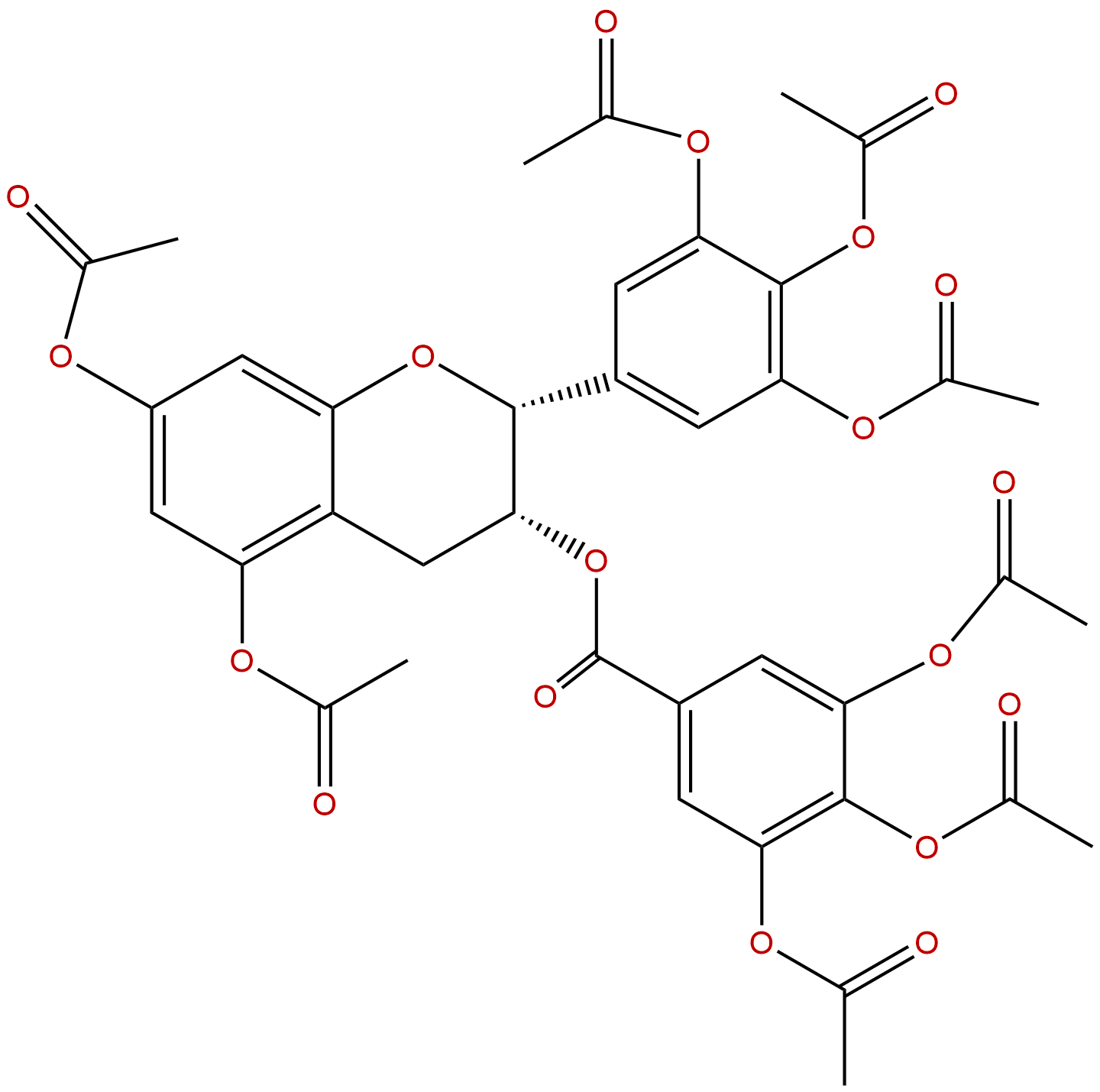
Acetylated EGCG is a fully acetylated derivative of EGCG, and its systematic chemical name is [(2R, 3R) -5,7-bis (acetoxy) -2- (3,4,5-tris (acetoxy) phenyl) -3,4-dihydro-2H-1-benzopyran-3-yl] 3,4,5-tris (acetoxy) benzoate. Its molecular formula is C36H34O20 and its molecular weight is 794.6710 Da.
The most significant difference from the parent EGCG is that all eight phenolic hydroxyl groups in the acetylated EGCG molecule (located at positions 5 and 7 of the A ring, positions 3, 4, and 5 of the B ring, and positions 3, 4, and 5 of the D ring galloyl group) are replaced by acetyl groups (- OCOCH3). This structural modification has brought about significant changes in physical and chemical properties:
1. Fat solubility and LogP Acetylation significantly reduces the polarity of the molecule, with a calculated LogP value of approximately 2.97, making it a moderately lipophilic compound, much higher than hydrophilic EGCG (LogP of approximately 0.5). This makes it easier to penetrate the lipid bilayer of the cell membrane.
2. Water solubility Corresponding to the increase in lipid solubility, its water solubility sharply decreases to about 0.0001 mg/mL, making it an extremely insoluble compound in water. This suggests that the development of its formulations may require the use of solubilization techniques, such as nano formulations, cyclodextrin inclusion, or the production of solid dispersions.
3. Stability The acetylation of phenolic hydroxyl groups protects it from oxidation and polymerization, greatly improving the chemical stability of acetylated EGCG in solid and neutral environments, making it more conducive to storage and in vivo delivery.
4. Topological polarity surface area Its TPSA value is 245.93 Å ², which is still relatively high, but due to the masking of hydroxyl groups, its intermolecular hydrogen bonding ability is weakened, and the membrane permeability is theoretically better than EGCG.
These properties determine the basic characteristics of acetylated EGCG as a prodrug: it is relatively stable in vitro and has membrane permeability. After entering the body, it gradually hydrolyzes and releases biologically active EGCG and acetic acid under the action of esterase.
Plant sources and extraction methods
Acetylated EGCG is not naturally present in plants, but is prepared through chemical semi synthetic methods. Its synthesis is based on natural EGCG as the starting material.
- Source of raw material EGCG EGCG is mainly extracted from tea leaves, especially green tea. Common extraction methods include solvent extraction (such as water, ethanol, methanol or their mixed solutions), ultrasound assisted extraction, microwave-assisted extraction, and supercritical CO2 extraction. Then, it is separated and purified by column chromatography (such as silica gel column, dextran gel column, macroporous adsorption resin column) or high performance liquid chromatography (HPLC) to obtain high-purity EGCG monomer.
- Acetylation synthesis method Using purified EGCG as the substrate, react with acetylation reagents (most commonly acetic anhydride) in the presence of alkaline catalysts such as pyridine and 4-dimethylaminopyridine DMAP. The reaction is usually carried out in anhydrous organic solvents such as dichloromethane, tetrahydrofuran, and ethyl acetate, and stirred for several hours at room temperature or under heating conditions. After the reaction is complete, the crude product is obtained by quenching, extraction, washing, and drying, and then purified by silica gel column chromatography or recrystallization to obtain high-purity acetylated EGCG. This synthetic route is mature and has a high yield, which is the basis for achieving its large-scale preparation.
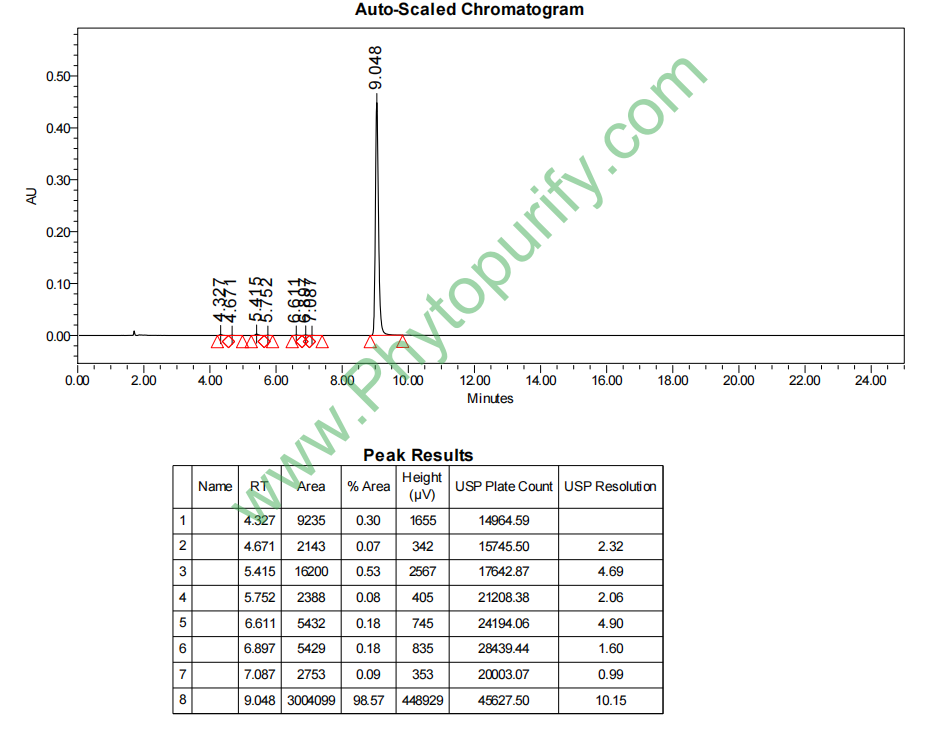
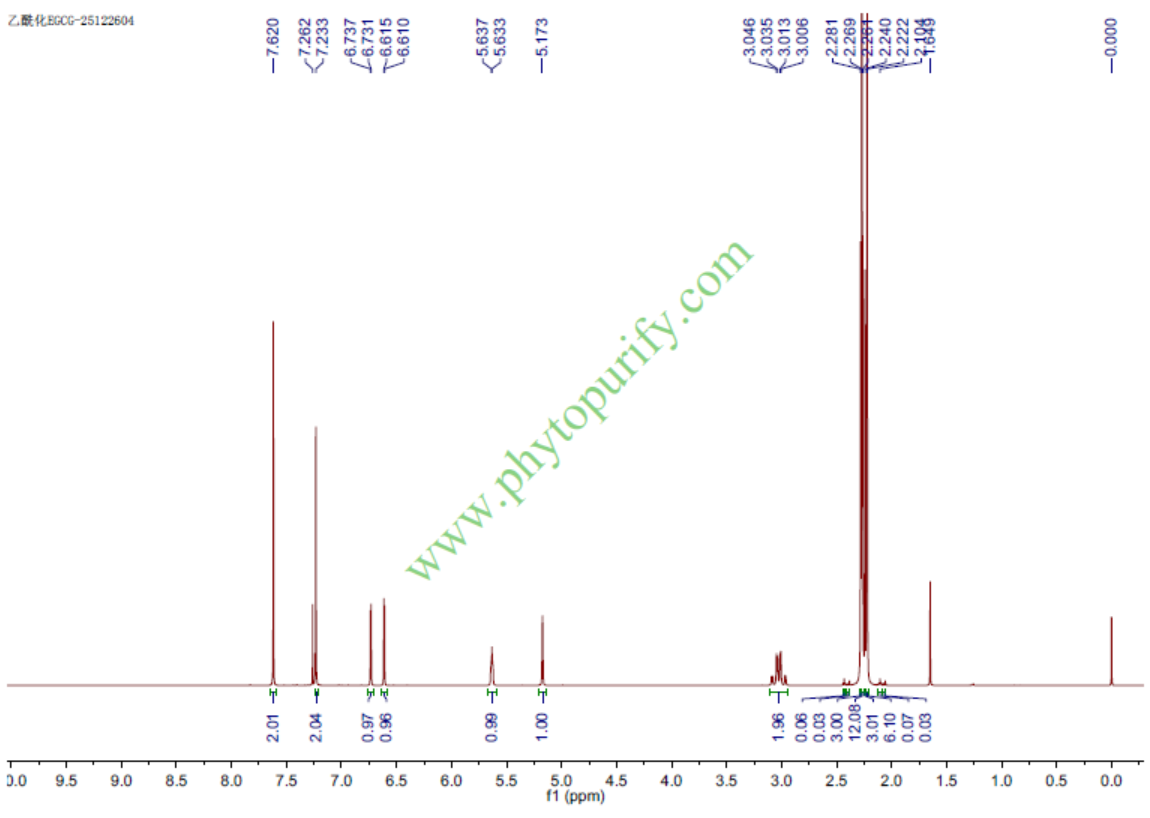
- Analysis and Identification The structure of the product was confirmed by nuclear magnetic resonance hydrogen spectroscopy (1H NMR), carbon spectroscopy (13C NMR), mass spectrometry (MS), and infrared spectroscopy (IR). High performance liquid chromatography (HPLC) is used to monitor reaction progress and test product purity.
Pharmacological activity research
Acetylated EGCG, as a prodrug, is mainly attributed to its pharmacological activity released in vivo, but its unique physicochemical properties often result in activity characteristics that are superior or distinct from EGCG.
- Antibacterial activity Studies have shown that acetylated EGCG exhibits potential inhibitory activity against various Gram positive bacteria (such as Staphylococcus aureus and Bacillus subtilis) and Gram negative bacteria (such as Escherichia coli and Pseudomonas aeruginosa). Its antibacterial mechanism may involve multiple aspects: the released EGCG can disrupt the integrity of bacterial cell membranes; The acetylated form itself may have stronger membrane penetration ability, interfering with bacterial metabolism; In addition, it can also inhibit the formation of bacterial biofilm, which is of great significance for enhancing antibacterial efficacy.
- anti-inflammatory activity This is one of the most extensively studied activities of acetylated EGCG. In the lipopolysaccharide (LPS) - induced macrophage (such as RAW264.7) inflammation model, acetylated EGCG can significantly inhibit the production of nitric oxide (NO), prostaglandin E2 (PGE2), and pro-inflammatory cytokines (such as TNF - α, IL-1 β, IL-6). Its anti-inflammatory effect is usually stronger than that of EGCG at the same concentration, which is related to its better cellular uptake efficiency.
- Antitumor and cancer prevention activity A large number of in vitro studies have shown that acetylated EGCG can inhibit the proliferation and induce apoptosis of many cancer cell lines (such as breast cancer, prostate cancer, liver cancer, colon cancer, lung cancer, etc.). In animal models, it also shows the potential to inhibit tumor growth and metastasis. Its anti-cancer effect is multifaceted, including inducing cell cycle arrest, activating apoptotic pathways, inhibiting invasion, metastasis, and angiogenesis. As a prodrug, its higher accumulation and transformation efficiency in tumor tissue may be the reason for its enhanced activity.
- antioxidant activity Although acetylated EGCG does not have antioxidant capacity, the EGCG released after metabolism in the body is a potent antioxidant that can directly eliminate free radicals and upregulate the body's own antioxidant defense system.
- Anti angiogenic activity Acetylated EGCG can inhibit endothelial cell proliferation, migration, and tubular formation induced by vascular endothelial growth factor (VEGF), and has shown inhibitory effects on angiogenesis in models such as chicken embryo chorioallantoic membrane (CAM), which is crucial for cutting off tumor nutrient supply.
Mechanism of action and molecular targets
The biological effects of acetylated EGCG are achieved through the intervention of its active metabolite EGCG in multiple signaling pathways, and its mechanism of action has the characteristics of multi-target and networked.
-
Core anti-inflammatory mechanism: inhibition of PI3K/Akt/NF - κ B pathway This is the core molecular mechanism of its anti-inflammatory effect. Studies have shown that acetylated EGCG can effectively inhibit the phosphorylation activation of PI3K and Akt induced by lipopolysaccharides or inflammatory factors. One of the key downstream targets of activated Akt is the transcription factor NF - κ B. Acetylated EGCG inhibits the activity of I κ B kinase (IKK), preventing the phosphorylation and degradation of I κ B α, thereby causing the NF - κ B p65/p50 dimer to remain in the cytoplasm and unable to enter the nucleus to initiate transcription. Further studies have shown that it can also inhibit the acetylation of NF - κ B p65 subunits (such as K310 site), and the acetylation of p65 is crucial for its transcriptional activity. By downregulating this pathway, acetylated EGCG comprehensively reduced the expression of COX-2, iNOS, and various pro-inflammatory cytokines.
-
Cancer Prevention and Treatment Related Target Network:
- P53 (TP53) pathway EGCG can stabilize and activate tumor suppressor protein p53, upregulate the expression of downstream target genes such as cyclin dependent kinase inhibitor p21 (CDKN1A), leading to cell cycle arrest in G1 phase.
- Apoptotic pathway EGCG can upregulate the expression of pro apoptotic protein Bax (BAX) and downregulate anti apoptotic protein Bcl-2, resulting in a decrease in mitochondrial membrane potential, release of cytochrome C, and activation of caspase cascade reaction, ultimately leading to apoptosis by CASP3.
- Nrf2 (NFE2L2) pathway EGCG can activate the antioxidant stress core transcription factor Nrf2, causing it to translocate from the cytoplasm into the nucleus, bind to antioxidant response elements (ARE), drive the expression of a series of phase II detoxifying enzymes (such as HO-1, NQO1) and antioxidant proteins, enhance the cell's resistance to oxidative damage and carcinogens, which is the key to its cancer chemopreventive effect.
- Other pathways This also includes inhibiting cancer promoting signaling pathways such as MAPK, STAT3, Wnt/β - catenin, as well as inhibiting the expression of matrix metalloproteinases (MMPs) to resist invasion and metastasis.
-
Antibacterial mechanism In addition to directly damaging the membrane structure, it may also involve inhibiting bacterial fatty acid synthesis, interfering with quorum sensing systems, and inducing bacterial reactive oxygen species (ROS) accumulation.
Evaluation of drug properties and pharmacokinetics
Based on the provided pharmacological parameters and existing research, a preliminary evaluation of the pharmacological properties of acetylated EGCG is conducted
- Absorption and distribution A higher lipid solubility (LogP~2.97) is beneficial for its passive diffusion across the gastrointestinal mucosa, indicating that its oral absorption may be better than EGCG. However, extremely low water solubility is the primary challenge in the development of oral formulations, requiring the use of appropriate formulation techniques to improve their solubility. Its TPSA value is relatively high, but the masking effect of acetyl groups may partially offset its negative impact on permeability. The prediction of "low blood-brain barrier permeability" is consistent with the characteristics of most polyphenol derivatives and is an unfavorable factor for the treatment of central nervous system diseases, but may reduce the risk of central neurotoxicity.
- Metabolism and elimination As a prodrug, acetylated EGCG is mainly hydrolyzed by carboxylesterase in the body (blood, liver, and target tissues), gradually removing acetyl groups, and ultimately releasing EGCG and acetic acid. The released EGCG subsequently undergoes phase II metabolism, including methylation, glucuronidation, and sulfation, and is mainly excreted through bile and urine. The half-life and area under the drug time curve (AUC) of its prototype drug are expected to be significantly higher than EGCG, as the acetylated form slows down the direct metabolism and elimination of EGCG.
-
Preliminary evaluation of safety:
- HERG inhibition The prediction of 'no' indicates a low risk of potential cardiac toxicity (inducing long QT syndrome), which is a favorable safety feature.
- Genotoxicity The Ames test result is 0.0, indicating that under the conditions of this experiment, no mutagenicity was shown, and the preliminary genetic toxicity risk is controllable.
- Other Potential safety issues that need to be addressed include the potential acetic acid load caused by esterase saturation at high doses, as well as the known hepatotoxicity and iron metabolism interference that EGCG itself may cause at high doses or in specific situations, which need to be carefully evaluated in preclinical and clinical studies.
-
Formulation Challenge Due to its extremely poor water solubility, the development of oral solid preparations (such as tablets and capsules) needs to focus on addressing the issue of dissolution. Delivery systems such as nanocrystals, liposomes, micelles, and self microemulsions are potential effective strategies that can enhance their bioavailability. For local medications such as skin inflammation and oral infections, their lipophilicity actually favors transdermal or mucosal absorption.
Clinical application prospects and prospects
The study of acetylated EGCG provides a promising pathway for pushing this star molecule into clinical applications.
-
Potential application areas:
- Inflammatory related diseases For example, inflammatory bowel disease (IBD), arthritis, dermatitis, atherosclerosis, etc., its strong inhibition of NF - κ B is the main pharmacological basis.
- Adjuvant treatment and prevention of cancer Can be used as a sensitizer or detoxifier for traditional radiotherapy and chemotherapy, or for chemoprevention in high-risk populations. There are many studies on breast cancer, prostate cancer, colorectal cancer, etc.
- infectious diseases Especially for drug-resistant bacterial infections or as antibacterial enhancers, when used in combination with antibiotics. It has potential applications in oral care (inhibiting cariogenic bacteria), wound anti infective dressings, and other fields.
- Metabolic diseases Based on the regulatory effect of EGCG on glucose and lipid metabolism, its application in diabetes, non-alcoholic fatty liver and other fields is also worth exploring.
-
challenges faced:
- Difficulties in formulation How to make highly insoluble compounds into efficient, stable, and controllable release formulations is the primary technical bottleneck in translational research.
- The complexity of metabolism in the body The differences in esterase activity among different tissues may lead to uneven efficiency in releasing EGCG in different target organs, affecting efficacy and safety prediction.
- Systematic toxicological evaluation The current safety data is still incomplete and requires comprehensive preclinical GLP toxicology studies, including long-term toxicity, reproductive toxicity, etc.
- Clear clinical positioning Rigorous clinical trials need to be designed to validate its advantages over EGCG or other standard therapeutic drugs on specific indications.
-
Future research directions:
- structural optimization Further modifications can be made on the basis of acetylation, such as preparing monoacetylation, specific site acetylation, or introducing other functional groups to finely regulate its release kinetics and targeting.
- Targeted delivery system Develop active or passive targeted delivery systems based on nanotechnology to specifically deliver acetylated EGCG to inflammatory or tumor sites, improving efficacy and reducing systemic toxicity.
- Combination therapy research Explore its synergistic effects with existing drugs such as chemotherapy drugs, antibiotics, and immunomodulators, and develop new combination therapy regimens.
- Deep exploration of the mechanism of action Using omics techniques (proteomics, metabolomics) and network pharmacology methods, comprehensively reveal its multi-target action network and biomarkers.
Conclusion
Acetylated EGCG, as an innovative precursor drug of EGCG, has significantly improved its physicochemical stability and membrane permeability through clever chemical modification, while retaining and enhancing the core pharmacological activity of the parent compound. This provides a practical and feasible solution to overcome the bioavailability bottleneck of EGCG in clinical applications. Its outstanding performance in anti-inflammatory, antibacterial, anti-tumor and other aspects, especially through precise regulation of key signaling pathways such as PI3K/Akt/NF - κ B, has demonstrated enormous therapeutic potential. Although there are still challenges in preparation development, system pharmacokinetics and complete safety evaluation, acetylated EGCG is expected to gradually move from an excellent scientific research model to a clinical candidate drug for inflammation, cancer and infectious diseases, and become a successful example of natural product structure optimization and innovative drug development with the progress of delivery technology and the deepening of translational medicine research. Future research should focus on addressing key issues related to its pharmacological properties and clarifying its clinical value positioning, in order to promote the early benefit of this promising compound to patients.