Dimethyl Danshenate B: A New Star of Cardiovascular Protection Emerging from Danshen
1. Overview
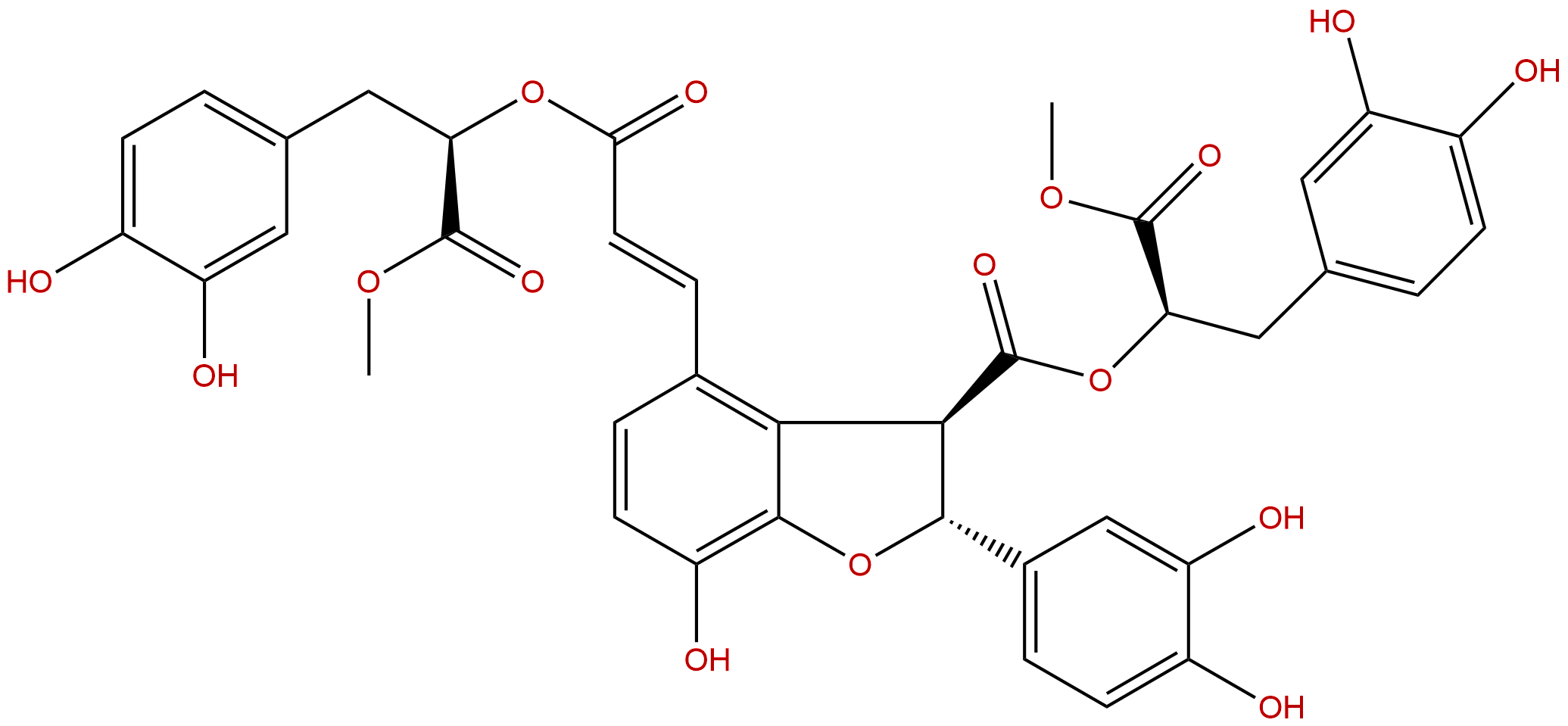
Dimethyl lithopone B (dmLSB), CAS number 875313-64-7, is a traditional Chinese medicine derived from Salvia miltiorrhiza(Salvia miltiorrhiza)Natural polyphenolic compounds. It is a methylated derivative of the famous active ingredient salvianolic acid B, with a molecular formula of C38H34O16 and a molecular weight of 746.6740 g/mol. In recent years, dmLSB has attracted much attention due to its unique and powerful cardiovascular protective activity, becoming a new star in the field of natural product drug research.
Research background shows that dmLSB was initially discovered because of its excellent antioxidant and anti diabetes potential. However, deeper research has revealed its more central pharmacological effect: as a selective sodium ion (Na+) channel agonist. It can slow down the deactivation process of sodium current (INa), thereby increasing the inward current in the early stage of action potential. This mechanism has shown great potential in intervening in arrhythmia diseases represented by Brugada syndrome, and is even considered a potential drug assisted treatment option for implantable cardiac defibrillators (ICDs). This article will provide a comprehensive and professional interpretation of this compound with important research value from the aspects of its chemical structure, plant origin, pharmacological mechanism, medicinal evaluation, and future prospects.
2. Chemical structure and physicochemical properties
The chemical structure of dimethyl salvianolic acid B is complex and exquisite, which is the material basis of its biological activity. Its SMILES string clearly depicts its skeleton: it is a highly modified dimer of caffeic acid derivatives, connected by ester and C-C bonds, and contains multiple catechol structural units. The two carboxyl groups in the molecule are methylated (- COOCH3), which is also the origin of its name "dimethyl ester". This methylation modification not only changes its physicochemical properties, but also significantly affects its biological activity and metabolic stability.
Analyze its physicochemical properties based on the provided pharmacological parameters:
- Molecular weight (MW):746.67 g/mol, Significantly exceeding the standard of 500 Da for conventional small molecule drugs, which may pose challenges for their oral absorption and transmembrane transport.
- Lipid water partition coefficient (LogP/LogD)The values of 3.6672 and 3.6229 respectively indicate that the compound has moderate lipophilicity and tends to be distributed in a lipid environment, which facilitates its penetration through the cell membrane but may also affect its water solubility.
- Water solubility Only 0.0529 mg/mL, which is a poorly soluble compound, is a major limiting factor for its oral bioavailability.
- Topological Polarity Surface Area (TPSA)Up to 256.04 Å ², reflecting the presence of a large number of polar atoms (especially oxygen atoms) and hydrogen bonding groups (such as phenolic hydroxyl and ester groups) in the molecule. High TPSA is usually associated with poor cell membrane permeability.
- Plasma protein binding rate (PPB)As high as 92.72%, it means that after entering the bloodstream, the vast majority of drugs will bind to plasma proteins (mainly albumin), and only a small amount of free drugs can exert pharmacological effects, which will affect the strength and duration of drug efficacy.
Overall, dmLSB is a typical polyphenolic natural product with large molecules, high polarity, and low solubility. These characteristics require special attention to its pharmaceutical and pharmacokinetic behavior in drug development.
3. Plant sources and traditional applications
The direct plant source of dimethyl salvianolic acid B is Danshen(Salvia miltiorrhiza Bunge), Lamiaceae Salvia plants. Danshen, also known as "red root" or "blood ginseng", has a medicinal history of more than two thousand years in China. It is an essential medicine for promoting blood circulation, removing blood stasis, and relieving pain. Its dried roots and rhizomes are widely used in traditional Chinese medicine clinical practice to treat diseases related to "blood stasis" such as coronary heart disease, angina pectoris, myocardial infarction, stroke, and menstrual disorders. It is known as the "one herb Danshen, with the same function as the four substances".
The modern chemical composition research of Danshen reveals that its water-soluble part mainly contains salvianolic acid compounds (such as salvianolic acid A, B, C, etc.), while its lipophilic part contains tanshinone compounds. Danshensu acid B is one of the water-soluble components with the highest content and strongest activity, and has various pharmacological effects such as antioxidant, anti-inflammatory, anti fibrosis, and protection of endothelial cells. Dimethyl salvianolic acid B, as a derivative of salvianolic acid B, is likely to exist in trace amounts in Danshen medicinal herbs or be produced during metabolic processes in the body. Methylation modification of salvianolic acid B through chemical semi synthetic methods aims to improve its chemical stability, membrane permeability, and oral bioavailability, thereby obtaining candidate molecules with better drug properties. Therefore, the research on dmLSB is a model for modernizing traditional Chinese medicine and optimizing its structure based on natural product lead compounds.
4. Pharmacological activity and mechanism of action
The cardiovascular protective effect of dimethyl salvianolic acid B is a synergistic result of multiple targets and pathways. Its core mechanism can be summarized into two aspects: firstly, as Selective Na+channel agonist Direct electrophysiological effects; Secondly, through regulation Vascular endothelial function related targets The indirect protective effect.
4.1 Core mechanism: Na+channel activation and antiarrhythmic effects
This is the most striking feature of dmLSB. The depolarization of the cardiac action potential in phase 0 is initiated by rapid sodium influx (INa) mediated by voltage-gated sodium channels (Nav1.5). In certain pathological states (such as Brugada syndrome), partial loss or accelerated inactivation of sodium channel function leads to insufficient inward current in the early action potential, resulting in a potential difference between the epicardium and endocardium, which can easily induce reentrant ventricular arrhythmia.
DmLSB can "slow down the inactivation of INa" by prolonging the opening time of sodium channels or slowing down their closing process. This results in more sodium ions continuously flowing in during the early stages of the action potential, thereby Enhance early inward current This effect can precisely compensate for the deficiency of sodium current in diseases such as Brugada syndrome, restore the uniformity of myocardial cell electrical activity, and eliminate the matrix that causes arrhythmia. Research has shown that it may become a potential drug assisted treatment option for such diseases in addition to ICD implantation, which is of great significance.
4.2 Multi target regulation and endothelial protection
The target information (NOS3, ICAM1, VCAM1, EDN1, SEL) provided by the database all points to the regulation of vascular endothelial function and anti atherosclerosis links, which is highly consistent with the traditional efficacy of salvia miltiorrhiza in "activating blood and removing blood stasis".
- NOS3 (endothelial nitric oxide synthase)DMLSB may upregulate or activate NOS3, promoting the production of nitric oxide (NO). NO is a powerful vasodilator that can inhibit platelet aggregation and leukocyte adhesion, and is crucial for maintaining vascular homeostasis.
- ICAM1 (intercellular adhesion molecule-1)&VCAM1 (vascular cell adhesion molecule-1)&SELE (E-selectin)These are key adhesion molecules that mediate the adhesion and migration of white blood cells (such as monocytes) to the subendothelial layer of blood vessels. In an inflammatory state, their expression is upregulated. DmLSB may reduce the inflammatory reaction of vascular endothelium and delay the formation of atherosclerotic plaque by inhibiting the expression of these molecules.
- EDN1 (endothelin-1)Endothelin-1 is currently the strongest known vasoconstrictor and can promote the proliferation of vascular smooth muscle cells. DMLSB may exert vasodilatory and anti proliferative effects by inhibiting the generation of EDN1 or antagonizing its receptors.
Integration of mechanism of action DMLSB directly corrects abnormal electrophysiological activity and combats arrhythmia by stimulating sodium channels; At the same time, through multi-target regulation (promoting NO, inhibiting ET-1, and inhibiting adhesion molecules), it can improve endothelial function, inhibit inflammation, relax blood vessels, protect the cardiovascular system from the root, and fight against atherosclerosis and other disease processes. These two pathways complement each other and together form the foundation of its powerful 'cardiovascular protection' effect.
5. Evaluation of drug properties
Based on the provided parameters, we conducted a systematic evaluation of the pharmacological potential of dmLSB using standards such as Lipinski's Rule of Five
-
Lipinski's Five Rules Compliance Analysis:
- Rule 1 (MW ≤ 500)Not compliant. The MW is 746.67, far exceeding the 500 standard.
- Rule 2 (LogP ≤ 5): Compliant. LogP is 3.67, which is within the ideal range.
- Rule 3 (Hydrogen bond donor HBD ≤ 5)Not compliant. From its structural formula, it can be inferred that the phenolic hydroxyl group and possible carboxylic acid (if hydrolyzed) may result in an HBD count exceeding 5.
- Rule 4 (Hydrogen bond acceptor HBA ≤ 10)Not compliant. There are numerous oxygen atoms in the molecule (16 oxygen atoms), and the number of HBAs far exceeds 10.
- Rule 5 (Number of rotatable keys ≤ 10)Usually not compliant. There are many flexible connection parts, and the number of rotatable keys may exceed 10.
Conclusion DmLSB seriously violates three of Lipinski's five rules (MW, HBD, HBA), which strongly indicates its Oral absorption may be poor It belongs to the "Beyond Rule of 5" compound and is difficult to develop into an oral medication.
-
Interpretation of key parameters of absorption, distribution, metabolism, and excretion (ADME):
- absorb High TPSA (256) and low Caco-2 permeability (0.3579) confirm its weak passive diffusion ability across intestinal epithelial cell membranes, with low expected oral bioavailability. The Peff value (1.8798) is also at a relatively low level.
- distribution The extremely high plasma protein binding rate (92.7%) means that its distribution volume is small, the free drug concentration is low, and higher doses may be required to achieve effective blood drug concentration. BBB penetration is' low ', indicating that it is not easily accessible to the central nervous system, which may be an advantage for cardiovascular drugs (reducing central side effects).
- Metabolism and toxicity A negative Ames test (0.0) indicates no direct genetic toxicity. However, the 'chromosomal aberration' test is' present ', indicating a potential genetic toxicity risk that needs to be highly valued and thoroughly validated. HERG inhibition as' no 'is a significant benefit, meaning it does not prolong the QT interval and has a lower risk of cardiac toxicity. Elevated levels of multiple serum enzyme indicators (ALT, AST, ALP, GGT) suggest the possibility of Hepatotoxicity This is the most alarming security signal in its development.
-
Comprehensive Assessment:
DmLSB is a Clear activity but significant challenges in drug development The lead compound. Its powerful multi target cardiovascular protection and unique Na channel activation mechanism endow it with high research value. However, its high molecular weight, high polarity, low solubility, low permeability, high protein binding, and potential risks of liver toxicity and genetic toxicity pose numerous obstacles for its development as an oral medication.
Future optimization direction Further structural modifications may be necessary to improve its solubility, permeability, and metabolic stability, such as preparing prodrugs, simplifying structures, and optimizing polar groups. Considering its difficulty in oral administration, it may also be considered to develop into Injection type Used for the treatment of acute or severe conditions (such as severe arrhythmia). During the promotion process, liver toxicity and genetic toxicity must be thoroughly studied as core safety issues.
6. Research Status and Application Prospects
At present, research on dimethyl salvianolic acid B is still in the preclinical stage, mainly focusing on in-depth exploration of its mechanism of action and preliminary pharmacological evaluation. Its potential as a Na+channel agonist for the treatment of sodium channel diseases such as Brugada syndrome has aroused interest in the field of cardiac electrophysiology. At the same time, its multi target endothelial protective effect also makes it have broad prospects in the prevention and treatment of chronic diseases such as atherosclerosis, diabetes vascular complications.
However, as mentioned earlier, its inherent physicochemical properties and ADME/Tox defects are the main bottlenecks towards clinical application. Future research will focus on the following directions:
1. structural optimization Using dmLSB as the lead compound, a systematic structure-activity relationship study and structural simplification were conducted with the aim of maintaining or enhancing its core activity while significantly improving its drug like properties (reducing MW and polarity, increasing solubility).
2. Formulation innovation To address the issues of low solubility and low permeability, research is being conducted on novel drug delivery systems such as nano formulations, liposomes, and cyclodextrin inclusion complexes to improve their oral bioavailability or develop efficient injectable formulations.
3. Mechanism deepening and disease model validation Validate its efficacy in animal models of diseases closer to humans, such as the Brugada syndrome transgenic animal model, and further elucidate the selectivity of its Na channel activation (for cardiac Nav1.5 vs. other subtypes) and precise molecular binding sites.
4. Comprehensive security evaluation Strict and standardized GLP toxicology studies should be conducted on the liver toxicity and chromosomal aberration risks suggested by it, to clarify the toxic dose, mechanism, and reversibility, which is the key to determining whether it can enter clinical trials.
In summary, Danshensu B dimethyl ester is a highly distinctive active molecule discovered from the treasure trove of traditional Chinese medicine. It is like a double-edged sword, shining with unique mechanisms and therapeutic potential on one hand, and facing severe tests of drug development on the other. Its research process vividly reflects the complete path and core challenges of modern natural product drug development from "activity discovery" to "drug creation". Regardless of whether it can ultimately be successfully marketed, in-depth research on it will greatly enrich our understanding of the pathological mechanisms of cardiovascular disease and provide valuable experience and clues for the development of new therapeutic drugs.