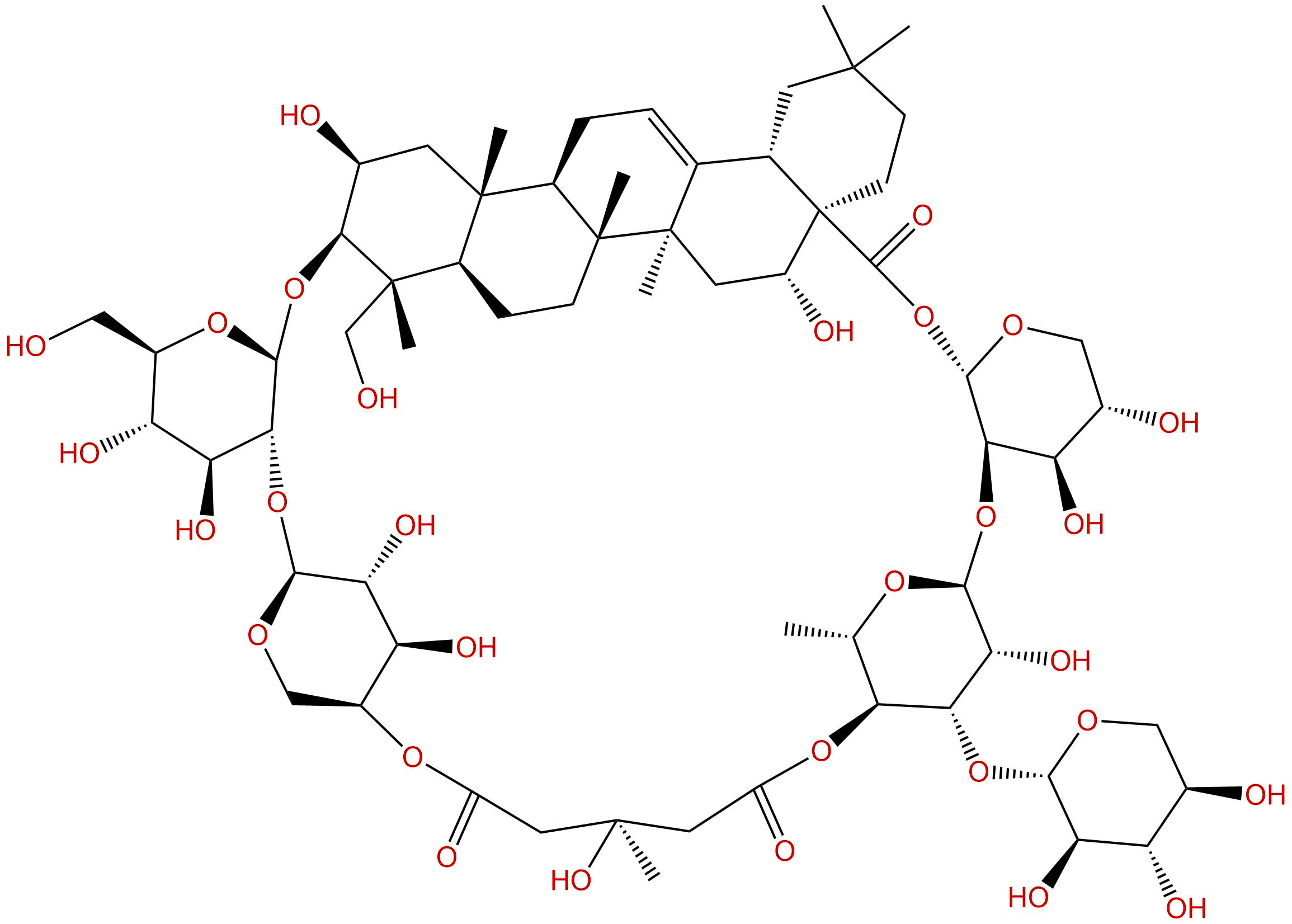


Product name: Tubeimoside II
Synonym name:
Catalogue No.: BP1416
Cas No.: 115810-12-3
Formula: C63H98O30
Mol Weight: 1335.45
Botanical Source: Bolbostemma paniculatum(Maxim.)Franquet
Physical Description:
Type of Compound: Terpenoids
Purity: 95%~99%
Analysis Method: HPLC-DAD or/and HPLC-ELSD
Identification Method: Mass, NMR
Packing: Brown vial or HDPE plastic bottle
Storage: Store in a well closed container, protected from air and light. Put into refrigerate or freeze for long term storage.
Whenever possible, you should prepare and use solutions on the same day. However, if you need to make up stock solutions in advance, we recommend that you store the solution as aliquots in tightly sealed vials at -20℃. Generally, these will be useable for up to two weeks.
The product could be supplied from milligrams to grams
Inquire for bulk scale.
Description:
Tubeimoside I, tubeimoside II, and tubeimoside III show anti-inflammatory, antitumor, and antitumor-promo ting effects.
References:
Acta Pharmacol Sin. 2001 May;22(5):463-8.
Structure-activity relationship of tubeimosides in anti-inflammatory, antitumor, and antitumor-promoting effects.
To study structure-activity relationship of tubeimosides isolated from Bolbostemma paniculatum for their anti-inflammatory, antitumor, and antitumor-promoting effects.
METHODS AND RESULTS:
Tubeimoside I, Tubeimoside II, and Tubeimoside III were isolated from tubers of Bolbostemma paniculatum (Maxim) Franquet (Cucurbitaceae), a Chinese folk medicine,"Tubeimu", and their anti-inflammatory, anti-tumor, anti-tumorigenic activities, and acute toxicity were studied in vivo. Tubeimoside I, Tubeimoside II, and Tubeimoside III are all natural analogues of oleanane type of triterpenoid saponins from the same medicinal plant, and all show anti-inflammatory, antitumor, and antitumor-promo ting effects. However, the anti-inflammatory, anti-tumor, and anti-tumorigenic activities of Tubeimoside II are stronger than those of tubeimoside I, and the acute toxicity of Tubeimoside II is lower than that of tubeimoside I; the anti-inflammatory, anti-tumor, and anti-tumorigenic activities of Tubeimoside III are stronger than those of Tubeimoside II, and the acute toxicity of Tubeimoside III is also stronger than that of Tubeimoside II.
CONCLUSIONS:
C-16 hydroxyl group of Tubeimoside II plays an important role in enhancing biological activity of Tubeimoside II and in decreasing its toxicity. The difference of chemical structure in B and/or C position between tubeimosides III and II plays an important role in enhancing biological activity and toxicity of Tubeimoside III. Therefore tubeimosidre II may be the most promising agent for cancer chemoprevention and chemotherapy among tubeimosides I, II, and III.
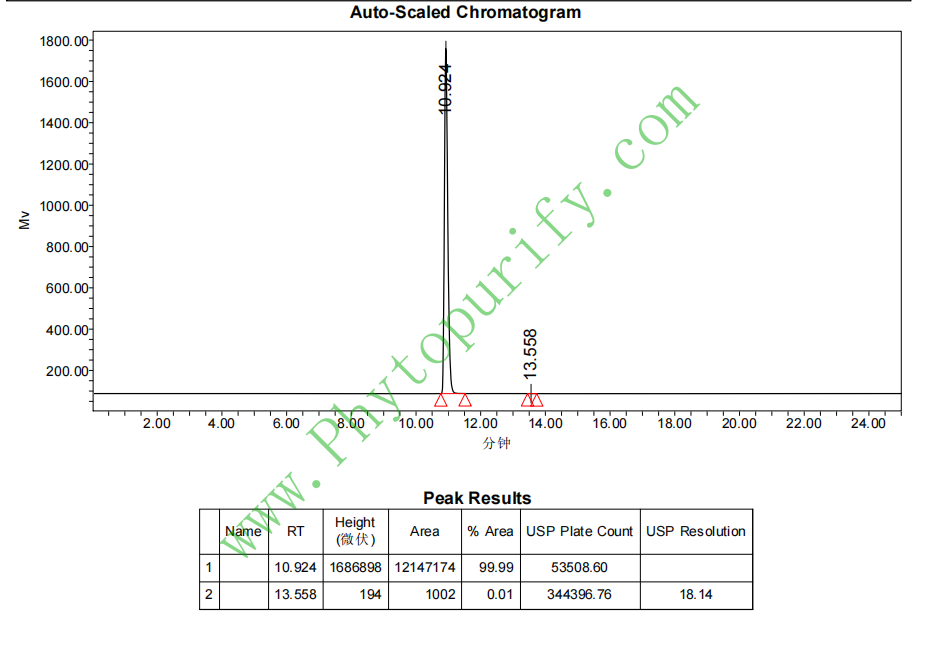
HPLC of Tubeimoside II
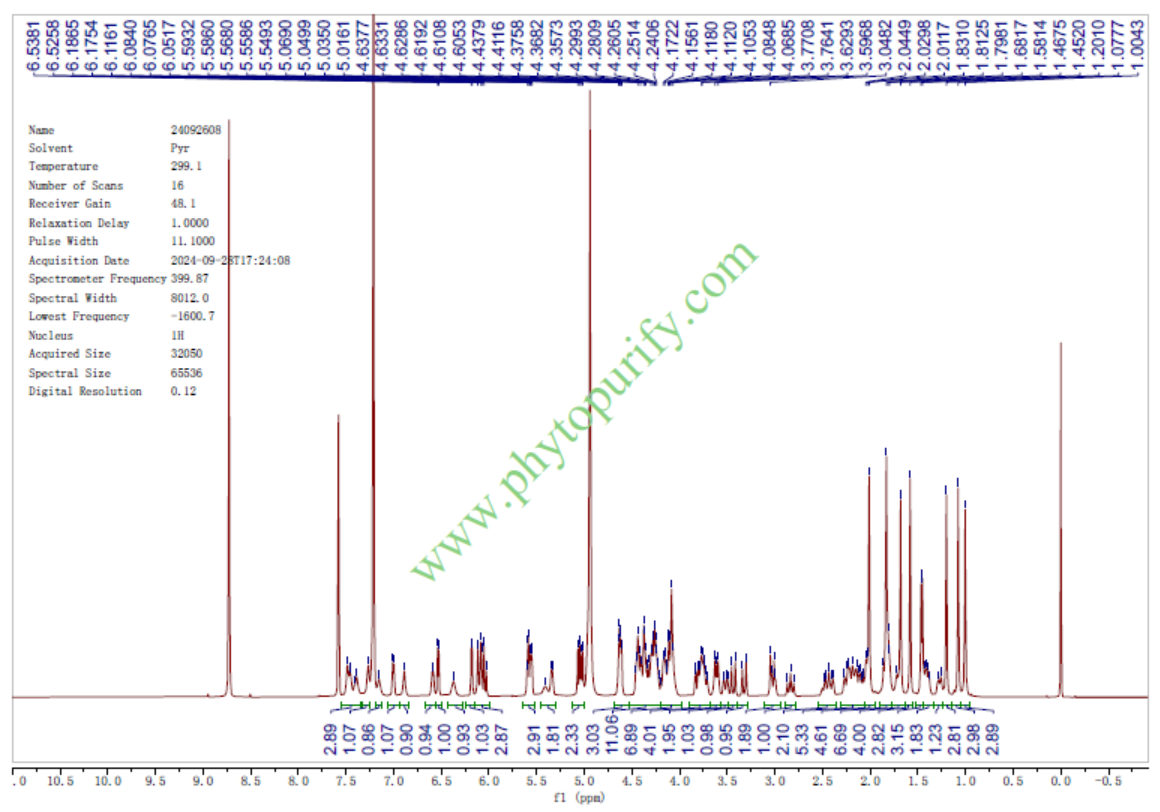
HNMR of Tubeimoside II
Storage conditions:Short-term storage at 2~8℃, long-term storage at -20 ~ -80℃
Tubeimoside II (hereinafter referred to as TBMS-II) is a natural analogue of oleane type triterpenoid saponins, mainly derived from the traditional Chinese medicine Tubeimoside(Bolbostemma paniculatum)Obtained through separation. As one of the important active ingredients of traditional Chinese medicine Fritillaria, TBMS-II has attracted widespread attention in the field of natural product pharmacology in recent years due to its significant anti-inflammatory and anti-tumor activities. Especially in the field of tumor therapy, TBMS-II exhibits good inhibitory effects on various cancer cells, especially ovarian cancer, and the related mechanisms involve the regulation of multiple signaling pathways and molecular targets. This article aims to systematically review the chemical structure and physicochemical properties, plant sources and extraction methods, pharmacological activity and mechanism of action, drug evaluation, pharmacokinetic characteristics, and clinical application prospects of TBMS-II, providing theoretical basis and research direction for its subsequent drug development and clinical translation.
TBMS-II belongs to the oleanane type triterpenoid saponins, with a molecular formula of C ₆∝ H ₉₉ O ∝₀ and a molecular weight of 1335.4470. Its structure is formed by the connection of multiple glycosides through glycosidic bonds between the oleanane type triterpenoid mother nucleus, exhibiting typical saponin structural characteristics. The LogP value of TBMS-II is approximately 1.0177, indicating its moderate lipophilicity, which facilitates cell membrane penetration without excessive hydrophobicity. The extremely high polar surface area (TPSA 465.4200) reflects the presence of multiple hydroxyl and sugar groups, resulting in low water solubility (0.2570), which has important implications for its bioavailability and in vivo distribution.
From the perspective of physicochemical properties, TBMS-II has a large molecular weight and complex structure, with numerous hydrogen bond donors and acceptors, resulting in a complex absorption and metabolism process in vivo. Its blood-brain barrier permeability is low, indicating limited distribution in the central nervous system. The hERG channel inhibition experiment showed a negative result, indicating a low risk of cardiac toxicity. The Ames gene mutation test result was 0.0, indicating that TBMS-II has no significant mutagenicity and high safety.
TBMS-II mainly comes from Fritillaria thunbergii(Bolbostemma paniculatum)This plant is a perennial herbaceous plant in the Cucurbitaceae family, widely distributed in multiple provinces in southern China. Tu Bei Mu is used in traditional Chinese medicine to treat diseases such as abscesses, sores, and scrofula. Its pharmacological active ingredients mainly include various triterpenoid saponins, among which TBMS-II is a component with high content and significant activity.
The common methods for extracting TBMS-II include solvent extraction, column chromatography separation, and high-performance liquid chromatography (HPLC) purification. Generally, methanol or ethanol is used as the extraction agent to obtain crude extract through reflux extraction, and then separated and purified using silica gel column chromatography or reverse phase C18 column. In recent years, the application of ultrasound assisted extraction and microwave-assisted extraction technologies has improved extraction efficiency and purity. The purified TBMS-II can be structurally confirmed through modern analytical techniques such as mass spectrometry and nuclear magnetic resonance (NMR).
TBMS-II exhibits significant anti-inflammatory effects. In vitro experiments have shown that TBMS-II can inhibit the expression of pro-inflammatory factors such as tumor necrosis factor - α (TNF - α), interleukin-6 (IL-6), and nitric oxide synthase (NOS2), reducing inflammatory responses. Its anti-inflammatory mechanism mainly works by inhibiting the activation of the nuclear factor kappa B (NF - κ B) signaling pathway, reducing the release of inflammatory mediators, and thus exerting a protective effect on tissues.
TBMS-II exhibits good cytotoxicity in various tumor cell lines, especially with significant inhibitory effects on ovarian cancer cells. Research has found that TBMS-II can induce apoptosis of tumor cells, inhibit cell proliferation and migration, and block tumor angiogenesis. Its anti-tumor effect involves the regulation of multiple signaling pathways and key molecules.
In ovarian cancer models, TBMS-II downregulates the anti apoptotic protein BCL2, inhibits STAT3 activation, reduces the expression of multidrug resistance associated protein ABCB1, and enhances chemotherapy drug sensitivity. In addition, TBMS-II can regulate the oxidative stress-related transcription factor NFE2L2, inhibit matrix metalloproteinase MMP9, and reduce the invasion and metastasis ability of tumor cells. The impact on DNA topoisomerases TOP1 and TOP2A suggests that they may interfere with the DNA replication and repair processes of tumor cells.
The mechanism of action of TBMS-II is complex, involving synergistic regulation of multiple targets and pathways. The main targets and their mechanisms are as follows:
The comprehensive regulation of these targets enables TBMS-II to exhibit the advantage of multi-target synergistic effects in anti-tumor and anti-inflammatory fields.
The pharmacological evaluation of TBMS-II shows that it has certain potential for drug development. The high molecular weight and polarity limit its oral absorption, and the low water solubility also affects its bioavailability. Its LogP is moderate, which is beneficial for cell membrane penetration, but high TPSA values indicate limited transmembrane ability. The low permeability of the blood-brain barrier reduces the risk of central nervous system toxicity.
In terms of safety, TBMS-II has no hERG channel inhibitory effect and a low risk of cardiac toxicity; Ames test negative, low risk of genotoxicity. Pharmacokinetic studies in vivo have shown that TBMS-II has a moderate half-life in the blood and is mainly metabolized by the liver and excreted by the kidneys. Further identification and toxicological evaluation are needed for its metabolites.
To overcome its poor water solubility and low bioavailability, researchers have attempted to improve its pharmacokinetic properties, in vivo stability, and targeting through nanocarriers, liposome encapsulation, and structural modification.
Given the significant anti-inflammatory and anti-tumor activities of TBMS-II, especially its potential therapeutic value for refractory tumors such as ovarian cancer, its clinical application prospects are broad. Future research should focus on the following aspects:
As a natural triterpenoid saponin with multiple targets and mechanisms, saponins from Fritillaria thunbergii exhibit excellent anti-inflammatory and anti-tumor activities, especially in the field of ovarian cancer treatment with broad application potential. Although there are certain challenges in its pharmacological development, it is expected to overcome these bottlenecks and achieve clinical translation through modern drug formulation technology and in-depth mechanism research. In the future, TBMS-II is expected to become an important candidate molecule for the development of natural anti-cancer drugs, providing new treatment options for cancer patients.
