


Product name: Tubeimoside I
Synonym name: Lobatoside H
Catalogue No.: BP1415
Cas No.: 102040-03-9
Formula: C63H98O29
Mol Weight: 1319.45
Botanical Source: Bolbostemma paniculatum(Maxim.)Franquet
Physical Description:
Type of Compound: Triterpenoids
Purity: 95%~99%
Analysis Method: HPLC-DAD or/and HPLC-ELSD
Identification Method: Mass, NMR
Packing: Brown vial or HDPE plastic bottle
Storage: Store in a well closed container, protected from air and light. Put into refrigerate or freeze for long term storage.
Whenever possible, you should prepare and use solutions on the same day. However, if you need to make up stock solutions in advance, we recommend that you store the solution as aliquots in tightly sealed vials at -20℃. Generally, these will be useable for up to two weeks.
The product could be supplied from milligrams to grams
Inquire for bulk scale.
Chengdu Biopurify Phytochemicals Ltd. is a leading company in the research, development, manufacture and marketing of High Quality Phytochemicals and Extracts(especially Active Ingredients from Traditional Chinese Medicine,TCM), Natural Active Pharmaceutical Ingredients worldwide.
The main services:
A. Supply active ingredients and reference standards of TCM, from mgs to kgs scale
B. Custom extraction and purification, target Herb Active Ingredients
C. Custom synthesis and semi-synthesis for Natural Active Ingredients
D. CR(contract research), CM(contract manufacture) and PD(process development) services from lab scale, pilot scale to commercial scale(GMP is also available)
E. TCM compounds library for drug screen,more than 3000 compounds available, many of them are rare and unique.
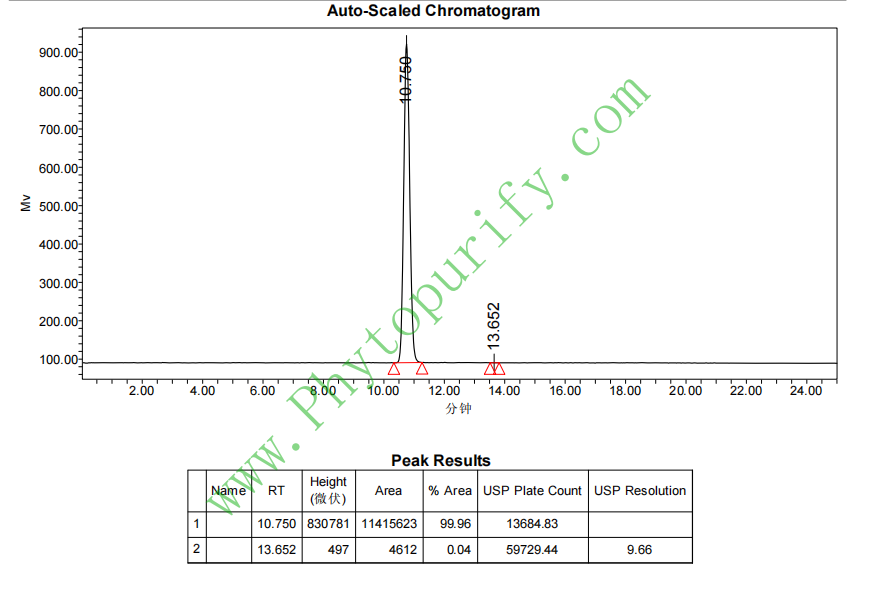
HPLC of Tubeimoside I
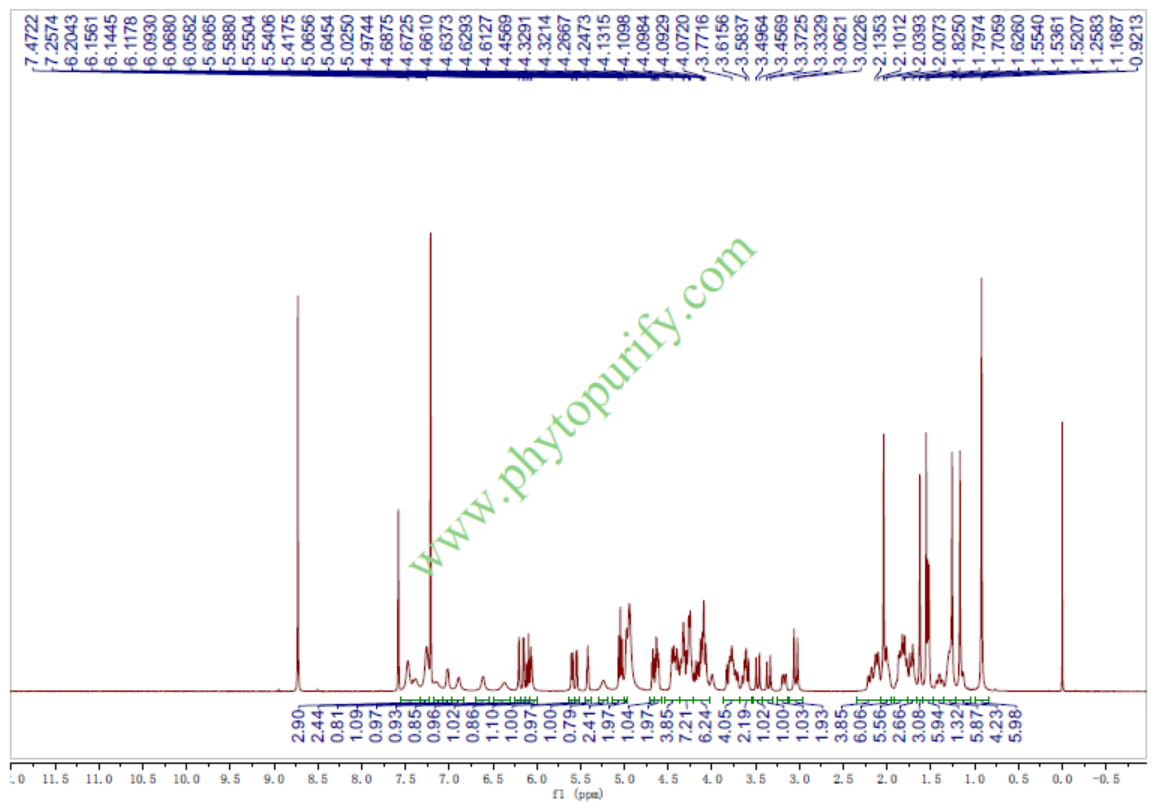
HNMR of Tubeimoside I
Storage conditions:Short-term storage at 2~8℃, long-term storage at -20 ~ -80℃
445.1900
1.3718
1.3716
.1932
.5470
.6451
Low
64.2601
8.8340
Yes
No
No
No
No
No
0.0
Yes
No
Yes
Yes
Tubeimoside I (CAS number: 102040-03-9) is a type of saponin derived from the Chinese medicinal herb Tubeimoside(Bolbostemma paniculatum)Natural triterpenoid saponins. As a natural product with significant biological activity, saponin A from Fritillaria thunbergii has attracted much attention in pharmacological research in recent years, especially in its potential therapeutic value in various disease models such as anti-inflammatory, anti-tumor, and sepsis. Its unique molecular structure endows it with multi-target regulatory ability, which can induce cellular autophagy, inhibit the production of pro-inflammatory cytokines, and promote angiogenesis by inhibiting heat shock protein 60 (HSPD1), regulating nuclear factor kappa B (NF - κ B) and mitogen activated protein kinase (MAPK) signaling pathways, thereby exerting cell protection and disease relief effects.
This review aims to systematically summarize the chemical structure and physicochemical properties, plant sources, and extraction methods of saponin A from Fritillaria thunbergii, comprehensively evaluate its pharmacological activity and mechanism of action, explore its pharmacological properties and pharmacokinetic characteristics, and look forward to its potential and development direction in clinical applications. By integrating the research progress in recent years, it is expected to provide theoretical basis and reference for the further drug development and clinical translation of saponins A from Fritillaria thunbergii.
Tu Bei Mu saponin A belongs to the triterpenoid saponin class, with a molecular weight of 1319.4480 and a complex molecular formula, containing multiple glycosylated triterpenoid skeletons. Its structural features include a typical pentacyclic triterpenoid core that connects multiple sugar chains, endowing it with high polarity and water solubility. The specific physicochemical properties are as follows:
The structure of saponin A in Fritillaria thunbergii is complex and highly polar, and the presence of sugar groups significantly affects its pharmacokinetic properties and biological activity. Its moderate lipophilicity and high polarity enable it to exhibit tissue selectivity in its distribution within the body, particularly in the inflammatory and tumor microenvironment, demonstrating good targeting properties.
The main source of saponin A in Platycodon grandiflorus comes from the Cucurbitaceae plant Platycodon grandiflorus(Bolbostemma paniculatum)This plant is widely used in traditional Chinese medicine to treat tumors, inflammation, and abscesses. As one of its main active ingredients, saponin A from Fritillaria thunbergii has significant pharmacological effects.
Tu Beimu is a perennial herbaceous plant mainly distributed in southern China and Southeast Asia. Both its root and aboveground parts contain abundant triterpenoid saponins. The content of saponin A in Fritillaria thunbergii varies at different growth stages and harvesting sites, usually extracted mainly from dried tubers.
The extraction of saponin A from Fritillaria thunbergii is usually carried out using the following steps:
In recent years, the application of new technologies such as ultrasound assisted extraction and microwave-assisted extraction has improved extraction efficiency and purity, providing technical support for large-scale preparation.
Tu Bei Mu saponin A exhibits a wide range of pharmacological activities in various disease models, mainly including anti-inflammatory, anti-tumor, anti sepsis, and promotion of angiogenesis.
Tu Bei Mu saponin A effectively reduces inflammation by inhibiting the production of pro-inflammatory cytokines such as IL-6 and IL-1 β. Its mechanism of action involves inhibiting the activation of NF - κ B and MAPK signaling pathways, and reducing the expression of inflammatory mediators. In addition, saponin A of Fritillaria thunbergii can regulate the eNOS VEGF axis, promote endothelial function repair, and further alleviate tissue damage caused by inflammation.
Tu Bei Mu saponin A exhibits significant inhibitory effects on various cancer cell lines, especially in solid tumor models such as cervical cancer, lung cancer, and liver cancer. Its anti-tumor mechanism mainly includes:
In the sepsis model, saponins A from Fritillaria thunbergii significantly alleviate sepsis symptoms by regulating immune response, inhibiting excessive inflammatory response, improving angiogenesis and microcirculation function. It promotes the activation of the eNOS VEGF signaling pathway, which helps to restore blood flow supply to ischemic tissues and alleviate ischemic injury.
The multi-target mechanism of action of saponin A from Fritillaria thunbergii is the basis for its broad pharmacological activity. Current research indicates that its main targets and mechanisms of action include:
Heat shock protein 60 (HSPD1), as an important molecular chaperone in cells, participates in protein folding and cellular stress response. As an orally active HSPD1 inhibitor, Tu Bei Mu saponin A can intervene in cellular stress response, regulate cell fate, and play a key role in tumor cells and inflammatory cells.
NF - κ B and MAPK are important signaling pathways that regulate inflammatory response and cell survival. Tu Bei Mu saponin A inhibits the activation of these pathways, reduces the expression of pro-inflammatory cytokines, alleviates inflammatory responses, and suppresses the proliferation and metastasis of tumor cells.
Tu Bei Mu saponin A can activate endothelial nitric oxide synthase (eNOS), promote the production of nitric oxide (NO), regulate the expression of vascular endothelial growth factor (VEGF), promote angiogenesis, and repair ischemic tissues.
By activating the Akt signaling pathway, saponin A from Fritillaria thunbergii induces protective autophagy in cells, enhancing their resistance to external stimuli, especially in tumor cells, which helps regulate the balance between cell survival and death.
In tumors such as cervical cancer, tubeimu saponin A acts on multiple key molecular targets, including BCL2, TOP1, EGFR, TP53, CDKN2A, RB1, BAX, CDKN1A, and HPVE6, regulating multiple processes such as cell cycle, apoptosis, and DNA repair, exerting a comprehensive anti-tumor effect.
The pharmacological evaluation of saponins A from Fritillaria thunbergii shows that it has certain advantages and challenges:
At present, there is limited research on the pharmacokinetics of saponin A in Fritillaria thunbergii. Previous studies have shown that it can reach effective concentrations in the blood after oral administration, and is mainly metabolized by the liver and excreted by the kidneys. Its metabolic pathway may involve glycoside hydrolysis and oxidation reactions. In the future, it is necessary to strengthen systematic research on its absorption, distribution, metabolism, and excretion (ADME) characteristics to guide clinical dosage form design and optimize dosing regimens.
Tu Bei Mu saponin A, with its multi-target and multi mechanism pharmacological properties, has shown broad application prospects in fields such as inflammatory diseases, tumors, sepsis, and ischemic diseases.
By inhibiting the NF - κ B and MAPK pathways and reducing the production of pro-inflammatory factors, saponin A of Fritillaria thunbergii is expected to become a novel anti-inflammatory drug, particularly suitable for the treatment of chronic inflammation and autoimmune diseases.
Regarding cervical cancer and other solid tumors, saponins from Fritillaria thunbergii exhibit potential anti-tumor activity by regulating cell apoptosis, autophagy, and cell cycle. In the future, it can be combined with existing chemotherapy drugs to enhance efficacy and reduce drug resistance.
Promote angiogenesis and improve microcirculation function, giving Tu Bei Mu saponin A unique advantages in the treatment of sepsis and ischemic injury, especially with potential value in acute phase management.
As a natural triterpenoid saponin derived from traditional Chinese medicine, Tu Bei Mu saponin A has shown great research and application value in anti-inflammatory, anti-tumor, and sepsis fields due to its unique chemical structure and multi-target pharmacological effects. Although its large molecular weight and high polarity pose certain challenges for drug development, its good safety and diverse mechanisms of action provide a solid foundation for new drug development. In the future, through in-depth pharmacological mechanism research, pharmacokinetic optimization, and clinical validation, saponins from Fritillaria thunbergii are expected to become important candidate drugs for the treatment of various diseases, promoting the development and clinical translation of natural product pharmacology.
