
| Catalog No | Package | Original Price | Price | Inventory | Quantity | Operating |
|---|---|---|---|---|---|---|
| BP0241-20mg | 20mg | $180.00 | Sign in |
|


Product name: Bayogenin
Synonym name:
Catalogue No.: BP0241
Cas No.: 6989-24-8
Formula: C30H48O5
Mol Weight: 488.709
Botanical Source: Bolbostemma paniculatum(Maxim.)Franquet
Physical Description:
Type of Compound: Triterpenoids
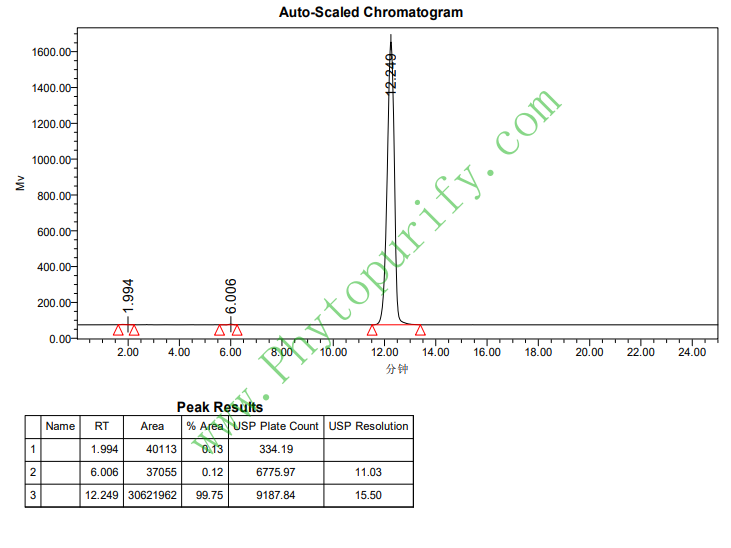
Purity: 95%~99%
Analysis Method: HPLC-DAD or/and HPLC-ELSD
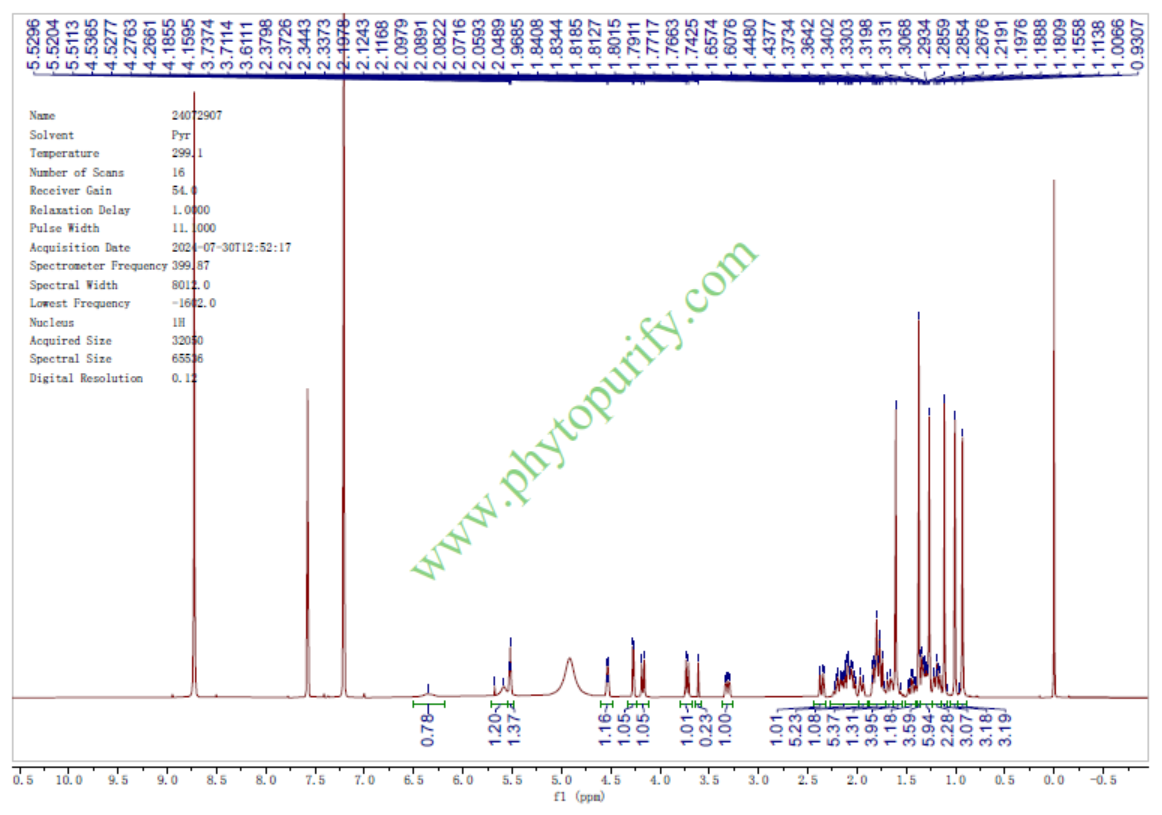
Identification Method: Mass, NMR
Packing: Brown vial or HDPE plastic bottle
Storage: Store in a well closed container, protected from air and light. Put into refrigerate or freeze for long term storage.
Whenever possible, you should prepare and use solutions on the same day. However, if you need to make up stock solutions in advance, we recommend that you store the solution as aliquots in tightly sealed vials at -20℃. Generally, these will be useable for up to two weeks.
The product could be supplied from milligrams to grams
Inquire for bulk scale.
Description:
Bayogenin, arjunolic acid, hederagonic acid and 4-epi-hederagonic acid are gly-cogen phosphorylase inhibitors with moderate potency.
References:
《Chinese Journal of Natural Medicines》 2010-06
Synthesis and Biological Evaluation of Arjunolic Acid, Bayogenin, Hederagonic Acid and 4-Epi-hederagonic Acid as Glycogen Phosphorylase Inhibitors To study glycogen phosphorylase inhibitory activity of natural pentacyclic triterpenes bearing 23-hydroxy or 24-hydroxy.
METHODS AND RESULTS:
Arjunolic acid, Bayogenin, hederagonic acid and 4-epi-hederagonic acid were synthesized from oleanolic acid as the starting material and biologically evaluated as glycogen phosphorylase inhibitors. Arjunolic acid, Bayogenin, hederagonic acid and 4-epi-hederagonic acid were successfully semi-synthesized by multiple steps. The synthesis of arjunolic acid was via 11 steps in about 10% overall yield, and Bayogenin via 14 steps in about 12% overall yield. Biological evaluation indicated that arjunolic acid, Bayogenin, hederagonic acid and 4-epi-hederagonic acid showed moderate potency of glycogen phosphorylase inhibition with IC50 of 53-103 μmol/L.
CONCLUSIONS:
Arjunolic acid, Bayogenin, hederagonic acid and 4-epi-hederagonic acid are gly-cogen phosphorylase inhibitors with moderate potency. Insert of 23-hydroxy or 24-hydroxy to oleanane skeleton has a tendency to be unfavorable to GP inhibition.
HPLC of Bayogenin
HNMR of Bayogenin
Storage conditions:Short-term storage at 2~8℃, long-term storage at -20 ~ -80℃
97.9900
4.5956
2.8372
.0113
1.9561
3.1972
Low
89.8915
4.9243
No
No
No
No
No
No
0.0
No
No
Yes
No
Hyperglycemia, as the core pathological feature of metabolic diseases such as diabetes, can lead to cardiovascular, neurological, kidney and other multi system complications, which seriously threaten human health. Although there are various types of hypoglycemic drugs in clinical practice, there are still problems such as insufficient efficacy, side effects, and secondary failure. Therefore, discovering lead compounds with novel structures and diverse mechanisms of action from natural products has always been an important direction for drug development. Triterpenoid saponins have attracted much attention in this field due to their broad biological activity and relatively low toxicity. Bayogen, a type of saponin derived from alfalfa(Medicago sativa L. The oleanane type pentacyclic triterpenoid sapogenins isolated from plants such as ________ have entered the research field in recent years due to their potential anti hyperglycemic activity. Early studies revealed that it is an inhibitor of glycogen phosphorylase, suggesting that it may intervene in blood glucose homeostasis by regulating the glycogen metabolism pathway. With the development of systems pharmacology and molecular docking technology, the potential target network of baicalein has been further expanded, involving multiple links closely related to hyperglycemia and its complications, such as epigenetic regulation, protein deubiquitination, insulin signaling pathway, glucose transport and metabolism, and amyloid protein processing. This article aims to provide a systematic review of the chemical properties, plant sources, pharmacological activities, multi-target mechanisms of action, and pharmacological properties of baicalein, in order to provide comprehensive scientific basis for the further development of this natural product as a lead compound for anti hyperglycemic effects.
Bei'e saponin element (CAS number: 6989-24-8) is an oleane type pentacyclic triterpenoid saponin element, with the chemical name 3 β, 2 α, 23-trihydroxyolean-12-en-28-oic acid. Its molecular formula is C30H48O6 and its molecular weight is 488.7090. Its core structure consists of five fused rings (A/B/C/D/E rings), belonging to the oleander 12-ene skeleton. The structural features include hydroxyl groups in β - and α - configurations at C-3 and C-2 positions, hydroxyl groups also attached to C-23 position, a carboxyl group connected to C-17 position (C-28 position), and a double bond at C-12 position. This structure serves as the basis for connecting saponins with sugar chains to form various types of saponins.
Its physicochemical properties are closely related to its pharmacological activity and drug formation. The calculated lipid water partition coefficient (LogP) is 4.5956, indicating that the compound has high lipophilicity, which is beneficial for its penetration of cell membranes and binding to intracellular targets, but may also affect its water solubility and bioavailability. Its topological polar surface area (TPSA) is 97.99 Å ², reflecting the surface area occupied by polar functional groups (hydroxyl, carboxyl) in the molecule. The predicted value of water solubility is relatively low, about 0.0113 mg/mL, which belongs to insoluble compounds. This suggests that solubilization strategies may be needed in formulation development (such as making prodrugs, nano formulations, or complexes). Preliminary drug risk assessment shows that its blood-brain barrier permeability is predicted to be "low", indicating that it may not easily enter the central nervous system. This may reduce the risk of central side effects for hypoglycemic drugs primarily targeting peripheral targets. In addition, it is predicted that there is no hERG potassium channel inhibitory activity (hERG inhibition: no), which reduces the potential risk of inducing QT interval prolongation and apical torsion type ventricular tachycardia in the heart. The Ames test predicted a value of 0.0, indicating that it may not have direct genetic toxicity and has a good safety starting point.
Bei'e saponin is mainly found in Fabaceae plants, especially in the alfalfa genus(Medicago). The preferred source is alfalfa(Medicago sativa L.), Commonly known as the "King of Grasses", its entire plant, especially the roots, is rich in various triterpenoid saponins, among which baicalein is one of the important saponin components. In addition, in some other medicinal plants such as Medicago polymorpha、Medicago arabica And some Trifolium It has also been detected in plants.
The extraction and isolation of baicalein from plant materials usually follow the conventional process of natural product chemistry. Firstly, dry and crushed plant materials are subjected to reflux extraction or ultrasound assisted extraction using methanol, ethanol, or aqueous alcohols to obtain crude total saponins extract. Due to the surface activity of saponins, water extraction is sometimes used. After vacuum concentration, the obtained crude extract was preliminarily enriched and decolorized using macroporous adsorption resins (such as D101, AB-8), washed with water to remove polar impurities such as polysaccharides and inorganic salts, and then eluted with different concentrations of ethanol to obtain saponin enriched sites.
Subsequently, the saponins need to be hydrolyzed to obtain sapogenins. The saponin enriched site is hydrolyzed by refluxing with acid (usually 2-4 M hydrochloric acid or sulfuric acid) in methanol or ethanol aqueous solution to break glycosidic bonds and release sapogenin (baicalein) and sugar chains. After neutralization and concentration of the hydrolysate, it is extracted with organic solvents such as ethyl acetate and chloroform, and the sapogenin is transferred to the organic phase due to enhanced lipophilicity. Finally, separation and purification were carried out by silica gel column chromatography, with different ratios of petroleum ether ethyl acetate or chloroform methanol gradient elution, and monitored by thin layer chromatography (TLC) or high performance liquid chromatography (HPLC). In recent years, preparative chromatography techniques such as high-speed counter current chromatography (HSCCC) have also been applied for efficient separation. The purified baicalein can be structurally confirmed by techniques such as nuclear magnetic resonance (NMR) and mass spectrometry (MS).
The pharmacological activity research of Bei'e Saponin mainly focuses on its potential to resist hyperglycemia and related metabolic disorders, and some studies also involve its anti-inflammatory, antioxidant and other auxiliary effects.
Lowering blood sugar and improving glucose metabolism As a known inhibitor of glycogen phosphorylase (GP), baicalein can directly intervene in liver glycogen breakdown, a key pathway for blood glucose elevation. GP is the rate limiting enzyme for glycogen breakdown, and its inhibition can reduce liver glucose output, thereby helping to lower fasting blood glucose. Animal model studies (such as streptozotocin induced diabetes rats) preliminarily showed that the administration of scallop saponin or its glycoside derivatives could significantly reduce blood glucose levels and improve oral glucose tolerance. In addition, its potential multi-target properties (see below) may synergistically act on multiple aspects such as insulin sensitivity, peripheral glucose uptake and utilization, achieving comprehensive regulation.
Improving insulin resistance Insulin resistance is the core pathological mechanism of hyperglycemia, especially type 2 diabetes. Research has shown that berberine may improve insulin resistance by activating the AMPK (AMP dependent protein kinase) pathway. AMPK is the "main switch" of cellular energy metabolism, and its activation can promote the translocation of glucose transporters (such as GLUT4), enhance fatty acid oxidation, and inhibit liver gluconeogenesis, thereby overall improving insulin sensitivity.
Anti inflammatory and antioxidant properties Chronic low-grade inflammation and oxidative stress are important driving factors for the occurrence and development of diabetes and its complications. As a triterpenoid compound, baicalein has been proven to have certain anti-inflammatory and antioxidant activities. It can inhibit the production of pro-inflammatory cytokines (such as TNF - α, IL-6) and alleviate oxidative stress damage. This effect is helpful to protect the function of pancreatic islet β cells and improve the function of vascular endothelium, so as to have potential prevention and treatment effects on complications of diabetes (such as atherosclerosis and nephropathy).
Neuroprotective potential Since its potential targets involve APP (amyloid precursor protein) and BACE1 (β - secretase 1), calyxasaponin may have intervention potential on diabetes related cognitive dysfunction or Alzheimer's disease like pathological changes. BACE1 is a key enzyme that generates neurotoxic A β peptides, and its inhibition may reduce the formation of amyloid plaques. However, its low blood-brain barrier permeability may limit its direct central role, and further research is needed to investigate the possibility of its impact through the "gut brain axis" or indirect mechanisms in the periphery.
Based on system pharmacology analysis and molecular docking studies, the anti hyperglycemic effect of Bei'e saponin is considered to be a network regulatory process involving multiple targets and pathways, surpassing single inhibition of glycogen phosphorylase.
Glycogen metabolism and gluconeogenesis regulation:
Regulation of insulin signaling pathway:
Epigenetics and protein homeostasis regulation:
Glucose uptake and processing:
Starch like protein pathway and esterase:
Fibrinolytic system:
In summary, baicalein may synergistically exert its anti hyperglycemic and metabolic syndrome improving effects through a complex "one drug, multiple targets" network, including glycogen breakdown, gluconeogenesis, insulin signaling, glucose transport, epigenetics, inflammation, and oxidative stress.
Despite the promising pharmacological mechanism of Bei'e Saponin, its drug like and pharmacokinetic properties are the key bottlenecks in its successful development as a drug.
absorb A higher LogP value (4.60) indicates good membrane permeability, which is beneficial for passive diffusion absorption in the intestine after oral administration. However, the extremely low water solubility (0.0113 mg/mL) is the primary factor limiting its oral bioavailability. In the gastrointestinal tract, poorly soluble drugs have a slow dissolution rate, incomplete absorption, and large variability. In addition, as a sapogenin, whether it will be further metabolized by intestinal microbiota or intestinal mucosal enzyme system, and whether there are substrate characteristics of efflux pumps (such as P-gp), still need to be experimentally clarified.
distribution The predicted blood-brain barrier permeability is low, mainly distributed in peripheral tissues. Its high lipophilicity may lead to its accumulation in adipose tissue, manifested as a larger apparent distribution volume (Vd), but the specific tissue distribution characteristics need to be determined through radiolabeling or LC-MS/MS methods in vivo studies.
Metabolism As a triterpenoid compound, baicalein is likely to undergo phase I metabolism (such as oxidation, reduction, and hydrolysis of cytochrome P450 enzymes) and phase II binding reactions (such as glucuronidation and sulfation) in the liver. The hydroxyl groups at positions C-3, C-2, and C-23 are potential metabolic sites. Clarifying its main metabolic enzymes, metabolites, and activities is crucial for evaluating drug interactions and individual differences. The prediction of no hERG inhibition and Ames negativity provides preliminary positive information for its safety assessment.
excretion It is expected that its prototype drug and metabolites will mainly be excreted through bile and kidneys. The specific excretion pathway and rate need to be studied in vivo.
Formulation challenges and optimization strategies In order to improve the pharmacological properties of Bei'e saponin, future research may need to focus on:
At present, there is still a lack of data on the complete preclinical pharmacokinetic studies (such as absolute bioavailability, half-life, clearance rate, etc. in animal models such as rats and dogs) of the Bei'e saponin system, which is a key gap that must be filled in the process of transitioning from active compounds to candidate drugs.
As a multi target natural triterpenoid, calyx saponin shows a unique application potential in the prevention and treatment of diabetes and its complications.
As a new anti diabetes lead compound Its multi-target mechanism of action, especially involving AMPK activation, PTP1B inhibition, potential SGLT2 inhibition, etc., may bring better blood glucose control effects than single target drugs and fundamentally improve insulin resistance. The combination use with existing drugs such as metformin, SGLT2 inhibitors, DPP-4 inhibitors may produce synergistic effects or be used for the development of compound formulations.
Prevention and treatment of complications of diabetes: Its anti-inflammatory and antioxidant activities, as well as its potential role in PAI1, APP/BACE1 and other targets, make it have exploratory value in preventing or delaying cardiovascular disease, nephropathy, neuropathy and even cognitive dysfunction in diabetes. Developing indications for complications is an important direction.
Structural optimization and derivative development Based on the parent nucleus structure of Bei'e saponin, systematic medicinal chemical modifications (such as glycosylation, esterification, and introduction of different functional groups) aim to optimize its water solubility, metabolic stability, target selectivity, and efficacy, which is an inevitable path to obtain better candidate drugs. Derivatives with higher selectivity can be designed for their different targets of action, such as AMPK, PTP1B, SGLT2.
Nutritional supplements or functional foods based on natural products Given that it is derived from the safe edible plant alfalfa, alfalfa extract moderately enriched with baicalein may be developed as a dietary supplement or functional food ingredient to assist in blood glucose management, but strict dose-response and safety evaluations are required.
Challenges faced and future research directions:
Bei'e sapogenin, a triterpenoid saponin derived from alfalfa, has gradually shown great potential as a multi-target natural lead compound for anti hyperglycemic effects, thanks to its initial discovery as a glycogen phosphorylase inhibitor. Its complex chemical structure determines its unique physicochemical properties and provides a structural basis for its interactions with multiple targets closely related to glucose metabolism, insulin signaling, inflammation, and neuroprotection, such as EHMT2, AMPK, PTPN1, SGLT2, etc. This "one drug, multiple targets" mode of action may provide new strategies for comprehensive regulation of blood glucose homeostasis, improvement of insulin resistance, and prevention and treatment of complications. However, its inherent low water solubility and incompletely elucidated pharmacokinetic behavior are the main obstacles that constrain its drug conversion. Future research should aim to confirm its multi-target network mechanism through experiments, optimize its drug properties using modern medicinal chemistry and formulation techniques, and conduct systematic preclinical and clinical evaluations. The study of calycosin is not only expected to provide new candidate molecules for the treatment of diabetes, but also provides an example for us to deeply understand the systematic and holistic nature of complex pharmacological effects of natural products.
