Lingzhi Alcohol A: Scientific Exploration from Traditional Fairy Grass to Modern Anti tumor Candidate Molecules
1. Overview
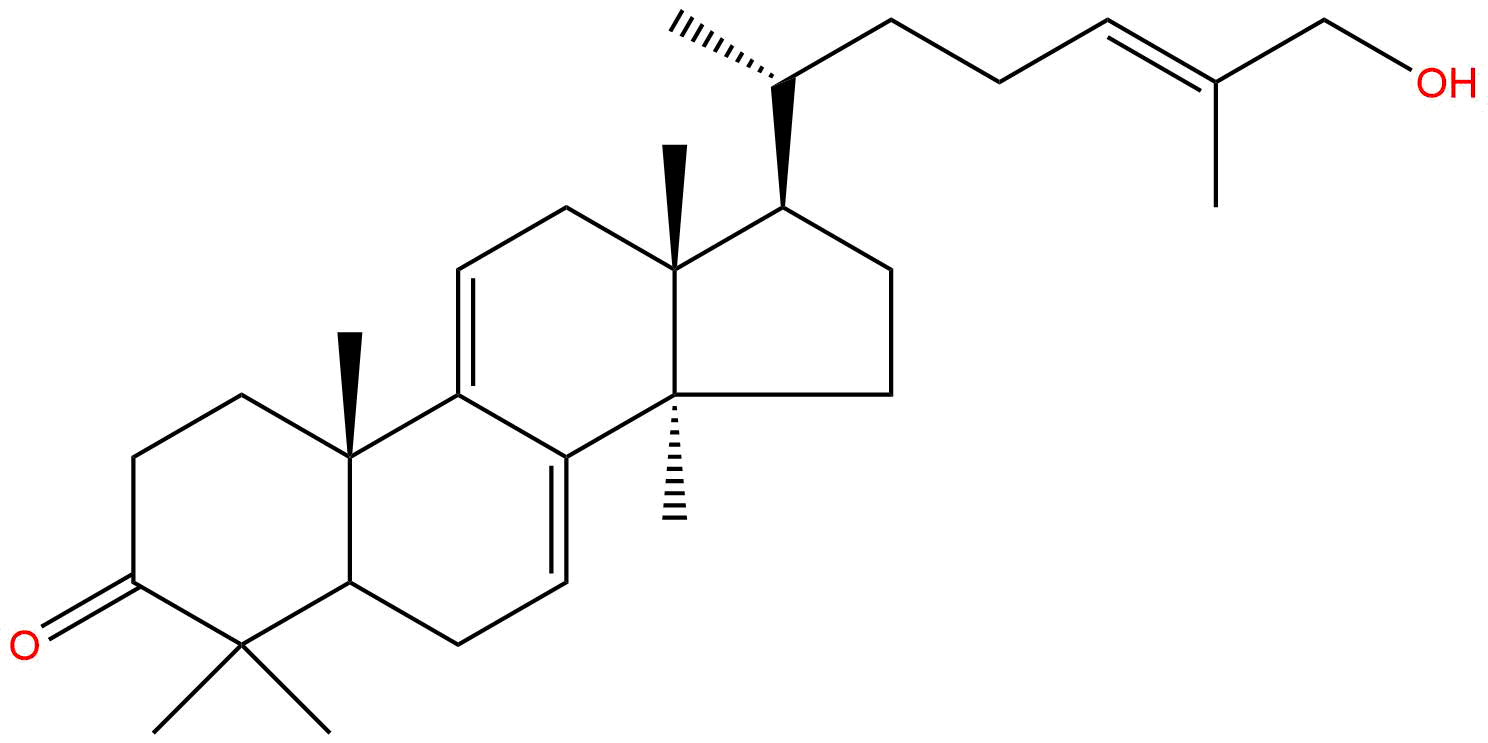
Ganoderol A, as a traditional medicinal fungus derived from Ganoderma lucidum(Ganoderma lucidum)The natural triterpenoids isolated from the middle are increasingly becoming a hot topic in modern natural product pharmaceutical research. Its CAS number is 104700-97-2, molecular formula is C30H46O2, and molecular weight is 438.6960 g/mol. Since its identification, research has revealed its multifaceted biological activities, including significant anti-inflammatory effects, protection of cells from ultraviolet (UVA) damage, inhibition of angiotensin-converting enzyme (ACE) activity, and interference with cholesterol biosynthesis. Of particular note, modern molecular biology research has linked its role to multiple key cell cycle and apoptosis regulatory targets (such as TP53, CASP3, MYC, BAX, CDKN1A), demonstrating enormous potential in the field of anti-tumor therapy. This article will start from its chemical essence, systematically sort out its plant origin, pharmacological mechanism, medicinal evaluation, and look forward to its future research and application prospects, aiming to provide professional and rigorous comprehensive popular science materials for researchers in related fields.
2. Chemical structure and physicochemical properties
Lingzhi alcohol A belongs to the tetracyclic triterpenoid class, and its SMILES structural formula is: C/C (=C \ CC C@@H[C@H]1CC[C@@]2(C)C3=CCC4C(C)(C)C(=O)CC[C@]4(C)C3=CC[C@]12C)CO。 This complex three-dimensional structure determines its unique physicochemical properties and biological activity.
From the analysis of pharmacological parameters:
- Molecular weight (MW):438.6960 g/mol, Slightly higher than the recommended upper limit of small molecule drug molecular weight (500 Da) in Lipinski's Rule of Five, but still within an acceptable range, with many successful natural product drugs having molecular weights in this range.
- Lipid water partition coefficient (LogP/LogD)The LogP value is 7.0960 and the LogD value is 7.0954. This value is significantly higher than the recommendation of Lipinski rule with LogP<5, indicating that ganoderic acid A has strong lipophilicity. This explains its extremely low water solubility (water_stolubility: 0.0008 mg/mL), which is the main challenge it needs to overcome in formulation development and in vivo delivery.
- Topological Polarity Surface Area (TPSA)37.3000 Å ², a relatively low value, is consistent with the typical TPSA<140 Å ² of small molecule drugs, indicating that their membrane permeability may be good.
- Permeability and Distribution The Caco-2 cell permeability (Caco2_permeability) is 13.1890, which belongs to highly permeable compounds. The blood-brain barrier permeability (BBB-permeability) is evaluated as "high", indicating that it may have central nervous system activity or be able to act on brain tumors. The plasma protein binding rate (PPB) is as high as 89.5583%, indicating that most drugs in the bloodstream bind to proteins, which may affect their free drug concentration and efficacy.
- Absorption and effectiveness The predicted effective penetration rate (Peff) of the human body is 7.6150 cm/s x 10 ^ -4, and the synthetic accessibility score is 4.7838, indicating that its oral absorption potential is still acceptable, but chemical synthesis is somewhat difficult.
In summary, Lingzhi alcohol A is a natural triterpenoid molecule with medium molecular weight, high lipophilicity, low water solubility, good membrane permeability, but high plasma protein binding rate. Its physicochemical properties lay the foundation for its biological activity and also indicate the direction that must be optimized for drug development.
3. Plant sources and traditional applications
The only known plant source of Lingzhi alcohol A is Lingzhi, commonly known as "Rui Cao" or "Xian Cao", with a scientific name of Ganoderma lucidum It belongs to the Ganoderma family. Lingzhi has a medicinal history of over two thousand years in East Asian countries such as China, Japan, and South Korea. It is revered as a "superior medicine" and is listed as a good product in the "Shennong Bencao Jing" for "nourishing the heart and qi, calming the soul, protecting the spirit, nourishing the essence and qi, strengthening muscles and bones, and good color".
In the traditional medical system, Ganoderma lucidum is considered to have the effects of strengthening the body, nourishing and strengthening the foundation, and prolonging life. It is commonly used to treat symptoms such as fatigue, cough, asthma, insomnia, indigestion, and tumors. Its application forms are diverse, including frying soup, soaking wine, and making powders or pills. Although ancient physicians were not aware of the specific chemical composition of Ganoderma lucidum extract A, thousands of years of practical experience have shown that Ganoderma lucidum extract has a wide range of physiological regulatory effects. Modern pharmacological research is based on these traditional wisdom, using chemical separation and activity tracking techniques to gradually identify a series of active ingredients in Ganoderma lucidum, such as ganoderic acid, ganoderic acid, and ganoderic polysaccharides. It attempts to explain the deep molecular mechanism of "strengthening the body and consolidating the foundation" in modern scientific language, especially its role in immune regulation and anti-tumor effects.
4. Pharmacological activity and mechanism of action
The existing research summarizes the multiple biological activities of Ganoderma lucidum alcohol A, including anti-inflammatory, anti UVA damage, inhibition of ACE, and cholesterol synthesis. However, the target information provided by the database (TP53, CASP3, MYC, BAX, CDKN1A) points to its mechanism of action at a deeper level Cell cycle regulation and programmed cell death (apoptosis) The core pathway is highly consistent with its "anti-tumor" related disease attributes. Below, we will systematically elucidate the possible anti-tumor mechanisms of these targets.
(1) Core target network and its association with anti-tumor therapy
- TP53 (tumor protein p53)Known as the "guardian of the genome", it is one of the most important tumor suppressor factors in cells. Under stress conditions such as DNA damage and oncogene activation, p53 is activated to regulate the expression of hundreds of downstream genes, leading to cell cycle arrest (giving DNA repair time), cell aging, or apoptosis. Lingzhi alcohol A acts on TP53, which may mean that it can activate or stabilize p53 protein, thereby initiating the growth inhibition or clearance program of tumor cells.
- CASP3 (cysteine protease-3)It is a key protease in the execution stage of cell apoptosis and belongs to the "death executor". Once activated by upstream signals such as the mitochondrial pathway or death receptor pathway, CASP3 cleaves various cytoskeletal and nuclear proteins, leading to irreversible morphological changes in cell apoptosis. The regulation of CASP3 by Ganoderma lucidum alcohol A may directly promote the apoptosis process of tumor cells.
- BAX (Bcl-2 related X protein)It is a pro apoptotic member of the Bcl-2 protein family. Under the stimulation of apoptotic signals, BAX forms oligomerization channels on the outer membrane of mitochondria, leading to the loss of mitochondrial membrane potential and the release of cytochrome C into the cytoplasm, thereby activating the CASP9/CASP3 cascade reaction. Lingzhi alcohol A may promote mitochondrial apoptosis by upregulating or activating BAX.
- MYC (oncogene c-Myc): is an important transcription factor that regulates genes related to cell proliferation, growth, metabolism, and apoptosis. The abnormally high expression of MYC is closely related to the occurrence and development of various tumors. Lingzhi alcohol A may inhibit the abnormal proliferation and metabolic reprogramming of tumor cells by suppressing the expression or activity of MYC.
- CDKN1A (cyclin dependent kinase inhibitor 1A, also known as p21)It is an important effector molecule downstream of p53. P21 can inhibit the activity of cyclin/cyclin dependent kinase complex, leading to cell cycle arrest in G1 phase. Lingzhi alcohol A may synergize with p53 to achieve cell cycle arrest by affecting CDKN1A.
(2) Hypothesis of Integration Mechanism
Based on the above targets, we can outline the possible network of anti-tumor effects of Ganoderma lucidum alcohol A:
Lingzhi alcohol A may enter tumor cells through direct or indirect means Activate/stabilize TP53 (p53)Activated p53, on one hand Upregulation of CDKN1A (p21) The expression of [substance] leads to cell cycle arrest in the G1 phase and inhibits tumor cell proliferation; On the other hand, p53 can Increase BAX Equal expression of pro apoptotic proteins, while possibly Inhibit MYC The survival signal. The activation of BAX triggers an increase in mitochondrial outer membrane permeability, releasing cytochrome C and activating the apoptotic protease cascade reaction, ultimately leading to Activate CASP3 Execute the apoptosis program. In addition, its anti-inflammatory activity (possibly by inhibiting pathways such as NF - κ B) can also alter the tumor microenvironment, indirectly inhibiting tumor growth and metastasis.
(3) Supplementary mechanisms for other pharmacological activities
- Inhibit cholesterol synthesis Perhaps by inhibiting key enzymes in cholesterol synthesis pathways such as HMG CoA reductase, which is similar to the target of many lipid-lowering drugs.
- Anti UVA damage It may be related to its antioxidant activity, by clearing free radicals or activating the cell's own antioxidant defense system (such as the Nrf2 pathway), protecting skin cells from UV induced oxidative stress and DNA damage.
- Inhibition of ACE activity It suggests that it may have a potential antihypertensive effect, but the specific mechanism needs to be further studied.
5. Evaluation of drug properties
Based on the provided pharmacokinetic parameters, we conducted a systematic evaluation of the potential of Ganoderma lucidum alcohol A using Lipinski's five rules, pharmacokinetics, and toxicity characteristics
(1) Lipinski's Five Rules Compliance Analysis(Rules for predicting oral activity):
1. Molecular weight<500 Da:438.7 (<500), in accordance with.
2. LogP < 5:7.10 (>5)Not in line. This is the main violation, indicating excessive fat solubility.
3. Number of hydrogen bond donors (inferred from structural formula, containing - OH, etc.): Approximately 2 (<5), consistent.
4. Number of hydrogen bond acceptors (inferred from structural formula, containing O atoms, etc.): Approximately 2 (<10), consistent.
Lingzhi alcohol A violates one of the five rules (LogP too high). Many oral medications also have one violation, so this does not completely negate their oral potential, but high LogP does bring challenges such as poor water solubility and possibly excessive metabolism.
(2) Pharmacodynamics and Formulation Challenges:
- absorb High Caco-2 permeability and high Peff value indicate that its intestinal absorption may be good. However, the extremely low water solubility (0.0008 mg/mL) is the main limiting factor for oral bioavailability. In the gastrointestinal tract, drugs must first dissolve before they can be absorbed. Future formulation development may require the use of technologies such as nanocrystals, solid dispersions, liposomes, or cyclodextrin inclusion to improve their solubility.
- distribution The high BBB penetration makes it promising for the treatment of brain tumors, but the high plasma protein binding rate (~90%) may lead to a decrease in tissue distribution volume and affect the strength and duration of drug efficacy.
- Metabolism and toxicity The Ames test (0.0) and chromosome aberration test (none) results were negative, indicating that it has no genetic toxicity. HERG inhibition is' no ', reducing the risk of causing QT interval prolongation in the heart. However, liver toxicity markers indicate that they may lead to elevated serum AST and ALT levels (Ser_SET: yes, Ser_LT: yes), suggesting a potential risk of liver cell damage, and liver toxicity assessment should be emphasized in subsequent development. Skin sensitization (Skid_Sens: Yes) also needs attention.
(3) Comprehensive evaluation:
Lingzhi alcohol A, as a lead compound, has the advantage of: clear Multi target anti-tumor mechanism, good Membrane permeability and potential for brain distribution, and preliminary safety(No genetic toxicity or cardiac toxicity). Its main weakness lies in Physicochemical properties(high lipophilicity, low water solubility) and potential Hepatotoxicity and skin sensitization。
Therefore, its pharmacological pathway may include:
1. Direct optimization By chemical modification (such as introducing polar groups), LogP can be reduced while retaining activity, improving water solubility and metabolic properties.
2. Breakthrough of formulations Develop advanced drug delivery systems for existing structures to overcome solubility and targeting challenges.
3. As a tool molecule Used to study the mechanism of action of p53/apoptosis related pathways in specific tumors.
6. Research Status and Application Prospects
At present, research on Ganoderma lucidum alcohol A is still in the preclinical stage. A large amount of research has focused on the validation of its anti-tumor and anti-inflammatory activities at the cellular level in vitro, as well as the preliminary exploration of its mechanism of action, such as the regulation of targets such as p53 and Caspase-3 mentioned above. Its in vivo pharmacological, pharmacokinetic, and toxicological data in animal models are still relatively lacking, which is a key bottleneck in promoting its development into a drug.
Future research directions It may focus on the following levels:
1. In depth mechanism research By utilizing techniques such as gene knockout, chromatin immunoprecipitation, proteomics, etc., the direct interaction mode between Ganoderma lucidum alcohol A and targets such as TP53 and MYC was accurately verified, and a complete signal network map was drawn to discover its advantageous indications (such as sensitivity to p53 wild-type or specific mutant tumors).
2. Pharmacokinetic and Toxicological Systematic Review Conduct standardized animal experiments to obtain detailed data on absolute bioavailability, tissue distribution, metabolites, and major toxic target organs, especially to clarify the dose-dependent and reversible hepatotoxicity.
3. Research on Structural Optimization and Structure Performance Relationship Using it as the core skeleton, a series of derivatives are synthesized, and the relationship between their chemical structure and anti-tumor activity, water solubility, and toxicity is systematically studied, aiming to discover candidate compounds with better activity and more balanced properties.
4. Combination therapy research Explore the combined use of Ganoderma lucidum alcohol A with existing chemotherapy drugs, targeted drugs, or immune checkpoint inhibitors to see if it can produce synergistic effects, reduce drug resistance, or alleviate toxic side effects.
Application Prospects:
- Lead compounds of anti-tumor drugs This is its most core prospect. Especially in the fields of central nervous system tumors, liver cancer, lung cancer, etc., it may have its own characteristics.
- Functional food or health supplement additives As one of the characteristic active ingredients of Ganoderma lucidum extract, it is used to develop products with auxiliary regulation of immunity, anti fatigue, and protection of skin health.
- Active ingredients in cosmetics Based on its anti UVA damage and anti-inflammatory activity, it can be used to develop high-end sunscreen, anti-aging, or soothing and repairing skincare products.
In short, Lingzhi alcohol A is a star molecule that has emerged from the traditional treasure Lingzhi, carrying millennium wisdom and facing scientific challenges in modern drug development. Through interdisciplinary and continuous in-depth research, it is expected to transform from an active natural product into an innovative drug or high-value product that benefits human health.