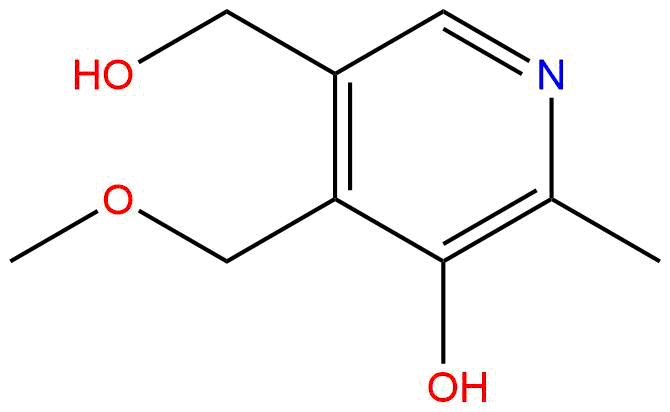


Product name: Ginkgotoxin
Synonym name: 4-Methoxypyridoxine; 4'-Methoxypyridoxine; 4'-O-Methylpyridoxine
Catalogue No.: BP2187
Cas No.: 1464-33-1
Formula: C9H13NO3
Mol Weight: 183.207
Botanical Source: Ginkgo biloba L.
Type of Compound:
Purity: 95%~99%
Analysis Method: HPLC-DAD or/and HPLC-ELSD
Identification Method: Mass, NMR
Packing: Brown vial or HDPE plastic bottle
Storage: Store in a well closed container, protected from air and light. Put into refrigerate or freeze for long term storage.
Whenever possible, you should prepare and use solutions on the same day. However, if you need to make up stock solutions in advance, we recommend that you store the solution as aliquots in tightly sealed vials at -20℃. Generally, these will be useable for up to two weeks.
The product could be supplied from milligrams to grams
Inquire for bulk scale.
For Reference Standard and R&D, Not for Human Use Directly.
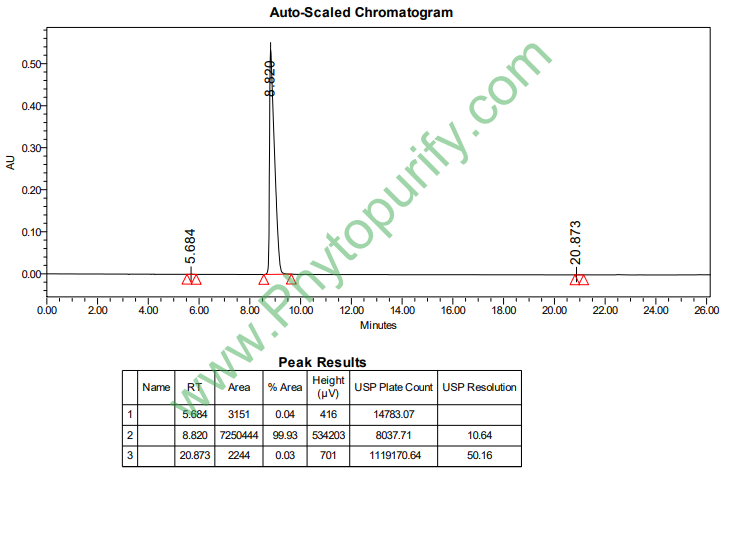
HPLC of Ginkgotoxin
Storage conditions:Short-term storage at 2~8℃, long-term storage at -20 ~ -80℃
62.5800
.7587
.7501
10.9508
2.5413
7.2182
High
21.9410
2.5293
Yes
Yes
No
No
No
Yes
0.0
Yes
No
Yes
No
Ginkgo biloba(Ginkgo biloba L.), As a "living fossil" in the plant kingdom, its extracts have been applied for decades in improving cognitive function, treating peripheral vascular diseases, and other fields, with a vast amount of related research. However, in addition to highly acclaimed active ingredients such as ginkgolides and flavones, there is also a class of pyridine like substances with potential neurotoxicity present in ginkgo fruits (white fruits) and leaves - ginkgotoxin (CAS: 1464-33-1). For a long time, ginkgo toxin has attracted attention from the toxicology community due to its structural similarity with vitamin B6 (pyridoxine) and its potential anti vitamin B6 effects, and related poisoning case reports are also not uncommon. However, in recent years, research has gradually revealed that under specific pathological conditions, especially in central nervous system injury diseases such as cerebral ischemia, ginkgotoxins may exhibit complex and potentially therapeutic multiple pharmacological activities by acting on a series of key molecular targets. This cognitive shift from "toxins" to "potential drug lead compounds" highlights the dialectical and complex nature of natural product research. This article aims to systematically review the chemical characteristics, plant sources, pharmacological activities of Ginkgo biloba toxin, and focus on its mechanism of action, pharmacological evaluation, and clinical application prospects in the network of targets related to cerebral ischemia, in order to provide a scientific perspective for the deep development and safe application of this unique natural product.
Ginkgo toxin, chemically named 4 '- O-Methylpyridoxine, is a structural analogue of the vitamin B6 family (including pyridoxine, pyridoxal, pyridoxamine, and their phosphate esters). Its molecular formula is C9H13NO3 and its molecular weight is 183.2070. Structurally, ginkgo toxin retains the pyridine ring and hydroxymethyl side chain of pyridoxine core, but the hydrogen on its 5-hydroxymethyl group is replaced by methoxy (- OCH3). This subtle structural modification is the chemical basis for the fundamental difference between its biological effects and vitamin B6.
In terms of physical and chemical properties, the calculated lipid water partition coefficient (LogP) is 0.7587, indicating that the compound has a certain degree of lipophilicity, but overall still tends to be hydrophilic. Its topological polar surface area (TPSA) is 62.5800 Å ², reflecting the proportion of polar atoms (N, O) in the molecule, which is consistent with the presence of pyridine nitrogen atoms and multiple hydroxyl and methoxy oxygen atoms in the structure. The water solubility data is 10.9508 mg/L, indicating that it has a certain solubility in water, but not highly soluble. It is particularly crucial that its blood-brain barrier (BBB) permeability is predicted to be "high", which is closely related to its moderate LogP value and small molecular weight, and directly explains why it can enter the central nervous system and produce neurobiological effects. In addition, preliminary pharmacological risk assessment showed no inhibitory activity on hERG potassium channels (hERG inhibition: No), and the Ames test result was 0.0, suggesting that it may not have cardiotoxicity or genotoxicity risks, providing preliminary safety data support for further research.
Ginkgo toxins mainly exist in the seeds (i.e. white fruits) of Ginkgo biloba, and are also distributed in small amounts in the leaves. As a traditional medicinal and edible dual-use item, ginkgo biloba is widely consumed in East Asia. However, excessive or improper consumption (especially raw food) can easily lead to poisoning, and its core toxic component is ginkgotoxin. Research has shown that the content of ginkgotoxins in ginkgo varies greatly depending on the place of origin, variety, maturity, and storage conditions, and is usually higher in fresh seeds.
Solvent extraction method is commonly used to extract ginkgo toxins from plant materials. Due to the good water solubility and certain lipophilicity of ginkgo toxin, commonly used extraction solvents include water, methanol, ethanol, or alcohol water mixed solutions in different ratios. The typical extraction process is to use solvents for ultrasonic assisted extraction or hot reflux extraction of dried and crushed white fruit or ginkgo leaves, followed by filtration and concentration to obtain crude extract. Further purification and separation rely on chromatographic techniques. Considering that ginkgo toxin is a highly polar nitrogen-containing heterocyclic compound, silica gel column chromatography, reverse phase C18 column chromatography (such as high-performance liquid chromatography, HPLC), or ion exchange chromatography are commonly used for separation and purification. In modern analysis, liquid chromatography-mass spectrometry (LC-MS) or gas chromatography-mass spectrometry (GC-MS) techniques are often used for qualitative and quantitative analysis of ginkgo toxins in extracts to ensure the accuracy and reproducibility of research. It is worth noting that in the development of standardized extracts (such as EGb 761) using Ginkgo biloba leaves as raw material, strict process control is aimed at removing or greatly reducing the content of potential harmful ingredients such as Ginkgo toxins to ensure the safety of the product.
Traditionally, pharmacological research on ginkgo toxins has focused on their toxicity. As a structural analogue of vitamin B6, it can competitively inhibit various enzymes that use pyridoxal phosphate (PLP) as a coenzyme, particularly glutamate decarboxylase (GAD) and gamma aminobutyric transaminase (GABA-T). This can lead to a decrease in the synthesis and an increase in the breakdown of the inhibitory neurotransmitter gamma aminobutyric acid (GABA), thereby disrupting the excitatory inhibitory balance of the central nervous system and causing acute toxic symptoms such as seizures, vomiting, and consciousness disorders, which can be life-threatening in severe cases.
However, recent studies, particularly in disease models such as cerebral ischemia, have revealed the neuroprotective or disease regulatory activity that Ginkgo biloba toxins may possess in specific pathological contexts. This seemingly contradictory 'hormesis' effect is not uncommon in natural products. Research has shown that in cellular and animal models of cerebral ischemia/reperfusion injury, treatment with low concentrations or specific doses of ginkgolide has the potential to alleviate oxidative stress, inhibit inflammatory responses, reduce neuronal apoptosis, improve blood-brain barrier integrity, and promote functional recovery. Its activity is no longer limited to simple vitamin B6 antagonism, but involves extensive regulation of multiple pathways such as energy metabolism, amyloid production, signal transduction, immune inflammation, and cytoskeletal stability. These findings have prompted researchers to re-examine ginkgo toxin as a potential lead compound with multi-target properties, rather than a simple toxin.
The complex pharmacological activities exhibited by Ginkgo biloba toxins in diseases such as cerebral ischemia stem from their interactions with multiple key molecular targets, forming a multidimensional and networked mechanism of action.
Energy metabolism and stress response core: AMPK (PRKAA1)AMP activated protein kinase (AMPK) is a central regulator of cellular energy metabolism. Activation of AMPK can help restore energy balance during cerebral ischemia energy crisis. Research has shown that ginkgo toxins may regulate the activity of AMPK by affecting the AMP/ATP ratio or acting directly, thereby affecting downstream pathways such as mTOR and autophagy, and exerting a regulatory effect on cell survival under ischemic stress.
Alzheimer's disease-related pathological targets: APP and BACE1 Cerebral ischemia is an important risk factor for vascular dementia and Alzheimer's disease (AD). Starch like precursor protein (APP) and its β - site cleaving enzyme 1 (BACE1) are key molecules involved in the production of β - amyloid protein (A β). Ginkgo toxin has been reported to potentially interfere with the processing of APP or inhibit the activity of BACE1, thereby reducing the neurotoxic production of A β, providing a potential intersection for the prevention and treatment of cognitive impairment after cerebral ischemia.
Signal transduction and inflammation regulation nodes:
Blood brain barrier and DNA repair related targets:
Cytoskeleton stable target: MAPT The abnormal excessive phosphorylation and aggregation of microtubule associated protein Tau (MAPT) are characteristics of tau protein diseases such as AD, and also occur after cerebral ischemia. Ginkgo biloba toxin may indirectly regulate the phosphorylation status of Tau protein by affecting the activity of related kinases or phosphatases, which helps maintain the stability of neuronal cytoskeleton.
In summary, the mechanism of action of ginkgo toxin is not through a single target, but rather acts as a "multi-directional regulator" that simultaneously acts on multiple nodes closely related to cerebral ischemia pathophysiology, such as AMPK, APP/ACE1, inflammation related receptor (CLEC4E), signal kinase (PRKCA, MAPK1), and PTPN1, forming a synergistic network that exerts potential neuroprotective effects from multiple aspects, including energy recovery, reduction of toxic protein production, inhibition of inflammation, and regulation of signal transduction.
Based on the aforementioned compound parameters, Ginkgo biloba toxin exhibits certain pharmacological properties, but there are also significant challenges.
Advantage aspects Low molecular weight (183.2), conducive to membrane absorption; Moderate LogP value (0.76) and high blood-brain barrier permeability prediction are valuable characteristics for targeting central nervous system diseases; No hERG inhibition or Ames mutagenicity alert, preliminary safety assessment is good.
Challenges and unknowns:
1. Lack of pharmacokinetic (PK) research Currently, there is very limited systematic research on the absorption, distribution, metabolism, and excretion (ADME) of ginkgo toxins in the body. The key PK parameters such as oral bioavailability, plasma protein binding rate, major metabolic organs and metabolites, and elimination half-life are not yet clear. Its interaction with vitamin B6 (competitive antagonism) may significantly affect its own metabolism and the activity of endogenous PLP dependent enzymes, which constitutes the unique complexity of its PK and pharmacodynamics (PD).
2. Treating narrow windows As a known neurotoxin, its effective dose may be very close to the toxic dose. The biggest obstacle to developing its pharmacological properties is determining a safe treatment window that has neuroprotective effects in disease models and does not cause vitamin B6 deficiency or acute neurotoxicity.
3. The double-edged sword effect of the mechanism of action Its regulatory effect on multiple targets may be beneficial in disease states, but may cause interference in normal physiological states. For example, inhibition of BACE1 may reduce A β, but it may also affect the processing of other important physiological substrates.
4. Preparation and delivery Although its BBB permeability is good, advanced formulation technology is needed to achieve targeted lesion sites, controlled release to maintain therapeutic concentration, and minimize systemic exposure.
Therefore, future drug efficacy evaluation requires in-depth preclinical ADME research and precise definition of its dose-response relationship and safety range in various animal models of cerebral ischemia. It is worth exploring strategies to combine it with appropriate supplementation of vitamin B6, or to reduce direct toxicity and improve selectivity through chemical structural modifications (such as prodrugs or analogues).
The clinical application prospects of ginkgo toxin are full of challenges but also contain unique opportunities, and its development path may be different from conventional natural products.
As an adjuvant or novel lead compound for stroke treatment Given its multi-target neuroprotective potential demonstrated in cerebral ischemia models, the most direct prospect is as a candidate drug for acute ischemic stroke or prevention of ischemia-reperfusion injury. However, rigorous preclinical studies must first be conducted to demonstrate its absolute safety at therapeutic doses and its advantages over existing therapies, such as stronger blood-brain barrier penetration and a broader spectrum of mechanisms of action.
Preventive interventions for vascular cognitive impairment and Alzheimer's disease Ginkgo biloba toxin or its structurally optimized derivatives may be used to treat vascular dementia or mixed dementia, especially those closely related to cerebral ischemic injury, in response to their impact on the activity of APP/ACE1 and Tau proteins.
The Translational Medical Value of Toxins The research paradigm of ginkgo toxin itself has important implications. It teaches us that natural products, especially those known to be toxic, may demonstrate therapeutic value in specific disease models. This encourages researchers to examine natural product libraries with a more open and dialectical perspective, utilizing modern molecular biology and network pharmacology tools to rediscover new uses for "old toxins".
Structural optimization and precise drug delivery Future research should focus on the rational structural modification of ginkgo toxins. For example, by introducing specific functional groups, the aim is to preserve their activity against brain ischemia related targets such as CLEC4E and BACE1 while weakening their ability to antagonize key enzymes involved in vitamin B6 metabolism, thereby broadening the therapeutic window. At the same time, developing brain targeted nano delivery systems to achieve precise and controllable release at the lesion site is another key technological direction to overcome its systemic toxicity.
The extremely high threshold for clinical research Any clinical development based on ginkgo toxin must be based on extremely sufficient preclinical safety data, and a rigorous clinical trial protocol must be designed to closely monitor any signs related to vitamin B6 deficiency or neurotoxicity. Its first human trial will require extra caution.
Ginkgo toxin, a pyridine compound that has long been considered a safety hazard for Ginkgo biloba consumption, is gradually demonstrating its multifaceted potential as a neuroprotective agent with the deepening of scientific research. The research process vividly illustrates the dialectical principles of natural product pharmacology, from the classic mechanism of antagonizing the toxicity of vitamin B6 to the revelation that it may play a beneficial role in the pathological process of cerebral ischemia by regulating multi-target networks such as AMPK, APP/ACE1, CLEC4E, MAPK, etc. Although its significant toxicity characteristics and narrow therapeutic window constitute the main obstacles to its drug conversion, this is also where its unique value lies: it provides an excellent research template for exploring how to transform a highly active, multi-target but toxic natural product into a safe and effective therapeutic drug through chemical and pharmaceutical means. In the future, through in-depth molecular mechanism analysis, systematic pharmacological evaluation, clever drug chemical modification, and innovative delivery strategies, Ginkgo biloba toxin is expected to transform from a hidden "poison pill" in ancient Ginkgo biloba into a new weapon for dealing with major neurological diseases such as cerebral ischemia, providing valuable experience and inspiration for the deep development of natural products and translational medicine.
