


Product name: Liquiritin
Synonym name: Liquiritoside
Catalogue No.: BP0874
Cas No.: 551-15-5
Formula: C21H22O9
Mol Weight: 418.398
Botanical Source: Glycyrrhiza glabra (licorice) and Glycyrrhiza uralensis (Chinese licorice)
Physical Description: Powder
Type of Compound: Flavonoids
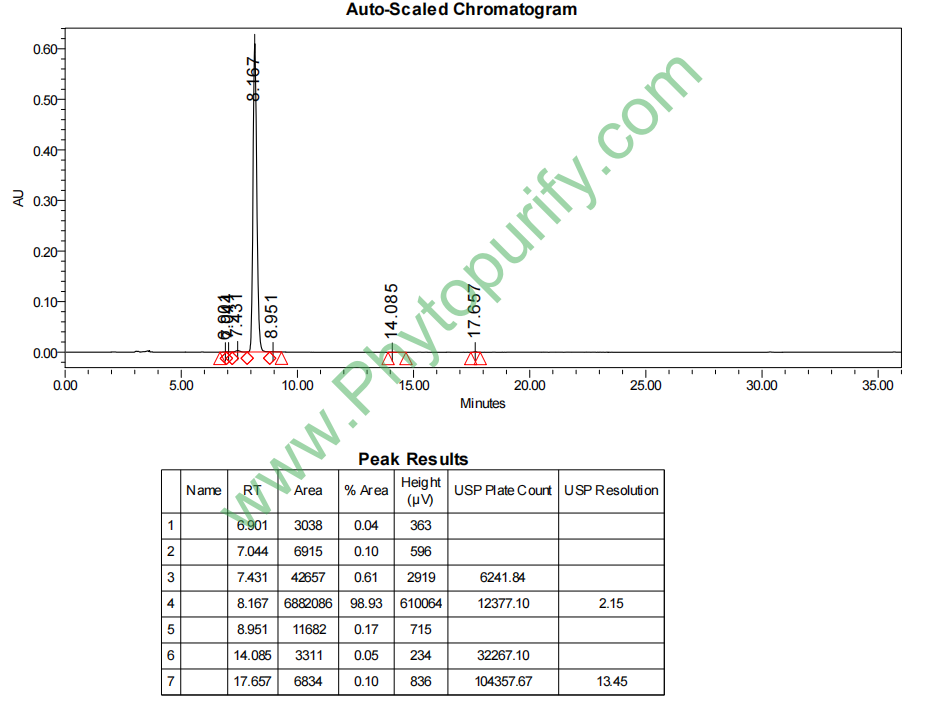
Purity: 95%~99%
Analysis Method: HPLC-DAD or/and HPLC-ELSD
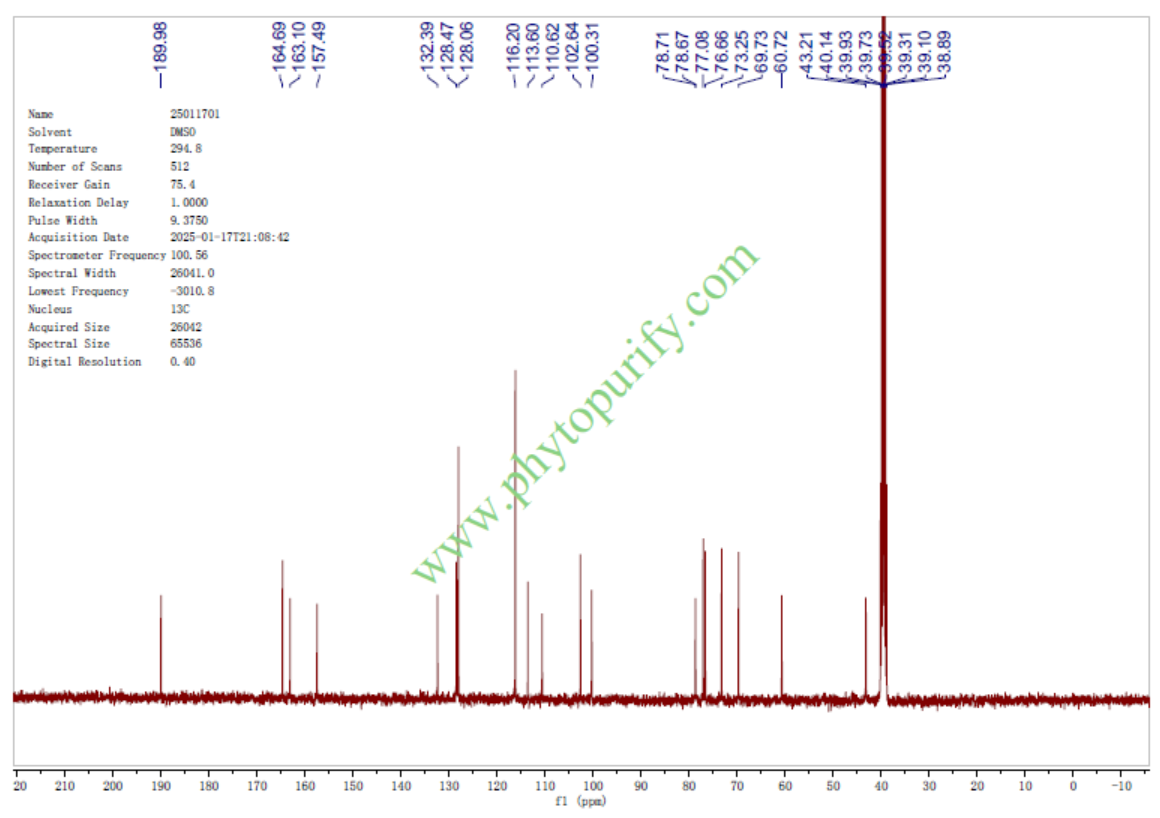
Identification Method: Mass, NMR
Packing: Brown vial or HDPE plastic bottle
Storage: Store in a well closed container, protected from air and light. Put into refrigerate or freeze for long term storage.
Whenever possible, you should prepare and use solutions on the same day. However, if you need to make up stock solutions in advance, we recommend that you store the solution as aliquots in tightly sealed vials at -20℃. Generally, these will be useable for up to two weeks.
The product could be supplied from milligrams to grams, up to kilograms
Inquire for bulk scale.
Descriptions:
Liquiritin, a flavone compound derived from Glycyrrhiza uralensis, it can effectively reverse alteration in immobility time and sucrose consumption, can increase SOD activity, inhibit lipid peroxidation, and lessen production of MDA, demonstrates that a potential antidepressant-like effect of liquiritin treatment on chronic variable stress can induce depression model rats, which might be related to defense of liquiritin against oxidative stress.[1]
Liquiritin has neuroprotective effect against focal cerebral ischemia/reperfusion in mice via its antioxidant and antiapoptosis properties, it might be a potential agent against cerebral I/R injury in mice.[2]
Liquiritin significantly promotes the neurite outgrowth stimulated by NGF in PC12 cells in dose dependant manners whereas the liquiritin alone did not induce neurite outgrowth, and it has the neurotrophic effect on the overexpression of neural related genes such as neurogenin 3, neurofibromatosis 1, notch gene homolog 2, neuromedin U receptor 2 and neurotrophin 5; liquiritin also modulate ERK? and AKT/GSK?3β?dependent pathways to protect against glutamate?induced cell damage in differentiated PC12 cells,thus, liquiritin may be a good candidate for treatment of various neurodegenerative diseases such as Alzheimer’s disease or Parkinson’s disease.[3,4]
Liquiritin can attenuate advanced glycation end products-induced endothelial dysfunction via RAGE/NF-κB pathway in human umbilical vein endothelial cells, it may be a promising agent for the treatment of vasculopathy in diabetic patients.[5]
References:
[1] Zhao Z, Wang W, Guo H, et al. Behal Brain Res, 2008, 194(194):108-13.
[2] YaXuan Sun, Yue Tang, AiLi Wu, et al.J Asian Nat Prod Res, 2010, 12(12):1051-60.
[3] Chen Z A, Wang J L, Liu R T, et al. Cytotechnol, 2009, 60(60):125-32.
[4] Teng L, Meng Q, Lu J, et al. Mol Med Rep, 2014, 10(2):818-24.
[5] Zhang X, Song Y, Han X, et al. Mol Cell Biochem, 2013, 374(1-2):191-201.
[6] Seo C S, Kim J H, Shin H K. Pak J Pharm Sci, 2014, 27(4):819-24.
HPLC of Liquiritin
NMR of Liquiritin
Storage conditions:Short-term storage at 2~8℃, long-term storage at -20 ~ -80℃
145.9100
.4366
.4265
2.1806
.6019
.1241
Low
72.8772
3.8558
No
No
No
No
No
No
0.0
Yes
Yes
Yes
Yes
Natural products, as an important source of drug discovery, play an irreplaceable role in maintaining human health and treating diseases. Licorice(Glycyrrhiza uralensis Fisch., as one of the most widely used herbs in traditional Chinese medicine, is known as the "old man of the country" and its medicinal history can be traced back thousands of years. Licorice and its active ingredients exhibit significant pharmacological activities in anti-inflammatory, antiviral, hepatoprotective, and anti ulcer aspects, among which flavonoids are an important group of active ingredients in licorice.
Glycyrrhizin (CAS number: 551-15-5) is a rich dihydroflavonoid compound in licorice and is one of the core components of licorice flavonoids. In recent years, with the continuous deepening of research on glycyrrhizin, its unique pharmacological activity spectrum has gradually been revealed. Research has shown that glycyrrhizin is an effective competitive aldehyde ketone reductase 1C1 (AKR1C1) inhibitor, with half maximal inhibitory concentrations (IC50) of 0.62 μ M, 0.61 μ M, and 3.72 μ M for AKR1C1, AKR1C2, and AKR1C3, respectively. This discovery closely links the target of glycyrrhizin with key physiological processes such as steroid hormone metabolism and prostaglandin synthesis.
What is even more remarkable is that glycyrrhizin exhibits various pharmacological activities, including antioxidant damage, neuroprotective, anticancer, and anti-inflammatory effects. Its antioxidant activity is closely related to the regulation of the nuclear factor E2 related factor 2 (NFE2L2/NRF2) signaling pathway, which can upregulate the expression of antioxidant enzymes such as superoxide dismutase 1 (SOD1), catalase (CAT), glutathione peroxidase 1 (GPX1), heme oxygenase 1 (HMOX1), and superoxide dismutase 2 (SOD2). The multi-target and multi pathway action characteristics make glycyrrhizin a hot molecule in the pharmacological research of natural products.
This article will systematically review the research progress of glycyrrhizin from the aspects of chemical structure and physicochemical properties, plant sources and extraction methods, pharmacological activity research, mechanism of action and molecular targets, drug evaluation and pharmacokinetics, clinical application prospects and prospects, in order to provide reference for the in-depth research and development of this natural product.
The chemical name of glycyrrhizin is 7-hydroxy-4 '- (β - D-glucosoxy) - dihydroflavone, with a molecular formula of C21H22O9 and a molecular weight of 418.3980. Its structure consists of a dihydroflavonoid core and a glucose group: the C ring of the dihydroflavonoid core is a saturated pyranone ring, the 7 position of the A ring is a hydroxyl group, and the 4 'position of the B ring is connected to β - D-glucose through an oxygen glycosidic bond. This glycosylation modification not only increases the water solubility of the molecule, but also affects its interaction mode with biological targets.
From a structural classification perspective, glycyrrhizin belongs to the dihydroflavonoid glycoside class and is one of the typical flavonoid components in licorice. Its glycoside is glycyrrhizin, which also has important pharmacological activity. Glycyrrhizin and glycyrrhizin can be converted into each other in the body, forming a metabolic balance. This glycoside glycoside relationship is of great significance in the efficacy of drugs.
The theoretical calculation parameters of glycyrrhizin provide important references for its pharmacological evaluation. The lipid water partition coefficient (LogP) of the compound is 0.4366, indicating moderate lipophilicity and favorable distribution and transport on biofilms. The topological polar surface area (TPSA) is 145.9100 Å ², which is higher than the recommended upper limit of 140 Å ² for oral medications, indicating the possibility of some membrane permeability limitation. The water solubility parameter is 2.1806, which belongs to a moderately water-soluble compound, consistent with the presence of multiple hydroxyl and sugar groups in its molecule.
In terms of drug safety prediction, the blood-brain barrier penetration ability of glycyrrhizin has been evaluated as "low", which may pose a challenge for the development of drugs that require central nervous system action, but may reduce the risk of central nervous system side effects for peripheral targeted therapy. The prediction result of hERG inhibition is' no ', indicating a low risk of cardiac toxicity. The Ames test result is 0.0, indicating a low risk of genetic toxicity. These safety parameters provide favorable conditions for the further development of glycyrrhizin.
It is worth noting that the physicochemical properties of glycyrrhizin are obtained based on theoretical calculations, and actual experimental measurements may vary due to factors such as measurement conditions and sample purity. In addition, the presence of glycosides may lead to their hydrolysis into aglycones by gut microbiota or liver enzymes in vivo, thereby altering their actual exposure form and pharmacokinetic characteristics.
Glycyrrhizin mainly comes from the genus Glycyrrhiza in the legume family(Glycyrrhiza)Plants, including Ural licorice(G. uralensis)Swelling fruit licorice(G. inflata)He Guangguo Licorice(G. glabra)Waiting for the inclusion of varieties in the pharmacopoeia. Among them, Ural licorice is one of the varieties with the highest content of glycyrrhizin, and its roots and rhizomes are traditional medicinal parts. The content of glycyrrhizin in licorice varies significantly depending on the variety, origin, harvest season, and processing method, typically fluctuating between 0.5% and 2.0%.
In addition to plants of the licorice genus, recent studies have found that glycyrrhizin is also present in other plants, such as the leguminous plant licorice(G. pallidiflora)And some orchids, but with much lower content than licorice. Therefore, licorice remains the main natural source of glycyrrhizin.
The extraction method of glycyrrhizin has gone through a development process from traditional solvent extraction to modern green extraction technology. The traditional method mainly relies on ethanol water mixed solvent reflux extraction, usually using 50% -70% ethanol to extract 2-3 times at 60-80 ℃ for 1-2 hours each time. This method is easy to operate and cost-effective, but it has shortcomings such as long extraction time, high solvent consumption, and poor selectivity.
In recent years, various modern extraction techniques have been applied to the extraction of glycyrrhizin in order to improve extraction efficiency and selectivity. Ultrasound assisted extraction utilizes the cavitation effect and mechanical vibration of ultrasound, which can significantly shorten the extraction time to 30-60 minutes and increase the yield by 15% -30%. Microwave assisted extraction utilizes the dielectric heating effect of microwaves to rupture the cell wall, accelerate the dissolution of target components, and shorten the extraction time to 10-20 minutes. In addition, enzyme assisted extraction utilizes cellulases, pectinases, and other enzymes to disrupt cell wall structure, which can improve the extraction rate of glycyrrhizin, especially suitable for industrial production.
In terms of separation and purification, macroporous adsorption resin method is one of the most commonly used methods. By selecting appropriate resin types (such as HPD-100, AB-8, etc.) and elution conditions (ethanol concentration gradient), glycyrrhizin with a purity of over 90% can be obtained. High speed countercurrent chromatography and preparative high-performance liquid chromatography can be used for the preparation of high-purity glycyrrhizin, with a purity of over 98%, suitable for pharmacological research and standard preparation.
The quality control of glycyrrhizin is usually achieved by high-performance liquid chromatography, using a C18 reverse phase chromatography column as the stationary phase, acetonitrile water or methanol water as the mobile phase, and a detection wavelength of 276 nm (the maximum absorption wavelength of glycyrrhizin). The Chinese Pharmacopoeia stipulates that the content of glycyrrhizin in licorice should not be less than 0.50%, which provides a basis for quality control of licorice medicinal materials and extracts.
Oxidative stress is the common pathological mechanism of the occurrence and development of many diseases, including neurodegenerative diseases, cardiovascular diseases, diabetes and its complications. Glycyrrhizin exhibits significant activity in antioxidant damage, and its mechanism of action involves two aspects: direct clearance of free radicals and indirect regulation of the antioxidant enzyme system.
In vitro studies have shown that glycyrrhizin can effectively scavenge 1,1-diphenyl-2-trinitrophenylhydrazine (DPPH) radicals, hydroxyl radicals, and superoxide anion radicals, and its scavenging ability is concentration dependent. In cell models, glycyrrhizin pretreatment can significantly reduce oxidative damage induced by hydrogen peroxide (H ₂ O ₂) or tert butyl hydroperoxide, decrease intracellular reactive oxygen species (ROS) levels, and inhibit the production of lipid peroxidation product malondialdehyde (MDA).
More importantly, glycyrrhizin can upregulate the expression of a series of antioxidant enzymes by activating the NRF2 signaling pathway. NRF2 is a key transcription factor in cellular oxidative stress response, which binds to Kelch like ECH related protein 1 (KEAP1) under normal physiological conditions and is degraded by ubiquitination. Under oxidative stress conditions, NRF2 is released from KEAP1 and translocated to the nucleus, where it binds to antioxidant response elements (ARE) and initiates transcription of downstream target genes. Glycyrrhizin can promote nuclear translocation of NRF2, upregulate the expression of antioxidant enzymes such as SOD1, SOD2, CAT, GPX1, and HMOX1, thereby enhancing the antioxidant defense ability of cells.
The neuroprotective activity of glycyrrhizin is closely related to its antioxidant and anti-inflammatory effects. In the Alzheimer's disease model, glycyrrhizin can alleviate the neurotoxicity induced by β - amyloid protein (A β), inhibit tau protein hyperphosphorylation, and improve cognitive dysfunction. Its mechanism involves inhibiting oxidative stress, reducing endoplasmic reticulum stress, and regulating autophagy pathway.
In Parkinson's disease models, glycyrrhizin has a protective effect against dopaminergic neuron damage induced by 6-hydroxydopamine (6-OHDA) or 1-methyl-4-phenyl-1,2,3,6-tetrahydropyridine (MPTP). Research has shown that glycyrrhizin can inhibit mitochondrial dysfunction, reduce cytochrome c release and caspase-3 activation, thereby suppressing cell apoptosis. In addition, glycyrrhizin can promote neuronal survival and synaptic plasticity by activating the brain-derived neurotrophic factor (BDNF)/tyrosine kinase receptor B (TrkB) signaling pathway.
In the model of cerebral ischemia-reperfusion injury, glycyrrhizin can reduce the volume of cerebral infarction and alleviate neurological deficits. Its protective mechanism includes inhibiting oxidative stress, reducing inflammatory response, inhibiting cell apoptosis, and promoting angiogenesis. It is worth noting that the low blood-brain barrier penetration ability of glycyrrhizin suggests that it may indirectly exert neuroprotective effects by acting on cerebral vascular endothelial cells or peripheral immune cells, and this hypothesis needs further verification.
Glycyrrhizin exhibits anti proliferative and pro apoptotic activities in various tumor cell lines. In liver cancer cells, glycyrrhizin can induce cell cycle arrest and apoptosis by inhibiting the AKT/mammalian rapamycin target protein (mTOR) signaling pathway. In breast cancer cells, glycyrrhizin can inhibit the proliferation of estrogen receptor positive cells, and its mechanism involves down regulating the expression of cyclin D1 and up regulating the expression of p21.
In lung cancer cells, glycyrrhizin can induce apoptosis by activating the caspase cascade and mitochondrial pathway, while inhibiting epithelial mesenchymal transition (EMT) and cell migration. In colorectal cancer cells, glycyrrhizin can inhibit the Wnt/β - catenin signaling pathway, downregulate the expression of c-Myc and cyclin D1, thereby inhibiting cell proliferation.
It is worth noting that the inhibitory effect of glycyrrhizin on AKR1C1, AKR1C2, and AKR1C3 may be closely related to its anticancer activity. The AKR1C enzyme family is involved in steroid hormone metabolism and prostaglandin synthesis, and its abnormal expression is associated with the occurrence and development of various hormone related tumors. By inhibiting AKR1C enzyme activity, glycyrrhizin may affect the hormone microenvironment and signal transduction of tumor cells, thereby exerting anti-cancer effects.
Glycyrrhizin exhibits significant anti-inflammatory activity in various inflammatory models. In the lipopolysaccharide (LPS) - induced macrophage inflammation model, glycyrrhizin can inhibit the production of tumor necrosis factor - α (TNF - α), interleukin-1 β (IL-1 β), interleukin-6 (IL-6), and nitric oxide (NO). The mechanism involves inhibiting the activation of nuclear factor kappa B (NF - κ B) and mitogen activated protein kinase (MAPK) signaling pathways.
In the acute lung injury model, glycyrrhizin can reduce the infiltration of inflammatory cells in the lungs, lower the levels of inflammatory factors in bronchoalveolar lavage fluid, and improve pathological damage to lung tissue. In colitis models, glycyrrhizin can alleviate colonic mucosal damage, inhibit myeloperoxidase (MPO) activity and inflammatory cytokine expression. In arthritis models, glycyrrhizin can alleviate joint swelling and bone destruction, inhibit synovitis and the formation of vascular opacities.
The anti-inflammatory effect of glycyrrhizin is closely related to its antioxidant activity, and oxidative stress and inflammatory response promote each other, forming a vicious cycle. By simultaneously inhibiting oxidative stress and inflammatory response, glycyrrhizin can break this vicious cycle and exert a synergistic protective effect.
As a competitive AKR1C1 inhibitor, glycyrrhizin's inhibitory effect on the AKR1C enzyme family is one of its most clear molecular targets. AKR1C enzyme belongs to the aldehyde ketone reductase superfamily, which includes four subtypes: AKR1C1, AKR1C2, AKR1C3, and AKR1C4. It plays a key role in steroid hormone metabolism, prostaglandin synthesis, and drug metabolism.
AKR1C1 (20 α - hydroxysteroid dehydrogenase) catalyzes the conversion of progesterone to 20 α - hydroxyprogesterone and is a key enzyme in progesterone metabolism. Glycyrrhizin has an IC50 of 0.62 μ M for AKR1C1, which effectively inhibits progesterone metabolism and maintains progesterone levels. This effect has potential therapeutic significance in pregnancy maintenance, endometriosis, breast cancer and other progesterone related diseases.
AKR1C2 (3 α - hydroxysteroid dehydrogenase type 3) catalyzes the conversion of 5 α - dihydrotestosterone to 3 α - androstanediol and participates in androgen metabolism. The IC50 of glycyrrhizin for AKR1C2 is 0.61 μ M, which is equivalent to AKR1C1. AKR1C3 (17 β - hydroxysteroid dehydrogenase type 5) catalyzes the conversion of androstenedione to testosterone and participates in androgen synthesis. The IC50 of glycyrrhizin for AKR1C3 is 3.72 μ M, which is relatively weak but still exhibits inhibitory activity.
Glycyrrhizin exerts antioxidant effects by activating the NRF2/ARE signaling pathway. NRF2 is the main regulator of cellular oxidative stress response, and its downstream target genes include various antioxidant enzymes and detoxifying enzymes. Research has shown that glycyrrhizin can promote the dissociation of NRF2 and KEAP1, increase the stability of NRF2 protein, promote its nuclear translocation, and bind to ARE.
The target genes of NRF2 include SOD1, SOD2, CAT, GPX1, and HMOX1. SOD1 and SOD2 catalyze the dismutation reaction of superoxide anions in the cytoplasm and mitochondria, respectively, to generate H ₂ O ₂. CAT and GPX1 further decompose H ₂ O ₂ into water and oxygen. HMOX1 catalyzes the degradation of heme into biliverdin, carbon monoxide, and iron ions, among which biliverdin and bilirubin have antioxidant activity, while carbon monoxide has anti-inflammatory and cell protective effects.
In addition to AKR1C enzyme and NRF2, glycyrrhizin may also exert pharmacological effects through other molecular targets. Research has shown that glycyrrhizin can inhibit the activation of NF - κ B and MAPK signaling pathways, thereby suppressing the expression of inflammatory factors. In terms of cell apoptosis, glycyrrhizin can regulate the expression of Bcl-2 family proteins, inhibit caspase activation, and thus suppress cell apoptosis.
In addition, glycyrrhizin may also exert cellular protective effects by regulating autophagy, endoplasmic reticulum stress, and mitochondrial function. These multi-target and multi pathway action characteristics make glycyrrhizin have potential therapeutic advantages in complex diseases.
Based on the physicochemical properties and pharmacological characteristics of glycyrrhizin, its medicinal properties can be evaluated from the following aspects:
absorb The LogP of glycyrrhizin is 0.4366, the TPSA is 145.9100 Å ², and the water solubility is 2.1806. These parameters indicate that it has a certain degree of water solubility, but the membrane permeability may be low. After oral administration, glycyrrhizin may be mainly absorbed through passive diffusion and carrier mediated transport. The glycosylation part may affect its absorption efficiency in the small intestine, but the hydrolysis of intestinal microbiota may promote the absorption of its aglycones.
distribution The low blood-brain barrier penetration ability of glycyrrhizin suggests its limited distribution in the central nervous system. This characteristic may be beneficial for peripheral targeted therapy, but may pose challenges for diseases that require central action, such as neurodegenerative diseases. The protein binding rate and tissue distribution characteristics of glycyrrhizin need further research.
Metabolism Glycyrrhizin may undergo extensive metabolism in the body, including glycation hydrolysis, glucuronic acid binding, sulfate binding, and methylation. Both gut microbiota and liver enzyme system are involved in its metabolic process. Its glycoside glycyrrhizin may be further metabolized into other active or inactive metabolites.
excretion Glycyrrhizin and its metabolites are mainly excreted through bile and urine. Its excretion pathway and rate need further research.
At present, research on the pharmacokinetics of glycyrrhizin is relatively limited. Animal experiments have shown that after oral administration of glycyrrhizin, its blood drug concentration is lower and its bioavailability may not be high. After intravenous administration, glycyrrhizin is rapidly distributed in the body with a short half-life. The exposure level of its metabolite glycyrrhizin in the body may be higher than that of the prototype drug, suggesting that glycyrrhizin may be the main form of pharmacological action.
It is worth noting that the AKR1C inhibitory activity of glycyrrhizin may affect its own metabolism. AKR1C enzyme is involved in the metabolism of various drugs and endogenous substances, and inhibition of it by glycyrrhizin may alter the metabolic kinetics of other drugs, leading to drug interactions.
The safety evaluation results of glycyrrhizin show that it has a low toxicity risk. The Ames test result is 0.0, indicating a low risk of genetic toxicity. The prediction result of hERG inhibition is' no ', indicating a low risk of cardiac toxicity. However, safety data on long-term toxicity, reproductive toxicity, and carcinogenicity are still lacking and require further research.
Based on the pharmacological activity spectrum of glycyrrhizin, it has potential application prospects in the following disease fields:
Neurodegenerative diseases The neuroprotective, antioxidant, and anti-inflammatory activities of glycyrrhizin make it potentially valuable in the treatment of neurodegenerative diseases such as Alzheimer's disease and Parkinson's disease. However, its low blood-brain barrier penetration ability limits its application in the central nervous system. Developing derivatives or nanomaterials that can penetrate the blood-brain barrier may be a way to solve this problem.
Hormone related diseases: The inhibitory effect of glycyrrhizin on AKR1C enzyme has potential therapeutic value in diseases related to abnormal progesterone metabolism (such as endometriosis, breast cancer) and androgen metabolism (such as prostate cancer, polycystic ovary syndrome).
Oxidative stress-related diseases: The antioxidant activity of glycyrrhizin makes it have potential application value in cardiovascular disease, diabetes and its complications, liver disease and other oxidative stress related diseases.
Inflammatory diseases The anti-inflammatory activity of glycyrrhizin makes it potentially therapeutic in inflammatory diseases such as arthritis, colitis, and dermatitis.
The drug development of glycyrrhizin faces the following challenges: low oral bioavailability, unstable metabolism, and limited target selectivity. To address these challenges, the following strategies can be adopted:
Structural modification Improving the pharmacological properties of glycyrrhizin through chemical modification, such as introducing specific functional groups to enhance membrane permeability, improve metabolic stability, or increase target selectivity.
Formulation technology Adopting novel drug delivery systems such as nano formulations, liposomes, and phospholipid complexes to enhance the bioavailability and targeting of glycyrrhizin.
combination therapy Combining glycyrrhizin with other drugs to achieve synergistic effects, reduce dosage and side effects.
Future research on glycyrrhizin should focus on the following directions:
In depth study of the mechanism of action Using omics techniques (proteomics, metabolomics, etc.) to systematically reveal the molecular targets and signal networks of glycyrrhizin, and elucidate the molecular basis of its multi-target effects.
Pharmacokinetic study Systematically study the absorption, distribution, metabolism, and excretion characteristics of glycyrrhizin in the body, clarify its active form (prototype or metabolite) and pharmacological substance basis.
Clinical translational research Conduct standardized preclinical pharmacological and toxicological studies to provide a basis for clinical trials. Explore the clinical application value of glycyrrhizin in specific diseases.
Derivative development Based on the structural characteristics of glycyrrhizin, design and synthesize derivatives with higher activity and selectivity to expand their application scope.
Glycyrrhizin, as an important flavonoid active ingredient in licorice, has become a hot topic in natural product pharmacology research due to its unique chemical structure and multifaceted pharmacological activities. Its inhibitory effect on AKR1C enzyme reveals its potential value in regulating steroid hormone metabolism, while its antioxidant, neuroprotective, anticancer, and anti-inflammatory activities demonstrate its multi-target characteristics.
From a chemical structure perspective, the clever combination of the dihydroflavonoid nucleus and glucose group of glycyrrhizin endows it with moderate physicochemical properties and diverse biological activities. From the perspective of pharmacological activity, glycyrrhizin plays a protective role in oxidative stress, neurodegenerative diseases, cancer, and inflammatory diseases by regulating various mechanisms such as NRF2/ARE signaling pathway, inhibiting AKR1C enzyme activity, and modulating NF - κ B and MAPK signaling pathways.
However, the drug development of glycyrrhizin still faces many challenges, including low oral bioavailability, unstable metabolism, and limited target selectivity. Future research should focus on in-depth elucidation of the mechanism of action, systematic evaluation of pharmacokinetic characteristics, advancement of clinical translational studies, and innovation in structural modification and formulation technology.
In summary, glycyrrhizin, as a leading compound in the development of natural product drugs, has important research value and development potential. With the continuous deepening of research and the continuous advancement of technology, glycyrrhizin and its derivatives are expected to play a greater role in disease treatment and contribute to human health.
