Introduction/Overview
Natural products, as an important source of drug discovery, play an indispensable role in the long history of human disease prevention and treatment. Among them, flavonoids have always been a hot topic in medicinal chemistry and pharmacology research due to their widespread biological activity and relatively low toxicity. Dihydroflavonols, as an important subclass of flavonoids, are characterized by a saturated bond at the C2-C3 position and a hydroxyl group at the C3 position. This structure endows them with unique chemical properties and biological activity. Padmatin, as a typical dihydroflavonol, was first isolated and identified from Prunus puddum in the Rosaceae family, and its name is derived from it. With the deepening of research, puerarin has been discovered in various plants and exhibits various pharmacological activities including antioxidant, anti-inflammatory, anti-tumor, and neuroprotective effects, which has attracted widespread attention from scholars at home and abroad.
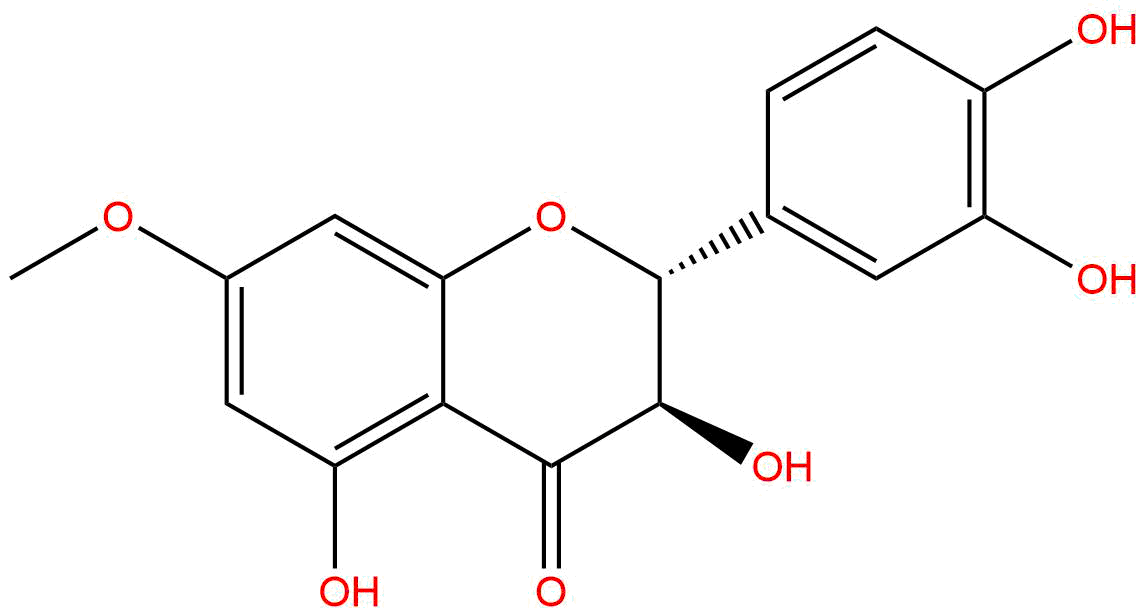
The chemical structure of Ligusticum is 3,5,7,3 ', 4' - pentahydroxydihydroflavonol, and its molecular skeleton consists of three rings A, B, and C. The A ring is a triphenylphenol structure, the B ring is a catechol structure, the C ring is a dihydropyranone ring, and the C3 position is connected to a hydroxyl group. The structural characteristics of this polyphenol hydroxyl group are the key structural basis for its antioxidant activity. In recent years, research on plum hormones has progressed from initial plant chemical isolation and identification to multiple levels such as pharmacological mechanisms, molecular targets, and drug efficacy evaluation. Especially its potential in regulating oxidative stress and intervening in cellular signaling pathways, it has shown broad application prospects in preventing and treating oxidative stress-related diseases such as neurodegenerative diseases, cardiovascular diseases, metabolic diseases, and skin aging.
This article aims to systematically review the research progress of puerarin, covering its chemical structure and physicochemical properties, plant sources and extraction methods, pharmacological activity, mechanism of action and molecular targets, pharmacological evaluation and pharmacokinetic characteristics. It also looks forward to its clinical application prospects, in order to provide comprehensive references for the in-depth research and development of this natural product.
Chemical structure and physicochemical properties
The chemical name of Ligusticum is 3,5,7,3 ', 4' - pentahydroxydihydroflavonol, which belongs to dihydroflavonol compounds. Its molecular formula is C15H12O7 and its molecular weight is 318.2810 g/mol. Its core structure consists of a dihydropyranone ring (C ring) connecting two benzene rings (A ring and B ring). Specifically, the C5 and C7 positions of ring A, the C3 'and C4' positions of ring B, and the C3 position of ring C are each connected to a hydroxyl group (- OH). The C2 position of the C ring is connected to the B ring, and the C4 position is a carbonyl group (C=O). This multi hydroxyl substitution mode, especially the catechol hydroxyl group on the B ring and the phloroglucinol structure on the A ring, is a key pharmacophore for plum hormones to exert various biological activities.
From the perspective of physical and chemical properties, puerarin is a light yellow to yellow crystalline powder. Its molecular weight is moderate, at 318.28. According to calculations, its lipid water partition coefficient (LogP) is 1.4869, indicating a certain degree of lipophilicity, but overall leaning towards hydrophilicity, which is consistent with the presence of multiple polar hydroxyl groups in its molecule. Its topological polar surface area (TPSA) is 116.45 Å ², much higher than the usual requirement of 140 Å ² for oral drugs, indicating that it may have good oral absorption potential, but it may also affect its transmembrane transport ability. In terms of water solubility, its calculated water solubility value is 0.6161 mg/mL, which belongs to the category of slight solubility, which may limit its bioavailability to some extent. In terms of stability, as a polyphenolic compound, puerarin is sensitive to light, heat, and alkaline environments, and is prone to oxidative degradation. It is relatively stable under acidic conditions. Its UV absorption spectral characteristics are usually manifested as two main absorption bands: band I (300-380 nm) is mainly related to the B ring (cinnamoyl system), and band II (240-280 nm) is mainly related to the A ring (benzoyl system). These physicochemical property parameters provide important basic information for the extraction, separation, formulation design, and in vivo process research of puerarin.
Plant sources and extraction methods
Plum element was originally isolated from the bark or heartwood of Prunus puddum, a plant in the Rosaceae family, which is also the origin of its name "Padmatin". With the deepening of plant chemistry research, it has been found that plum hormones are not only present in a single plant, but are widely distributed in various plant groups, especially in families and genera such as Rosaceae, Fabaceae, Betulaceae, and Rhamnaceae. For example, it has been reported in various plants such as Rubus and Potentilla in the Rosaceae family, Pterocarpus and Acacia in the Fabaceae family, Alnus in the Betulaceae family, and Rhamnus in the Rhamnaceae family. In addition, the presence of Li element has also been found in some medicinal plants such as Engelhardtia roxburghiana and Balanophora involucrata. These plants typically grow in tropical and subtropical regions of Asia, Africa, and the Americas. Plum hormones usually exist in the form of free glycosides in plants, or combine with sugars to form glycosides such as plum hormone 3-O-glucoside, plum hormone 7-O-glucoside, etc.
The extraction method of Ligusticum mainly relies on classical phytochemical separation techniques. Due to its moderate polarity as a polyphenolic compound, commonly used extraction solvents include methanol, ethanol, acetone, or their aqueous solutions. The extraction methods often use cold soaking, percolation, reflux, or ultrasound assisted extraction. In order to improve extraction efficiency and selectivity, green extraction technologies such as microwave-assisted extraction and pressurized solvent extraction have also been developed in recent years.
The crude extract after extraction usually requires a series of separation and purification steps to obtain high-purity puerarin. Common separation methods include:
1. Liquid-liquid extraction Using solvents of different polarities (such as petroleum ether, ethyl acetate, n-butanol) to perform fractional extraction on the crude extract, enriching the plum element into the moderately polar ethyl acetate or n-butanol fractions.
2. Column chromatography method This is the core step of separation and purification. Common stationary phases include silica gel, polyamide, Sephadex LH-20, ODS (C18), etc. Silica gel column chromatography is commonly used for preliminary separation, polyamide column chromatography has good selectivity for flavonoids, and Sephadex LH-20 can be used for separation based on molecular size and is commonly used for final purification. The eluent usually uses gradient systems such as chloroform methanol, ethyl acetate methanol, methanol water, etc.
3. Preparation type high-performance liquid chromatography (Pre HPLC)For compounds with similar structures that are difficult to separate, preparative HPLC is an effective method for obtaining high-purity monomers (purity>98%).
In terms of identification, the structure of Li element is usually confirmed by spectroscopic methods, including ultraviolet visible spectroscopy (UV Vis), infrared spectroscopy (IR), mass spectrometry (MS), as well as one-dimensional and two-dimensional nuclear magnetic resonance spectroscopy (1D and 2D NMR). By comparing with the data reported in the literature, its chemical structure can be ultimately determined.
Pharmacological activity research
As a natural polyphenol, the pharmacological activity research of Li element mainly focuses on the following aspects:
antioxidant activity
Antioxidant activity is the most core and extensively studied pharmacological activity of plum hormones. The multiple phenolic hydroxyl groups in its molecular structure, especially the ortho dihydroxy group on the B ring, are efficient hydrogen atom donors that can directly scavenge various free radicals, including 1,1-diphenyl-2-trinitrophenylhydrazine (DPPH) free radical, 2,2 '- diazo-bis-3-ethylbenzothiazoline-6-sulfonic acid (ABTS) cationic free radical, superoxide anion free radical (O ₂⁻ ·), hydroxyl free radical (· OH), and peroxynitrite anion (ONOO ⁻). In vitro chemical experiments have shown that the free radical scavenging ability of puerarin is comparable to or even stronger than classical antioxidants such as vitamin C, vitamin E, quercetin, etc. In addition, Li element can effectively chelate transition metal ions (such as Fe ² ⁺, Cu ² ⁺), inhibit Fenton reaction, and thus reduce the generation of hydroxyl radicals. In cell models, Li element can significantly reduce intracellular reactive oxygen species (ROS) levels induced by oxidants such as hydrogen peroxide (H ₂ O ₂) and tert butyl hydroperoxide (t-BHP), and reduce the production of lipid peroxidation product malondialdehyde (MDA), protecting cells from oxidative damage.
anti-inflammatory activity
Oxidative stress is closely related to inflammatory response. Li element can indirectly inhibit inflammatory reactions through its antioxidant activity. More directly, studies have shown that resveratrol can inhibit the production of nitric oxide (NO) and prostaglandin E2 (PGE2) in macrophages stimulated by lipopolysaccharide (LPS), which is related to its inhibition of the expression of inducible nitric oxide synthase (iNOS) and cyclooxygenase-2 (COX-2). At the same time, resveratrol can downregulate the mRNA and protein levels of various pro-inflammatory cytokines, such as tumor necrosis factor - α (TNF - α), interleukin-1 β (IL-1 β), and interleukin-6 (IL-6). These anti-inflammatory effects may be related to their inhibition of the activation of nuclear factor kappa B (NF - κ B) and mitogen activated protein kinases (MAPKs) signaling pathways.
Antitumor activity
Ligusticol exhibits inhibitory effects on proliferation and induces apoptosis in various tumor cell lines. For example, in the studies of hepatoma cells (HepG2), breast cancer cells (MCF-7), colon cancer cells (HT-29), melanoma cells (B16), etc., Liguin can inhibit cell proliferation, block cell cycle in G0/G1 phase or G2/M phase, and induce apoptosis by activating Caspase cascade reactions (such as Caspase-3, Caspase-9). Its anti-tumor mechanism may involve multiple aspects, including upregulation of pro apoptotic protein Bax and downregulation of anti apoptotic protein Bcl-2, leading to a decrease in mitochondrial membrane potential and release of cytochrome c; inhibition of PI3K/Akt/mTOR signaling pathway, thereby inhibiting cell growth and metabolism; And reduce DNA damage caused by carcinogens through antioxidant effects.
Neuroprotective activity
Given the crucial role of oxidative stress in neurodegenerative diseases such as Alzheimer's disease and Parkinson's disease, the neuroprotective potential of resveratrol has attracted much attention. Research has shown that puerarin can protect neuronal cells from toxicity induced by β - amyloid (A β), glutamate excitotoxicity, and oxidative stress damage. Its protective mechanism includes: clearing ROS and inhibiting lipid peroxidation; Maintain mitochondrial function and stabilize membrane potential; Inhibit the influx of calcium ions; And activate the neurotrophic factor signaling pathway. These findings suggest that resveratrol may have the potential to prevent and treat neurodegenerative diseases.
Other activities
In addition to the main activities mentioned above, puerarin has also been reported to have other pharmacological effects, such as:
- Anti skin photoaging By inhibiting the expression of matrix metalloproteinases (MMPs) induced by ultraviolet B (UVB), such as MMP-1 and MMP-3, collagen degradation is reduced, tyrosinase (TYR) activity is inhibited, melanin production is reduced, and the potential for whitening and wrinkle resistance is demonstrated.
- Cardiovascular protection By exerting antioxidant and anti-inflammatory effects, it protects vascular endothelial cells, inhibits low-density lipoprotein (LDL) oxidation, and improves myocardial ischemia-reperfusion injury.
- Liver protection It has a protective effect on chemical liver injury (such as carbon tetrachloride and acetaminophen induction), can reduce serum transaminase levels, alleviate liver cell necrosis and steatosis.
- Antibacterial activity Has a certain inhibitory effect on certain bacteria and fungi.
Mechanism of action and molecular targets
The pharmacological activity of Ligusticum is the result of the synergistic effect of multiple targets and pathways. Its core mechanism lies in its strong antioxidant capacity, and based on this, it regulates multiple key cellular signaling pathways.
Directly eliminate free radicals and chelate metal ions
This is the most direct antioxidant mechanism of puerarin. The ortho dihydroxy group (3 ', 4' - dihydroxy) on its B ring can provide hydrogen atoms to convert active free radicals (such as · OH, O ₂⁻ ·, ROO ·) into stable semiquinone free radicals, thereby interrupting the free radical chain reaction. At the same time, this structure can also chelate transition metal ions such as Fe ² ⁺ and Cu ² ⁺, inhibit the Fenton reaction (Fe ² ⁺+H ₂ O ₂ → Fe ³ ⁺+· OH+OH ⁻), and reduce the generation of highly active · OH from the source.
Activate Nrf2/ARE antioxidant signaling pathway
This is the key molecular mechanism by which puerarin exerts its cellular protective effect. Nuclear factor E2 related factor 2 (NFE2L2, abbreviated as Nrf2) is a core transcription factor that cells use to respond to oxidative stress. Under normal physiological conditions, Nrf2 binds to Kelch like ECH associated protein 1 (Keap1), is in an inhibited state, and is degraded by ubiquitination. When cells are stimulated by oxidative stress or electrophilic agents (including lignin and its oxidative products), the cysteine residue of Keap1 is modified, resulting in conformational changes and the release of Nrf2. The released Nrf2 enters the nucleus and binds to antioxidant response elements (ARE), initiating the transcription of a series of downstream protective genes, including:
- SOD1 (Cu/Zn SOD) and SOD2 (Mn SOD)Encoding superoxide dismutase, catalyzing the dismutation of O ₂⁻ · into H ₂ O ₂ and O ₂.
- CAT Encode catalase to decompose H ₂ O ₂ into H ₂ O and O ₂.
- GPX1 Encode glutathione peroxidase 1, which utilizes glutathione (GSH) to reduce H ₂ O ₂ and organic peroxides.
- HMOX1 Encoding heme oxygenase 1, it catalyzes the degradation of heme into biliverdin, CO, and Fe ² ⁺. The product biliverdin and its metabolite bilirubin are potent antioxidants.
- NQO1 Encoding NAD (P) H: quinone oxidoreductase 1, catalyzing detoxification of quinone compounds.
By activating the Nrf2/ARE pathway, resveratrol can enhance the overall antioxidant defense ability of cells, rather than just acting as a direct free radical scavenger. Research has shown that puerarin can significantly upregulate the mRNA and protein expression levels of target genes such as HMOX1, NQO1, SOD1, CAT, etc.
Inhibition of MMPs activity
Matrix metalloproteinases (MMPs) are a class of zinc dependent endopeptidases responsible for degrading extracellular matrix (ECM). Overexpression of MMPs (especially MMP-1 and MMP-3) is a key link in pathological processes such as skin photoaging, arthritis, and tumor invasion and metastasis. Li element can inhibit the activity and expression of MMP-1 and MMP-3. The mechanism may include: direct chelation of Zn ² ⁺ from MMP active centers; By inhibiting the activation of upstream signaling pathways such as MAPKs (ERK, JNK, p38) and AP-1 (activator protein-1), the transcription of MMPs is reduced; And through its antioxidant activity, it reduces the activation of MMPs by ROS.
Inhibit TYR activity
Tyrosinase (TYR) is the rate limiting enzyme in melanin synthesis. Li element has an inhibitory effect on TYR, which makes it potentially effective in skin whitening. Its inhibitory mechanism may be through chelation with copper ions in the TYR active center, or competitive inhibition of enzyme activity as a substrate analogue.
Regulating cell apoptosis and proliferation signaling pathways
In terms of anti-tumor effects, puerarin affects the fate of tumor cells by regulating multiple signaling pathways. For example, it can inhibit the PI3K/Akt/mTOR pathway, block growth factor signaling, suppress cell proliferation, and promote autophagy; By activating stress signaling pathways such as p53 and JNK, the Bax/Bcl-2 ratio is upregulated, leading to mitochondrial dysfunction, release of cytochrome c, activation of Caspase-9 and Caspase-3, and ultimately inducing cell apoptosis.
Evaluation of drug properties and pharmacokinetics
Translating natural products into clinical drugs and evaluating their pharmacological properties is a crucial step. The pharmacological parameters of Ligusticum have been partially revealed, providing preliminary basis for its subsequent development.
Analysis of drug properties
According to Lipinski's "Five Rules", the molecular weight (318.28<500), LogP (1.49<5), number of hydrogen bond donors (5 phenolic hydroxyl groups, equal to 5), and number of hydrogen bond acceptors (7 oxygen atoms,<10) of puerarin all meet the requirements, indicating its good oral drug potential. However, its TPSA is 116.45 Å ², although lower than 140 Å ², its higher polarity may limit its passive diffusion through cell membranes, especially the blood-brain barrier (BBB). The predicted results show that its BBB permeability is "low", which is consistent with its high polarity and multi hydroxyl structure. This means that puerarin may be difficult to achieve effective therapeutic concentrations in the central nervous system, but it may also reduce central nervous system side effects. HERG inhibition prediction is' no ', indicating a low risk of cardiac toxicity. The Ames test result is 0.6, indicating a low risk of genetic toxicity, but further experimental verification is needed.
Pharmacokinetic characteristics
At present, research on the pharmacokinetics of puerarin in vivo is relatively limited, but based on the commonalities of its structural analogues (such as quercetin and dihydroquercetin), some of its characteristics can be inferred:
- absorb After oral administration, puerarin may be absorbed in the intestine. However, due to its general water solubility (0.6161 mg/mL) and high polarity, its oral bioavailability may not be high. The gut microbiota may hydrolyze its glycosides into aglycones or perform ring opening degradation on them.
- distribution After absorption, puerarin and its metabolites may bind to plasma proteins (such as albumin) and distribute to various tissues throughout the body. Due to its low BBB permeability, its distribution in the central nervous system is limited.
- Metabolism Li element undergoes extensive phase II metabolism in the body, mainly in the liver and intestines. Through the action of glucuronosyltransferases (UGTs) and sulfotransferases (SULTs), it binds with glucuronic acid or sulfuric acid to form more water-soluble complexes, which are easily excreted from the body. In addition, its phenolic hydroxyl group may also be methylated (catalyzed by COMT enzyme).
- excretion Metabolized complexes are mainly excreted through urine and bile.
Overall, although puerarin has good drug like properties, its low oral bioavailability and extensive phase II metabolism are the main challenges in its development as an oral drug. Future research needs to explore strategies to improve its bioavailability, such as using nano formulations, phospholipid complexes, prodrug design, etc.
Clinical application prospects and prospects
Based on the rich pharmacological activity and preliminary pharmacological evaluation of puerarin, its application prospects in multiple disease fields are worth looking forward to.
Skin Health and Anti Aging
Plum blossom extract has great potential as a cosmetic and skin care active ingredient by inhibiting TYR activity (whitening), MMPs activity (anti wrinkle), and strong antioxidant (anti photoaging) effects. The development of skincare products containing Li element for preventing and improving skin pigmentation, wrinkles, and sagging is its most direct application direction. Its low toxicity and good safety have laid the foundation for its application in the cosmetics field.
Adjuvant therapy for chronic diseases related to oxidative stress
Since oxidative stress is the common pathological basis of many chronic diseases (such as cardiovascular disease, diabetes, nonalcoholic fatty liver disease, neurodegenerative disease), Liguin, as a powerful natural antioxidant, is expected to be used as a dietary supplement or auxiliary treatment drug to prevent and treat these diseases. For example, by activating Nrf2 pathway, enhancing the antioxidant defense ability of the body may have a positive impact on delaying aging, preventing atherosclerosis, improving insulin resistance, protecting the liver, etc. However, its low bioavailability in the body is a key obstacle that needs to be overcome.
Lead compounds for anti-tumor drug development
Li element has inhibitory effects on various tumor cells, and its mechanism of action involves multiple key signaling pathways. Although it may be difficult to directly become a clinical drug due to pharmacokinetic issues, its unique chemical skeleton provides valuable lead compounds for medicinal chemists. By modifying the structure of puerarin, such as introducing specific functional groups to improve its metabolic stability, enhance targeting, or improve water solubility, it is expected to develop novel anti-tumor candidate drugs with independent intellectual property rights.
Future research directions
Despite its broad prospects, the research on Li element is still in its early stages, and further exploration is needed in the following areas in the future:
1. In depth pharmacokinetic research Systematic in vivo pharmacokinetic experiments are required to clarify the overall picture of its absorption, distribution, metabolism, and excretion (ADME), especially the activity of its metabolites, as well as the pharmacokinetic characteristics under different administration routes (such as oral, topical, injection).
2. Refined analysis of the mechanism of action By utilizing modern molecular biology techniques such as CRISPR-Cas9 gene editing, proteomics, and metabolomics, we aim to more accurately identify the direct protein targets of plum hormones and elucidate their detailed molecular mechanisms for regulating signaling pathways such as Nrf2 and MMPs.
3. Pharmacodynamic validation in vivo: In a variety of animal disease models related to oxidative stress (such as skin photoaging model, diabetes model, Alzheimer's disease model, liver cancer model), systematically evaluate the in vivo efficacy of plumarin, and determine its effective dose and administration scheme.
4. Research on Structure Modification and Structure Activity Relationship Systematically synthesize a series of derivatives of Li element, study the effects of different substituents on their activity, selectivity, metabolic stability, and toxicity, establish clear structure-activity relationships, and provide guidance for designing better candidate drugs.
5. Pharmaceutical research Develop new drug delivery systems, such as liposomes, nanoparticles, phospholipid complexes, etc., to improve the solubility, stability, and oral bioavailability of puerarin and solve its drug development bottleneck.
Conclusion
As a natural dihydroflavonol, puerarin exhibits a wide range of pharmacological activities including antioxidant, anti-inflammatory, anti-tumor, neuroprotective, and skin protective properties due to its unique chemical structure and polyphenolic hydroxyl characteristics. Its core mechanism of action lies in the direct clearance of free radicals, chelation of metal ions, activation of key cell protective signaling pathways Nrf2/ARE, and regulation of important targets such as MMPs and TYR. The preliminary pharmacological evaluation shows that it has a good drug like basis, but its low oral bioavailability and extensive metabolism are its main challenges. Although there is still a long way to go from laboratory discovery to clinical application, puerarin is undoubtedly a natural product lead compound worth further research and development. In the future, by combining modern multidisciplinary approaches such as medicinal chemistry, pharmacology, pharmacy, and systems biology, we can deeply elucidate its mechanism of action, optimize its pharmacokinetic properties, and have the potential to transform the active molecules in this ancient plant into new drugs or functional products that benefit human health. The continuous research on Ligusticum not only helps to enrich our understanding of the chemical diversity and biological activity of natural products, but also provides new ideas and candidate molecules for drug discovery in response to oxidative stress-related diseases.