Introduction/Overview
Multiple myeloma (MM), as a malignant hematological tumor originating from plasma cells, has made significant progress in its treatment due to the emergence of proteasome inhibitors, immunomodulators, and monoclonal antibodies. However, drug resistance, recurrence, and unavoidable toxic side effects remain serious challenges in clinical practice. Therefore, exploring active molecules with novel structures, unique mechanisms of action, and low toxicity from natural products has always been an important direction for the development of anti-tumor drugs. Triterpenoids have become an important source of anti-tumor lead compounds due to their wide range of biological activities and diverse chemical structures.
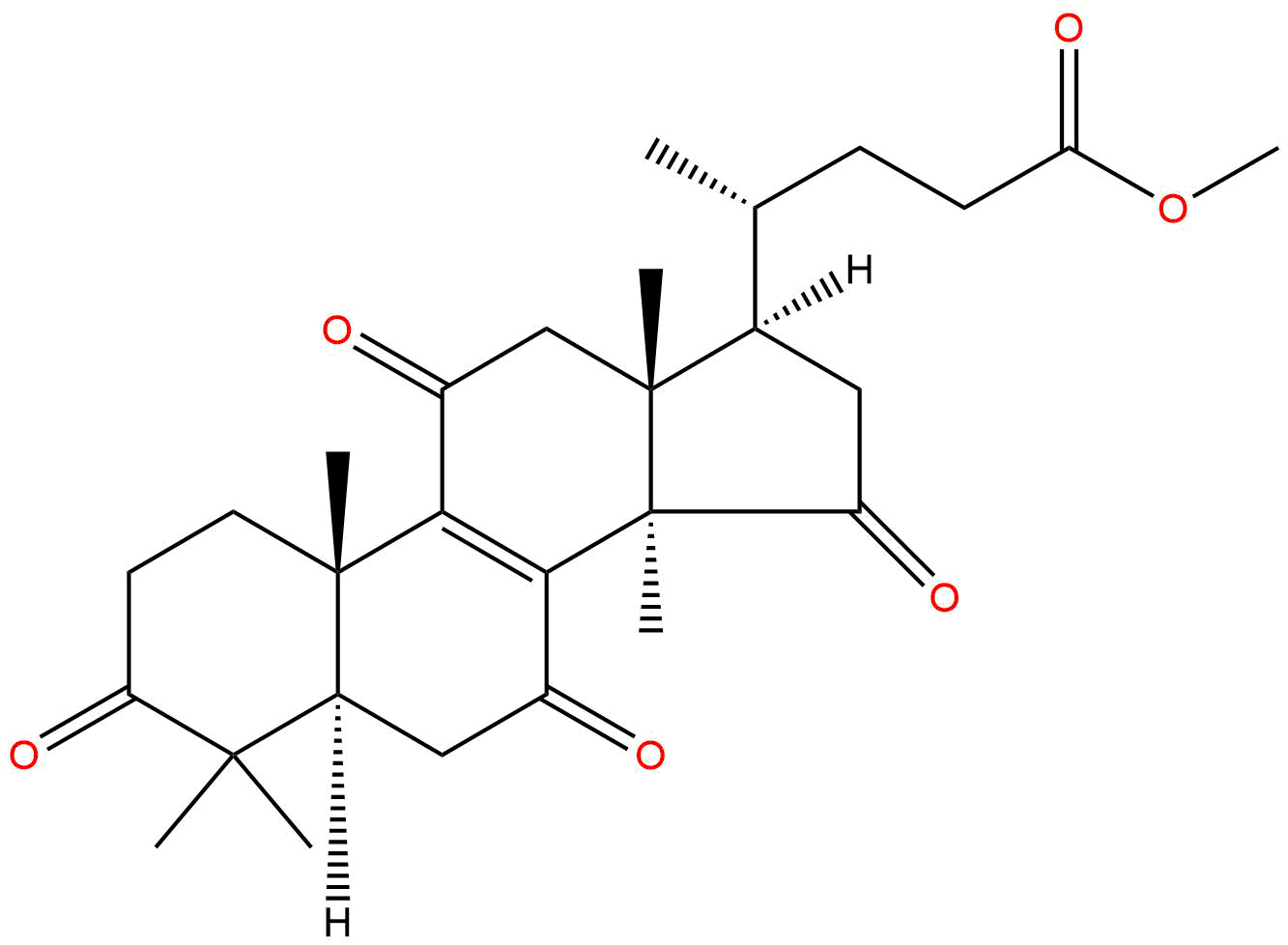
Methyl Lucident F (MLF), CAS number 98665-10-2, is a traditional and precious medicinal fungus derived from Ganoderma lucidum(Ganoderma lucidum)The lanostane type triterpenoids isolated from the middle. Chizhi, commonly known as Lingzhi, has been used in traditional East Asian medicine for thousands of years and is known as the "fairy grass". Modern research has confirmed that its extracts and monomeric components have multiple pharmacological effects such as immune regulation, anti-inflammatory, antioxidant, and anti-tumor. In recent years, with the advancement of separation and identification techniques, the anti-tumor activity of Ganoderma triterpenoid monomers represented by F methyl erythrite, especially their potential therapeutic value in multiple myeloma, has attracted widespread attention in the pharmacological community. This article aims to systematically review the chemical properties, plant sources, and pharmacological activities of F methyl erythrite, with a focus on its molecular mechanism of action and potential target network in multiple myeloma. It also evaluates and prospects its pharmacological properties and clinical application prospects.
Chemical structure and physicochemical properties
Gibberellic acid methyl ester belongs to highly oxidized lanostane type tetracyclic triterpenes. Its basic skeleton consists of four rings A, B, C, and D, with a molecular formula of C28H38O6 and a molecular weight of 470.6060. The structural characteristics of this compound are that its C-3 position is usually a carbonyl or hydroxyl group (carboxyl group in gibberellic acid F, which forms methyl ester after methylation), C-7 position is often a carbonyl group, C-11 position is a hydroxyl group, C-12 position often has unsaturated double bonds, and C-20 position is usually a carboxyl group or its derivative. Methyl ester of gibberellic acid F is the product of methylation reaction on the C-3 or C-20 carboxyl group of gibberellic acid F. This modification is usually aimed at improving its lipid solubility and cell permeability.
From the analysis of the parameters related to drug formation, the calculated LogP value is 3.2738, indicating that the compound has moderate to high lipophilicity, which is beneficial for its penetration of cell membranes but may also affect its water solubility. Its topological polar surface area (TPSA) is 94.58 Å ², which is relatively moderate. The predicted value of water solubility is relatively low, about 0.0029 mg/mL, indicating that when developing it into oral or injectable forms, it may be necessary to improve solubility and bioavailability through formulation methods such as making nanoparticles, liposomes, or using solubilizers. It is worth noting that its predicted blood-brain barrier permeability is "high", which suggests that it may have the potential to treat central nervous system related diseases, but potential neurotoxic risks should also be monitored. In early safety screening, its hERG inhibition was predicted as' no ', indicating a lower risk of causing QT interval prolongation in the heart; The Ames test predicted a value of 0.0, indicating that it may not have direct genetic toxicity, providing preliminary positive signals for its safety as a lead compound.
Plant sources and extraction methods
The main source of F methyl ester of Ganoderma lucidum comes from the fungus Ganoderma lucidum in the family Polyporus(Ganoderma lucidum The fruiting body, mycelium, or spore powder of (Leyss. ex Fr.) Karst. There are significant differences in the composition and content of triterpenoids in different regions, cultivation conditions, growth stages, and medicinal parts (such as fruiting body caps, stems, and spores). Usually, spore powder has a higher content of triterpenoids, but its structure is more complex.
Its extraction and separation follow the conventional process of natural product chemistry. Firstly, the dried Ganoderma lucidum material is crushed and subjected to reflux extraction or ultrasound assisted extraction using highly polar organic solvents such as methanol, ethanol, or aqueous ethanol to fully extract polar components including triterpenes. The extract is concentrated under reduced pressure to obtain a crude extract. Subsequently, the crude extract was preliminarily separated using solvent partitioning method (such as extraction with petroleum ether, ethyl acetate, and n-butanol in sequence), and triterpenoid components such as F methyl erythrite were mostly enriched in the ethyl acetate fraction.
Further purification relies on various chromatographic techniques. Silica gel column chromatography is commonly used, with different ratios of petroleum ether ethyl acetate or chloroform methanol gradient elution for preliminary grouping. The target component is then finely separated and purified by reversed-phase silica gel (such as ODS), dextran gel (such as Sephadex LH-20) column chromatography, or high-performance preparative liquid chromatography (HPLC). Modern technologies such as high-speed countercurrent chromatography (HSCCC) have also been applied to the separation of triterpenoids from Ganoderma lucidum due to their high efficiency and irreversible adsorption advantages. Finally, through techniques such as nuclear magnetic resonance (NMR, including 1H-NMR, 13C-NMR, 2D-NMR), mass spectrometry (MS), and X-ray single crystal diffraction, the structure was identified and confirmed to be F methyl erythrite.
Pharmacological activity research
The pharmacological activity research of Ganoderma lucidum methyl ester mainly focuses on the field of anti-tumor. It exhibits inhibitory effects on proliferation, induces apoptosis, and blocks cell cycle in various tumor cell lines, among which the research on multiple myeloma cells is the most in-depth and systematic.
1. Anti multiple myeloma activity:
In vitro studies have shown that F methyl erythrite can significantly inhibit the proliferation of human multiple myeloma cell lines (such as RPMI 8226, U266, MM.1S, etc.), and its effect is dose-dependent and time-dependent. The half maximal inhibitory concentration (IC50) is usually in the micromolar range. More importantly, the compound also exhibits growth inhibition on primary tumor cells isolated from multiple myeloma patients, while its toxicity to normal peripheral blood mononuclear cells is relatively low, indicating its certain selectivity.
2. Inducing cell apoptosis:
Flow cytometry (Annexin V/PI double staining) and Western blot analysis confirmed that F methyl erythrite can effectively induce apoptosis in multiple myeloma cells. Manifested as an increase in phosphatidylserine efflux, an early marker of apoptosis, as well as activation of apoptosis executing proteins Caspase-3 and Caspase-9 and cleavage of their substrate PARP.
3. Cell cycle arrest:
This compound can interfere with the normal cycle progression of multiple myeloma cells. Research has shown that treatment with F methyl erythrite can cause cell cycle arrest in G0/G1 or G2/M phases, and the specific arrest points may vary depending on the cell line and concentration. The downregulation of expression of cycle related proteins such as cyclin D1 and CDK4/6, as well as the upregulation of p21 and p27, are often associated with this process.
4. Inhibit cell migration and invasion:
Preliminary research suggests that F-methyl erythrite may inhibit the migration and invasion ability of multiple myeloma cells by downregulating the expression of matrix metalloproteinases (MMPs), suggesting its potential anti metastatic effect.
5. Other activities:
In addition to anti-tumor effects, triterpenoids from Ganoderma lucidum generally have anti-inflammatory and hepatoprotective effects. Although there is limited specialized research on F methyl erythrite, its structural analogues have been shown to inhibit the production of inflammatory factors by regulating pathways such as NF - κ B, suggesting that MLF may also have similar anti-inflammatory potential.
Mechanism of action and molecular targets
The anti multiple myeloma effect of Ganoderma lucidum methyl ester is not achieved through a single target, but through the synergistic action of multiple targets and pathways, forming a complex regulatory network. Its core mechanism involves interventions in multiple key biological processes such as cell apoptosis, survival signaling pathways, inflammatory responses, and DNA damage repair.
1. Regulating apoptosis related proteins (BCL2 family):
BCL2 and BCL2L1 (Bcl xL) are important anti apoptotic proteins that are often overexpressed in multiple myeloma, leading to impaired cell apoptosis. Research has shown that F methyl erythrite can downregulate the expression of BCL2 and BCL2L1, and may also affect the activation of pro apoptotic proteins such as BAX, thereby reducing mitochondrial membrane potential, promoting cytochrome C release, and activating endogenous apoptotic pathways.
2. Inhibition of STAT3 signaling pathway:
STAT3 is a key transcription factor that mediates cell proliferation, survival, and immune escape, and is continuously activated in multiple myeloma. Gibberellic acid methyl ester can effectively inhibit the phosphorylation (activated form) of STAT3, prevent its nuclear translocation and binding to DNA, and thereby downregulate the expression of downstream target genes (such as cyclin D1, BCL2, MCL1, VEGF, etc.), which is one of the core mechanisms of inducing apoptosis and cycle arrest.
3. Inhibition of NF - κ B signaling pathway:
NF - κ B is another core pathway that regulates inflammation, survival, and proliferation. Gibberellic acid methyl ester can inhibit the activity of IKK complexes or promote the stability of I κ B α, preventing the activation and nuclear translocation of NF - κ B subunits such as RELA/p65 and NFKB1/p50. This not only directly inhibits the expression of survival promoting genes, but also forms cross inhibition with the STAT3 pathway, synergistically exerting anti-tumor effects.
4. Interference with the PI3K/AKT/mTOR pathway:
AKT1 is a core kinase for cell survival and metabolism. Treatment with F methyl erythrite can reduce the phosphorylation level of AKT1, inhibit the activity of downstream effector molecules such as mTOR, thereby inhibiting protein synthesis, promoting autophagy or apoptosis, and enhancing cell sensitivity to apoptotic signals.
5. Impact on MAPK signaling pathway:
MAPK1 (ERK2) is a key molecule that regulates cell proliferation and differentiation. The effect of F methyl erythrite on the MAPK pathway may be bidirectional or cell specific, inhibiting its activation to block proliferation in some cases and briefly activating it as part of stress response in other cases.
6. Related to DNA damage and repair:
As an important tumor suppressor gene and DNA damage response regulator, the functional status of TP53 affects cell fate. Gibberellic acid methyl ester may enhance DNA damage response, promote cell cycle checkpoint activation and apoptosis by activating TP53 or its downstream pathways. In addition, some studies suggest that some triterpenoids may cause DNA damage by inhibiting topoisomerases (such as TOP1), but whether MLF directly acts on TOP1 still needs experimental confirmation.
7. Potential association with protein kinase C:
PRKCA (PKC α) is involved in regulating various cellular processes. Ganoderma triterpenoids have been reported to regulate PKC activity, thereby affecting downstream pathways such as NF - κ B and MAPK. Whether MLF works by regulating PRKCA is a direction worth exploring.
In summary, Ganoderma lucidum methyl ester disrupts the survival network of multiple myeloma cells by simultaneously targeting multiple key nodes such as BCL2, STAT3, NF - κ B, AKT, ultimately leading to apoptosis and growth inhibition. This multi-target characteristic may help overcome resistance issues caused by single target mutations or bypass activation.
Evaluation of drug properties and pharmacokinetics
Based on its physicochemical parameters and limited preclinical data, a preliminary evaluation of the pharmacological properties of F methyl erythrite is conducted
Advantage:
1. Clear in vitro activity and multi-target mechanism: It has clear inhibitory activity against multiple myeloma cells, and its mechanism of action involves multiple validated tumor related targets, reducing the risk of single target drug resistance.
2. Preliminary safety signal is good: The prediction of no hERG inhibition and genotoxicity (Ames negative) laid the foundation for its safety development. Low selective toxicity to normal cells is also a positive signal.
3. Strong structural modifiability: As a natural triterpene, its structure contains multiple modifiable functional groups (such as hydroxyl and methyl carboxylate), providing space for optimizing its activity, solubility, and pharmacokinetic properties through medicinal and chemical methods in the future.
Challenge:
1. Poor water solubility: The extremely low water solubility (0.0029 mg/mL) is the main obstacle to its development as an injection or high bioavailability oral formulation. Advanced formulation technology is needed to solve it.
2. Pharmacokinetic properties unknown: At present, there is almost no systematic pharmacokinetic research on the absorption, distribution, metabolism, and excretion of F methyl erythrite. Its high LogP value and high blood-brain barrier permeability prediction suggest that it may have a large distribution volume, but key parameters such as oral absorption degree, first pass effect, major metabolic pathways, half-life, etc. urgently need to be elucidated through in vivo experiments.
3. Insufficient validation of in vivo effectiveness: The vast majority of research remains at the cellular level, lacking in animal models of multiple myeloma such as SCID hu and Vk The in vivo pharmacological validation on MYC transgenic mice is a crucial step in advancing its preclinical development.
4. Potential metabolic stability issues:*Triterpenoids may undergo extensive phase I (such as CYP450 enzyme mediated oxidation) and phase II (such as glucuronidation and sulfation) metabolism in the body, leading to rapid clearance. It is necessary to evaluate the activity of its main metabolic enzymes and metabolites.
Prospects for pharmacokinetic research:
Future research needs to first establish sensitive and specific biological analysis methods (such as LC-MS/MS), and then systematically carry out the following work: ① Investigate their absolute bioavailability under different administration routes (oral, intraperitoneal injection); ② Study its distribution characteristics in plasma and tissues, especially its accumulation in tumor tissues; ③ Identify its main metabolites and key CYP450 subtypes involved in metabolism; ④ Assess its excretion pathway and rate. These data will provide a direct basis for the design of dosage forms and optimization of dosing regimens.
Clinical application prospects and prospects
As a natural triterpenoid with multi-target anti multiple myeloma activity, F-methyl erythrite has broad clinical application prospects, but the road ahead is long and requires in-depth exploration from multiple dimensions
As a novel anti MM lead compound:
Its multi-target mechanism of action, especially the inhibition of STAT3 and NF - κ B, two pathways that play a central role in the MM microenvironment and drug resistance, makes it a promising candidate drug for the treatment of recurrent/refractory multiple myeloma. Can be used in combination with existing standard therapies such as bortezomib and lenalidomide to investigate whether it has a synergistic or reversal effect on drug resistance.
2. Exploration of combination therapy strategies:
Considering its mechanism of action is related to immune regulation and inflammation inhibition, the potential for its combined application with immunotherapy (such as PD-1/PD-L1 inhibitors, CAR-T cell therapy) can be explored in the future. By regulating the tumor microenvironment, it is possible to enhance immune cell recognition and killing of tumors.
3. Structural optimization and derivative development:
Due to its poor water solubility and unclear pharmacokinetic properties, medicinal chemists can modify its structure. For example, preparing its phosphate or amino acid ester prodrug to improve water solubility; Or by introducing specific functional groups to optimize its binding affinity and selectivity with key targets such as the SH2 domain of STAT3, while regulating its LogP value and metabolic stability.
4. Application of new delivery systems:
The use of nanotechnology, such as encapsulating it in liposomes, polymer nanoparticles, or forming micelles, can significantly improve its solubility, prolong circulation time, enhance tumor targeting (through EPR effect or active targeting modification), and may reduce systemic toxicity.
5. Expand indications:
Its predicted high blood-brain barrier permeability suggests that it may be used for the treatment of central nervous system lymphoma or myeloma with meningeal infiltration. In addition, based on the key role of STAT3 and NF - κ B pathways in a variety of solid tumors (such as liver cancer, breast cancer, lung cancer) and inflammatory diseases, it is necessary to expand their anti-tumor spectrum and anti-inflammatory activities.
6. Bottlenecks and breakthroughs in transformation research:
The biggest bottleneck currently lies in the lack of solid in vivo pharmacological and pharmacokinetic data. The next step is to validate its in vivo anti-tumor effect using clinically relevant animal models and simultaneously complete preliminary toxicological evaluations (acute toxicity, repeated administration toxicity). At the same time, it is necessary to use methods such as molecular docking, biological layer interference (BLI), or cell thermal displacement analysis (CETSA) to more accurately elucidate its direct interaction mode with the above-mentioned targets.
Conclusion
Gibberellic acid F methyl ester is a lanostane triterpenoid compound with significant anti multiple myeloma potential discovered from the traditional medicinal fungus Ganoderma lucidum. The pharmacological basis of its action lies in its ability to intervene in key signaling networks such as BCL2 family, STAT3, NF - κ B, AKT, etc. with multiple targets, effectively inhibiting tumor cell proliferation, inducing apoptosis, and blocking the cell cycle. Although its clear in vitro activity and good preliminary safety predictions are encouraging, poor water solubility and unknown pharmacokinetic properties are the main challenges it faces for drug conversion.
Future research should focus on verifying its efficacy through in vivo experiments, systematically elucidating its ADME characteristics, and optimizing it through medicinal chemistry and pharmaceutical strategies. By combining modern drug development technology with the wisdom of traditional natural products, Ganoderma lucidum F-methyl ester is expected to gradually develop from a promising lead compound into a new type of therapeutic drug for the treatment of multiple myeloma and other related diseases, providing more choices for clinical practice and a new molecular perspective for further elucidating the scientific connotation of Ganoderma lucidum's "strengthening the body and consolidating the foundation".