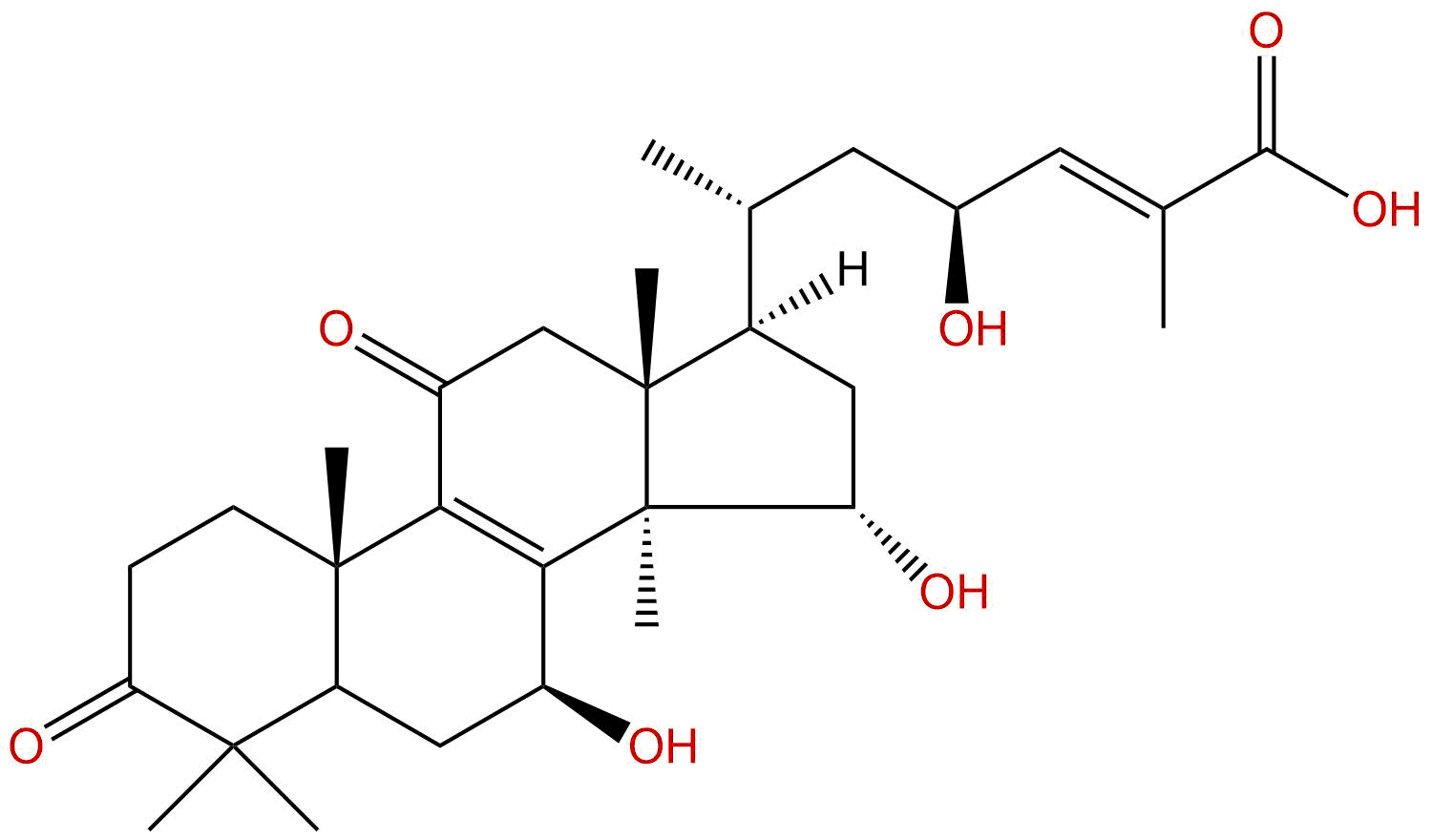


Product name: Ganoderic acid Gama
Synonym name: Ganoderic acid γ
Catalogue No.: BP2215
Cas No.: 294674-00-3
Formula: C30H44O7
Mol Weight: 516.675
Botanical Source:
Type of Compound: Triterpenoids
Purity: 95%~99%
Analysis Method: HPLC-DAD or/and HPLC-ELSD
Identification Method: Mass, NMR
Packing: Brown vial or HDPE plastic bottle
Storage: Store in a well closed container, protected from air and light. Put into refrigerate or freeze for long term storage.
Whenever possible, you should prepare and use solutions on the same day. However, if you need to make up stock solutions in advance, we recommend that you store the solution as aliquots in tightly sealed vials at -20℃. Generally, these will be useable for up to two weeks.
The product could be supplied from milligrams to grams
Inquire for bulk scale.
For Reference Standard and R&D, Not for Human Use Directly.
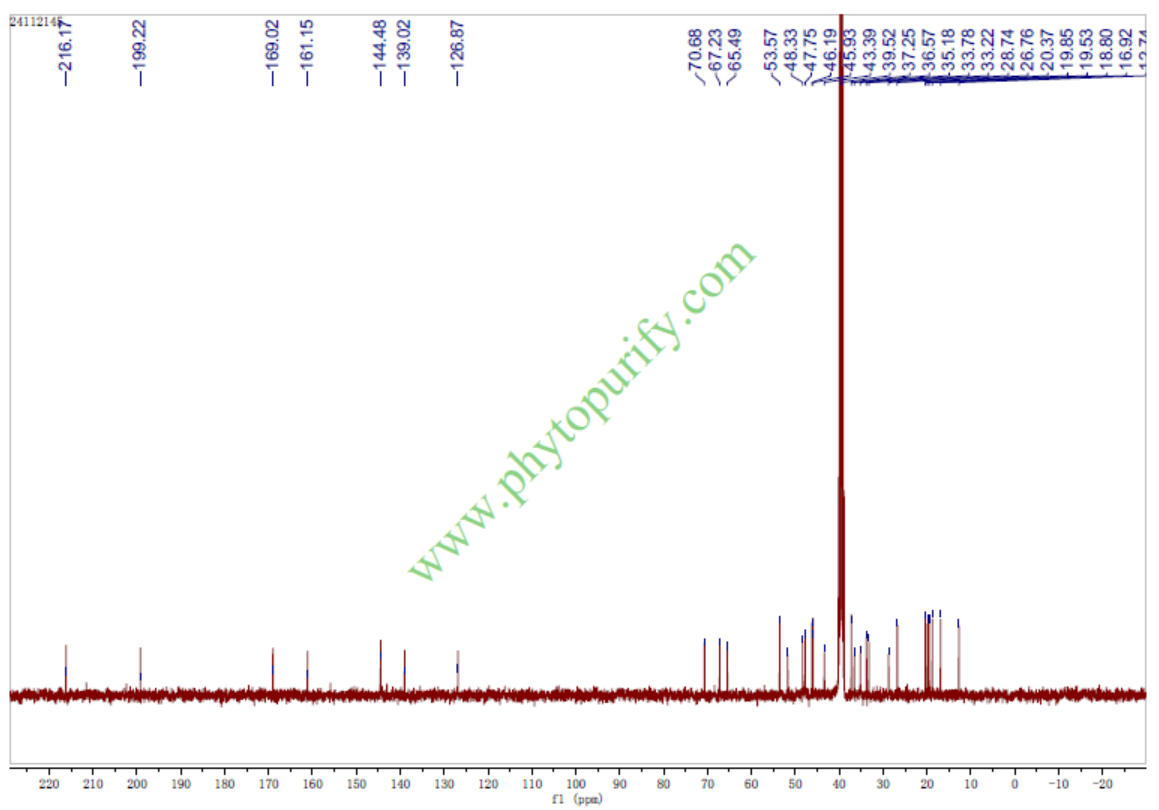
NMR of Ganoderic acid Gama
Storage conditions:Short-term storage at 2~8℃, long-term storage at -20 ~ -80℃
132.1300
2.9929
.4141
.0910
1.6785
4.3877
Low
83.7536
5.3072
No
No
Yes
No
No
No
0.0
Yes
No
No
Yes
Natural products, as an important treasure trove for drug discovery, play an irreplaceable role in the long history of human fight against diseases. Among them, the medicinal fungus Ganoderma lucidum(Ganoderma lucidum)Due to its long history of application and extensive pharmacological activity, it has attracted much attention. The pharmacological substance basis of Ganoderma lucidum mainly lies in its triterpenoids, polysaccharides, sterols, and other components. Ganoderma triterpenoids, especially ganoderic acid compounds, are considered key contributors to its core activities such as anti-tumor and immune regulation. Ganoderic acid Gama (CAS number: 294674-00-3), as a member of the triterpenoid family of Ganoderma lucidum, has gradually become a hot topic in natural product pharmacology research in recent years due to its significant activity and unique multi-target mechanism in the treatment of malignant tumors such as lymphoma. Lymphoma, as a malignant tumor originating from the lymphatic hematopoietic system, still faces challenges such as drug resistance and recurrence in its treatment, and there is an urgent need to develop new treatment strategies. This article aims to systematically review the chemical properties, plant sources, pharmacological activities, especially the mechanism of action and molecular target network of Ganoderma lucidum acid Gama against lymphoma, evaluate its pharmacological properties, and prospect its clinical application prospects, in order to provide comprehensive scientific references for the in-depth research and potential drug development of this compound.
Ganoderma lucidum acid Gama belongs to highly oxidized lanostane triterpenoids. Its molecular formula is C30H44O7 and its molecular weight is 516.6750. Structurally, it has a core skeleton of tetracyclic triterpenes and has been modified with hydroxyl, carbonyl, and carboxyl groups at multiple positions. The presence of these oxygen-containing functional groups has a decisive impact on their biological activity and physicochemical properties.
The calculated lipid water partition coefficient (LogP) is 2.9929, indicating that the compound has moderate lipophilicity, which is beneficial for its penetration of cell membranes, but may also affect its water solubility. Its topological polar surface area (TPSA) is 132.1300 Å ², reflecting the large proportion of polar parts (such as hydroxyl and carboxyl groups) in the molecule. The measured or predicted water solubility value is 0.0910 mg/mL, which belongs to the category of slightly soluble to poorly soluble. This is a common problem faced by many natural triterpenoid acid compounds and a key difficulty that needs to be overcome in their formulation development. In the early risk assessment of drugs, the prediction shows that it has no significant inhibitory potential on hERG potassium channels, indicating a low risk of causing QT interval prolongation in the heart; At the same time, the Ames test predicted a value of 0.0, indicating that there is no direct risk of genetic toxicity mutagenesis. However, these computer predictions need to be further validated through subsequent experiments. In addition, its ability to penetrate the blood-brain barrier is predicted to be 'low', which means it may not be suitable for treating primary or metastatic lymphoma of the central nervous system, but also reduces the potential risk of central nervous system side effects.
Gama ganoderic acid is mainly derived from the porous fungal family Ganoderma lucidum(Ganoderma lucidum)It belongs to closely related species, such as Ganoderma lucidum(Ganoderma sinense). It is distributed in fruiting bodies, mycelium, and spore powder, but the content is usually low, and it is significantly affected by factors such as strain variety, cultivation conditions, growth stage, and harvesting time.
The traditional extraction method mainly relies on organic solvent extraction. Due to the polarity and solubility characteristics of Gama ganoderic acid, methanol, ethanol, ethyl acetate, or alcohol water mixed solvents with different ratios are often used for reflux extraction or ultrasound assisted extraction. The crude extract needs to undergo a series of complex separation and purification steps, including but not limited to silica gel column chromatography, reverse phase column chromatography (such as ODS), preparative high-performance liquid chromatography (HPLC), etc., in order to obtain high-purity monomer compounds. These processes are time-consuming, labor-intensive, and have low yields, which are the main bottlenecks limiting their large-scale acquisition and in-depth research.
To address this challenge, modern biotechnology provides promising alternative solutions. Among them, liquid deep fermentation technology can significantly increase the yield of target triterpenoid acids (including ganoderic acid Gama) in Ganoderma lucidum mycelium by optimizing the composition of the culture medium (carbon source, nitrogen source, precursor substances, etc.), fermentation conditions (pH, temperature, dissolved oxygen, stirring rate), and the addition of inducers (such as methyl jasmonate, salicylic acid). In addition, synthetic biology and metabolic engineering strategies are exploring the reconstruction and expression of key biosynthetic genes of ganoderic acid in easily operable heterologous hosts such as yeast and filamentous fungi, in order to achieve sustainable and controllable production of target products, laying a technological foundation for future large-scale supply.
The pharmacological activity research of Ganoderma lucidum acid Gama is currently mainly focused on the field of anti-tumor, especially for lymphoma, and also involves other biological activities.
1. Anti lymphoma activity
Both in vitro and in vivo experiments have confirmed that Gama ganoderic acid has significant inhibitory effects on proliferation and pro apoptotic effects on various lymphoma cell lines. Research has shown that it can inhibit the vitality of lymphoma cells in a dose-dependent and time-dependent manner, induce cell cycle arrest (commonly in G0/G1 or G2/M phases), and activate apoptosis signaling pathways, leading to typical morphological changes and biochemical indicators such as phosphatidylserine efflux and caspase enzyme activation. Its anti lymphoma activity shows certain advantages or synergistic potential compared to some traditional chemotherapy drugs.
2. Other pharmacological activities
Although research is relatively limited, existing literature suggests that Gama ganoderic acid may have a broader spectrum of biological activities. For example, some studies have shown that it has anti-inflammatory effects, which may be achieved by inhibiting the production of inflammatory factors such as TNF - α and IL-6. In addition, based on its structural similarity with known hepatoprotective triterpenoids, it may have a protective effect against chemical liver injury. Its antioxidant and potential immune regulatory activities also deserve further exploration. These multifaceted activities together constitute the potential of ganoderic acid Gama as a multifunctional lead compound.
The anti lymphoma effect of Ganoderma lucidum acid Gama is not achieved through a single pathway, but through a complex multi-target network, which reflects the characteristics of natural products with multiple components and multi-target effects. Based on the provided target information, its mechanism of action can be summarized as follows:
1. Inducing cell apoptosis (targeting BCL2 family and TP53)
Apoptosis resistance is the key to the survival of lymphoma cells. Lingzhi acid Gama can downregulate the expression of anti apoptotic proteins BCL2 and MCL1, and may also affect pro apoptotic proteins, thereby disrupting mitochondrial membrane potential, promoting cytochrome C release, activating caspase cascade reactions, and ultimately leading to cell apoptosis. In addition, it may enhance the transcriptional activity of tumor suppressor TP53 by stabilizing or activating it, thereby upregulating the expression of pro apoptotic target genes (such as PUMA, NOXA) and strengthening apoptotic signals.
2. Block cell cycle progression (targeting CDC25B and CDKN2A)
The uncontrolled cell cycle is the foundation of infinite tumor proliferation. CDC25B phosphatase is a key positive regulatory factor in the G2/M phase transition of the cell cycle. Lingzhi acid Gama may inhibit the activity of CDC25B, causing the CDK1/Cyclin B1 complex to maintain an inhibitory phosphorylation state, thereby blocking cells in the G2/M phase. Meanwhile, it may inhibit the activity of CDK4/6 by upregulating the expression of cyclin dependent kinase inhibitor CDKN2A (p16INK4a), leading to dephosphorylation of Rb protein and hindering G1/S phase transition.
3. Inhibit survival and proliferation signaling pathways (targeting STAT3 and NF - κ B)
STAT3 and NF - κ B (the p50 subunit encoded by NFKB1) are two important survival and proliferation signaling pathways that are continuously activated in lymphoma. Lingzhi acid Gama can inhibit the tyrosine phosphorylation of STAT3 and the expression of downstream target genes such as Bcl xL and Cyclin D1. At the same time, it can also inhibit the activation of the NF - κ B signaling pathway, prevent its nuclear translocation, and downregulate the expression of a series of genes related to inflammation, proliferation, and anti apoptosis.
4. Affects cell differentiation and immune recognition (potential targets for RXRB and PTPRC)
Retinol X receptor beta (RXRB) is a member of the nuclear receptor superfamily, involved in processes such as cell differentiation and metabolism. Lingzhi acid Gama may act as a ligand to affect the activity of RXRB, thereby regulating the expression of related genes and affecting the differentiation status of lymphoma cells. Protein tyrosine phosphatase receptor type C (PTPRC, CD45) is a key signaling regulatory molecule on the surface of lymphocytes. Although the specific mechanism is not yet clear, intervening in PTPRC may affect lymphocyte receptor signaling, thereby interfering with the survival microenvironment of tumor cells or enhancing immune recognition.
5. Other potential targets (MAPT)
The microtubule associated protein Tau (MAPT) is commonly associated with neurological disorders, but it is also abnormally expressed in certain blood tumors, possibly related to cytoskeletal stability and signal transduction. The effect of gamma ganoderic acid on MAPT and its significance in anti lymphoma need further research.
In summary, Gama ganoderic acid has formed a "multi pronged" anti lymphoma mode of action by simultaneously intervening in multiple key cellular processes such as apoptosis, cell cycle, survival signaling, and differentiation, which helps to overcome the problem of resistance to single target drugs.
Although Gama ganoderic acid exhibits excellent pharmacological activity in vitro, its successful development as a drug largely depends on its pharmacological properties, namely "pseudo pharmacological" and pharmacokinetic properties.
1. Preliminary analysis of drug properties
According to the "Five Rules" and other preliminary judgments, its molecular weight (516.7) is slightly higher than the ideal range (<500), and LogP (~3) is within an acceptable range, but the number of hydrogen bond donors/acceptors may be relatively high (due to multiple hydroxyl and carboxyl groups). The main challenge lies in Poor water solubility(0.091 mg/mL), This can lead to difficulty in oral absorption and low bioavailability. Although its predicted hERG inhibition and genotoxicity risk are low, its poor blood-brain barrier permeability limits its application in central nervous system lymphoma.
2. Pharmacokinetic challenges and strategies
At present, there are few reports on the pharmacokinetic studies of the Gama system of ganoderic acid. Based on its structural characteristics, it can be foreseen that it may face the following challenges in vivo:Low oral absorption rate(Due to poor solubility and first pass effect)Fast metabolism in the body(prone to II combination reactions such as glucuronidation and sulfation)Limited distribution volume, as well as possible existing High plasma protein binding rate Wait for the question. These factors collectively lead to insufficient exposure and short half-life in the body, making it difficult to achieve and maintain effective therapeutic blood drug concentrations.
To improve its medicinal properties, the following strategies can be adopted:
* Prodrug design Modify its carboxyl or hydroxyl groups through esterification, amidation, etc. to produce prodrugs, in order to improve lipid solubility and membrane permeability, and release the original drug through enzymatic interpretation in vivo.
* Formulation technology By utilizing advanced drug delivery systems such as nanocrystals, liposomes, polymer micelles, and solid dispersions, the solubility and dissolution rate can be significantly improved, oral bioavailability can be enhanced, or targeted delivery can be achieved.
* structural optimization On the premise of retaining its pharmacophore, reasonable structural modifications are carried out to simplify the structure, reduce molecular weight, optimize LogP and solubility, and achieve the best balance between activity and drug formation.
Lingzhi acid Gama, as a natural small molecule with clear anti lymphoma activity and unique multi-target mechanism, has broad clinical application prospects, but the road ahead is long.
1. Direct drug development
as New anti lymphoma candidate drugs Especially for refractory recurrent lymphoma, its multi-target characteristics may lead to better therapeutic efficacy and lower drug resistance. It is expected to be developed as an oral or injectable form, used alone or in combination with existing chemotherapy drugs (such as CHOP regimen) and targeted drugs to enhance efficacy and reduce toxic side effects. In addition, based on its targets such as STAT3 and BCL2, it may also be used to treat other malignant tumors that rely on the same pathway.
2. As a chemical probe and mechanism research tool
Due to its ability to simultaneously act on multiple key targets, ganoderic acid Gama can serve as a valuable Chemical probe Used to study the cross dialogue between apoptosis, cycle, and survival signaling networks in lymphoma, revealing new tumor biological mechanisms.
3. Challenges and Future Directions Faced
Future research needs to focus on addressing the following issues:
* In depth mechanism clarification Chemical biology methods such as affinity fishing, molecular docking, and site directed mutagenesis verification need to be used to clarify their direct target proteins and draw more accurate action network diagrams.
* Optimization of drug properties in the system It is necessary to conduct comprehensive preclinical pharmacokinetic and toxicological studies, and actively use prodrug strategies and new delivery technologies to overcome the bottleneck of solubility and bioavailability.
* Explore combination therapy Thoroughly investigate the synergistic effects and mechanisms of its combination with immune checkpoint inhibitors, epigenetic drugs, and other therapies.
* Ensure sustainable supply Optimizing fermentation processes or achieving synthetic biology production is the material guarantee to promote its clinical application.
Gama ganoderic acid is a natural triterpenoid compound with significant research value derived from the traditional medicinal fungus Ganoderma lucidum. It exhibits significant anti-tumor potential by synergistically targeting multiple key targets closely related to the occurrence and development of lymphoma, such as MCL1, BCL2, STAT3, NF - κ B, CDC25B, etc. Although it currently faces challenges in drug formation such as poor water solubility and poor pharmacokinetic properties, this also provides opportunities for innovation in medicinal chemistry and pharmacy. With the in-depth analysis of its mechanism of action, rational optimization based on structure, and the application of advanced delivery technology, Gama ganoderic acid is expected to gradually develop from an active natural product into a promising candidate molecule in the field of anti lymphoma drug development. It not only brings new treatment hope to lymphoma patients, but also further confirms the immortal value of natural products in modern innovative drug discovery. Future research requires interdisciplinary collaboration to jointly promote the chemical treasure of this ancient Ganoderma lucidum to the stage of modern clinical applications.
