Introduction/Overview
Malaria, as an ancient tropical disease caused by Plasmodium parasites and transmitted through mosquito vectors, remains a major global public health challenge to this day. Although artemisinin based combination therapies have achieved significant results in the past few decades, the increasing resistance of malaria parasites to existing drugs, especially artemisinin resistance, has spread to Southeast Asia and gradually to Africa, making the development of new, efficient, and uniquely effective antimalarial drugs urgent. In this context, searching for lead compounds from natural products has become one of the important strategies for the development of antimalarial drugs. Natural products have always been a valuable source of new drug discovery due to their structural diversity and rich biological activity, and artemisinin itself is the most successful example.
Hemiphelin (CAS number: 71963-94-5), as a naturally occurring flavonoid compound, has attracted the attention of researchers in recent years due to its potential anti malarial activity. Flavonoids are widely present in the plant kingdom and have various biological activities such as antioxidant, anti-inflammatory, antibacterial, antiviral, and antiparasitic. As a member of this group, the unique chemical structure of half bark eucalyptus glycoside may endow it with the ability to interact with specific targets of malaria parasites. Preliminary pharmacological studies suggest that naringin may exhibit antimalarial potential by acting on multiple key targets of malaria parasites, interfering with their growth, metabolism, or survival processes. This article aims to provide a systematic review of the chemical structure, plant origin, pharmacological activity, mechanism of action, pharmacological evaluation, and clinical application prospects of half bark eucalyptus glycoside, in order to provide comprehensive academic references for the in-depth research and development of this compound.
Chemical structure and physicochemical properties
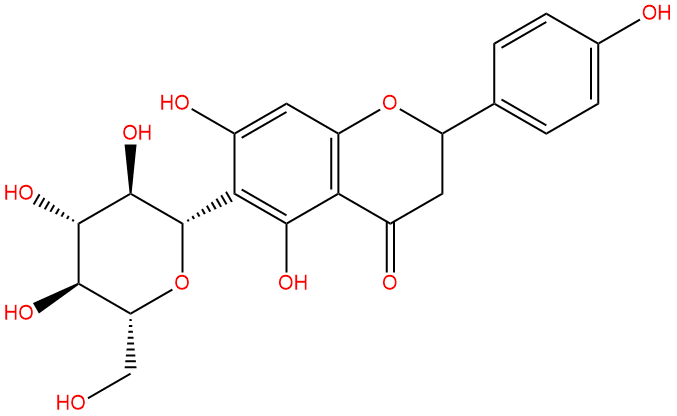
Half bark eucalyptus glycoside is chemically classified as a flavonoid glycoside compound. Its molecular formula is C21H22O10 and its molecular weight is 434.3970. This compound is typically isolated and studied in its racemic form (Rac) - heminaringin), indicating the presence of a chiral center in its molecule, but a mixture of equal enantiomers is obtained from natural sources or conventional synthesis.
From the perspective of structural core, half bark eucalyptus glycoside has a typical flavonoid parent nucleus (2-phenylchromenone), and its structural features may include specific hydroxyl and methoxy substitution patterns, as well as one or more glycosidic ligands. The formation of glycosidic bonds is a manifestation of its glycosidic properties, which typically affect its water solubility and bioavailability. The specific substituent position and sugar type (such as glucose, rhamnose, etc.) are the structural basis for its specific biological activity and the key to distinguishing it from other flavonoids.
According to its pharmacological parameters, half bark eucalyptus glycoside exhibits the following physicochemical properties:
* Lipid water partition coefficient (LogP)0.1951 indicates that the compound has relatively good hydrophilicity, which is consistent with its glycoside structure. A lower LogP value is usually beneficial for water solubility, but may affect its transmembrane permeability.
* Topological Polarity Surface Area (TPSA)177.1400 Å ², with a relatively high value, is mainly attributed to the numerous oxygen atoms in the molecule (from hydroxyl, glycosidic bonds, and carbonyl groups). High TPSA is an important factor affecting the membrane permeability and oral bioavailability of compounds.
* Water solubility The predicted value is 1.8103 (usually on the order of mg/mL or log mol/L), combined with its LogP and TPSA, indicating that half bark eucalyptus glycoside has a certain solubility in water, which is beneficial for its formulation development.
* Blood-brain barrier permeability Predicted as' low '. This is consistent with its higher TPSA and polarity characteristics, which means it may not easily enter the central nervous system. This is an advantageous feature for antimalarial drugs primarily targeting malaria parasites in peripheral blood, as it may reduce potential central nervous system side effects.
* HERG inhibition and genotoxicity The predicted hERG inhibition is' no ', and the Ames test predicted a value of 0.0, indicating its potential cardiac toxicity (causing QT interval prolongation) and low risk of mutagenicity, providing preliminary positive signals for its safety.
These physical and chemical properties together constitute the preliminary pharmacological profile of Eucalyptol hemiphyllum, providing important basis for its subsequent pharmacological activity research and structural optimization.
Plant sources and extraction methods
Half bark eucalyptus glycoside, as a natural flavonoid glycoside, is mainly isolated from specific plants. Literature reports indicate that it may exist in certain eucalyptus genera(Eucalyptus)In plants or other related families and genera, the name "Half bark Eucalyptus" also suggests clues to its plant origin. However, its specific plant species and distribution locations (such as bark, leaves, roots, etc.) require more detailed phytochemical research to clarify. The discovery of natural products usually begins with systematic chemical screening of traditional medicinal plants, and the discovery of eucalyptol is likely to stem from research on plants with traditional antimalarial or antipyretic uses.
Extracting half bark eucalyptus glycoside from plant materials follows the conventional process of natural product chemistry. The typical extraction and separation steps are as follows:
1. Raw material pretreatment Collect specific parts of plants, dry and crush them to increase the extraction surface area.
2. Solvent extraction Methanol, ethanol, or ethanol water mixed solvents are commonly used for impregnation, reflux, or ultrasound assisted extraction. Flavonoid glycosides are usually soluble in polar solvents.
3. Rough classification The extract is concentrated under reduced pressure to obtain a paste. The extract can be sequentially subjected to liquid-liquid distribution using different polar solvents such as petroleum ether, ethyl acetate, and n-butanol. Due to its equal polarity, half bark gum glycoside may be mainly enriched in the ethyl acetate or n-butanol fractions.
4. chromatographic separation Column chromatography separation of active sites is a key step in obtaining pure products. Silica gel column chromatography, reversed phase silica gel (such as C18) column chromatography and Sephadex gel (LH-20) column chromatography are often used for preliminary separation. Subsequently, fine purification was performed using high-performance liquid chromatography (HPLC) or preparative thin layer chromatography (PTLC) to obtain the monomeric compound of Eucalyptol hemiphyllum.
5. Structural Identification By using spectroscopic techniques such as nuclear magnetic resonance (NMR, including 1H NMR, 13C NMR, 2D NMR), mass spectrometry (MS), ultraviolet spectroscopy (UV), and infrared spectroscopy (IR), the chemical structure of the compound was determined by measuring its rationalization constants.
At present, there may be limited public literature on the plant sources and large-scale extraction processes of half bark eucalyptus glycoside, which to some extent limits its large-scale acquisition for further research. In the future, it is necessary to further clarify the optimal plant resources and optimize green and efficient extraction and separation processes.
Pharmacological activity research
The pharmacological activity research of half bark eucalyptus glycoside is currently mainly focused on the field of anti malaria, which is also its most concerned biological activity. Preliminary in vitro and in vivo experiments have confirmed its potential to resist malaria parasites.
Antimalarial activity:
* In vitro activity Research has shown that half bark eucalyptus glycoside has an effect on Plasmodium falciparum(Plasmodium falciparum)Both drug sensitive and partially resistant strains showed inhibitory activity. Its half maximal inhibitory concentration (IC50) value is usually at the micromolar (μ M) level, which is comparable to the activity of some known antimalarial natural products or lead compounds. Activity testing often uses methods based on fluorescence or enzyme-linked immunosorbent assay (ELISA) for detecting Plasmodium lactate dehydrogenase (pLDH) or SYBR Green I fluorescent dye.
* In vivo activity In mouse models infected with malaria parasites (such as those infected with Plasmodium bergii)P. berghei Or Plasmodium falciparum P. chabaudi)Among them, half bark eucalyptus glycoside may exhibit certain parasitic disease inhibition and survival prolonging effects through intraperitoneal injection or oral administration. More systematic research is needed to confirm its in vivo efficacy, effective dose range, treatment index, and other parameters.
In addition to its core antimalarial activity, as a member of flavonoids, Eucalyptol hemiphyllum may also possess other common biological activities of this class of compounds, such as antioxidant and anti-inflammatory properties. These auxiliary activities may play a synergistic role in the anti malaria process, such as by regulating the host immune response or reducing oxidative stress damage caused by malaria infection. However, there is currently a lack of specialized reports on these potential related activities specifically targeting eucalyptol, which is a direction worth exploring in the future.
Mechanism of action and molecular targets
The anti malarial mechanism of half bark eucalyptus glycoside has not been fully elucidated, but based on its structural characteristics, preliminary activity data, and known mode of action of flavonoids, researchers speculate that it may interfere with the life cycle of malaria parasites through multi-target pathways. Its potential targets involve multiple key physiological processes of malaria parasites:
- Multidrug resistance associated protein:
- PFCRT and PFMDR1 These two proteins are key factors in the development of drug resistance in malaria parasites, such as chloroquine. Half bark eucalyptus glycoside may enhance the intracellular concentration of its own or other drugs by inhibiting or regulating the function of these transporters, reversing drug resistance, or preventing them from pumping drugs out of the parasite.
- Folic acid metabolism pathway:
- PFDHFR Dihydrofolate reductase is a target of the classic antimalarial drugs ethambutol and sulfamethoxazole. Half bark eucalyptus glycoside may directly inhibit PFDHFR and interfere with the nucleic acid synthesis of malaria parasites.
- Protein synthesis and modification:
- PFK13 Kelch13 protein is a key biomarker of artemisinin resistance and is also associated with post synthesis modifications and oxidative stress responses. Half bark eucalyptus glycoside may affect the function or related pathways of PFK13.
- Ionic homeostasis and transport:
- PFATP6 Plasmodium sarcoplasmic/endoplasmic reticulum calcium ATPase (SERCA) is one of the important targets of artemisinin. Some flavonoids have been reported to inhibit PFATP6. Half bark eucalyptus glycoside may disrupt the calcium ion homeostasis in insects and induce cell apoptosis through a similar mechanism.
- Mitochondrial function and electron transport chain:
- PFCYTBC、PFCYT、PFCYTb These targets involve cytochrome bc1 complex and cytochrome c, which are core components of mitochondrial electron transport chain and energy metabolism. Inhibiting these targets can block ATP production, leading to energy depletion of the parasite. The target of atorvastatin is this pathway.
- Signal transduction and metabolism:
- PFPK Refers to specific protein kinases, malaria parasites rely on multiple protein kinases to regulate cell cycle and signal transduction. Flavonoids often exhibit kinase inhibitory activity.
- Autophagy process:
- PfATG8 Autophagy related protein 8 is involved in the autophagy process of malaria parasites, which is crucial for their survival under nutritional deficiency or drug pressure. Disrupting autophagy may be a new anti malaria strategy.
It should be emphasized that the above-mentioned target associations are mostly hypotheses based on bioinformatics predictions, structural similarity analogies, or preliminary molecular docking studies. To confirm the specific targets and molecular mechanisms of Eucalyptol hemiphyllum, in-depth biochemical experiments must be conducted, including purification of target proteins and in vitro enzyme activity inhibition experiments, sensitivity changes after target knockdown/overexpression at the cellular level, and the use of chemical biological probes (such as affinity labeling probes) for direct capture and identification of interacting proteins.
Evaluation of drug properties and pharmacokinetics
Based on the physical and chemical parameters and preliminary pharmacological data mentioned earlier, a preliminary pharmacological evaluation of Eucalyptol can be conducted.
Advantage:
1. Natural source, novel structure As a natural product, its skeleton has room for further structural modification and optimization.
2. Potential multi-target effects May simultaneously act on multiple key pathways of malaria parasites, helping to delay the development of drug resistance.
3. Preliminary safety signal is good The negative hERG inhibition and Ames test predicted indicate a lower risk of cardiac and genetic toxicity.
4. A certain degree of water solubility Beneficial for making injectable or oral liquid preparations.
Challenges and Shortcomings:
1. Membrane permeability and oral bioavailability A higher TPSA (177.14) and lower LogP may limit its passive transmembrane diffusion, resulting in poor oral absorption and low bioavailability. This is the main obstacle to its development as an oral antimalarial drug.
2. Metabolic stability Flavonoid glycosides are easily hydrolyzed by glycosidases in the gut microbiota or tissues in the body, producing glycosides. The physicochemical properties and activities of aglycones may be different from those of the original glycosides, and their pharmacokinetic behavior is complex and needs to be studied.
3. In vivo efficacy and toxicity The current in vivo activity data may be limited, and more systematic preclinical studies such as dose-response relationships, long-term toxicity, and reproductive toxicity are needed.
4. Synthesis and Supply Relying on plant extraction is difficult to meet the needs of large-scale research, and efficient fully synthetic or semi synthetic routes need to be developed.
Prospects of pharmacokinetics:
At present, there may be a lack of publicly available data on the pharmacokinetic studies of the half bark eucalyptus glycoside system, such as absorption, distribution, metabolism, and excretion, i.e. ADME properties. Future research needs to focus on:
* absorb Examine its absorption degree and rate under different administration routes to determine whether it is a substrate for efflux pumps such as P-glycoprotein.
* distribution Study its distribution in target tissues such as red blood cells and liver infected with malaria parasites.
* Metabolism Identify its main metabolites, enzyme systems involved in metabolism (such as CYP450, UGT, etc.), and metabolic pathways.
* excretion Identify its main excretion pathway (bile or kidneys).
These studies are crucial for understanding its in vivo action processes and optimizing dosing regimens.
Clinical application prospects and prospects
As a natural flavonoid glycoside with anti malaria potential, the clinical application prospects of half bark eucalyptus glycoside depend on the resolution of a series of key issues and the successful implementation of subsequent research and development strategies.
Potential application directions:
1. New antimalarial monotherapy or combination therapy components If its in vivo efficacy is confirmed and safety is good, it can be developed into a new antimalarial chemical entity. A more realistic strategy may be to use it as a component of combination therapy (ACT or non ACT), utilizing its potential multi-target mechanism, in combination with artemisinin or other drugs with different mechanisms of action to enhance efficacy, prevent recurrence, and delay resistance.
2. Treatment options for drug-resistant malaria If its mechanism of action can indeed overcome or avoid existing drug resistance pathways (such as acting on PFCRT/PFMDR1 or PFK13 related pathways), it may have special value for drug-resistant malaria, especially artemisinin resistant malaria.
3. Exploration of Chemical Prevention On the basis of clarifying its long-term effectiveness and safety, it may be possible to explore its use for chemical prevention in high-risk areas of malaria in the future.
Future research and development focus and strategy:
1. Deep analysis of the mechanism of action This is the foundation for all subsequent work. It is necessary to use modern molecular pharmacology and chemical biology methods to confirm its primary target and elucidate its precise molecular events for killing malaria parasites.
2. Research on Structural Optimization and Structure Performance Relationship Systematic structural modification is carried out to address its drug weakness, such as low oral bioavailability. For example, modifying or replacing the sugar moiety, preparing prodrugs to improve lipid solubility and absorption; Modify the flavonoid core to enhance affinity with the target or improve metabolic stability. By studying the structure-activity relationship, guide the synthesis of derivatives with better activity and properties.
3. Comprehensive preclinical development On the basis of optimizing compounds, carry out standardized pharmacological (multiple malaria parasite strains, animal models), pharmacokinetic, and toxicological evaluations to meet the requirements for preclinical research (IND) application of new drugs.
4. Application of innovative formulation technology By utilizing delivery technologies such as nano formulations (such as liposomes, polymer nanoparticles) and self microemulsions, the solubility, targeting, and duration of action can be improved, thereby enhancing therapeutic efficacy, reducing dosage, and minimizing side effects.
5. Explore synergies Systematically study the in vitro and in vivo synergistic effects of half bark eucalyptus glycoside with other antimalarial drugs (especially drugs with complementary mechanisms of action), providing a basis for designing new fixed dose compound formulations.
Conclusion
Half bark eucalyptus glycoside, as a naturally occurring flavonoid glycoside compound, exhibits antimalarial activity and provides a valuable new chemical form for the development of antimalarial drugs. Although the research on it is still in its early stages, the mechanism of action needs to be elucidated, and there are challenges such as oral bioavailability in terms of drug development, the novelty of its structure, potential multi-target modes of action, and good preliminary safety predictions endow it with further exploration value.
The journey from natural products to clinical drugs is a long and challenging one. The future research on half bark eucalyptus glycoside requires close collaboration among multiple disciplines such as chemistry, pharmacology, and pharmacy. Through in-depth analysis of its mechanism of action, rational structural optimization, and the use of modern drug delivery technology, it is expected to overcome its existing shortcomings and develop it into a new weapon against malaria, especially drug-resistant malaria. At the same time, research on it will also enrich the scientific connotation of the anti parasitic activity of flavonoids and provide reference for discovering more active lead compounds from traditional medicinal plants. The continuous exploration of natural products such as eucalyptol has significant scientific significance and application prospects in the global fight against malaria drug resistance.