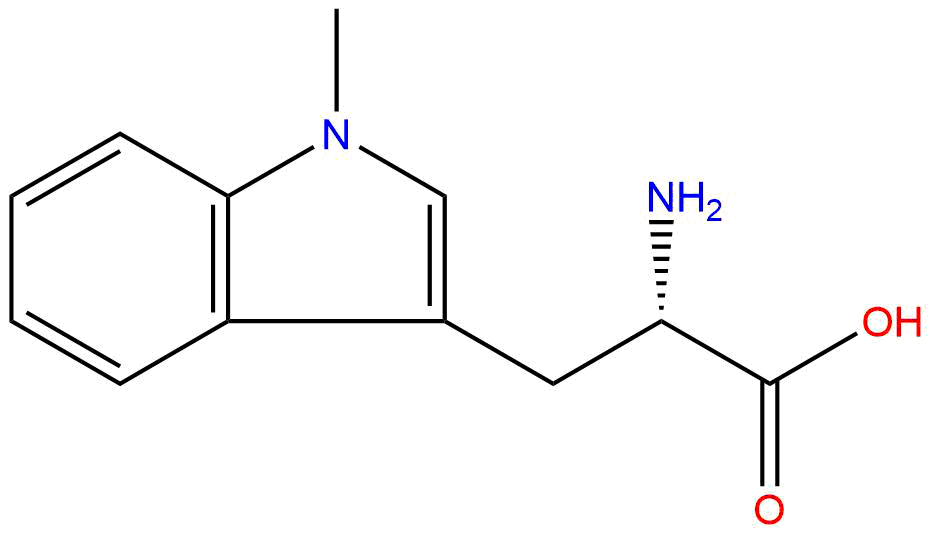


Product name: 1-Methyl-L-tryptophan
Synonym name: L-1-Methyltryptophan; (S)-2-Amino-3-(1-methyl-1H-indol-3-yl)propanoic acid
Catalogue No.: BP7010
Cas No.: 21339-55-9
Formula: C12H14N2O2
Mol Weight: 218.256
Botanical Source: the seeds of Abrus precatorius and Desmodium tiliaefolium
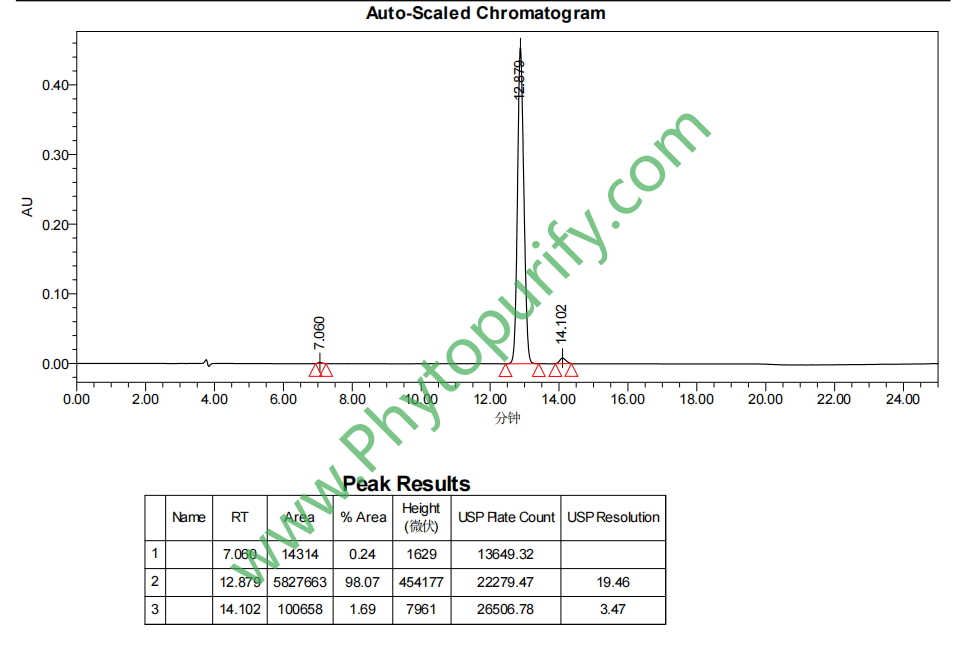
Purity: 95%~99%
Analysis Method: HPLC-DAD or/and HPLC-ELSD
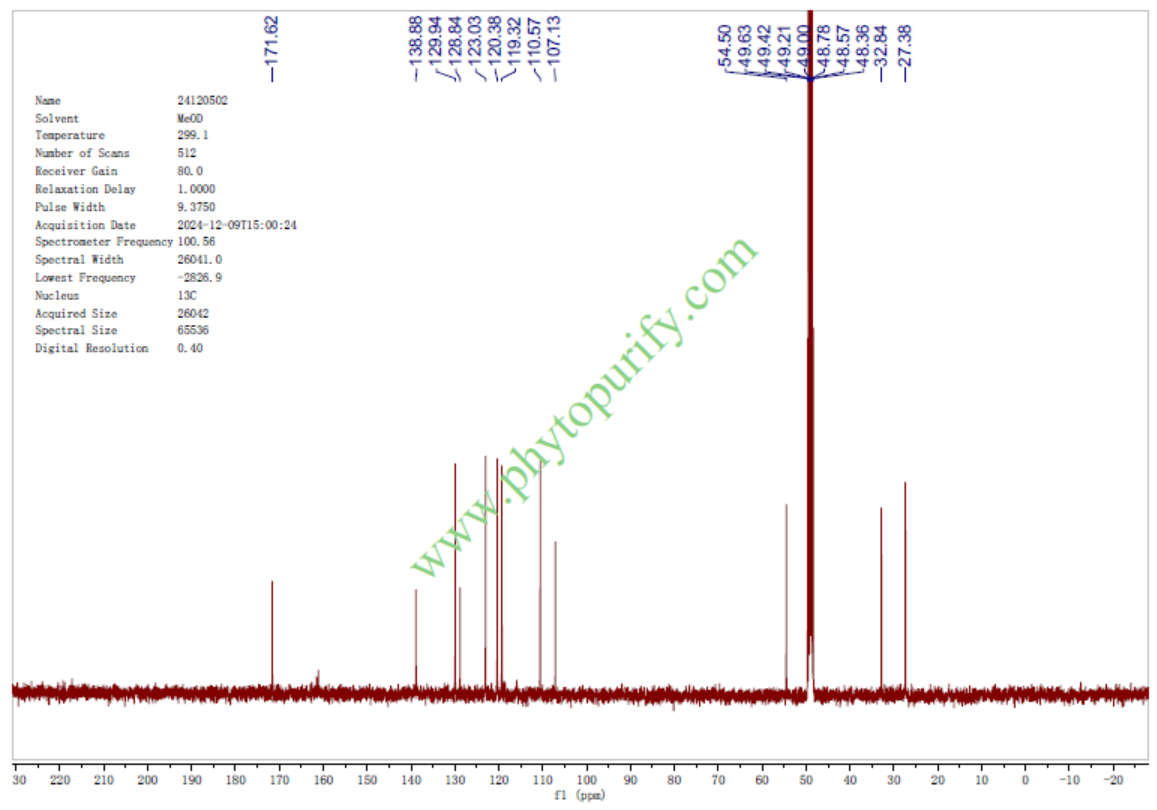
Identification Method: Mass, NMR
Packing: Brown vial or HDPE plastic bottle
Can be supplied from milligrams to grams.
For Reference Standard and R&D, Not for Human Use Directly.
Inquire for bulk scale.
HPLC of 1-Methyl-L-tryptophan
NMR of 1-Methyl-L-tryptophan
Storage conditions:Short-term storage at 2~8℃, long-term storage at -20 ~ -80℃
83.6700
.4100
Unknown
Unknown
Unknown
Unknown
Unknown
Unknown
Unknown
Natural products, as an important source of drug discovery, play an irreplaceable role in the long history of human struggle against diseases. From the classic analgesic morphine to the antimalarial artemisinin, countless active molecules derived from plants, microorganisms, and marine organisms not only directly constitute the main body of clinical medication, but also provide valuable lead compound frameworks for modern drug design. Among numerous natural products, indole alkaloids have attracted much attention due to their structural diversity and wide range of biological activities. Among them, 1-methyl-L-tryptophan (1-MT), as a relatively simple indole carboxylic acid derivative, has shown unique potential in the field of neuropsychophacology, especially in the treatment of anxiety disorders, in recent years.
Anxiety disorder is one of the most common mental disorders worldwide, with a lifetime prevalence of up to 10% -30%, bringing heavy economic and emotional burdens to individuals, families, and society. Although existing anti anxiety drugs such as benzodiazepines and selective serotonin reuptake inhibitors (SSRIs) have achieved significant therapeutic effects in clinical practice, they generally have side effects such as slow onset, strong dependence, cognitive impairment, and sexual dysfunction. Therefore, the search for anti anxiety candidate drugs with novel mechanisms of action, higher selectivity, and lower toxicity has become a hot and difficult topic in current neuropharmacology research. Acacia alkaloids, as methylated derivatives of tryptophan, have the potential to cross the blood-brain barrier due to their chemical structure and interact with multiple targets closely related to anxiety pathophysiology, providing a theoretical basis for their development as novel anti anxiety drugs. This article will provide a systematic and in-depth review of sophocarpine from multiple dimensions, including chemical structure, plant origin, pharmacological activity, mechanism of action, pharmacological evaluation, and clinical application prospects. The aim is to provide comprehensive references for researchers in related fields and explore its future development direction as a candidate drug for anti anxiety.
The chemical name of 1-methyl-L-trioptophan is (S) -2-amino-3- (1-methyl-1H-indol-3-yl) propionic acid, and its core skeleton consists of an indole ring and alanine side chains. Compared with L-tryptophan, the key structural difference lies in the presence of a methyl group attached to the nitrogen atom at position 1 of the indole ring. This simple methylation modification significantly alters the electron cloud distribution, spatial hindrance, and hydrogen bond donor/acceptor ability of the molecule, thereby profoundly affecting its interaction mode with biological targets.
From the perspective of physicochemical properties, the molecular weight of acaricine is 218.25 g/mol, belonging to the category of small molecule compounds, which lays the foundation for its good membrane permeability. Its lipid water partition coefficient (LogP) is 0.41, indicating that the molecule has moderate lipophilicity, neither too hydrophilic to penetrate the cell membrane nor too lipophilic to be easily metabolized and cleared. This balanced LogP value, combined with its topological polar surface area (TPSA) of 83.67 Å ², suggests that it has good oral absorption potential and the possibility of penetrating the blood-brain barrier. TPSA is an important parameter for predicting the ability of molecules to passively diffuse and penetrate the blood-brain barrier. It is generally believed that molecules with TPSA less than 90 Å ² have good central nervous system penetration. The TPSA value of sophocarpine is exactly below this threshold, which is highly consistent with its potential application in the treatment of anxiety disorders.
In addition, the molecule of acaricine contains four hydrogen bond acceptors (including two oxygen atoms of the carboxyl group and one nitrogen atom of the amino group, as well as one nitrogen atom on the indole ring), which enables it to form a stable hydrogen bond network with the target protein. There is a basic amino group (pKa about 9.5) and an acidic carboxyl group (pKa about 2.3) in its structure, which makes it mainly exist in the form of zwitterionic ions under physiological pH (7.4) conditions. This charge distribution may affect its binding with transport proteins. It is worth noting that key pharmacological parameters such as blood-brain barrier penetration, hepatotoxicity, cardiotoxicity (such as hERG inhibition), and genotoxicity (Ames test) of sophocarpine are currently unknown. This suggests that before pushing it into clinical practice, a systematic and rigorous pharmacokinetic and toxicological evaluation must be conducted to comprehensively assess its safety and efficacy.
Acacia alkaloids were originally derived from the legume plant Acacia seeds(Abrus precatorius L. It was isolated and identified from the seeds. Acacia is a climbing plant widely distributed in tropical and subtropical regions. Its seeds are often used as decorations due to their bright color (red and black), but the whole plant contains highly toxic substances, especially the acacia toxin (abrin) in the seeds, which is a strong inhibitor of protein synthesis. However, in addition to highly toxic proteins, Acacia seeds also contain various alkaloids, and Acacia alkaloids are one of them. It is worth noting that Acacia alkaloids are not unique to Acacia seeds. As a natural metabolite of L-tryptophan, they also exist in other plants and certain microorganisms, and may even be produced in trace amounts in certain physiological processes of the human body.
Extracting sophocarpine from plants usually follows the classic process of natural product chemistry. Firstly, the dried Acacia seeds are crushed and soaked or percolated using polar solvents such as methanol, ethanol, or acidic aqueous solutions to fully dissolve polar components including alkaloids. After concentration, the extraction solution is usually purified using acid-base extraction method: by utilizing the properties of alkaloids that form salts and dissolve in water under acidic conditions and separate downstream under alkaline conditions, the enrichment of target components is achieved by adjusting the pH value. Subsequently, various chromatographic separation techniques were combined for refinement, such as silica gel column chromatography, reverse phase C18 column chromatography, preparative high-performance liquid chromatography (Prep HPLC), etc. Due to the UV absorption (characteristic absorption of indole ring) of sophocarpine, UV detectors are often used for online monitoring during the separation process. Finally, the structure of the purified compound was confirmed by spectroscopic methods such as nuclear magnetic resonance spectroscopy (NMR) and mass spectrometry (MS).
However, there are many limitations to directly extracting sophocarpine from plants: limited plant resources, long growth cycle, low content (usually only a few thousandths of the dry weight of seeds), cumbersome extraction and purification steps, and low yield, making it difficult to meet the needs of large-scale research and potential clinical applications. Therefore, chemical synthesis and biological synthesis methods have become better choices for obtaining sophocarpine. Chemical synthesis usually starts with L-tryptophan and introduces a methyl group on the nitrogen atom at position 1 of the indole ring through selective methylation reaction. This process requires strict control of reaction conditions to avoid methylation of other sites, such as the 2-position or amino group. In recent years, with the development of green chemistry and enzyme catalysis technology, the use of methyltransferases for region selective enzymatic methylation has provided new ideas for the green and efficient synthesis of sophocarpine. In addition, genetically engineering the metabolic pathways of microorganisms such as Escherichia coli or yeast to achieve de novo biosynthesis of sophocarpine has shown great potential for sustainable and low-cost production.
The most notable area of pharmacological activity research on acaricine is its regulatory effect on anxiety like behavior. The occurrence of anxiety disorders is closely related to the dysfunction of various neurotransmitter systems, such as serotonin, gamma aminobutyric acid, glutamate, etc. As a derivative of tryptophan, sophocarpine was initially believed to exert its effects by interfering with the synthesis or metabolism of serotonin. However, subsequent studies have revealed its more complex and unique pharmacological mechanisms.
In classic animal behavior models such as the Elevated Cross Maze (EPM), Open Field Test (OFT), and Light Dark Box Test (LDB), significant anti anxiety like effects can be observed when rodents are given a certain dose of acaricine (usually administered intraperitoneally or orally). For example, in the elevated cross maze experiment, the mice in the acaricine treated group showed a significant increase in the dwell time and number of entries in the open arms, indicating a decrease in their anxiety levels. This effect has been validated in various anxiety models, such as chronic unpredictable mild stress model and restraint stress model, indicating its broad-spectrum anti anxiety potential.
It is worth noting that the anti anxiety effect of sophocarpine may be related to its regulation of the immune system. More and more evidence suggests that neuroinflammation and immune activation play key roles in the pathogenesis of anxiety disorders. Indoleamine 2,3-dioxygenase (IDO) is the rate limiting enzyme for tryptophan metabolism to the canine urinary tract pathway. Overactivation of IDO can lead to tryptophan depletion and accumulation of neurotoxic metabolites such as quinoline acid, thereby inducing or exacerbating anxiety and depression. Interestingly, sophocarpine is a competitive inhibitor of IDO, although its inhibitory activity is relatively weak (IC50 values at the micromolar level). Therefore, there is a hypothesis that acaricine may exert anti anxiety effects by inhibiting IDO activity, restoring the normal metabolic balance of tryptophan, reducing the production of neurotoxic metabolites. However, this hypothesis still requires more experimental evidence to support, especially whether its IDO inhibitory activity is sufficient to produce behavioral effects under in vivo conditions.
In addition, Acacia alkaloids have been reported to have other pharmacological activities, such as anti-inflammatory, immunomodulatory, and anti-tumor effects. These activities may be related to their regulation of multiple signaling pathways, such as NF - κ B and STAT3. These findings further expand the pharmacological application scope of sophocarpine, but also suggest the need to be cautious of potential off target effects when developing it as an anti anxiety drug.
The pharmacological mechanism of action of sophocarpine is multi-target and multi pathway, which is closely related to its unique chemical structure. According to existing research, its anti anxiety effect may involve the following key targets and signaling pathways:
Opioid receptor system Opioid receptors, especially the delta opioid receptor (OPRD1), play important roles in emotion regulation and stress response. Activation of OPRD1 has been shown to have anti anxiety and anti depressive effects. Molecular docking and functional experiments have shown that sophocarpine can bind to OPRD1 and may serve as a partial agonist or forward allosteric regulator. This discovery provides direct evidence to explain its anti anxiety effect. In addition, the Sigma 1 receptor (SIGMAR1) is also a target associated with anxiety, playing a key role in regulating calcium homeostasis, neuroplasticity, and stress response. The interaction between sophocarpine and SIGMAR1 may also be involved in its anti anxiety mechanism.
Adenosine receptor system Adenosine A3 receptor (ADORA3) plays an important role in neuroinflammation and neuroprotection. Activation of ADORA3 can inhibit the release of pro-inflammatory cytokines, alleviate neuroinflammation, and thus improve anxiety like behavior. Acacia alkaloids have been confirmed to be ligands of ADORA3, and their anti anxiety effects may be partially achieved by activating the anti-inflammatory pathway mediated by this receptor.
Endothelin receptor system Endothelial receptor A (EDNRA) and B (EDNRB) are mainly involved in vascular constriction and cell proliferation, but recent studies have found that they are also expressed in the central nervous system and participate in stress response and emotion regulation. Acacia alkaloids can interact with these two receptors and may affect anxiety states by regulating the endothelin signaling pathway.
Cholinergic system Alpha 7-nicotinic acetylcholine receptor (CHRNA7) is an important ion channel receptor in the central nervous system, involved in cognitive function and emotion regulation. Activating CHRNA7 has anti-inflammatory and neuroprotective effects. Acetylcholinesterase (ACHE) is a key enzyme that degrades acetylcholine. Inhibiting ACHE can increase the level of acetylcholine in the synaptic cleft, thereby enhancing cholinergic transmission. Acacia alkaloids have effects on both CHRNA7 and ACHE, suggesting that they may exert anti anxiety effects by regulating the cholinergic system.
metabotropic glutamate receptor Metabolite glutamate receptor 2 (GRM2) is an important negative feedback regulator of the glutamatergic system. Activation of GRM2 can inhibit the excessive release of glutamate, thereby reducing excitotoxicity, which is of great significance in the treatment of anxiety disorders. The interaction between sophocarpine and GRM2 may provide another pathway for its anti anxiety effect.
Other targets In addition to the aforementioned targets, sophocarpine has also been found to interact with targets such as ABCB1 (P-glycoprotein) and TOP1 (topoisomerase I). ABCB1 is an important efflux transporter on the blood-brain barrier, and its activity affects the distribution of drugs in the central nervous system. The regulation of ABCB1 by sophocarpine may affect its own or other drug concentrations in the brain. And TOP1 is a classic target for anti-tumor drugs, suggesting that sophocarpine may have potential anti-tumor activity.
In summary, Acacia alkaloids do not act on a single target, but through a network regulation mode of "multi-target synergy", comprehensively regulate multiple systems such as neurotransmitters, neuropeptides, and immune inflammation, ultimately producing anti anxiety effects. This multi-target mode of action may lead to more comprehensive therapeutic effects and lower risk of drug resistance, while also increasing the complexity of pharmacological mechanism research and potentially causing more unpredictable side effects.
To push acaricine from laboratory research to clinical application, a systematic evaluation of its pharmacological properties is necessary, with pharmacokinetic (ADME) characteristics being the core link. As mentioned earlier, its physicochemical parameters such as molecular weight (218.25), LogP (0.41), and TPSA (83.67) preliminarily indicate that it has good drug like properties. However, there is still limited data available on its more critical ADME parameters, such as absorption, distribution, metabolism, excretion, and toxicity.
absorb Based on its LogP and TPSA values, acaricine should be well absorbed by the gastrointestinal tract after oral administration. However, whether it is a substrate for transporters (such as amino acid transporters) and thus affects its absorption rate and degree remains to be studied. In addition, its water solubility (as zwitterionic) may limit its absorption at high doses.
distribution Its moderate lipid solubility and low TPSA suggest its potential to penetrate the blood-brain barrier, which is crucial for central nervous system drugs. However, whether it is a substrate for efflux transporters such as P-glycoprotein (ABCB1) will directly affect its concentration in the brain. If it is a substrate of P-glycoprotein, its brain exposure may be much lower than plasma concentration, thereby limiting its therapeutic effect. Therefore, clarifying its interaction relationship with ABCB1 is a crucial step in evaluating its pharmacological properties.
Metabolism The metabolic pathway of sophocarpine is not yet clear. The amino and carboxyl groups in its structure may undergo glucuronidation or sulfation binding reactions, while the indole ring may be oxidized by cytochrome P450 enzymes (CYP450). Metabolic stability is an important factor determining its half-life and dosing frequency. If its metabolism is too fast, frequent administration or development of sustained-release formulations is required.
excretion Its excretion pathways may include the kidneys (prototype or metabolites) and bile. Renal excretion may be influenced by its zwitterionic properties.
toxicity At present, its liver toxicity, cardiac toxicity (especially hERG potassium channel inhibition risk), and genetic toxicity (Ames test) are all "unknown". This is the most concerning gap in its pharmacological evaluation. HERG inhibition is the main cause of drug-induced long QT syndrome and fatal arrhythmias, and is a toxicity indicator that must be rigorously screened in central nervous system drug development. Similarly, a positive Ames test indicates a potential carcinogenic risk, which will directly lead to the termination of development. Therefore, in advancing its preclinical research, priority must be given to completing these key toxicology experiments.
In summary, although acaricine has shown certain advantages in physical and chemical properties and preliminary pharmacological activity, its pharmacokinetic and toxicological properties are still unclear, which constitutes the main bottleneck for its pharmacological development. Future research should focus on: 1) establishing sensitive and specific biological sample analysis methods (such as LC-MS/MS) to determine their concentrations in vivo; 2) Conduct systematic pharmacokinetic studies in vivo to clarify their absorption, distribution, metabolism, and excretion characteristics; 3) Conduct comprehensive toxicological evaluation, particularly hERG inhibition, hepatotoxicity, and genotoxicity testing. Only through these rigorous evaluations can we determine whether sophocarpine has the potential to become a clinical candidate drug.
Although the pharmacological evaluation of acaricine is still in its early stages, its unique pharmacological mechanism and preliminary anti anxiety activity paint a hopeful picture for its clinical application prospects.
Firstly, its multi-target mode of action makes it possible to become a "broad-spectrum" anti anxiety drug, effective against multiple subtypes such as generalized anxiety disorder, social anxiety disorder, and panic disorder. More importantly, its mechanism of action does not rely on traditional GABAergic or serotonergic systems, thus potentially avoiding side effects associated with existing drugs such as sedation, memory impairment, sexual dysfunction, and withdrawal symptoms. This is undoubtedly an important potential option for patients who are intolerant or ineffective to existing treatments (i.e. patients with refractory anxiety).
Secondly, the regulatory effects of sophocarpine on the immune system, such as IDO inhibition and ADORA3 activation, suggest that it may be particularly suitable for anxiety subtypes associated with neuroinflammation, such as anxiety induced by chronic stress, infection, or autoimmune diseases. This provides a new approach for the precise treatment of anxiety disorders.
However, the path from laboratory to clinical translation is still full of challenges. In addition to the pharmacokinetic and toxicological issues mentioned above, the following key issues urgently need to be addressed:
Acacia alkaloids, a simple indole carboxylic acid derived from the ancient plant Acacia seeds, are showing new vitality in the field of modern neuropsychopharmacology due to their unique chemical structure and multi-target pharmacological activity. It exhibits significant anti anxiety potential by acting on multiple receptor systems such as opioid, adenosine, endothelin, cholinergic, and glutamate, providing a new molecular framework and approach for the development of novel anti anxiety drugs. However, many gaps in its pharmacological evaluation, especially the uncertainty of pharmacokinetic and toxicological properties, are the main obstacles on its path to clinical application. In the future, we need to conduct systematic pharmacokinetic and toxicological studies based on a deep understanding of its mechanism of action, and actively explore drug chemical optimization based on its structure. Despite the long road ahead, the research on sophocarpine undoubtedly opens up a promising new direction for the treatment of anxiety disorders, and once again confirms the eternal value of natural products as a treasure trove of drug discovery.
