


Synonym name: L-Abrine; Nα-Methyl-L-tryptophan
Catalogue No.: BP0112
Cas No.: 526-31-8
Formula: C12H14N2O2
Mol Weight: 218.256
Botanical Source: the seeds of Abrus precatorius and Desmodium tiliaefolium
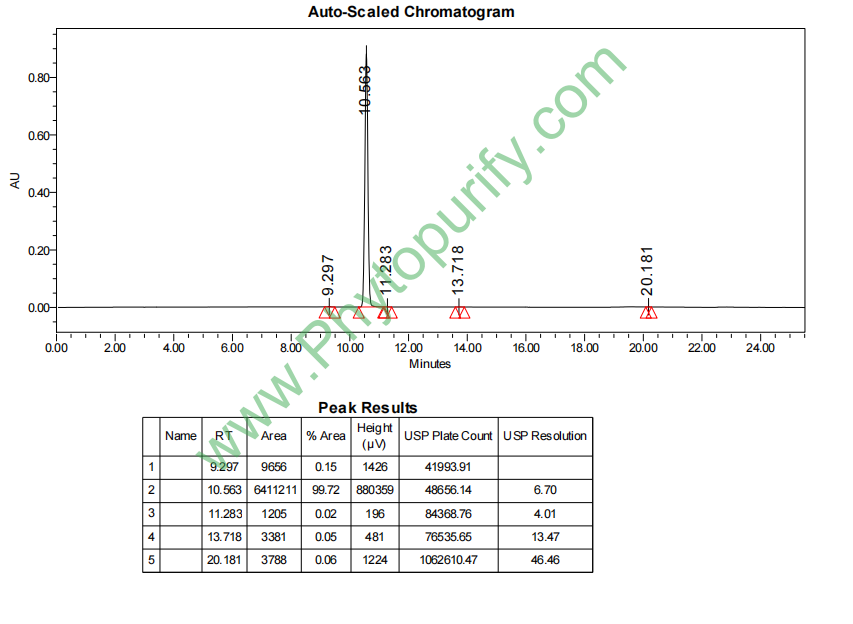
Purity: 95%~99%
Analysis Method: HPLC-DAD or/and HPLC-ELSD
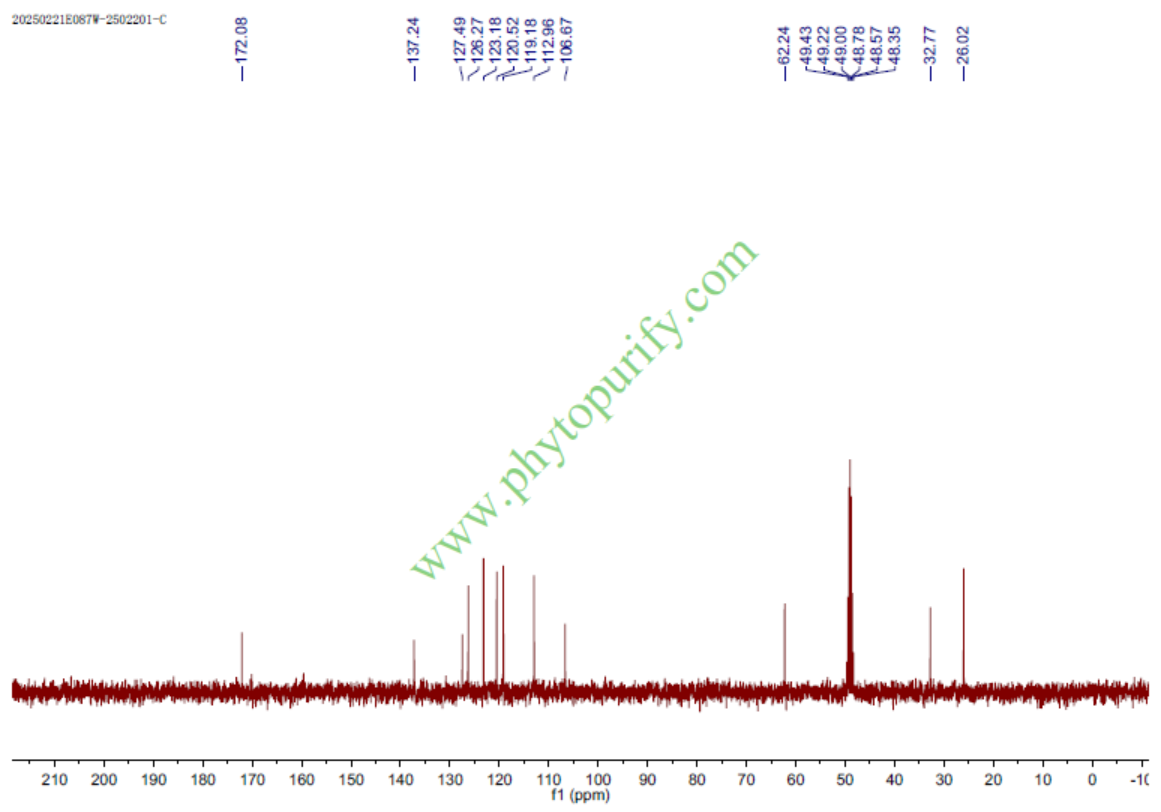
Identification Method: Mass, NMR
Packing: Brown vial or HDPE plastic bottle
Can be supplied from milligrams to grams.
For Reference Standard and R&D, Not for Human Use Directly.
Inquire for bulk scale.
HPLC of Abrine
NMR of Abrine
Storage conditions:Short-term storage at 2~8℃, long-term storage at -20 ~ -80℃
69.1700
.5800
.1300
Low
No
No
No
Unknown
No
Unknown
Abrine (CAS number: 526-31-8), as an important alkaloid in natural products, has attracted widespread attention in pharmacology and natural product chemistry in recent years. Its chemical structure is N-methyl-L - α - amino acid, specifically the N α - methyl derivative of L-tryptophan, exhibiting unique biological activity and pharmacological properties. Acacia alkaloids not only exist as secondary metabolites in certain plants, but have also been found to be associated with the metabolic processes of Escherichia coli, demonstrating their potential role in microbial metabolic networks. Research has shown that Acacia alkaloids have antioxidant activity, can scavenge ABTS radical ions, and to some extent reduce the efficacy of commercial antioxidants such as BHT and Trolox, indicating their potential application value in antioxidant development.
At present, research on Acacia alkaloids mainly focuses on their chemical properties, pharmacological activities, and drug evaluation, especially in the field of natural product pharmacology. Their unique structure as a derivative of L-tryptophan provides a theoretical basis for further understanding their mechanism of action. This article aims to systematically review the chemical structure and physicochemical properties, plant sources and extraction methods, pharmacological activity and mechanism of action, pharmacological evaluation and pharmacokinetic characteristics of Acacia alkaloids. Finally, it looks forward to its clinical application prospects, providing theoretical support and practical guidance for subsequent related research.
The chemical name of Acacia alkaloids is N (α) - methyl-L-tryptophan, with a molecular formula of C12H15N2O2 and a molecular weight of 218.25 Da. Its structural feature is that the N α - amino group of L-tryptophan is methylated to form N-methyl-L - α - amino acid. This structure endows Acacia alkaloids with zwitterionic properties and can exhibit tautomeric forms under different pH conditions.
In terms of physical and chemical properties, the LogP value of Acacia alkaloids is 0.58, indicating a good balance between hydrophilicity and hydrophobicity, which is conducive to their distribution and absorption in organisms. The polar surface area (TPSA) is 69.17 Å ², and the number of hydrogen bond acceptors is 4, indicating that it has certain polarity and hydrogen bond formation ability, which is of great significance for its interaction with biomolecules. The low permeability of the blood-brain barrier suggests limited penetration ability in the central nervous system, which helps reduce the risk of central nervous system side effects. Toxicological evaluation shows that Acacia alkaloids have no significant hepatotoxicity, cardiotoxicity, or hERG channel inhibition effects, but the Ames mutagenicity test results are still unclear and require further safety evaluation.
Acacia alkaloids are mainly found in the seeds of the legume Acacia spp., especially in the seeds of Abrus precatorius, which have a higher content. As a traditional herb and natural dye source, the content and distribution of acaricine in the seeds of Acacia provide a basis for its pharmacological activity research.
The extraction method usually uses solvent extraction combined with chromatographic separation technology. The commonly used extraction solvents include a mixed solution of methanol, ethanol, and water. Ultrasonic assisted extraction or reflux extraction can be used to improve the extraction efficiency. After concentration and liquid-liquid distribution, the extract was purified using methods such as silica gel column chromatography and reverse phase high-performance liquid chromatography (RP-HPLC). In recent years, supercritical CO2 extraction technology and molecular imprinting technology have also been attempted to be applied to the efficient separation of acacia alkaloids, significantly improving purity and recovery rate.
In addition, there have been reports on the chemical synthesis route based on acacia alkaloids, mainly achieved through the N α - methylation reaction of L-tryptophan, providing the possibility for large-scale preparation.
The pharmacological activity research of Acacia alkaloids mainly focuses on their antioxidant, antibacterial, and potential anti-tumor activities.
antioxidant activity
Acacia alkaloids exhibit significant free radical scavenging ability, especially in ABTS based ion scavenging experiments, showing antioxidant effects comparable to BHT (butyl hydroxytoluene) and Trolox (vitamin E analogue). Its antioxidant mechanism may be related to the synergistic effect of the indole ring and amino acid groups in its N-methyl-L-Tryptophan structure, which can effectively capture free radicals and alleviate cell damage caused by oxidative stress.
Antibacterial activity
As one of the metabolites of Escherichia coli, acaricine exhibits inhibitory effects on Gram negative bacteria at certain concentrations. Related studies have shown that Acacia alkaloids may exert antibacterial effects by interfering with bacterial protein synthesis or membrane function, but the specific targets and mechanisms still need to be further explored.
Antitumor potential
Preliminary in vitro experiments have shown that Acacia alkaloids have inhibitory activity on the proliferation of certain tumor cell lines, which may be related to their regulation of apoptosis related signaling pathways. The N-methyl-L-Tryptophan structure provides the possibility for its binding to intracellular enzymes or receptors, but the related mechanism research is still in its infancy.
Other potential activities
Some studies suggest that Acacia alkaloids may affect neurotransmitter metabolism and immune regulation. However, due to their low blood-brain barrier permeability, the clinical significance of their neuropharmaceutical effects needs further verification.
The mechanism of action of Acacia alkaloids has not been fully elucidated, but based on their structural characteristics and pharmacological activity, it is speculated that they mainly exert biological effects through the following pathways:
Antioxidant mechanism
The indole ring structure in Acacia alkaloids can stabilize free radicals, reduce the generation of reactive oxygen species (ROS), and protect cells from oxidative damage. The N-methylated amino acid portion may enhance molecular stability and improve antioxidant efficacy. In addition, Acacia alkaloids may indirectly enhance the antioxidant defense system by regulating the expression of intracellular antioxidant enzymes such as superoxide dismutase and glutathione peroxidase.
molecular target
Although the specific target is not yet clear, it is speculated that Acacia alkaloids may interact with enzymes related to tryptophan metabolism, such as tryptophan hydroxylase and indoleamine 2,3-dioxygenase, affecting cellular metabolic pathways. In addition, its inhibitory effect on bacterial protein synthesis suggests that it may target ribosomes or related transport RNA synthases.
Signal pathway regulation
Preliminary data suggests that Acacia alkaloids may regulate apoptosis related signaling pathways, such as the expression of Bcl-2 family proteins in the mitochondrial pathway, promoting cancer cell apoptosis. In addition, its antioxidant effect helps to inhibit inflammatory signaling pathways such as NF - κ B, exerting anti-inflammatory and cell protective effects.
metabolic regulation
As a metabolite of Escherichia coli, acaricine may be involved in the metabolic regulation of microbial communities, affecting the balance of host gut microbiota and subsequently impacting the host's health status.
The pharmacological parameters of Acacia alkaloids indicate that they have certain potential for development:
In terms of pharmacokinetics, existing data is relatively limited. It is speculated that Acacia alkaloids are well absorbed after oral administration and widely distributed in the body, but due to the low permeability of the blood-brain barrier, they mainly act on peripheral tissues. Its metabolic pathway may involve amino acid metabolizing enzymes in the liver, and the metabolites still need to be systematically identified. The excretion pathway may be mainly through the kidneys, and the half-life and bioavailability need to be further clarified through in vivo pharmacokinetic studies.
Acacia alkaloids, as a natural product with good antioxidant activity and potential pharmacological effects, have broad application prospects in the prevention and treatment of various diseases in the future
Development of antioxidants
Due to its excellent free radical scavenging ability, Acacia alkaloids can be used as a novel natural antioxidant for the prevention and treatment of oxidative stress-related diseases, such as cardiovascular disease, neurodegenerative diseases, and chronic inflammatory diseases.
Antimicrobial adjuvants
Its inhibitory effect on Escherichia coli and other Gram negative bacteria suggests that acaricine can be used as an adjuvant for antibacterial drugs, enhance antibacterial efficacy, or be developed as a new type of antibacterial drug.
Research on anti-tumor drugs
The preliminary anti-tumor activity provides the possibility for its application in the field of tumor therapy. In the future, it is necessary to verify its anti-tumor mechanism and efficacy through systematic in vitro and in vivo experiments, and explore its potential as a chemotherapy adjuvant.
Microecological modulator
As a microbial metabolite, Acacia alkaloids have the potential to regulate the gut microbiota, promote host health, and be applied in the prevention and treatment of intestinal diseases and metabolic syndrome.
Future research should focus on addressing the safety evaluation, pharmacokinetic characteristics, and mechanism of action of Acacia alkaloids, optimizing their structure with modern drug design methods, and improving their biological activity and drug utilization. At the same time, preclinical and clinical trials will be conducted to verify its therapeutic efficacy and safety, laying the foundation for its clinical application.
Acacia alkaloids, as a structurally unique N-methyl-L-Tryptophan derivative, exhibit diverse biological activities, particularly in the fields of antioxidant and antibacterial properties, demonstrating significant potential. Its good pharmacological parameters and safety evaluation provide favorable conditions for its drug development. Although the current research on its mechanism of action and pharmacokinetics is not sufficient, with the development of modern molecular biology and pharmacology techniques, it is believed that Acacia alkaloids will play an increasingly important role in natural product pharmacology and new drug development. In depth research on future systems will promote the transition of Acacia alkaloids from the laboratory to clinical practice, becoming an effective natural medicine for treating various diseases.
