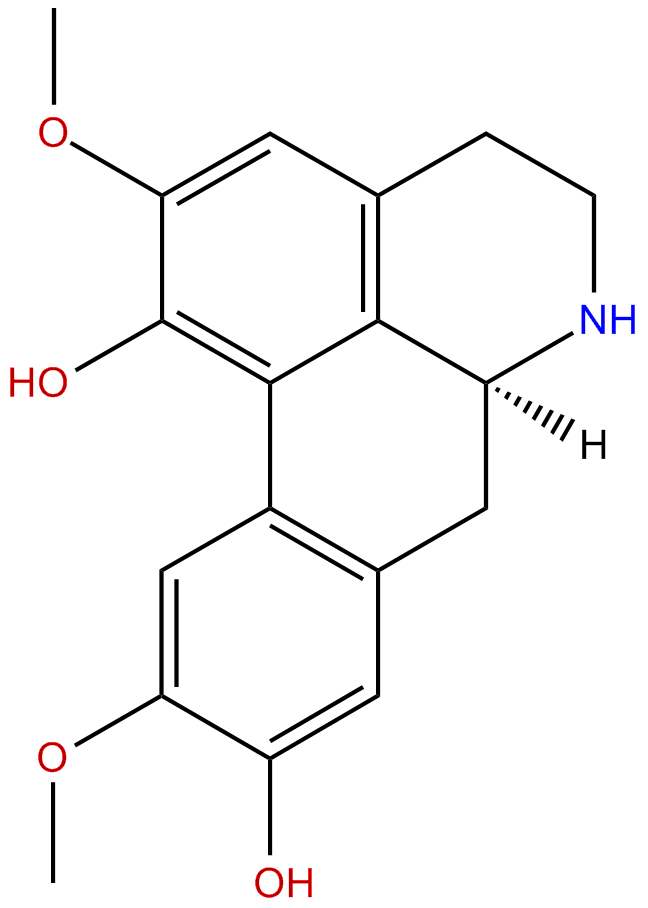


Product name: Norisoboldine
Synonym name: Laurelliptine
Catalogue No.: BP1007
Cas No.: 23599-69-1
Formula: C18H19NO4
Mol Weight: 313.353
Botanical Source: Alkaloid from Beilschmiedia elliptica, Beilschmiedia podagrica, Cassytha pubescens, Monodora tenuifolia, Litsea xylanica and some other Litsea spp., Zizyphus jujuba, Nectandra rigida and (possibly) Monanthotaxis cauliflora (Lauraceae, Annonaceae, Rhamnac
Physical Description: Powder
Type of Compound: Alkaloids
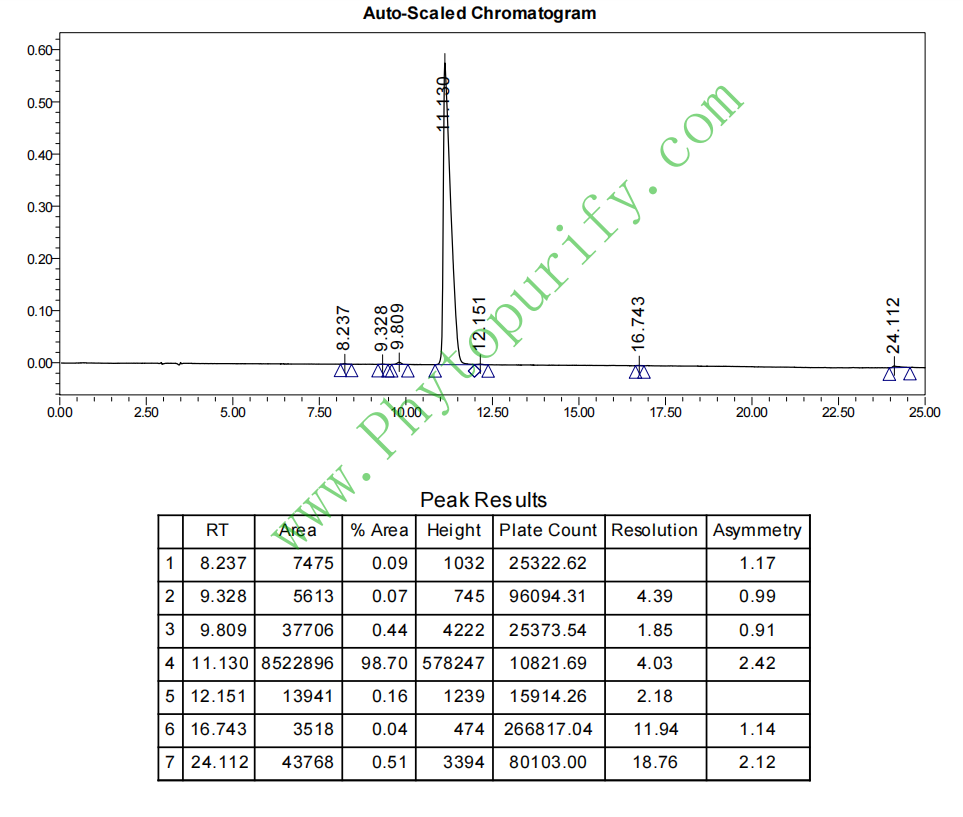
Purity: 95%~99%
Analysis Method: HPLC-DAD or/and HPLC-ELSD
Identification Method: Mass, NMR
Packing: Brown vial or HDPE plastic bottle
Storage: Store in a well closed container, protected from air and light. Put into refrigerate or freeze for long term storage.
Whenever possible, you should prepare and use solutions on the same day. However, if you need to make up stock solutions in advance, we recommend that you store the solution as aliquots in tightly sealed vials at -20℃. Generally, these will be useable for up to two weeks.
The product could be supplied from milligrams to grams, up to kilograms
Inquire for bulk scale.
Descriptions:
Norisoboldine is the main isoquinoline alkaloid occurring in Radix Linderae, the dry roots of Lindera aggregata (Lauraceae family),it has been previously implicated to be able to ameliorate the synovial inflammation and abnormal immune conditions in collagen-induced arthritis of mice; it inhibits the macrophage activation and the resultant production of pro-inflammatory cytokines via down-regulating the activation of MAPKs signaling pathways rather than NF-κB.[1]
Norisoboldine can suppress osteoclast differentiation through preventing the accumulation of TRAF6-TAK1 complexes and activation of MAPKs/NF-κB/c-Fos/NFATc1 pathway; it alao inhibits the production of interleukin-6 in fibroblast-like synoviocytes from adjuvant arthritis rats through PKC/MAPK/NF-κB-p65/CREB pathway.[2,3]
Norisoboldine can significantly alleviate the severity of collagen II -induced arthritis (CIA) , based on the reduced clinical scores and elevated the lowered body weights of model mice, it also significantly suppressed the enhanced T cell responses in vivo, suggests that norisoboldine might be a potential therapeutic agent for rheumatoid arthritis, and it functions through protecting joint destruction as well as regulating the abnormal immune responses.[4]
Norisoboldine can alleviate joint destruction in AIA rats by reducing RANKL, IL-6, PGE2, and MMP-13 expression via the p38/ERK/AKT/AP-1 pathway.[5]
Norisoboldine attenuates inflammatory pain and decreases forskolin-evoked cyclic adenosine monophosphate levels in mouse spinal cord neuronal cultures through the adenosine A1 receptor.[6]
Norisoboldine inhibit VEGF-induced endothelial cell migration via a cAMP-PKA-NF-κB/Notch1 signaling pathway.[7]
References:
[1] Luo Y, Liu M, Dai Y, et al. Inflammation, 2010, 33(6):389-97.
[2] León M, Martín P, Bravo D, et al. Plos One, 2013, 8(3):e59171-e59171.
[3] Wei Z F, Wang FY, Song J, et al. J Cell Biochem, 2012, 113(8):2785-95.
[4] Luo Y, Liu M, Xia Y, et al. Phytomedicine International Journal of Phytotherapy & Phytopharmacology, 2010, 17(10):726-31.
[5] Wei Z F, Jiao X L, Wang T, et al. Acta Pharmacol Sin, 2013, 34(3):403-13.
[6] Gao X, Lu Q, Chou G, et al. Eur J Pain, 2014, 18(7):939-48.
[7] Lu Q, Tong B, Luo Y, et al. Plos One, 2013, 8(12):e81220.
[8] Chen J, Guixin C, Yang L, et al. China Journal of Chinese Materia Medica, 2009, 34(21):2774-6.
HPLC of Norisoboldine
Storage conditions:Short-term storage at 2~8℃, long-term storage at -20 ~ -80℃
70.9500
2.2407
1.2363
.4032
2.8994
6.9782
High
78.7552
3.1845
No
Yes
No
No
Yes
No
0.6
Yes
No
No
No
Natural products, as an important source of drug discovery, play an irreplaceable role in the long history of human struggle against diseases. Among numerous natural products with biological activity, isoquinoline alkaloids have attracted much attention due to their structural diversity and extensive pharmacological activities. Norioboldine, abbreviated as NOR, is a traditional Chinese medicine derived from black medicine(Lindera aggregata The aporphine type isoquinoline alkaloids, also known as forest ginseng, have become a research hotspot in the field of natural product pharmacology in recent years due to their unique pharmacological effects and clear molecular targets.
The chemical name of demethyl isopole is 1,2,10-trimethoxy-6-methyl-5,6,6a,7-tetrahydro-4H-dibenzo [de, g] quinoline-9-phenol, with a CAS number of 23599-69-1. This compound was initially isolated and identified from black medicine, and is one of the most abundant isoquinoline alkaloids in black medicine. Traditional Chinese medicine theory holds that Wu medicine has the effects of promoting qi circulation, relieving pain, warming the kidneys, and dispelling cold. Modern pharmacological research has revealed its various biological activities such as anti-inflammatory, analgesic, and anti-tumor effects. As the main active ingredient of Wuyao, the research value of demethyl isoproterenol is increasingly prominent.
Of particular note is that demethyl isopole has been identified as a natural aryl hydrocarbon receptor (AhR) agonist with oral activity. AhR is a ligand activated transcription factor initially recognized for mediating the toxic effects of environmental toxins such as dioxins. However, in recent years, a large number of studies have shown that AhR plays a complex regulatory role in immune regulation, inflammatory response, cell proliferation and differentiation, as well as tumor occurrence and development. The activation of AhR can produce vastly different biological effects, depending on the nature of the ligand, cell type, and microenvironment. Norepinephrine, as a natural and low toxicity AhR agonist, provides an ideal tool molecule and lead compound for studying the physiological functions of AhR and developing therapeutic strategies based on AhR regulation.
At present, the pharmacological activity research of dexmedetomidine has expanded from its initial anti-inflammatory and immunomodulatory effects to the treatment of rheumatoid arthritis (RA), ulcerative colitis (UC), and various tumors. Its mechanism of action involves the regulation of multiple signaling pathways, including AhR, STAT3, MAPK, etc. This article aims to provide a systematic review of the chemical structure, plant origin, pharmacological activity, mechanism of action, medicinal properties, and clinical application prospects of demethyl isopole, in order to provide reference for the in-depth research and development of this natural product.
Demethyl isopole belongs to the aporphine type isoquinoline alkaloids, and its core skeleton is derived from benzylisoquinoline, with a four ring fused ring system. Its chemical structural characteristics are as follows: the C-1 and C-2 positions on the A ring are substituted with methoxy groups, the C-9 position is a phenolic hydroxyl group, the C-10 position is substituted with methoxy groups, the C-6a position on the D ring is the chiral center, and the naturally occurring demethyl isopole is designated as the S configuration. The phenolic hydroxyl and tertiary amine nitrogen atoms in this structure are key functional groups for its biological activity, which may participate in hydrogen bonding or ion interactions with the target protein.
In terms of physical and chemical properties, the molecular formula of demethyl isopole is C ₁₉ H ₂₁ NO ₄, with a molecular weight of 313.3530 g/mol. Its lipid water partition coefficient (LogP) is 2.2407, indicating that it has moderate lipophilicity and is conducive to transmembrane transport. The topological polar surface area (TPSA) is 70.9500 Å ², which meets the general requirements for oral medications (usually less than 140 Å ²). The water solubility parameter is 0.4032, which belongs to the category of slight solubility, which may affect its oral bioavailability to some extent. It is worth noting that computer predictions show that dexmedetomidine has a high blood-brain barrier penetration ability, which provides potential therapeutic applications for central nervous system diseases. In addition, the hERG inhibition prediction was negative, and the Ames test prediction value was 0.6, indicating a low risk of cardiac and genetic toxicity and good safety potential.
These physical and chemical properties indicate that dexmedetomidine has preliminary favorable conditions for development as an oral drug, but its poor water solubility may need to be improved through formulation techniques such as cyclodextrin inclusion, solid dispersion, nanoparticles, etc.
The main source of norepinephrine is Lauraceae, a genus of mountain pepper in the Lauraceae family(Lindera)Plants, including black medicine(Lindera aggregata The content of (Sims) Kosterm. is the most abundant. Wuyao, also known as forest ginseng or short camphor, is a traditional Chinese medicine with dried root tubers widely distributed in the Yangtze River Basin and southern provinces of China. In addition to wuyao, demethyl isoproterenol also exists in other camphor plants such as San Ya wuyao(Lindera obtusiloba)Heshan pepper(Lindera glauca)Medium, but the content is usually low.
The alkaloid components in black medicine are complex. In addition to metoclopramide, it also contains various aporphine alkaloids such as Isoboldine, Boldine, and Linderine. As one of the characteristic components of Wuyao, the content of demethyl isoproterenol is often used as an indicator for evaluating the quality of Wuyao medicinal materials.
The traditional methods for extracting dexmedetomidine usually include solvent extraction, acid extraction and alkaline precipitation, and column chromatography separation. The specific process is as follows:
1. Raw material pretreatment Crush the dried root of black medicine into coarse powder.
2. Solvent extraction Acidic ethanol (such as ethanol containing 0.5-1% hydrochloric acid) or methanol is commonly used for percolation or reflux extraction, utilizing the property of alkaloids that form salts under acidic conditions and dissolve in alcohol water.
3. Enrichment and purification After extracting the solvent under reduced pressure, dissolve it in dilute acidic water and filter to remove fat soluble impurities. The filtrate is adjusted to alkaline with alkaline solution (such as ammonia water) to free the alkaloids, and then extracted with organic solvents (such as chloroform, ethyl acetate) to obtain the total alkaloid fraction.
4. Separation and refinement Total alkaloids are separated and purified by silica gel column chromatography, alumina column chromatography, or preparative high-performance liquid chromatography (Pre HPLC). The commonly used elution systems are chloroform methanol ammonia solution or petroleum ether ethyl acetate diethylamine, etc. Dexmedetomidine, due to its specific polarity, can be obtained from specific fractions and recrystallized to obtain monomeric compounds.
In recent years, in order to meet the needs of research and development, more efficient and environmentally friendly extraction methods have been continuously developed, such as high-speed countercurrent chromatography (HSCCC), molecular imprinting technology, etc. These methods can achieve rapid and high-purity separation of demethyl isopole.
The pharmacological activity research of dexmedetomidine mainly focuses on its anti-inflammatory, immunomodulatory, anti-tumor, and therapeutic effects on autoimmune diseases.
This is one of the most essential pharmacological activities of norepinephrine. Numerous studies have shown that dexmedetomidine exhibits significant inhibitory effects in various inflammatory models.
- The effect on rheumatoid arthritis (RA)In collagen induced arthritis (CIA) mouse models and adjuvant arthritis (AA) rat models, oral administration of demethyl isoproterenol can significantly reduce joint swelling, bone erosion, and cartilage damage, as well as decrease the levels of pro-inflammatory cytokines (such as TNF - α, IL-1 β, IL-6) in serum. Its mechanism of action is related to inhibiting Th17 cell differentiation and promoting the generation of regulatory T cells (Tregs), thereby restoring immune balance.
- The effect on ulcerative colitis (UC)In the colitis mouse model induced by dextran sulfate sodium (DSS), demethyl isoproterenol can effectively alleviate symptoms such as weight loss, diarrhea, and rectal bleeding, and reduce the pathological score of colon tissue. It protects the integrity of the intestinal mucosal barrier by inhibiting intestinal inflammatory response, and its effect is also closely related to the activation of AhR.
- Effects on other inflammatory models In lipopolysaccharide (LPS) - induced acute lung injury, macrophage inflammation models, and atopic dermatitis models, norepinephrine has shown the ability to inhibit inflammatory mediators (such as NO, PGE2) and pro-inflammatory cytokine production.
Dexmedetomidine exhibits proliferation inhibition, induction of apoptosis, and anti metastatic activity against various tumor cell lines.
- Inhibition of proliferation and induction of apoptosis: Among breast cancer, lung cancer, liver cancer, colorectal cancer, leukemia and other cancer cells, norethipoldine can inhibit cell proliferation and block cell cycle in G0/G1 or G2/M phase. Meanwhile, it induces cell apoptosis by regulating Bcl-2 family proteins (downregulating anti apoptotic proteins MCL1 and BCL2, upregulating pro apoptotic protein Bax) and activating the Caspase cascade reaction.
- Inhibit invasion and metastasis Dexmedetomidine can downregulate the expression of matrix metalloproteinases (MMP2, MMP9) and inhibit the migration and invasion ability of tumor cells. In addition, it can also inhibit tumor growth and metastasis by suppressing the accumulation of HIF-1 α and affecting tumor angiogenesis.
- Reverse multidrug resistance Preliminary studies suggest that demethyl isoproterenol may reverse multidrug resistance by inhibiting the function or expression of P-glycoprotein (P-gp), increasing the accumulation of chemotherapy drugs in drug-resistant tumor cells.
The pharmacological mechanism of dexmedetomidine is complex, involving multiple signaling pathways and molecular targets, among which the activation of AhR is its most core upstream mechanism.
Dexmedetomidine has been identified as a natural AhR agonist. It can directly bind and activate AhR, promote AhR translocation from cytoplasm to nucleus, form heterodimers with aromatic hydrocarbon receptor nuclear translocation protein (ARNT), and then bind to the dioxin response element (DRE) in the promoter region of the target gene, initiating transcription of downstream genes.
- Immune regulatory mechanism In RA and UC models, activation of AhR by demethyl isoproterenol can promote the differentiation of Treg cells (by inducing Foxp3 expression) while inhibiting the differentiation of Th17 cells (by suppressing ROR γ t expression). The restoration of this immune balance is the key to treating autoimmune diseases. In addition, AhR activation can induce the production of IL-22, which plays an important role in maintaining the integrity of the intestinal mucosal barrier.
- Anti inflammatory mechanism In macrophages, activation of AhR by demethyl isoproterenol can inhibit the NF - κ B signaling pathway, thereby reducing the production of pro-inflammatory cytokines (TNF - α, IL-6) and inflammatory mediators (iNOS, COX-2).
Signal transducer and activator of transcription factor 3 (STAT3) is continuously activated in various tumors and inflammatory diseases, and is an important therapeutic target. Dexmedetomidine can inhibit the phosphorylation (Tyr705 site) and nuclear translocation of STAT3, thereby blocking its transcriptional activity. This leads to downregulation of downstream target genes such as anti apoptotic proteins (MCL1, BCL2, Survivin), cell cycle regulatory protein (Cyclin D1), and pro angiogenic factor (VEGF) expression. Inhibiting STAT3 signaling is one of the important mechanisms by which norepinephrine exerts anti-tumor and anti-inflammatory effects. It is worth noting that there is an interaction between AhR and STAT3 signaling, and demethyl isoproterenol may indirectly regulate STAT3 activity through AhR.
The mitogen activated protein kinase (MAPK) family, including ERK, JNK, and p38, is involved in regulating cell proliferation, differentiation, and apoptosis. The effect of dexmedetomidine on the MAPK pathway is cell and context dependent. In some tumor cells, it can inhibit the phosphorylation of ERK1/2, thereby suppressing cell proliferation. In inflammatory cells, it may reduce the production of inflammatory factors by inhibiting the phosphorylation of p38 and JNK.
In summary, dexmedetomidine exerts its pharmacological effects through a "multi-target, multi pathway" approach. As its primary target, AhR initiates a series of downstream signaling cascades, and the regulation of pathways such as STAT3 and MAPK further amplifies its biological effects.
Based on previous research, a preliminary evaluation of the pharmacological properties of demethyl isoproterenol was conducted.
At present, there are relatively limited systematic research reports on the pharmacokinetics of dexmedetomidine, but some preliminary findings have been made:
- absorb After oral administration, dexmedetomidine can be absorbed into the bloodstream, confirming its oral activity. But the absolute bioavailability may not be high, which is speculated to be related to the first pass effect and poor water solubility.
- distribution Its high LogP value and blood-brain barrier penetration ability suggest that it is widely distributed in the body, especially in organs with abundant blood flow such as the brain, liver, and kidneys.
- Metabolism and excretion The main metabolic pathways may include CYP450 enzyme mediated oxidative metabolism in the liver and UGT enzyme mediated glucuronic acid binding reaction. Metabolites and prototype drugs are mainly excreted through urine and bile.
In order to develop dexmedetomidine as a clinical drug, its potential shortcomings need to be overcome:
- Improve water solubility By preparing prodrugs (such as phosphate esters and amino acid esters), forming salts (such as hydrochloride salts and sulfates), or using novel drug delivery systems such as nanocrystals and liposomes.
- Improve bioavailability By structural modification, steric hindrance or substitution groups are introduced at easily metabolized sites such as phenolic hydroxyl groups to reduce first pass effects. Or develop non oral routes of administration, such as transdermal drug delivery systems.
- Clarify metabolites The system identifies its metabolites and evaluates their activity and toxicity, which is crucial for understanding their in vivo efficacy and safety.
Norepinephrine, as a natural product with a unique mechanism of action, has shown broad application prospects in the treatment of various diseases.
Despite the bright prospects, the development of norepinephrine still faces challenges:
- Mechanism depth The biological function of AhR is highly complex, and its activation may produce vastly different effects in different cellular and disease contexts. A deeper understanding is needed of the "biased" signaling mechanism of demethyl isoproterenol as an AhR agonist to avoid potential pro tumor or immunosuppressive risks.
- Pharmacokinetic optimization Improving its oral bioavailability and water solubility is the key to pushing it into clinical practice.
- clinical translation It is necessary to conduct preclinical pharmacological, pharmacokinetic, and toxicological studies that comply with international standards, and ultimately initiate clinical trials.
In the future, with the development of structural biology, chemical biology, and systems pharmacology, it is expected to obtain higher activity, better selectivity, and better pharmacokinetic properties of demethyl isoproterenol derivatives through structural modification. Meanwhile, based on its unique AhR activation mechanism, developing precise treatment strategies for specific diseases will be an important research direction.
Dexmedetomidine, an aporphine type alkaloid derived from traditional Chinese medicine Wu Yao, occupies an important position in the field of natural product pharmacology due to its unique identity as a natural AhR agonist. From a chemical structure perspective, it conforms to the rules of drug likeness, possesses oral activity, and has good safety potential. From a pharmacological activity perspective, it exhibits significant anti-inflammatory, immune regulatory, and anti-tumor effects in rheumatoid arthritis, ulcerative colitis, and various tumor models by regulating multiple signaling pathways such as AhR, STAT3, and MAPK.
The research process of dexmedetomidine is a microcosm of the modernization of traditional Chinese medicine. It reveals the modern pharmacological code contained in ancient Chinese medicine and provides valuable lead compounds for the development of original drugs based on new mechanisms (AhR activation). Although there are still many challenges in optimizing drug properties and clinical translation, the value of in-depth research on it is undeniable. In the future, with more detailed analysis of its mechanism of action and continuous efforts in medicinal chemistry, demethyl isoproterenol or its derivatives are expected to become a new generation of drugs for the treatment of autoimmune diseases and tumors, contributing to the cause of human health. Studying it is not only an exploration of a natural product, but also a vivid practice of the integration of traditional wisdom and modern science.
