


Product name: Garcinone D
Synonym name:
Catalogue No.: BP0623
Cas No.: 107390-08-9
Formula: C24H28O7
Mol Weight: 428.481
Botanical Source: Garcinia mangostana L.
Physical Description:
Type of Compound: Xanthones
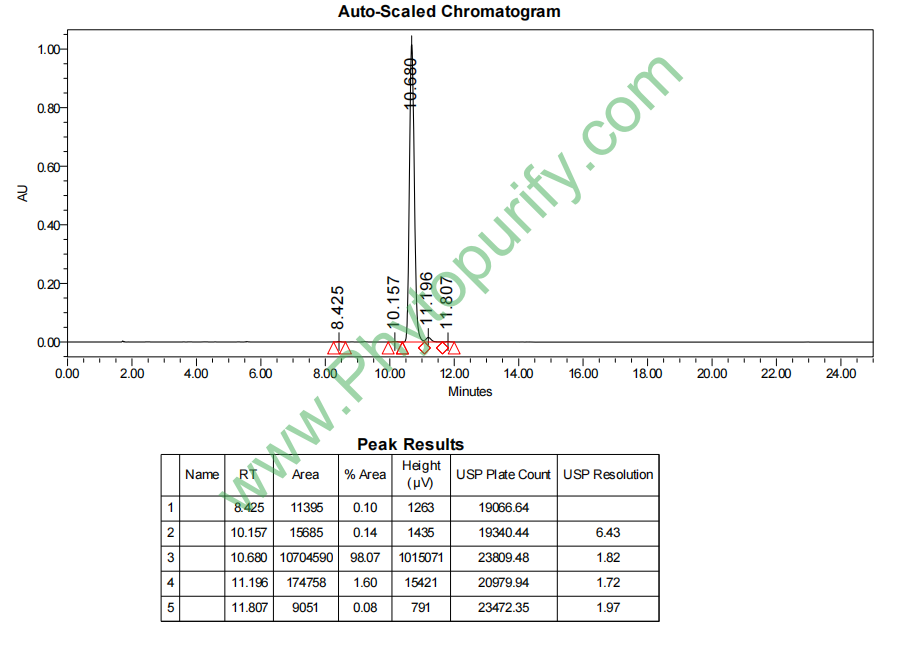
Purity: 95%~99%
Analysis Method: HPLC-DAD or/and HPLC-ELSD
Identification Method: Mass, NMR
Packing: Brown vial or HDPE plastic bottle
Storage: Store in a well closed container, protected from air and light. Put into refrigerate or freeze for long term storage.
Whenever possible, you should prepare and use solutions on the same day. However, if you need to make up stock solutions in advance, we recommend that you store the solution as aliquots in tightly sealed vials at -20℃. Generally, these will be useable for up to two weeks.
The product could be supplied from milligrams to grams
Inquire for bulk scale.
Chengdu Biopurify Phytochemicals Ltd. is a leading company in the research, development, manufacture and marketing of High Quality Phytochemicals and Extracts(especially Active Ingredients from Traditional Chinese Medicine,TCM), Natural Active Pharmaceutical Ingredients worldwide.
The main services:
A. Supply active ingredients and reference standards of TCM, from mgs to kgs scale
B. Custom extraction and purification, target Herb Active Ingredients
C. Custom synthesis and semi-synthesis for Natural Active Ingredients
D. CR(contract research), CM(contract manufacture) and PD(process development) services from lab scale, pilot scale to commercial scale(GMP is also available)
E. TCM compounds library for drug screen,more than 3000 compounds available, many of them are rare and unique.
HPLC of Garcinone D
Storage conditions:Short-term storage at 2~8℃, long-term storage at -20 ~ -80℃
120.3600
3.7049
3.5891
.0512
2.7187
3.2241
Low
89.5450
3.2059
No
No
Yes
No
Yes
Yes
0.6
Yes
No
Yes
No
Natural products, as an important treasure trove for drug discovery, play an irreplaceable role in the history of human disease treatment. Among them, plants of the Caryophyllum genus have attracted much attention due to their abundant xanthenone compounds, which exhibit a wide range of biological activities, including anti-inflammatory, antioxidant, anti-tumor, and neuroprotective effects. Garcinone D is a unique pharmacological derivative of xanthenone isolated from this genus of plants. Its CAS number is 107390-08-9, and its molecular formula is C24H28O7. In recent years, with the deepening of molecular pharmacology research, the multi-target properties of Garcinone D have gradually been revealed. It can not only promote the proliferation of neural stem cells by activating the STAT3/Cyclin D1 and Nrf2/HO-1 pathways, but also block the tumor cell cycle by inhibiting key cyclin dependent kinases such as CDK2/CyclinE1, thus demonstrating dual potential in the fields of neural regeneration and tumor therapy. In particular, it shows inhibitory activity in breast cancer, prostate cancer and other major disease models, making it an attractive candidate molecule for connecting nerve repair and tumor treatment research. This article aims to systematically review the chemical properties, plant sources, pharmacological activities, mechanisms of action, and medicinal properties of Garcinone D, and to explore its future research directions and application prospects.
Garcinone D belongs to the class of xanthenone compounds, and its core structure is a tricyclic xanthenone skeleton. Its molecular weight is 428.4810, and its specific structural feature is the presence of hydrophobic substituents such as isopentenyl groups attached to the parent nucleus of xanthenone, which have a decisive impact on its biological activity and physicochemical properties.
From the analysis of physicochemical parameters related to drug formation, the lipid water partition coefficient (LogP) of Garcinone D is 3.7049, indicating its good lipophilicity, which is beneficial for its penetration of cell membranes and binding to hydrophobic targets, but may also affect its water solubility and in vivo distribution. Its topological polar surface area (TPSA) is 120.3600 Å ², which is relatively high, indicating the presence of multiple hydrogen bond acceptors and donors (such as carbonyl and hydroxyl groups) in the molecule, which can affect its membrane permeability. The measured water solubility is 0.0512 mg/mL, belonging to the category of slightly soluble to poorly soluble, which may be a potential limiting factor for its oral bioavailability. In the preliminary toxicity prediction, the Ames test value was 0.6, indicating a low risk of mutagenicity; HERG inhibition is' no ', indicating that its potential risk of inducing QT interval prolongation in the heart is relatively small. However, its blood-brain barrier permeability is predicted to be "low", which poses a challenge for its application as a therapeutic drug for central nervous system diseases, such as promoting neural stem cell proliferation, and may need to be improved through pharmaceutical methods.
Garcinone D is mainly derived from the bamboo genus in the family Theaceae. This genus of plants is widely distributed in tropical regions and traditionally used to treat various diseases in Southeast Asia and other places. Garcinone D and its analogues have been reported to be present in the skin, bark, or leaves of various plants in the genus Caryophyllum.
Its extraction and separation usually follow the conventional process of natural product chemistry. Firstly, the dried plant material (such as rattan peel) is crushed and subjected to cold soaking or heating reflux extraction using organic solvents such as methanol, ethanol, or acetone to obtain the crude extract. Subsequently, the crude extract was preliminarily separated using solvent partitioning method (such as extraction with petroleum ether, ethyl acetate, and n-butanol in sequence), and Garcinone D was often enriched in the ethyl acetate fraction due to its equipolarity. Further purification relies on various chromatographic techniques. Silica gel column chromatography is commonly used for preliminary separation, with different ratios of petroleum ether ethyl acetate or chloroform methanol gradient elution. The obtained flow fractions are refined by modern separation methods such as reverse phase silica gel column chromatography (such as ODS, eluted by methanol water system), dextran gel column chromatography or high performance liquid chromatography, and finally high-purity Garcinone D monomer compounds are obtained. Structural identification is accomplished through the comprehensive use of techniques such as nuclear magnetic resonance, mass spectrometry, ultraviolet and infrared spectroscopy.
The pharmacological activity study of Garcinone D reveals its dual role in two important fields: neuroprotection and anti-tumor.
1. Promote the proliferation of neural stem cells and neuroprotective effects:
Research has shown that Garcinone D can significantly promote the proliferation of C17.2 mouse neural stem cell lines. This effect is closely related to its activation of specific cellular signaling pathways. In neural stem cells, Garcinone D has been shown to upregulate the expression of cyclin D1 and activate the phosphorylation of signal transduction and transcription activator 3, thereby promoting cell transition from G1 phase to S phase and promoting cell proliferation. Meanwhile, it can also activate nuclear factor E2 related factor 2 and its downstream antioxidant enzyme heme oxygenase-1 pathway. The activation of the Nrf2/HO-1 pathway helps to eliminate excessive reactive oxygen species in cells, alleviate oxidative stress damage, and create a more favorable microenvironment for the survival and proliferation of neural stem cells. This dual effect of promoting proliferation and antioxidant stress suggests that Garcinone D has potential value in the treatment of neurodegenerative diseases (such as Alzheimer's disease, Parkinson's disease) or neural repair after brain injury.
2. Antitumor activity:
Contrary to its pro proliferative effect in neural stem cells, Garcinone D exhibits significant anti proliferative and cycle arrest effects in various tumor cells. In prostate cancer and breast cancer cell lines, Garcinone D can effectively inhibit cell growth. The core of its anti-tumor mechanism lies in the inhibition of the cell cycle engine. Research has shown that Garcinone D has an inhibitory effect on the complex of cyclin dependent kinase 2 and cyclin E1, with an IC50 value of 28.23 μ M. CDK2/CyclinE1 is a key kinase complex that drives cells through the G1/S checkpoint. Inhibition of its activity leads to cell cycle arrest in the G1 phase, thereby preventing unlimited proliferation of tumor cells. In addition, it also has an inhibitory effect on CDK4. This inhibitory effect on key nodes of the cell cycle is an important molecular basis for its anti-tumor activity.
The core of Garcinone D's "bidirectional regulation" effect (i.e. promoting normal neural stem cell proliferation and inhibiting tumor cell proliferation) lies in its differential regulation of specific signaling networks in different cell types. Its mechanism of action involves multiple key targets and pathways.
1. Targets and pathways in neural stem cells:
* STAT3/Cyclin D1 pathway: STAT3 is an important transcription factor that enters the nucleus after phosphorylation activation and can regulate the expression of various genes related to cell proliferation and survival. Garcinone D can promote the phosphorylation of STAT3, thereby upregulating the expression of its downstream target gene Cyclin D1. Cyclin D1 binds to CDK4/6, pushing cells through the G1 phase checkpoint, which is one of its core mechanisms for promoting neural stem cell proliferation.
* Nrf2/HO-1 pathway: Nrf2 is a central regulatory factor of cellular antioxidant response. In the resting state, Nrf2 binds to Keap1 and is degraded by ubiquitination. Garcinone D may dissociate Nrf2 and transfer it to the nucleus by modifying cysteine residues on Keap1, activating the transcription of a series of antioxidant genes including HO-1. HO-1 degrades hemoglobin to produce biliverdin, carbon monoxide, and iron ions, exerting strong antioxidant, anti-inflammatory, and anti apoptotic effects to protect neural stem cells.
2. Action targets and pathways in tumor cells (especially breast cancer):
In tumor cells such as breast cancer, the focus of Garcinone D has shifted to inhibiting proliferation and inducing cycle arrest.
* CDK2/CyclinE1 and CDK4: The direct reason for its induction of G1 phase arrest in tumor cells is the direct inhibition of kinase activity of CDK2/CyclinE1 and CDK4. This blocks the excessive phosphorylation of retinoblastoma proteins, thereby inhibiting the release of E2F transcription factors and the transcription of S phase genes.
* Related breast cancer target network: According to the target information provided, the role of Garcinone D may extend to a more complex breast cancer related network. For example:
* Energy and Metabolism (AMPK/PRKAA1): Activation of AMPK may regulate energy metabolism and inhibit synthetic metabolism in tumor cells.
* Apoptosis regulation (BCL2): It may promote tumor cell apoptosis by affecting the balance of BCL2 family proteins.
* Estrogen Signal (ESR2): The effect on estrogen receptor beta may affect the growth of hormone dependent breast cancer.
* Drug efflux pumps (ABCB1, ABCG2): Inhibiting these efflux pumps may reverse multidrug resistance in tumors.
* Invasion and metastasis (MMP2): Inhibition of matrix metalloproteinase 2 may reduce the invasion and metastasis ability of tumors.
* Protein kinase C (PRKCA) and microtubule associated protein (MAPT): These targets involve cellular signal transduction and skeletal rearrangement, which may affect various malignant phenotypes of tumor cells.
* Melanogenesis (TYR): This target suggests that it may have applications in other pigment related diseases.
It is worth noting that how Garcinone D achieves differential regulation of targets such as STAT3 (activated in neural stem cells) and CDK2 (inhibited in tumor cells) on the same molecule may depend on cell type specific signaling background, drug concentration, subcellular localization, and interactions with other proteins, which is a topic that needs to be further explored in future mechanism research.
Based on its physicochemical properties and preliminary biological data, conduct a preliminary evaluation of the pharmacological properties of Garcinone D.
Advantage:
1. Clear in vitro activity: At the cellular level, it has a clear effect on the proliferation of neural stem cells and inhibition of tumor cells, and the mechanism of action involves multiple key targets, which may have the potential for multi pathway synergistic therapy.
2. Lower early toxicity risk: A negative Ames test indicates a low risk of genetic toxicity, while the absence of hERG inhibition suggests a lower risk of cardiac toxicity, providing preliminary positive signals for its safety assessment.
3. Natural product sources: Originating from traditional medicinal plants, it has a certain "medicinal like" basis.
Challenges and unknowns:
1. Solubility and permeability: Low water solubility and blood-brain barrier permeability are its main shortcomings. This may lead to poor oral absorption, low bioavailability, and difficulty in effectively reaching central nervous system targets. Suitable drug delivery systems need to be developed, such as nano formulations, liposomes, prodrug modifications, or in combination with penetration enhancers.
2. Lack of pharmacokinetic data: At present, there is extremely limited publicly available data on the in vivo pharmacokinetics of Garcinone D, including absorption, distribution, metabolism, and excretion. The key information regarding its oral bioavailability, plasma half-life, tissue distribution characteristics (especially brain tissue distribution), major metabolic pathways, and metabolite activity in animal models such as mice and rats is still blank.
3. Insufficient validation of in vivo efficacy and toxicity: Although the in vitro activity is clear, its in vivo effectiveness, optimal dosage, administration scheme and potential toxicity of long-term administration (such as hepatotoxicity and nephrotoxicity) in animal disease models (such as brain injury models, breast cancer transplant tumor models) still need to be systematically evaluated.
4. The internal balance of "two-way interaction": How to precisely regulate its ability to promote proliferation and resist proliferation in complex in vivo environments, and avoid unnecessary pro proliferative effects on normal tissues (especially other rapidly renewing cells), is a problem that must be carefully considered in its development process.
The unique dual biological activity of Garcinone D has opened up unique application prospects, but also brought challenges in research and development strategies.
Potential application directions:
1. Treatment of neurological disorders: As a promoter of neural stem cell proliferation and neuroprotective agent, Garcinone D has the potential to be used as an adjunct strategy for cell replacement therapy in the treatment of neurodegenerative diseases such as stroke, traumatic brain injury, spinal cord injury, and Alzheimer's disease. The key is to overcome the blood-brain barrier and achieve effective central delivery.
2. Cancer treatment: As a CDK inhibitor and a modulator of multiple signaling pathways, Garcinone D can be used in the treatment of breast cancer, prostate cancer and other solid tumors. Especially its potential to reverse multidrug resistance (by inhibiting ABCB1/ABCG2) and inhibit metastasis (by inhibiting MMP2) makes it a potential sensitizer for combination chemotherapy or targeted therapy. For hormone receptor positive breast cancer, its regulatory effect on ESR2 is also worth further discussion.
3. Combination therapy strategy: Given its multi-target nature, Garcinone D may be used in combination with existing standard therapies such as chemotherapy, radiotherapy, and immunotherapy to synergistically enhance efficacy through different mechanisms or reduce the dosage of traditional drugs to alleviate side effects.
Future research prospects:
1. In depth mechanism research: It is necessary to comprehensively elucidate the precise molecular switches and network differences that induce distinct effects of Garcinone D in nerve cells and tumor cells at the levels of proteomics and transcriptomics. Verify key targets using techniques such as gene knockout and RNA interference.
2. Optimization of drug properties of the system: Conducting systematic drug chemical modifications aimed at improving its water solubility and blood-brain barrier permeability, while retaining or enhancing its core activity. Explore advanced formulation technologies such as prodrug strategies and nano drug delivery systems.
3. Comprehensive preclinical evaluation: Establish relevant animal disease models and systematically evaluate their in vivo efficacy, pharmacokinetics, and safety. This is a crucial step that cannot be surpassed in its clinical translation.
4. Exploring new indications: Based on its target spectrum (such as TYR, AMPK, Nrf2), its new applications in pigmentary diseases, metabolic diseases, oxidative stress-related diseases, and other fields can be explored.
Garcinone D, as a natural xanthenone compound derived from the genus Phyllostachys, has become a highlight molecule in natural product pharmacology research due to its unique "bidirectional regulation" ability to activate the STAT3/Nrf2 pathway to promote neural stem cell proliferation and inhibit targets such as CDK2/CyclinE1 to block the tumor cell cycle. It cleverly links the two important medical fields of nerve regeneration and tumor treatment, showcasing the complex charm of natural products with multiple targets and multiple effects. Although current research has revealed its exciting in vitro activity and partial mechanism of action, its poor solubility, unknown pharmacokinetic properties, and complex in vivo balance of effects constitute the main obstacles to its drug conversion. Future research needs to focus on optimizing its drug properties through medicinal chemistry and formulation methods, based on in-depth analysis of its cell type specific mechanism of action, and conducting rigorous and systematic preclinical in vivo studies. Only in this way can we fully tap into the therapeutic potential of Garcinone D, which has the potential to move from the laboratory to clinical practice, bringing new treatment hope to patients with neurological disorders and cancer.
