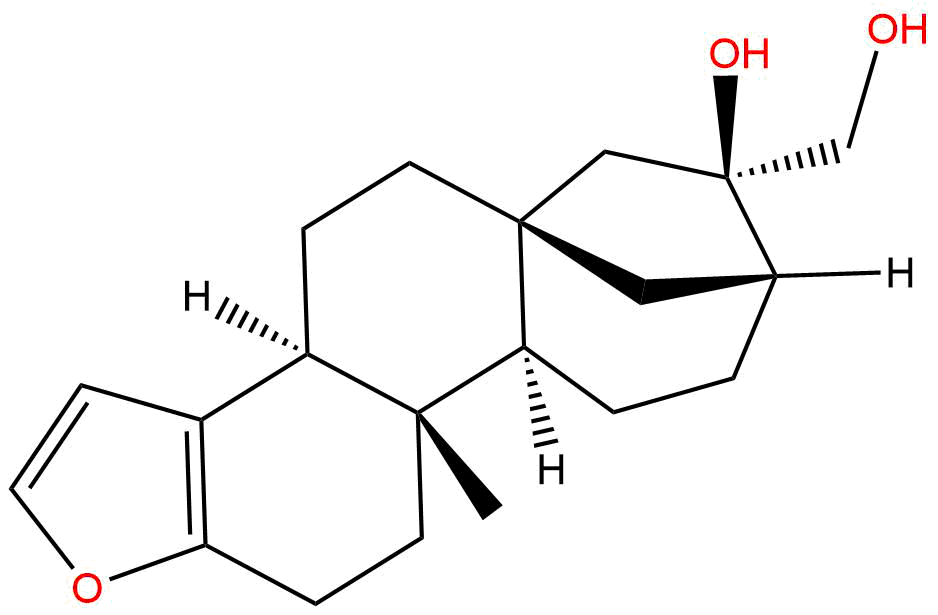


Product name: Cafestol
Synonym name: Cafesterol; Coffeol
Catalogue No.: BP1763
Cas No.: 469-83-0
Formula: C20H28O3
Mol Weight: 316.441
Botanical Source: Coffea Bean
Physical Description:
Type of Compound:
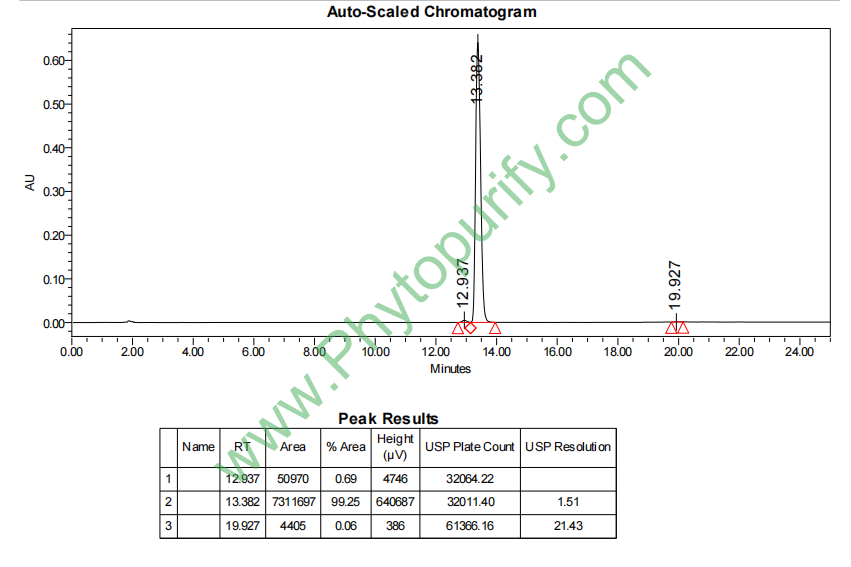
Purity: 95%~99%
Analysis Method: HPLC-DAD or/and HPLC-ELSD
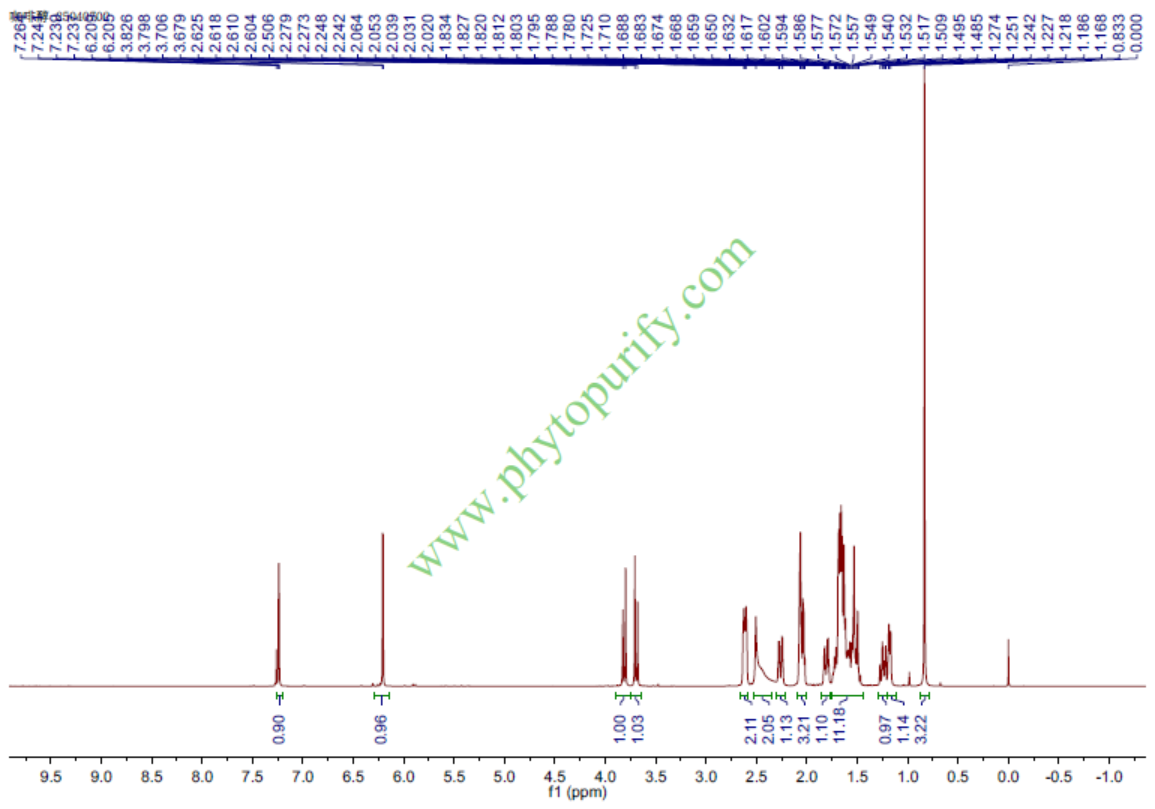
Identification Method: Mass, NMR
Packing: Brown vial or HDPE plastic bottle
The product could be supplied from milligrams to grams. Inquire for bulk scale.
We provide solution to improve the water-solubility of compounds, thereby facilitating the variety of activity tests and clinic uses.
For Reference Standard and R&D, Not for Human Use Directly.
Description:
Cafestol has anticarcinogenic, peripheral antinociceptive and anti-inflammatory activities, it inhibits Cyclic-Strain-induced interleukin-8, intercellular adhesion molecule-1, and monocyte chemoattractant protein-1 production in vascular endothelial cells. Cafestol is a novel extracellular signal-regulated kinase inhibitor with AP-1-targeted inhibition of prostaglandin E2 production in lipopolysaccharide-activated macrophages. Cafestol acts as an agonist ligand for both FXR and PXR, and this may contribute to its impact on cholesterol homeostasis. Cafestol has protective effects against the CCl(4)-induced hepatotoxicity, which possibly involve mechanisms related to its ability to block the CYP2E1-mediated CCl(4) bioactivation and free radical scavenging effects. Cafestol has antidiabetic activity, it increases glucose-stimulated insulin secretion in vitro and increases glucose uptake in human skeletal muscle cells. Cafestol also has a weak inhibitory effect on osteoclastogenesis and promotes osteoblast differentiation.
References:
Oxid Med Cell Longev. 2018 Apr 30;2018:7861518.
Cafestol Inhibits Cyclic-Strain-Induced Interleukin-8, Intercellular Adhesion Molecule-1, and Monocyte Chemoattractant Protein-1 Production in Vascular Endothelial Cells.
Moderate coffee consumption is inversely associated with cardiovascular disease mortality; however, mechanisms underlying this causal effect remain unclear. Cafestol, a diterpene found in coffee, has various properties, including an anti-inflammatory property. This study investigated the effect of Cafestol on cyclic-strain-induced inflammatory molecule secretion in vascular endothelial cells.
METHODS AND RESULTS:
Cells were cultured under static or cyclic strain conditions, and the secretion of inflammatory molecules was determined using enzyme-linked immunosorbent assay. The effects of Cafestol on mitogen-activated protein kinases (MAPK), heme oxygenase-1 (HO-1), and sirtuin 1 (Sirt1) signaling pathways were examined using Western blotting and specific inhibitors. Cafestol attenuated cyclic-strain-stimulated intercellular adhesion molecule-1 (ICAM-1), monocyte chemoattractant protein- (MCP-) 1, and interleukin- (IL-) 8 secretion. Cafestol inhibited the cyclic-strain-induced phosphorylation of extracellular signal-regulated kinase and p38 MAPK. By contrast, Cafestol upregulated cyclic-strain-induced HO-1 and Sirt1 expression. The addition of zinc protoporphyrin IX, sirtinol, or Sirt1 silencing (transfected with Sirt1 siRNA) significantly attenuated Cafestol-mediated modulatory effects on cyclic-strain-stimulated ICAM-1, MCP-1, and IL-8 secretion.
CONCLUSIONS:
This is the first study to report that Cafestol inhibited cyclic-strain-induced inflammatory molecule secretion, possibly through the activation of HO-1 and Sirt1 in endothelial cells. The results provide valuable insights into molecular pathways that may contribute to the effects of Cafestol.
Biol Pharm Bull. 2010;33(1):128-32.
Cafestol, a coffee-specific diterpene, is a novel extracellular signal-regulated kinase inhibitor with AP-1-targeted inhibition of prostaglandin E2 production in lipopolysaccharide-activated macrophages.
Coffee is a popular beverage worldwide with various nutritional benefits. Diterpene Cafestol, one of the major components of coffee, contributes to its beneficial effects through various biological activities such as chemopreventive, antitumorigenic, hepatoprotective, antioxidative and antiinflammatory effects.
METHODS AND RESULTS:
In this study, we examined the precise molecular mechanism of the antiinflammatory activity of Cafestol in terms of prostaglandin E(2) (PGE(2)) production, a critical factor involved in inflammatory responses. Cafestol inhibited both PGE(2) production and the mRNA expression of cyclooxygenase (COX)-2 from lipopolysaccharide (LPS)-treated RAW264.7 cells. Interestingly, this compound strongly decreased the translocation of c-Jun into the nucleus and AP-1 mediated luciferase activity. In kinase assays using purified extracellular signal-regulated kinase 2 (ERK2) or immunoprecipitated ERK prepared from LPS-treated cells in the presence or absence of Cafestol, it was found that this compound can act as an inhibitor of ERK2 but not of ERK1 and mitogen-activated protein kinase kinase 1 (MEK 1).
CONCLUSIONS:
Therefore our data suggest that Cafestol may be a novel ERK inhibitor with AP-1-targeted inhibitory activity against PGE(2) production in LPS-activated RAW264.7 cells.
Biofactors. 2015 Jul-Aug;41(4):222-31.
Cafestol has a weaker inhibitory effect on osteoclastogenesis than kahweol and promotes osteoblast differentiation.
Bone homeostasis is regulated by a balance between osteoclast (OCL)-mediated bone resorption and osteoblast (OBL)-mediated bone formation. Thus, developing a compound that simultaneously inhibits OCL function and promotes OBL function would be useful as a new medical therapy for bone diseases.
METHODS AND RESULTS:
Here, we examined the effects of Cafestol, a coffee diterpene, on the differentiation of OCLs and OBLs. Cafestol prevented OCL formation in a dose-dependent manner and suppressed the bone-resorbing activity of OCLs. Interestingly, the viability of OCLs treated with 10-50 μM Cafestol was significantly higher than that of untreated cells. At the molecular level, Cafestol markedly decreased RANKL-induced phosphorylation of extracellular signal-regulated kinase (Erk) and inhibitor of nuclear factor kappa B alpha (IκBα). Compared to kahweol, another coffee-specific diterpene, the inhibitory effects of Cafestol were milder on OCL differentiation, and Cafestol and kahweol showed different characteristics in induction of the phase ΙΙ antioxidant enzymes and sensitivities in nuclear factor-erythroid 2-related factor 2 (Nrf2)-deficient BMMs. In addition to inhibiting OCLs, Cafestol enhanced the differentiation of osteoblastic cells by increasing the mRNA levels of differentiation markers.
CONCLUSIONS:
Thus, Cafestol inhibits OCL differentiation and promotes OBL differentiation, suggesting that Cafestol may be a novel agent for bone diseases.
HPLC of Cafestol
HNMR of Cafestol
Storage conditions:Short-term storage at 2~8℃, long-term storage at -20 ~ -80℃
53.6000
3.3393
3.3391
.0044
4.8605
14.6011
High
86.9725
5.8063
No
No
No
No
No
No
0.0
No
No
No
No
Cafestol, also known as (3bS, 5aS, 7R, 8R, 10aR, 10bS) -3b, 4,5,6,7,8,9,10,10a, 10b-decahydro-7-hydroxy-10b-methyl-5a, 8-methylene-5H-naphtho [1,2-g] benzofuran-3-methanol, is a unique diterpenoid compound found in coffee beans. Since its structure was elucidated, caffeic acid has attracted much attention due to its complex biological effects. Early research mainly focused on its role as the main lipid component in unfiltered coffee (such as French press pot and Türkiye coffee), which is closely related to the increase of serum cholesterol and low-density lipoprotein (LDL) levels, and is considered as one of the double-edged swords of coffee affecting cardiovascular risk. However, as research deepens, caffeic acid has shown vast pharmacological potential far beyond its "fat raising" side effects. Modern pharmacological studies reveal that caffeinol has significant anti-inflammatory, anti angiogenesis, anti diabetes activities, and has strong anti-tumor effects in a variety of tumor models, which can induce apoptosis and autophagy of cancer cells. Its target involves multiple key signaling pathways, including ERK, STAT3, BCL2, etc., making it of significant research value in fields such as cancer, metabolic diseases, and inflammatory diseases. This article aims to systematically review the chemical properties, plant sources, pharmacological activities, molecular mechanisms of action, pharmacological evaluation, and clinical application prospects of caffeic alcohol, in order to provide comprehensive academic references for the in-depth development and transformation research of this natural product.
The CAS number of caffeic alcohol is 469-83-0, with a molecular formula of C20H28O3 and a molecular weight of 316.4410. Its structure belongs to the sesquiterpene type diterpenes, with a core skeleton composed of a hydrogenated phenanthrene ring and a furan ring fused together, and containing multiple chiral centers, which determine its specific stereochemical configuration and biological activity. The hydroxyl and alcohol groups in the molecule are key functional groups involved in hydrogen bonding interactions, affecting solubility and biological activity.
In terms of physicochemical properties, caffeic alcohol has strong lipid solubility, and the calculated lipid water partition coefficient (LogP) is 3.3393, indicating its good membrane permeability. Its topological polar surface area (TPSA) is 53.6000 Å ², which is relatively small and further supports its good transmembrane transport ability. However, its water solubility is extremely low, only 0.0044 mg/mL, which poses the primary challenge for its formulation development. Coffee alcohol exhibits high blood-brain barrier permeability, suggesting its potential intervention effect on central nervous system related diseases. In the preliminary safety screening, caffeic acid did not show significant hERG potassium channel inhibitory activity (hERG inhibition: No), reducing its risk of inducing QT interval prolongation in the heart; Meanwhile, the actual Ames test result was 0.0, indicating no mutagenicity under the testing conditions, providing preliminary positive data for its safety.
Coffee alcohol is a characteristic component of coffee beans in the coffee genus (mainly Arabica coffee and Robusta coffee), mainly present in the oil part of coffee beans, namely coffee oil. Its content is significantly affected by coffee variety, origin, degree of roasting, and brewing method. Generally speaking, coffee beans that have not been roasted have a higher content of caffeic alcohol, and deep roasting can lead to partial degradation. In terms of brewing method, caffeinol has the highest content in unfiltered coffee drinks due to its lipophilicity, such as coffee prepared by pressing pot, boiling pot or Türkiye method; Dropped coffee or instant coffee filtered through filter paper has an extremely low content of coffee alcohol due to the effective retention of its oil components.
Extracting and purifying coffee alcohols from coffee beans or coffee oil is the basis for studying their activity. Conventional extraction methods include organic solvent extraction, which commonly uses solvents such as n-hexane, dichloromethane, or ethyl acetate to extract total lipids from coffee powder or coffee oil. Subsequently, various chromatographic techniques need to be used for separation and purification, such as silica gel column chromatography, high-performance liquid chromatography (HPLC), and preparative thin layer chromatography (PTLC). In recent years, supercritical CO2 extraction technology has been applied to the extraction of coffee oil and its diterpenoid components due to its green, efficient, and selective advantages, which can better preserve thermosensitive components. The extracted coffee alcohol usually requires structural confirmation through techniques such as nuclear magnetic resonance (NMR) and mass spectrometry (MS).
The pharmacological activity spectrum of caffeic acid is broad and complex, covering multiple fields from metabolic regulation to anti-tumor effects.
The impact on blood lipid metabolism This is the earliest known biological effect of caffeic acid. Numerous human and animal studies have shown that daily intake of higher doses of unfiltered coffee (providing approximately 6-12 milligrams of caffeic alcohol) can significantly increase serum total cholesterol, low-density lipoprotein cholesterol (LDL-C), and triglyceride levels. The mechanism may be related to the activation of farnesol X receptor (FXR), upregulation of cholesterol synthesis related genes (such as HMG CoA reductase), and interference with liver bile acid metabolism. This effect is a negative manifestation of its "double-edged sword" characteristic, but it also suggests its strong influence in lipid metabolism regulation pathways.
anti-inflammatory activity Coffee alcohol exhibits significant anti-inflammatory effects in various inflammatory models. It can inhibit the production of nitric oxide (NO) and prostaglandin E2 (PGE2) in macrophages induced by lipopolysaccharide (LPS), and downregulate the expression of inducible nitric oxide synthase (iNOS) and cyclooxygenase-2 (COX-2). Its anti-inflammatory effect is closely related to the inhibition of key inflammatory transcription factors such as nuclear factor kappa B (NF - κ B) and activator protein-1 (AP-1).
Anti angiogenic activity Coffee alcohol can effectively inhibit the proliferation, migration, and tubular formation of endothelial cells, and has shown the ability to inhibit angiogenesis in models such as chicken embryo chorioallantoic membrane (CAM). This characteristic is the basis of its anti-tumor and potential treatment of other vascular proliferative diseases (such as diabetes retinopathy).
Antidiabetic activity Research has shown that caffeic acid can improve insulin sensitivity. The mechanism may involve inhibiting the activity of protein tyrosine phosphatase 1B (PTPN1), thereby enhancing insulin receptor signaling. In addition, it can also alleviate oxidative stress damage to pancreatic beta cells by activating the Nrf2 (NFE2L2) pathway.
Antitumor activity This is currently the hottest area of research on coffee alcohol. Caffeinol has growth inhibitory and cytotoxic effects on a variety of cancer cell lines, especially in prostate cancer, colon cancer, breast cancer and other models. Its anti-tumor effect is mainly achieved through two core pathways:Inducing cell apoptosis and Inducing autophagy in cells Coffee alcohol can upregulate pro apoptotic proteins (such as Bax) and downregulate anti apoptotic proteins (such as BCL2), leading to loss of mitochondrial membrane potential, release of cytochrome C, and ultimately activating the Caspase cascade reaction. Meanwhile, it can also induce protective or lethal autophagy by regulating pathways such as AMPK/mTOR. In addition, its anti angiogenic effect also synergistically inhibits tumor growth and metastasis.
The multiple pharmacological activities of caffeic acid stem from its interactions with multiple molecular targets within cells, forming a complex regulatory network. Based on its research in prostate cancer, the following focuses on several key targets:
ERK signaling pathway Coffee alcohol has been identified as a direct inhibitor of extracellular signal regulated kinase 2 (ERK2). ERK is a core member of the MAPK signaling pathway, involved in cell proliferation, survival, and differentiation. Coffee alcohol is an important mechanism for inducing cell cycle arrest and apoptosis by inhibiting the phosphorylation and activity of ERK, blocking its downstream signaling pathways that promote survival and proliferation.
STAT3 signaling pathway Signal transducer and activator of transcription factor 3 (STAT3) is a continuously activated oncogenic protein in various cancers. Coffee alcohol can inhibit the phosphorylation (Tyr705 site) and nuclear translocation of STAT3, thereby downregulating the expression of its target genes (such as BCL2 and Cyclin D1), promoting cancer cell apoptosis and inhibiting proliferation.
BCL2 family proteins BCL2 is a key anti apoptotic protein. Coffee alcohol treatment can significantly downregulate the expression of BCL2, while possibly upregulating the levels of pro apoptotic proteins such as Bax, disrupting the balance in the mitochondrial apoptosis pathway and promoting cell apoptosis.
Protein tyrosine phosphatase 1B (PTPN1)PTPN1 is a negative regulator of the insulin receptor signaling pathway. Caffeinol, as an inhibitor of PTPN1, can enhance tyrosine phosphorylation of insulin stimulated insulin receptor beta subunit (IR β) and insulin receptor substrate 1 (IRS-1), and improve insulin sensitivity, which is directly related to its anti diabetes activity.
Nuclear factor E2 related factor 2 (NFE2L2/Nrf2)Nrf2 is a central regulatory factor of cellular antioxidant stress response. Caffeinol can activate Nrf2, promote the expression of its downstream antioxidant enzymes and phase II detoxification enzymes (such as HO-1, NQO1), thus playing a cytoprotective role, which is of great significance in anti diabetes and chemoprevention.
Other related targets Coffee alcohol can also affect the activity of estrogen receptor beta (ESR2), which may interfere with the growth of hormone dependent cancers; Inhibiting multidrug resistance protein ABCB1 (P-gp) may reverse tumor drug resistance; Regulating the activity of protein kinase C alpha (PRKCA); Inhibiting the stability of hypoxia inducible factor 1 alpha (HIF1A) and affecting tumor adaptation to the hypoxic microenvironment; And it also affects the activity of topoisomerase I (TOP1) and the activation of inflammasome component CASP1.
These targets do not exist in isolation, as caffeic acid acts on multiple nodes simultaneously, interweaving into a synergistic network, ultimately achieving its multifunctional biological functions.
Despite the rich pharmacological activity of caffeic acid, its development as a drug faces a series of challenges.
Analysis of drug properties parameters As mentioned earlier, the low water solubility and high LogP value of caffeic alcohol are the main obstacles to its conversion into oral or injectable forms. Although high lipid solubility is beneficial for absorption, it may lead to unstable absorption and significant first pass effects. Its high blood-brain barrier permeability is a double-edged sword, which may be used to treat brain diseases and increase the risk of central nervous system side effects. The lack of hERG inhibition and mutagenicity is currently a preliminary advantage in terms of its safety.
Pharmacokinetic study Existing studies (mainly based on animal experiments) have shown that the absorption of caffeic acid alcohol is rapid but incomplete after oral administration, and its bioavailability is greatly affected by the lipid content in the food. A high-fat diet can significantly promote its absorption. After absorption, it is widely distributed in tissues such as the liver and kidneys. Coffee alcohol is mainly metabolized by the liver in the body, undergoing hydroxylation, demethylation and other reactions through the cytochrome P450 enzyme system (especially CYP1A2, CYP2C8/9, etc.), and binding with glucuronic acid. Its metabolites are mainly excreted through bile and feces, with less excretion by the kidneys. The half-life of caffeic acid is relatively short, which requires its formulation to consider a sustained release strategy to maintain effective blood drug concentration. It is worth noting that caffeic acid is a ligand for aromatic hydrocarbon receptors (AhR), which may induce metabolic enzymes of itself and co administered drugs, posing potential risks of drug drug interactions.
Formulation strategy To improve its water solubility and bioavailability, researchers are exploring various advanced drug delivery systems, such as nanocrystals, liposomes, solid lipid nanoparticles, cyclodextrin inclusion complexes, and self microemulsion drug delivery systems (SMEDS). These technologies can effectively improve its solubility and dissolution rate, enhance gastrointestinal stability, and potentially achieve targeted delivery.
The clinical application prospects of caffeic acid alcohol are broad, but the road is winding and requires exploration and breakthroughs from multiple dimensions.
Disease treatment field:
Challenges and Countermeasures:
Value as a lead compound Coffee alcohol, as a natural product with novel structure, diverse activities, and clear targets, is an excellent lead compound for medicinal chemists to optimize and innovate its structure. Through rational drug design, it is expected to develop a new generation of therapeutic drugs with independent intellectual property rights, better efficacy, and fewer side effects.
Coffee alcohol, a diterpenoid compound derived from the daily beverage coffee, has transformed from a worrying "fat raising factor" to an attractive multi-target natural drug lead molecule. Its outstanding activities in anti-tumor, anti diabetes and anti inflammation reveal the complexity of chemical structure and diversity of biological functions of natural products. Although its inherent lipid-lowering effect and poor solubility pose obstacles for direct drug development, this precisely provides a challenging issue for modern drug research and development. Through interdisciplinary collaboration and the comprehensive application of research methods in medicinal chemistry, pharmacy, molecular pharmacology, and clinical medicine, it is entirely possible to systematically optimize the structure, innovate formulations, and deeply cultivate mechanisms of caffeic alcohol, and to leverage its strengths and avoid its weaknesses, transforming it into a safe and effective clinical therapeutic drug. The research process of caffeic acid vividly illustrates the drug development concept of "originating from nature and surpassing nature", and its future progress deserves continuous attention in the fields of natural product pharmacology and drug development.
