


Product name: Eleutheroside B
Synonym name: Syringin; Lilacin; Methoxyconiferin; Magnolenin A; Alyposide; Syringoside; Ligustrin; Ilexanthin A
Catalogue No.: BP0525
Cas No.: 118-34-3
Formula: C17H24O9
Mol Weight: 372.37
Botanical Source: Eleutherococcus senticosus
Physical Description:
Type of Compound: Phenylpropanoids
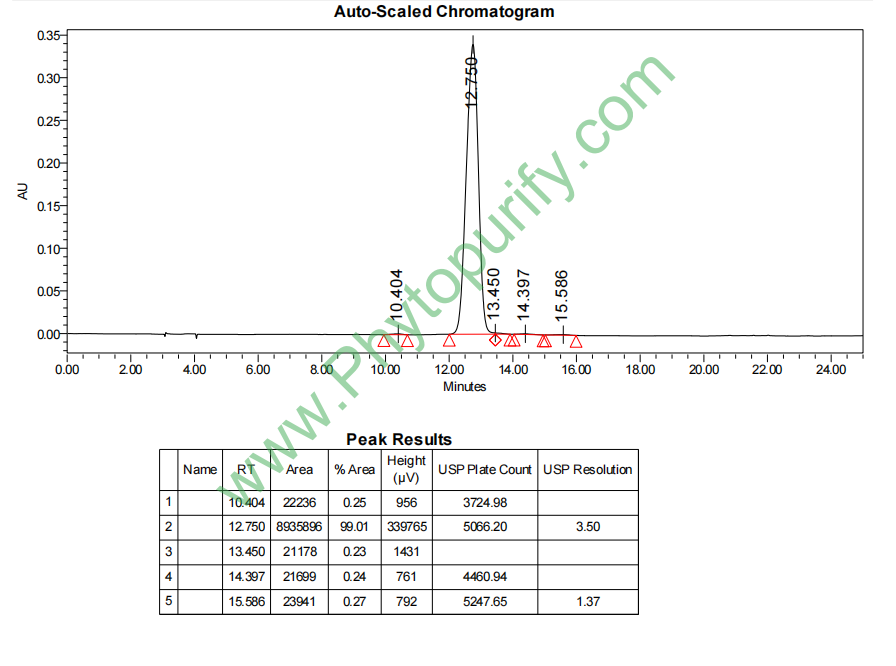
Purity: 95%~99%
Analysis Method: HPLC-DAD or/and HPLC-ELSD
Identification Method: Mass, NMR
Packing: Brown vial or HDPE plastic bottle
Storage: Store in a well closed container, protected from air and light. Put into refrigerate or freeze for long term storage.
Whenever possible, you should prepare and use solutions on the same day. However, if you need to make up stock solutions in advance, we recommend that you store the solution as aliquots in tightly sealed vials at -20℃. Generally, these will be useable for up to two weeks.
The product could be supplied from milligrams to grams
Inquire for bulk scale.
Description:
Syringin (Eleutheroside B) has neuroprotective, tonic, adaptogenic, antitumour, anti- platelet aggregation, anti-inflammatory, antinociceptive ,and immune-modulating properties. It reduced the expression levels of inducible NO synthase (iNOS) ,COX,TNF-α, Beta Amyloid, and Caspase.
References:
Arch Pharm Res. 2010 Apr;33(4):531-8.
Syringin from stem bark of Fraxinus rhynchophylla protects Abeta(25-35)-induced toxicity in neuronal cells.
The medicinal herb Jinpi, derived from the dried stem barks of Fraxinus rhynchophylla belonging to Oleaceae is widely used as a variety of Korean folk remedies for anti-inflammatory, febricide, antidiarrhea, and antileukorrhea diseases.
METHODS AND RESULTS:
In the course of screening antidementia agents from natural products, F. rhynchophylla showed significant inhibitory activity toward Abeta(25-35)-induced neuronal cell death. An active principle was isolated and identified as Syringin.When the neuroblastoma cells were exposed to 50 microM Abeta(25-35), 3-(4,5-dimethylthiazol-2-yl)-2,5-diphenyltetrazolium bromide (MTT) reduction rate (survival rate) decreased to 60.21 +/- 2.16% over control while Syringin treated ones recovered cell viability up to 79.12 +/- 1.39% at 20 microM. In addition, 20 microM Syringin almost completely removed Abeta(25-35)-induced reactive oxygen species. The neuroprotective effect of Syringin seemed to be originated from the reduction of apoptosis since decrease in caspase-3 activity and expression, reduction in cleaved PARP, and DNA fragmentation were observed.
CONCLUSIONS:
These results suggest that F. rhynchophylla and Syringin are expected to be useful for preventing Abeta(25-35)-induced neuronal cell damage.
Fundam Clin Pharmacol. 2015 Apr;29(2):178-84.
Syringin may exert sleep-potentiating effects through the NOS/NO pathway.
Sleep is essential for basic survival as well as for optimal physical and cognitive performance in both human beings and animals.
METHODS AND RESULTS:
To investigate the effect of Syringin on sleep of anesthetized mice and the potential mechanisms, 35 male Kunming mice were randomly divided into six experimental groups (n = 5) and one control group (n = 5). Sleep latency and sleep duration, as well as nitric oxide (NO) content and nitric oxide synthase (NOS) activity, were determined after Syringin administration. The NO precursor l-Arginine (l-Arg) or NOS inhibitor NG-Nitro-l-arginine methyl ester (l-NAME) was administered alone or in combination with Syringin, and time for sleep latency and duration was recorded. After intragastric administration of Syringin, sleep latency decreased in a dose- and time-dependent manner, concomitant with increased sleep duration. The optimal sleep performance was obtained when Syringin was given at a dose of 80 mg/kg for eight consecutive days. Syringin significantly reduced NO concentration and NOS activity. Administration of l-Arg prolonged sleep latency and shortened sleep duration, and the effects were fully reversed by Syringin coadministration. Administration of L-NAME induced a significant reduction in sleep latency and a corresponding increase in sleep duration, and coadministration of Syringin further enhanced the effects.
CONCLUSIONS:
The finding of our study demonstrated that Syringin could exert sleep-potentiating effects on anesthetized mice in a time- and dose-dependent manner, and these effects may be intimately correlated with the NO/NOS pathway.
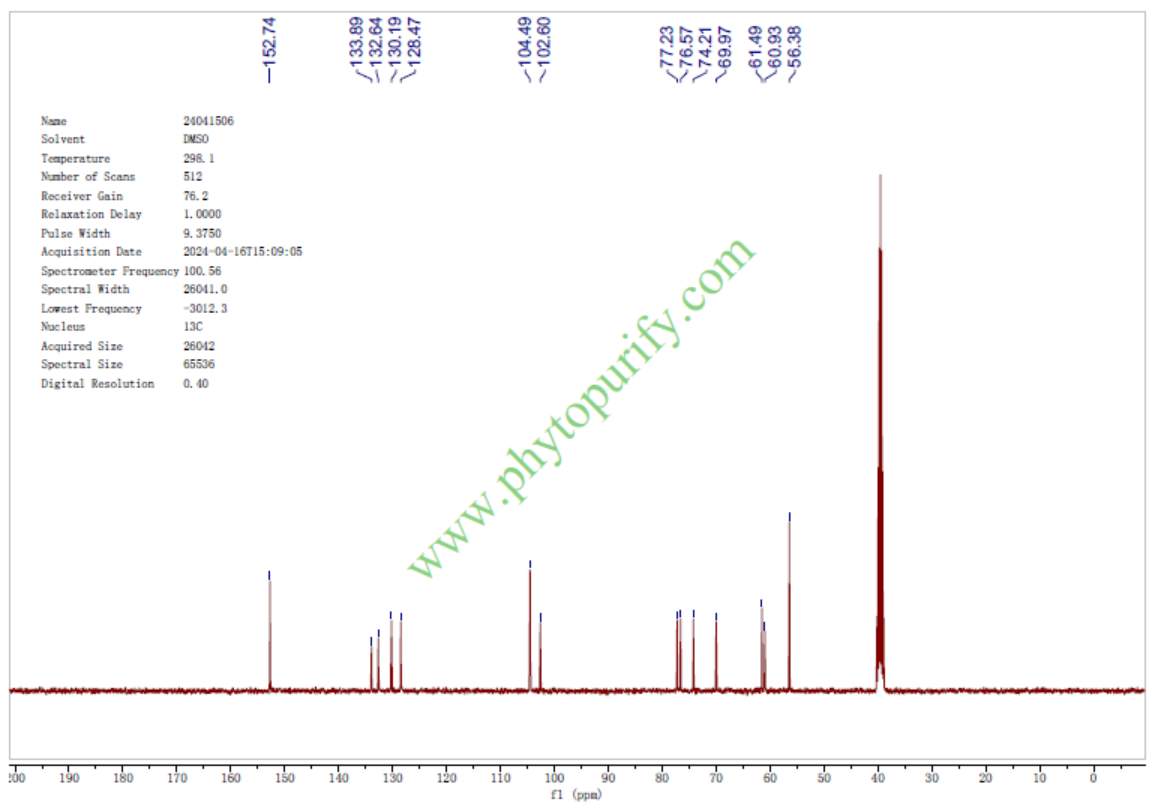
NMR of Eleutheroside B
HPLC of Eleutheroside B
Storage conditions:Short-term storage at 2~8℃, long-term storage at -20 ~ -80℃
138.0700
-.3794
-.3797
22.8682
.5785
.2027
Low
44.9866
3.7232
Yes
No
No
No
No
No
0.0
Yes
Yes
Yes
Yes
Natural products, as an important treasure trove for drug discovery and development, play an irreplaceable role in the history of human disease prevention and treatment. Among them, glycoside compounds have always been a hot topic in medicinal chemistry and pharmacology research due to their structural diversity and wide range of biological activities. Lilac glycoside, also known as Ciwujia glycoside B, is a phenylpropanoid glycoside compound widely present in various medicinal plants. Its chemical essence is the β - D-glucoside of trans mustard alcohol, with a CAS number of 118-34-3. Modern pharmacological research has revealed that syringin exhibits a multidimensional and multi-target biological activity spectrum, including but not limited to neuroprotective, anti-inflammatory, immunomodulatory, hepatoprotective, and antidepressant effects, making it highly potential for the prevention and treatment of neurological diseases, immune related diseases, and metabolic diseases. This article aims to systematically review the chemical properties, plant sources, pharmacological activities, molecular mechanisms of action, pharmacological characteristics, and clinical application prospects of syringin, in order to provide comprehensive scientific references for the deep development and utilization of this natural product.
The molecular formula of syringin is C17H24O9, with a molecular weight of 372.37 g/mol. Its core structure is composed of two parts connected by β - glycosidic bonds: the glycoside part is trans mustard alcohol, which is a phenylpropanol structure with hydroxyl and methoxy substituents; The sugar moiety is a β - D-glucopyranose group attached to the first carbon atom of the hydroxyl group of the glycoside alcohol. This structure classifies it as a phenylpropanoid glycoside monosaccharide derivative.
Its physical and chemical properties are closely related to its structure. The calculated lipid water partition coefficient (LogP) is approximately -0.38, indicating that the compound has good hydrophilicity. The topologically polar surface area (TPSA) is as high as 138.07 Å ², mainly attributed to the numerous oxygen atoms in the molecule (hydroxyl groups on sugar groups and methoxy and phenolic hydroxyl groups on glycosides). The theoretically calculated water solubility value is about 22.87 mg/mL, further confirming its good water solubility, which is beneficial for its development in water-based formulations. However, higher polarity and TPSA often indicate limited ability to penetrate biofilms, with a predicted "low" blood-brain barrier permeability, which may pose a challenge for its central nervous system activity, but also suggest that its peripheral effects may be more significant. In terms of preliminary safety evaluation, existing data suggest that it does not significantly inhibit hERG potassium channels (indicating low risk of cardiac toxicity), and the Ames test result is negative (indicating no mutagenicity), providing preliminary evidence for its relatively good safety.
Lilac glycoside is not unique to any particular plant, but is widely distributed in various plants such as the Araliaceae, Oleaceae, and Leuciscinae families, reflecting its universality in plant secondary metabolism. Its most famous source is traditional Chinese medicine Ciwujia The roots and rhizomes of the plant are characterized by the presence of one of the characteristic active ingredients (Acanthopanax senticosus glycoside B). In addition, in lilac The bark of the tree Cistanche Dried fleshy stems with scaled leaves Fructus Ligustri Lucidi The fruits and dandelion It has also been detected in plants.
Solvent extraction method is commonly used to extract syringin from plant materials. Considering its good water solubility and alcohol solubility,Water, methanol, ethanol, or ethanol water solutions in different proportions It is a commonly used extraction solvent. In order to improve extraction efficiency, modern extraction techniques such as Ultrasonic assisted extraction, microwave-assisted extraction, and heating reflux extraction It has been widely applied. These methods destroy plant cell walls through physical means, accelerate solvent penetration and component dissolution, and can achieve higher extraction rates in a shorter period of time.
The crude extract after extraction usually requires further separation and purification to obtain high-purity syringin monomers. The conventional purification process includes: first, using macroporous adsorption resins (such as AB-8, D101 type) for preliminary enrichment, and gradient elution with ethanol water solutions of different concentrations. Syringin is usually eluted in the low to medium concentration ethanol range (such as 30% -50%). Subsequently, it can be adopted Silica gel column chromatography, reverse phase silica gel column chromatography Wait for fine separation. In recent years,Preparation type high-performance liquid chromatography Due to its high resolution and efficiency, it has become a key technology for obtaining high-purity syringin monomers. The separation process is often tracked and detected using thin-layer chromatography or high-performance liquid chromatography.
Numerous in vitro and in vivo pharmacological studies have confirmed that syringin has broad and significant biological activities.
Neuroprotection and antidepressant activity This is one of the most highly regarded activities of syringin. In various neural injury models, such as beta amyloid induced PC12 cell injury, MPTP induced Parkinson's disease mouse model, and cerebral ischemia-reperfusion injury rat model, syringin can significantly improve neuronal survival rate, reduce apoptosis, and improve learning and memory impairment and motor function. Its antidepressant effect has been validated in chronic unpredictable mild stress mouse models and behavioral despair models such as forced swimming and tail suspension, effectively shortening immobility time and regulating monoamine neurotransmitter levels.
Anti inflammatory and immune regulatory activity Lilac glycoside has inhibitory effects on both acute and chronic inflammation. In the lipopolysaccharide induced RAW264.7 macrophage inflammation model and in vivo models such as mouse ear swelling and foot swelling, it can significantly inhibit the excessive production of nitric oxide, prostaglandin E2, and key pro-inflammatory cytokines (such as TNF - α, IL-1 β, IL-6). Its immune regulatory effect is bidirectional, which can both suppress excessive immune responses and regulate the function of immune cell subsets (such as Treg cells), restoring immune balance.
Hepatoprotective activity In chemical liver injury mouse or rat models induced by carbon tetrachloride, acetaminophen, alcohol, etc., pre-treatment with syringin can significantly reduce serum transaminase (ALT, AST) levels, alleviate liver tissue pathological damage (such as necrosis and inflammatory infiltration), and its hepatoprotective effect is closely related to antioxidant, anti-inflammatory, and inhibition of liver cell apoptosis.
Other activities Research has also shown that syringin has certain properties antioxidant Ability to eliminate free radicals and enhance antioxidant enzyme activity; Can induce tumor cells Autophagy and apoptosis, demonstrating potential anti-tumor adjuvant therapy value; In addition, there are research reports that it has Anti fatigue, anti osteoporosis Waiting for activity.
The multiple pharmacological effects of syringin stem from its diverse regulation of complex cellular signaling networks. The existing research has preliminarily outlined the network landscape of its mechanism of action, among which immune regulation related targets are particularly prominent.
Regulating the TLR4/NF - κ B signaling pathway Toll like receptor 4 is a key molecule for recognizing endogenous danger signals and exogenous pathogens. Lilac glycoside has been proven to be effective Inhibition of TLR4 Overactivation of, thereby blocking downstream key transcription factors NF-κB Nuclear translocation. The inhibition of NF - κ B leads to the downregulation of gene expression of a series of pro-inflammatory factors (such as TNF - α, IL-6, IL-1 β) and inflammatory mediators (iNOS, COX-2), which is the main mechanism by which it exerts its core anti-inflammatory effect.
Regulating the JAK/STAT signaling pathway This pathway is crucial in cell proliferation, differentiation, apoptosis, and immune regulation. Lilac glycoside can affect STAT3 and STAT4 Phosphorylation activation state. In tumor and inflammatory environments, it often inhibits the abnormal sustained activation of STAT3, thereby suppressing the expression of related pro-inflammatory and pro survival genes. Meanwhile, it may affect the differentiation of Th1 cells by regulating STAT4 IFN-γThe generation.
Regulating T cell function and immune balance Lilac glycoside can affect various T cell related factors. It can upregulate key transcription factors of regulatory T cells FOXP3 Cytokines related to their functions IL-10 and TGF-β1 The expression of Treg cells promotes the differentiation and function of Treg cells with immunosuppressive function, which is crucial for controlling autoimmunity and excessive inflammation. At the same time, it has an effect on effector T cytokines such as IL-2 and IFN-γThe regulation of immune balance exhibits model dependence, reflecting its immunomodulatory properties. In addition, studies suggest that it may affect T cell co stimulatory molecules CTLA-4 The expression.
Other mechanisms: Also includes activation Nrf2/HO-1 Antioxidant pathway enhances cell resistance to oxidative stress; adjust PI3K/Akt and MAPK Pathways that affect cell survival and apoptosis; And directly or indirectly induce protective autophagy, etc.
Although syringin has a wide range of pharmacological activities, its drug like properties and pharmacokinetic characteristics are key to its successful development as a drug.
From the perspective of pharmacological parameters, its molecular weight is moderate, its water solubility is good, and it meets multiple criteria in Lipinski's "Five Rules" (with only LogP slightly lower than the recommended value), indicating preliminary drug like properties. The absence of hERG inhibition and mutagenic risk is an important safety advantage. However,Low blood-brain barrier permeability This is the main obstacle that needs to be overcome in the development of central nervous system drugs. Strategies may include structural modification (preparation of prodrugs), development of novel drug delivery systems (such as nanoparticles, liposomes), or utilizing their peripheral effects to indirectly affect the central nervous system.
Pharmacokinetic research is still in the advanced stage. Existing animal experiments (mainly in rats) have shown that syringin is rapidly absorbed after oral administration, but The bioavailability may not be high This may be related to the partial hydrolysis or first pass effect of its glycoside structure in the gastrointestinal tract. It is widely distributed in the body, but its entry into brain tissue is limited. In terms of metabolism, syringin, as a glycoside compound, is likely to undergo hydrolysis under the action of glycosidases in the gut microbiota and liver, producing the aglycone trans sinapine, which may further undergo methylation, sulfation, or glucuronidation binding reactions. The prototype drug and its metabolites are mainly excreted through the kidneys. The systematic study of human pharmacokinetics is still a blank, which is a data gap that must be filled before future clinical translation.
The diverse pharmacological activities of syringin have depicted broad prospects for its application in multiple disease fields.
Future research should focus on: 1)Thoroughly elucidate its multi-target action network Using techniques such as systems pharmacology and proteomics, clarify its core functional targets and pathways for cross dialogue; 2)Improve its pharmacokinetic properties Improve its bioavailability and targeting through pharmaceutical or prodrug strategies; 3)Conduct standardized preclinical safety evaluations Complete toxicology studies under GLP conditions to provide a basis for clinical trial applications; 4)Exploring combination therapy based on natural products Combining syringin with other active ingredients or existing drugs to achieve synergistic effects.
As a naturally occurring phenylpropanoid glycoside with abundant sources, syringin has become a star molecule in natural product pharmacology research due to its multidimensional pharmacological activity and multi-target mechanism of action. From chemical structure to plant extraction, from cell animal experiments to preliminary mechanism exploration, research has built a solid scientific foundation for it. Its potential applications in neurological and psychiatric disorders, immune inflammatory diseases, and liver injury prevention are encouraging. However, its inherent pharmaceutical challenges (especially brain delivery) and incomplete pharmacokinetic and clinical data are the gaps that must be bridged between laboratory research and clinical success. In the future, through interdisciplinary collaboration and a deep understanding of its complex biological network, we will focus on pharmaceutical innovation and rigorous clinical translational research. Syringin is expected to transform from a potential natural active ingredient into a modern drug that benefits human health.
