


Product name: Calycosin
Synonym name: 3′,7-Dihydroxy-4′-methoxyisoflavone; 3-Hydroxyformononetin; Cyclosin
Catalogue No.: BP0305
Cas No.: 20575-57-9
Formula: C16H12O5
Mol Weight: 284.267
Botanical Source: Baptisia, Bowdichia, Cadia, Cladrastis, Cyclolobium, Dalbergia, Machaerium, Myroxylon, Pterocarpus, Sophora, Thermopsis and Trifolium spp. (all Leguminosae subfamily Papilionoideae)
Physical Description: Yellow powder
Type of Compound: Flavonoids
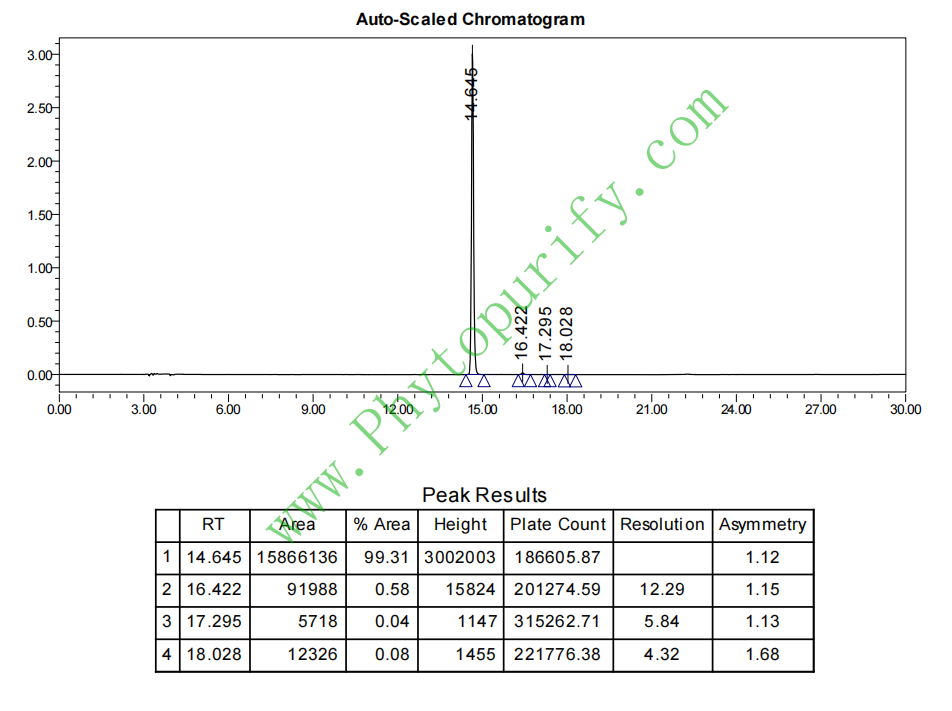
Purity: 95%~99%
Analysis Method: HPLC-DAD or/and HPLC-ELSD
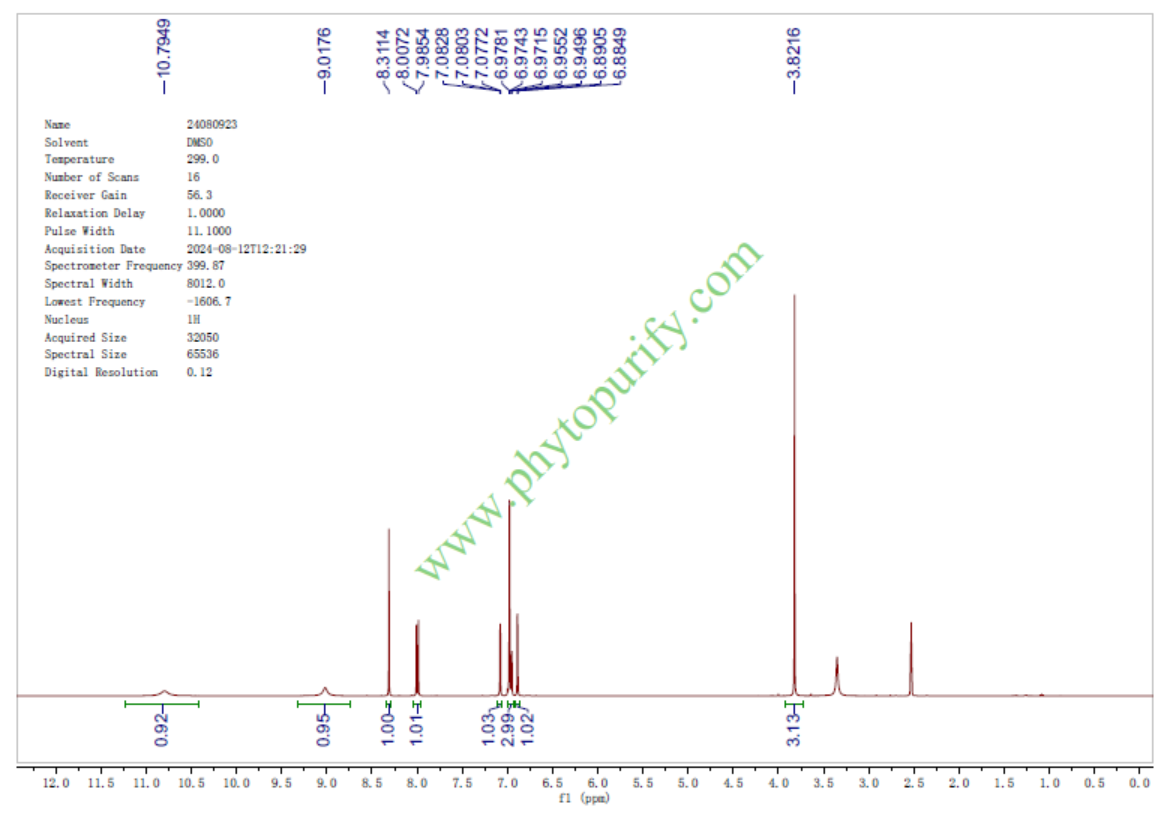
Identification Method: Mass, NMR
Packing: Brown vial or HDPE plastic bottle
Storage: Store in a well closed container, protected from air and light. Put into refrigerate or freeze for long term storage.
Whenever possible, you should prepare and use solutions on the same day. However, if you need to make up stock solutions in advance, we recommend that you store the solution as aliquots in tightly sealed vials at -20℃. Generally, these will be useable for up to two weeks.
The product could be supplied from milligrams to grams, up to kilograms
Inquire for bulk scale.
Descriptions:
Calycosin, a major isoflavonoid isolated from Radix Astragal, induces angiogenesis in human umbilical vein endothelial cell cultures (HUVEC) in vitro and zebrafish embryos in vivo via the up-regulation of vascular endothelial growth factor (VEGF), VEGFR1 and VEGFR2 mRNA expression;it acts similar to other selective estrogen receptor modulators (SERMs) to promote angiogenesis via activation of MAPK with the involvement of ERK1/2 and ER. , such as raloxifene and tamoxifen, by displaying selective potency and affinity to estrogen receptors ERa and ERb.[1]
Calycosin has neuroprotective effects in cerebral ischemia/reperfusion rats, and the molecular mechanisms may correlate with the positive feedback between ER-α and miR-375, along with the regulation of downstream targets.[2]
Calycosin inhibits growth and induce apoptosis in ER-positive breast cancer cells, which is mediated by ER-α-induced inhibition of IGF-1R, along with the selective regulation of MAPK and phosphatidylinositol 3-kinase (PI3K)/Akt pathways.[3]
Calycosin can promote proliferation of estrogen receptor-positive cells via estrogen receptors and ERK1/2 activation in vitro and in vivo.[4]
Calycosin can reduce advanced glycation end products-induced macrophage migration and adhesion to endothelial cells and relieve the local inflammation; furthermore, this effect is via estrogen receptor-ERK1/2–NF-κB pathway.[5]
Calycosin is a vasorelaxant, its action is endothelium-independent and is unrelated to intracellular Ca(2+) release; it is also a noncompetitive Ca(2+) channel blocker, the effect of it on Ca(2+) channel blockade may be different from that of dihydropyridines. [6]
References:
[1] Tang J Y, Li S, Li Z H, et al. Plos One, 2010, 5(7): e11822.
[2] Wang Y, Dong X, Li Z, et al. J the Neurol Sci, 2014, 339(2):144-8.
[3] Chen J, Hou R, Zhang X, et al. Plos One, 2014, 9(3):e91245.
[4] Chen J, Liu L, Hou R, et al. Cancer Lett, 2011, 308(2):144-51.
[5] Xu Y, Feng L, Wang S, et al. J Ethnopharmacol, 2011, 137(1):359-70.
[6] Xiu-li, Yin-ye, WANG, et al. Acta Pharmacol Sin, 2006, 27(8):1007–12.
[7] Wang H, Yang L I, Fang L, et al. J Pharm Practice, 2015(01):53-4.
HPLC of Calycosin
HNMR of Calycosin
Storage conditions:Short-term storage at 2~8℃, long-term storage at -20 ~ -80℃
79.9000
2.2223
2.0869
.0441
3.4938
45.0731
Low
89.9182
2.1824
Yes
No
Yes
No
Yes
Yes
2.1
No
No
Yes
No
Calycosin, also known as 7,3 '- dihydroxy-4' - methoxy isoflavone, is a natural flavonoid compound widely found in leguminous plants. Its CAS number is 20575-57-9, and it is one of the main active ingredients of the traditional precious Chinese medicine Radix Astragali. Huangqi, as an essential medicine for tonifying qi and consolidating the surface, has been applied in traditional Chinese medicine clinical practice for more than two thousand years. Modern pharmacological research has gradually revealed the material basis of its "strengthening the body and consolidating the essence" effect, and flavonoids from the pistil have played a crucial role in it. In recent years, with the rise of research on natural products, flavones have attracted much attention due to their wide range of biological activities. Research has shown that this compound has significant pharmacological effects such as antioxidant, anti-inflammatory, regulation of cell apoptosis, neuroprotection, cardiovascular protection, and anti-tumor effects. Especially in the intervention research of gynecological tumors (such as ovarian cancer, breast cancer) and menopause syndrome and other estrogen related diseases, calycosin has shown great potential. Its function involves precise regulation of multiple signaling pathways such as estrogen receptor (ESR1/ESR2), mitogen activated protein kinase (MAPK), nuclear factor kappa B (NF - κ B), cyclooxygenase-2 (PTGS2), etc. This article aims to provide a systematic review of the chemical properties, plant sources, pharmacological activities, molecular mechanisms of action, pharmacological evaluation, and clinical application prospects of flavonoids in the plant, in order to provide comprehensive scientific references for the in-depth research and development of this compound.
The molecular formula of Mao Rui Isoflavones is C ₁₆ H ₁₂ O ₅, with a molecular weight of 284.2670 g/mol. Its basic chemical structure is a typical isoflavone core, namely the 3-phenylchromenone structure. Specifically, it has one phenolic hydroxyl group at the 7th position of the A ring and one methoxy group at the 3 'position of the B ring. This specific substitution pattern of hydroxyl and methoxy groups is the key structural basis for its biological activity. The presence of phenolic hydroxyl groups endows it with strong antioxidant and free radical scavenging abilities, while methoxy groups affect its lipophilicity and binding properties with target proteins.
From the analysis of physical and chemical properties, the lipid water partition coefficient (LogP) of flavones in hairy stamens is 2.2223, indicating that they have a certain degree of lipophilicity, but not highly hydrophobic. Its topological polar surface area (TPSA) is 79.9000 Å ², reflecting the surface area occupied by polar atoms (such as oxygen atoms) in the molecule. Its water solubility is relatively low, about 0.0441 mg/mL, which to some extent limits its bioavailability. In the preliminary screening of medicinal properties, it was found that genistein had no significant inhibitory effect on hERG potassium channels, indicating a low risk of cardiac toxicity. The Ames test result is 2.1, indicating that under the testing conditions, its mutagenicity risk is low and its safety is preliminarily controllable. However, its blood-brain barrier permeability prediction is "low", which means its ability to enter the central nervous system in the form of a prototype drug is limited. This may be a challenge for treating central nervous system diseases, but it may also reduce related side effects.
The main plant source of Mao Rui Isoflavones is the dried roots of Astragalus membranaceus (Fisch.) Bge. var. mongholicus (Bge.) Hsiao or Astragalus membranaceus (Fisch.) Bge., which belong to the legume family. In addition, there are also small amounts of distribution in plants such as Hedysarum polybotrys Hand. - Mazz. and Glycyrrhiza uralensis. In Astragalus membranaceus, flavones are often present in the form of aglycones and often coexist with their glucosides (such as flavones), which can be converted into aglycone forms through enzymatic or acid hydrolysis in vitro and in vivo to exert activity.
The main method for extracting flavonoids from Astragalus membranaceus is solvent extraction. Ethanol or methanol are commonly used as extraction solvents to improve efficiency through heating reflux, ultrasound assisted or microwave-assisted extraction. The crude extract is extracted by organic solvents (such as ethyl acetate and n-butanol) for preliminary enrichment, and then further separated and purified by column chromatography. The commonly used stationary phases include silica gel, macroporous adsorption resins (such as AB-8 and D101), polyamide and dextran gel (Sephadex LH-20), etc. The mobile phase mostly uses chloroform methanol or petroleum ether ethyl acetate systems with different proportions. Modern separation techniques such as high-speed countercurrent chromatography (HSCCC) and preparative high-performance liquid chromatography (Prep HPLC) have also been successfully applied to the preparation of high-purity flavones. The optimization of extraction process usually considers extraction rate, purity, and cost as comprehensive indicators.
A large number of pharmacological experiments both in vitro and in vivo have confirmed that flavonoids from Scutellaria baicalensis have diverse and significant biological activities.
antioxidant activity Mao Rui Isoflavones are effective antioxidants. The phenolic hydroxyl group in its structure can directly scavenge reactive oxygen/nitrogen species such as superoxide anions (O ₂⁻·), hydroxyl radicals (· OH), and peroxynitrite (ONOO ⁻). In addition, it can upregulate the endogenous antioxidant system of cells, such as activating the nuclear factor E2 related factor 2 (Nrf2) pathway, promoting the expression of phase II detoxifying enzymes and antioxidant proteins such as heme oxygenase-1 (HO-1) and quinone oxidoreductase 1 (NQO1), thereby reducing oxidative stress damage to cells such as cardiomyocytes, neurons, and endothelial cells.
anti-inflammatory effect Mao Rui Isoflavones have shown good inhibitory effects on both acute and chronic inflammation models. It can significantly inhibit the excessive production of pro-inflammatory cytokines such as nitric oxide (NO), prostaglandin E2 (PGE2), interleukin-6 (IL-6), and tumor necrosis factor alpha (TNF - α) in macrophages induced by stimuli such as lipopolysaccharide (LPS). Its anti-inflammatory effect is the basis of treating inflammation related diseases such as atherosclerosis, neuroinflammation, osteoarthritis, etc.
Antitumor activity Mao Rui Isoflavones have growth inhibitory and pro apoptotic effects on various tumor cells, especially hormone dependent tumor cells. In the study of ovarian cancer and breast cancer, it can induce cell cycle arrest (such as G2/M phase arrest) and inhibit cell proliferation, migration and invasion. Its anti-tumor mechanism is complex, involving inducing endogenous (mitochondrial pathway) and exogenous apoptosis pathways, inhibiting angiogenesis, reversing epithelial mesenchymal transition (EMT), and so on.
The regulatory effect on menopausal syndrome Menopausal syndrome is caused by fluctuations and decreases in estrogen levels due to ovarian dysfunction. Mao Rui Isoflavones exhibit selective estrogen receptor modulator (SERM) properties. It can bind with estrogen receptor beta (ESR2) with high affinity, producing estrogen like or anti estrogen effects, partially simulating the protective effects of estrogen on cardiovascular, skeletal, and central nervous systems, while possibly avoiding the risk of excessive stimulation of the breast and endometrium by estrogen. Animal experiments have shown that it can improve symptoms such as hot flashes, osteoporosis, dyslipidemia, and cognitive impairment in ovariectomized rats.
Other activities In addition, quercetin also has pharmacological effects such as protecting against myocardial ischemia-reperfusion injury, improving insulin resistance, anti liver fibrosis, antiviral and immune regulation, showing multi-target and multi pathway characteristics.
The pharmacological effects of genistein are achieved by regulating a complex cellular signaling network, and its key molecular targets and pathways are as follows:
Estrogen receptor pathway Mao Rui Isoflavones are a type of plant estrogen. It has a higher affinity for ESR2 than ESR1, and this selective binding allows it to regulate the transcription of estrogen responsive genes, exerting estrogen like protective effects in bone tissue, cardiovascular system, and brain, while possibly exhibiting antagonistic or weak excitatory effects in breast and uterus, providing a molecular basis for its use in the treatment of menopausal syndrome. By affecting the expression of aromatase (CYP19A1) and progesterone receptor (PGR), it further regulates the balance of sex hormones in the body.
MAPK signaling pathway Mao Rui Isoflavones can inhibit the abnormal phosphorylation activation of extracellular signal regulated kinase 1/2 (ERK1/2, i.e. MAPK3/MAPK1), c-Jun N-terminal kinase (JNK), and p38 MAPK. Inhibition of the MAPK/ERK pathway is one of the important mechanisms for anti proliferation and pro apoptosis in tumor cells. Regulation of p38 and JNK pathways is also crucial in inflammation and neuroprotection.
NF - κ B signaling pathway NF - κ B is a core transcription factor for inflammation and cell survival. Mao Rui Isoflavones inhibit the activity of I κ B kinase (IKK), prevent the degradation of I κ B α and nuclear translocation of NF - κ B p65 subunit, thereby downregulating the expression of target genes such as TNF - α, IL-6, IL-1 β, as well as inducible nitric oxide synthase (iNOS) and cyclooxygenase-2 (PTGS2). This is the core mechanism by which they exert strong anti-inflammatory effects.
PTGS2 (COX-2) inhibition Mao Rui Isoflavones can directly or indirectly (through pathways such as NF - κ B) inhibit the expression and activity of PTGS2, reduce the synthesis of PGE2, which is closely related to their anti-inflammatory, analgesic, and anti-tumor effects (especially in preventing colon cancer).
Neurotransmitter system related targets In alleviating menopausal mood disorders such as anxiety and depression, genistein may play a role by regulating the central serotonin system. Research has shown that it can affect the function of serotonin transporter (SLC6A4) and the activity or expression of serotonin 1A receptor (HTR1A) and 2A receptor (HTR2A), thereby regulating synaptic cleft serotonin levels, improving mood and behavior.
Apoptosis related pathways Mao Rui Isoflavones can upregulate the expression of pro apoptotic protein Bax and downregulate the expression of anti apoptotic protein Bcl-2, leading to a decrease in mitochondrial membrane potential, release of cytochrome C, and activation of caspase-9 and caspase-3 cascade reactions, inducing tumor cell apoptosis.
Although the pharmacological activity of flavones in hairy stamens is clear, their pharmacological properties still need to be comprehensively evaluated.
Absorption, Distribution, Metabolism, and Excretion (ADME):
- absorb After oral administration, Mao Rui Isoflavones are moderately absorbed in the gastrointestinal tract. Its glycoside form (such as flavone-7-O - β - D-glucoside) may be absorbed after hydrolysis into aglycones by gut microbiota or intestinal wall enzymes.
- distribution Due to its moderate LogP value, it can be widely distributed in the body. But the blood-brain barrier has low permeability, which limits its direct central function. Research has shown that it can accumulate to some extent in tissues such as the heart, liver, kidneys, and uterus.
- Metabolism Mao Rui Isoflavones mainly undergo phase I and phase II metabolism in the body. Phase I metabolism includes hydroxylation, demethylation, etc., mainly catalyzed by the liver cytochrome P450 enzyme system (such as CYP1A2, CYP2C9, CYP3A4). Phase II metabolism mainly involves glucuronidation and sulfation, producing more water-soluble metabolites catalyzed by uridine diphosphate glucuronosyltransferase (UGT) and sulfotransferase (SULT). Its 4 '- methoxy group is a common site for metabolic modification.
- excretion Metabolites are mainly excreted through the kidneys and urine, and some prototype drugs and metabolites can also be excreted through bile and feces.
Challenges and Strategies in Drug Development:
1. Water solubility and bioavailability Low water solubility and first pass effect are the main factors limiting its oral bioavailability. The current improvement strategies include: preparing phospholipid complexes, cyclodextrin inclusion complexes, and solid dispersions; Developing nano drug delivery systems such as nanocrystals, liposomes, and micelles; And carry out prodrug modification (such as preparing phosphate or amino acid ester prodrugs).
2. Metabolic stability To improve its metabolic stability, its easily metabolized sites (such as phenolic hydroxyl and methoxy groups) can be structurally modified or co administered with CYP enzyme inhibitors.
3. Targeted delivery For tumor treatment, folate receptor targeted and transferrin receptor targeted nanoparticles can be designed, or pH sensitive drug release systems can be prepared to increase drug concentration at the tumor site and reduce systemic toxicity.
4. Pharmacokinetic study Current pharmacokinetic studies are mostly focused on animal models, and there is an urgent need to conduct systematic ADME research in higher-level animals and even humans to clarify their pharmacokinetic parameters, effective blood drug concentrations, and dose exposure effect relationships.
The clinical application prospects of Mao Rui Isoflavones are broad, but the road ahead is long.
Treating menopausal syndrome As a natural compound with SERM properties, genistein is an ideal candidate for developing hormone replacement therapy (HRT) alternatives. It may provide the benefits of relieving hot flashes, improving mood, preventing osteoporosis and cardiovascular disease, while avoiding the problem that traditional HRT increases the risk of breast cancer and endometrial cancer. In the future, rigorous large-scale, multicenter, randomized controlled clinical trials need to be designed to verify its efficacy and long-term safety.
Adjuvant anti-tumor therapy In the comprehensive treatment of gynecological tumors such as ovarian cancer and breast cancer, calycosin can be used as an auxiliary drug for chemotherapy or endocrine therapy. It may play a role in sensitizing chemotherapy, reversing drug resistance, reducing the side effects of radiotherapy and chemotherapy (such as bone marrow suppression and cardiac toxicity), and preventing recurrence and metastasis. The synergistic effect of combined application with existing targeted drugs deserves further investigation.
Treating chronic inflammatory diseases Based on its powerful anti-inflammatory and antioxidant mechanism, calycosin has potential application value in atherosclerosis, rheumatoid arthritis, chronic hepatitis, neurodegenerative diseases (such as Alzheimer's disease) and other fields. In depth preclinical efficacy evaluation is needed for specific disease models.
Drug development form:
Future research directions:
As the core active flavonoid component of traditional Chinese medicine Huangqi, Mao Rui Isoflavones have shown significant potential in antioxidant, anti-inflammatory, anti-tumor, and endocrine regulation due to their multi-target and multi pathway pharmacological action modes. It regulates complex cellular signaling networks by acting on key targets such as ESR2, MAPK, NF - κ B, and PTGS2, thereby intervening in the pathological processes of various diseases. Despite facing challenges such as poor water solubility and low bioavailability in drug development, modern pharmaceutical and medicinal chemistry technologies provide feasible solutions for this. From the experience of traditional medicinal plants to the interpretation of modern molecular pharmacology, the study of flavones in Polygonatum sibiricum is a model for the modernization of traditional Chinese medicine and the development of natural medicines. In the future, through more in-depth mechanism research, systematic pharmacological optimization, and rigorous clinical validation, Mao Rui Isoflavones are expected to develop from a promising natural compound into an innovative drug for treating menopausal syndrome, assisting anti-tumor or combating chronic inflammatory diseases, and contributing unique value to human health.
