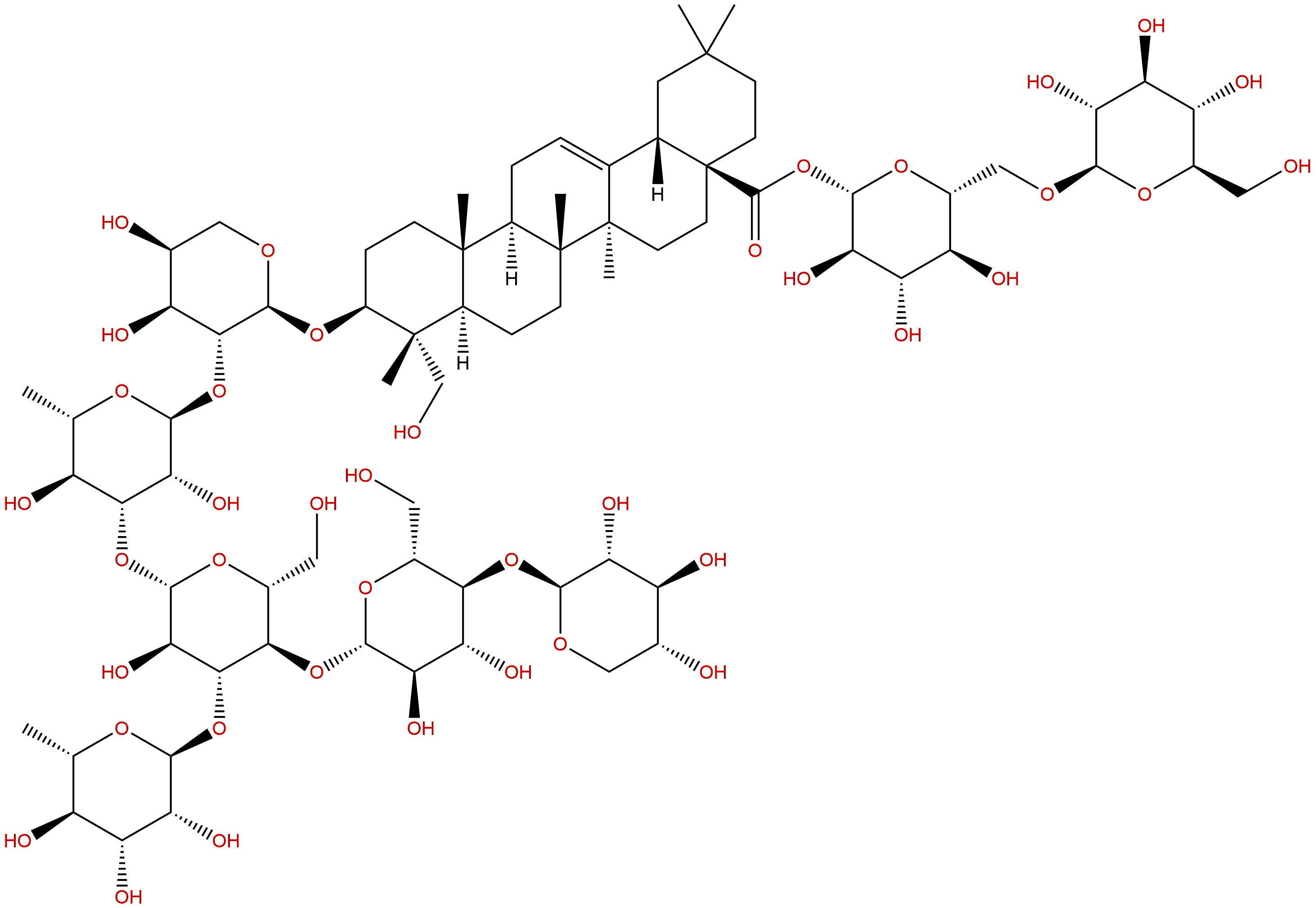


Product name: Akebia saponin X
Synonym name:
Catalogue No.: BP5400
Cas No.: 146100-01-8
Formula: C76H124O40
Mol Weight: 1677.79
Botanical Source:
Type of Compound: Triterpenoids
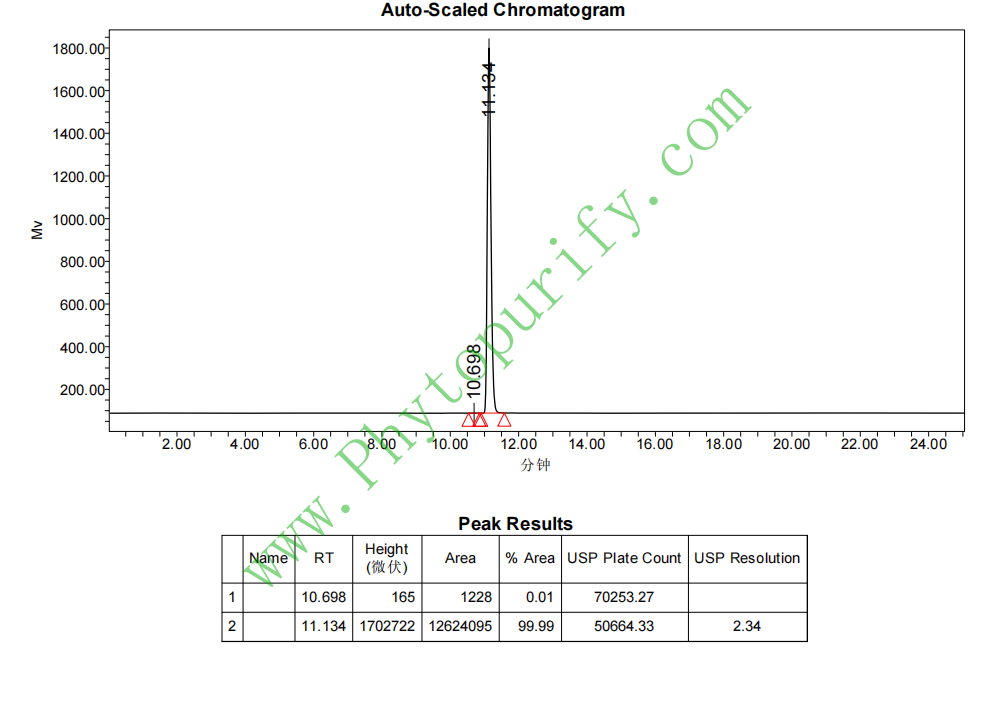
Purity: 95%~99%
Analysis Method: HPLC-DAD or/and HPLC-ELSD
Identification Method: Mass, NMR
Packing: Brown vial or HDPE plastic bottle
Storage: Store in a well closed container, protected from air and light. Put into refrigerate or freeze for long term storage.
Whenever possible, you should prepare and use solutions on the same day. However, if you need to make up stock solutions in advance, we recommend that you store the solution as aliquots in tightly sealed vials at -20℃. Generally, these will be useable for up to two weeks.
The product could be supplied from milligrams to grams
Inquire for bulk scale.
For Reference Standard and R&D, Not for Human Use Directly.
HPLC of Akebia saponin X
Storage conditions:Short-term storage at 2~8℃, long-term storage at -20 ~ -80℃
630.0400
.7991
.7993
2.5215
.4476
.1540
Low
60.9012
7.5010
Yes
No
No
No
No
No
0.0
Yes
No
No
Yes
Osteoporosis is a systemic bone disease characterized by bone loss and destruction of bone microstructure. Its incidence rate continues to rise with the acceleration of population aging process. According to the World Health Organization, approximately 200 million women worldwide suffer from osteoporosis, and about one-third of women and one-fifth of men over the age of 50 are at risk of osteoporotic fractures. The commonly used anti osteoporosis drugs in clinical practice mainly include bisphosphonates, selective estrogen receptor modulators, parathyroid hormone analogues, and RANKL inhibitors. However, these drugs often have varying degrees of adverse reactions during long-term use, such as bisphosphonate related mandibular necrosis, atypical femoral fractures, and thrombotic risk caused by estrogen receptor modulators. Therefore, the search for efficient and low toxicity new anti osteoporosis candidate compounds from natural products has become an important direction in the field of drug development.
Akebia saponin X (ASX) is a traditional Chinese medicine derived from the leaves of Panax notoginseng(Dipsacus asper Wall. ex DC. isolated oleanane type triterpenoid saponins. Chuanxuduan, as a traditional Chinese medicine for tonifying the kidneys, strengthening bones, and relieving pain, is listed as a top-grade herb in the Shennong Bencao Jing. Throughout history, medical practitioners have widely used it in the treatment of bone related diseases such as lumbar and knee soreness, fracture injuries, and osteoporosis. Modern pharmacological research has confirmed that the extract of Chuanxuduan has significant effects on promoting osteoblast differentiation, inhibiting osteoclast activity, and improving bone microstructure. Chuanxuduan saponin X, as one of the active saponin components with high content in Chuanxuduan, has received widespread attention in recent years due to its unique pharmacological activity in regulating bone metabolism. This article will provide a systematic review of the research progress of Chuanxuduan saponin X from multiple dimensions, including chemical structure, plant origin, pharmacological activity, molecular mechanism, and medicinal properties, in order to provide reference for the in-depth development and clinical translation of this natural product.
Chuanxuduan saponin X belongs to the oleanane type pentacyclic triterpenoid saponin, and its glycoside is oleanolic acid. The sugar chain is composed of multiple monosaccharide units. According to existing literature reports, the complete chemical structure of Chuanxuduan saponin X is 3-O - β - D-glucopyranosyl - (1 → 3) - α - L-rhamnopyranosyl - (1 → 2) - α - L-arabinopyranosyl oleanolic acid-28-O - β - D-glucopyranosyl - (1 → 6) - β - D-glucopyranosyl ester glycoside. This molecule contains a pentacyclic triterpenoid nucleus with two sugar chains connected at positions C-3 and C-28, respectively. The C-3 position is a trisaccharide chain (glucose rhamnose arabinose) and the C-28 position is a disaccharide chain (glucose glucose). This disaccharide chain structure is a common structural feature in triterpenoid saponins.
From the perspective of physical and chemical properties, the molecular weight of Chuanxuduan saponin X is 1677.7880 Da, which belongs to the category of large molecule natural products. Its lipophilic water partition coefficient (LogP) is 0.7991, indicating that the compound has a certain hydrophilicity, which is consistent with its structural characteristics of containing multiple polar sugar units in its molecule. The topologically polar surface area (TPSA) is as high as 630.0400 Å ², far exceeding the recommended upper limit of 140 Å ² for oral medications, indicating that this compound may pose certain challenges in intestinal transmembrane absorption. The water solubility parameter is 2.5215, which belongs to the category of moderately water-soluble compounds, providing the basic conditions for their dissolution and distribution in living organisms. It is worth noting that the blood-brain barrier permeability of Chuanxuduan saponin X is evaluated as "low", which to some extent reduces the risk of central nervous system toxicity. In addition, the hERG inhibition prediction result was negative, and the Ames test mutagenicity score was 0.0, indicating that the compound has good safety in terms of cardiac toxicity and genetic toxicity.
The main plant source of saponins X from Panax notoginseng is the Panax notoginseng family plant, Panax notoginseng(Dipsacus asper Dry roots of Wall ex DC. Chuanxuduan is widely distributed in China, mainly produced in provinces such as Sichuan, Hubei, Hunan, Yunnan, Guizhou, etc. Among them, Sichuan produces the best quality, hence the name "Chuanxuduan". In addition, the plant of the same genus, Japanese Continuation, is also included(Dipsacus japonicus Miq. also contains similar saponin components, but the content of saponin X in Chuanxuduan is the most abundant in Chuanxuduan.
The extraction of saponins X from Chuanxuduan is usually carried out using the classic natural product chemical separation process. Firstly, after crushing the dried roots of Chuanxuduan, ethanol or methanol is used for reflux extraction, and the extract is concentrated under reduced pressure to obtain the total extract. Subsequently, the total extract was dispersed in water and subjected to liquid-liquid extraction using petroleum ether, ethyl acetate, and n-butanol in sequence. Saponin X from Panax notoginseng was mainly enriched in the n-butanol extraction site. This part can be separated by silica gel column chromatography, ODS reverse phase column chromatography, and preparative high-performance liquid chromatography to obtain high-purity compound of Chuanxuduan saponin X.
In recent years, researchers have developed various modern extraction techniques to improve extraction efficiency and purity. The ultrasound assisted extraction method utilizes the cavitation effect of ultrasound to destroy the plant cell wall, which can significantly shorten the extraction time and improve the yield of saponins; The microwave-assisted extraction method rapidly vaporizes intracellular water through microwave heating, promoting the dissolution of active ingredients. In addition, macroporous adsorption resin technology (such as AB-8 and D101 resins) has shown good adsorption and desorption performance in the enrichment and purification of total saponins in Sichuan ginseng, and can effectively remove impurities such as sugars and pigments. It is worth noting that with the promotion of green chemistry concepts, deep eutectic solvents (DESs), as a new type of green solvent, have shown better extraction efficiency and environmental advantages than traditional organic solvents in the extraction of saponins from Panax notoginseng, providing new ideas for the green scale preparation of Panax notoginseng saponins X.
The pharmacological activity of Chuanxuduan saponin X in anti osteoporosis is the most extensively studied direction. In vitro cell experiments have shown that ASX can significantly promote the proliferation and differentiation of mouse osteogenic precursor cells MC3T3-E1, increase alkaline phosphatase (ALP) activity, and promote the formation of mineralized nodules. In the model of bone marrow mesenchymal stem cells (BMSCs) differentiating into osteoblasts, the expression levels of osteogenic related genes, including RUNX2, SP7, COL1A1, and BGLAP, were significantly upregulated in the ASX treatment group. At the same time, ASX has inhibitory effects on the differentiation and function of osteoclasts. In the RANKL induced RAW264.7 cell osteoclast differentiation model, ASX can dose dependently reduce the formation of tartrate resistant acid phosphatase (TRAP) positive multinucleated cells and inhibit the production of bone resorption cavities.
At the animal model level, the rat model induced by ovariectomy (OVX) is a classic model for evaluating the activity of anti osteoporosis drugs. Research has shown that administering Chuanxuduan saponin X (10-40 mg/kg/d) orally for 8 consecutive weeks can significantly improve the decrease in bone mineral density (BMD), increase the number and thickness of bone trabeculae, and improve bone microstructural parameters in OVX rats. The Micro CT analysis results showed that the bone volume fraction (BV/TV), trabecular thickness (Tb. Th), and trabecular number (Tb. N) of ASX treated rats were significantly higher than those of the model group, while the trabecular separation degree (Tb. Sp) was significantly reduced. Further biomechanical tests have confirmed that ASX can restore the compressive strength and flexural strength of OVX rat femurs, suggesting that it can not only increase bone mass but also improve the mechanical properties of bones.
In addition to its anti osteoporosis effect, Chuanxuduan saponin X also exhibits other noteworthy pharmacological activities. In terms of anti-inflammatory effects, ASX can inhibit the release of pro-inflammatory factors such as TNF - α, IL-6, and IL-1 β in macrophages induced by lipopolysaccharide (LPS), and its mechanism may be related to the inhibition of the NF - κ B signaling pathway. In terms of antioxidant stress, ASX can increase the activity of superoxide dismutase (SOD) and glutathione peroxidase (GSH Px) induced by hydrogen peroxide (H ₂ O ₂) in osteoblasts, reduce the level of malondialdehyde (MDA), and protect osteoblasts from oxidative damage. In addition, preliminary studies suggest that ASX may have effects such as promoting fracture healing, inhibiting the progression of osteoarthritis, and regulating immune function, but these findings require further experimental evidence to support.
The elucidation of the anti osteoporosis mechanism of Chuanxuduan saponin X is currently a focus and hotspot of research. Based on existing literature reports, ASX exerts bone protection through synergistic regulation of multiple targets and signaling pathways. The molecular targets involved mainly include estrogen receptor alpha (ESR1), matrix metalloproteinase 9 (MMP9), vitamin D receptor (VDR), Runt related transcription factor 2 (RUNX2), transcription factor SP7, protease K (CTSK), osteoprotegerin (TNFRSF11B), osteocalcin (SOST), type I collagen alpha 1 chain (COL1A1), and osteocalcin (BGLAP).
RUNX2 and SP7 are core transcription factors for osteoblast differentiation. Chuanxuduan saponin X can activate the BMP/Smad signaling pathway, promote phosphorylation of Smad1/5/8, and upregulate the expression of RUNX2 and SP7. RUNX2, as the "main switch" of osteogenic differentiation, can activate the transcription of downstream osteogenic related genes such as COL1A1, BGLAP, and ALP, thereby promoting the maturation and mineralization function of osteoblasts. In addition, ASX can activate the Wnt/β - catenin signaling pathway, inhibit GSK-3 β activity, promote nuclear translocation of β - catenin, and upregulate the expression of osteogenic related genes. It is worth noting that ASX has an inhibitory effect on the expression of SOST (osteoclast encoding gene), which is a negative regulator of the Wnt signaling pathway. Therefore, ASX's inhibition of SOST can further release the inhibition of Wnt signaling and form a positive feedback regulatory loop.
In terms of regulating osteoclast differentiation, Chuanxuduan saponin X mainly works by regulating the RANKL/RANK/OPG system. After binding to RANK receptors on the surface of osteoclasts, RANKL can activate the NF - κ B and MAPK signaling pathways, promoting the differentiation and maturation of osteoclasts. ASX can upregulate the expression of OPG (encoded by TNFRSF11B gene) in osteoblasts. OPG acts as a bait receptor for RANKL and competitively binds to RANKL, thereby blocking RANKL/RANK signaling and inhibiting osteoclastogenesis. In addition, ASX can directly inhibit the expression and activity of CTSK (tissue protease K) in osteoclasts. CTSK is a key collagenase secreted by osteoclasts, responsible for degrading type I collagen in the bone matrix. Therefore, inhibition of CTSK by ASX can effectively reduce the formation of bone resorption cavities.
The interaction between Chuanxuduan saponin X and estrogen receptor alpha (ESR1) is one of the important mechanisms by which it exerts bone protective effects. Molecular docking and surface plasmon resonance (SPR) experiments have shown that ASX can directly bind to the ligand binding domain of ESR1, with a binding mode similar to classical estrogen 17 β - estradiol, but with lower affinity, suggesting that ASX may act as a selective estrogen receptor modulator (SERM). In the ovariectomy rat model, ASX can partially restore bone loss caused by decreased serum estradiol levels without causing estrogen like side effects such as uterine weight gain, which makes it potentially advantageous in the treatment of postmenopausal osteoporosis.
Vitamin D receptor (VDR) plays a crucial role in calcium and phosphorus metabolism and bone homeostasis regulation. Research has found that Chuanxuduan saponin X can upregulate the expression of VDR in osteoblasts and enhance the transcriptional activation effect of 1,25-dihydroxyvitamin D3 (active vitamin D) on target genes. The activation of VDR can promote intestinal calcium absorption, increase bone mineralization, and synergistically regulate osteogenic differentiation with RUNX2. In addition, the inhibitory effect of ASX on MMP9 is also worth paying attention to. MMP9 is a member of the matrix metalloproteinase family and plays an important role in osteoclast mediated degradation of bone matrix. ASX can downregulate the expression of MMP9 by inhibiting the NF - κ B signaling pathway, thereby reducing the degradation of collagen and gelatin in bone matrix.
Based on the Lipinski Rule of Five and Veber Rule, the pharmacological properties of Chuanxuduan Saponin X face certain challenges. Its molecular weight (1677.79 Da) far exceeds the threshold of 500 Da, and the number of hydrogen bond donors and acceptors also significantly exceeds the regulatory requirements, which are usually associated with low oral bioavailability. However, it is worth noting that there are precedents in natural products with high molecular weight but good oral activity, such as cyclosporine A (molecular weight 1202 Da), indicating that molecular weight is not the only factor determining oral absorption. The LogP of Chuanxuduan saponin X is 0.7991, which is within the appropriate range (0-3), indicating that its lipophilic hydrophilic balance is relatively reasonable. The TPSA reached 630.04 Å ², indicating that the compound is difficult to passively diffuse through the cell membrane, and its absorption may depend on active transport or endocytosis mediated by transporters.
At present, the systematic study on the pharmacokinetics of Chuanxuduan saponin X in vivo is not sufficient, but some preliminary findings have been made. After oral administration in rats, the blood concentration time curve of ASX showed a bimodal phenomenon, indicating possible differences in absorption in different parts of the gut liver circulation or gastrointestinal tract. The metabolic pathways of ASX in the body mainly include hydrolysis of sugar chains and further metabolism of glycosides. The gut microbiota plays an important role in the metabolism of ASX. β - glucosidase and α - rhamnosidase secreted by gut microbiota can gradually hydrolyze the sugar chains of ASX, producing secondary glycosides or aglycones such as oleanolic acid. These metabolites may have pharmacological activities different from those of the prototype drug, and may even be the true active forms that exert pharmacological effects in vivo.
In terms of organizational distribution, ASX and its metabolites are mainly distributed in liver, kidney, and skeletal tissues. The distribution characteristics in skeletal tissue are closely related to its anti osteoporosis effect, suggesting that ASX may exert local pharmacological effects by targeting bone tissue. The main excretion pathway is bile excretion, and some metabolites are excreted through urine. It is worth noting that ASX has a high protein binding rate in plasma, which may affect its free drug concentration and efficacy.
As mentioned earlier, the hERG inhibition prediction of Chuanxuduan saponin X is negative, and the Ames test mutagenicity score is 0.0, indicating good preliminary safety. In acute toxicity experiments, the LD ₅₀ value of ASX orally administered to mice is greater than 2000 mg/kg, indicating that it is a low toxicity compound. In the subchronic toxicity experiment, after 28 days of continuous administration, no significant abnormalities were found in the liver and kidney function indicators, blood routine, and pathological examination of major organ tissues in rats. However, due to the presence of multiple sugar units in ASX molecules, long-term high-dose administration may cause gastrointestinal discomfort such as diarrhea, bloating, etc., which needs to be addressed in future research.
Based on existing pharmacological research evidence, Chuanxuduan saponin X has potential application value in the treatment of bone related diseases such as postmenopausal osteoporosis (PMOP), senile osteoporosis, glucocorticoid induced osteoporosis (GIOP), and delayed or non healing fractures. Especially for postmenopausal osteoporosis, ASX's ability to simulate estrogen signals without causing uterine stimulation makes it a potential alternative or supplement to traditional hormone replacement therapy (HRT). In addition, the bidirectional regulatory effect of ASX on osteoclasts and osteoblasts gives it a unique advantage in diseases related to bone remodeling imbalance.
Reasonable formulation design is the key to improving the clinical translational potential of Chuanxuduan saponin X, which has a low oral bioavailability. Nanodrug delivery systems, such as liposomes, polymer nanoparticles, solid lipid nanoparticles, etc., can effectively improve the encapsulation efficiency and intestinal absorption of ASX. Phospholipid complex technology can significantly improve the lipid solubility and promote transmembrane transport by forming a complex between ASX and phospholipids. In addition, the "prodrug" strategy based on the metabolic characteristics of gut microbiota is also worth exploring, that is, designing ASX glycoside derivatives to gradually release active ingredients under the action of gut microbiota, thereby achieving the goal of sustained release and enhanced efficacy.
The combination of Chuanxuduan saponin X and other anti osteoporosis drugs may produce synergistic effects. For example, the combination of ASX with vitamin D3 or calcium supplements can synergistically promote calcium absorption and bone mineralization through different mechanisms; Combined with bisphosphonates, it can inhibit bone resorption while promoting bone formation, achieving bidirectional regulation of bone metabolism. In addition, based on traditional Chinese medicine theory, the combination of Chuanxuduan saponin X with other active ingredients of kidney tonifying and bone strengthening Chinese herbal medicines (such as icariin, psoralen, etc.) may exert comprehensive therapeutic advantages through multi-target and multi pathway approaches.
Although Chuanxuduan saponin X has shown promising application prospects in the field of anti osteoporosis, there are still many key scientific issues that urgently need to be addressed. Firstly, the interaction mode between ASX and ESR1 needs to be further clarified through crystal structure analysis or molecular dynamics simulations to guide structural optimization and selective regulation. Secondly, the specific target cells of ASX in bone tissue (osteoblasts, osteoclasts, bone cells or bone marrow stromal cells) and their sequence of action still need to be systematically studied. Thirdly, the long-term toxicity and reproductive toxicity evaluation of ASX is a necessary task before clinical translation. Finally, the design and synthesis of new derivatives based on the ASX chemical structure are expected to yield candidate compounds with stronger activity and better drug properties.
As a representative active ingredient in traditional kidney tonifying Chinese medicine, Chuanxuduan saponin X exhibits significant pharmacological activity in promoting osteogenic differentiation, inhibiting osteoclast activity, and improving bone microstructure through synergistic regulation of multiple targets and signaling pathways. Its mechanism of action involves multiple key targets such as ESR1, RUNX2, SP7, VDR, CTSK, TNFRSF11B, and SOST, covering core pathways of bone metabolism regulation such as estrogen signaling, Wnt/β - catenin signaling, BMP/Smad signaling, and RANKL/RANK/OPG system. Despite facing challenges in terms of oral bioavailability, through rational formulation design and structural modification, Chuanxuduan Saponin X is expected to be developed as a new natural drug for the treatment of osteoporosis. In the future, with in-depth research on its pharmacokinetic characteristics, in vivo metabolic pathways, and long-term safety, Chuanxuduan saponin X will move from the laboratory to clinical practice, providing a safer and more effective treatment option for patients with osteoporosis, and also providing a successful example for the modernization development of traditional Chinese medicine.
