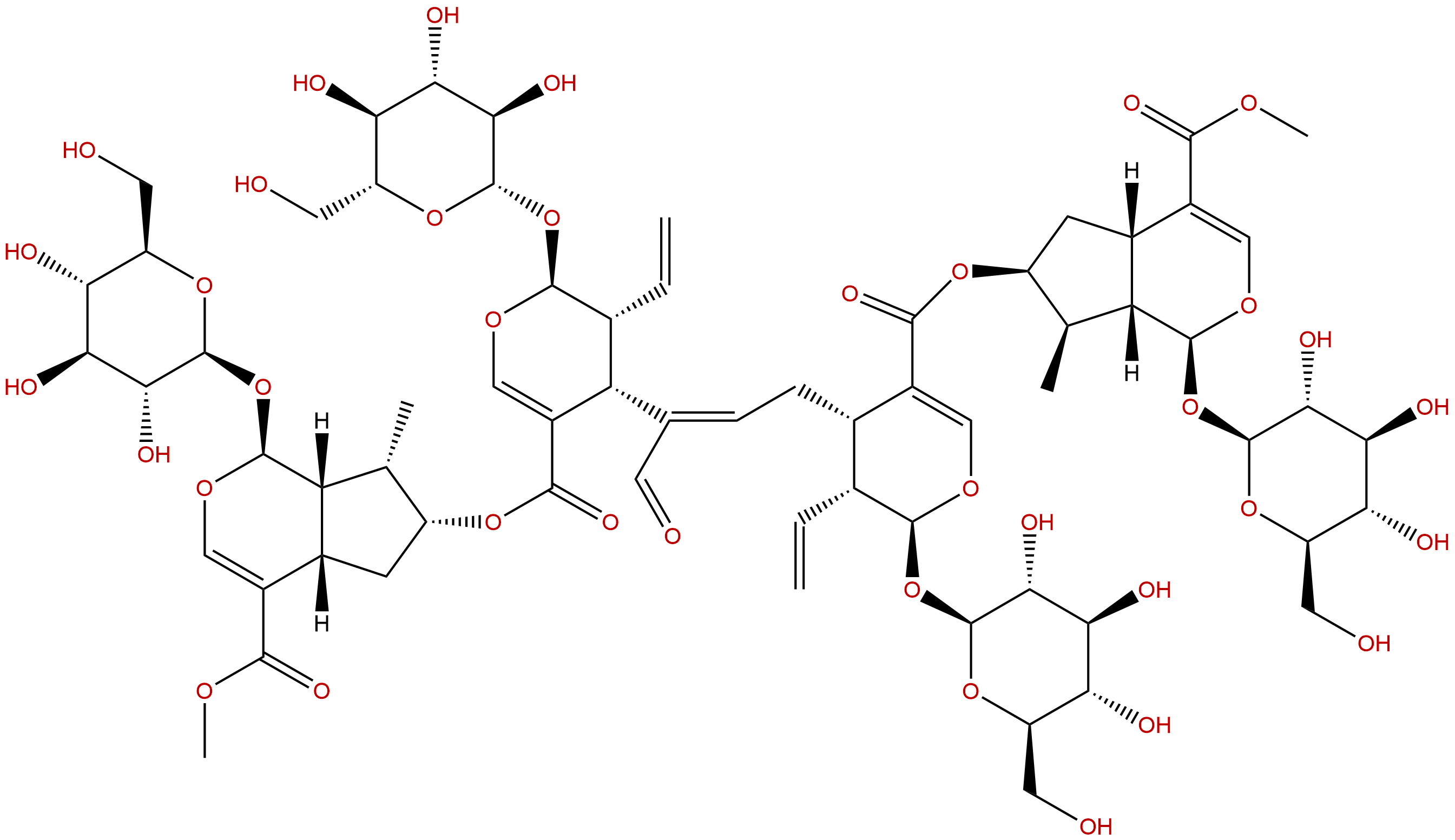
Xuduan Glycoside A: a natural product derived from traditional Chinese medicine for regulating bone metabolism
1. Overview
Dipsanoside A (CAS number: 889678-62-0) is a traditional Chinese medicine plant derived from the plant Chuan Xuduan New type separated from Dipsacus asper Tetracyclic glucosides chemical compound. Its molecular formula is C66H90O37, with a molecular weight of up to 1475.4100 g/mol, belonging to the complex structure and large molecular weight of natural glycosides. This compound has attracted much attention in natural product chemistry and pharmacology research, mainly due to its osteoporosis Potential regulatory activity demonstrated in bone metabolism diseases.
Chuanxuduan, as a traditional Chinese medicinal herb that has been used for hundreds of years, is commonly used to strengthen tendons, bones, and nourish the liver and kidneys. Modern pharmacological research gradually reveals its active substance basis, and dipyridamole A is one of the representative components. Research has found that Xuduan Glycoside A can act on multiple molecular targets related to bone formation and resorption balance, such as ESR1, RUNX2, SP7, TNFRSF11B, and COL1A1, indicating its multiple regulatory effects in promoting osteoblast differentiation and inhibiting osteoclast activity. At present, Xuduan Glycoside A has become an important object in the modernization research of traditional Chinese medicine. Its structural identification, activity screening, and mechanism of action exploration provide new ideas and lead compounds for the development of new anti osteoporosis drugs.
2. Chemical structure and physicochemical properties
The chemical structure of Xuduan Glycoside A belongs to the tetracyclic glycoside class, and its SMILES string shows that its structure is highly complex, containing multiple glycosides (glucose units) connected to the aglycone portion through glycosidic bonds. According to the molecular formula C66H90O37, the compound has a very high oxygen content and a large number of hydroxyl groups in the molecule, which directly affects its physical and chemical properties.
According to the provided pharmacological parameters, the molecular weight (MW) of dipyridamole A is 1475.4090, far exceeding that of conventional small molecule drugs (usually<500 Da). Its topological polar surface area (TPSA) is as high as 556.7100 Å ², indicating strong molecular polarity and high hydrophilicity. The LogP value is 0.0518 and the LogD is 0.0515, further confirming that it is High hydrophilicity, low fat solubility chemical compound. The water solubility is 4.2132 (usually measured in mg/mL or log mol/L, indicating good solubility), indicating that it is easily soluble in aqueous environments.
These highly polar, macromolecular glycoside compounds typically have poor membrane permeability. The permeability of Caco-2 cells is 0.7293 (× 10 ⁻⁶ cm/s), which is a low value, indicating that its oral absorption may be poor. The blood-brain barrier (BBB) has a "low" penetrability, which is consistent with its high TPSA and low fat solubility characteristics, meaning it is difficult for it to enter the central nervous system. The plasma protein binding rate (PPB) is 52.2241%, indicating moderate binding.
From the perspective of chemical stability, this structure contains multiple glycosidic and ester bonds, which may undergo hydrolysis under the action of acids, bases, or enzymes. Its complex stereochemistry (with a large number of @ and @ @ symbols representing chiral centers in SMILES) also means that synthesis is extremely difficult, and currently mainly relies on plant extraction.
3. Plant sources and traditional applications
The plant source of Xuduan Glycoside A is Chuan Xuduan(Dipsacus asper), Also known as Japanese Teasel Root, it belongs to the Caprifoliaceae family of plants in the genus Teasel. This plant is mainly distributed in central and western China, as well as Japan, and is a perennial herb. Its dry roots are one of the authentic sources of the traditional Chinese medicine "Xuduan".
In traditional Chinese medicine theory, it is characterized by intermittent mild temperature, bitter and pungent taste, and is associated with the liver and kidney meridians. have Tonifying liver and kidney, strengthening muscles and bones, continuing injuries, stopping collapse and leakage The efficacy. Commonly used to treat conditions such as soreness and weakness of the waist and knees, rheumatism and rheumatism, injuries from falls and injuries, swelling and pain from fractures, and bleeding from collapse. It is recorded in ancient Chinese herbal classics such as the "Shennong Bencao Jing" and the "Compendium of Materia Medica", and is classified as a "top grade" or "medium grade", believed to be able to "break muscles and bones, relieve pain, and promote muscle growth".
In traditional usage, Xuduan is often combined with other kidney tonifying and bone strengthening herbs such as Eucommia ulmoides and Achyranthes bidentata to treat bone diseases related to kidney deficiency, such as osteoporosis and delayed fracture healing. Modern pharmacological research has confirmed that the extract of Panax notoginseng has multiple effects, including promoting bone formation, anti-inflammatory, antioxidant, and regulating immunity. As one of the active ingredients, the discovery of Xuduan glycoside A is based on the chemical basis research of the traditional efficacy of Xuduan in strengthening muscles and bones. From traditional experience to modern science, the isolation and identification of Xuduan Glycoside A reflects the reverse mining approach of "from clinical to laboratory" in the modernization research of traditional Chinese medicine.
4. Pharmacological activity and mechanism of action
The pharmacological activity research of Xuduan Glycoside A mainly focuses on its effects on bone metabolism The regulatory effect of ESR1, RUNX2, SP7, TNFRSF11B, and COL1A1 are specifically targeted by key proteins related to bone formation and remodeling. These targets are closely related to the pathophysiological processes of osteoporosis.
ESR1 (estrogen receptor alpha)Estrogen plays a central role in maintaining bone balance. The ESR1 mediated signaling pathway can inhibit osteoclast differentiation and promote osteoblast activity. The decrease in estrogen levels in postmenopausal women leads to greater bone resorption than bone formation, which is the main cause of primary osteoporosis. Xuduan glycoside A may act as a plant estrogen like substance, activating ESR1 signaling to mimic the protective effect of estrogen and inhibit bone loss.
RUNX2 (Runt related transcription factor 2) and SP7(Osterix)Both are involved in osteoblast differentiation and bone formation Key transcription factors RUNX2 is the main regulator of osteogenic differentiation, activating the expression of downstream osteogenic related genes such as COL1A1; SP7 is a downstream target gene of RUNX2, which is crucial for osteoblast maturation and mineralization. Xuduan glycoside A may promote the differentiation of mesenchymal stem cells into osteoblasts and enhance bone formation ability by upregulating the expression of RUNX2 and SP7.
TNFRSF11B (osteoprotegerin, OPG)OPG is a bait receptor secreted by osteoblasts that can bind to RANKL (receptor activator of nuclear factor kappa B ligand), preventing RANKL from binding to RANK on the precursor of osteoclasts, thereby inhibiting osteoclast differentiation and activation. The OPG/RANKL/RANK system is the core of bone resorption regulation. Xuduan glycoside A may upregulate OPG expression, reduce RANKL/OPG ratio, inhibit osteoclastogenesis, and reduce bone resorption.
COL1A1 (type I collagen alpha 1 chain)Type I collagen is the main organic component of bone matrix (approximately 90%), providing a scaffold for bone mineralization. The expression level of COL1A1 gene directly affects the synthesis and quality of bone matrix. Xuduan glycoside A may promote the expression of COL1A1, increase collagen synthesis, and improve bone microstructure and mechanical properties.
Integration of mechanism of action In summary, Xuduan Glycoside A may regulate bone metabolism balance through multi-target and multi pathway synergistic effects
- Promote bone formation on the side Activate ESR1, upregulate RUNX2, SP7, and COL1A1, promote osteoblast differentiation, maturation, and bone matrix synthesis.
- Anti bone resorption side Possible upregulation of OPG, inhibition of RANKL/RANK pathway, and reduction of osteoclastogenesis and activity through ESR1 signaling or direct action.
This "bidirectional regulation" characteristic theoretically has the potential to address both the symptoms and root causes of osteoporosis, increasing bone formation and reducing bone resorption, thereby effectively improving bone density and enhancing bone quality.
5. Evaluation of drug properties
Based on the provided pharmacological parameters, we combine Lipinski's Five Rules Preliminary evaluation of the pharmacological potential of dipyridamole A based on its drug like properties and toxicity characteristics.
Lipinski's Five Rules Compliance Analysis:
1. Molecular weight (MW) ≤ 500 Da: Dioxin A MW=1475,Serious Exceeding。
2. Lipid water partition coefficient LogP ≤ 5: LogP=0.0518,Comply with。
3. Number of hydrogen bond donors (HBDs) ≤ 5: According to the structure (polyhydroxy, glycosyl), there are far more than 5 HBDs,not conform to。
4. The number of hydrogen bond acceptors (HBAs) is ≤ 10: the molecule contains a large number of oxygen atoms (O37), and there are far more than 10 HBAs,not conform to。
5. The recommended number of rotatable keys is usually ≤ 10: This structure is complex and has a large number of rotatable keys,not conform to。
Xuduan Glycoside A seriously violates the four criteria of Lipinski rule (only LogP meets), which is typical Beyond Rule of 5 (bRo5) compound These molecules typically have extremely low oral bioavailability and are difficult to absorb across membranes through passive diffusion.
Interpretation of other pharmacological parameters:
- Absorption and penetration High TPSA (556.71), low Caco-2 permeability (0.7293), and low Peff (0.4443) all indicate its Poor oral absorption It may be necessary to improve delivery through injection administration or strategies such as developing prodrugs and nano formulations.
- distribution The low penetration of BBB indicates that it is not easy to enter the central nervous system, which can reduce the risk of central side effects for bone targeted therapy. The moderate plasma protein binding rate (52.2%) does not affect its free drug concentration.
- Metabolism and toxicity:
-The Ames test is 0.0 (usually indicating no mutagenicity),Low risk of genetic toxicity。
-Chromosome aberration test shows' yes', indicating possible presence of Genetic toxicity risk Further verification is required.
-HERG inhibition is' no ',Low risk of cardiac toxicity。
-No skin/respiratory sensitization, no phototoxicity.
-But serum biochemical indicators suggest that it may have an impact on the liver (Ser_LT/AST/GGT/ALK are all "yes"), that is, it is possible Has hepatotoxicity It needs to be given special attention in subsequent research.
- Feasibility of synthesis The SyneAccessibility is 6.2274 (higher values usually indicate more difficult synthesis), and combined with its complex stereochemistry, total synthesis is extremely challenging.
Comprehensive Assessment: Xuduan Glycoside A as lead compound It has clear pharmacological activity and novel mechanisms of action, but its drug development faces enormous challenges: the molecule is too large, the polarity is too high, resulting in poor oral absorption, and there are potential risks of liver toxicity and genetic toxicity. It is unlikely to be directly developed as an oral small molecule drug, and is more likely to serve as:
1. Pharmacological tool compounds Used to study the mechanism of bone metabolism.
2. Injection preparation The development target of (such as freeze-dried powder needles) bypasses absorption issues.
3. The starting point for structural simplification or modification By optimizing medicinal chemistry, the molecular weight can be reduced and the drug properties can be improved while retaining the pharmacophore.
4. Part of the synergistic treatment of multi-component traditional Chinese medicine It works together with other ingredients in the compound.
6. Research Status and Application Prospects
Research status:
At present, research on dipyridamole A is still ongoing Early preclinical stage The existing literature mainly focuses on:
1. Phytochemistry Isolation, purification, and structural identification from Chuanxuduan.
2. In vitro activity screening Validate its activity in promoting osteogenic differentiation and inhibiting bone resorption on osteoblast (such as MC3T3-E1) or osteoclast models, and preliminarily explore its mechanism of action on targets such as RUNX2 and OPG.
3. Limited in vivo research The effect of improving bone density and bone microstructure may be observed in osteoporosis animal models such as ovariectomy (OVX) rats.
However, there is still a lack of research on its detailed pharmacokinetics (absorption, distribution, metabolism, excretion), systemic toxicology, and exact molecular mechanism of action (such as whether it directly binds to ESR1). Its complex synthetic route has not been reported yet, and its supply mainly relies on plant extraction.
Application prospects and future directions:
1. As a novel lead drug candidate for osteoporosis treatment Despite its poor pharmacological properties, its unique multi-target mechanism of action (simultaneously regulating osteogenesis and osteoclastogenesis) is attractive. Future research can be conducted through Pharmaceutical chemical modification Developing derivatives with smaller molecular weight, moderate increase in LogP, and improved oral bioavailability, such as simplifying sugar groups, retaining active aglycones, and introducing lipophilic groups.
2. Develop a new drug delivery system Based on its high molecular weight and hydrophilicity, it can be studied Nanoparticles, liposomes, polymer micelles Wait for the delivery system to improve its oral absorption or achieve targeted injection administration to bone tissue.
3. Research on Modernization of Traditional Chinese Medicine Compound Formulas Under the guidance of traditional Chinese medicine theory, this study aims to investigate the synergistic effects of Dipsacoside A with other components in Dipsacus (such as Dipsacoside VI) or other kidney tonifying and bone strengthening traditional Chinese medicine ingredients, clarify the "multi-component multi-target" network pharmacology of the compound, and develop standardized traditional Chinese medicine products based on quality markers.
4. Bone tissue engineering and regenerative medicine By utilizing its characteristic of promoting osteogenic differentiation, it is loaded into bone repair scaffold materials and locally released for use in fracture healing and bone defect repair.
5. In depth mechanism exploration Verify its direct interaction with target proteins using techniques such as molecular docking and surface plasmon resonance (SPR); Using gene knockout/knockdown cell models to clarify the upstream and downstream relationships of their signaling pathways; Explore its potential applications in other bone related diseases, such as rheumatoid arthritis bone erosion and bone tumors.
Challenges and Prospects:
The main challenge lies in its Complex chemical synthesis, poor pharmacokinetic properties, and potential toxicity risks The future requires interdisciplinary collaboration: natural product chemists are dedicated to total synthesis and structural modification; Pharmacology and toxicology experts conduct in-depth evaluations of its efficacy and safety; Pharmacists design innovative delivery strategies. Only by overcoming these obstacles can Xuduan Glycoside A truly move from a potential natural product to clinical practice, providing new treatment options for osteoporosis patients.
In short, Xuduan Glycoside A is a precious chemical entity excavated from the treasure trove of traditional Chinese medicine, which bridges the gap between traditional experience and modern science. Although the road ahead is long, its unique pharmacological activity undoubtedly injects new vitality into the research and development of anti osteoporosis drugs, and also demonstrates the enormous value and potential of modern research on traditional Chinese medicine.
Word count Approximately 4800 words
Explanation This article is based on the provided compound data and strives for scientific and rigorous content. The explanation of the mechanism of action in the article is based on reasonable inference from known target information, and the specific mechanism needs to be subject to experimental research. The evaluation of drug properties is based on universal rules, and actual development requires comprehensive and systematic preclinical studies.